What is Tech-Noir?
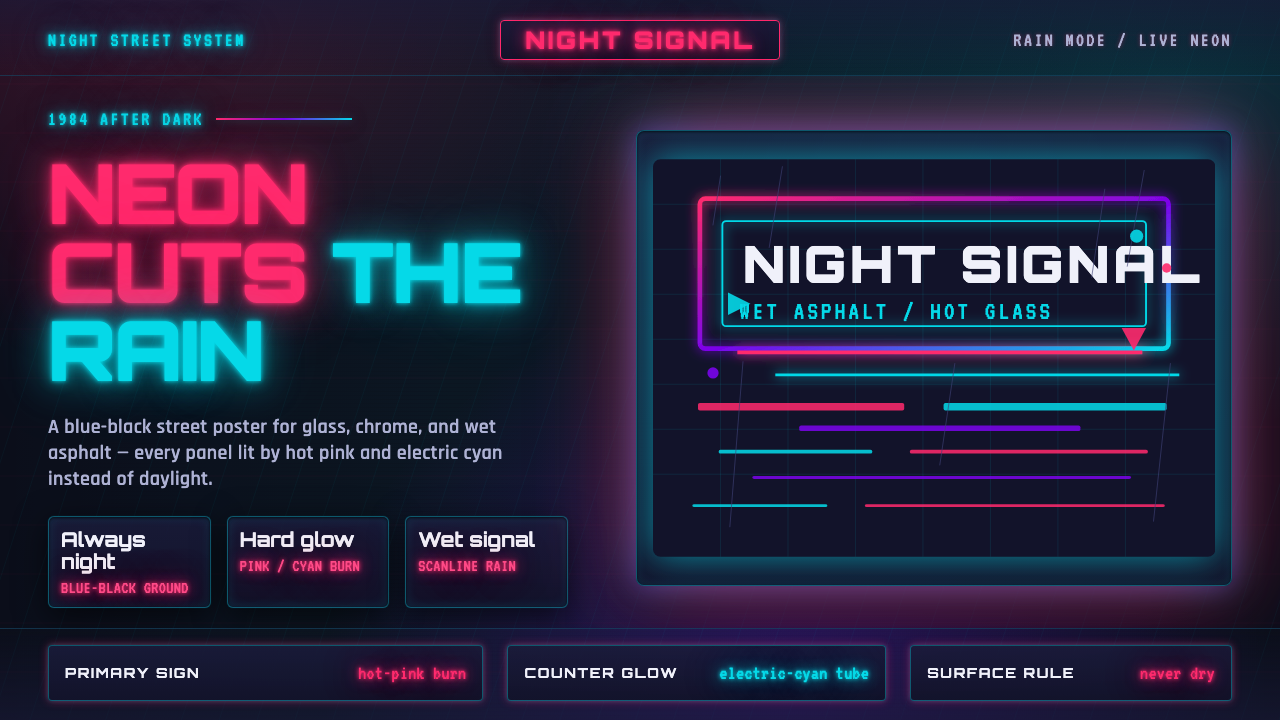
Tech-Noir is always night: blue-black pavement, rain and chrome turning hot pink and electric cyan neon into the architecture of the scene.
Tech-Noir in brief
Tech-Noir is the rain-slicked, neon-drenched street language associated with 1980s science-fiction cinema. Its defining image is not simply a dark city, but a city made visible by artificial light: near-black blue-black asphalt receives neon signage, wet pavement returns it, and chrome and glass bend it across the frame. Night is not a backdrop here. It is the material that gives every color its force.
The name directly recalls the Tech Noir nightclub in The Terminator, released in 1984, while its larger visual world also draws on the perpetually wet boulevards of Blade Runner. These cinematic streets establish the essential condition of the style: darkness must remain present enough for light to feel cut into it. A bright sign is never isolated; it is multiplied through rain, reflections, transparent surfaces, and metallic sheen.
Hot pink and electric cyan form the style’s central chromatic tension. They arrive as hard, vivid interruptions against the blue-black ground rather than as gentle atmosphere. This pairing later became inseparable from synthwave and serves as a direct visual forebear of cyberpunk. Nothing is dry, muted, or daylit. Glass, chrome, rain, and asphalt all have one job: catching the glow and sending it somewhere else.
Where does Tech-Noir come from?
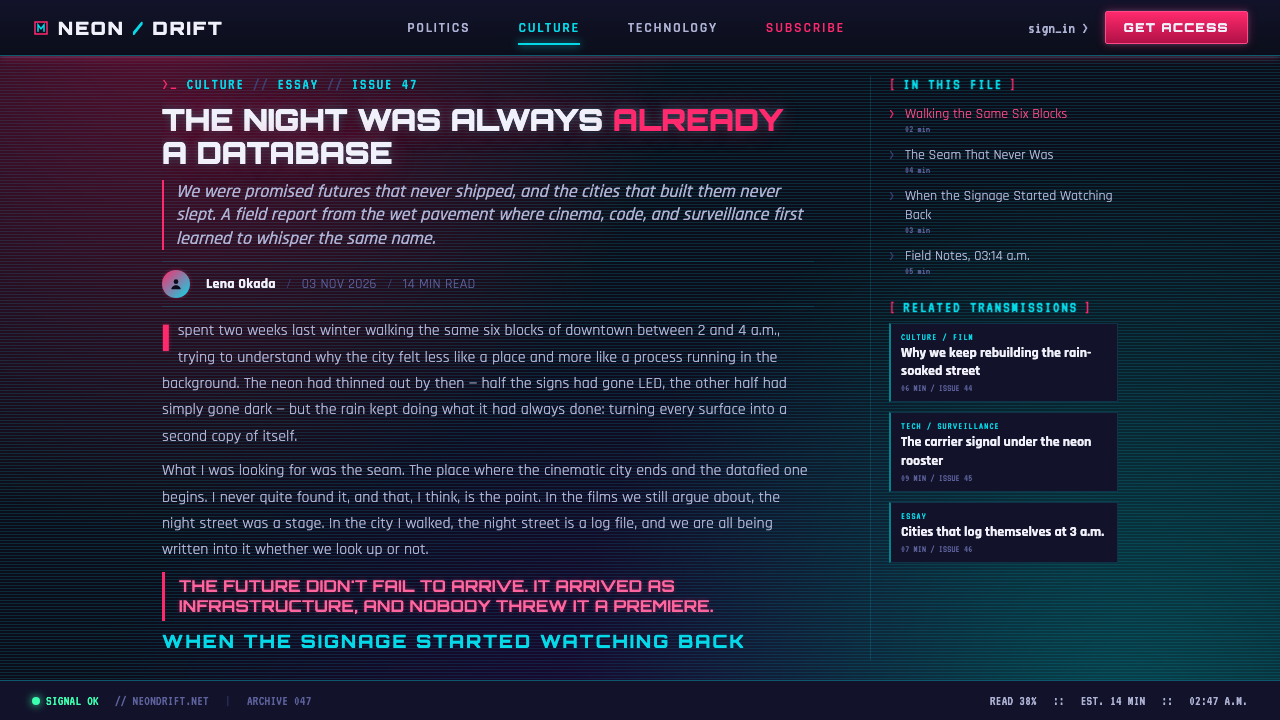
Tech-Noir emerged from North American, specifically Hollywood, science-fiction cinema of the 1980s. The term was coined in 1984 through the nightclub named Tech Noir in The Terminator. That name gave a concise label to a screen world where technology, urban darkness, reflected signage, and nocturnal danger occupy the same visual field. It is a film-derived aesthetic before it is a digital-interface aesthetic.
James Cameron is attached to the term through The Terminator and its named nightclub. The setting matters because it turns the style into a concentrated environment rather than a loose collection of colors: an enclosed night space where hot neon can strike darkness, reflective material can amplify it, and the exterior rain-soaked street vocabulary can continue inside. The title itself joined technology to noir at the level of atmosphere.
Ridley Scott is a second key figure through Blade Runner and its perpetually wet boulevards. In the supplied visual lineage, these streets establish rain not as incidental weather but as an optical device. Water creates a second image beneath the first one, so signage and city light extend beyond their physical sources. The pavement becomes a reflective surface, while chrome and glass make the illumination feel mobile and unstable.
The style was revived visually through synthwave, outrun, and retrowave from the 2010s into the 2020s. This revival retained the blue-black night ground and the hot-pink/electric-cyan contrast while making the cinematic language portable across contemporary graphics and screens. Its relationship to cyberpunk remains central: Tech-Noir is the filmic precursor, while synthwave and retrowave recirculate that nocturnal neon memory as a contemporary design vocabulary.
What defines the Tech-Noir look?
Perpetual Night
The ground is a blue-black night that approaches black without becoming visually empty. Darkness is active space, not blank space: it holds back detail so neon, reflection, and metallic edges can emerge with greater force. A convincing Tech-Noir composition never allows daylight or a neutral bright field to dissolve that pressure.
Neon Contrast
Hot pink and electric cyan cut sharply through the dark field. Their role is not to decorate a broad palette but to create a decisive opposition: warmth against coolness, signal against shadow, an artificial flare against blue-black asphalt. The intensity works because the surrounding scene stays dark, wet, and visually restrained.
Wet Reflection
Rain-slicked pavement is a primary compositional surface. It catches signage and turns a light source into a dispersed field beneath the street, creating vertical echoes and broken streaks rather than a clean mirror image. Reflection gives the scene depth without making it dry, orderly, or calm.
Glass and Chrome
Glass and chrome exist to catch and bend illumination. Their value lies in their responsiveness: a small neon source can become a sharp edge, a colored flare, or a displaced reflection across a surface. These materials make the environment feel technologically charged without requiring an abundance of visible machinery.
Hard Glow
Tech-Noir light is vivid and directional, not soft or muted. Neon appears to strike surfaces, separate edges, and expose fragments of the night rather than evenly illuminating a whole environment. The glow should feel captured by rain, glass, and metal, with every reflection preserving the sense of a distinct artificial source.
No Dry Daylight
The style depends on a world without dryness, muting, or daylight. A clear daytime surface removes the conditions needed for reflected neon to matter. Tech-Noir is therefore less about adding cyan and pink to an ordinary layout than about committing the entire visual environment to darkness, moisture, and artificial nocturnal light.

Who shaped Tech-Noir?
Cameron is a key figure because The Terminator supplied the term through its Tech Noir nightclub in 1984. The setting anchors the style’s name in a concentrated nocturnal environment of darkness, neon, and technological unease, making the fusion of tech and noir legible before it became a broader design label.
Scott is a key figure through Blade Runner and its perpetually wet boulevards. Within the approved visual lineage, those streets establish the rain-soaked city as a central Tech-Noir condition: pavement reflects signage, darkness receives color, and glass and chrome keep the illumination moving across the scene.
The Tech Noir nightclub is the named source of the term in The Terminator. More than a title reference, it provides a compact model for the aesthetic: an always-night setting in which hot neon cuts through darkness and reflective materials make light feel multiplied, unstable, and cinematic.
How do you use Tech-Noir today?
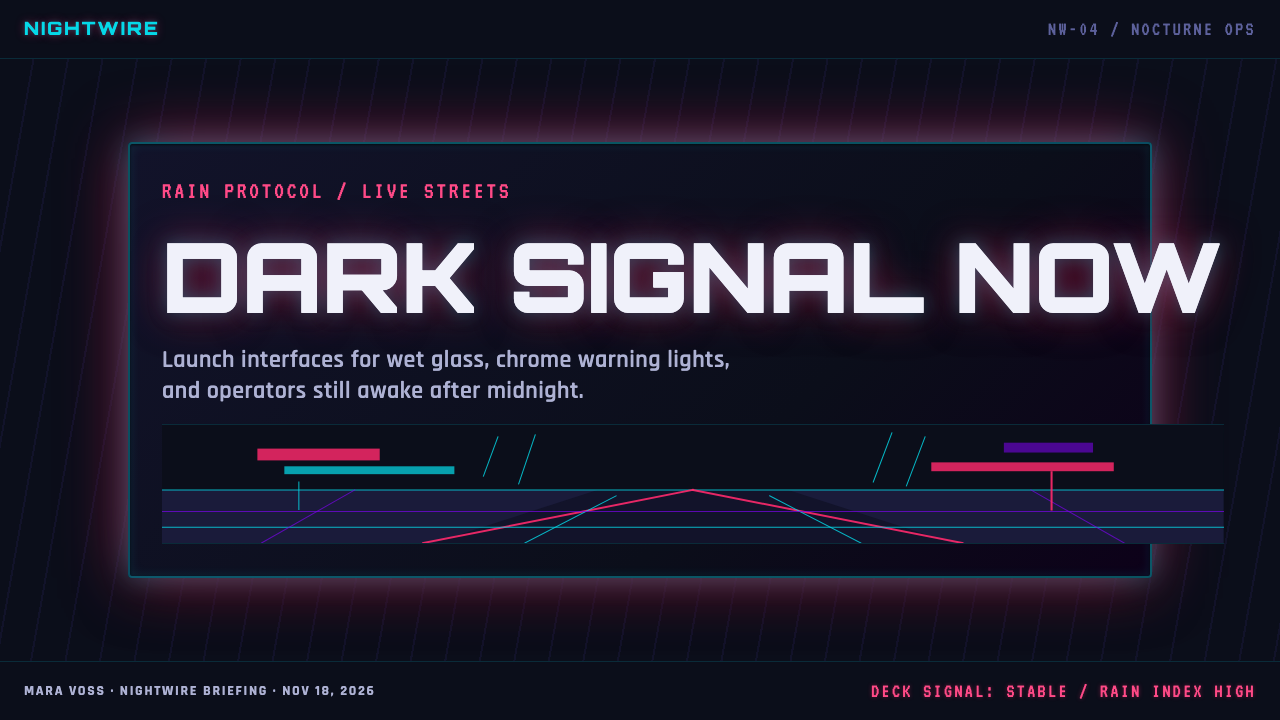
For presentation covers, treat the slide as a wet nocturnal street rather than a generic dark page. Let a blue-black field carry the composition, then use one concentrated hot-pink or electric-cyan gesture as the title’s visual event. A reflective line, glass-like panel, or cropped neon sign can establish the setting, but the empty darkness around it must remain generous enough for the glow to feel dangerous and deliberate.
For presentation content and data slides, translate the rain-and-reflection logic into hierarchy. Keep the information field dark and legible, reserve the neon pair for the most consequential labels, trends, or data marks, and use quieter blue-black structure for secondary material. Data should feel like illuminated signals emerging from night, not like a conventional bright chart recolored with neon. Avoid making every line equally luminous.
For web interfaces, Tech-Noir suits dashboards, monitoring views, and interfaces where live signals, system state, or dense visual attention belong at the center. A dark blue-black environment can hold panels like windows into the night, while cyan and pink distinguish active status, selected paths, or urgent changes. Reflective accents work best as a rare atmospheric layer; they should enrich the sense of glass and rain without obscuring reading or interaction.
For pricing pages, editorial work, and marketing campaigns, use the style to make a product feel cinematic, nocturnal, and technologically charged. A hero can begin in near-black darkness with a single neon proposition, then let later sections reveal fragments through reflective surfaces and colored light. Editorial layouts benefit from wide dark pauses, sharp illuminated headings, and imagery that visibly contains rain, glass, pavement, chrome, or signage.
The common mistake is treating Tech-Noir as a two-color effect pasted onto an ordinary dark layout. Hot pink and electric cyan alone cannot create the style if the page is dry, evenly lit, or crowded with unrelated color. The system depends on blue-black night, wet reflection, and surfaces that catch light. Use the neon pair selectively, preserve darkness, and make every bright mark appear to have a source and a reflected consequence.
Tech-Noir — FAQ
Is Tech-Noir the same as cyberpunk?
They are closely related but not identical in the supplied lineage. Tech-Noir is the rain-slicked, neon-lit cinematic language associated with 1980s Hollywood science fiction, while cyberpunk is identified as its direct cinematic descendant. Tech-Noir names the nocturnal visual atmosphere: blue-black asphalt, hot pink and electric cyan, rain, glass, chrome, and reflected artificial light.
Why are rain and wet pavement so important to the style?
They make light visible beyond its source. Wet pavement reflects neon signage into the street, turning a single sign into broken color, vertical echoes, and a second image beneath the city. Rain also gives glass, chrome, and asphalt a shared reflective purpose. Without moisture, the core Tech-Noir relationship between darkness, illumination, and multiplied reflection becomes much weaker.
Can Tech-Noir work without hot pink and electric cyan?
Those colors are described as the quintessential synthwave duo and are central to the approved Tech-Noir vocabulary. Removing both risks losing the immediate connection to neon-drenched night and its synthwave revival. If an application must be restrained, preserve at least the underlying logic: a blue-black nocturnal ground, artificial light that cuts through it, and reflective surfaces that carry that illumination onward.
Does Tech-Noir need visible technology everywhere?
No. The supplied material defines the style through atmosphere and surfaces rather than through an inventory of devices. Technology is felt in the city’s artificial light, chrome, glass, neon signage, and nocturnal cinematic charge. A scene can read as Tech-Noir when illumination behaves as the main subject, even if the visible objects are only pavement, rain, reflections, and a sign.
How is Tech-Noir related to synthwave and retrowave?
Tech-Noir’s hot-pink and electric-cyan contrast is identified as the quintessential synthwave pairing. The visual language, rooted in 1980s cinema, was revived through synthwave, outrun, and retrowave in the 2010s and 2020s. These later movements did not remove the style’s night-street foundation; they carried its neon, blue-black darkness, and cinematic memory into contemporary visual culture.
Related design styles
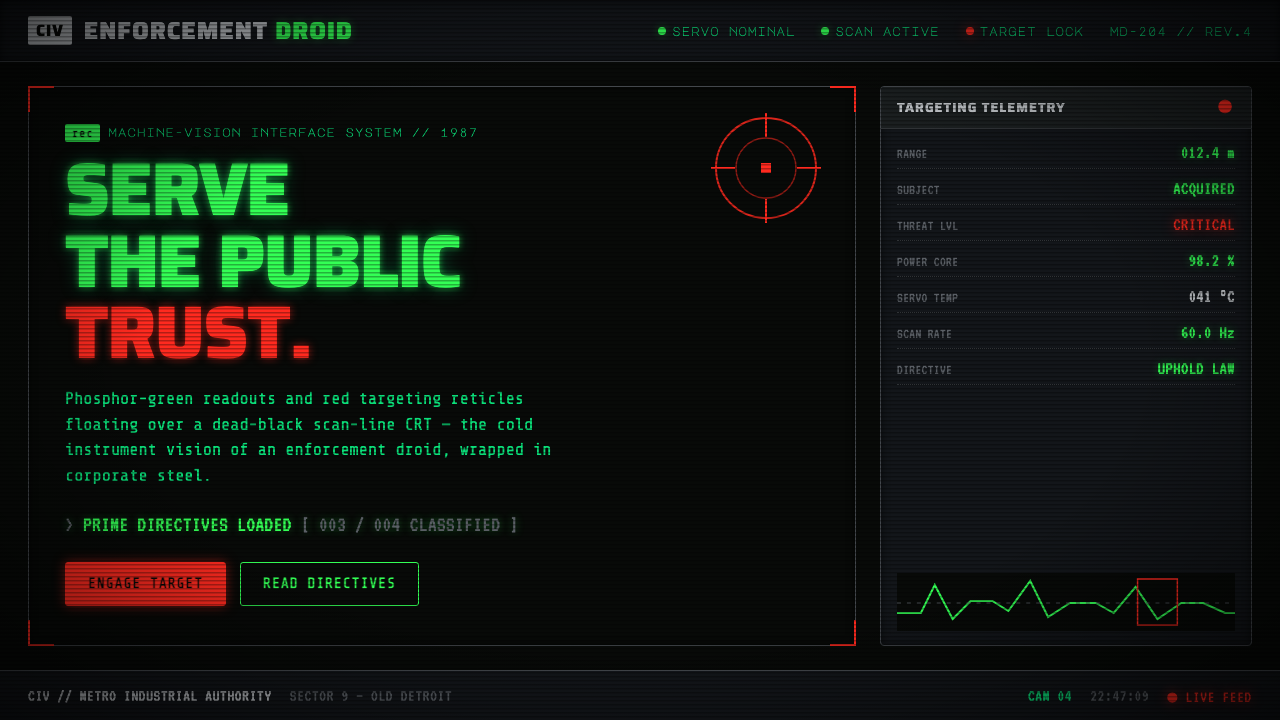 RoboCop (1987)Machine vision as interface. Phosphor-green readouts on dead-black CRT, red r…
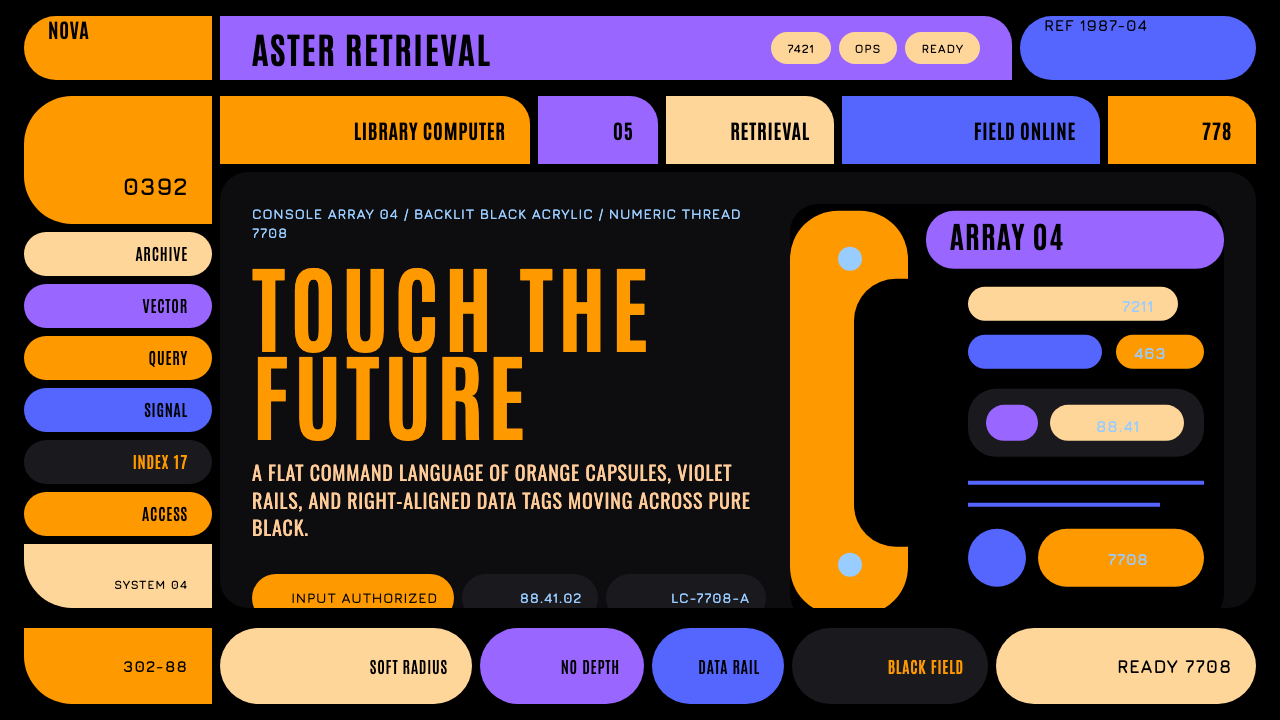 Star Trek LCARSFuture as flat command. Orange-violet elbows and Jura numbers glow on black.
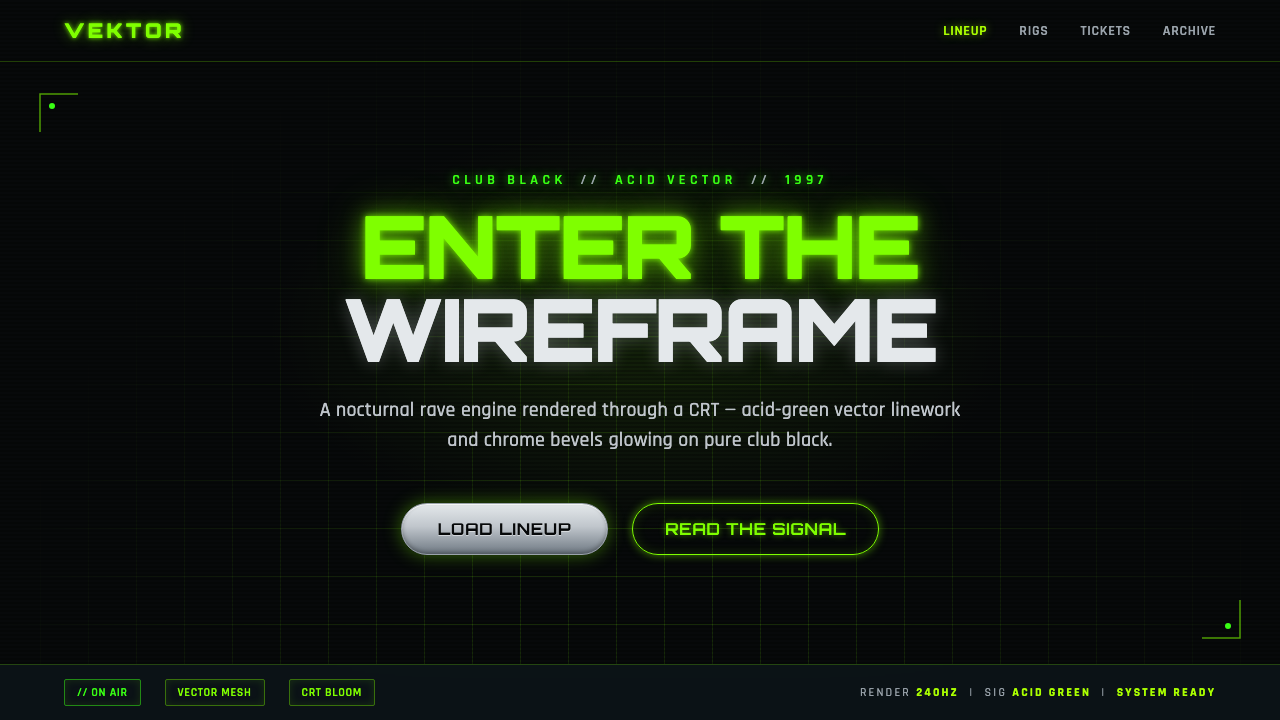 Playstation Rave Green 1997Enter the wireframe. Acid-green vector lines and chrome glow on club black, a…
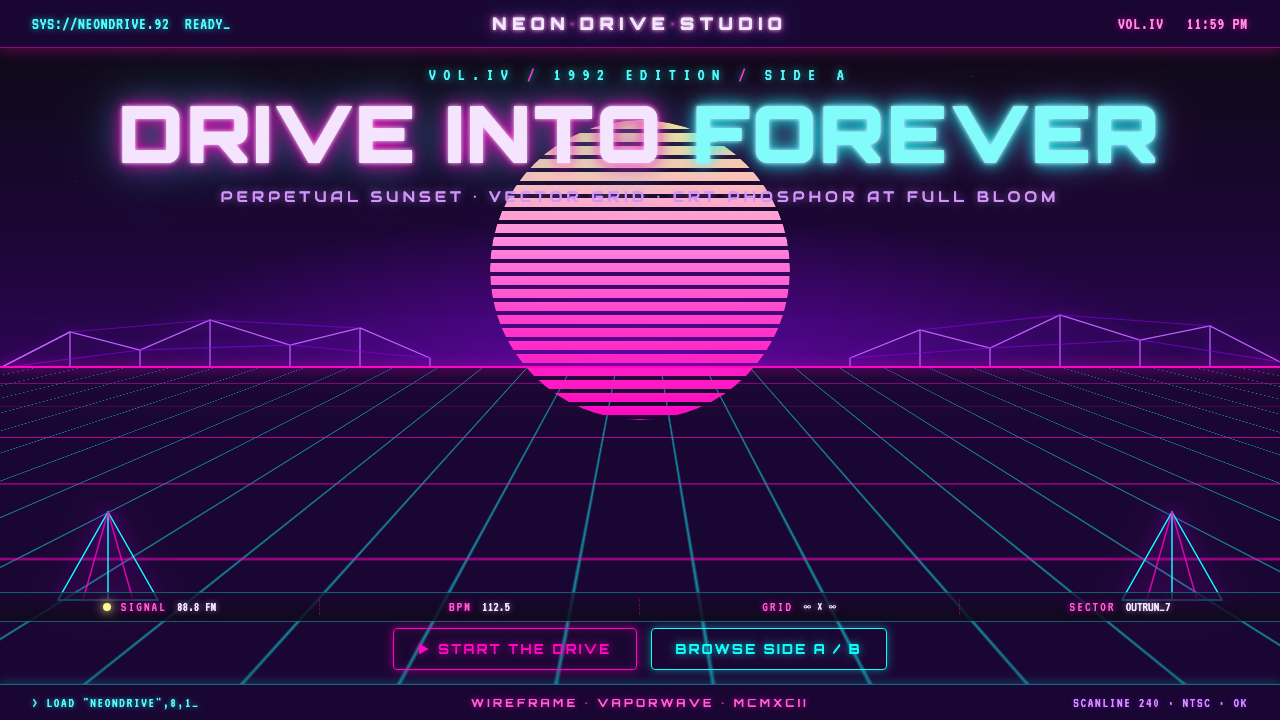 Wireframe VaporwaveDrive into forever. Magenta-cyan grid races to a vanishing point under a stri…
 Gunpla Model BoxBuild-sheet drama. Cosmic navy, cyan burst, tricolor armor, and spec-panel gr…
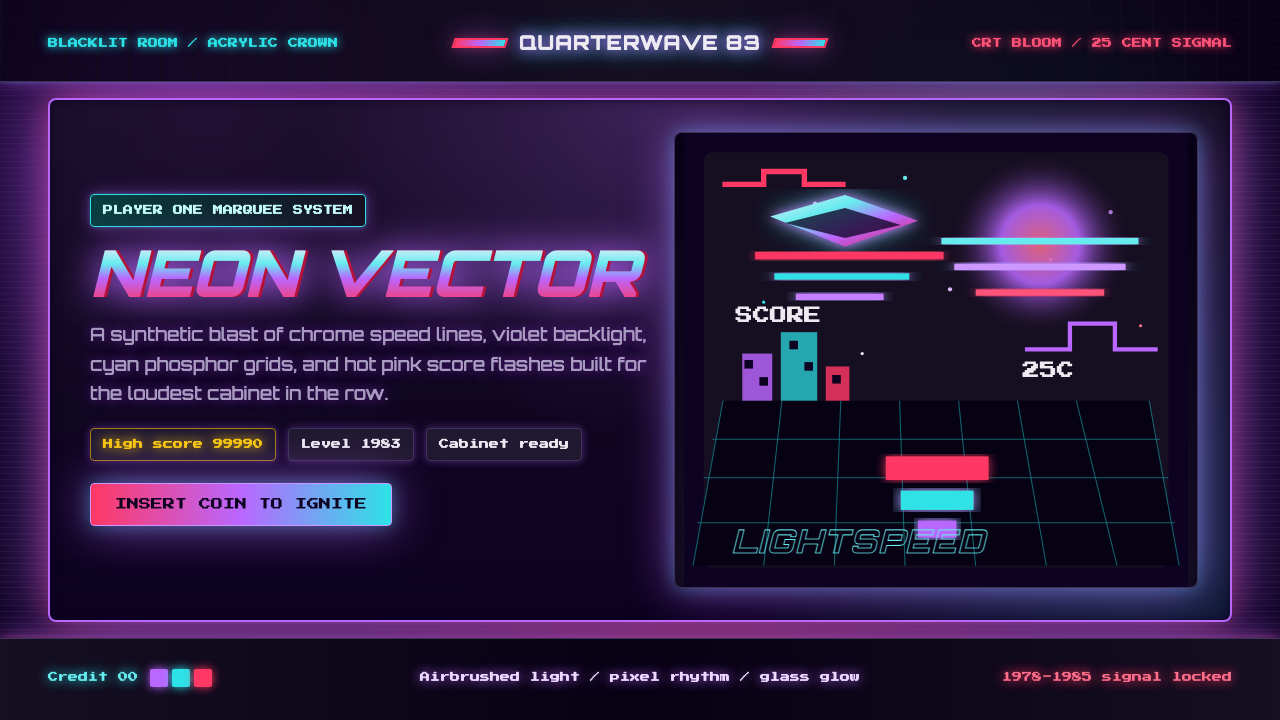 Arcade Cabinet MarqueeToo loud to ignore. Black-indigo glass, violet glow, cyan grids, hot-pink arc…