What is Tasmanian MONA Museum (2011)?
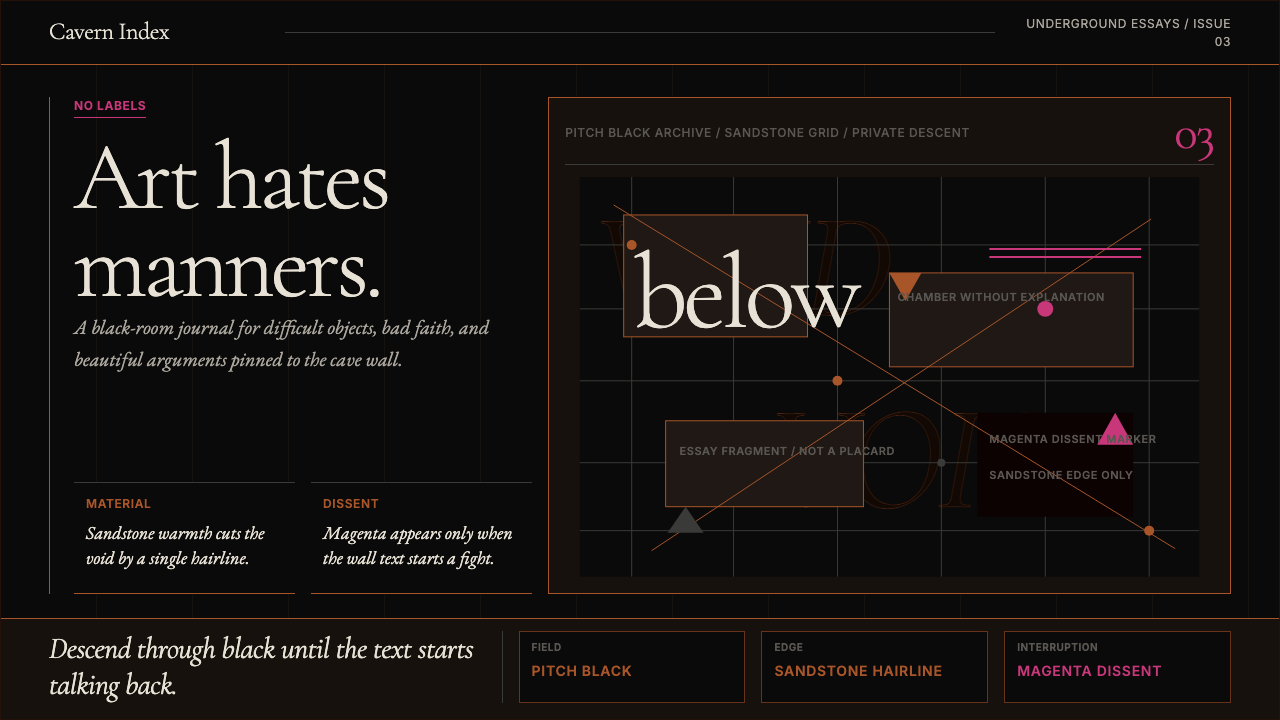
MONA is the anti-museum — a subterranean gallery carved into Tasmanian sandstone by a professional gambler, where pitch-black voids, rust-warm metal, and magenta provocations make institutional design look polite by comparison.
Tasmanian MONA Museum (2011) in brief
The Museum of Old and New Art, which opened in Hobart, Tasmania, in January 2011, is one of the most deliberately antagonistic cultural institutions ever designed. Its visual identity does not invite — it challenges. Where conventional museum branding reaches for restraint and civic legibility, MONA reaches for the darkness of a cave, the weight of geological time, and the confrontational wit of its founder's exhibition wall labels, which routinely mock the conventions of art-world commentary.
MONA's aesthetic vocabulary runs on opposites held in tension: vast black voids against single hairline traces in the warm tone of the surrounding sandstone; silence punctuated by magenta provocations; the ancient and the contemporary occupying the same underground space. The result is a visual system that feels both immovable — rooted in Triassic rock — and willfully transgressive, as though the museum is daring you to take offence.
At its core, the MONA aesthetic is an argument about what cultural authority looks like when it refuses all the usual markers of cultural authority. There are no grand marble facades, no gilt lettering, no cream-coloured walls offering neutral ground for art to speak. Instead the space descends underground, offers darkness as its primary welcome, and uses the friction between minimal restraint and editorial aggression as its defining visual character.
Where does Tasmanian MONA Museum (2011) come from?
MONA emerged from the singular vision of David Walsh, a Hobart-born professional gambler who built a fortune through mathematical card-counting and betting systems. Walsh is not an art-world insider; he is a self-described outsider who came to art through obsessive personal collecting, drawn to works that deal with sex, death, and time — themes he describes as the only subjects serious enough to justify a museum. His personal collection, assembled over decades, became the core of what would eventually open as MONA.
The building itself was designed by Nonda Katsalidis, the Melbourne-based architect, on Walsh's Moorilla Estate winery property at Berridale, a peninsula jutting into the Derwent River north of Hobart. Katsalidis excavated three levels into the sandstone cliff, creating 8,000 square metres of gallery space that descends from ground level into the rock. The decision to go underground was not simply an engineering choice — it was an aesthetic and philosophical one. The descent underground places the visitor in a fundamentally different relationship to light, to orientation, and to institutional expectation.
The museum's identity was shaped by creative director Leigh Carmichael and designer Mark Fraser, working in close collaboration with Walsh's curatorial instincts. Walsh's own voice — irreverent, intellectually confrontational, deliberately vulgar at times — runs through the institution's entire communications strategy. The wall labels, which Walsh writes himself or commissions in his register, are called 'Art Wanks': a label that signals in advance that the institution will not perform reverence for its own collection.
The 2017 opening of the Pharos wing — named for the ancient lighthouse of Alexandria — brought new gallery space and refined the visual system. The Pharos extension reinforced the institution's commitment to darkness as atmosphere, to geological material as texture, and to the contrast between the prehistoric substrate of the building site and the contemporary and ancient artworks housed within it. By this point the MONA visual language had cohered into a recognizable and widely imitated set of principles that extends well beyond museum design into editorial, hospitality, and digital interface design.
What defines the Tasmanian MONA Museum (2011) look?
Dominant Darkness
The ground note of the MONA system is an uncompromising near-black that functions as the primary surface for almost all visual communication. This is not the dark-mode convention of contemporary interface design, which uses dark backgrounds for energy efficiency or aesthetic preference. It is something more philosophical: darkness as the natural state of underground space, darkness as the condition that makes all other visual elements feel like they have been excavated into visibility rather than placed on top of a surface.
Sandstone Hairline Traces
Against the dominant black, MONA deploys extremely fine lines in the warm, earth-toned register of Tasmanian sandstone. These hairlines — so thin they read almost as cracks or geological veining rather than designed marks — serve a dual function. They provide structural delineation in layouts and interfaces without breaking the overall darkness of the surface, and they carry the literal material of the building site into the graphic language of the institution. The effect is of something etched rather than printed.
Magenta Provocation
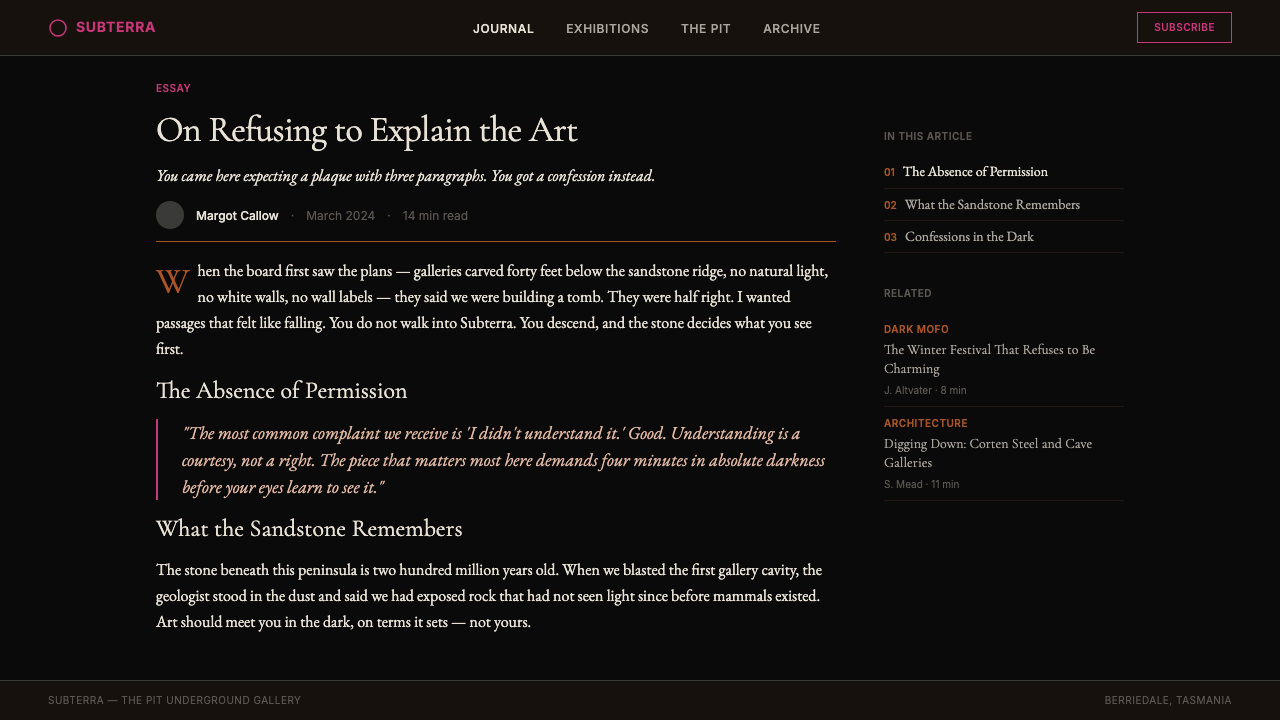
The primary chromatic event in the MONA system is magenta: a color chosen not for its conventionally pleasing qualities but for its confrontational intensity. Against black, magenta reads almost aggressively — it cannot be ignored, it will not recede, and it has none of the cultural associations of institutional blues or civic greens. It arrives in the system as an editorial accent, as a highlight for text that Walsh particularly wants you to notice, as a marker of the institution's refusal to be mistaken for a conventional cultural venue.
Corten-Register Warmth
The only warmth in the MONA system comes from a color register drawn from oxidized steel and aged sandstone — the rust-browns and amber-ochres associated with Corten weathering steel, which was used extensively in the building's construction. This warmth is not decorative; it is material. It refers directly to the building's physical fabric and to geological time. The presence of this warmth prevents the visual system from reading as cold corporate darkness and instead grounds it in something organic, durable, and site-specific.
Dense Italic Editorial Typography
Where most museum typography reaches for authoritative upright roman letterforms, MONA's editorial voice consistently favors italic serif type, set with a density that recalls academic journals or the tightly argued prose of a philosophical polemic. The italic leans — a literal inclination that mirrors the institution's posture of irreverence. Text appears not as caption but as argument; not as label but as commentary. The typographic density is part of the message: MONA assumes an engaged reader, not a passive viewer.
Asymmetric Composition with Deliberate Imbalance
MONA layouts are asymmetric not in the modernist sense — where asymmetry is a form of dynamic balance — but in a more confrontational sense, where elements are placed to create productive tension or even discomfort. A headline may crowd into a corner; an image may be cropped in a way that refuses conventional framing; whitespace — where it appears — is not generous breathing room but deliberate void. The overall effect is compositional anxiety held just short of chaos.
Anti-Institutional Voice as Visual Element
Perhaps MONA's most distinctive design feature is one that operates primarily through language rather than form: the institution's own voice — irreverent, self-aware, sometimes scabrous — functions as a visual element in its own right. The tone of text in the space, on the app, in print materials, and on signage is so consistent and so different from institutional norms that it becomes part of the system's visual identity as surely as the color palette. The words and the design are inseparable.
Who shaped Tasmanian MONA Museum (2011)?
Walsh is the founder, primary funder, and curatorial spirit of MONA. His personal philosophy — that art should provoke rather than reassure, and that the museum as an institution has historically been a mechanism for social control rather than liberation — drives every aspect of the institution's design and communication. Walsh writes or personally commissions the wall labels and is the editorial voice behind MONA's communications. His willingness to be publicly self-critical, self-mocking, and confrontational within his own institution is what gives the MONA brand its particular edge: it is a brand built on the character of a single, highly idiosyncratic individual rather than on any conventional institutional positioning.
The Melbourne architect responsible for the building's form, Katsalidis resolved the central design challenge of MONA: how to create an art museum inside a cliff without subordinating the architecture to the demands of conventional gallery white-cube thinking. His decision to descend through three levels into the sandstone, and to allow the raw geological material of the excavated walls to remain visible and textural, was the gesture that made everything else in the MONA aesthetic possible. The building is not a neutral container; it is the first and most permanent artwork in the collection.
As creative director, Carmichael was responsible for translating Walsh's curatorial instincts and personal voice into a coherent visual and communications system. The challenge was considerable: maintaining the rawness and irreverence that Walsh insisted on while producing a system legible enough to function across print, digital, wayfinding, and hospitality contexts. Carmichael's solution was to let the tension between darkness and provocation do the structural work, and to keep typographic and color constraints tight enough that the variability in tone reads as intentional character rather than inconsistency.
Fraser worked as the primary designer giving form to the MONA visual identity, operating within the framework established by Carmichael and Walsh. His contribution was in the specific graphic choices that make the system distinctive at a micro level: the weight and placement of hairlines, the specific rendering of the magenta accent, the treatment of typography in a way that serves the institution's editorial voice without compromising legibility. The result is a visual identity that appears simple but contains a precise set of calibrations that are difficult to imitate without understanding the underlying philosophy.
Varenne served as MONA's founding curator, responsible for shaping the early exhibition program that established what kind of art institution MONA would be. His curatorial choices — emphasizing works that deal with mortality, sexuality, time, and taboo — gave coherence to Walsh's eclectic collection and confirmed that the darkness of the architecture was not merely aesthetic but thematic. A curator always shapes the visual environment of a museum through selection; at MONA, Varenne's selections defined the emotional register that the design language would need to sustain.
How do you use Tasmanian MONA Museum (2011) today?
The MONA aesthetic is one of the most coherent dark-luxury systems to have emerged from a cultural institution, and its influence on editorial, hospitality, and digital design has been substantial. Applying it successfully requires grasping what the system is actually doing: using darkness not as atmosphere but as philosophy, using color provocation not as branding but as editorial argument, and letting the tension between restraint and aggression do the compositional work.
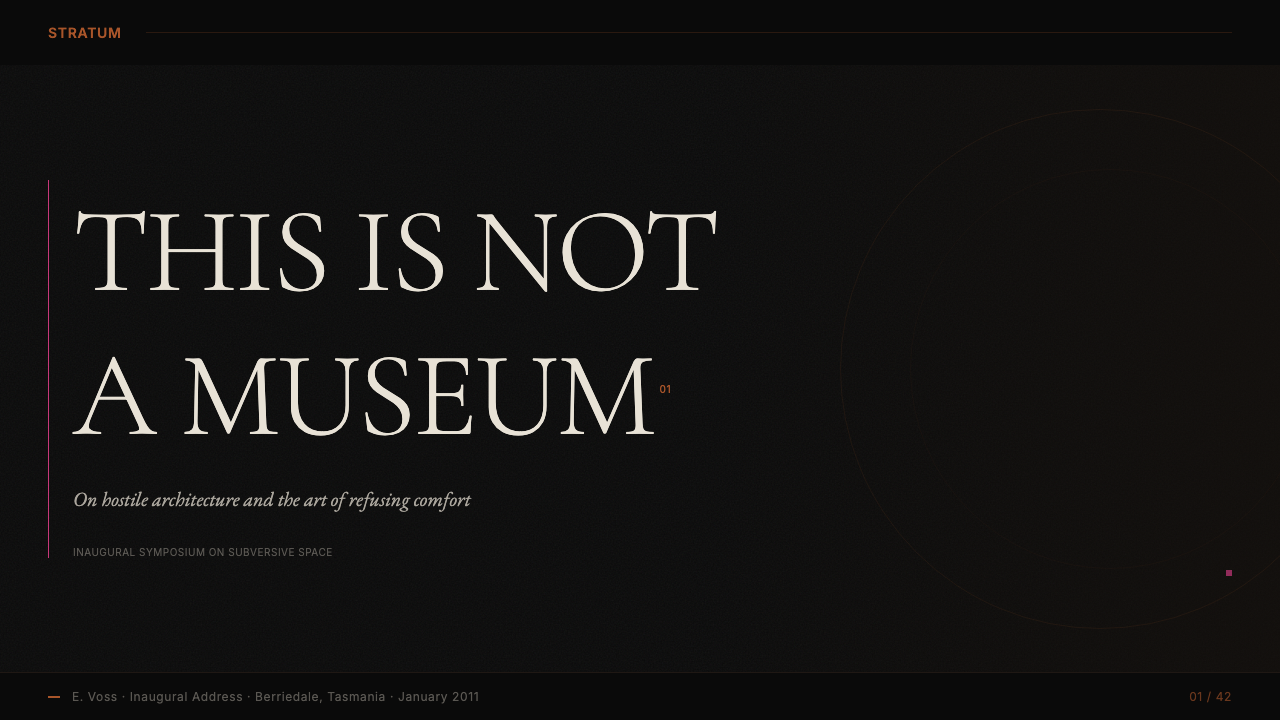
For presentation slides and editorial materials, the MONA system works powerfully on cover pages and section dividers. A cover built on a deep black ground, with a title in dense italic serif type and a single magenta accent — perhaps on a pull quote or a key phrase — immediately establishes a register of serious, confrontational intelligence. Content pages should resist the temptation to introduce warmth or relief through light backgrounds; the system's logic depends on maintaining the primary darkness throughout, punctuated only by the occasional hairline or accent color. Data and diagram slides benefit from treating the information graphically as geological strata — horizontal bands of varying density on a dark ground, with the magenta reserved for the single most important data point.
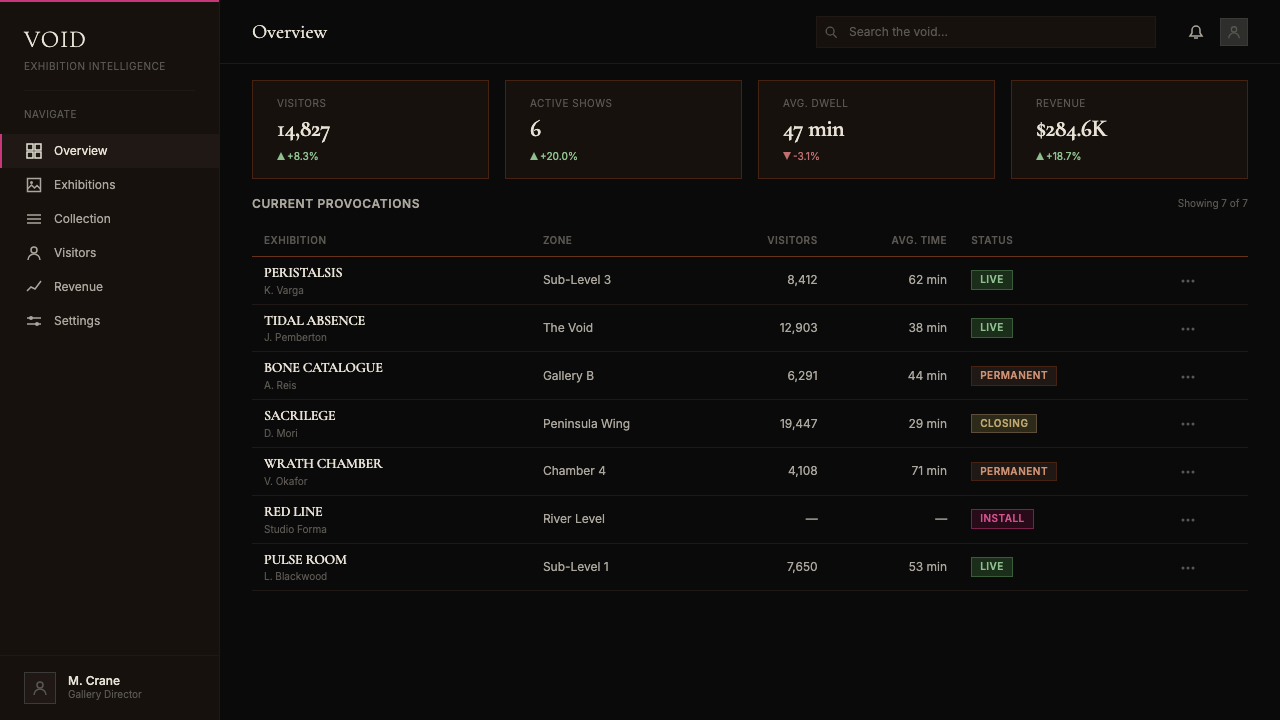
For web and digital interfaces, the MONA approach suits editorial platforms, cultural institutions, artist portfolios, and any context where the audience is self-selecting and intellectually engaged. The system does not serve e-commerce contexts well — it is too confrontational for casual browsing, and the darkness works against the legibility demands of dense product grids. Where it works: a dark-mode dashboard where the primary actions are highlighted in a warm oxidized-steel accent rather than a conventional blue; an editorial publication where headlines are italic serif on black and body text appears in a slightly warmer near-white; a cultural organization's landing page where the absence of decorative imagery makes the typography itself the event.
For hospitality and physical space applications — the context in which MONA's identity was originally developed — the system's most powerful elements are tactile and material rather than graphic. The principle of using the building's own geological material as the warmth source translates into any context where the finishes, textures, and materials of a physical environment can be allowed to provide contrast to a dominant darkness. A hospitality brand deploying this approach would lean on stone, aged metal, and leather rather than paint or fabric for its warm tones, and would let the graphic vocabulary be austere and editorial rather than welcoming.
A common mistake when applying the MONA system is to treat the magenta accent as a general-purpose highlight color and use it frequently across layouts. The system's power comes from the restraint with which the accent appears — when it is everywhere, it loses its confrontational quality and becomes decoration. The magenta should feel like an interruption: rare, deliberate, and pointed. Similarly, the editorial density of the typography only functions in contrast to extensive dark voids; if the darkness is relieved too frequently by content, the system collapses into a generic dark editorial aesthetic without the underground specificity that gives MONA its character.
Tasmanian MONA Museum (2011) — FAQ
What makes MONA's aesthetic different from generic dark-mode design?
Generic dark-mode design uses darkness as a surface preference — a way to reduce eye strain, signal sophistication, or differentiate from a light-mode default. MONA's darkness is conceptual: it is the darkness of underground space, of geological time, of a space that has been excavated rather than built. The difference shows up in the details. Generic dark mode typically uses near-dark greys and introduces warmth through blue or purple accents; it softens edges and uses gradient overlays freely. MONA's system is harsher and more principled: the black is near-absolute, the warmth comes from geological material rather than chromatic choice, and the magenta accent is used with a deliberateness that signals argument rather than mood.
Is the MONA visual system suited to brands that want to appear approachable and friendly?
No, and that is the point. The MONA aesthetic is deliberately built on the refusal of approachability as a design value. It assumes a willing, curious, and intellectually engaged audience; it actively filters out those who prefer comfort and reassurance. For brands whose success depends on reducing friction in customer acquisition — consumer products, retail, family services, health applications — this system is entirely wrong. For brands whose differentiation depends on projecting intellectual confidence, editorial authority, or deliberate exclusivity — certain cultural institutions, specialist publishers, luxury hospitality, high-end creative services — it works because it signals that the institution is not trying to please everyone.
How does the MONA identity handle digital wayfinding and navigation?
MONA's approach to wayfinding — both physical and digital — treats navigation as an editorial act rather than a service function. In the physical museum, the visitor is deliberately disoriented by the underground descent and the absence of conventional signage clarity; finding works is part of the experience rather than a friction to be eliminated. Digitally, this translates into interfaces where the navigation is typographic and dense rather than icon-based and open, where primary actions are indicated by the magenta accent rather than by conventional button affordances, and where the overall experience of use carries some of the productive difficulty of the physical space.
Can the MONA system work in a light-background version?
Technically possible, practically ill-advised. The MONA visual system's coherence depends on the darkness as a founding condition, not as a stylistic option. On a light background, the magenta accent loses its confrontational weight — it becomes merely unusual rather than aggressive. The sandstone hairlines, which work against black because they read as cracks in a solid dark surface, lose their geological specificity against a light ground and become conventional fine lines. The dense italic type, which works against darkness because it suggests text being illuminated rather than printed, reads very differently against white. You could technically apply the color relationships and typographic choices to a light-background system, but you would be borrowing the surface features of MONA without its animating logic.
What is the relationship between MONA's design and the art it houses?
Unusual among cultural institutions, MONA's design is not neutral toward its collection — it takes a position. The darkness, the provocation, the density, the refusal of institutional warmth all express curatorial choices: that this is art dealing with mortality, sexuality, time, and taboo; that it will not be softened for a general audience; that the experience of encountering it should carry some of the discomfort of confronting difficult truths. Most museum design tries to step aside so the art can speak; MONA's design speaks in the same register as the art, which is why the two cannot be separated without diminishing both.
Related design styles
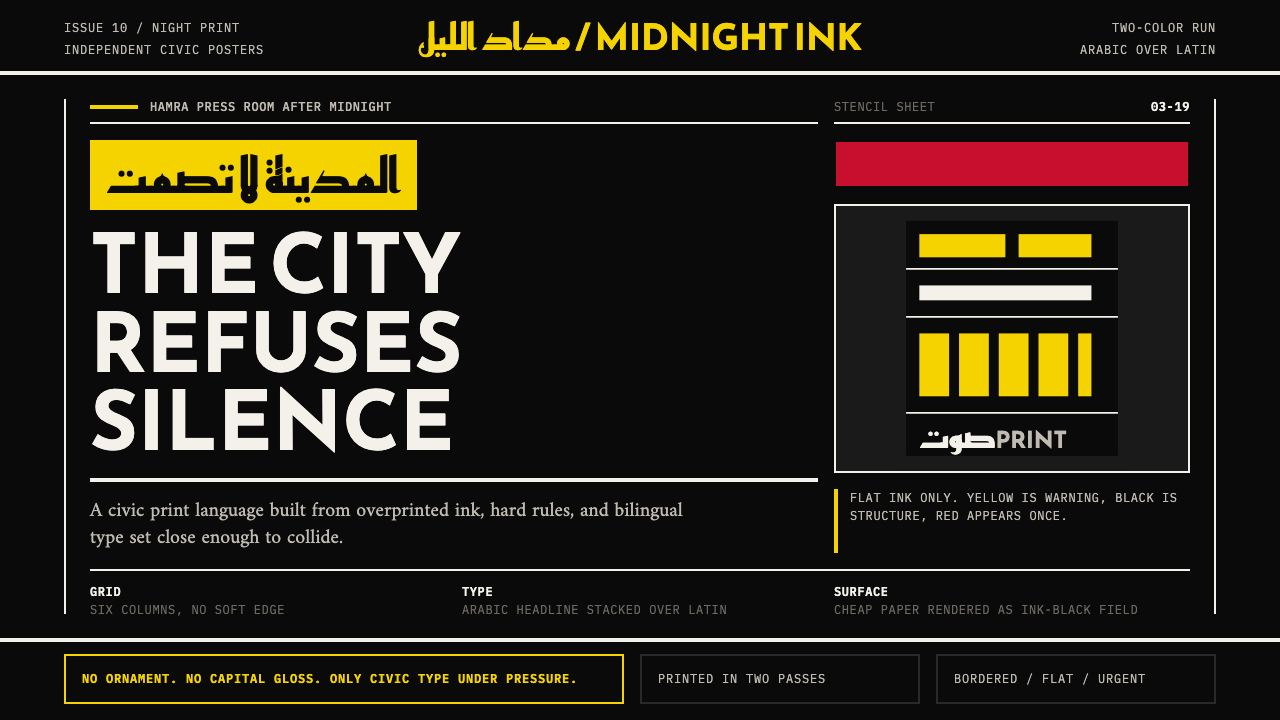 Beirut Indie Graphic DesignCivic type as protest. Sulfur yellow Arabic blocks collide with ink-black pos…
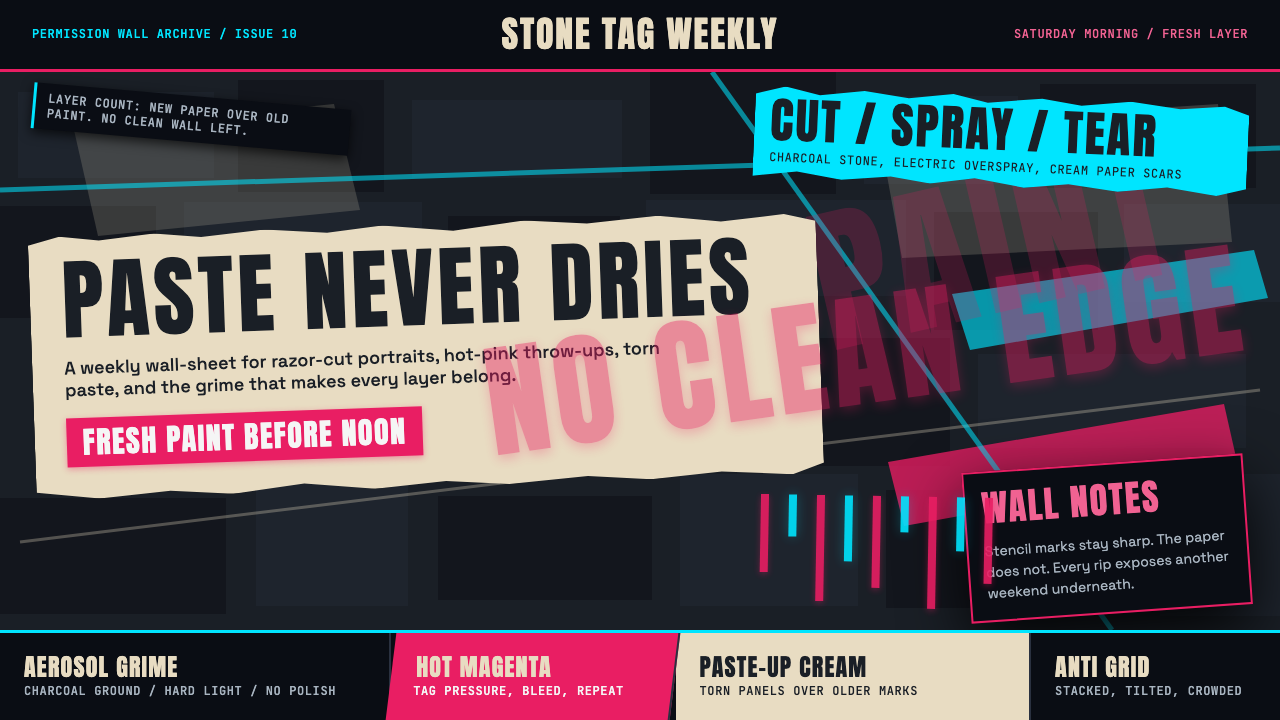 Melbourne Laneway Stencil (Hosier Lane)Permission-wall maximalism. Magenta tags slash charcoal bluestone and cream p…
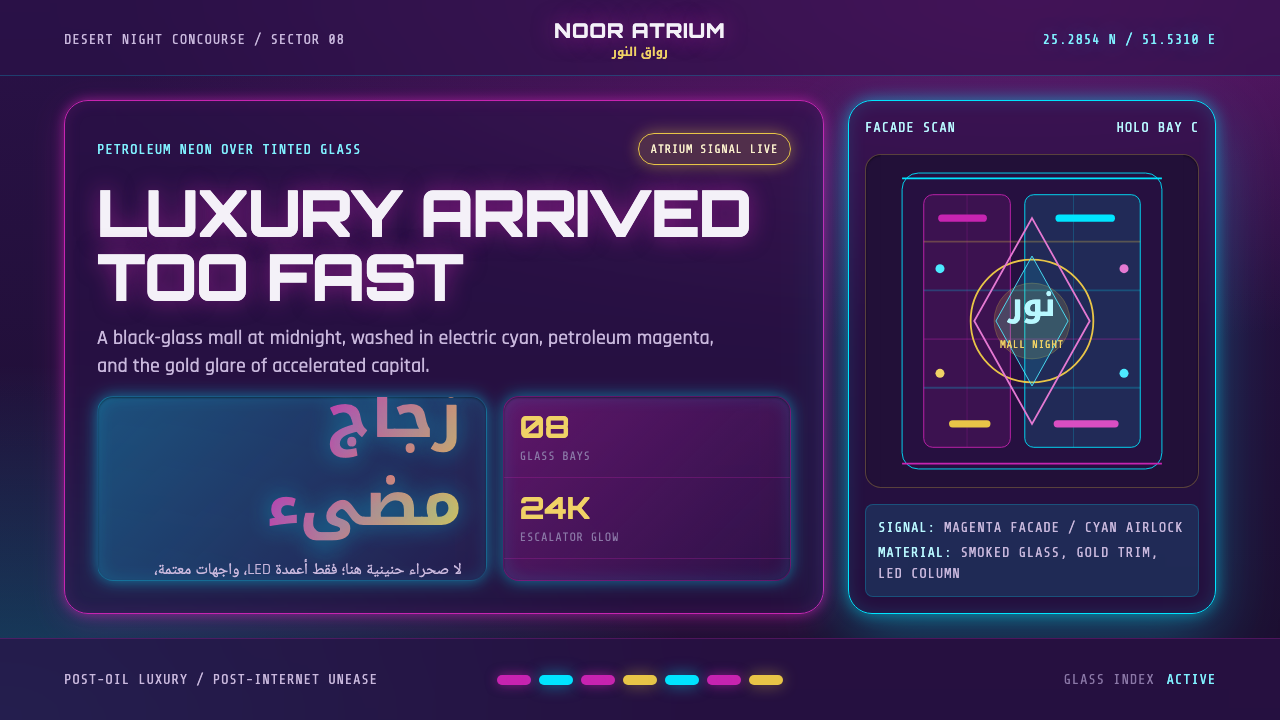 Gulf FuturismLuxury feels accelerated. Magenta-cyan neon cuts glass grids over purple-blac…
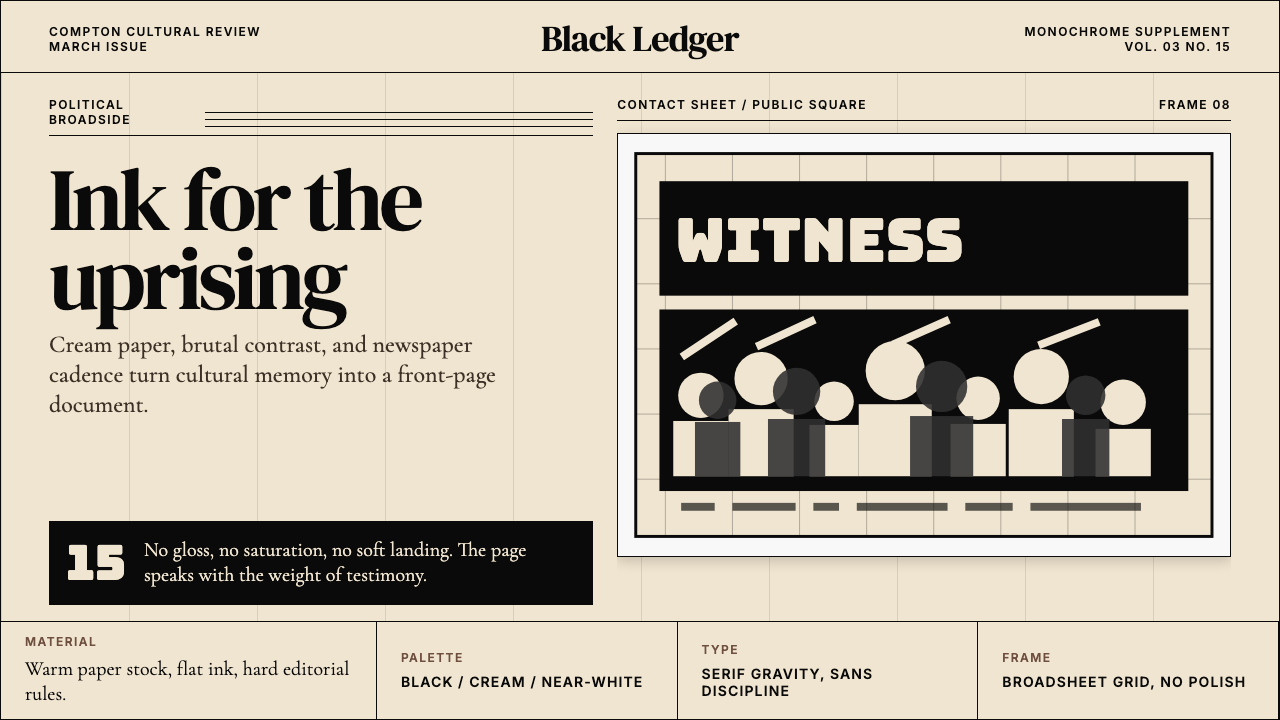 Kendrick — To Pimp a ButterflyPolitical weight, printed cold. Cream paper, hard serif type, monochrome crow…
 Money Heist (La Casa de Papel)Resistance becomes spectacle. Arterial red cuts through graphite grids and ta…
 Banksy Stencil GraffitiProtest is reduced to a cut mark. Anton black on brick cream, one scarlet red…