What is Banksy Stencil Graffiti?
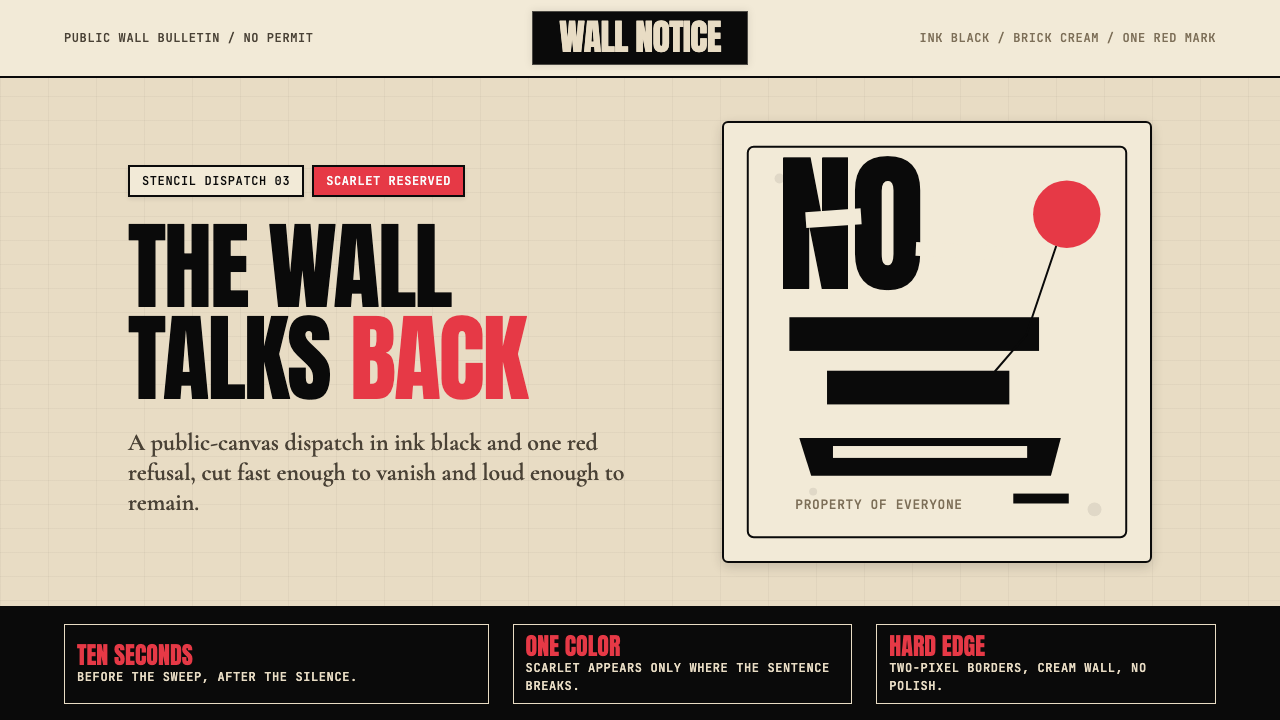
Banksy reduced political rage to a stencil's edge — monochrome black silhouettes on brick-wall cream, with a single scarlet interruption that says everything the spray can cannot.
Banksy Stencil Graffiti in brief
Banksy Stencil Graffiti is the most recognized street-art idiom on earth: black cut-cardboard silhouettes sprayed onto cream or aged plaster walls, punctuated by a single saturated accent — almost always a deep scarlet red — used with surgical restraint to mark the one object that carries the image's emotional payload. The palette is doctrinally limited. Black governs every contour and figure; the brick-wall ground does not compete; red appears once, and only once, per composition.
The system borrows the economics of protest printing. A stencil can be cut in an hour and deployed in ten seconds before dawn; the imagery must therefore communicate instantly, at reading distance, and again later in a photograph reproduced at thumbnail size. This constraint produces a visual language that is binary by necessity — ink or no ink, silhouette or void — and the discipline that follows from that binary turns out to be remarkable: nothing extraneous survives the cut.
As an applied design aesthetic, the style translates a street-art practice into a graphic system governed by three rules: near-total monochrome, silhouette as the primary form-making tool, and a single saturated color used exclusively for emotional punctuation. The result is simultaneously austere and arresting — the visual equivalent of a sentence that ends with a word you did not expect.

Where does Banksy Stencil Graffiti come from?
Banksy emerged from the Bristol underground graffiti scene of the early 1990s, a city whose port geography — warehouses, railway arches, canal walls — offered abundant surfaces and whose art school culture provided a critical audience. Early Bristol graffiti was dominated by the American freehand wildstyle tradition: elaborate multicolor lettering produced with aerosol cans over many minutes in relative safety. Banksy, reportedly frustrated by the time exposure required and the risk of arrest that came with it, turned to stencils around 1992 after an incident in which he hid under a train for more than an hour to avoid police and noticed the stenciled lettering on the undercarriage. The practical solution became an aesthetic philosophy.
The formal lineage of stencil street art runs through Blek le Rat, the Paris-based French artist (born Xavier Prou) who began cutting and spraying figurative stencils on Parisian walls in 1981. Blek was the first to bring rats into the street-art vocabulary — anonymous, ubiquitous, ungovernable — and the first to treat the stencil not as a labeling device but as a medium for narrative imagery. Banksy has acknowledged Blek le Rat's influence directly, and the two share a commitment to the silhouette as a unit of meaning: a figure reduced to its essential shape communicates across languages and literacy levels in a way that no lettered slogan can.
The palette — monochrome black on aged wall, one scarlet accent — was not a branding decision but a production constraint that calcified into doctrine. Black aerosol on pale or cream masonry reads clearly in low light and photographs sharply in daylight. A second color, applied from a second can, doubles the time on the wall and doubles the risk. Banksy's red became his signature precisely because it was used so sparingly: the balloon in 'Girl with Balloon' (Waterloo Bridge, London, 2002), the flower bouquet held by the masked rioter in 'Flower Thrower' (Jerusalem, 2003), the bloodstained handprints. Each red element appears once per image, and it marks the hinge on which the work's meaning turns.
By the mid-2000s, the style had migrated off walls entirely. Banksy's 2006 Los Angeles show 'Barely Legal' and his clandestine placement of modified artworks inside major museum collections — the British Museum, the Metropolitan Museum of Art, the Louvre — demonstrated that the visual grammar of street stencil could operate in any context, on any surface, including canvas and print. Steve Lazarides, who served as Banksy's agent and photographer through the early 2000s, documented and distributed the work globally, giving the stencil aesthetic its second life as a reproducible graphic system. The 2013 New York residency 'Better Out Than In' — one new piece per day for a month — cemented the visual language as an international idiom recognizable by audiences with no connection to graffiti culture.
The wider movement encompasses practitioners well beyond Banksy himself. King Robbo, whose Banksy-Robbo feud over a London canal wall became a defining episode in street-art history, represented the freehand aerosol tradition that stencil culture disrupted. Other artists working adjacent to Banksy's idiom — including Shepard Fairey with his OBEY campaign and JR with his large-scale photo-wheat-pastes — share the commitment to public space as medium and the monochrome-plus-accent color logic, even when their formal techniques differ. The stencil street-art movement is best understood not as a single artist's style but as a set of constraints — speed, reproducibility, limited materials, adversarial context — that shaped a visual grammar shared across a generation of practitioners.
What defines the Banksy Stencil Graffiti look?
Palette
The color system is one of the most restricted in applied design: near-black for all stencil forms, an aged cream or pale masonry tone for the ground, and a single deep saturated red reserved solely for the image's emotional focal point. No secondary colors, no gradients, no tints or shades between pure black and the ground tone. The palette does not describe a mood — it enforces one. The moment red appears, the eye goes there first and last.
Silhouette
The silhouette is the fundamental unit of the visual language. Every figure — child, soldier, rat, riot policeman — is reduced to its most recognizable outline and filled with flat black, with no internal modeling, no crosshatching, no tonal variation. The discipline of silhouette forces the designer to retain only the features that are essential for identification; anything else is cut away. This reduction is also why the images survive at any scale, in any reproduction quality, on any surface.
Single Accent
The red accent — when present — is used exactly once per composition and applied to a single object that functions as the image's interpretive key. It is never used as decoration, pattern, or background wash. It is the comma or exclamation mark in a sentence otherwise written in black and white. Designs that use red twice, or use it for structural framing, violate the logic of the system and dilute the accent's communicative force.
Texture and Ground
The background is not a clean white digital field. It carries the memory of its surface — rough plaster, aged brick, weathered concrete, yellowed paper. This texture is not decorative; it is the context that makes the stencil legible as a gesture of intervention rather than a packaged product. When the style is applied to screen or print, the ground should carry some organic quality: a slight grain, an uneven warmth, the suggestion of a surface that exists in the world rather than on a monitor.
Typography
When text appears, it does so sparingly and with the same stencil-cut economy as the imagery. Type should look like it was cut from card stock or sprayed through a letterform mask — slightly irregular at the edges, never smooth or digitally precise. Condensed, heavy letterforms work best because they compress information efficiently and read at a distance. The message is always short: a slogan, a caption, a date, a location. Anything longer than a short phrase belongs to the photograph, not the stencil.
Composition and Irony
Banksy compositions are built on a single structural principle: juxtapose the familiar with the subversive to produce irony. A riot policeman holding a smiley-face balloon; a child flying a kite in the shape of a surveillance drone; a rat holding a paintbrush. The visual grammar requires that this juxtaposition be immediate and legible — the viewer must understand both elements and their collision in under three seconds. This means the two halves of the image must be visually distinct enough to register separately before the mind combines them.
Context as Material
The wall is not neutral. Where the stencil is placed — on a bank, a detention center, a luxury hotel, a security barrier — is part of the image's meaning. This site-specificity translates into a design principle: the ground and context of a design are not passive backdrops but active participants. A scarlet accent on a cream ground means one thing; the same accent on a surface with a visible history or institutional association means something more complex. Applied design using this aesthetic should treat the surrounding context — a slide deck's surrounding content, a webpage's navigation and footer — as an element of the composition.

Who shaped Banksy Stencil Graffiti?
Banksy is an anonymous England-based street artist, political activist, and film director whose identity has never been officially confirmed. Emerging from Bristol's underground graffiti scene in the early 1990s, Banksy developed the stencil method as a practical response to the risk of arrest, then refined it into one of the most legible visual systems in contemporary art. Key works include 'Girl with Balloon' (2002), 'Flower Thrower' (2003), and the Walled Off Hotel in Bethlehem (2017). His 2013 New York residency 'Better Out Than In' produced one new public artwork per day for a month. The 2018 auction shredding of 'Girl with Balloon' — rigged inside the frame and triggered remotely at the moment the hammer fell — extended the stencil idiom into live performance and became one of the most discussed art events of the decade.
Blek le Rat (Xavier Prou, born 1952 in Boulogne-Billancourt, France) is widely considered the originator of stencil street art as a figurative practice. Beginning in Paris in 1981, he introduced the rat as a recurring motif — a creature that, like the urban artist, moves unseen through official spaces — and developed the use of life-size human silhouettes as a form of spectral public presence. His work preceded Banksy's by over a decade and established the core grammar: figurative stencil, urban wall, no signature but the image itself. Banksy has said that 'every time I think I've painted something slightly original, I find out that Blek le Rat has done it as well, only twenty years earlier.'
King Robbo (born Robert, died 2014) was one of the most respected figures in British graffiti culture, whose hand-painted work on a London canal wall in Camden dated to 1985 and was considered one of the oldest surviving pieces of graffiti in the city. When Banksy painted over Robbo's work in 2009 — replacing it with a stencil of a workman hanging wallpaper — it ignited a years-long public feud that crystallized the tension between the freehand aerosol tradition and stencil street art, between the graffiti writer's culture of individual reputation and the street artist's appropriation of public space for political imagery. The Robbo-Banksy conflict became the defining episode in the argument over what street art is for and who it belongs to.
Steve Lazarides served as Banksy's agent, photographer, and primary distributor from the late 1990s through 2008, a period that corresponds almost exactly with the stencil aesthetic's transition from local Bristol phenomenon to global visual language. Lazarides documented Banksy's street work systematically and sold limited print editions through his gallery operations, creating the commercial infrastructure that allowed the aesthetic to survive and propagate beyond the wall. His subsequent gallery, Lazarides Gallery (London, then international), represented a generation of artists working in dark, confrontational imagery — many of them using the stencil's economy of means — and was instrumental in legitimizing street-art aesthetics within the art market.
Shepard Fairey (born 1970 in Charleston, South Carolina) is an American street artist and graphic designer whose OBEY campaign — begun in 1989 with a sticker featuring the wrestler Andre the Giant — developed a visual language adjacent to Banksy's: bold flat forms, limited palette, reproducible stencil-and-screen-print aesthetics, and a critique of power embedded in the imagery itself. His 2008 'Hope' poster for Barack Obama's presidential campaign, reproduced in saturated red, white, and blue with a single dominant color plane per zone, demonstrated how stencil-derived graphic logic could operate at national scale. Fairey's practice illuminates the connection between street-stencil aesthetics and political poster design, a lineage that runs through Soviet Constructivism, Situationist détournement, and the Bristol underground.
How do you use Banksy Stencil Graffiti today?
Banksy Stencil Graffiti is among the most distinctive visual systems available to contemporary designers, and also among the most specific in its requirements. Applying it correctly means understanding that the style's power derives entirely from its constraints: the moment you add a third color, soften the ground, or use the red accent twice, the system loses its logic and becomes a generic dark aesthetic with protest overtones. The rules are not suggestions.
For presentation slides, the style is most effective when the constraint becomes a compositional device rather than a limitation. A cover slide works best as a large, near-full-bleed silhouette of an image directly relevant to the talk's subject — a person, an object, a scenario — centered or slightly off-center on a cream or lightly textured ground, with the title in heavy condensed type below or beside the figure. The red accent should appear only if there is a single element that must carry the entire emotional weight of the slide; if every slide has a red element, the accent loses its function. Content slides should be treated as near-minimal: a strong typographic hierarchy using only black and the ground tone, with generous margins and a restrained use of ruled lines as structural dividers. Data slides gain unusual power in this aesthetic — bar charts become architectural silhouettes when rendered in flat black against cream, and a single red bar marking the data point that matters most lands with the same force as the balloon in 'Girl with Balloon'.
For web interfaces, the aesthetic suits contexts where authority, directness, and a slight edge of confrontation are desirable — a portfolio site for a creative studio, a campaign landing page, a civic or advocacy organization's homepage. Dashboard applications can use the system by committing to a near-black typographic layer on a warm off-white ground, reserving deep red strictly for alert states or the one metric that the product considers most critical. Pricing pages work with a tier-differentiation approach: most tiers rendered in black and cream, the featured tier marked with a red accent element — a single horizontal rule, a badge, a border — that does not repeat anywhere else on the page. Navigation should be wordmark and label only; icon decoration undermines the stencil's economy of means.
For editorial and marketing work, the style functions as a short-range weapon: powerful at poster distance, demanding in its restraint, unsuited to long-form layouts where the viewer spends extended time with the page. A single-page editorial spread works well — a full-bleed silhouette image on one page, dense typographic text on the opposite page with the single red accent appearing in a pull quote or a chapter number. Marketing campaigns using this aesthetic should commit to a consistent single image per communication: one stencil, one moment, one red element, one message. The temptation to use more variety to fill campaign volume is precisely the temptation to resist.
The most common mistake when applying this aesthetic is treating the black-and-cream palette as a style choice that can be blended with other elements. Soft drop shadows, gradient overlays, smooth rounded corners, photography used as a naturalistic window, and warm illustrative texture all belong to different visual systems; their presence in the same layout signals indecision rather than design. A second, more subtle mistake is using the red accent as a brand color — placing it in the logo, the navigation, the footer, and the call-to-action button simultaneously. That diffusion destroys the accent's entire communicative logic. The red must appear once, at the point of greatest emotional weight, and nowhere else.

Banksy Stencil Graffiti — FAQ
Can this style work on a digital interface, or is it inherently a print and wall medium?
It works on digital surfaces, but it requires deliberate translation rather than direct transfer. The key adaptations are: replace the literal brick-wall texture with a warm, slightly irregular off-white ground that carries organic quality without being illustrative; render silhouette elements as flat vector forms rather than photographic cutouts; and treat interactive states — hover, active, focus — through scale or opacity change rather than color addition. The one thing that transfers perfectly is the single-accent logic: exactly one red element per screen or per major section. Digital interfaces that apply this style at its most faithful look like protest posters that happen to be interactive.
Is the aged or textured background mandatory, or can the style work on a clean white ground?
A clean white ground is possible but changes what the style communicates. The aged texture carries the implication of site — of a real surface in the world — which is what separates the aesthetic from a generic high-contrast graphic design. On a pure white ground, the stencil silhouette reads as illustration or icon design; on an organic ground, it reads as an act. For contexts where the street-art connotation must be explicit, preserve the textured ground. For contexts where the style is being used more abstractly — for its boldness and constraint — a warm near-white is acceptable as long as the cream tone remains visible rather than tipping into a neutral cool white.
How do you handle a project with multiple accent needs — for example, a data dashboard with four KPI states?
The single-accent rule is the most difficult constraint to adapt and also the most important. For multi-state applications, the honest answer is that strict Banksy aesthetics does not accommodate four simultaneously active accent states — and trying to force it produces incoherence. The practical approach is to treat red as the exclusive property of the one state that requires immediate action (critical alert, overdue item, target breached), and to handle all other states through typographic weight, scale contrast, and structural position within the black-and-cream system. A state that matters but does not require immediate action is conveyed by position and size, not color. If four genuinely critical simultaneous states are required, consider whether this aesthetic is the right system for the application.
Does the style carry political meaning that might be inappropriate for some clients?
Yes, and this is worth discussing directly with clients before committing. The Banksy stencil aesthetic is inseparable from its origins in anti-establishment political street art — it signals critique, intervention, and a certain adversarial relationship with institutional authority. For brands or organizations that are themselves institutional authorities — banks, government agencies, large corporations in regulated industries, healthcare systems — the aesthetic is likely to generate dissonance: it will read as either satirical or incoherent rather than bold. The style is best suited to organizations that have a genuine ideological alignment with the aesthetic's values: advocacy groups, independent creative studios, challenger brands, cultural institutions with a critical public mission, and technology products positioning themselves against incumbents.
What is the difference between Banksy Stencil Graffiti and a generic dark poster aesthetic?
The distinguishing features are three and all of them structural. First, the ground is organic and aged, not a designed dark background — the cream or plaster tone is a surface with history, not a brand color choice. Second, the imagery is silhouette rather than rendered illustration — flat black with no internal modeling, no shading, no line weight variation within a form. Third, the accent is singular and positional rather than decorative and repeated. A generic dark poster aesthetic might share some surface similarities — high contrast, limited palette, bold type — but it typically uses multiple accent colors, employs rendered or photographic imagery, and treats dark backgrounds as atmospheric choices rather than contextual facts. The simplest diagnostic: if the design would still make sense on a clean digital black background, it is probably not Banksy Stencil Graffiti — it is something else wearing its clothes.
Related design styles
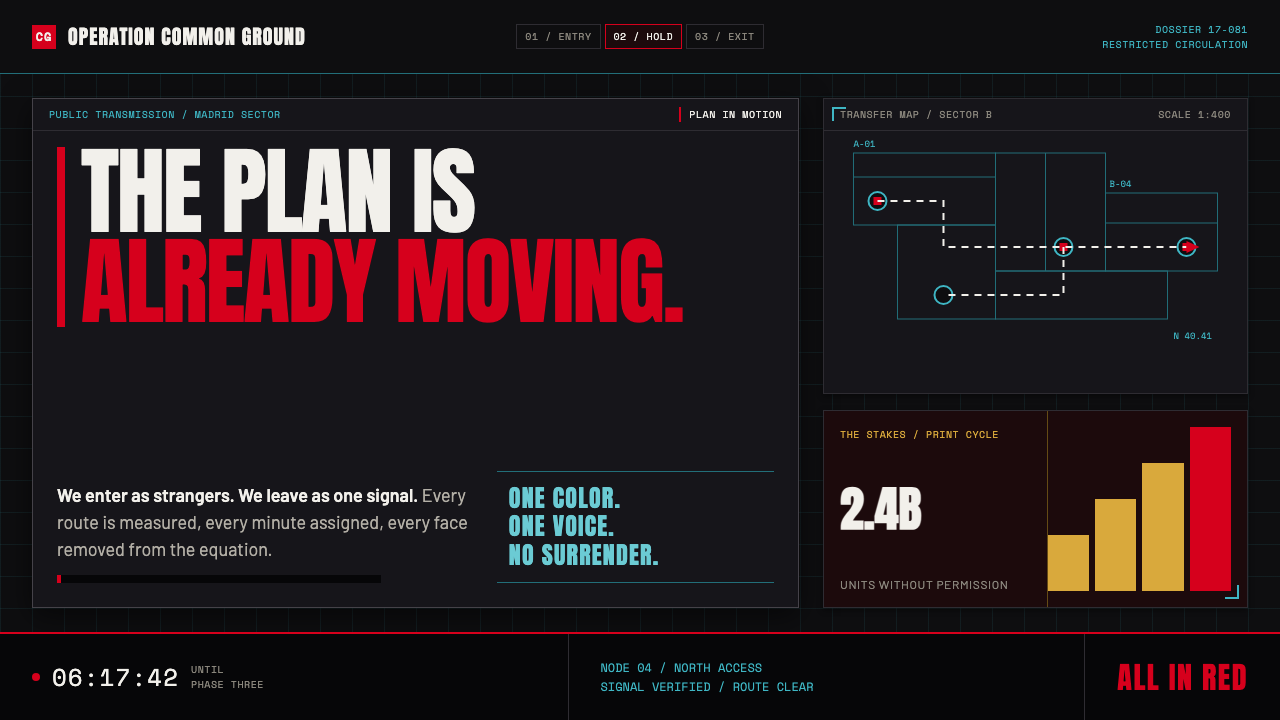 Money Heist (La Casa de Papel)Resistance becomes spectacle. Arterial red cuts through graphite grids and ta…
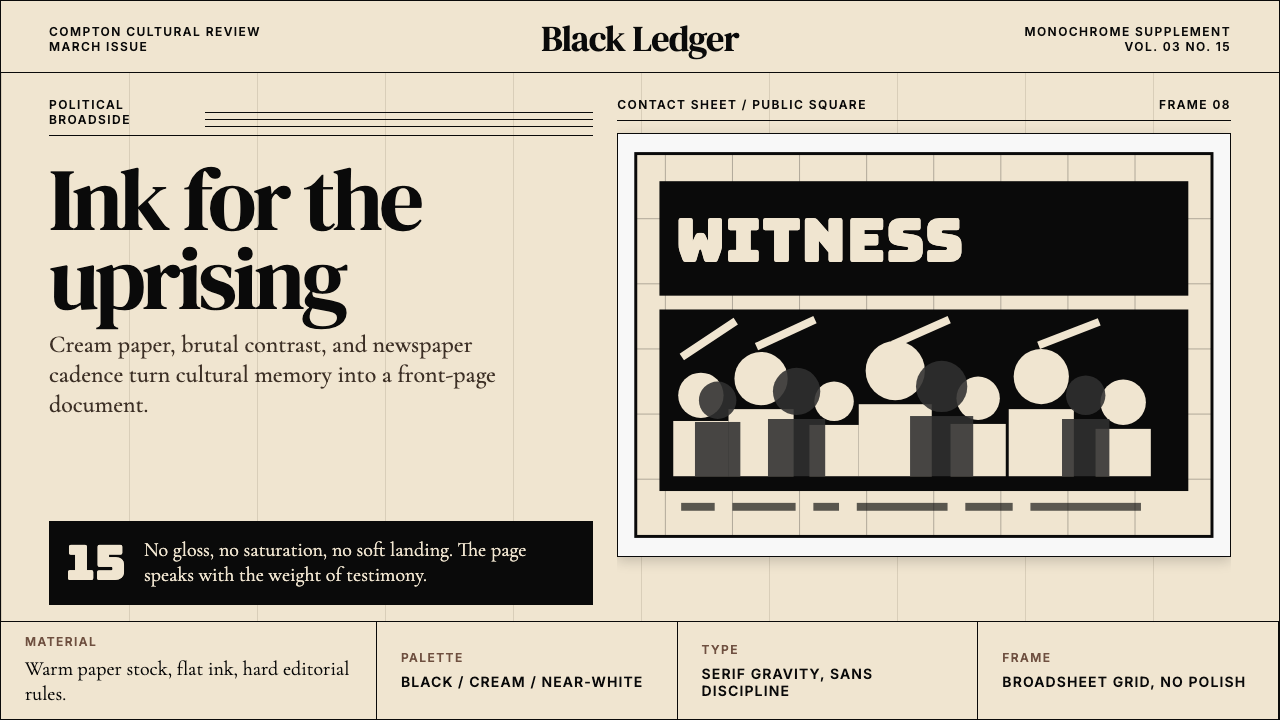 Kendrick — To Pimp a ButterflyPolitical weight, printed cold. Cream paper, hard serif type, monochrome crow…
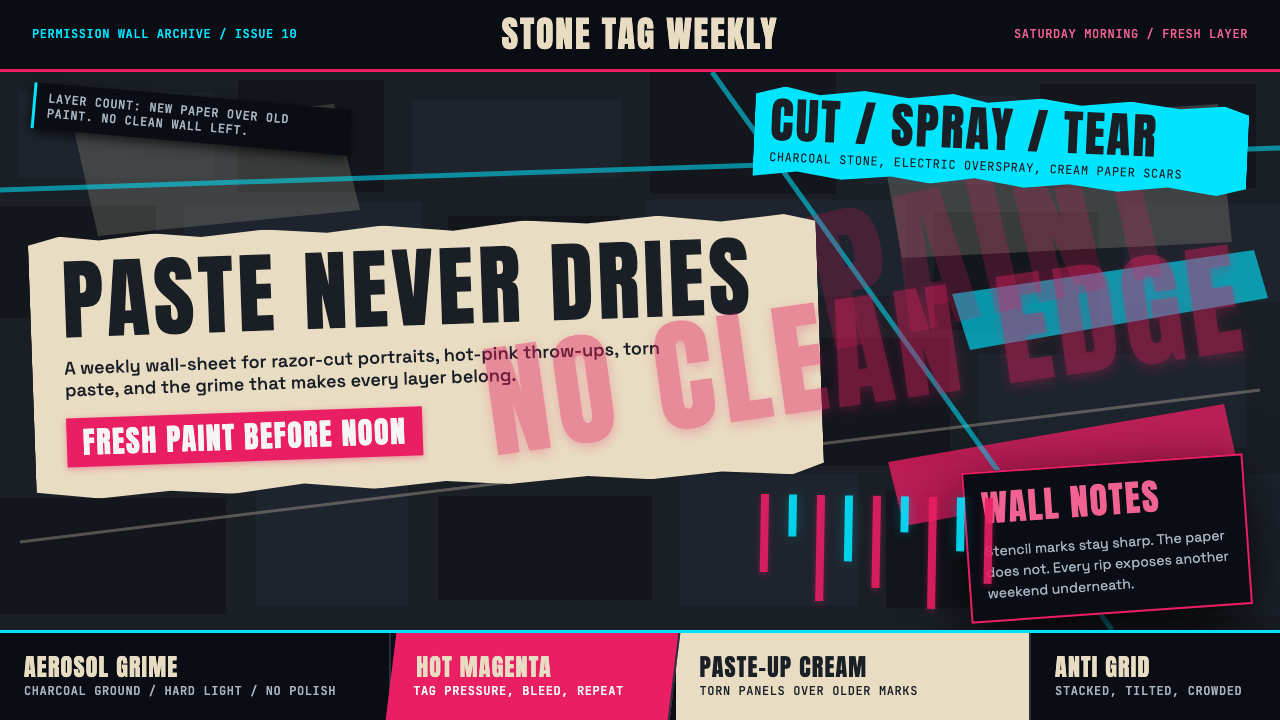 Melbourne Laneway Stencil (Hosier Lane)Permission-wall maximalism. Magenta tags slash charcoal bluestone and cream p…
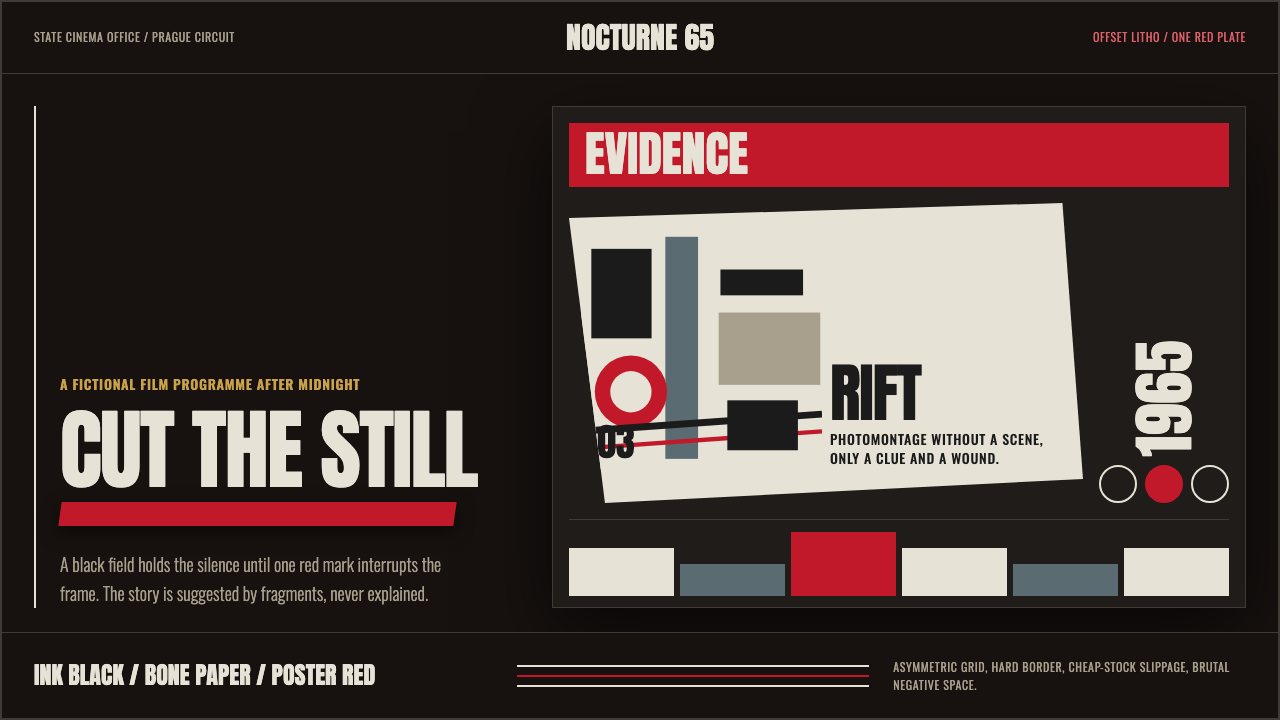 Czech New Wave PosterConcept before spectacle. Ink black, bone type and one poster-red incision fr…
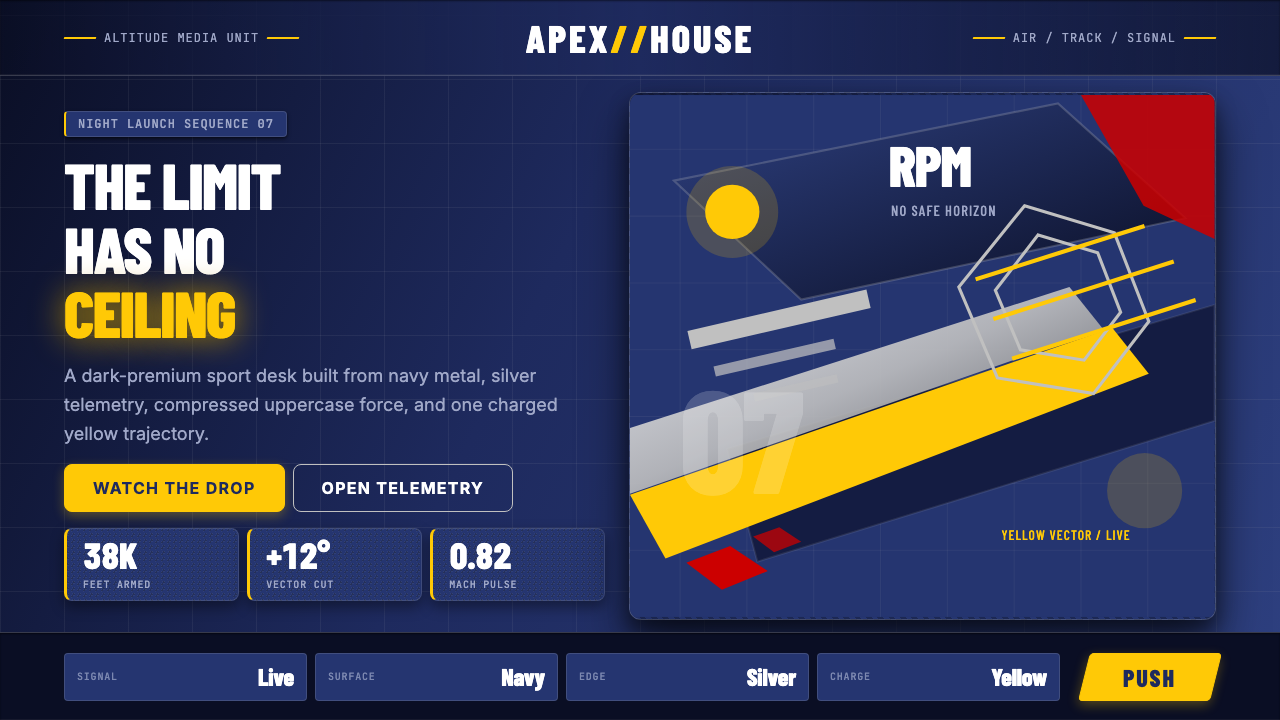 Red Bull Extreme SportsAdrenaline goes corporate. Navy chrome, condensed uppercase, yellow slashes a…
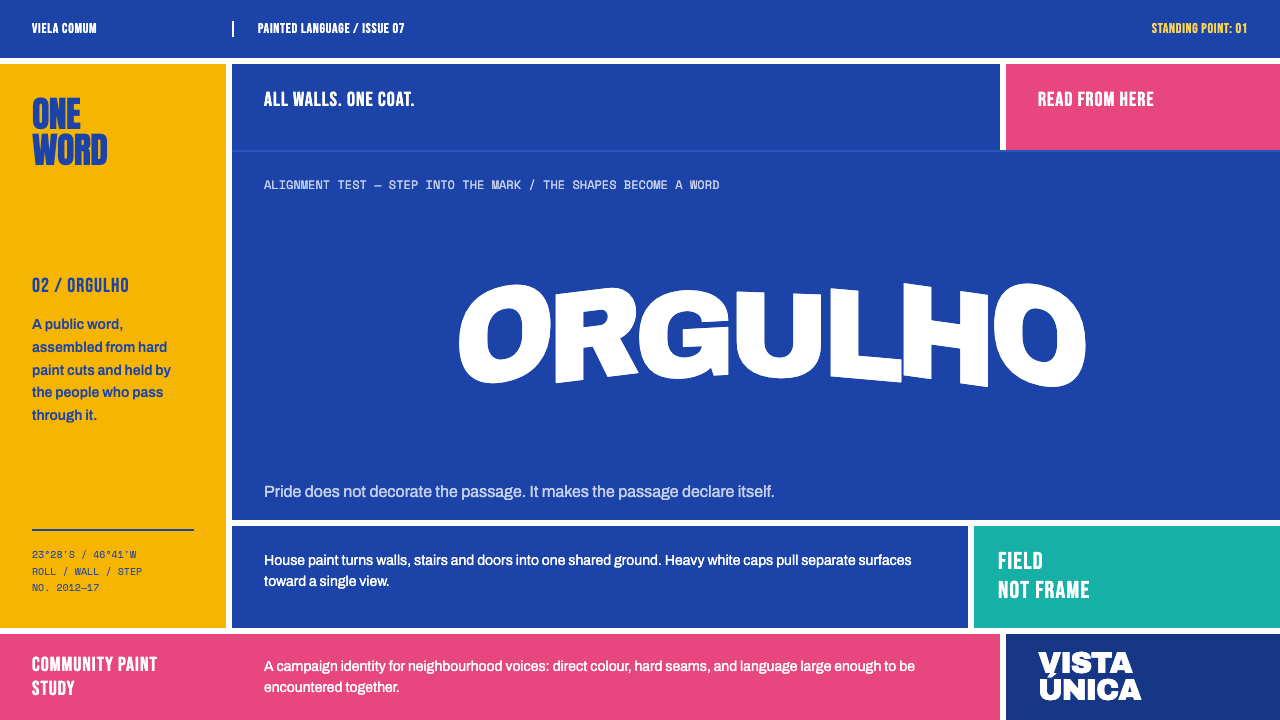 Boa Mistura Favela PaintingPride fills the passage. White Archivo Black caps snap across an ultramarine…