What is Red Bull Extreme Sports?
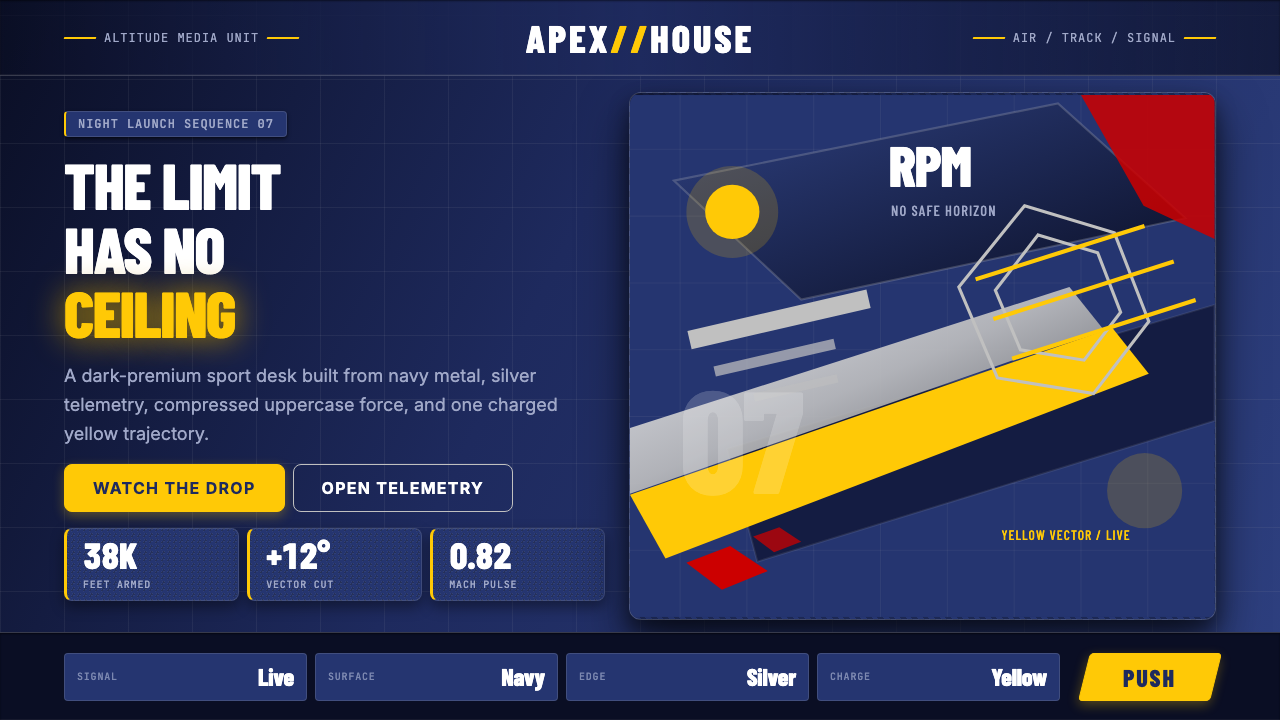
Red Bull turned an energy drink can into a global media empire by building a visual language as extreme as the athletes it sponsors.
Red Bull Extreme Sports in brief
Red Bull Extreme Sports is a corporate design identity that grew far beyond its origins as a beverage brand. The visual system is built on a foundation of deep navy and metallic silver — colors that read as premium, authoritative, and slightly dangerous — punctuated by a charging-bull yellow that signals raw energy. This palette is not playful or casual; it is the color of a helmet, a sponsorship banner, a race livery. Against these corporate anchor colors, extreme-sports photography of humans doing genuinely impossible things — jumping from the stratosphere, racing open-wheel cars, cliff-diving into Croatian coves — provides the emotional charge that the brand's carefully controlled geometry cannot supply on its own.
The typographic approach is built on condensed, uppercase letterforms — forms that feel compressed under pressure, as if the letters themselves are aerodynamic. Nothing is decorative; everything is maximally legible at speed, whether read on a racing car at two hundred kilometers per hour or glanced at on a broadcast lower-third. Layout geometry leans angular and diagonal: slashes, chevrons, skewed photographic crops, wedge-shaped divisions. The cumulative effect is a brand that communicates momentum, controlled aggression, and the consistent message that physical and human limits are obstacles to be overcome rather than respected.
What makes the Red Bull visual identity culturally interesting is its unusual position between corporate precision and subcultural authenticity. It does not look like a traditional consumer goods brand, but neither does it look like an underground sports culture. It occupies a third register: the media company that owns the events it broadcasts, the sponsor that employs the athletes it features, the publication that covers the sports it funds. This vertical integration is visible in the design — it is simultaneously a brand mark and a production house identity, as comfortable on the side of a Formula One car as on a long-form documentary title card.

Where does Red Bull Extreme Sports come from?
Red Bull was founded in 1987 when Austrian entrepreneur Dietrich Mateschitz partnered with Thai businessman Chaleo Yoovidhya to bring a reformulated version of the Thai energy drink Krating Daeng to the European market. The brand launched first in Austria and struggled in early market tests — it was, Mateschitz reportedly said, one of the least successful product launches in history. Within a decade, it had become the defining energy drink of the late twentieth century, with a visual identity that had evolved from a simple silver can with two red bulls charging toward a golden sun into something far more systematic and media-oriented.
The visual identity matured through the 1990s and 2000s alongside the brand's sponsorship of extreme sports, which was not incidental to the brand but constituted its core marketing strategy. Red Bull did not advertise in the conventional sense — it owned events. The Red Bull Flugtag, the Red Bull Crashed Ice, the Red Bull Air Race, and eventually the Red Bull Racing Formula One team were not sponsorships of pre-existing properties but events created from scratch to generate content. Red Bull Media House, founded in 2007, formalized this strategy into a full media production company, publishing magazines, producing films, operating a television channel, and eventually a record label. The design system had to function as both a corporate brand and a media production house identity simultaneously.
The visual anchor of the brand — the two charging bulls against the yellow solar disk — traces its origin to the Thai source drink, but the European reformulation pushed it toward a more premium, angular, and kinetic visual treatment. The navy ground that became the brand's signature color was a departure from the red-and-gold palette of the Asian original; it signified European premium positioning, coldness, speed, and the darkness of high altitude. Where the Thai original was warm and folkloric, the Austrian reinterpretation was sleek, corporate, and globally scalable.
Felix Baumgartner's 2012 Red Bull Stratos mission — in which he jumped from a helium balloon at the edge of space, breaking the sound barrier in freefall and setting multiple world records — represents the apex of the brand's visual and conceptual ambition. The mission was produced and broadcast by Red Bull Media House as a live global event. The imagery produced — a solitary figure in a pressure suit standing at the edge of the stratosphere, the curvature of the earth below and absolute blackness above — is among the most striking documentary photography of the twenty-first century. It also established definitively that Red Bull's design identity could contain and frame events of genuine historical significance, not merely extreme sports entertainment.
What defines the Red Bull Extreme Sports look?
Color Palette
The palette is anchored by a deep navy ground that reads as both corporate authority and nocturnal speed — the color of deep water or the sky at altitude just before total darkness. Against it, metallic silver provides a cold, premium sheen, while a high-energy yellow signals the charging bull and raw kinetic force. A concentrated red appears primarily in the brand mark itself. The palette avoids warmth entirely; there are no earth tones, pastels, or analogous harmonies. Everything is either a neutral or an aggressive signal color, creating a visual vocabulary of high contrast and maximum readability under demanding conditions.
Typography
All primary communication is set in condensed, uppercase letterforms — compressed horizontally to convey speed and urgency, while maintaining maximum vertical impact in limited horizontal space. The condensed uppercase approach is well-suited to broadcast environments (scoreboards, lower-thirds, racing livery) where text must be read at a glance and at distance. Weight is heavy; there is no use of light or thin cuts for principal text. All-capitals treatment is consistent across headlines, labels, and graphic callouts, reinforcing a tone of declarative authority rather than conversational warmth.
Diagonal and Angular Geometry
Where most corporate identities rely on horizontal and vertical axes, Red Bull's layout language is built on the diagonal. Slashes, chevrons, wedge-shaped divisions, and skewed photographic crops appear across every application — packaging, broadcast graphics, editorial layouts, and digital interfaces. This diagonal emphasis does not feel arbitrary; it reads as inherent to the physics of speed and trajectory. A skewed rectangular band across a cover page implies motion. A wedge cutting into a photograph implies penetration. The geometry is angular rather than curved, reinforcing a visual language of precision and controlled force rather than organic flow.
Extreme-Sports Photography
Photography is not supplementary to the Red Bull visual system — it is load-bearing. The brand's design geometry provides the frame; the photography provides the content and emotional energy. Imagery consistently features humans at the outer edges of physical possibility: athletes suspended at great heights, moving at extraordinary speeds, inhabiting environments that are hostile to human life. The photographic treatment favors dramatic perspective — wide-angle distortion, aerial views, action-frozen at peak tension — and high contrast, which reinforces the brand palette's inherent darkness. Ordinary lifestyle photography has no place in the system; everything must evidence an encounter with genuine physical extremity.
Metallic and Dark Surfaces
The tactile and material dimension of the brand is defined by its relationship to metallic surfaces — the aluminum can, the carbon-fiber racing car, the chrome helmet visor. In two-dimensional applications, this material sensibility translates into the use of gradient-free metallic tones, high-contrast lighting in photography, and a dark ground that suggests both premium positioning and the physical environments the brand inhabits: night racing, high-altitude skies, underwater diving. Unlike brands that use metallics to suggest luxury, Red Bull uses them to suggest equipment — functional, engineered, performance-oriented objects rather than decorative ones.
Brand Mark Integration
The two-bulls motif — two charging bulls facing each other before a radiant yellow sun-disk — functions as both a heraldic emblem and a dynamic action image. It is reproduced at every scale, from the face of a can to the nose of a Formula One car to a stadium banner. The mark's bilateral symmetry is unusual in a design system otherwise committed to diagonal asymmetry; this contrast gives the mark a ceremonial weight that differentiates it from the kinetic surrounding graphics. When the mark is isolated, it reads as a seal of authority; when surrounded by the full brand system, the system amplifies its energy.
Minimalism of Ornament, Maximalism of Content
Red Bull's design vocabulary is not minimal in the contemporary sense — it is dense, kinetic, and visually loaded — but it is rigorously free of decorative ornament that serves no structural or narrative purpose. Every graphic element is either a brand signal (the palette, the mark, the condensed typography) or content (the photography, the data, the editorial text). There is no ambient texture, no decorative pattern, no gradient fill applied for visual richness. The effect is a kind of saturated functionalism: the frame is stripped and mechanical, but within it, the content is as extreme as the sport it depicts.

Who shaped Red Bull Extreme Sports?
The Austrian co-founder of Red Bull died in 2022 after building one of the most distinctive corporate identities in consumer goods history. Mateschitz's core insight — that the brand could own the culture around a product rather than simply selling the product — drove the decision to invest in events, athletes, and media production rather than conventional advertising. The design philosophy of the brand reflects his sensibility: premium, dark, engineered, and built for performance environments rather than supermarket aisles. His insistence that Red Bull would not compete on price, and would instead position itself at the intersection of sport, lifestyle, and media, gave the design team a brief broad enough to build something genuinely original.
Red Bull Media House, established in Salzburg in 2007, operates as the production arm responsible for translating the brand's extreme-sports identity into editorial, film, broadcast, and digital content. The creative team — functioning more like a media organization than a traditional brand design department — established the visual language for Red Bull's content properties: Red Bulletin magazine, Red Bull TV, and the film and documentary division that produces feature-length works. Their contribution is the systematization of the brand across editorial and broadcast contexts, ensuring that the same visual logic that governs packaging design also governs documentary cinematography and magazine layout.
The Austrian skydiver who in 2012 ascended to approximately thirty-nine kilometers altitude in a helium balloon and jumped, becoming the first human to break the sound barrier in freefall. The Red Bull Stratos mission was as much a media and design project as a scientific one — the visual documentation, the broadcast graphic system, and the imagery of Baumgartner's pressure suit against the curvature of the earth produced a body of visual material that has become iconic. For the brand, Stratos demonstrated that its design identity could absorb events of genuine historical significance without those events overwhelming the brand system, and that the system could scale from a can label to a globally broadcast live event.
The Red Bull Racing Formula One team won four consecutive constructors' and drivers' championships from 2010 to 2013, with Sebastian Vettel as the drivers' champion each year. This period established the Red Bull livery — a navy-and-silver base with the charging-bull yellow mark — as one of the most recognized visual identities in global sport. The Formula One car functions as a moving billboard at extraordinary scale and speed, and the durability of the Red Bull visual identity across the demands of broadcast television, trackside photography, and pit-lane marketing materials demonstrated the system's robustness. The racing program also introduced the chevron and the angled graphic language of the brand's later communication.
Unlike conventional sponsors who attach their name to athletes, Red Bull employs its top athletes as content creators and ambassadors whose visual presence — their equipment, their environments, their action — becomes part of the brand's ongoing visual production. Athletes such as skateboarder Tony Hawk in the brand's earlier years, and later snowboarders, cliff divers, wingsuit pilots, and rally drivers, provided the photographic and documentary raw material that sustains the brand's visual identity over time. The result is a design system that is continuously refreshed by real human performance rather than manufactured scenarios, giving the brand an authenticity that purely graphic systems cannot achieve.
How do you use Red Bull Extreme Sports today?
Red Bull Extreme Sports as a design reference works best when the context genuinely calls for a vocabulary of speed, intensity, and physical extremity — not as visual decoration but as a truthful expression of what the product or service actually does. The style is transferable to sports technology platforms, performance equipment brands, motorsport event collateral, gaming and esports identities, and any product that positions itself at the edge of what users can achieve. Applying it to content that does not carry genuine intensity risks producing design that looks aggressive without being earned — the visual vocabulary becomes costume rather than identity.
For presentation slides, the Red Bull approach produces a striking cover when the dark navy ground is committed to fully and the central image is a single high-contrast photograph that fills the frame. The title should be set in condensed uppercase at large scale, anchored to the lower third with a diagonal slash or chevron separator reinforcing the angular geometry. Content slides benefit from a strict grid with one or two bold typographic hierarchies; body text should remain light-colored against the dark ground with no decorative elements competing for attention. For data slides, charts and graphs rendered with sharp edges and filled with the brand's high-energy yellow against the navy ground become graphic objects in their own right — the data visualization and the brand language reinforce each other.
For web interfaces — particularly dashboards, performance-tracking applications, and competitive leaderboard displays — the system translates well when the dark background is treated as the primary canvas and the high-energy accent color is reserved for active states, live data indicators, and primary calls to action. Navigation should be bold and typographic, not icon-driven. Card components work with sharp-edged borders rather than soft shadows, maintaining the brand's hard-material sensibility. Pricing pages benefit from the style's clarity: tier differentiation is handled through color and typographic scale rather than decorative card styling.
For editorial and marketing applications — event programs, magazine layouts, social graphics, and advertising — the diagonal geometry and action photography combine most effectively when the photography is given maximum breathing room within an angular frame rather than being cropped to a thumbnail. The brand's editorial identity is built on the tension between generous scale and hard containment: a full-bleed photograph of a cliff diver, then a hard geometric overlay with the headline cut across it. Marketing materials work when they commit to the brand's severity — the style does not accommodate compromise toward softness or friendliness, and attempts to warm it up typically produce incoherence.
A common mistake when referencing this style is treating the diagonal geometry as decoration rather than structure. Slashes and chevrons that appear randomly — not as containers for content, not as directional signals for a reading path, not as divisions between content zones — read as gratuitous visual noise rather than kinetic design. A second error is using the dark palette without genuine photographic content: when the dark navy background carries only type and graphic elements, without the high-contrast photography that provides emotional energy, the result is heavy and inert rather than dynamic. The style depends on the tension between controlled geometry and uncontrolled physical action — remove one element and the system loses its defining character.
Finally, this style should be applied with honest assessment of audience expectations. It communicates intensity and controlled aggression naturally; it does not communicate warmth, accessibility, or calm. Products aimed at casual users, wellness contexts, or audiences who associate this visual language with intimidation should consider whether the emotional register of the style genuinely serves their objectives, or whether the design's strength will work against user trust and engagement.

Red Bull Extreme Sports — FAQ
Is Red Bull Extreme Sports a design style or just a brand identity?
It is both, and the distinction matters when applying it. As a brand identity, it belongs to Red Bull GmbH and its specific commercial context. As a design style, it represents a transferable visual vocabulary: dark premium grounds, condensed uppercase typography, diagonal geometric divisions, high-contrast action photography, and metallic accent tones. This vocabulary predates Red Bull in parts — condensed type in extreme-sports graphics has roots in 1980s skateboard and BMX culture — but Red Bull systematized and corporatized it into a globally recognized design language. Referencing it as a style means drawing on this vocabulary while applying it to a different subject or context.
Can this style work for digital products that are not sports-related?
Yes, with careful scoping. The style's core attributes — dark backgrounds, high contrast, condensed type, angular geometry — translate well to any digital context that values intensity, performance orientation, and technical precision: security monitoring dashboards, financial trading interfaces, industrial control systems, developer tools, and competitive gaming platforms. What does not transfer easily is the action photography, which works only when the content genuinely depicts physical performance. In contexts where no such photography exists, the design vocabulary must do more structural work and risk feeling like an empty aesthetic reference rather than a coherent system.
How does this style differ from other dark sports brand aesthetics?
The key differences are the corporate precision and the media-house depth. Many dark sports brand aesthetics — streetwear, skateboarding, underground race culture — deliberately resist corporate polish; their roughness and inconsistency signal authenticity. Red Bull's aesthetic achieves the opposite: it is dark and kinetic but also perfectly controlled, systematized, and scalable from a can label to a globally broadcast live event. The second distinction is scale of content: most sports brands work with still photography and short-form graphics, while Red Bull's design system is built to carry long-form documentary film, magazine editorial, and live broadcast — media formats that require a design identity robust enough to function as an invisible frame rather than a competing visual element.
Should the diagonal geometry always be present, or can it be used sparingly?
Sparingly is usually better. The diagonal elements — slashes, chevrons, skewed crops — are most effective as structural organizers that divide the composition into distinct zones or direct the eye along a specific reading path. Used across every element on every page, they produce visual fatigue rather than kinetic energy. A practical approach: use diagonal geometry at transitions and boundaries — between a headline and a photograph, between a header zone and body content, between two content sections — and let the content within those zones rest on horizontal and vertical axes. This preserves the style's sense of motion without making every surface feel like it is in motion simultaneously.
What types of projects should avoid this style?
Projects where warmth, approachability, and emotional softness are design priorities should avoid this style. Healthcare interfaces that rely on patient trust and calm, consumer applications serving elderly or accessibility-focused audiences, children's educational products, food and beverage brands that emphasize naturalness or craft, and any service where users are in an emotionally vulnerable state at point of use — these contexts require visual languages that signal safety, human warmth, and ease of use. The Red Bull style signals intensity and high performance; applied to the wrong context, it can communicate intimidation, exclusion, or cold technological distance rather than the empowerment it intends.
Related design styles
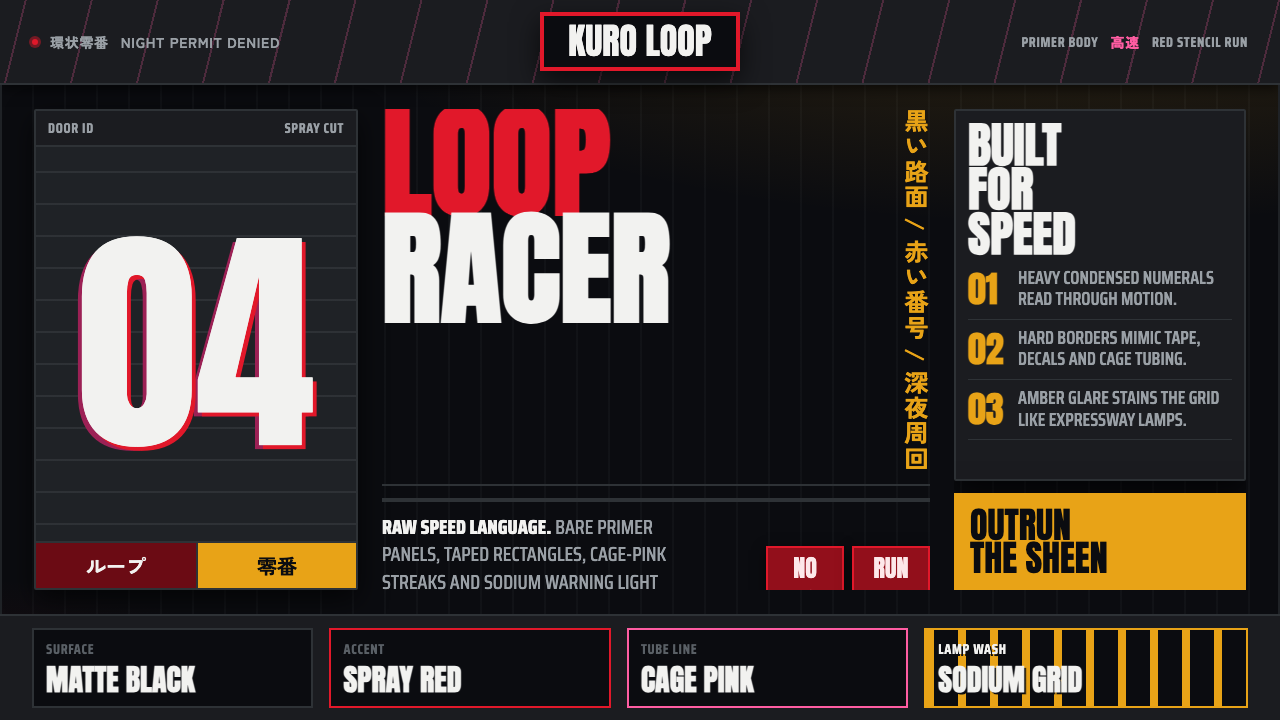 Kanjōzoku Loop RacerSpeed as contraband. Hot red numbers slice black tarmac with amber grid glare.
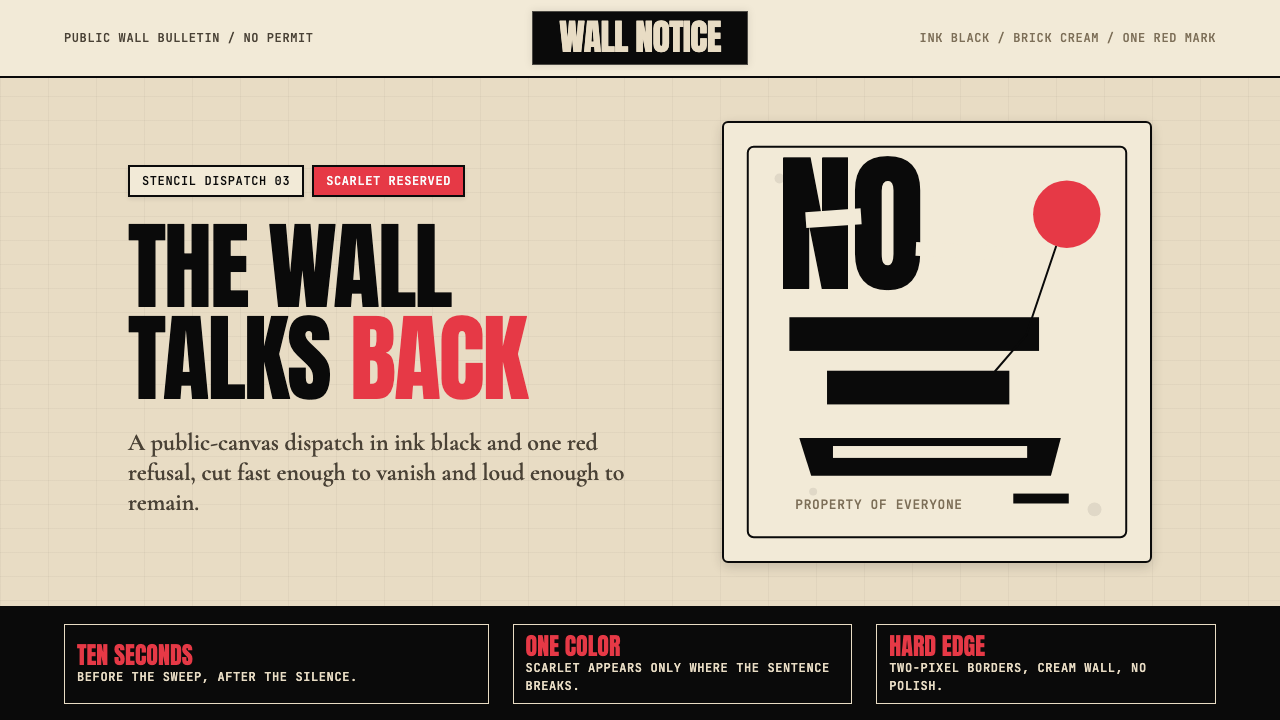 Banksy Stencil GraffitiProtest is reduced to a cut mark. Anton black on brick cream, one scarlet red…
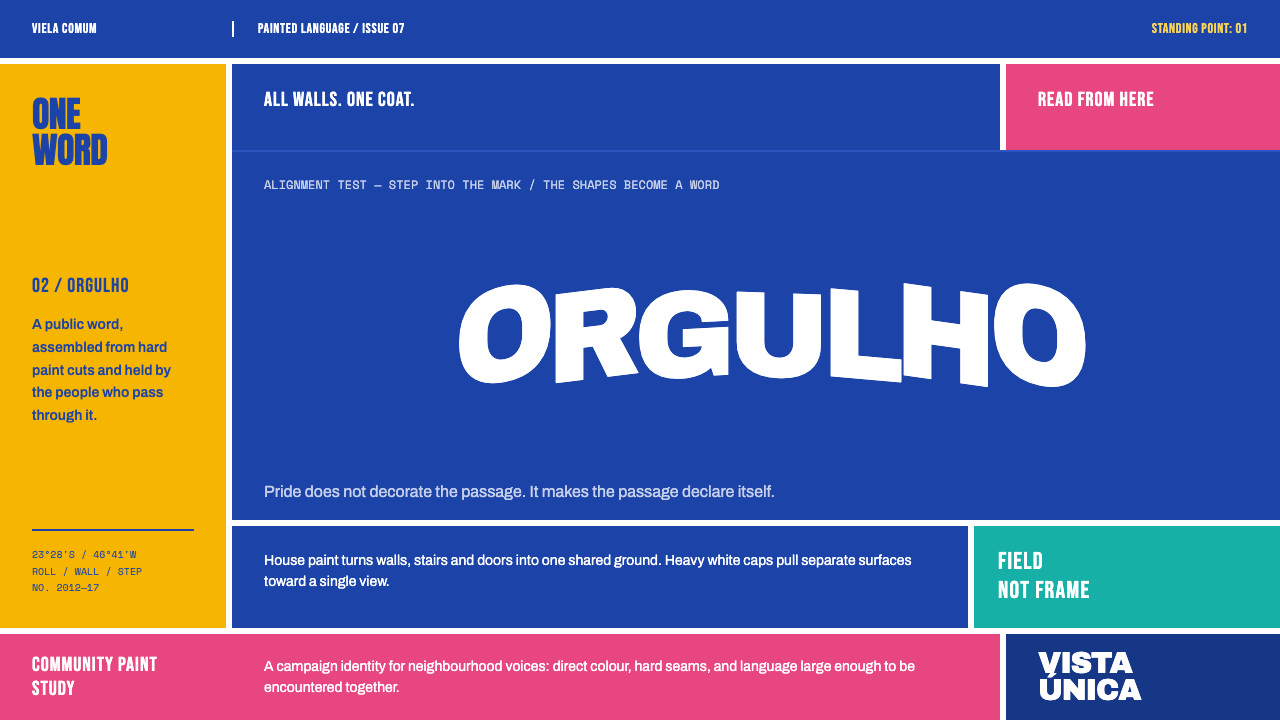 Boa Mistura Favela PaintingPride fills the passage. White Archivo Black caps snap across an ultramarine…
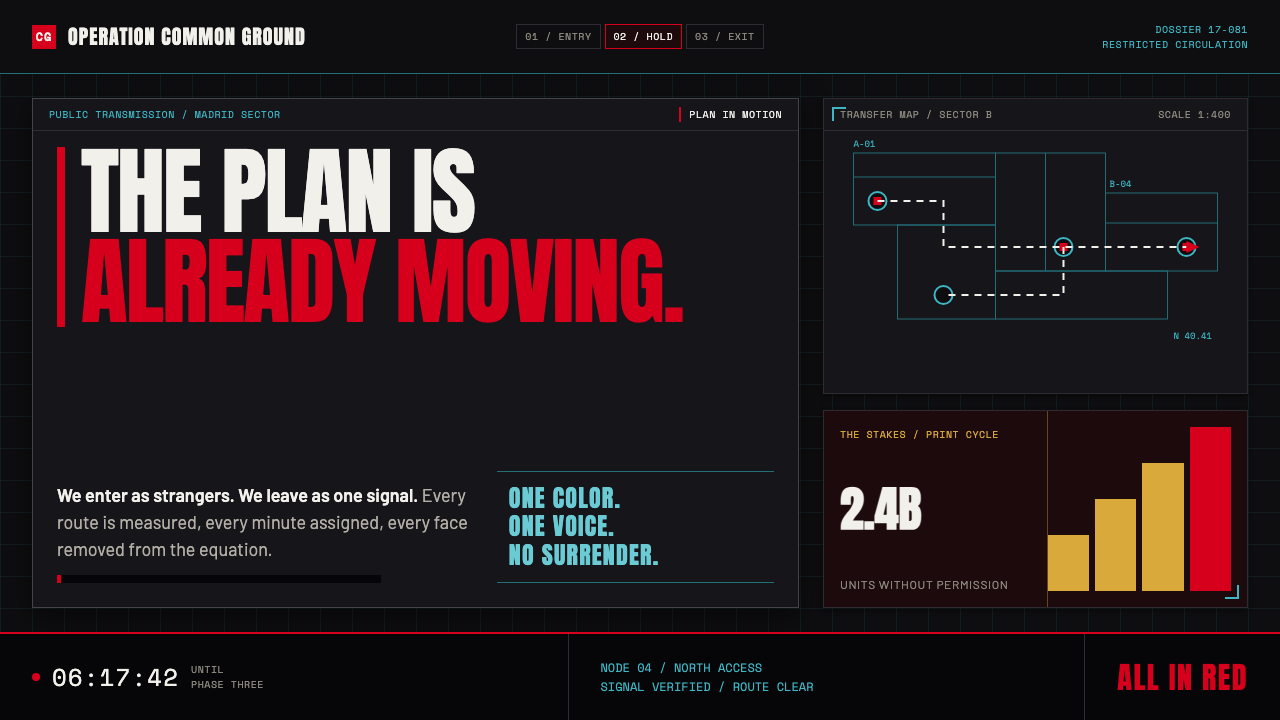 Money Heist (La Casa de Papel)Resistance becomes spectacle. Arterial red cuts through graphite grids and ta…
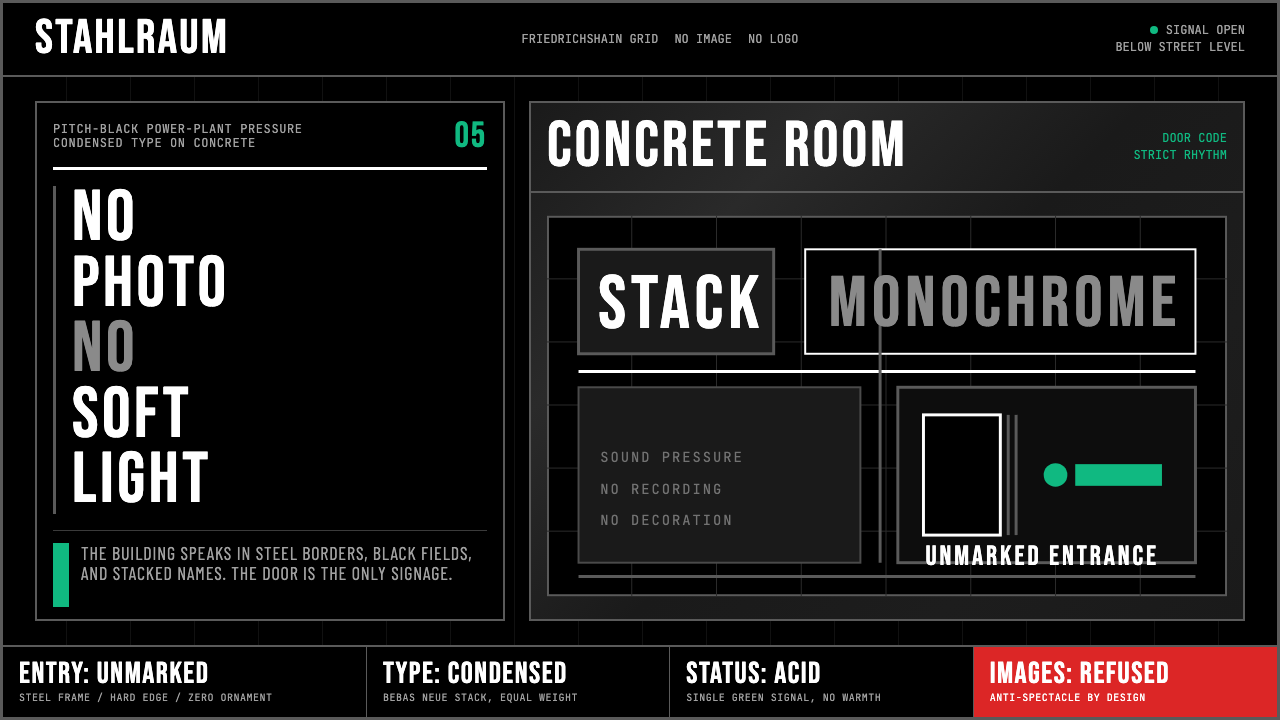 Berlin Techno (Berghain era)Refuses spectacle. Black grid, steel rules, condensed type, one acid-green si…
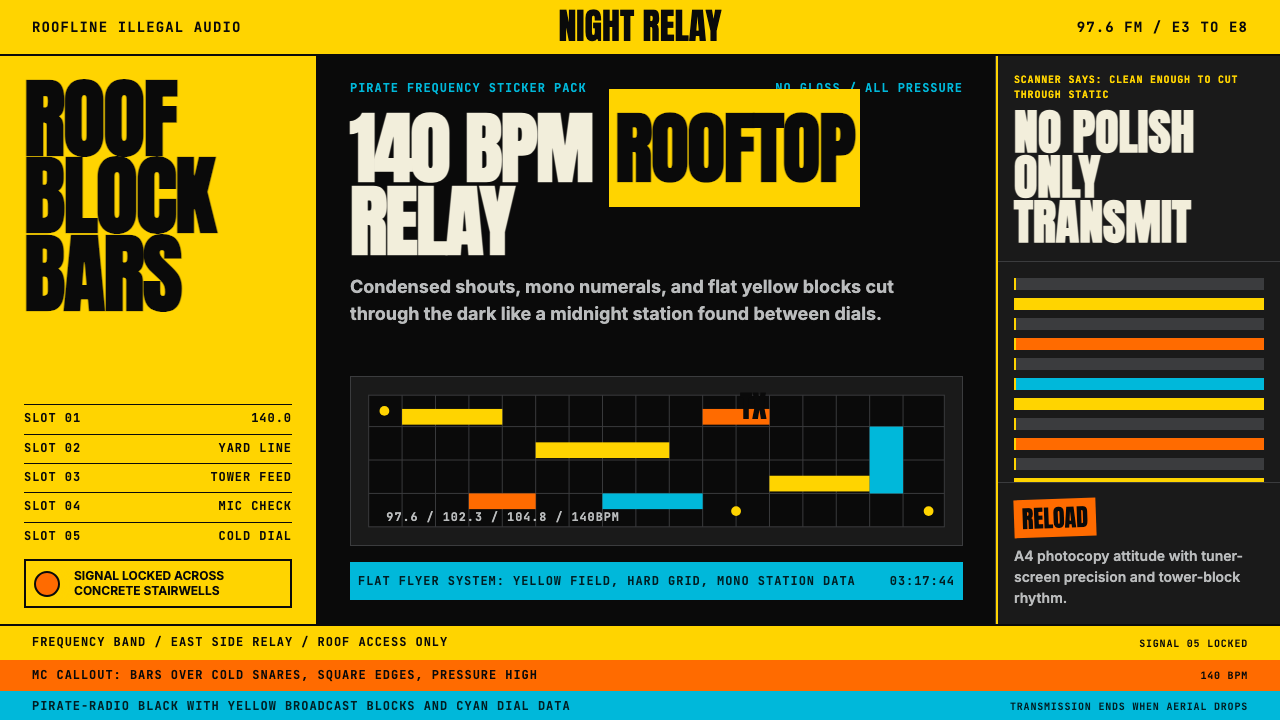 Grime London Pirate Radio (2003)Pirate signal, flat and urgent. Yellow blocks, mono FM numerals, hard flyer g…