What is Kendrick — To Pimp a Butterfly?
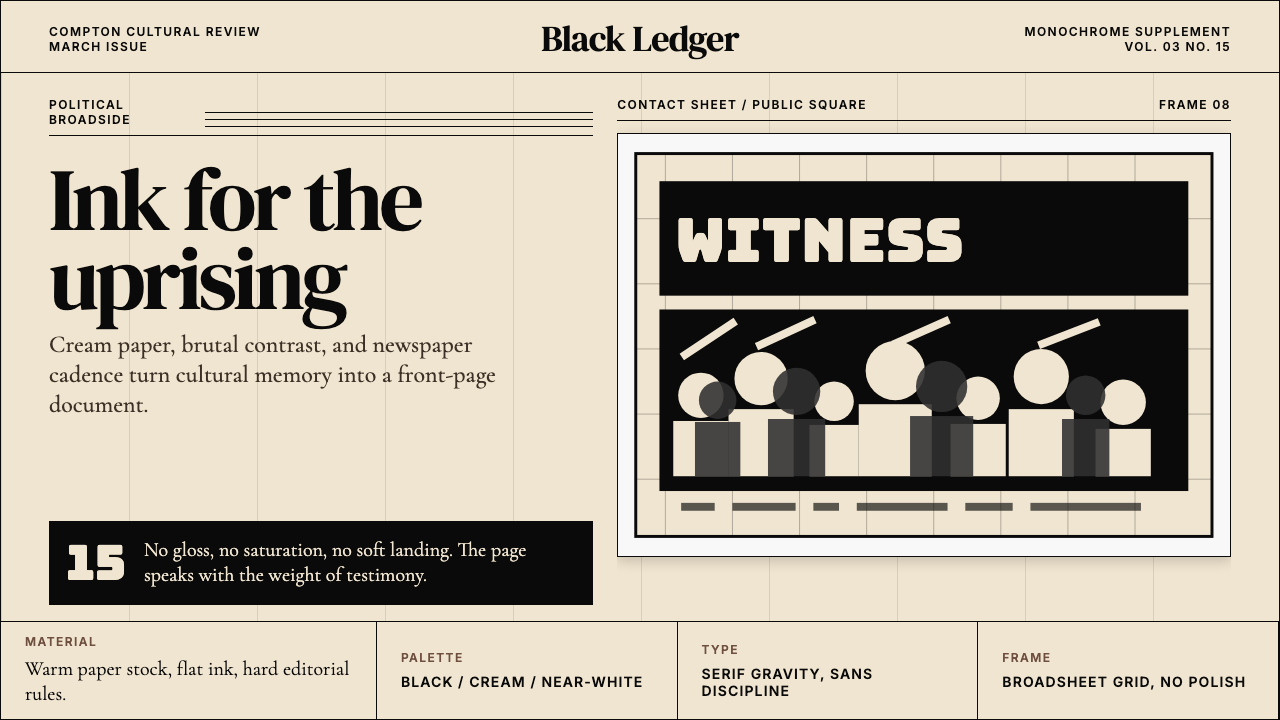
A chaotic celebration in front of the White House, distilled into cream paper, hard serif gravity, and the uncompromising monochrome of political conviction.
Kendrick — To Pimp a Butterfly in brief
Kendrick — To Pimp a Butterfly is a design language born from the visual universe of Kendrick Lamar's landmark 2015 album. Art-directed by Vlad Sepetov and photographed by Denis Rouvre, the album cover — a crowd of Black men celebrating on the White House lawn, rendered in stark monochrome — became one of the most politically charged images in contemporary popular culture. This design system translates that energy into a transferable visual grammar: strict monochrome discipline, the warmth of cream paper grounds, and the editorial gravitas of a political broadside.
The style speaks with the authority of conscious rap given form. It draws on newspaper typography, documentary-style photography treated as flat graphic mass, and a tonal restraint that refuses decoration. No saturated color intrudes, no cheerful gradient softens the edges. What remains is a high-contrast world of deep blacks, warm off-whites, and figures rendered as graphic silhouettes — a visual language that says something before a single word is read.
This is not minimalism for minimalism's sake. It is purposeful weight. Every element carries the density of a movement: the cream ground recalls printed matter with history behind it — pamphlets, manifestos, editorial pages — while the severe typographic contrast and monochrome imagery signal that the content means business. It is a style suited to creators and platforms that have something serious to say and want the design to earn that seriousness.

Where does Kendrick — To Pimp a Butterfly come from?
To Pimp a Butterfly was released on March 15, 2015, arriving at a moment of acute political tension in the United States. The period between Trayvon Martin's shooting in 2012 and the album's release had seen the emergence of the Black Lives Matter movement, a profound national conversation about race, policing, and systemic inequality. Kendrick Lamar, who had grown up in Compton, California — a city marked by cycles of poverty, gang violence, and police brutality — channeled these realities into the most politically ambitious album of his career. The record was not merely a commercial release; it was a cultural document.
The album cover's composition was a deliberate provocation. Denis Rouvre's photograph placed a crowd of Black men — some gleeful, some stoic, all alive with presence — on the lawn of the White House, the symbolic center of American political power, posed beside the corpse of a suited white man and a defaced currency note. A judge in judicial robes stands to the side. The image collapsed celebration and indictment into a single frame, demanding that the viewer hold both simultaneously. Vlad Sepetov's art direction rendered this scene in severe black and white, stripping away any chromatic comfort and forcing the drama to live entirely in tonal contrast and body language.
Kendrick himself had been building toward this visual register since his 2012 breakthrough good kid, m.A.A.d city. That album used street documentary aesthetics — grainy photography, hand-written notes, VHS-quality memory — to ground its narrative in the specific textures of Compton. To Pimp a Butterfly elevated that approach into something more overtly political and formally self-conscious, drawing on the visual traditions of the Black American political canon: protest photography, radical magazine layouts from the era of the Black Panther Party newspaper, and the Cold War-era graphic tradition of the political broadside.
The movements that converge in this visual system span decades. Conscious rap — with its roots in the late 1980s and early 1990s work of artists like Public Enemy, A Tribe Called Quest, and Mos Def — had always demanded a visual counterpart as serious as its lyrical content. Post-Trayvon visual culture gave that demand new urgency. Top Dawg Entertainment, the independent Compton-based label that released the album, had cultivated a visual identity that refused commercial slickness in favor of rawness and authenticity. The design system that emerged from TPAB synthesized all of these threads: the editorial gravity of the Black American press tradition, the confrontational geometry of political poster art, and the documentary honesty of monochrome photography.
What defines the Kendrick — To Pimp a Butterfly look?
Monochrome Discipline
The palette is built on a strict axis of deep black and warm off-white, with no chromatic color permitted to enter. Where a tonal range appears, it reads as the natural grain of documentary photography — silver gelatin depth — rather than as designed gradation. The monochrome is not cold or clinical; the off-white anchor gives it the warmth of aged newsprint or cream card stock, lending the system its characteristic sense of weight with history.
Editorial Typography
Serif letterforms carry the typographic work — specifically the kind of high-contrast serif associated with the print tradition of newspapers and literary journals, where thick strokes anchor headlines and thin strokes carry body text. Type is set with stark scale contrast: a headline commands the composition at outsized weight while secondary text pulls back. There is no decorative letterwork, no script, no playful mixing — the type speaks with the directness of a printed statement.
Documentary Photography as Flat Mass
Photography in this system functions not as a window but as a graphic element with tonal weight. Images are treated with high contrast — shadows pushed to near-black, highlights held near-white — so that human figures read as dense graphic silhouettes against their ground. The effect collapses depth: figures become monolithic masses, crowds become textured geometry. This approach is drawn directly from the tradition of documentary and protest photography, where the image must communicate its argument even in low-fidelity reproduction.
Confrontational Composition
Layouts place mass directly against the viewer — subjects face outward, text anchors forward, negative space is used not to create calm but to create pressure. The composition has a broadside quality: elements are arranged to be read quickly and felt immediately, without the invitation of gentle hierarchy. A single dominant image or text block arrests the eye before any secondary reading path begins. This is design that demands, rather than invites.
Cream-Ground Warmth
The ground is never pure white. An off-white — warm, slightly yellowed, reminiscent of aged print stock or uncoated paper — underlies all compositions. This warmth prevents the high-contrast monochrome from reading as sterile or digital. It places the design in the tradition of printed political and cultural documents: pamphlets, literary journals, album liner notes. The cream ground is the system's connective tissue between the archive and the present.
Conscious-Weight Restraint
Nothing decorative is permitted. No ornamental borders, no illustrative flourishes, no chromatic accent colors introduced for visual relief. The restraint is not a passive minimalism but an active refusal — the system withholds visual pleasure as a political and rhetorical act. Decoration would dilute the weight. What remains after all decoration is removed is not emptiness but pressure: the pressure of information that considers itself too important to be made pretty.
Crowd-as-Geometry
Groups of figures, when they appear, are not presented as individuals but as collective form — dense, interlocking, read as texture rather than portraiture. This treatment echoes both the album cover's mass of celebrants and the visual tradition of protest and documentary imagery, where the crowd itself is the argument. In designed contexts, this principle translates to: multiple images or elements arranged in tight, repeating grids that create textural mass rather than orderly separation.

Who shaped Kendrick — To Pimp a Butterfly?
Born in Compton, California, Kendrick Lamar grew from a street-level chronicler on good kid, m.A.A.d city (2012) to the most politically ambitious voice in American rap on To Pimp a Butterfly (2015). The album drew on jazz, funk, spoken-word poetry, and the intellectual tradition of Black American political thought. In 2018 he became the first rapper to win the Pulitzer Prize for Music, awarded for his 2017 album DAMN. The visual language of TPAB — monochrome severity, cream warmth, editorial confrontation — is inseparable from the density of the lyrical content it was designed to carry.
Vlad Sepetov served as art director for the To Pimp a Butterfly cover, making the central aesthetic decisions that shaped the album's visual identity: the monochrome treatment, the White House setting as backdrop, and the formal arrangement of the crowd. His choices transformed Denis Rouvre's documentary photography into a political image that reads simultaneously as celebration and indictment. Sepetov's art direction is the bridge between the raw photographic material and the finished visual statement.
Denis Rouvre is a French documentary and portrait photographer whose practice centers on unflinching, high-contrast portraiture of human subjects in extreme or politically charged circumstances. His photographic eye — building scenes with dense tonal contrast and a directness that refuses sentimentality — gave the TPAB cover its documentary credibility. The photograph works because it does not look staged in the conventional sense; it looks witnessed. That documentary quality is foundational to the design system.
Founded in Compton in 2004, Top Dawg Entertainment built its identity around independence, authenticity, and a refusal of the visual slickness associated with major-label releases. TDE's visual philosophy — raw over polished, specific over generic, heavy over light — provided the institutional context in which the TPAB visual system could be conceived. The label's consistent commitment to design that reflects rather than softens its artists' realities is a significant reason why the album cover retains its force years after release.
The design system draws on a longer visual lineage than the album alone: the graphic tradition of Black American political publishing, which runs from abolitionist pamphlets through the Harlem Renaissance literary journals, the Black Panther Party newspaper (published 1967–1980), and the design sensibility of civil rights-era documentary photography. This tradition favored high-contrast print aesthetics, editorial seriousness, and the use of typography and image as instruments of political argument rather than aesthetic pleasure. TPAB locates itself explicitly within this lineage.
How do you use Kendrick — To Pimp a Butterfly today?
Kendrick — To Pimp a Butterfly is a style for content that takes itself seriously and wants the design to make that legible before the first line is read. It works when the material has weight — political, cultural, intellectual — and when that weight should be felt immediately upon encountering the page or screen. It does not work as decoration for content that lacks this seriousness; applied to lightweight or commercial material, it reads as pretension rather than conviction.
For presentation slides, the style works best when the content demands authority: keynote addresses, research findings, policy documents, cultural criticism. A cover slide benefits from the full confrontational treatment — a high-contrast monochrome photograph of a person or scene, occupying most of the frame, with the title set in heavy editorial serif type at large scale against a cream ground. Content slides should be treated as single-subject spreads: one dominant element per slide, generous vertical rhythm, body text set in a readable serif at modest size, section breaks marked by a bold rule rather than a decorative ornament. Data slides can adopt the crowd-as-geometry principle: grid arrangements of small charts or figures that read as textured mass before they are read individually.
For web interfaces, the system suits editorial sites, cultural platforms, independent journalism, and any dashboard where the data is serious enough to be treated with the same gravity as a printed report. On a dashboard, this means a cream or very warm near-white background, deep black for all labeling and body text, hard-edged card components with no soft shadows, and monochrome data visualizations that rely on tonal contrast — lighter and darker values — rather than color coding for differentiation. For pricing or feature pages, the confrontational composition principle applies: large, direct type at each tier heading, no icon illustration as a substitute for prose, and clear differentiation between tiers through scale and contrast rather than color.
For editorial and marketing work, the style excels at hero sections, table-of-contents spreads, and interview layouts. A hero section structured in this system places a high-contrast portrait or crowd photograph in a dominant position, with a headline set at substantial scale in editorial serif, the whole composition on a cream ground with deep black type. Marketing pages benefit from the broadside quality: alternating full-width sections that shift between deep-black grounds with cream type and cream grounds with deep-black type, using scale and contrast — not chromatic color — to maintain visual momentum. Pull-quotes and call-outs should be set large and bold, treated as graphic masses rather than styled text.
A common mistake is introducing chromatic color to relieve the severity — adding a single saturated accent to a button or header, reasoning that pure monochrome is too austere for a screen product. This undermines the system's entire logic: the absence of color is not an omission but the argument itself. A second mistake is using photographic imagery with too much tonal range and too little contrast, resulting in images that look gray and underpowered rather than the graphic monoliths the system requires. If photography is not available, dense typographic composition — large-scale text treated as visual mass — is a stronger substitute than low-contrast imagery.

Kendrick — To Pimp a Butterfly — FAQ
Is this style limited to music or cultural content?
No — its applicability is determined by the weight and seriousness of the content, not by its genre. The visual system translates well to political journalism, academic publishing, activist organizations, human rights documentation, and any platform whose content engages with social, ethical, or political questions. It also works for premium brand contexts where the brand wants to position itself as substantive and unconventional rather than polished and commercial. What the style cannot carry is content that is fundamentally light, playful, or pleasure-driven — for those contexts, the severity reads as mismatch.
How do I handle color when the brand absolutely requires one brand color?
The system can accommodate a single chromatic color, used with extreme restraint — as a single accent on one interactive element, a single line weight in a data chart, or a single tonal field in an otherwise monochrome composition. The key discipline is that the chromatic color must feel earned rather than decorative: it should mark something functionally significant, not appear as relief from the monochrome. Think of it as a redaction marker on a document — present because it must be, not because it looks appealing. If the brand color is warm (amber, brick, rust), it integrates naturally with the cream ground; if it is cool or saturated, use it more sparingly.
Can this work as a dark-mode design?
A dark inversion is possible but requires reconsidering the system's logic at its root. In the standard version, the cream ground does significant work: it provides warmth, historicity, and the sense that the content is printed matter with substance. On a dark ground, this warmth disappears and the composition becomes colder and more confrontational in a different way — less political broadside, more noir. If you commit to a dark version, replace cream with a near-black that retains some warmth (slightly brown-toned rather than pure digital black), use near-white rather than pure white for body text to avoid harshness, and treat photography with even higher contrast to maintain graphic mass. The result is a valid variant, but a different emotional register.
How does this style handle illustration or iconography?
The system has almost no native space for conventional illustration or icon-based UI patterns. Figurative illustration is antithetical to the documentary directness the style depends on — a drawn character introduces a layer of mediation that the style's use of photography deliberately refuses. If iconic marks are needed, they should be purely typographic or geometric: a dash, a slash, a circle used as a bullet point, a bold rule used as a section marker. Avoid pictogram-style icons entirely. Where data needs visual encoding, use geometric shapes — squares, bars, circles — treated as graphic mass rather than decorative infographic elements.
Is TPAB the same as general monochrome design?
No — general monochrome design can be minimal, luxurious, clinical, or editorial depending on how typography, texture, and negative space are handled. The TPAB system is specifically monochrome with editorial weight: the type is heavy and contrast-driven, the photography is dense and confrontational, the ground is warm rather than cool, and the overall effect is of something that has been printed rather than displayed. Monochrome luxury design (as found in high-fashion contexts) typically uses cool white grounds, generous negative space, and refined typography. TPAB is the opposite — it is dense, pressured, and insistently warm. The difference is in the grain and the weight, not simply the absence of color.
Related design styles
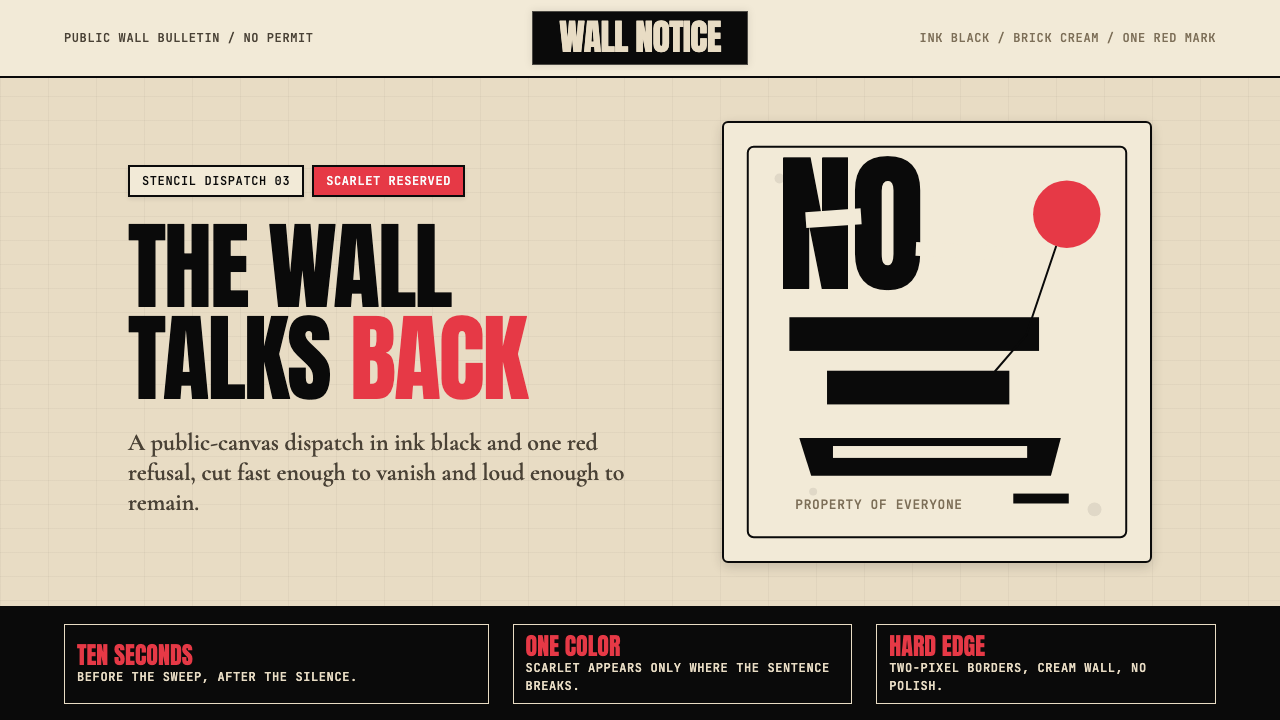 Banksy Stencil GraffitiProtest is reduced to a cut mark. Anton black on brick cream, one scarlet red…
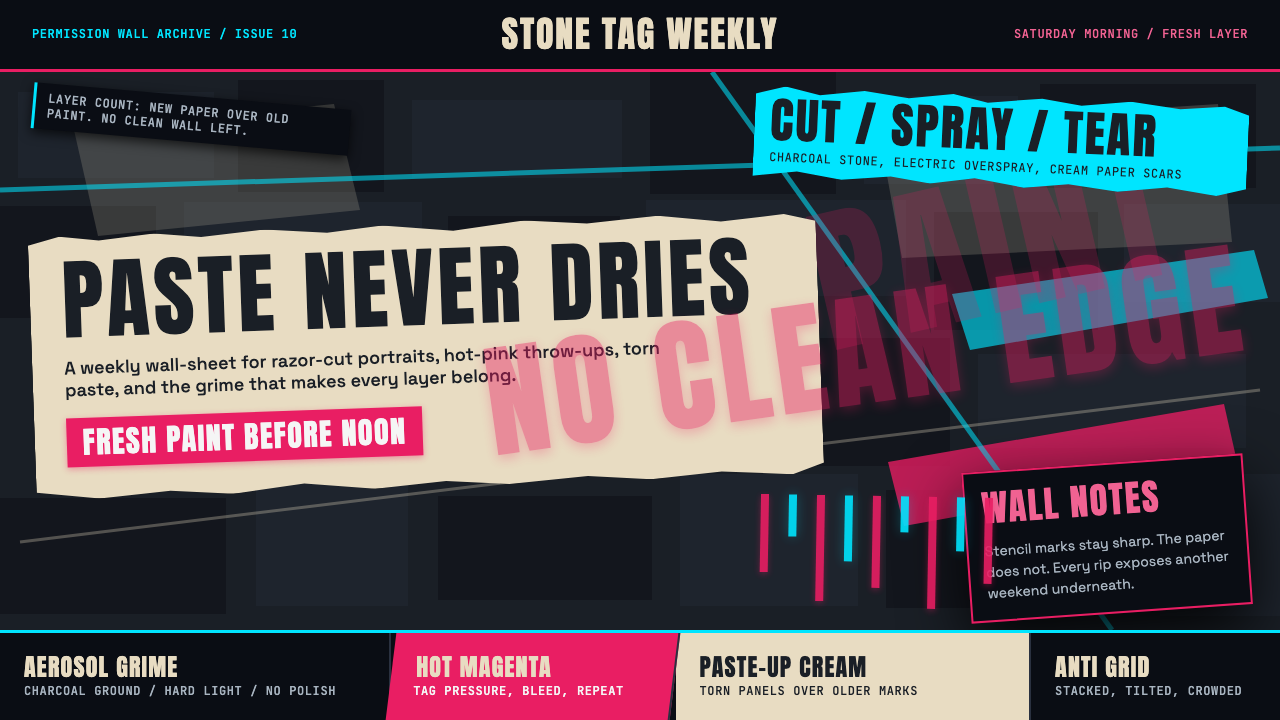 Melbourne Laneway Stencil (Hosier Lane)Permission-wall maximalism. Magenta tags slash charcoal bluestone and cream p…
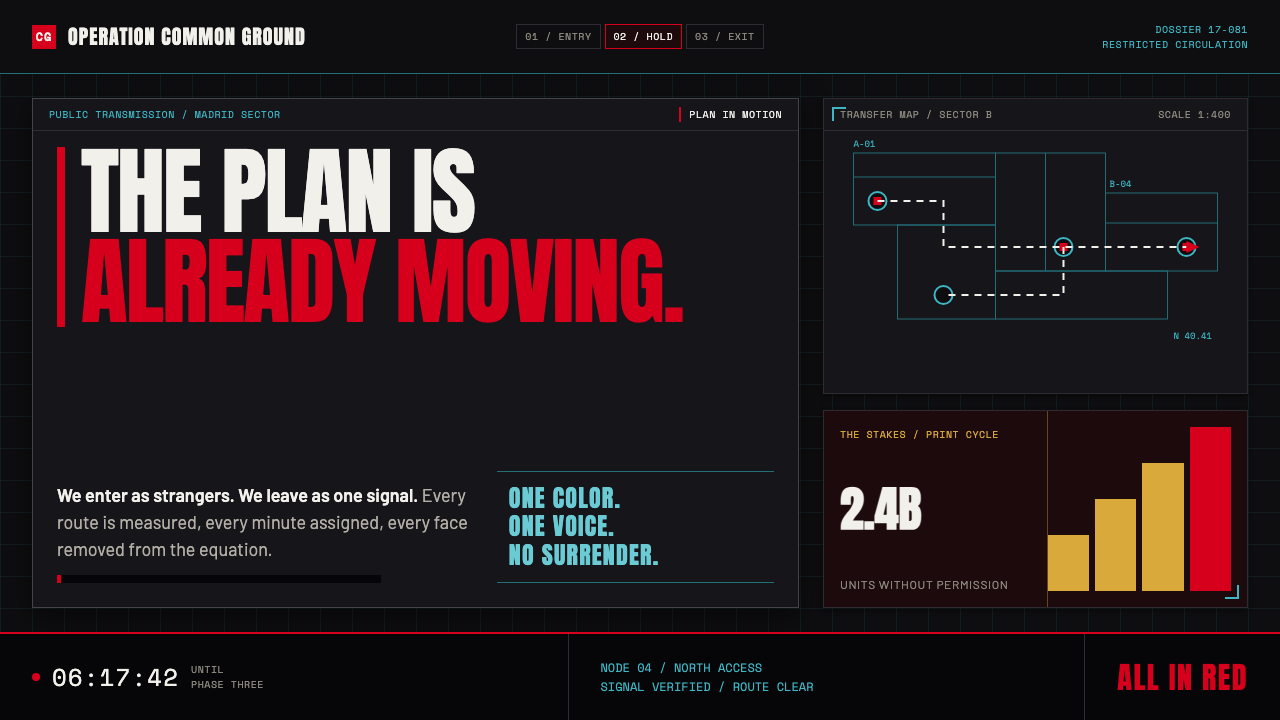 Money Heist (La Casa de Papel)Resistance becomes spectacle. Arterial red cuts through graphite grids and ta…
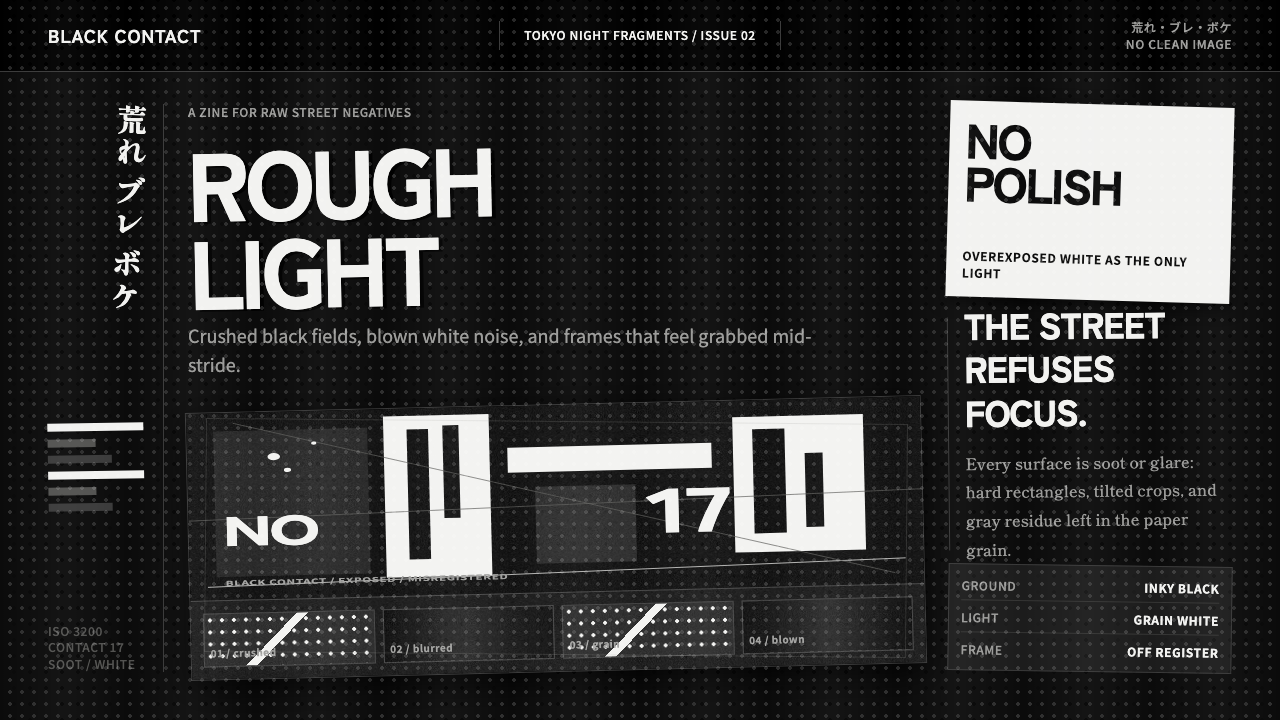 Daido Moriyama Are-Bure-BokeNothing is clean. Inky black, blown white grain, and tilted frames make the i…
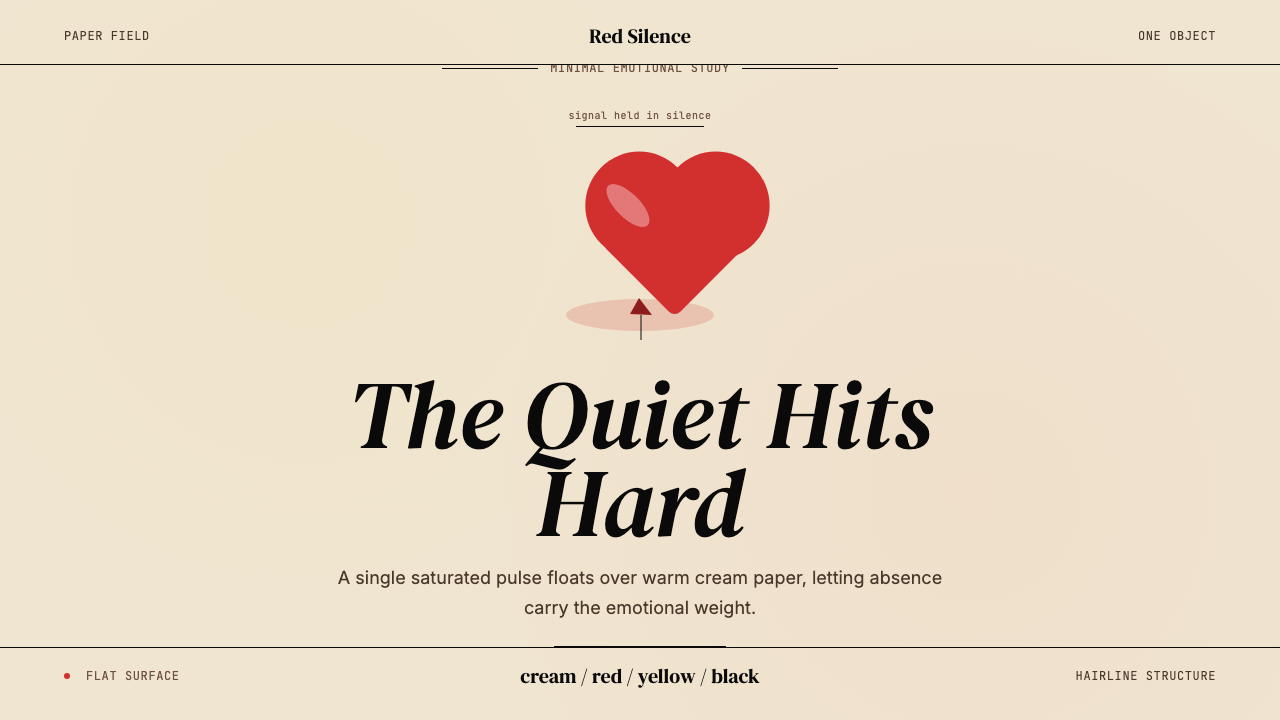 Kanye — 808s & HeartbreakGrief in restraint. Cream paper, one red heart, yellow heat, and a black hair…
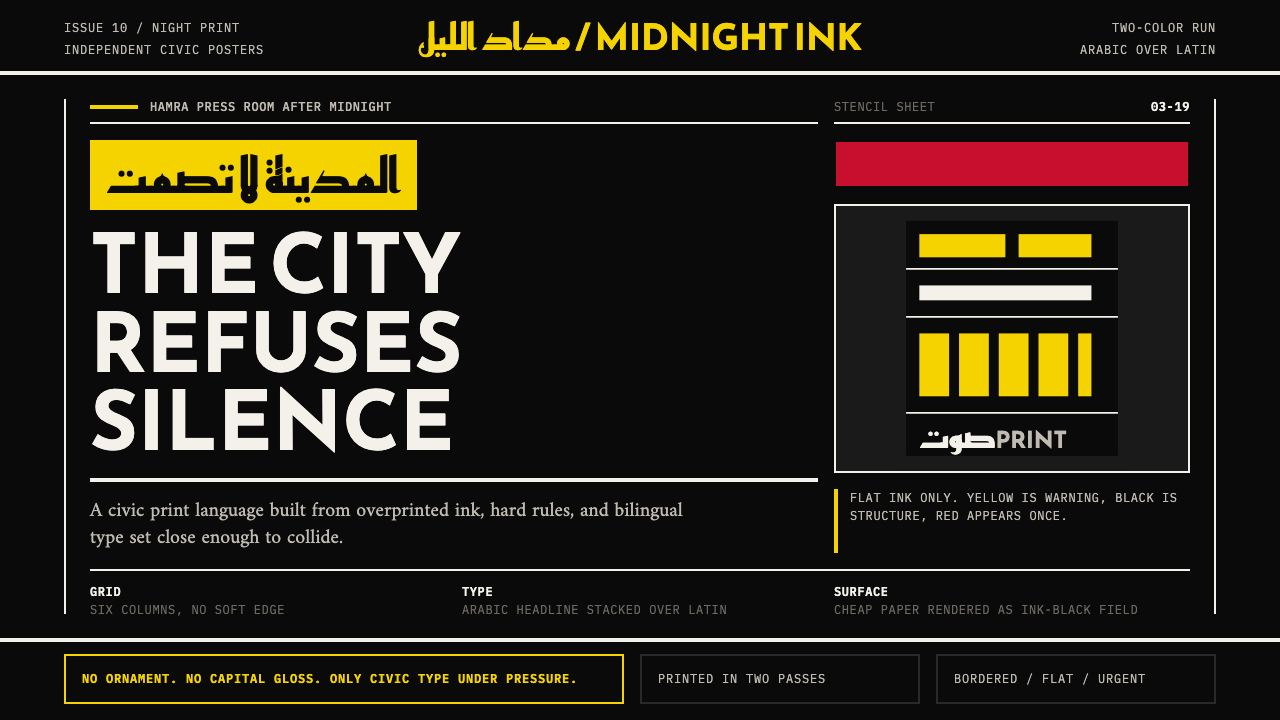 Beirut Indie Graphic DesignCivic type as protest. Sulfur yellow Arabic blocks collide with ink-black pos…