What is Snowy Owl Tundra?
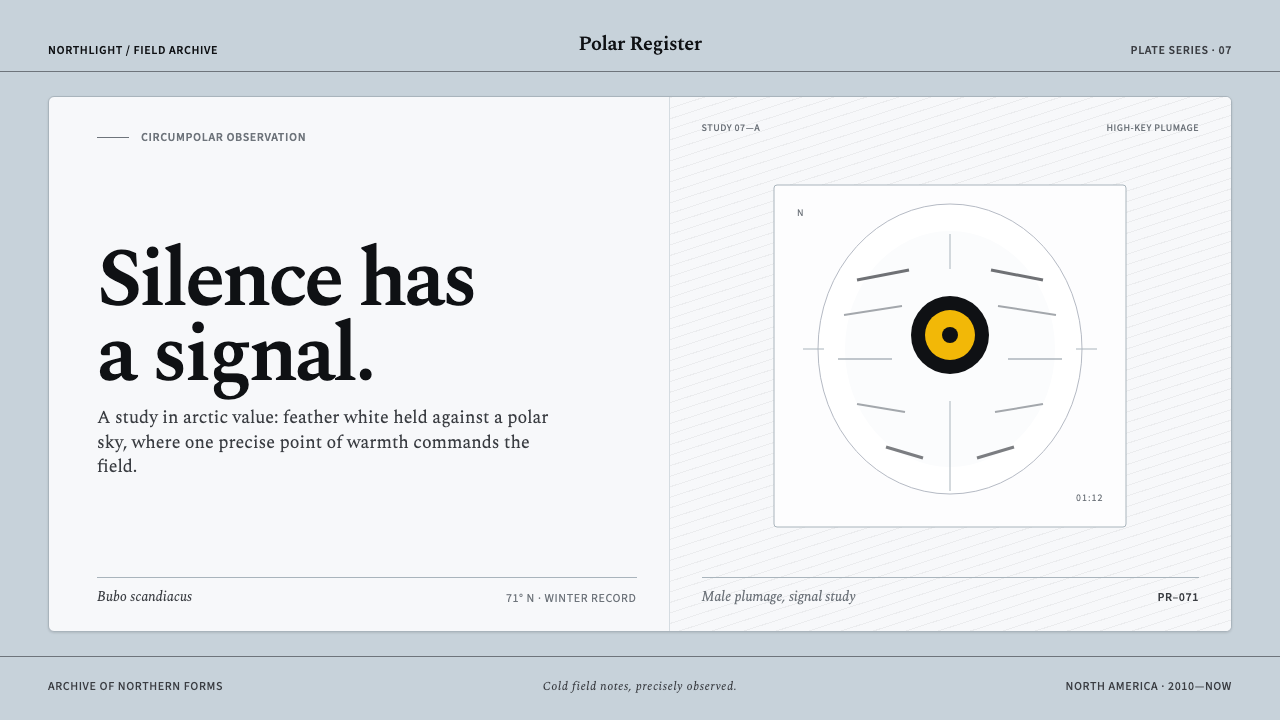
Snowy Owl Tundra turns a field-guide specimen into an interface language: cold, spacious, exact, with one yellow signal that refuses to be missed.
Snowy Owl Tundra in brief
Snowy Owl Tundra is a contemporary high-key natural-history style drawn from the visual grammar of a museum plate. A snowy owl of almost immaculate white plumage occupies a pale blue-grey field resembling polar sky rather than aged paper. The subject is not crowded by scenery. Generous negative space gives it the stillness of observation, as though the viewer is studying a specimen before reading an interface.
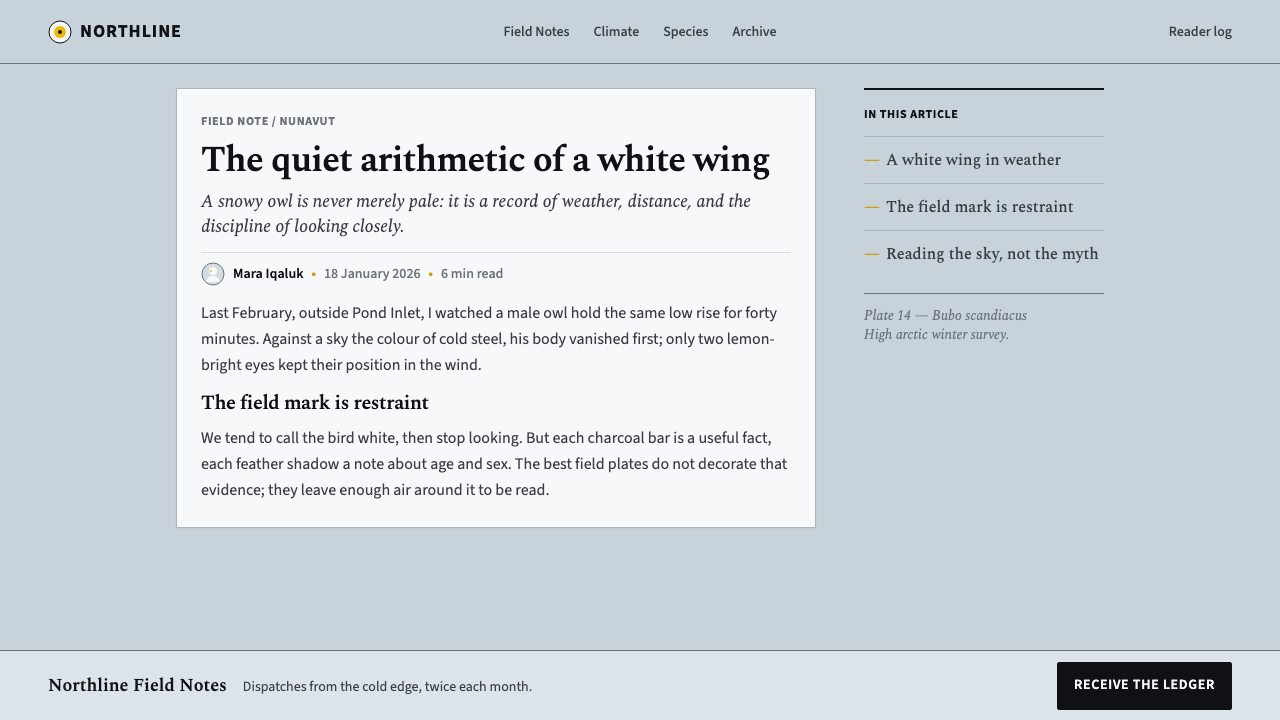
Its contrast is disciplined rather than dramatic. Feather white carries the largest visual area; charcoal barring, spotting, and near-black outlines provide the fine evidence that keeps the pale subject legible. Hairline rules behave like field-guide annotations, adding measure and order without competing with the bird. The palette stays cool, bright, and restrained throughout.
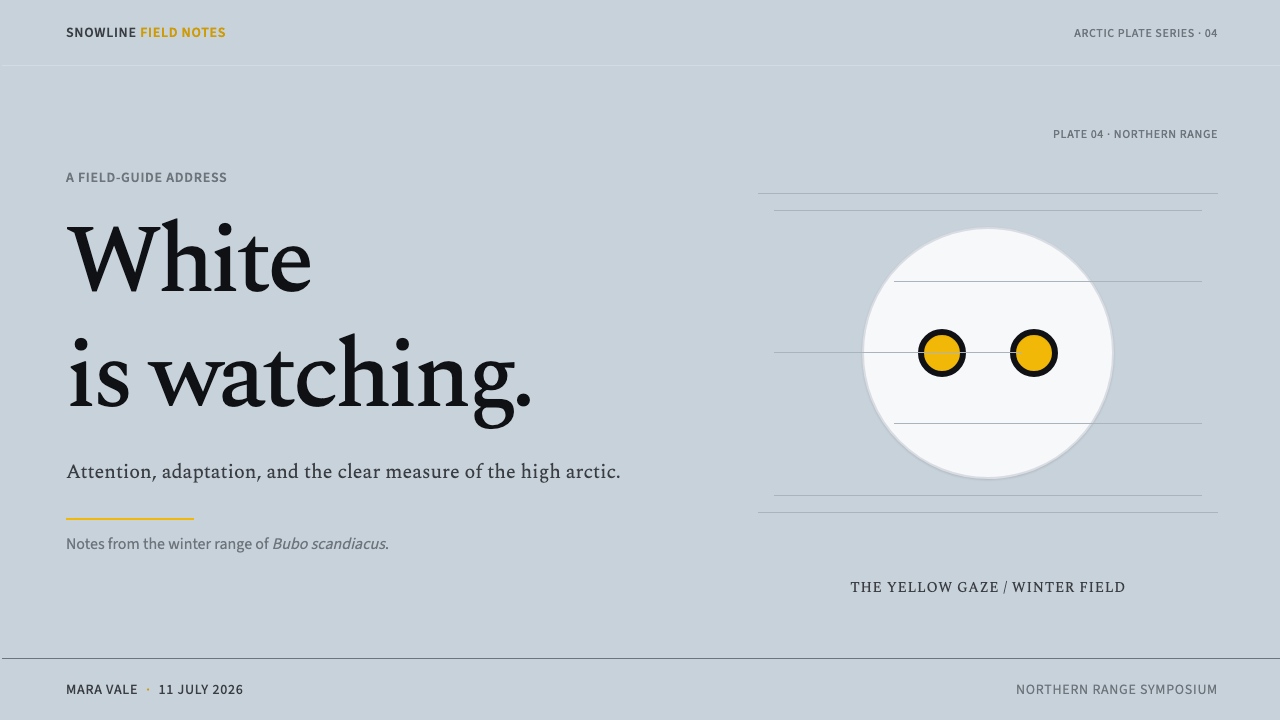
The exception is the eye. A piercing lemon-yellow accent, enclosed by near-black, becomes the visual system’s single warm signal. In a product context, that contrast makes the yellow suitable for the primary action, an active state, or the one fact that must be found immediately. Its force depends on scarcity: warmth is meaningful because the surrounding world remains tundra-cold.
Where does Snowy Owl Tundra come from?
The style belongs to a contemporary period of high-key natural-history and field-guide illustration, described as extending from 2010 to the present. Its subject is Bubo scandiacus, the snowy owl, associated here with the North American circumpolar Arctic tundra breeding range. That setting supplies more than a motif: the pale sky, open field, white plumage, and dark feather markings establish the visual conditions from which the style is built.
Its first reference point is scientific natural-history illustration. Museum plates isolate a subject so that form, pattern, and distinguishing marks can be read without narrative distraction. In Snowy Owl Tundra, the illustration is not treated as nostalgic decoration. Its observational discipline becomes a method for hierarchy: the subject holds attention, small markings carry supporting information, and rules clarify relationships.
Its second reference point is high-key wildlife photography plates. High-key treatment preserves detail in light subjects without turning the field into glare or sentiment. Snowy Owl Tundra borrows that balance: white is expansive but not empty, charcoal detail is descriptive rather than heavy, and the pale blue-grey atmosphere establishes coldness without forcing the image into darkness. The yellow eye is the decisive exception, an anatomical detail elevated into a functional signal.
The result is not an attempt to reproduce a historical school. It is a contemporary application of field-guide habits to digital communication: isolate what matters, let cool space do structural work, use fine markings as evidence, and reserve a warm accent for the moment an interface needs a response. Its authority comes from attention and restraint rather than ornamental abundance.
What defines the Snowy Owl Tundra look?
Polar Field
The background resembles a cold, pale blue-grey polar sky rather than paper cream. It keeps the composition high-key and open, allowing white plumage to remain the dominant mass without dissolving into a blank page. The field is atmospheric but never scenic.
Feather White
Near-immaculate white is the style’s principal surface. It should feel clean, light, and observed rather than glossy or sterile. White works here as a living field that needs surrounding cool ground and dark marks to reveal its extent.
Charcoal Evidence
Charcoal barring and fine spotting supply texture. These marks should read as feather information, not as decorative noise or a generic pattern. Near-black outlines around key forms make the pale subject precise while preserving the overall quietness of the plate.
Annotation Rules
Fine rules borrow the authority of specimen labels and field-guide measurement. They organize captions, divisions, and metadata with a quiet technical tone. Their job is to orient the reader, never to become a decorative frame around content.
Lemon Signal
Lemon yellow is the only admitted warmth, modeled on the owl’s eye. Used against feather white, slate-like cool ground, and near-black edging, it becomes immediate and directional. It is strongest when reserved for the primary action or a single active condition.
High-Key Restraint
The system stays bright without becoming cheerful or soft. Its emotional register is cold precision: broad pale areas, sparse dark evidence, and one alert warmth. Any additional warmth or visual clutter weakens the tension that makes the accent useful.

Who shaped Snowy Owl Tundra?
The snowy owl is the style’s named subject and its central visual authority. Its near-white plumage, charcoal barring and spotting, near-black eye rim, and lemon-yellow eye provide the complete contrast system: pale field, dark evidence, and a single warm alert.
This movement contributes the logic of the museum plate: isolate the organism, make its identifying structure readable, and let labels clarify rather than decorate. It supplies the style’s measured, observational character.
This reference contributes the treatment of light subjects in a light environment. It shows how pale plumage can retain form through selective dark detail and cool atmospheric ground, without converting the image into a dark or theatrical composition.
How do you use Snowy Owl Tundra today?
For slides, make the cover a specimen field: place a white subject or large pale form in generous cool space, use a near-black title with a restrained annotation rule, and reserve lemon yellow for the one element that establishes direction. Content slides should keep the same field-guide hierarchy, with headings acting as labels and supporting notes kept visually subordinate. Data slides can use pale surfaces, charcoal marks, and a single yellow highlight to identify the active series, exception, or decision point.
For web interfaces, Snowy Owl Tundra suits dashboards, search tools, catalogues, and pricing pages where calm scanning matters. Use the pale blue-grey field to create spaciousness, allow white panels or content zones to feel like plumage against sky, and use charcoal for durable text and structural separators. Yellow should identify the primary task, selected condition, or urgent signal rather than becoming a general-purpose decoration.
For editorial and marketing work, the style is strongest when it behaves like a contemporary field plate rather than a wildlife-themed collage. Pair a focused image or pale silhouette with concise annotation, quiet metadata, and a broad expanse of cool space. Campaign sections can move from observation to action by introducing the yellow signal only where a reader is meant to respond.
The common mistake is to treat the owl eye as permission to scatter warm yellow across every badge, button, and illustration. That turns a signal into background noise and removes the style’s defining temperature contrast. Another mistake is overfilling the pale field with decorative snow, scenic tundra, or heavy texture; the visual identity depends on isolation, fine evidence, and room to observe.
Snowy Owl Tundra — FAQ
Is Snowy Owl Tundra a dark theme?
No. It is explicitly a light, high-key system. Its drama comes from pale blue-grey atmosphere, feather white surfaces, and selective charcoal detail. Near-black is important for structure and eye rims, but it does not define the overall field.
Why is lemon yellow used so sparingly?
Because it represents the owl’s eye and functions as the only warm signal in an otherwise cool system. If it appears everywhere, it loses its ability to direct attention. Its usefulness is inseparable from the restraint of the surrounding white, blue-grey, and charcoal.
Can photography be used with this style?
Yes. High-key wildlife photography plates are one of its stated references. Photography should preserve the style’s observational clarity: isolate the pale subject, retain meaningful dark feather detail, keep the atmospheric ground cool, and avoid turning the image into a busy environmental scene.
What kind of products fit Snowy Owl Tundra best?
It fits products that benefit from calm inspection and one unmistakable action: catalogues, search interfaces, analytical dashboards, educational material, and carefully structured pricing or comparison pages. It is less suitable when the communication requires sustained warmth, abundance, or a dense sense of spectacle.
Related design styles
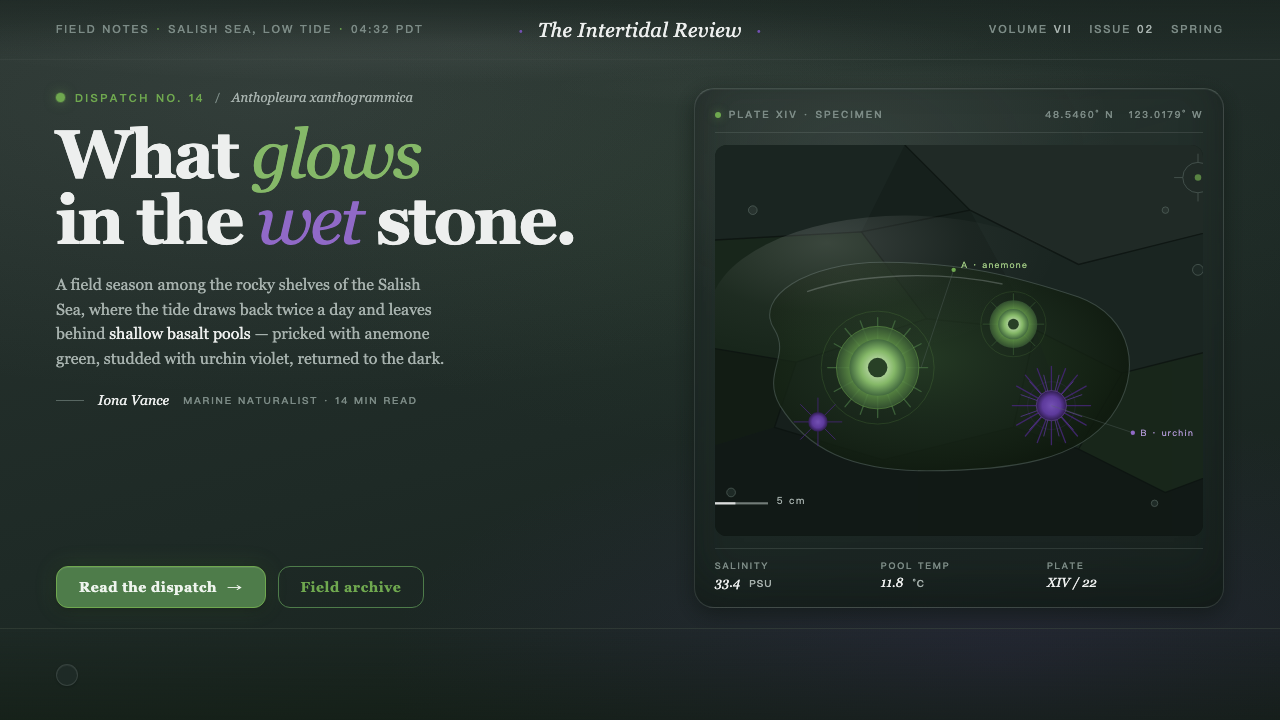 Tide PoolFeels like field notes after rain. Literary serif in basalt black, algal gree…
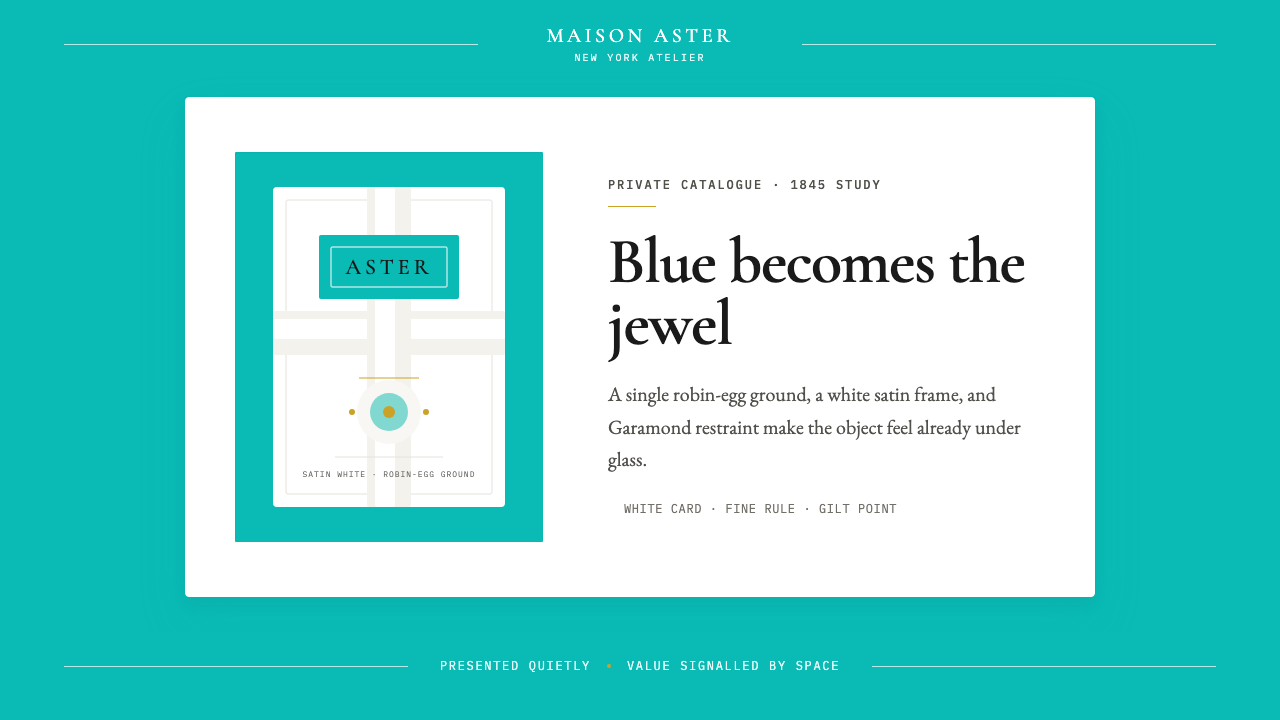 Tiffany Robin-Egg BlueBlue is the luxury signal. Robin-egg ground, white satin rules, Garamond rest…
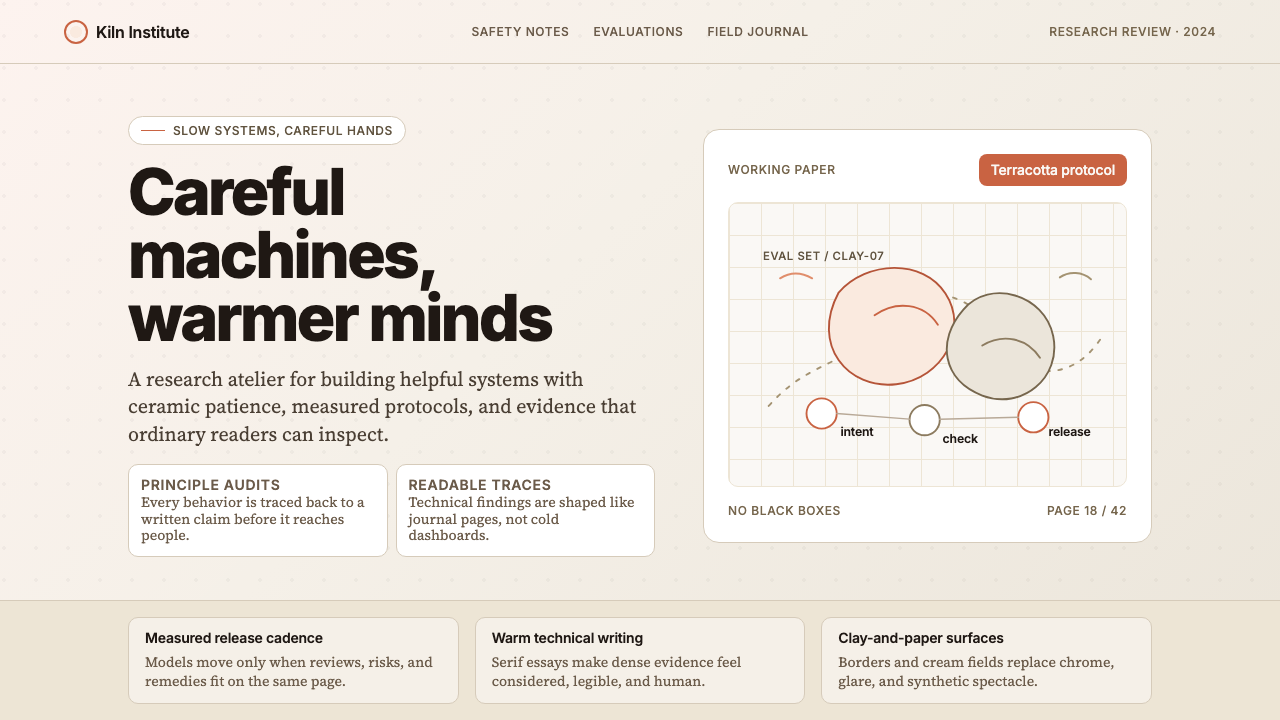 Anthropic ClayAI safety in handmade clay. Sand backgrounds, terracotta accents, serif body…
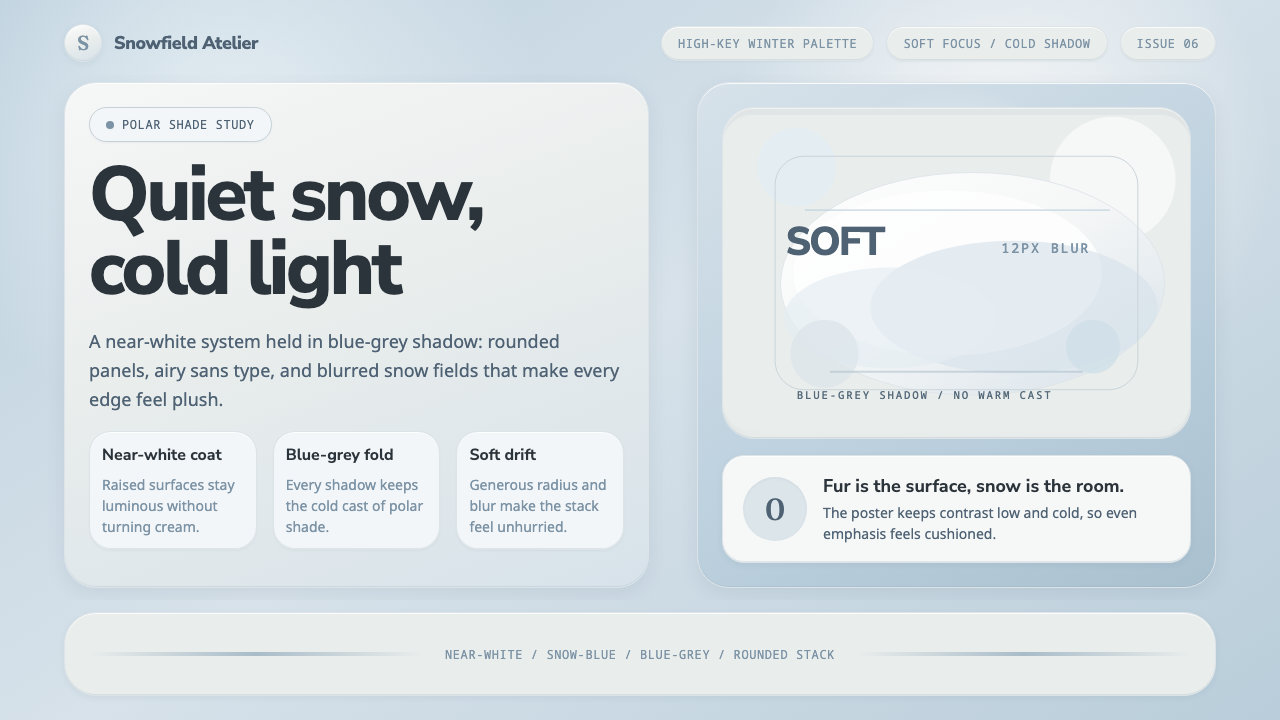 Arctic Fox Winter CoatIcy softness, never cream. Near-white panels float over snow-blue shadow.
 Financial Times (Pink Paper)Authority on salmon paper. Deep navy rules and claret accents discipline dens…
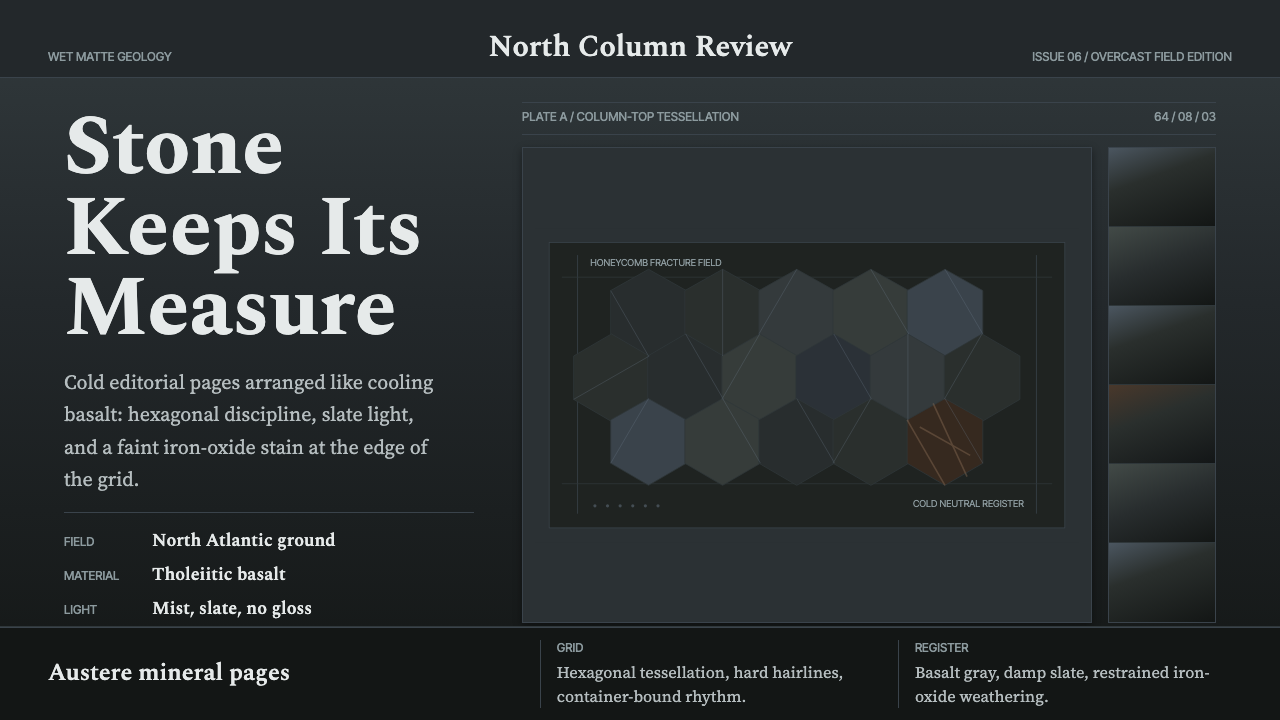 Giant's Causeway BasaltCold stone edits the page. Spectral type locks into slate hex grids and iron-…