What is Sinofuturism?
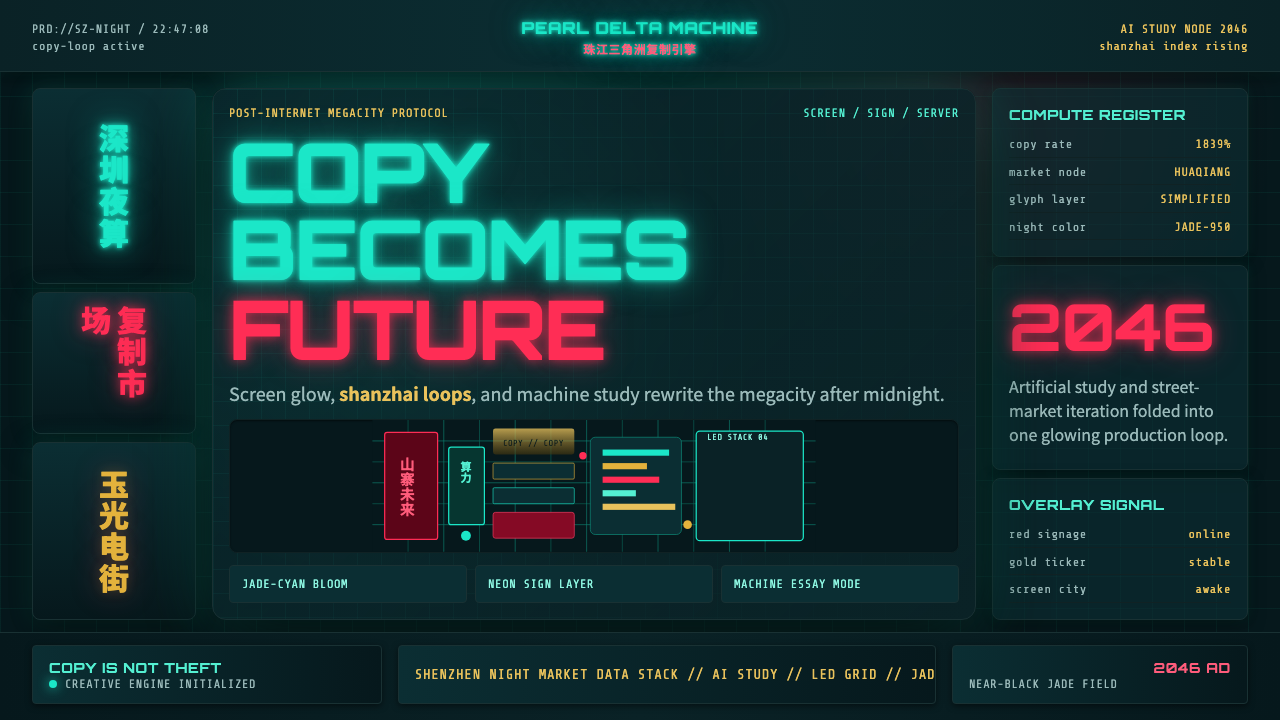
Sinofuturism reads a Chinese future in neon shopfronts and screen glow — where copying is not theft but the engine that builds tomorrow.
Sinofuturism in brief
Sinofuturism is a visual language named for and drawn directly from Lawrence Lek's 2016 video essay of the same title, which constructs an imagined Chinese future out of real contemporary material: Shenzhen's dense neon shopfront signage, artificial intelligence and computing culture, the shanzhai (copying and remixing) tradition of manufacturing, and a distinctive jade-tinted screen glow that unites the whole visual field. The style reads as a night street seen from within a dense urban layer of light — vertical shopfront signs burning bright over a near-black ground tinted jade, with LED grids and data overlays stacked densely across the visual field.
The system deliberately fuses two distinct registers rather than blending them into a single homogenous look. The first is a signage layer: simplified Chinese characters rendered in neon red and imperial gold, evoking the literal visual texture of a commercial street in Shenzhen or another Pearl River Delta city. The second is a computing layer: monospace data readouts, grid overlays, and a jade-cyan glow associated with screens and artificial intelligence interfaces. These two registers sit on top of one another rather than merging, producing the 'screens stacked on screens' quality the video essay itself describes.
Crucially, the style is not lantern-and-dragon chinoiserie — the decorative, tourist-facing version of 'Chinese aesthetic' built around red lanterns and pagoda silhouettes. Sinofuturism is saturated neon urbanism grounded in a specific, real, contemporary place and a specific philosophical claim: that copying itself, rather than being creativity's opposite, can function as a genuine creative and economic engine, a claim the video essay makes explicitly about Chinese manufacturing and AI development.

Where does Sinofuturism come from?
Sinofuturism (1839–2046 AD) is a video essay by the artist and architect Lawrence Lek, released in 2016, that adopts the structure of a documentary or lecture narrated by an artificial intelligence, arguing that China itself — its manufacturing systems, its population scale, its state planning, its embrace of AI and automation — can be read as a kind of distributed, already-existing artificial intelligence. The title's date range gestures at a historical arc from the Opium Wars (beginning 1839) through an imagined future milestone (2046), framing contemporary China as the middle chapter of a much longer speculative narrative.
The video essay's visual and conceptual material draws heavily on Shenzhen, the Pearl River Delta city that transformed from a fishing town into a manufacturing and technology megacity within a single generation after being designated a Special Economic Zone in 1980. Shenzhen's identity as both the historic center of shanzhai manufacturing — the ecosystem of rapid copying, remixing, and iterating on existing product designs — and a contemporary hub of legitimate technology and AI development gives the video essay its central visual and thematic tension: is copying a form of theft, or a genuine mode of creative production in its own right?
Lek situates his essay within a broader current of Afrofuturism-adjacent thinking — speculative visual and conceptual movements that use futurist imagery to interrogate a specific cultural or national identity's relationship to technology, labor, and modernity, rather than presenting a generic, culturally unmarked vision of 'the future.' Sinofuturism extends this mode of thinking to a Chinese context, using neon signage, AI narration, and shanzhai manufacturing as its core visual and conceptual vocabulary rather than borrowing indiscriminately from any pan-Asian futurist imagery.
The work sits within the broader post-internet art movement and an accelerationist strand of contemporary video essay practice — work that treats the internet, automation, and computational acceleration not as background technology but as the direct subject and material of the art itself. Since its 2016 release, Sinofuturism has become a widely referenced touchstone in discussions of techno-orientalism, AI aesthetics, and the visual culture of contemporary China's technology sector, continuing to shape ongoing visual culture well beyond the original video essay.
What defines the Sinofuturism look?
Color
A near-black jade-tinted ground anchors the whole system, with jade-cyan carrying the computing/AI register and neon red plus imperial gold carrying the signage register. These two color families are meant to sit in visible tension rather than blend — the jade-cyan should read as screen-glow, distinct from the warmer red-and-gold of physical shopfront signage.
Vertical Neon Signage
Simplified Chinese characters set vertically, rendered in glowing neon red or gold against the dark ground, directly evoke Shenzhen shopfront signage. This vertical orientation and the specific use of simplified (rather than traditional) characters are deliberate — they anchor the style in a specific contemporary mainland Chinese urban context rather than a generic pan-Asian aesthetic.
LED Grid Layering
Dense grids of small light points, echoing LED display panels and screen overlays, stack visually across the composition to create a sense of layered urban density — screens on screens, signage over signage. This layering should feel dense and stacked rather than orderly and spacious, reflecting the visual crowding of a real dense commercial street.
Monospace Data Overlay
Small monospace type — echoing terminal readouts, code, or AI narration subtitles — appears layered over or alongside the signage, representing the computing/AI register of the video essay's narration. This type should feel technical and slightly clinical, in deliberate contrast to the warmer, more human signage layer beneath it.
Dense Urban Night Layering
The composition as a whole should feel like a night street viewed from within its own density — no single element floats in isolated negative space the way a minimalist system would arrange it. Elements overlap, signage competes with signage, and the overall field reads as saturated and layered rather than spacious.
AI-Narration Register
A cool, detached, almost clinical typographic and compositional voice — small precise labels, grid alignment, data-like presentation — represents the video essay's conceit of an artificial intelligence narrating its own history. This register should feel deliberately impersonal, a counterweight to the warmer human signage layer.
Shanzhai Remix Logic
Compositions can knowingly layer, remix, or iterate on recognizable commercial signage conventions rather than presenting a single polished original form — echoing the video essay's central argument that copying and remixing is itself a legitimate creative mode. This is expressed through visible layering and repetition rather than through any single 'copied' element.

Who shaped Sinofuturism?
Lek, an artist and architect, wrote, directed, and narrated Sinofuturism (1839–2046 AD) in 2016, coining the term and establishing its entire visual and conceptual vocabulary in a single work. His background in architecture and simulation informs the video essay's use of rendered, screen-based, densely layered visual environments, and his practice continues to explore AI, simulation, and speculative national futures in subsequent works.
The real, historical ecosystem of rapid-iteration, copy-and-remix manufacturing centered in Shenzhen supplies the video essay's central philosophical provocation — that copying can function as genuine creative and economic production rather than mere theft. This ecosystem's actual urban and commercial visual texture (dense shopfronts, electronics markets, neon signage) is the direct visual source for the style's signage layer.
Sinofuturism explicitly positions itself in relation to Afrofuturism and similar culturally specific speculative-futurist movements, which use futurist visual language to interrogate a particular community's relationship to technology and modernity rather than presenting a generic, unmarked vision of the future. This lineage shapes Sinofuturism's insistence on being grounded in specifically Chinese material rather than borrowed pan-Asian imagery.
How do you use Sinofuturism today?
Sinofuturism transfers well to any digital product wanting to signal technological ambition, urban density, and a specific contemporary Chinese or East Asian identity rather than a generic cyberpunk aesthetic — AI and technology platforms, gaming and entertainment brands set in dense urban futures, event branding for tech conferences, or speculative fiction and design projects exploring the intersection of manufacturing and computation. Applying it correctly means keeping the two-layer structure — signage and computing — distinct rather than collapsing them into a single generic neon look.
For presentation slides, a cover works well built on a jade-tinted near-black field with layered vertical neon signage in one corner and a monospace data readout in another, deliberately positioned as two competing visual registers rather than merged into one. Content slides should preserve density rather than minimalist spacing — stacked information panels, grid overlays, and layered typography echo the video essay's 'screens on screens' visual logic. Data visualization suits this style well: charts rendered in jade-cyan monospace against the dark ground read as native to the aesthetic's computing layer.
For web interfaces, the style suits landing pages for AI products, gaming platforms, and technology brands wanting an urban-futurist identity distinct from generic cyberpunk purple-and-pink. A hero section might use a dense, layered dark ground with vertical signage-style headline treatment and a monospace subtitle or tagline, with interactive states rendered in jade-cyan glow rather than a generic neon blue or pink.
For editorial and marketing work, the style rewards content exploring technology, urbanism, and manufacturing culture — a feature on AI development, a piece on Shenzhen's tech ecosystem, or speculative design writing about automation and the future of production. Imagery should favor dense urban night photography and screen-glow visual textures over clean daytime product shots.
A common mistake is treating Sinofuturism as interchangeable with generic cyberpunk or 'Asian futurism' aesthetics, importing Japanese-coded imagery (katakana signage, different neon color conventions) or decorative chinoiserie motifs (lanterns, dragons, pagoda silhouettes) that dilute the style's specific grounding in contemporary Shenzhen and simplified Chinese signage. A second common mistake is over-cleaning the composition into a spacious, minimalist layout, which loses the dense, stacked, competing-signage quality the style depends on.

Sinofuturism — FAQ
Is Sinofuturism the same as cyberpunk?
They are related but distinct. Cyberpunk is a broader, often culturally unmarked genre built around neon, dystopia, and technology-versus-humanity tension, frequently borrowing generic 'Asian futurism' signifiers without grounding in a specific place. Sinofuturism is specifically anchored in Lawrence Lek's 2016 video essay, in real Shenzhen urban texture, simplified Chinese signage, and a specific philosophical argument about copying as creative production — it is a grounded, authored visual language rather than a genre umbrella.
Why does the style avoid decorative chinoiserie like lanterns and dragons?
Because those motifs belong to a different visual tradition — a decorative, often tourist-oriented shorthand for 'Chinese aesthetic' drawn from historical or mythological imagery. Sinofuturism is specifically about contemporary technology, manufacturing, and urban Shenzhen, and importing lantern-and-dragon iconography would dilute its grounding in that specific, present-day source material with an unrelated decorative register.
What does the style's core philosophical claim actually mean for how it's applied?
The video essay argues that copying and remixing — the shanzhai manufacturing ethos — can be a genuine creative engine rather than simple theft. Practically, this means the style can knowingly layer or remix recognizable signage and interface conventions rather than insisting on a single polished 'original' composition — visible layering and iteration are part of the aesthetic's logic, not a flaw to be smoothed away.
Should Sinofuturism use traditional or simplified Chinese characters?
Simplified Chinese, specifically, since the style is grounded in contemporary mainland Chinese urban signage — particularly Shenzhen and the Pearl River Delta — where simplified characters are standard. Using traditional characters would shift the visual reference toward Hong Kong, Taiwan, or historical contexts the style is not drawn from.
Can this style work in a light, daytime color scheme?
Not faithfully. The style's entire visual logic depends on neon and screen-glow reading as luminous against a dark ground — the same colors on a light background lose the sense of light emerging from darkness that defines both the video essay's night-street imagery and the jade-cyan computing glow. A daytime variant would need a fundamentally different visual strategy and would no longer represent the source material accurately.
Related design styles
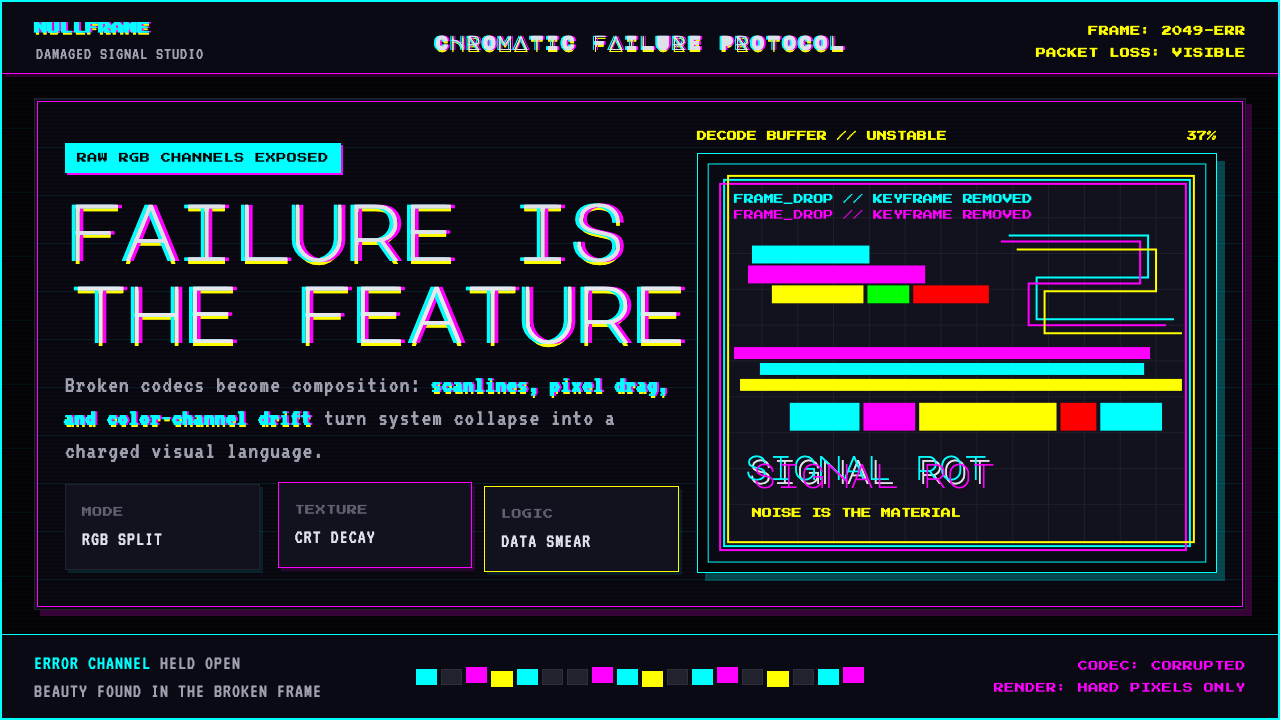 Glitch DatamoshErrors as composition. Corrupted JPEGs, RGB splits, scanlines — failure treat…
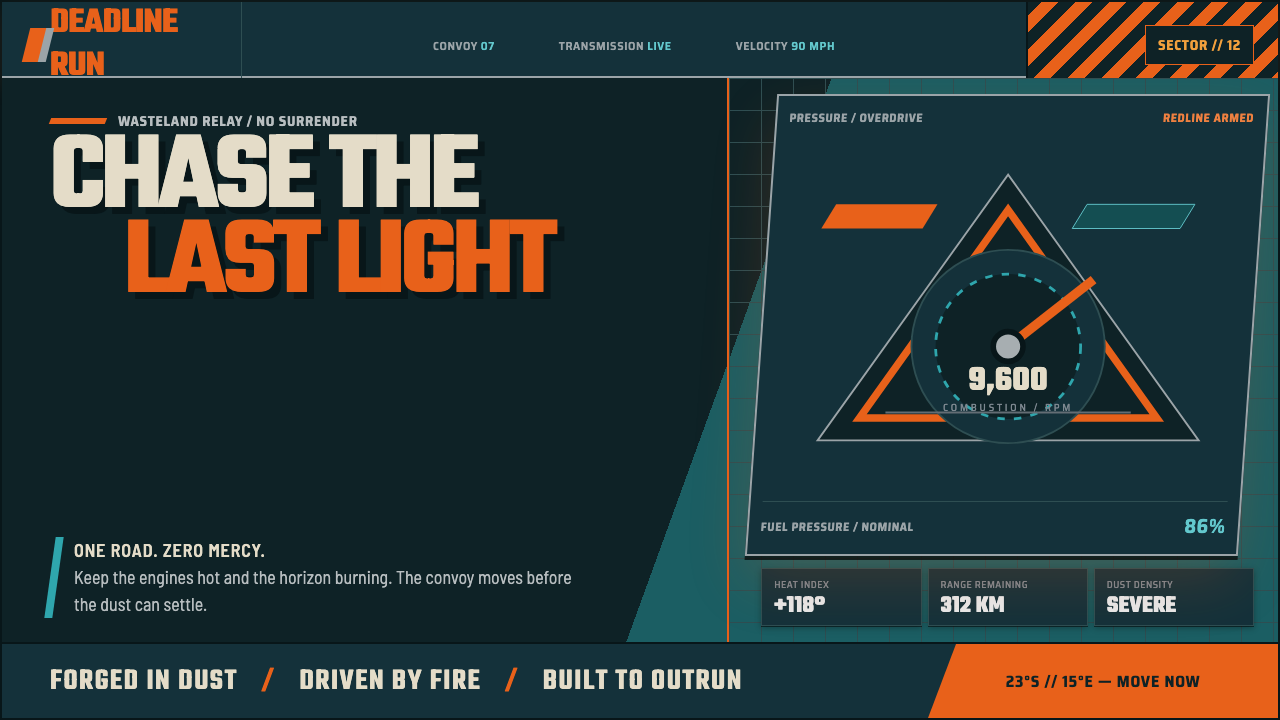 Mad Max Fury Road (2015)Built to roar. Molten saffron cuts through petrol teal, riveted grids, and ha…
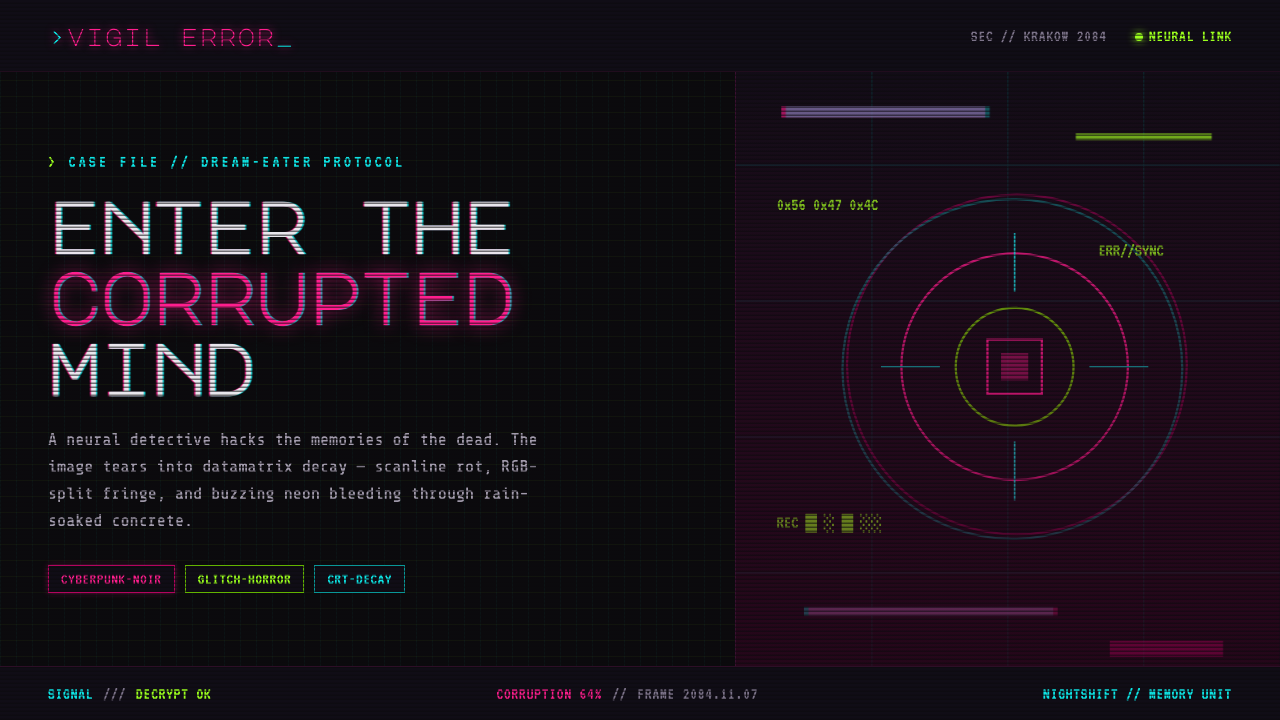 ObserverTech, but corrupted. Neon magenta and acid green tear through rain-black conc…
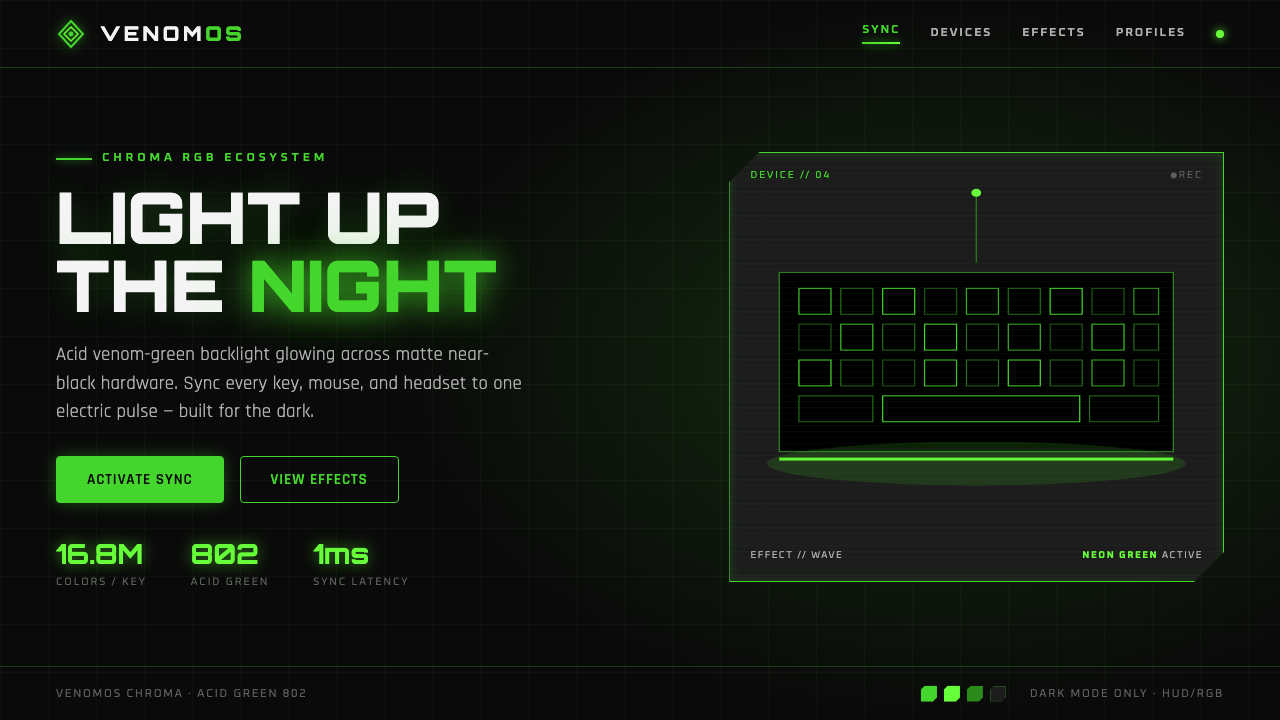 Razer Chroma GreenEsports gear at night. Acid Pantone-802 green burns on matte black via RGB gl…
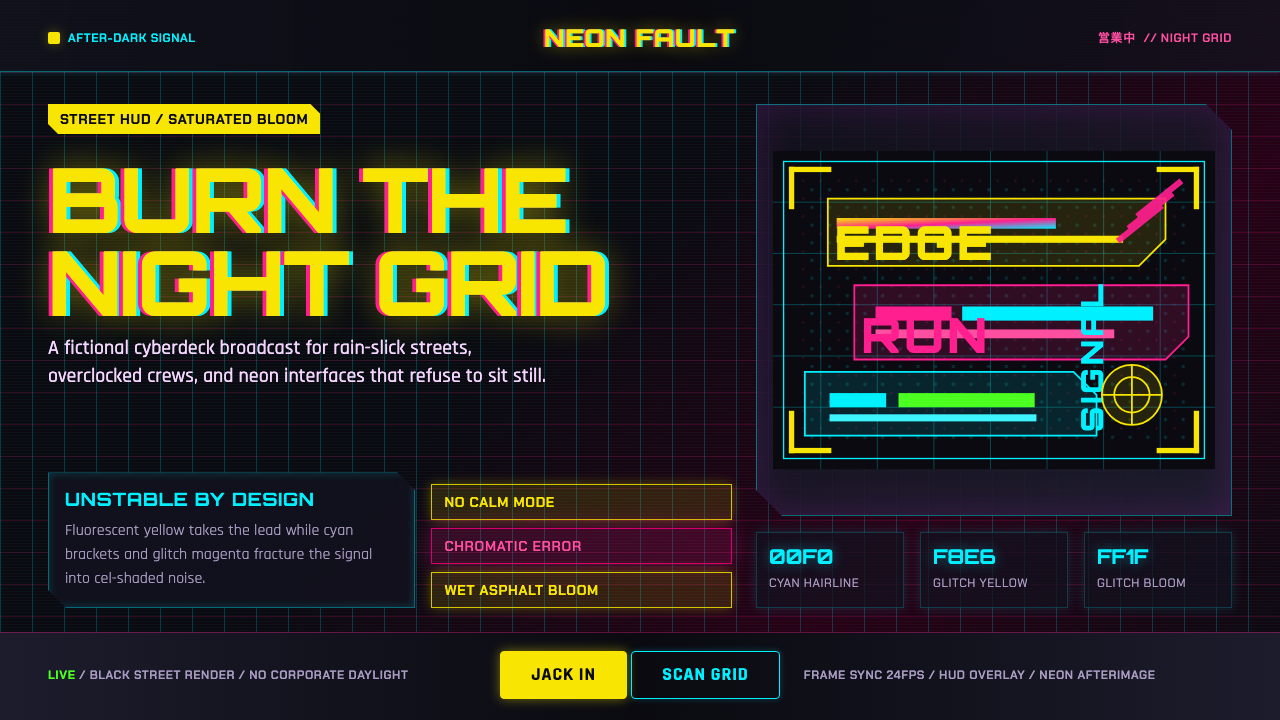 Edgerunners NeonNeon overload. Fluorescent yellow, cyan HUD grids, and magenta glitches burn…
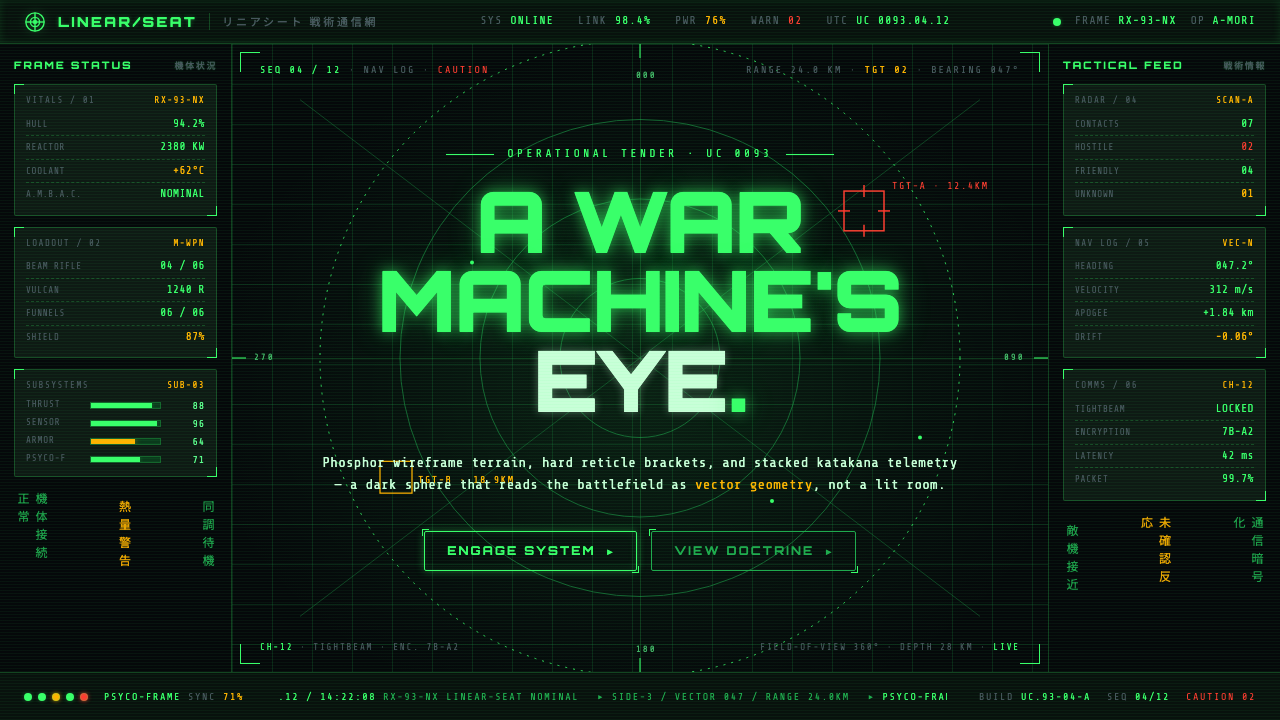 Gundam Universal Century UIA war machine's eye. Phosphor wireframe and katakana telemetry glow inside a…