What is Glitch Datamosh?
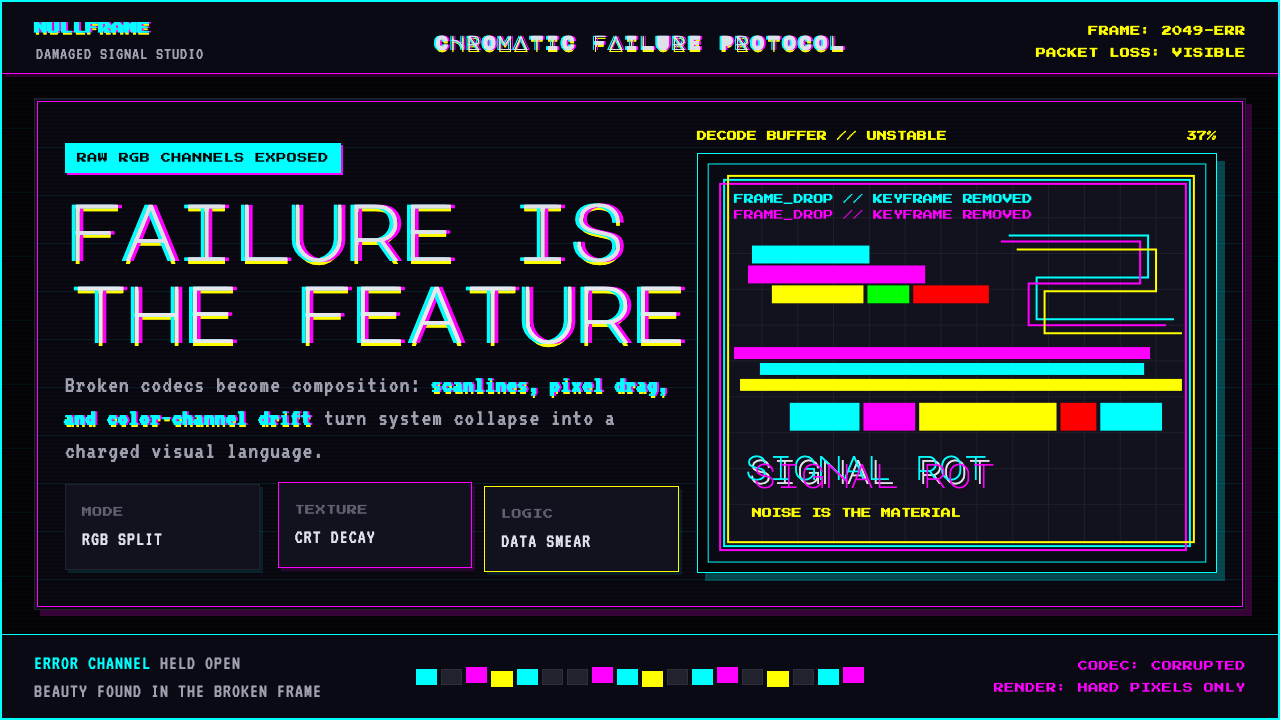
Glitch Datamosh treats digital failure as raw material — corrupted frames, chromatic splits, and pixel-sorting artifacts elevated into a deliberate aesthetic language.
Glitch Datamosh in brief
Glitch Datamosh is a digital art and design aesthetic that treats the visual artifacts of broken or corrupted media as compositional elements rather than errors to be corrected. Corrupted JPEG blocks, datamoshed video frames in which motion data from one clip bleeds into another, RGB channel splits that pull the red, green, and blue layers of an image apart in space, and pixel-sorting trails that streak and smear across a photograph — all of these are symptoms of failing systems, repurposed as intentional aesthetic tools.
The style operates on a fundamental inversion: what digital culture normally hides — the seams, the glitches, the moments when a system breaks down — becomes the subject and the substance of the work. A datamoshed image does not simulate damage; it actually is damaged, or processed in a way that replicates damage. This gives the work a quality of raw authenticity that is difficult to achieve through conventional design: the artifacts are real, and the audience, having encountered corrupted media in everyday life, recognizes them as real.
Visually, the aesthetic is dark in mood and neon in palette. Deep blacks and near-blacks dominate grounds, against which electric magentas, acid greens, blown-out cyans, and aggressive reds appear in streaks, halos, and displaced channels. The human figure — particularly the face — is a recurring subject, rendered distorted, smeared, or fragmented into colored bands. The overall impression is one of technological unease: a world where the infrastructure of image-making has become visible and unstable.

Where does Glitch Datamosh come from?
The roots of glitch aesthetics reach into the earliest moments of consumer digital technology. In the 1980s and 1990s, as home computers and early video hardware became widespread, users began encountering corruption artifacts — scrambled pixels from bad RAM, streaked video from damaged tape heads, the characteristic JPEG blocking of heavily compressed images — as everyday annoyances. A small number of artists began to notice that these failures had a visual character worth exploring. Early experiments included deliberately damaging floppy disks, opening image files in audio editors to produce scrambled results, and physically bending cartridge hardware mid-operation.
Cory Arcangel's 2002 work Super Mario Clouds — in which he removed all game sprites from a Nintendo cartridge, leaving only the scrolling cloud background — marked an early high-profile intersection of artist intervention, digital culture nostalgia, and systems thinking. Arcangel's approach was conceptual: the corruption was controlled and precise, the result spare and meditative rather than chaotic. Around the same time, a diffuse online community of net-artists and early bloggers was developing a shared vocabulary of glitch techniques and sharing them through forums and early social media, building the aesthetic from the bottom up.
The theoretical underpinning arrived with Rosa Menkman's foundational text The Glitch Moment(um), published in 2011. Menkman, a Dutch media artist and theorist, argued that glitch art was not merely a visual style but a critical practice — a way of making the normally invisible workings of digital infrastructure visible and questioning the assumption that technological systems should be seamless and transparent. Her framework gave the existing practice an intellectual vocabulary and legitimacy, and attracted attention from academic institutions including Goldsmiths London and the MIT Media Lab, both of which became centers for critical digital media study.
The aesthetic crystallized into a recognizable mainstream style between roughly 2010 and 2015. Music videos by major artists — Kanye West's Welcome to Heartbreak directed by Nabil, Beyoncé's Hold Up, and a wave of electronic and hip-hop productions — brought datamoshing and RGB-splitting techniques to enormous audiences. Simultaneously, the rise of Instagram and Tumblr created platforms where glitch-influenced image-making could circulate rapidly, and a generation of graphic designers began incorporating chromatic aberration, scanlines, and pixel-sorting into commercial work. By the mid-2010s, the aesthetic had become a recognizable shorthand for themes of technology, anxiety, surveillance, and post-internet identity.
What defines the Glitch Datamosh look?
Chromatic Aberration and Channel Splitting
The most immediately recognizable characteristic of glitch aesthetics is the deliberate misalignment of color channels. In an authentic glitch or a faithful simulation, the red, green, and blue layers of an image separate in space — one shifts left, another right, a third remains centered — creating a ghosted, prismatic halo around edges and subjects. The effect evokes both the physical failure of analog CRT displays and the compression artifacts of digital video. Applied with restraint, it reads as a subtle vibration; pushed to extremes, it dissolves figures into bands of displaced color.
Datamosh and Motion Bleed
Datamoshing is a technique specific to compressed video codecs, in which the keyframe data of one clip is removed or corrupted so that the motion vectors from a preceding clip persist into new content. The result is a smearing or melting of motion information across a cut — flesh tones from one scene bleed across the geometry of another, backgrounds liquefy while foreground subjects remain sharp, or a face slowly morphs into the landscape behind it. In still-image design, this quality is evoked through deliberate smear and stretch, particularly along horizontal axes, as though a single frame were caught mid-corruption.
Dark Ground with Neon Palette
The glitch aesthetic is almost universally dark in its ground treatment. Deep blacks and saturated near-blacks serve as the dominant field, against which neon and fluorescent accent colors — electric magentas, acid greens, blown-out cyans, hot reds — operate at full saturation. This combination evokes the phosphorescent glow of CRT monitors, the color bleeding of analog VHS tape, and the oversaturated palette of early computer graphics. The darkness is not empty or minimal; it is dense and slightly unstable, often broken by grain, scanlines, or compression noise.
Scanlines and Compression Artifacts
Horizontal scanlines — thin, evenly spaced dark lines that cross the composition — reference the raster scan of CRT displays and early video monitors. They impose a visible mechanical grid on top of whatever image sits beneath, flattening and texturizing simultaneously. JPEG compression artifacts — the blocky eight-by-eight-pixel grid that appears when compression is pushed too hard — are similarly used to create fields of colored noise and texture. Both effects layer a second visual system over the primary image, creating a sense that the work exists inside a screen or transmission rather than on a neutral surface.
Pixel Sorting
Pixel sorting is a technique in which the pixels of an image are algorithmically reordered based on properties such as brightness, hue, or saturation, typically along a single axis. The result is a dramatic streak or trail — portions of the image that meet a threshold condition smear horizontally or vertically, creating long ribbons of blended color while adjacent areas remain intact. The aesthetic effect is somewhere between a long photographic exposure and a data visualization: the underlying image remains recognizable but appears to be flowing or disintegrating in one direction. Pixel sorting is often the most visually dramatic element in glitch composition.
The Distorted Figure
The human body — and especially the face — occupies a privileged position in glitch imagery. When a face is subjected to datamoshing, channel-splitting, or pixel-sorting, the distortion carries psychological weight that an abstract field of noise does not. Eyes displaced from their sockets, a jaw smeared horizontally across a dark ground, a portrait rendered as overlapping ghost images in three misaligned colors — these configurations produce a specific kind of unease that connects glitch art to wider themes of identity, surveillance, and the instability of digital selfhood. The figure is not used for portraiture; it is used as a site of disintegration.
Controlled Chaos and Signal/Noise Tension
Despite appearances, skilled glitch composition is highly controlled. The most effective work sets areas of legibility against areas of corruption — a recognizable subject floats in a field of noise, or a clean typographic element anchors a composition otherwise given over to distortion. This signal-to-noise tension is what separates glitch design from undifferentiated visual chaos: the audience must be able to read something, even if the reading is effortful, for the corruption to function as content rather than simply as obstruction. The art lies in calibrating exactly how much of the signal to preserve.

Who shaped Glitch Datamosh?
Dutch media artist and theorist Rosa Menkman is the most important single figure in the theorization of glitch art. Her 2011 publication The Glitch Moment(um) provided the movement with an intellectual framework, arguing that glitch is not a failure of technology but a productive rupture — a moment when the normally opaque workings of a digital system become visible and open to critique. Menkman continues to create glitch-based visual works, conduct academic research, and develop taxonomies for artifact types that have become standard reference in critical digital media studies. Her ongoing influence bridges artistic practice and theoretical scholarship in a way that few practitioners in the field match.
New York-based artist Cory Arcangel pioneered the intervention approach to digital glitch, creating work that manipulates existing hardware and software systems rather than generating noise from scratch. His 2002 Super Mario Clouds — achieved by carefully hacking a Nintendo cartridge to remove all sprites except the scrolling clouds — exemplifies the conceptual precision of his practice: the intervention is minimal, the result uncanny, the point sharp. Arcangel's work established that glitch art could be collected, exhibited, and taken seriously by major institutions, and his early adoption of web-native distribution helped establish the cultural norms of net-art more broadly.
Chicago-based artist and educator Nick Briz occupies a unique position in the glitch community as both practitioner and pedagogue. His widely circulated tutorials and educational videos on glitch techniques made the practice accessible to a generation of digital artists who encountered it through the open internet rather than institutional art education. Briz is notable for his insistence on the political and critical dimensions of glitch practice — he argues consistently that how we make glitch matters as much as what it looks like, and that the choice to work with broken systems is itself a form of commentary on the systems we live inside.
Phillip Stearns works at the intersection of glitch aesthetics and physical fabrication, most notably through his Glitch Textiles project, in which corrupted image data is woven directly into fabric using industrial Jacquard looms. The resulting textiles materialize the visual language of digital error in a medium that predates the computer — the same punch-card logic that underlies Jacquard weaving is a conceptual ancestor of digital binary code. Stearns's practice demonstrates that glitch is not confined to screens or transmission; the formal vocabulary of corruption can migrate into any medium that can encode and decode visual information.
How do you use Glitch Datamosh today?
Glitch Datamosh is a high-intensity style that communicates technological unease, subcultural edge, and self-aware digitality. Applying it effectively requires understanding not just its visual grammar but the emotional and contextual signals it sends. It is not a neutral backdrop — it makes claims about the content it frames, positioning that content as raw, transgressive, or aware of its own mediation. This makes it powerful in the right contexts and actively counterproductive in the wrong ones.
For presentation slides, the style works best on covers, section dividers, and high-stakes feature reveals rather than on data-heavy content pages. A cover using glitch aesthetics should anchor one legible typographic element — typically the title and date — against a field of controlled distortion; the corruption should frame the text, not compete with it. Section dividers can carry more visual intensity, using full-screen pixel-sorting or channel-split imagery as a palate cleanser between major topics. Data slides, however, should be restrained: charts and graphs require clean grounds and unambiguous color encoding; glitch texture introduced into a bar chart will undermine legibility without adding meaning. Reserve the distortion for editorial moments, not analytical ones.
For web interfaces and dashboards, glitch aesthetics suit dark-mode products in creative technology, music, gaming, or security sectors where the aesthetic signals insider familiarity with the digital substrate. Applied to a dashboard, the style works through texture and micro-detail rather than wholesale distortion: scanline overlays at low opacity on hero panels, subtle channel-split on hover states for interactive elements, pixel-noise texture fields as background surfaces rather than in foreground content. Pricing pages in this style pair dark grounds with neon accent colors to differentiate tiers, using the saturation and vibrancy of glitch-adjacent hues as a hierarchy signal. Navigation and body text must remain fully legible — the glitch is environment, not obstruction.
For editorial and marketing work — album artwork, poster campaigns, event promotion, fashion editorial — the style has its most natural habitat. Here the full visual grammar can deploy without accessibility constraints: a face dissolving into color channels, a logotype with deliberately misaligned layers, a full-bleed background of pixel-sorted imagery overlaid with sparse clean typography. The most effective editorial applications use the contrast between the distorted image layer and a single clean typographic layer as the primary compositional tension. Marketing materials for technology launches, cultural events, and creative platform announcements have used this aesthetic to signal that the product occupies territory at the edge of mainstream digital culture — aware of its own construction, unafraid of its own failure.
The most common mistake when applying glitch aesthetics is applying distortion indiscriminately, without preserving any signal. Effective glitch composition depends on contrast between corrupted and legible zones — if everything is equally distorted, the distortion ceases to read as deliberate and becomes visual noise. A secondary mistake is using all the aesthetic markers simultaneously at full intensity: maximum chromatic aberration, full pixel-sorting, scanlines at high opacity, and heavy JPEG blocking combined produce cacophony rather than tension. The strongest work picks one or two primary distortion modes and uses the others sparingly as supporting texture. Finally, the style's darkness and intensity make it poorly suited to contexts requiring warmth, approachability, or trust-building — healthcare, financial services, children's products, and consumer goods aimed at broad general audiences should approach with significant caution or avoid it entirely.
A note on cultural context: glitch aesthetics carry specific subcultural associations — with electronic music, hacker culture, net-art, and post-internet identity politics — that will be recognized by audiences familiar with those communities and may read as affectation or noise to audiences who are not. The style works best when the product or context genuinely shares those associations, and least well when applied purely decoratively by brands seeking to borrow the aesthetic's edge without earning it.

Glitch Datamosh — FAQ
Is glitch design the same as vaporwave?
They share some ancestry — both are post-internet aesthetics that engage with digital nostalgia and consumer media culture — but they operate differently. Vaporwave draws on early computer graphics, mall aesthetics, and late-1980s through mid-1990s consumer culture; its palette is pastel and its mood is ironic melancholy. Glitch aesthetics are darker, more technically specific in their artifact references, and more politically inflected toward critique of digital infrastructure. Vaporwave finds beauty in the smooth surfaces of corporate culture; glitch art finds beauty in those surfaces breaking down. They can coexist in the same composition, but they pull in opposite emotional directions.
Do I need to use real corruption, or can I simulate the effects?
Simulation is standard practice in commercial and design contexts, and the visual results are often indistinguishable from the real thing. Authentic datamoshing requires codec manipulation and video editing skills that are not always accessible, and the results can be unpredictable. Most design work in this aesthetic uses filters, blend modes, layer displacement maps, and dedicated software to achieve chromatic aberration, scanline overlays, and pixel-sorting effects without engaging the underlying corruption mechanisms. The critical community sometimes draws a distinction between simulation and authentic glitch on philosophical grounds, but for applied design purposes, the visual outcome matters more than the process by which it was achieved.
Can glitch aesthetics work in a light-background layout?
It can, but the effect changes substantially. The neon accent colors that read as electric and urgent against a dark ground become more cheerful and less menacing on white or cream. Scanlines become visible marks rather than atmospheric texture. Chromatic aberration can work well on white — it carries the same optical quality — but pixel-sorting and JPEG artifact textures tend to read as decorative rather than disruptive when the ground is light. A light-ground glitch composition shifts the aesthetic register from technological dread toward something closer to pop-art playfulness. Whether that shift serves the design depends entirely on the context. Some applications — youth branding, playful consumer technology, editorial design for lifestyle publications — may benefit from the lighter reading.
How do I keep glitch design accessible and legible?
The central rule is to never apply distortion effects to text that must be read. Reserve glitch effects for image layers, backgrounds, and decorative elements; keep typographic content on clean, undistorted layers with sufficient contrast against their ground. For body text and interface labels, the dark grounds typical of the aesthetic require light, high-contrast type — not mid-tone or low-contrast choices. Chromatic aberration applied to headlines can be effective if the underlying letterforms remain readable after the channel offset; test by removing the effect and checking that the base type passes contrast requirements independently. Screen-reader accessibility is not affected by visual glitch effects, so semantic HTML and alt text practices apply normally.
Is this style too niche for mainstream commercial work?
It depends on what mainstream means in a given context. In music, gaming, fashion, and youth-oriented consumer technology, glitch-adjacent aesthetics have been mainstream for over a decade — audiences in these sectors recognize and respond to the visual language without needing it explained. In financial services, healthcare, or broad-market consumer goods, the style would read as niche or jarring to most audiences. The practical test is whether the target audience has meaningful exposure to the cultural contexts — electronic music, net-art, hacker culture, streaming platform design — in which the aesthetic is already normalized. Where that exposure exists, the style reads as confident and culturally aware. Where it does not, it reads as arbitrary or aggressive.
Related design styles
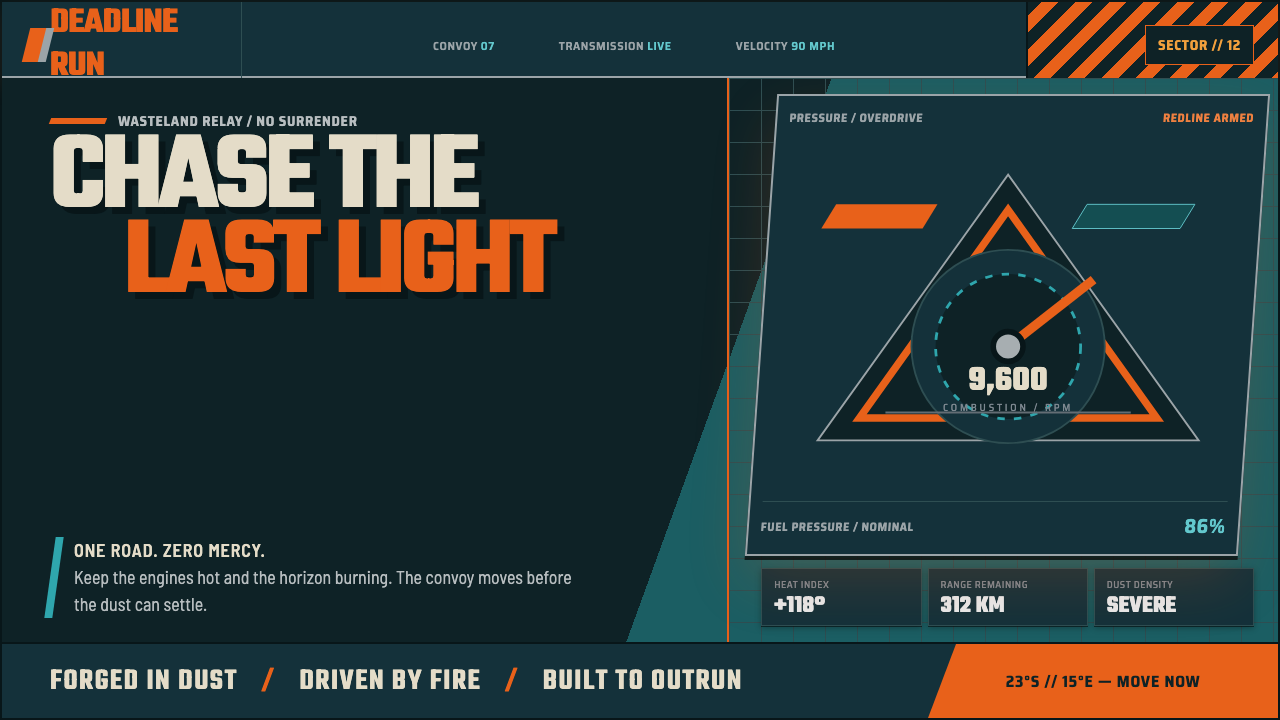 Mad Max Fury Road (2015)Built to roar. Molten saffron cuts through petrol teal, riveted grids, and ha…
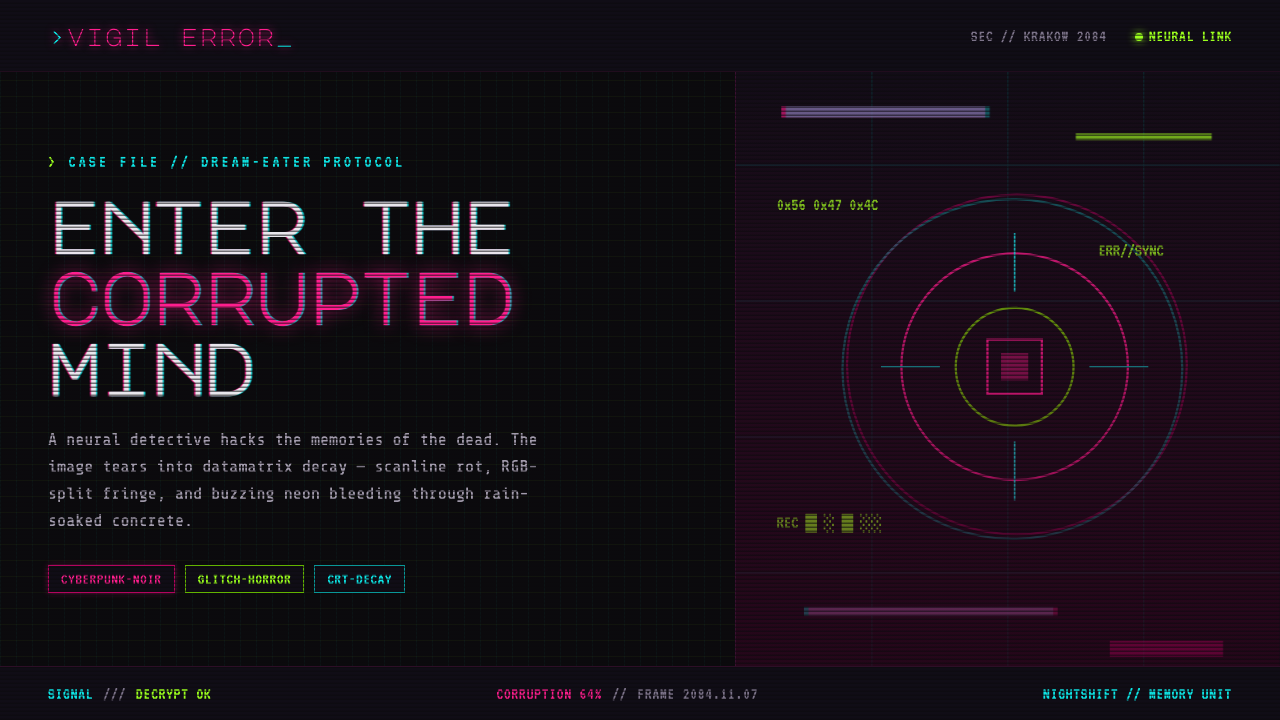 ObserverTech, but corrupted. Neon magenta and acid green tear through rain-black conc…
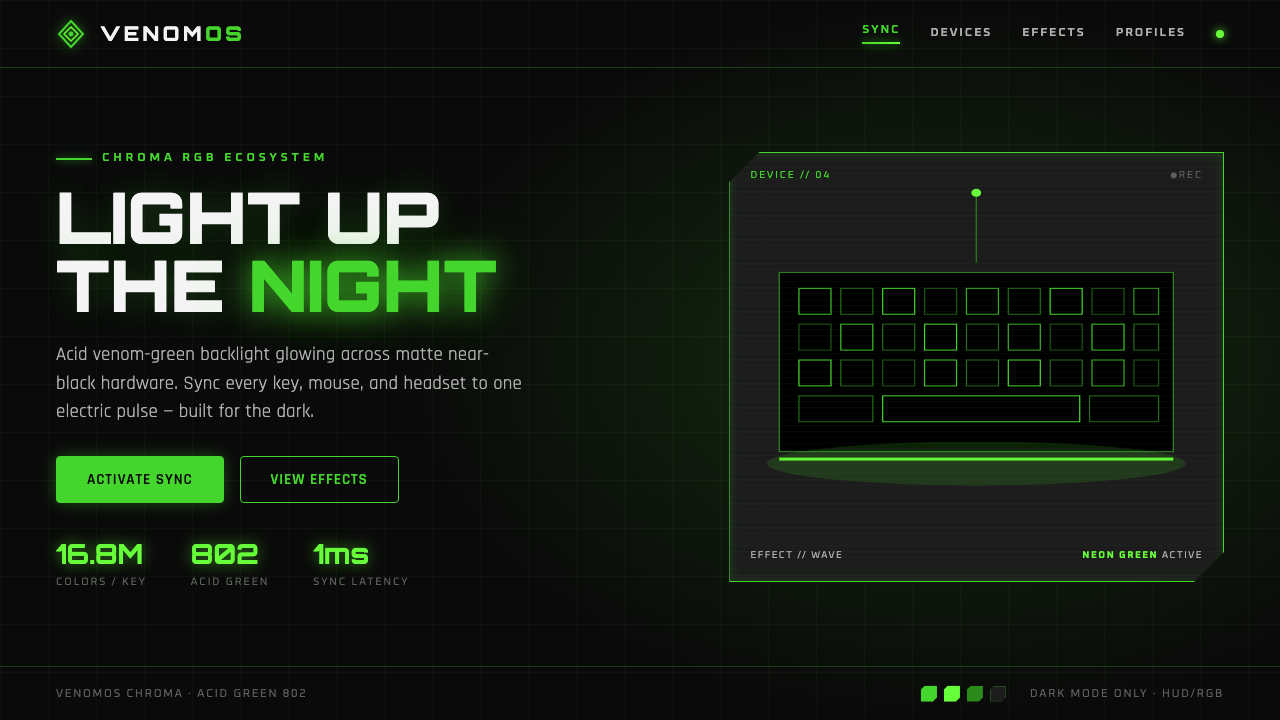 Razer Chroma GreenEsports gear at night. Acid Pantone-802 green burns on matte black via RGB gl…
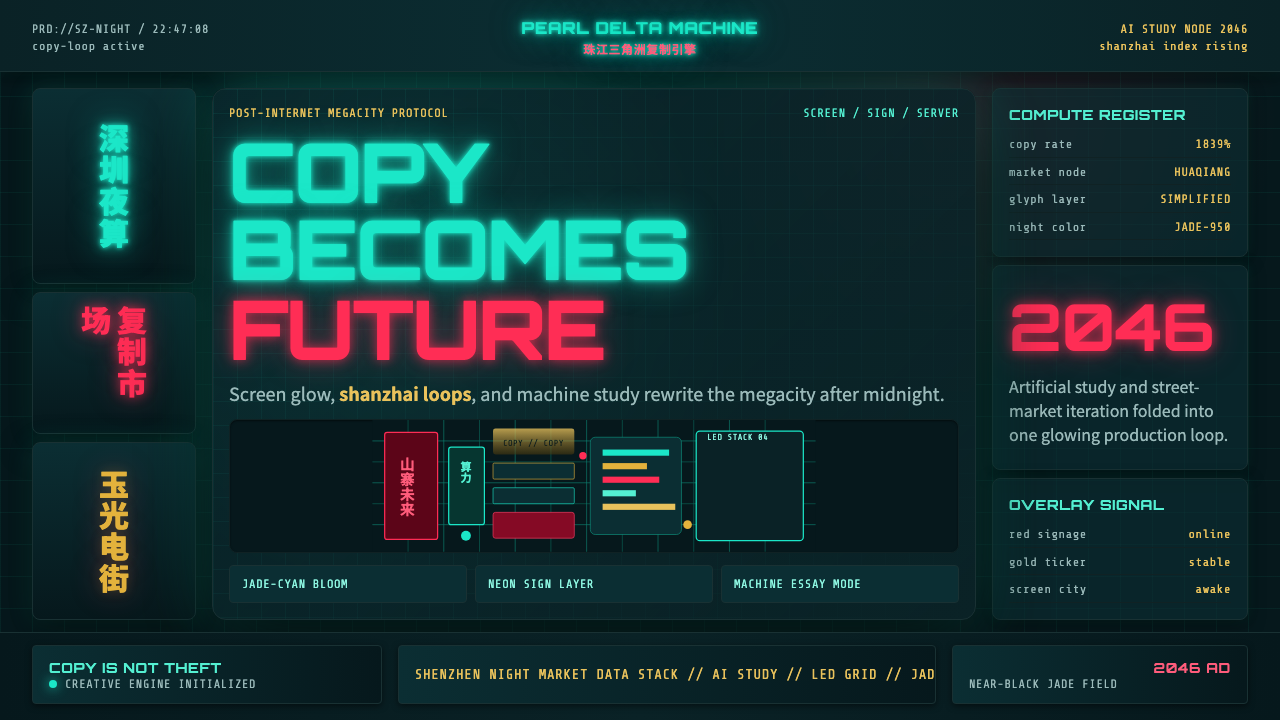 SinofuturismCopy becomes future. Jade-cyan grids, red signage, and Orbitron data stack th…
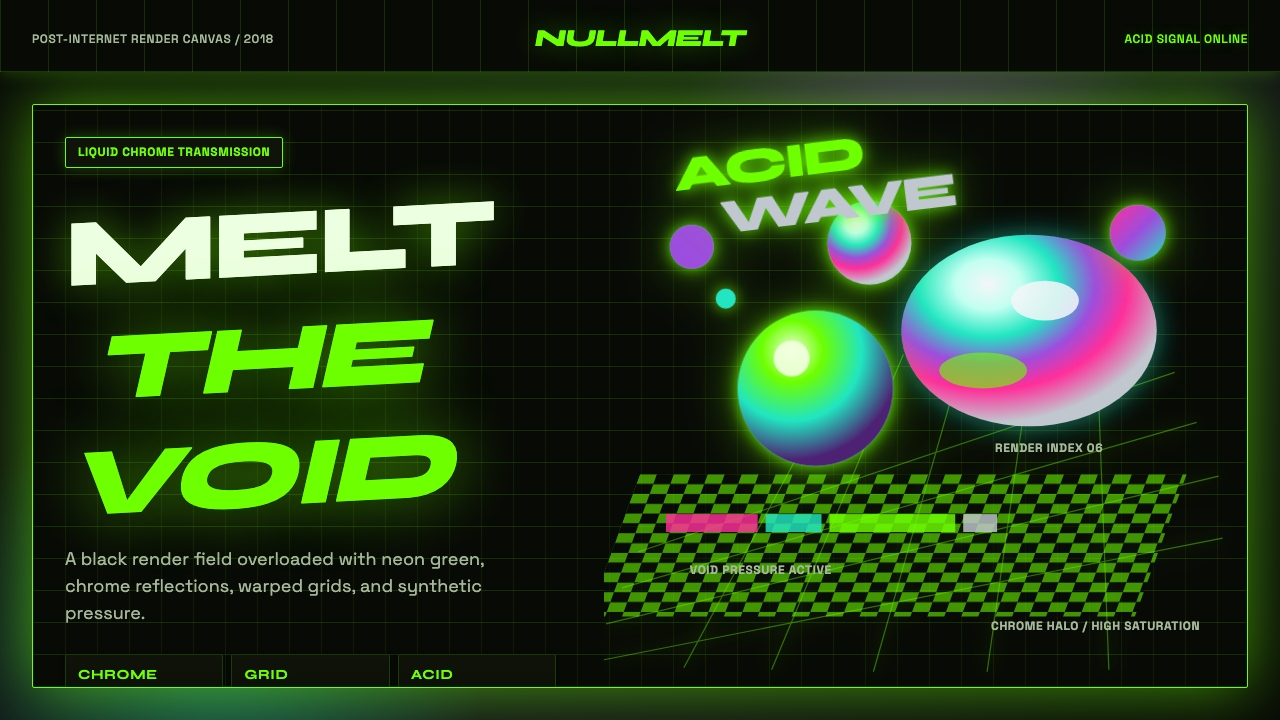 Acidwave 3D RenderPsychedelia hits the render engine. Neon green, chrome orbs, and warped grids…
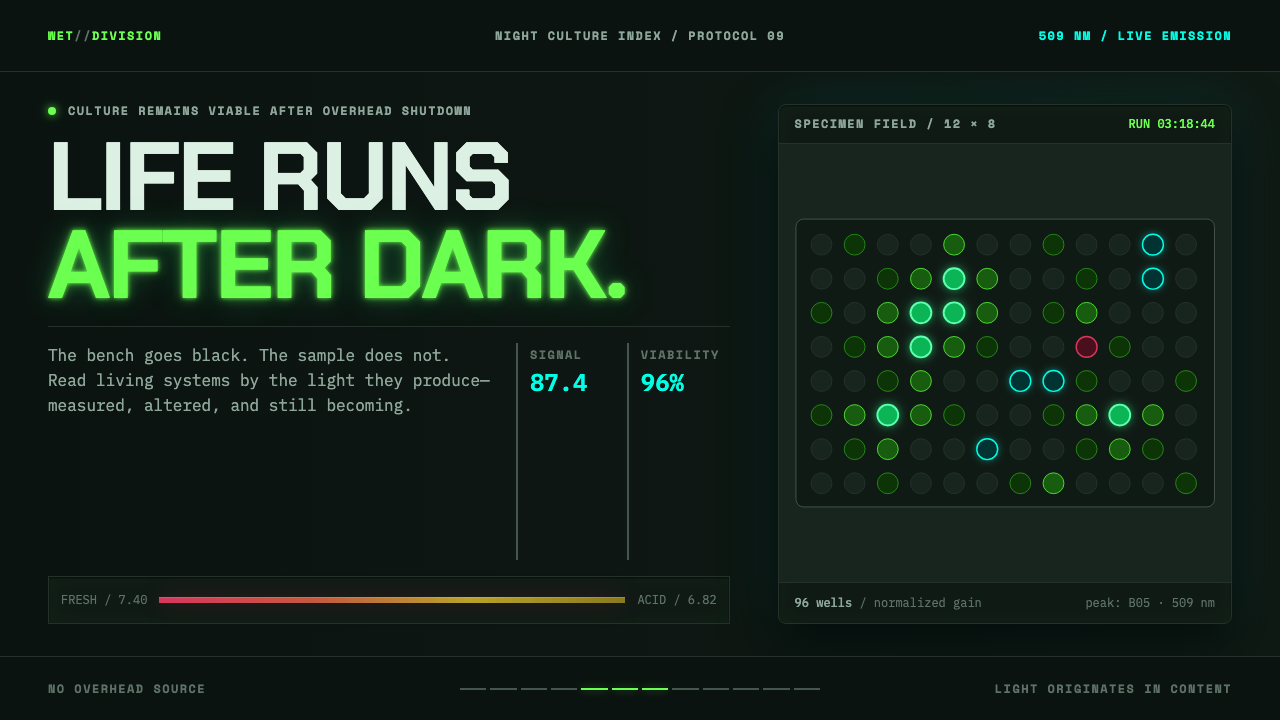 Biopunk WetwareLife emits after dark. GFP green and transilluminator cyan pulse across black…