What is Shona Serpentine Sculpture?
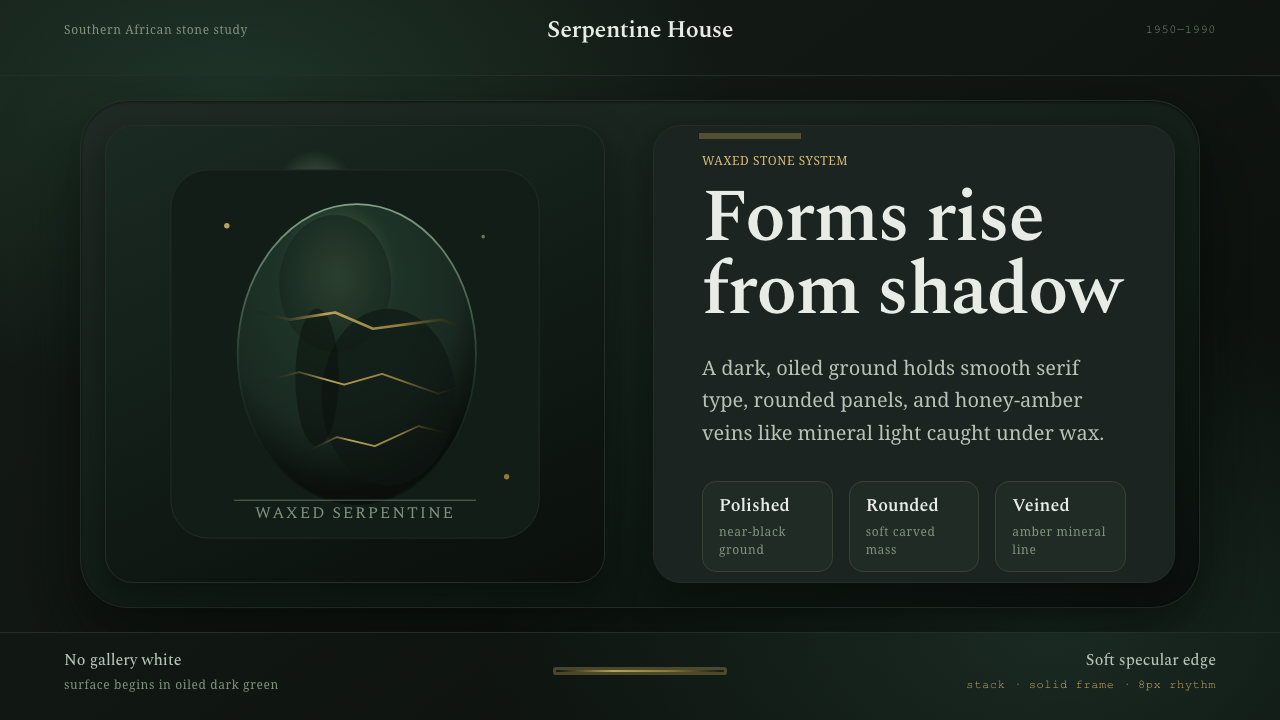
Shona Serpentine Sculpture turns darkness into a surface with memory: polished green stone, amber veins, and human forms that seem to emerge slowly from within the material.
Shona Serpentine Sculpture in brief
Shona Serpentine Sculpture is a design language drawn from Zimbabwean stone carving of the mid-to-late twentieth century, particularly work associated with the Great Dyke serpentine belt. Its visual world begins with stone rather than paper, fabric, or a neutral digital canvas. Springstone, opalstone, and leopard rock are understood not as passive materials waiting to be decorated, but as dense bodies whose color, mineral veins, and polish already contain the image.
The style is defined by rounded abstraction. Heads, figures, and facial suggestions are simplified until they sit somewhere between portrait, landscape, and mineral formation. A curve may indicate a cheek, shoulder, brow, or folded limb without insisting on literal anatomy. This restraint gives the forms a quiet emotional charge: they feel intimate and human, yet never fully exposed.
Its color and finish are inseparable from its making. Stone is heated with open flame, then worked with beeswax and carnauba so that the surface deepens from yellow-green through brown toward near-black. Honey and amber mineral seams interrupt that darkness with warmth. In a contemporary design system, the same logic favors shadowed grounds, waxed-looking surfaces, restrained highlights, and forms that appear discovered rather than placed.
Where does Shona Serpentine Sculpture come from?
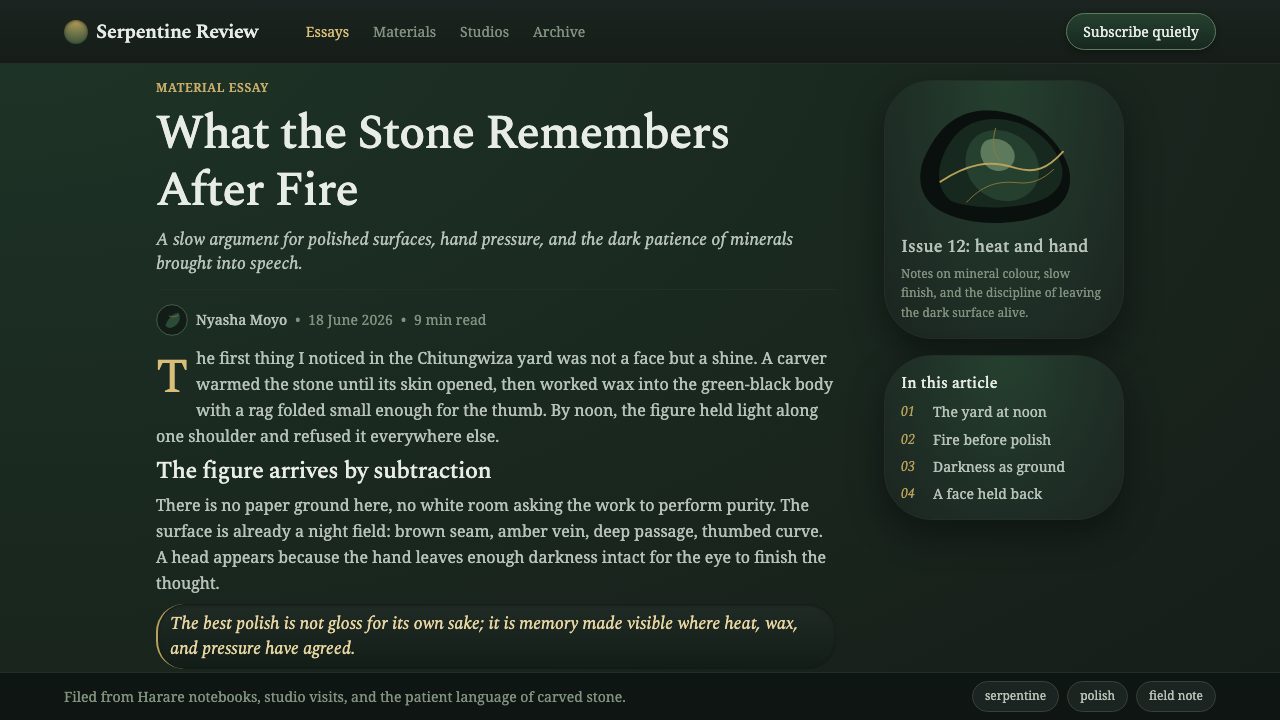
The movement emerged in Zimbabwe during the 1950s and developed through the period from 1950 to 1990 around the Great Dyke serpentine belt. This geological setting supplied the stones that gave the work its distinctive range of dark greens, browns, near-black passages, and mineral interruptions. The material was not a neutral support for a separate visual program; its internal variation shaped the final image from the beginning of the carving.
Tengenenge workshop sculptors and artists connected with the National Gallery of Zimbabwe workshop school were central to this period. Their practice established a shared language of carving in which smooth abstraction, rounded volume, and the expressive possibilities of serpentine stone could meet. The resulting works did not depend on elaborate surface ornament. Their force came from the relation between hand-carved form, visible mineral structure, and a finish that made the stone seem newly alive.
The first generation of Shona carvers helped define an approach now associated with Zimbabwean stone sculpture and the Tengenenge school. Across this lineage, an abstracted head or figure could remain legible without becoming descriptive. The artist could retain a seam, curve around a vein, or let a darker mass hold visual weight. That relationship between disciplined reduction and material attention is what makes the style useful beyond sculpture: it offers a way to build identity from surface, shadow, contour, and restraint.
What defines the Shona Serpentine Sculpture look?
Waxed Darkness
The ground is deep rather than empty. Dark green, brown, and near-black surfaces create the sense of a polished stone body extending beyond the frame. Darkness should feel dense and warm, never like a flat void. It holds the composition together while allowing small areas of light to carry disproportionate importance.
Mineral Veins
Honey and amber passages act as natural interruptions within the darker mass. They are not decorative stripes and should not repeat with mechanical regularity. A vein is most convincing when it appears embedded, branching, or partially concealed, as though the surface has revealed an older structure beneath its polish.
Rounded Abstraction
Forms are softened into continuous curves. Heads and figures emerge through swelling planes, shallow recesses, and silhouettes that resist sharp description. The abstraction should preserve presence rather than erase it: the viewer senses a face, embrace, or bodily gesture without being given a literal illustration.
Soft Specular Light
Light gathers along selected curves and polished ridges instead of flooding the whole composition. Highlights should be smooth, restrained, and shaped by volume. Their role is to explain the turn of a surface, reveal waxed depth, and make darkness feel tactile rather than merely atmospheric.
Material-Led Composition
Composition follows the logic of stone. A dark mass can remain unbroken for a long visual stretch; an irregular seam can become the main directional element; a rounded silhouette can carry more meaning than a detailed scene. Nothing should look pasted on top of the surface. Every visual decision should appear to belong to the same mineral body.
Quiet Human Presence
The emotional register is contemplative rather than dramatic. Abstracted faces and figures are intimate because they withhold detail, inviting recognition without demanding a fixed reading. This makes the style especially effective when a design needs gravity, care, ancestry, or reflection without resorting to sentimental imagery.
Who shaped Shona Serpentine Sculpture?
The sculptors of the Tengenenge workshop represent one of the key workshop-based forces in the Zimbabwean stone-sculpture movement. Their importance lies in the sustained exploration of serpentine carving as a shared visual language: smooth forms, material sensitivity, and abstraction built through direct engagement with stone rather than applied decoration.
The National Gallery of Zimbabwe workshop school formed another central context for the movement. It connected artists around a practice in which the carved object, the source stone, and the finished waxed surface belonged to one continuous process. Its presence in the movement helps explain why the aesthetic is both sculptural and systematic rather than merely individual or ornamental.
The first generation of Shona carvers established the enduring vocabulary of abstracted serpentine carving. Their work made it possible for a rounded head, figure, or gesture to carry meaning through contour, polish, and mineral variation. That legacy remains the foundation for contemporary interpretations that seek depth and human presence without literal representation.
How do you use Shona Serpentine Sculpture today?
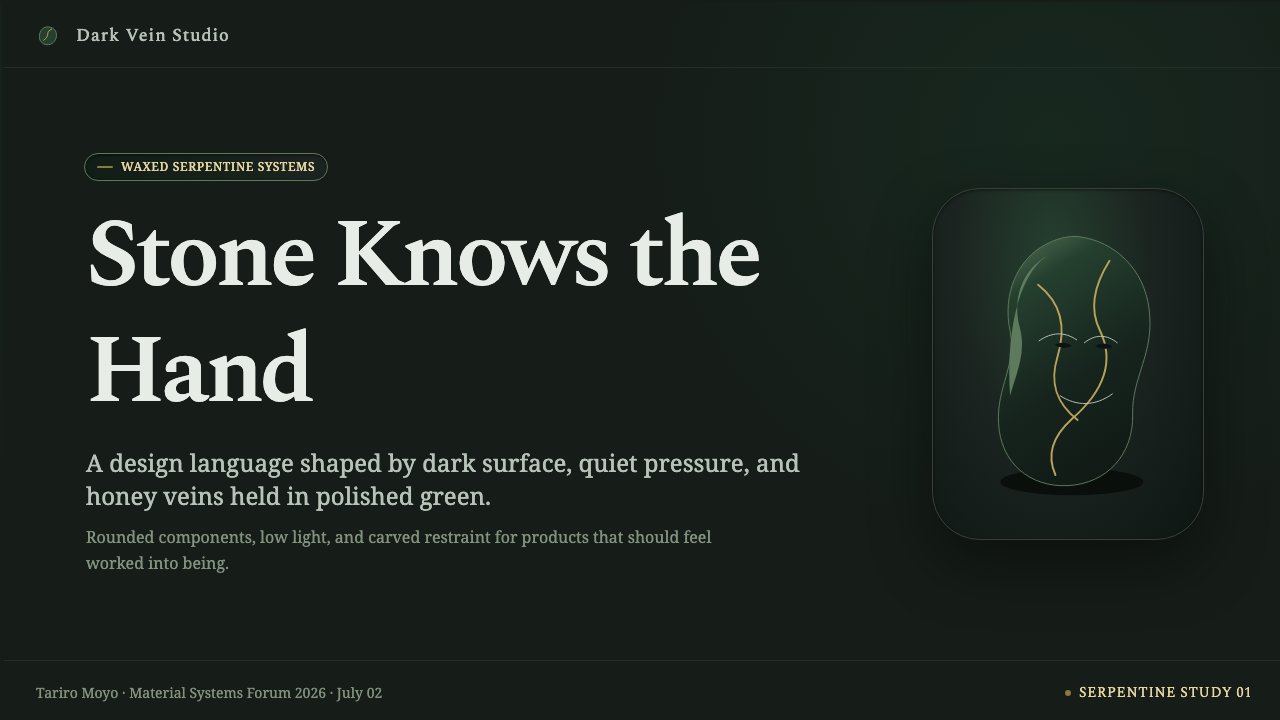
For presentation covers, let a single dark sculptural mass establish the field before adding language. A rounded silhouette can rise from one edge, while an amber vein or small polished highlight gives the title a visual companion. Content slides should remain calm and spacious: use darkness as a continuous ground, group text into clear clusters, and allow one curve or seam to organize the reading path. Data slides benefit from the same discipline when charts are treated as carved forms rather than bright dashboard decoration.
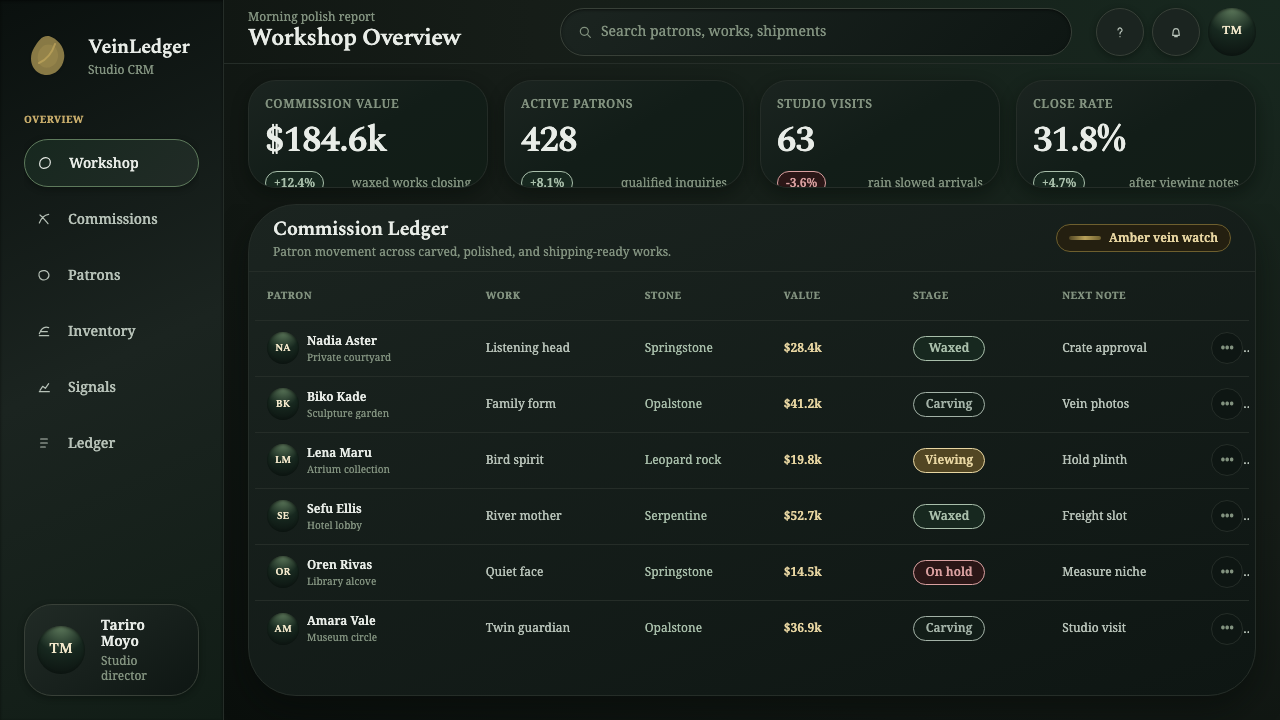
For web interfaces, this style suits editorial archives, cultural platforms, premium collections, and reflective product experiences more naturally than fast, utility-first tools. A dashboard can use dark stone-like panels to separate areas of attention, with warm mineral accents reserved for the most consequential state or action. Pricing pages can make each tier feel like a distinct material presence, but should preserve enough contrast and plain-language hierarchy that the atmosphere never obstructs comparison.
For editorial and marketing work, use the style to create slow visual pacing. Large crops of stone-like texture, abstract figure studies, and generous dark intervals can frame introductions, quotations, or featured objects. Marketing material should emphasize tactility and craft through surface and contour, not through an overload of effects. The strongest layouts feel almost like a gallery encounter: the viewer approaches, notices a vein of light, then gradually understands the form.
A common mistake is to treat the style as generic dark luxury. Gloss alone is not enough, and a black background with random gold accents loses the relationship to serpentine stone. The visual system needs green-brown depth, irregular mineral warmth, rounded abstraction, and carefully localized light. Another mistake is over-describing the figure: once every facial feature and contour becomes explicit, the sense of discovery that gives the style its power disappears.
The style also demands restraint in motion and interaction. Transitions should feel like a surface catching light or a form becoming visible from shadow, not like a spectacle layered over stone. Interactive elements need a clear tactile distinction, but they should remain part of the same material world. When every control shines equally, the eye loses the hierarchy that polished darkness and small amber interruptions are meant to create.
Shona Serpentine Sculpture — FAQ
Is Shona Serpentine Sculpture primarily a dark design style?
Darkness is central, but it is not the whole system. The relevant darkness comes from waxed serpentine stone moving through green, brown, and near-black, not from an interchangeable black backdrop. Its meaning depends on the way amber veins, rounded forms, and soft reflected light interrupt the darker body. Remove those material cues and the result may feel dramatic, but no longer connected to the sculpture language.
How literal should a figure or face be?
It should remain suggestive. The source tradition centers on smooth, rounded abstract heads and figures, so the goal is not anatomical accuracy. A brow-like ridge, a shoulder curve, or a paired silhouette may be enough to establish human presence. Leaving space for the viewer to complete the image preserves the contemplative quality that literal illustration would weaken.
Can the style work without stone photography or texture?
Yes, provided the composition still follows material logic. Abstract curves, dark layered surfaces, restrained polished highlights, and irregular amber interruptions can evoke the source without reproducing a literal stone photograph. The important distinction is between an image that feels formed from one continuous body and a layout that merely applies a texture over unrelated components.
Where does this style struggle in digital products?
It struggles where speed, dense comparison, and constant status scanning are the dominant user needs. The style relies on shadow, subtlety, and gradual recognition, which can become burdensome if every screen must support rapid operational decisions. In those contexts, its material atmosphere works best as an identity layer around a clearer information system, rather than as the organizing principle for every interface element.
Related design styles
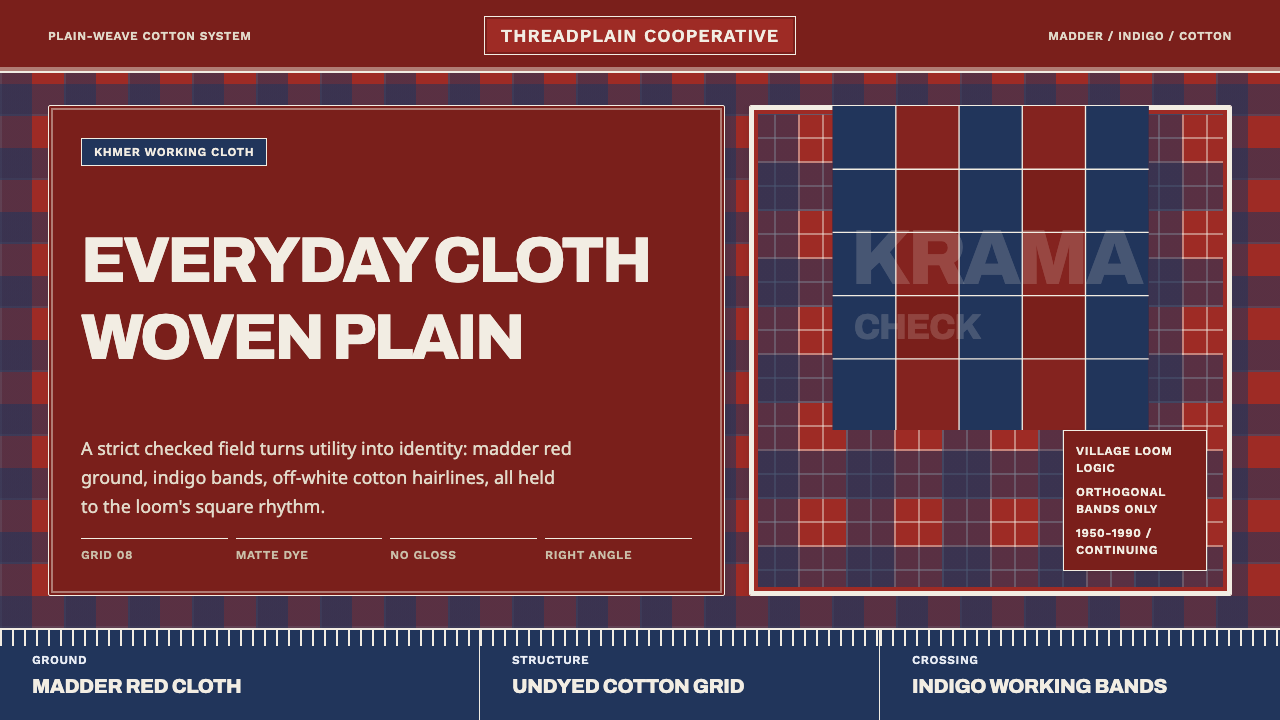 Cambodian Krama CheckPlain cloth has authority. Madder red, indigo bands, and cotton grid lines do…
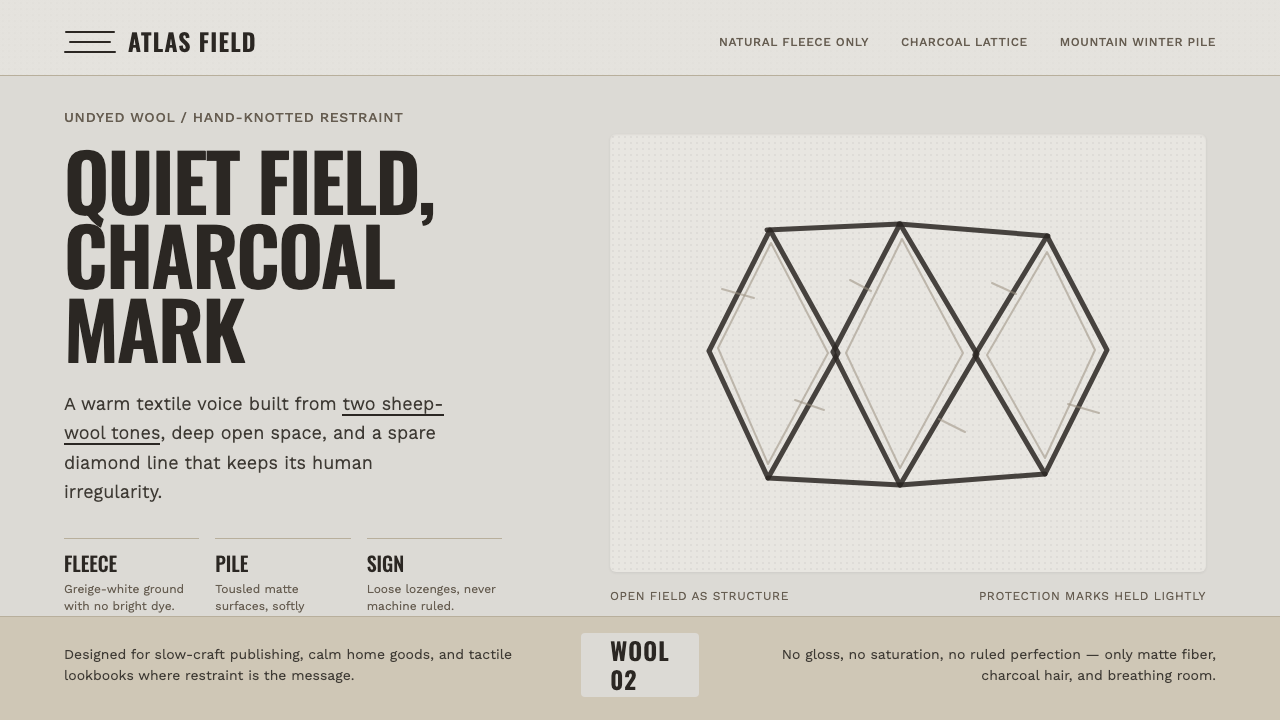 Beni Ourain Berber CarpetRestraint feels tactile. Greige wool field, Oswald type, and a loose charcoal…
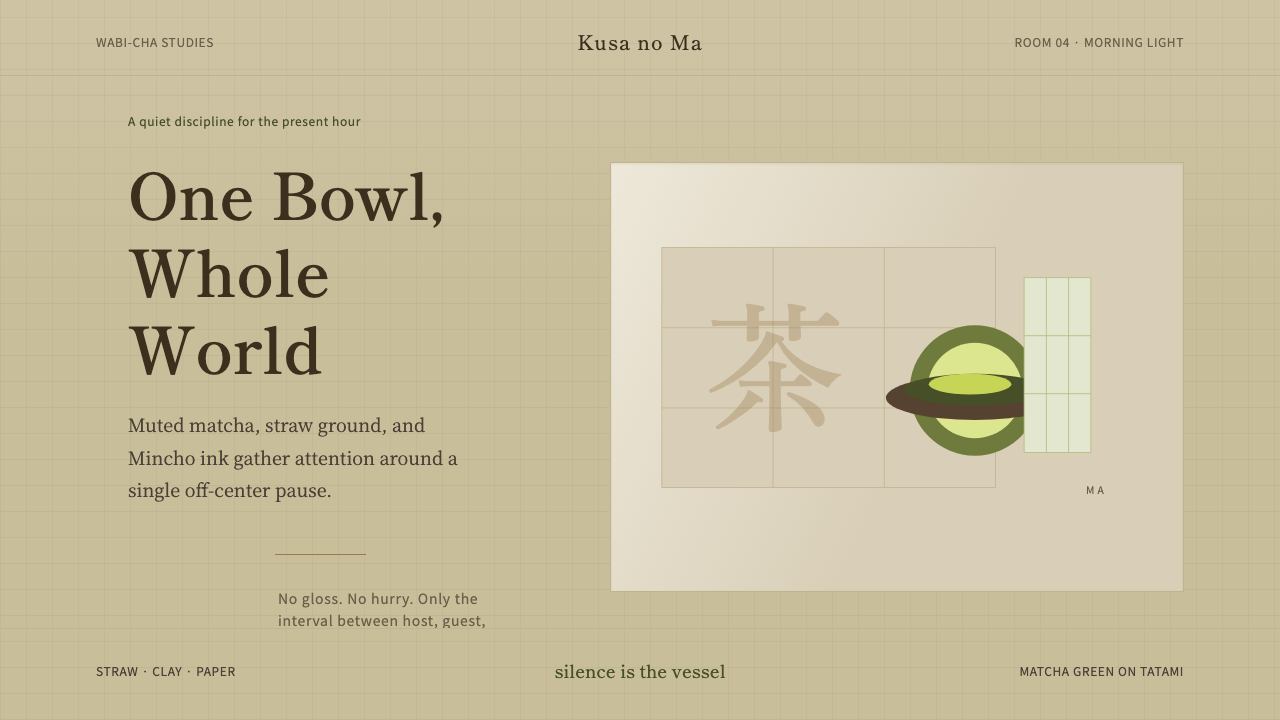 Japanese Tea CeremonyStillness has weight. Tatami straw, matcha green, and Mincho type leave room…
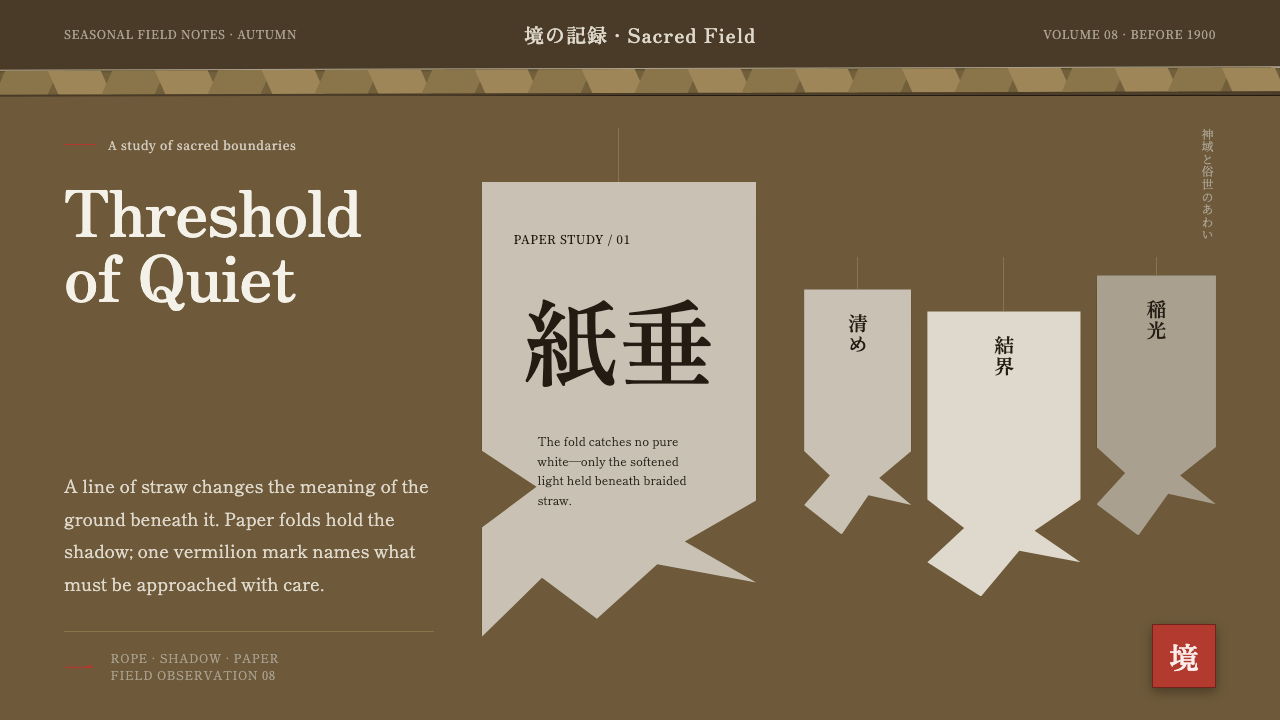 Shinto Shide Paper StreamerQuiet becomes sacred. Shadowed washi hangs from a straw-gold line, marked onc…
 Sumi-e Ink WashRestraint carries weight. Washed black ink floats on oatmeal washi, anchored…
 Undyed Khadi WhiteModest, never cream. Greige homespun cotton with gray slub flecks and plain h…