What is Sepik Yam Mask Abelam?
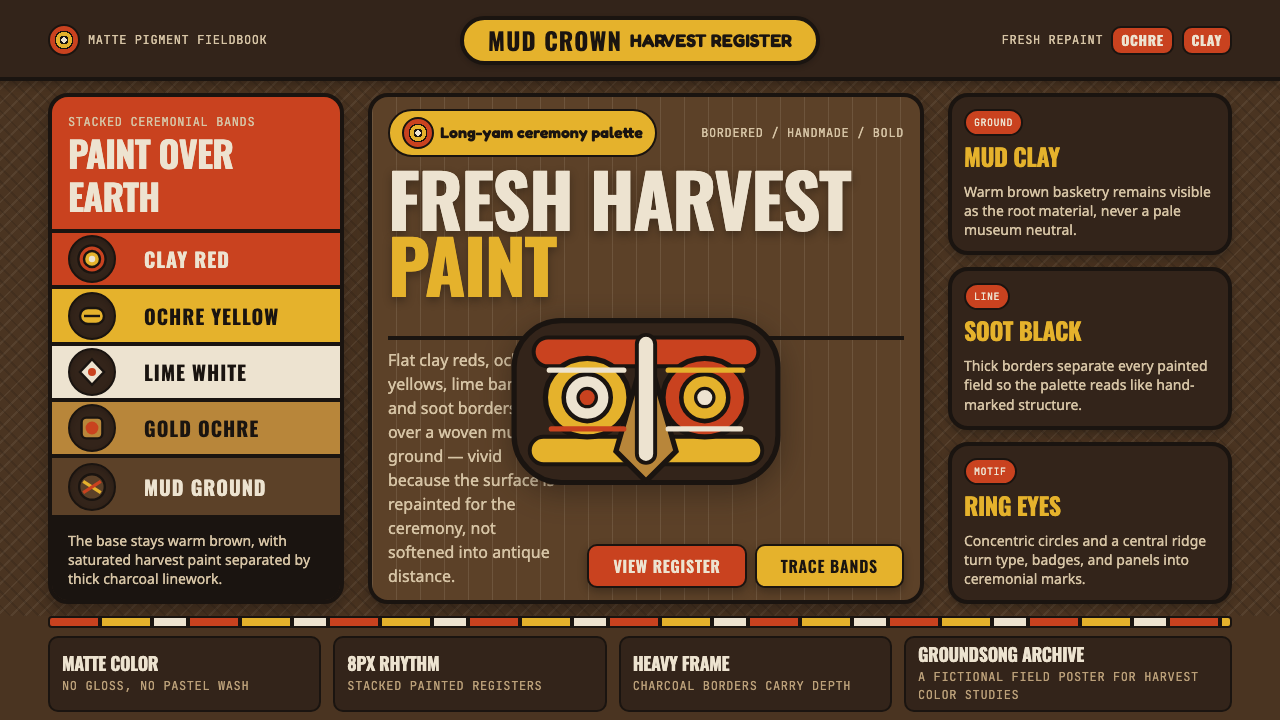
Sepik Yam Mask Abelam brings fresh-harvest force to the page: clay red and ochre bands, lime white, and soot black charged against a deep warm-brown ground.
Sepik Yam Mask Abelam in brief
Sepik Yam Mask Abelam draws from the ceremonial visual language of Abelam long-yam masks in the Maprik and Wosera area of Papua New Guinea’s Sepik region. The original object is a helmet-like form woven from cane and vine, coated in mud-clay, then repainted with natural pigments for each long-yam harvest ceremony. Its design energy comes from the meeting of a rough, earthen body and clear, saturated painted marks.
The visual system centers on clay-ochre red and yellow, chalky lime white, and soot black. These pigments do not behave like delicate accents placed on a neutral field. They arrive as broad, decisive bands that hold their own against a warm mud-brown base. The brown ground is essential: it gives the brighter colors gravity, keeps the composition materially rooted, and prevents the palette from becoming decorative or washed out.
The mask’s recognizable features provide the compositional logic. A long nose ridge establishes a strong vertical path, while concentric-ring eyes create repeated circular centers of attention. Curving painted bands travel across this structure rather than floating independently around it. Applied in design, the style should feel handmade, ceremonial, and freshly renewed: matte color, bold directional contours, and a sense that every mark has been placed over a substantial earthen surface.
Where does Sepik Yam Mask Abelam come from?
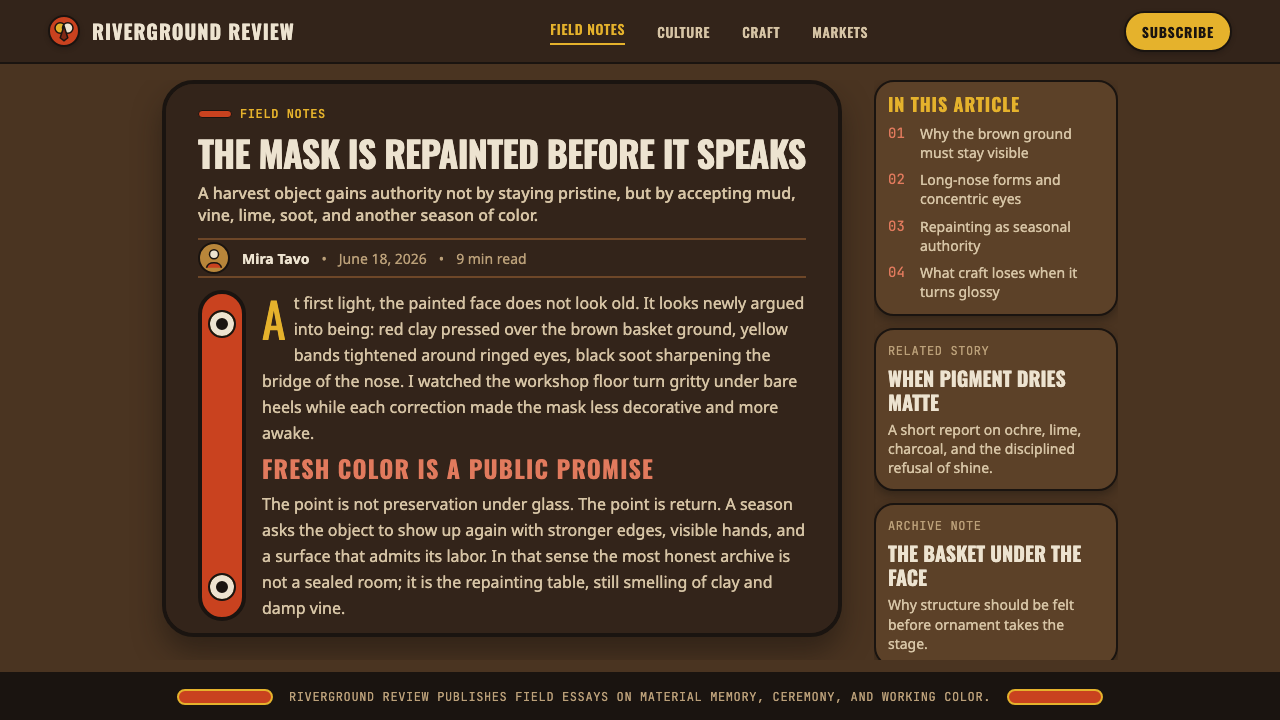
The source of this style is the Abelam long-yam cult and the woven basketry yam-mask painting tradition of the Sepik region. Its place is specific: Maprik and Wosera in Papua New Guinea. Rather than treating the imagery as a general tropical pattern, a responsible application begins by retaining that specificity. The visual language belongs to a harvest-cult setting, where the mask is connected to long-yam ceremony rather than to an abstract idea of ornament.
The period identified for this tradition is 1900–1950, with the crucial qualification that masks were repainted for each long-yam ceremony. That cycle of repainting matters aesthetically. The image is not defined by permanent preservation of a single surface; it is renewed through ceremony. The colors therefore read as fresh and active, not aged into a muted historical palette. A contemporary interpretation should preserve this sense of immediate pigment over durable earth.
Construction and painting are inseparable. Cane and vine establish the underlying basketry form, mud-clay coats it, and natural pigment gives the face its ceremonial visibility. The material sequence suggests a useful hierarchy for design: begin with the brown, woven-earth impression; establish a strong structural ridge and eye centers; then bring in the red, yellow, white, and black as applied force. Starting instead with bright colors on a pale digital ground reverses the visual logic of the source.
Abelam painters and yam-cult ceremonial leaders are the named collective figures associated with the tradition. Their presence reminds designers that this is not simply an inventory of colors and motifs. It is a ceremonial system shaped through making, repainting, and harvest practice. The most faithful contemporary work does not imitate an object as a novelty; it learns from the relationship between material ground, emphatic paint, repeated form, and renewal.
What defines the Sepik Yam Mask Abelam look?
Earthen Ground
Warm mud-brown is the visual root of the system. It should feel dense, matte, and materially present, like a surface that has been coated rather than a blank field awaiting decoration. The brighter pigments gain their intensity from this contrast with earth. Cream, stark white, and faded neutral grounds weaken the harvest power that makes the palette distinctive.
Fresh Natural Pigment
Clay-ochre reds and yellows, chalky lime white, and soot black should read as freshly applied pigment. Their appeal lies in opacity and directness, not in polished luminosity. Color areas are most convincing when they feel brushed, coated, or pressed onto the ground, with matte fullness rather than glossy digital smoothness.
Curvilinear Bands
Broad curving bands are the principal active marks. They should sweep around and across form with confidence, creating rhythm through turns, overlaps, and changing direction. These bands are not ornamental ribbons added after a layout is finished; they are the compositional movement that links nose ridge, eyes, surrounding field, and edge.
Ridge and Axis
The long nose ridge creates a commanding central axis. In graphic work, a vertical or gently shifting spine can perform the same task: it organizes information, divides fields, and gives curving color a structure against which to push. The axis should feel bodily and built, never like a thin ornamental rule.
Concentric Eyes
Concentric-ring eyes introduce repetition, alertness, and focal pressure. Circular forms work best as intentional centers rather than scattered decorative dots. Repeated rings can frame a number, icon, image crop, or key fact, but their placement should echo the mask’s watchful symmetry and remain connected to the larger curving system.
Matte Ceremony
The style depends on a ceremonial, hand-applied surface character. Avoid effects that make color appear metallic, glassy, misty, or softly illuminated. Depth should come from overlap, contour, and the tension between painted bands and earthen ground. The result should feel forceful and tactile, as if renewed for an occasion, rather than refined into a luxury finish.

Who shaped Sepik Yam Mask Abelam?
Abelam painters are central to the repainting of yam masks with brilliant natural pigment for each long-yam harvest. In design terms, they point to the importance of renewal, decisive hand-applied color, and a surface whose visual authority comes from active repainting rather than permanent decorative finish.
Yam-cult ceremonial leaders connect the mask to the long-yam ceremony and its harvest setting. Their role situates the visual language within collective ceremonial practice, making context as important as motif. A respectful adaptation keeps the work purposeful and avoids reducing the imagery to exotic surface decoration.
The mask’s woven cane-and-vine construction makes basketry an essential contributor to its appearance. Even when a design is entirely digital, this material foundation should remain legible through warmth, density, and a sense of built structure beneath the painted bands. The painted face is not separate from its woven support.
How do you use Sepik Yam Mask Abelam today?
For presentation covers, use the warm mud-brown field as a complete environment rather than a background accent. Establish one commanding ridge-like axis or a large curved band, then let a concise title occupy a quiet area of the composition. A concentric-ring device can hold a date, chapter marker, or central image. Keep the painted colors selective and forceful, so the cover reads as a unified ceremonial face rather than a collection of colorful shapes.
On presentation content pages, translate the ridge into an organizing column, divider, or reading path. Let clay red or ochre bands identify sections and lead the eye between text groups, while white and black provide high-contrast information anchors. For data slides, ring forms can frame a single important measure, and curved bands can distinguish categories or paths. The data should remain legible first; the style works when the graphic structure feels like it grew from the information rather than being laid over it.
For web interfaces, this approach suits dashboards, progress views, and pricing pages that need a grounded, energetic visual identity. Begin with a warm brown foundation and make the clearest interface information readable in restrained light and dark contrast. Use the brighter pigment colors for status, active pathways, category distinctions, and emphasis. Curved bands can guide navigation or organize related panels, while ring motifs can become focused indicators. Preserve generous calm areas so the interface does not become visually exhausting.
In editorial and marketing work, use the style to communicate harvest, renewal, material process, or bold collective energy. A long-form page can place a strong vertical spine beside a narrow reading column, with curved bands marking transitions between sections. Campaign-like layouts benefit from large matte pigment fields and tightly controlled focal circles. Photography or product imagery should sit decisively within the system, framed by bands or rings, instead of dissolving the earth-and-pigment hierarchy.
The common mistake is to borrow the red, yellow, white, and black while abandoning the warm-brown ground, the mask-derived structure, and the ceremonial logic of repainting. Another mistake is turning every surface into a busy pattern of rings and curves. The style needs hierarchy: a dominant axis, a small number of focal eyes, broad color movement, and areas where the mud-brown field can carry visual weight on its own.

Sepik Yam Mask Abelam — FAQ
Is this style simply a palette of red, yellow, white, and black?
No. The palette only works fully when it is held by a warm mud-brown ground and organized through the long nose ridge, concentric eyes, and broad curvilinear bands associated with the mask. Treating the colors as interchangeable accents removes the material and ceremonial force that gives them meaning.
Why should the background remain warm brown rather than pale or white?
The source material identifies the woven mask as coated in mud-clay, with bright natural pigment applied over that earthy surface. Warm brown is therefore not a neutral substitute; it is the visual root that makes clay-ochre red, yellow, lime white, and soot black feel fresh, matte, and substantial.
Can concentric rings be used as a general decorative pattern?
They are most effective when used sparingly as focused eye-like centers. In the source material, concentric rings are part of a face structured around a long nose ridge and painted bands. Repeating them everywhere weakens their alert, focal quality. Give each ring a reason to exist: a key metric, an image focus, a section marker, or a point of orientation.
How can a contemporary design use this source respectfully?
Name the Abelam and Sepik source where context allows, retain the connection to long-yam harvest ceremony, and avoid presenting the imagery as generic exotic decoration. Work from the system’s structural lessons—earthen ground, hand-applied matte pigment, curving movement, ridge, and eyes—rather than copying a mask as a detached visual novelty.
Related design styles
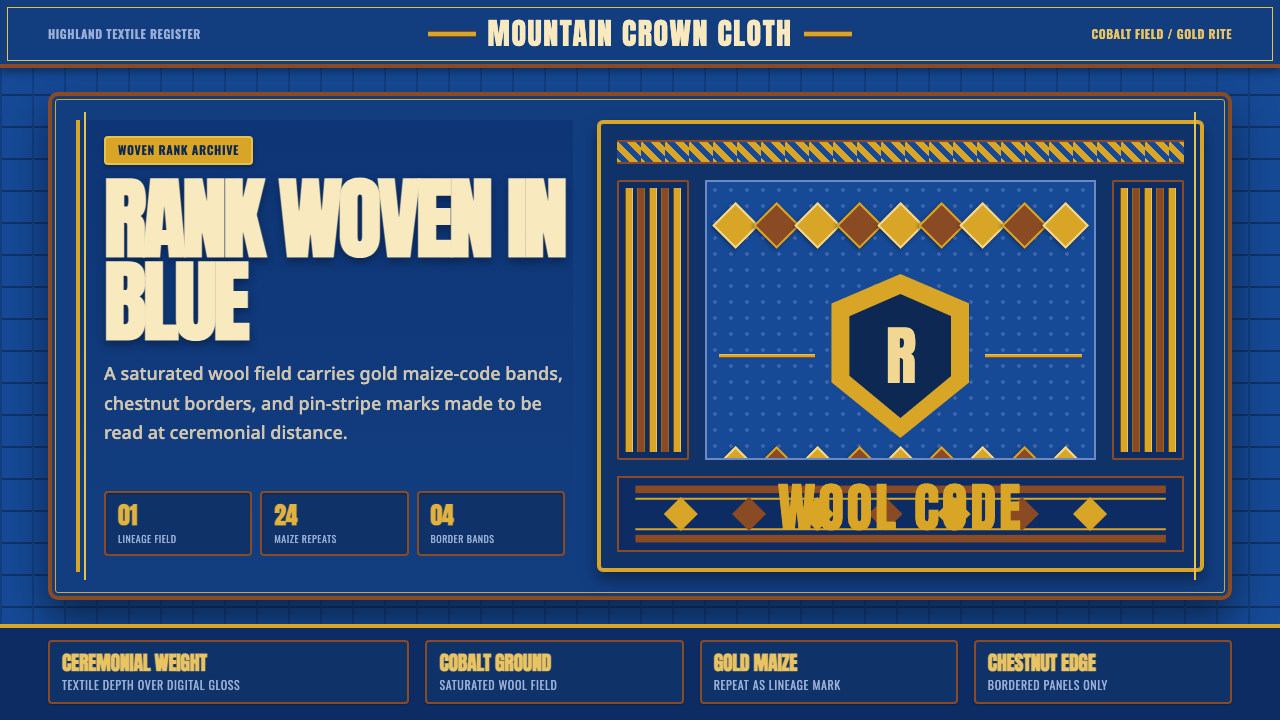 Basotho Seanamarena BlanketRank made visible. Cobalt wool, gold maize diamonds, and chestnut borders rea…
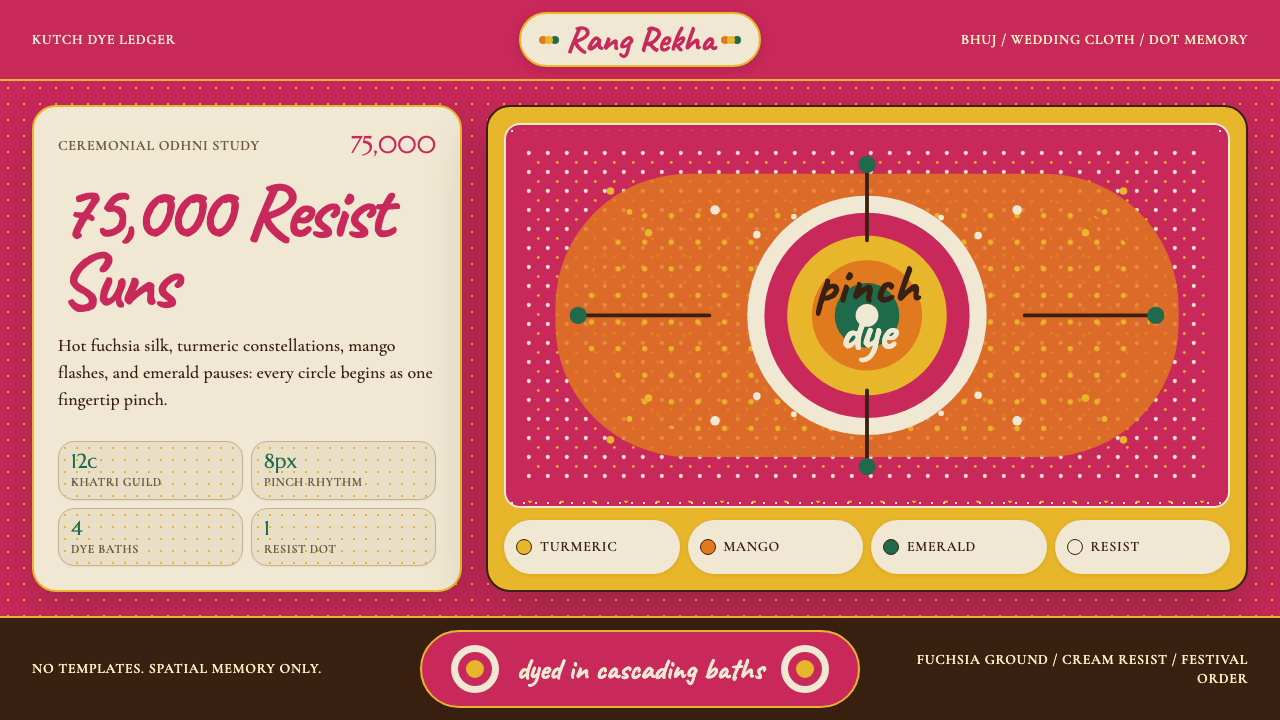 Gujarati Bandhani Tie-DyeFestival precision. Fuchsia cloth, turmeric dot constellations, Caveat letter…
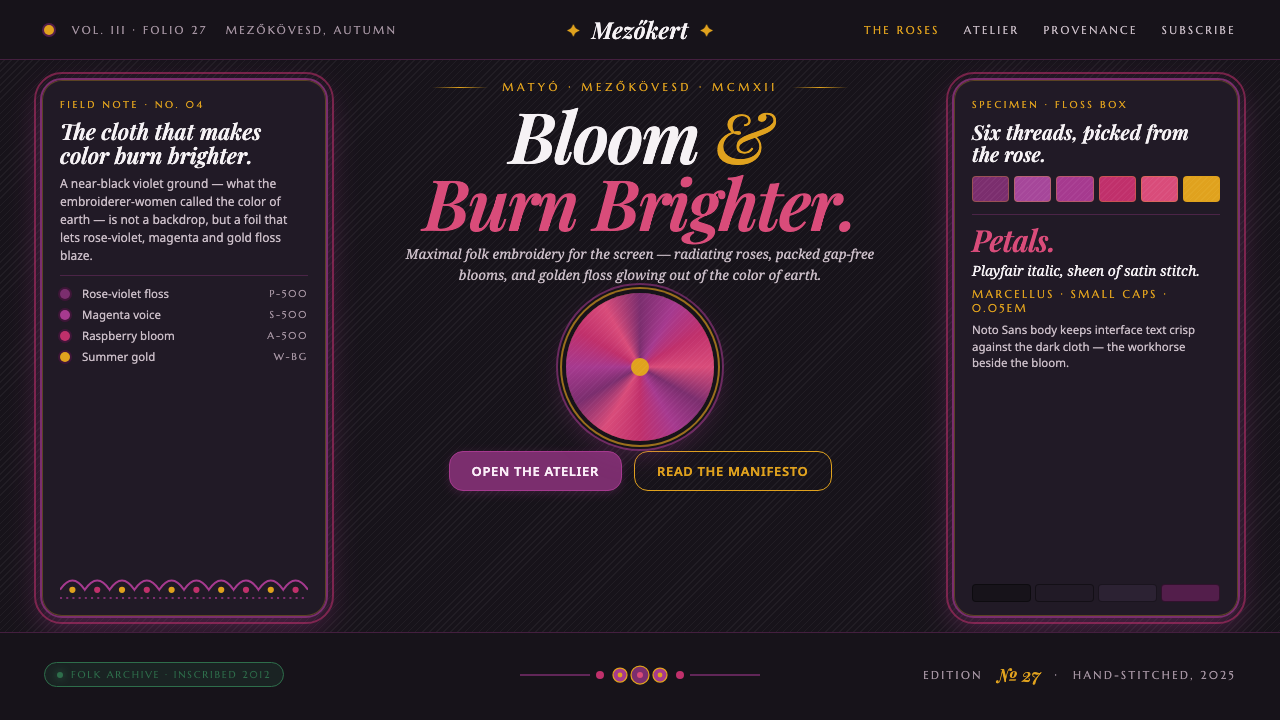 Hungarian Matyó VioletFolk embroidery, maximal. Rose-violet and gold blooms blaze gap-free on near-…
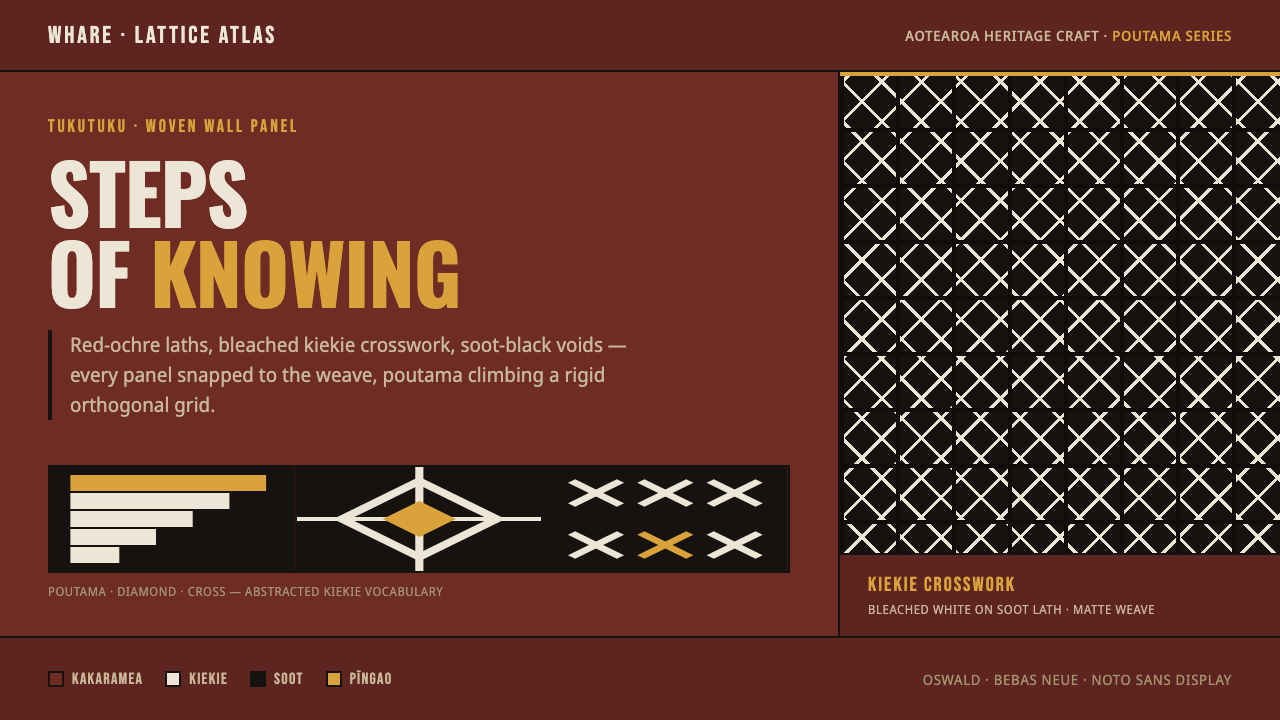 Māori Tukutuku PanelTukutuku weave, rendered strict. Bleached kiekie crosswork laces poutama step…
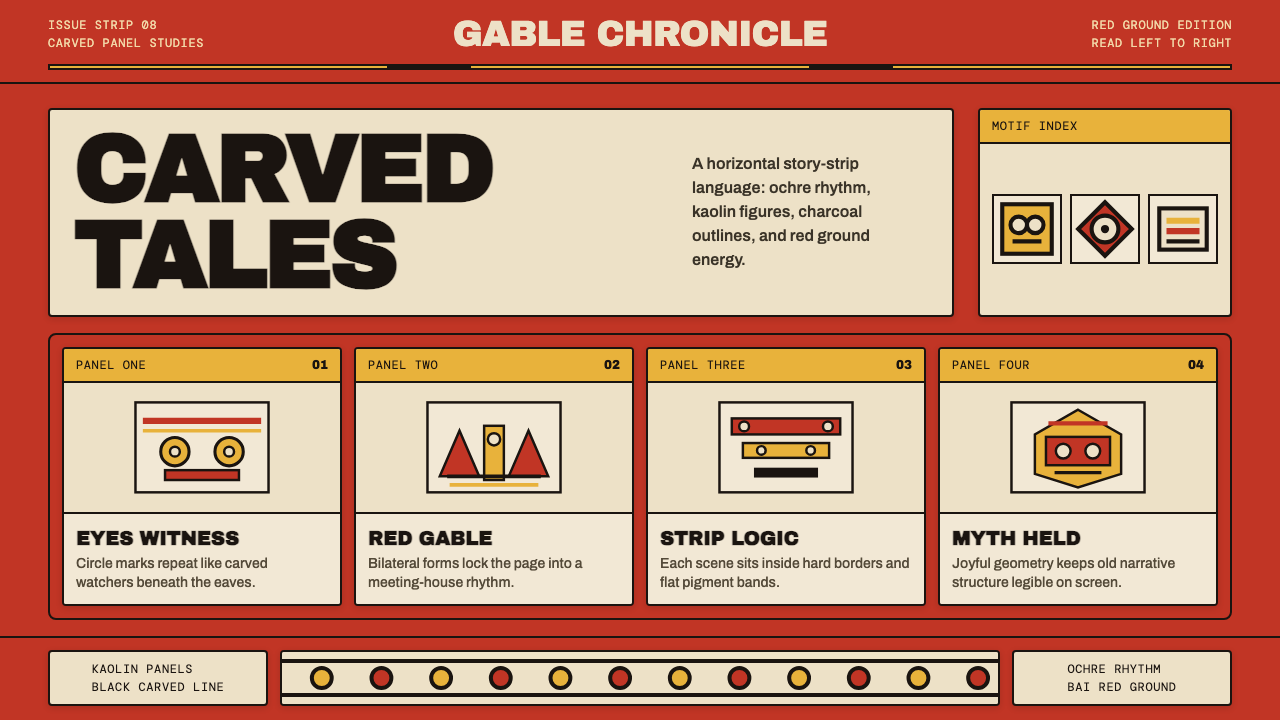 Palauan Bai StoryboardNarrative hits like carved wood. Bai red, ochre bands, kaolin panels, black o…
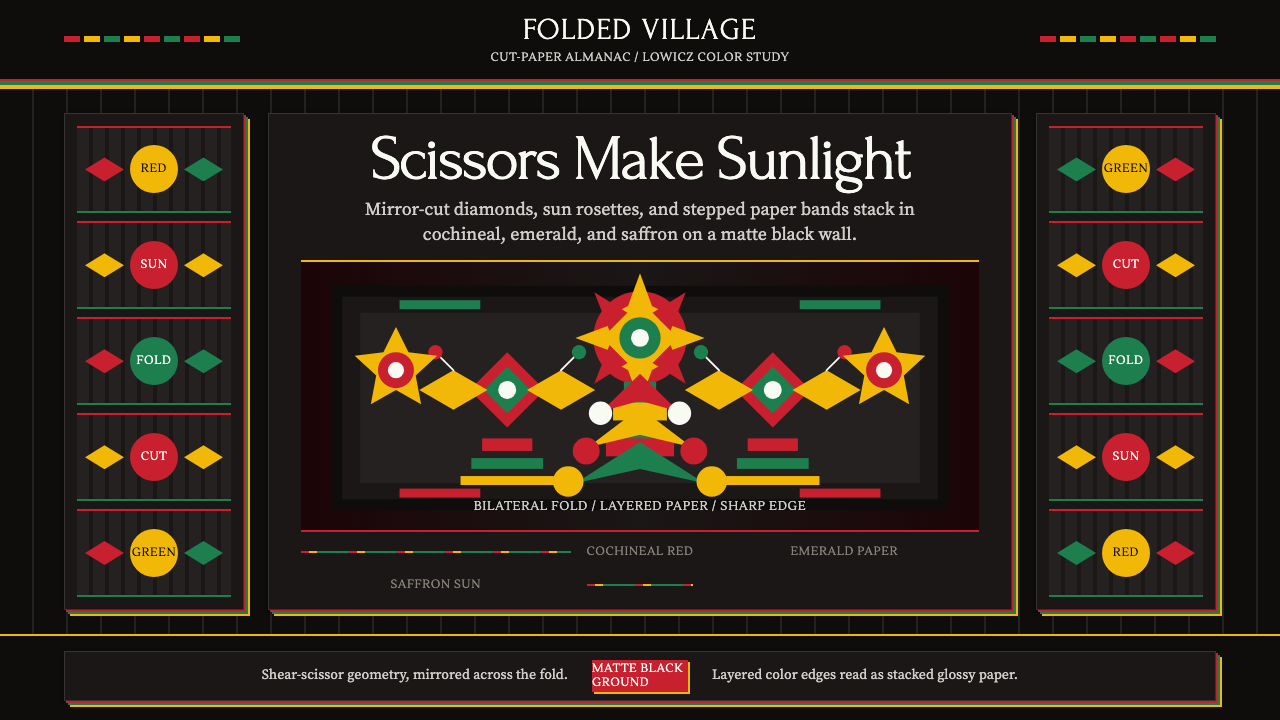 Polish Wycinanki (paper-cut folk art)Cuts sing in symmetry. Cochineal, emerald, and saffron layers blaze on black.