What is Colombian Chiva Bus?
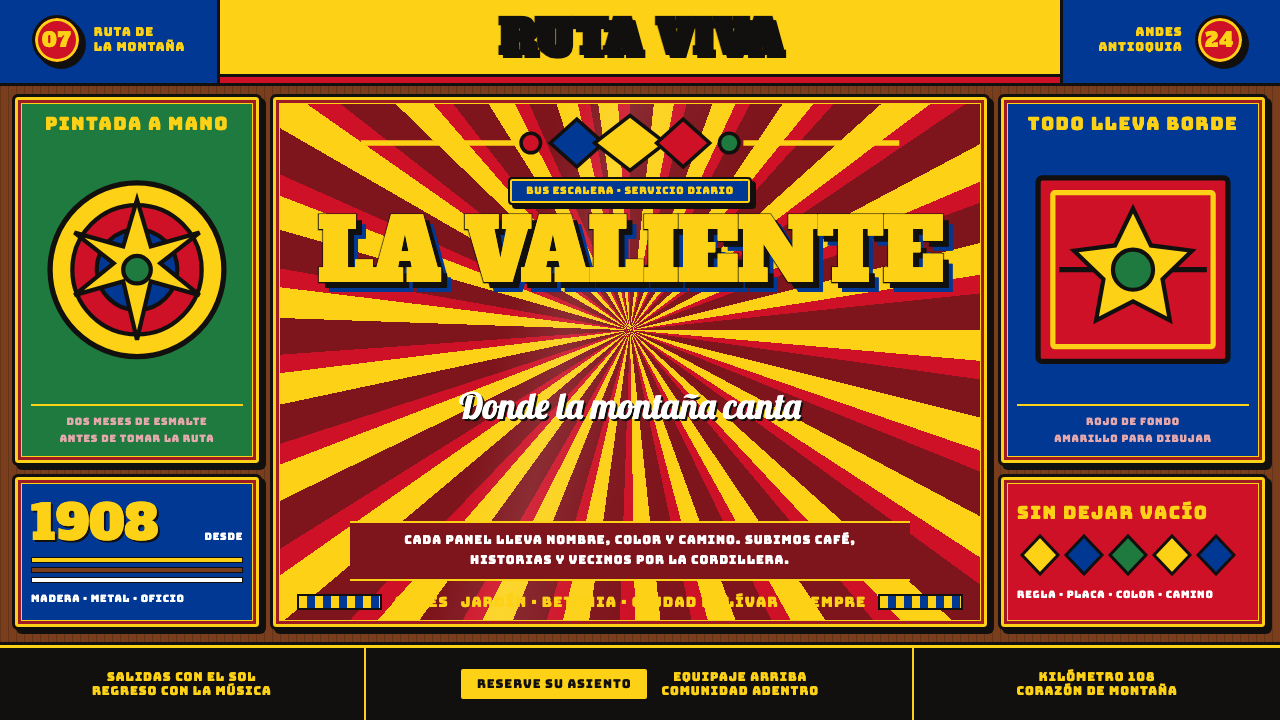
The Colombian chiva bus proves that a moving vehicle can be a canvas with no tolerance for empty space: flag-red panels, ruled borders, and hand-painted murals crowd every surface, each one outlined in black.
Colombian Chiva Bus in brief
A chiva is a rural bus built by hand in the Andes region of Antioquia, Colombia — hardwood slats and sheet metal bolted onto a Ford or Chevrolet chassis, distinct from any factory bus body. Before it ever runs a route, the finished shell is handed to a painter and spends roughly two months being decorated, which means the painting is not applied to a finished product but is treated as an essential, unhurried stage of the bus's construction.
The paint itself is enamel house paint over a ground that reads as a sun-faded flag red, the color a working vehicle takes on after years outdoors in Andean sun. Onto this ground, painters rule hard borders around every panel, add arabesque flourishes in the corners, and fill the remaining space with murals of coffee plants, macaws, and mountains — plus the owner's chosen nickname lettered prominently across the front of the vehicle.
The defining discipline of this style is that nothing is left empty. Every panel is treated as a surface requiring full coverage, and every painted mark — a border, a flourish, a mural, a letterform — is finished with a black keyline that separates it cleanly from whatever sits next to it. Leaving a gap unpainted is read, within this craft tradition, as leaving the job unfinished.
Where does Colombian Chiva Bus come from?
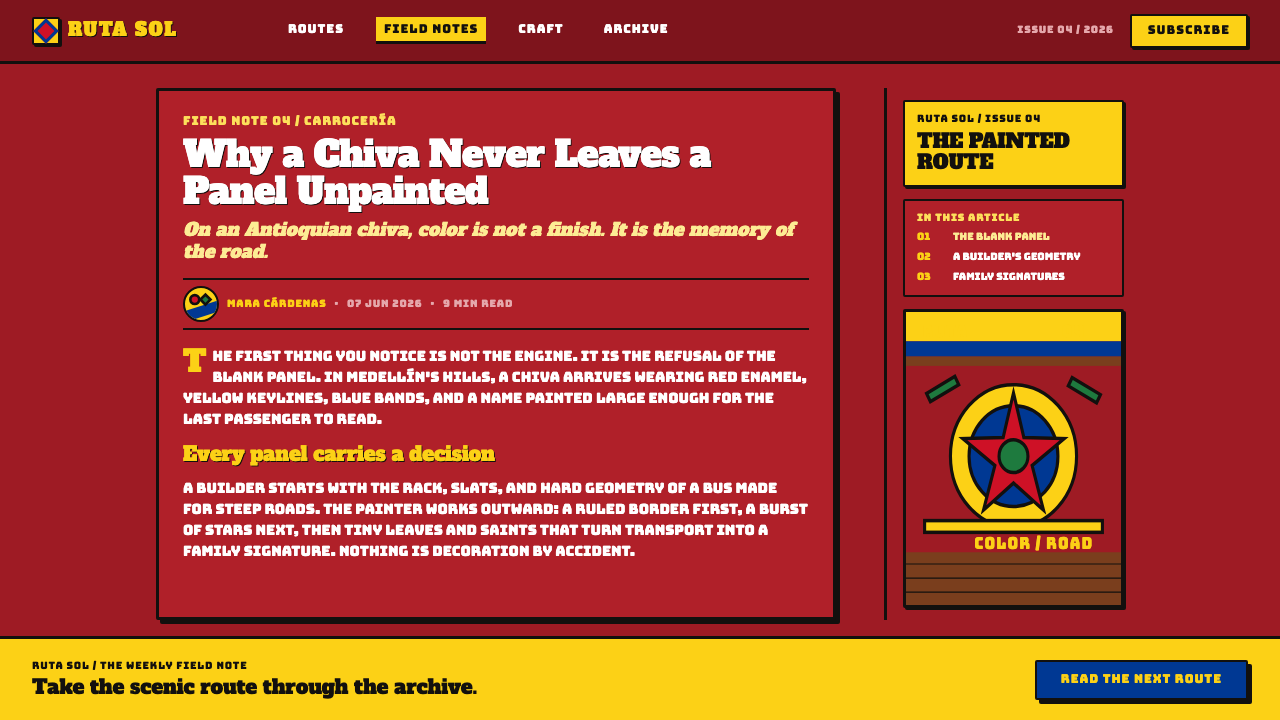
The first chiva was built in Antioquia in 1908, and the painted repertoire described here has been in continuous daily use ever since, making it one of the longest-running living vehicle-painting traditions in the Americas. Chivas remain in active service on rural routes across Colombia today, not preserved as museum pieces but still built, painted, and driven as working transport.
The tradition belongs to Latin American folk transport painting as a broader category, but it is also specifically a signwriting craft — rotulación — practiced by carroceros, the coachbuilders who construct the wooden-and-metal bus bodies, working alongside dedicated sign painters. Figures associated with this craft lineage include Luciano Restrepo and Roberto Tisnes, part of the wider community of carroceros and sign painters based in Andes, Antioquia, where the practice is most closely associated.
This tradition is also an example of what can be called popular maximalism: a folk aesthetic in which covering every available surface, rather than editing down to a few focal elements, is itself the mark of quality craftsmanship. That principle runs counter to design approaches that prize negative space, and it is worth treating as a genuine stylistic commitment rather than a lack of restraint.
Because chivas are built and repainted as working vehicles rather than static artifacts, the style has been sustained by continuous practical use — a bus that ferries passengers and cargo on real mountain routes every day — rather than by preservation efforts, which helps explain why its visual vocabulary of borders, arabesques, and murals has stayed remarkably consistent for more than a century.
What defines the Colombian Chiva Bus look?
Sun-Faded Flag Red
The base ground color is not a clean, saturated red but the slightly faded version that a bright red enamel takes on after years of Andean sun exposure. This weathered warmth sits underneath and around every painted panel, functioning as the connective ground color for the whole vehicle.
Ruled Panel Borders
Every panel on the bus body is first defined by a ruled, hard-edged border before any mural or lettering is added, giving the vehicle a gridded, compartmentalized structure. The border is a structural first step in the craft process, not a decorative afterthought.
Corner Arabesques
The corners of each panel are filled with flowing arabesque scrollwork, a flourish that softens the otherwise rigid grid of ruled borders. These corner details are a recurring, expected feature rather than an optional embellishment.
Landscape and Wildlife Murals
The main body of each panel is filled with representational murals — coffee plants, macaws, and mountain ranges recur as subject matter, drawn from the working landscape the bus actually travels through. These are full pictorial scenes, not abstract pattern.
Front-Facing Nickname Lettering
The owner's chosen nickname for the bus is lettered prominently across the front, in bold, heavy letterforms distinct from the smaller signwriting elsewhere on the vehicle. This is treated as the bus's identity marker, given pride of place on the most visible surface.
Universal Black Keylines
Every painted element — border, arabesque, mural, or letterform — is finished with a black keyline separating it from its neighbors. This is the single unifying device that lets a vehicle covered in dense, varied imagery still read as one coherent composition.
Total Surface Coverage
The overriding compositional rule is that no panel is left unpainted. Every available surface carries a border, a mural, a flourish, or lettering, and empty space is treated within this craft tradition as an unfinished job rather than a deliberate breathing room.
Who shaped Colombian Chiva Bus?
Restrepo is associated with the carrocero and sign-painting craft lineage based in Andes, Antioquia, the community whose practice sustained the chiva's dense, fully-covered panel style as a continuous working tradition.
Tisnes is part of the same Andes, Antioquia carrocero and sign-painting community, contributing to the craft lineage that has kept the chiva's ruled borders, arabesques, and murals consistent across generations of hand-built buses.
This collective community of coachbuilders and sign painters is the ongoing practical engine of the chiva tradition — building the wooden-and-metal bus bodies and then spending roughly two months painting each one, sustaining the style through continuous daily working use rather than preservation.
How do you use Colombian Chiva Bus today?
This system carries a maximalist, joyful, handmade energy, which makes it well suited to any project that wants to feel warm, festive, and unmistakably crafted by a person rather than generated — tourism and travel branding, food and beverage identities, community and folk-culture projects, and playful consumer products.
For presentation slides, a cover slide can commit fully to the sun-faded red ground with a bold nickname-style title lettered across it and a ruled border framing the whole frame, echoing the front-of-bus treatment. Content slides should keep the panel logic — a ruled border around each content block, with one small mural-style illustration or icon inside rather than a full pictorial scene, since dense murals on every slide would overwhelm on-screen reading at speed.
For web interfaces, the palette and border logic suit landing pages for travel, hospitality, and cultural-heritage brands where warmth and craft signal trustworthiness better than restraint would. Card components can borrow the ruled-border-plus-corner-arabesque structure, and a hero section can use a full mural-style illustration the way a chiva uses its largest front panel.
For editorial and marketing collateral, this system supports full-bleed, densely illustrated spreads — posters, packaging, or social cards where every corner of the frame carries intentional decoration. The black keyline discipline is what keeps a fully covered layout readable, so any dense illustrative work should keep that separating outline consistent across elements.
The most common mistake is applying the flag-red and mural imagery while leaving generous negative space in a conventional modern layout. This style's identity depends on total coverage — negative space reads, within this tradition, as an unfinished panel, not as elegant restraint, so diluting the density undermines the entire aesthetic.
Colombian Chiva Bus — FAQ
Why is leaving negative space considered wrong in this tradition?
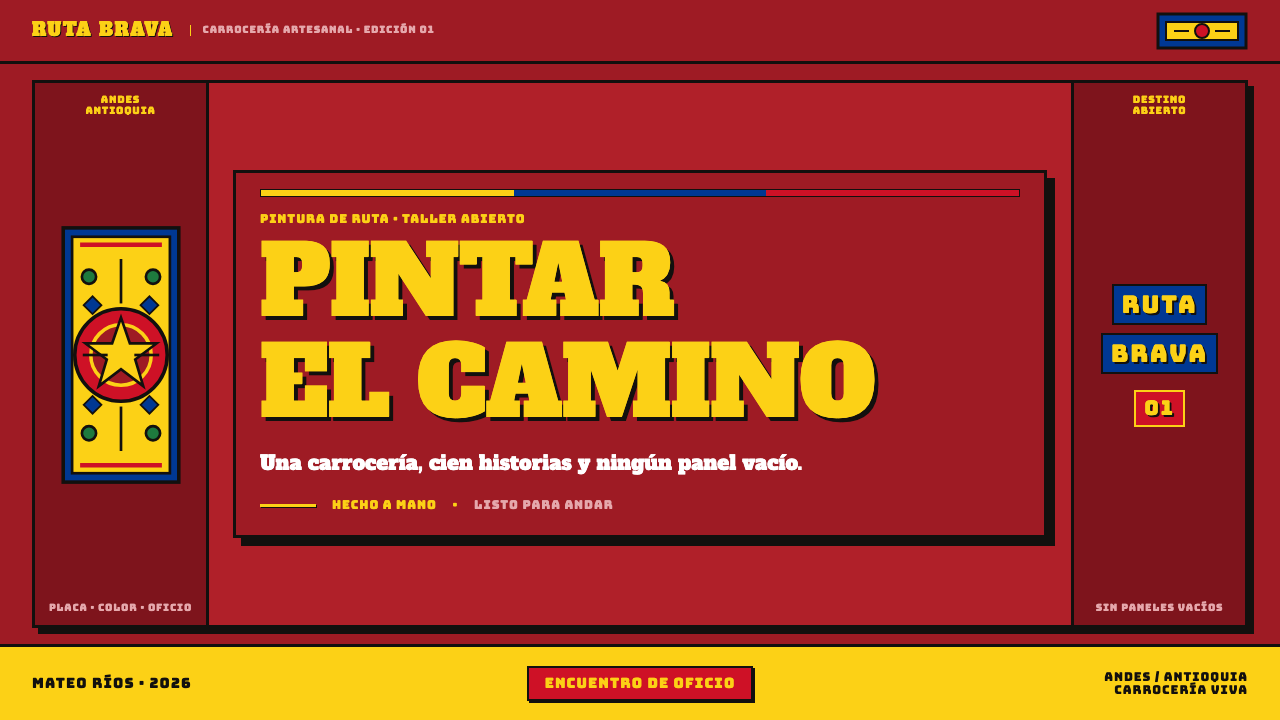
Because within chiva painting craft, an unpainted panel signals unfinished work, not intentional restraint. The style developed as a full-coverage discipline in which every surface — border, corner, mural field — is expected to carry a painted mark, so an empty area reads as a step skipped rather than a design choice.
Do the murals have to depict coffee plants, macaws, and mountains specifically?
Those are the recurring subjects drawn from the working landscape a chiva actually travels through, and they anchor the style's authenticity, but the underlying principle is depicting the real surrounding landscape and life of the route rather than generic decoration. A project applying this style elsewhere should look for its own equivalent local subject matter rather than mechanically copying coffee plants and macaws out of context.
Is the black keyline purely decorative, or does it serve a structural purpose?
It is structural. Without a consistent black keyline separating every border, flourish, mural, and letterform, a surface this densely covered would blur into visual noise. The keyline is what allows total coverage to still read as an organized composition rather than clutter.
Can this style work in a digital product with limited screen space?
It can, but it needs to be scaled down in density rather than in principle — a single well-framed illustration with a ruled border and keyline can carry the spirit of the style within a small card or hero area, even though a full chiva panel would be too dense for a phone screen. The ruled-border-plus-keyline structure is more transferable to constrained screens than the full mural density is.
Related design styles
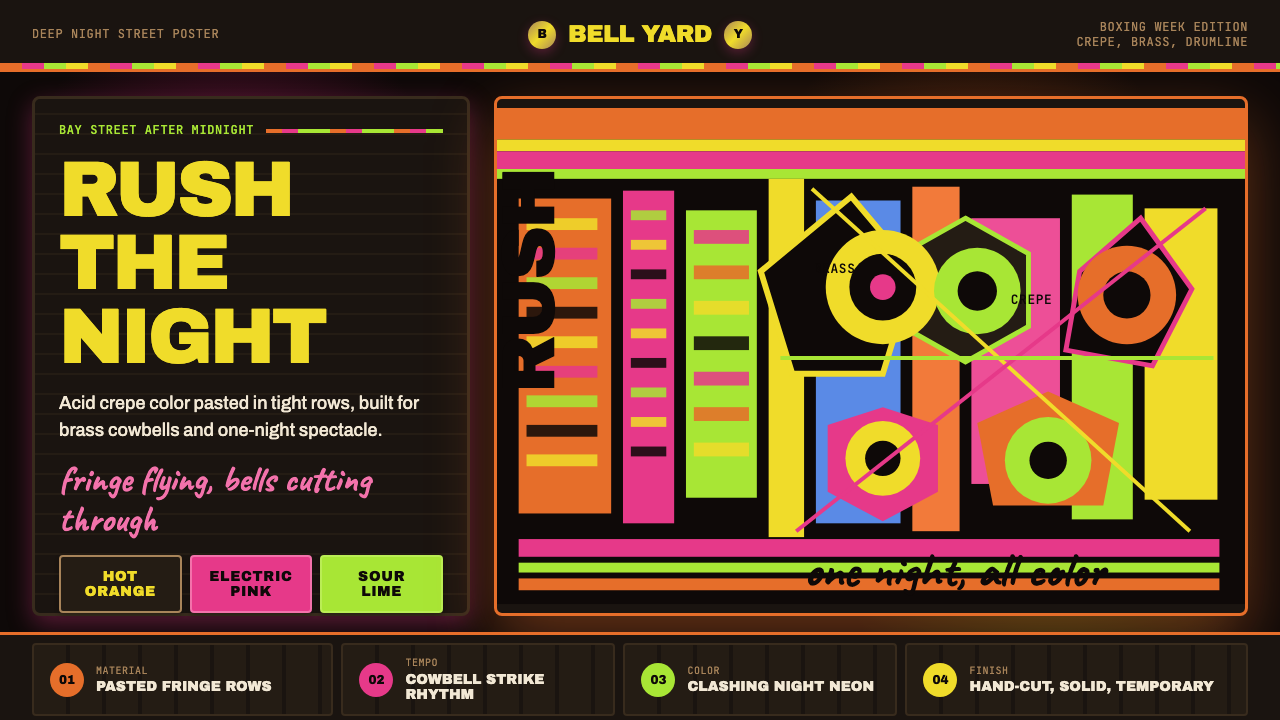 Bahamian Junkanoo CowbellNight refuses silence. Acid crepe stripes and block type collide like cowbell…
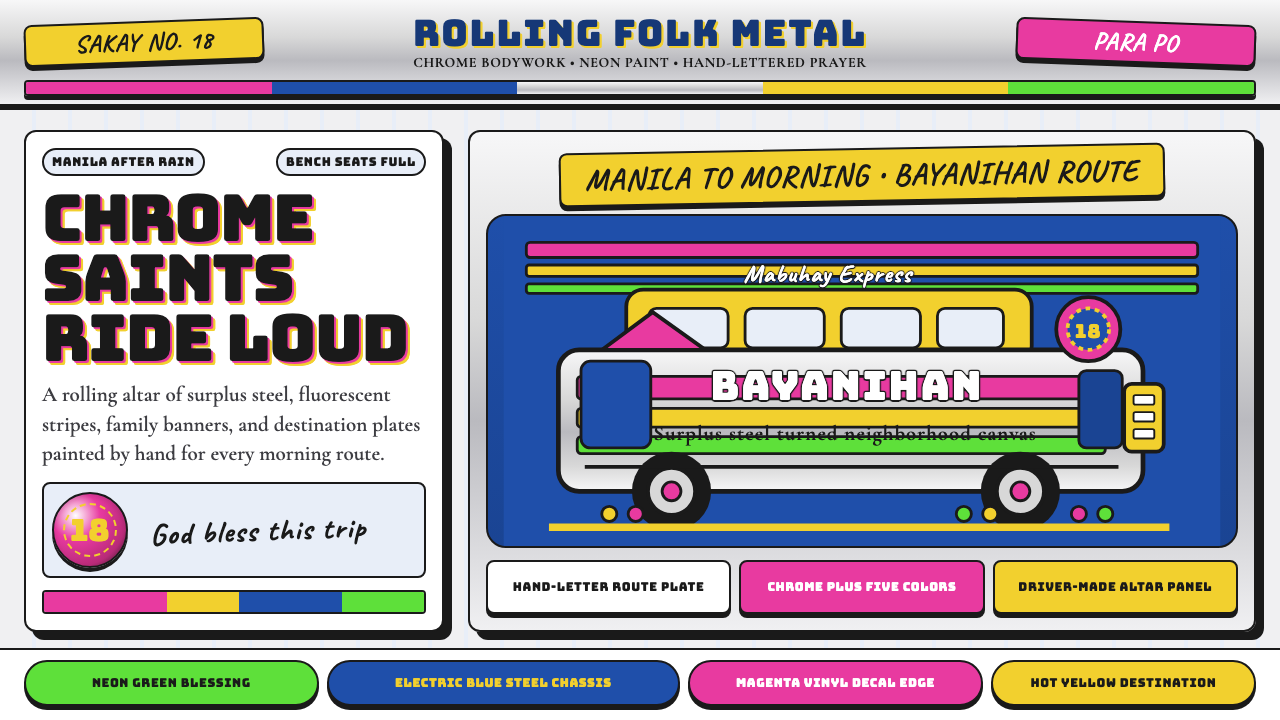 Filipino JeepneyLoud steel, made personal. Chrome gradients carry neon stripes and hand-lette…
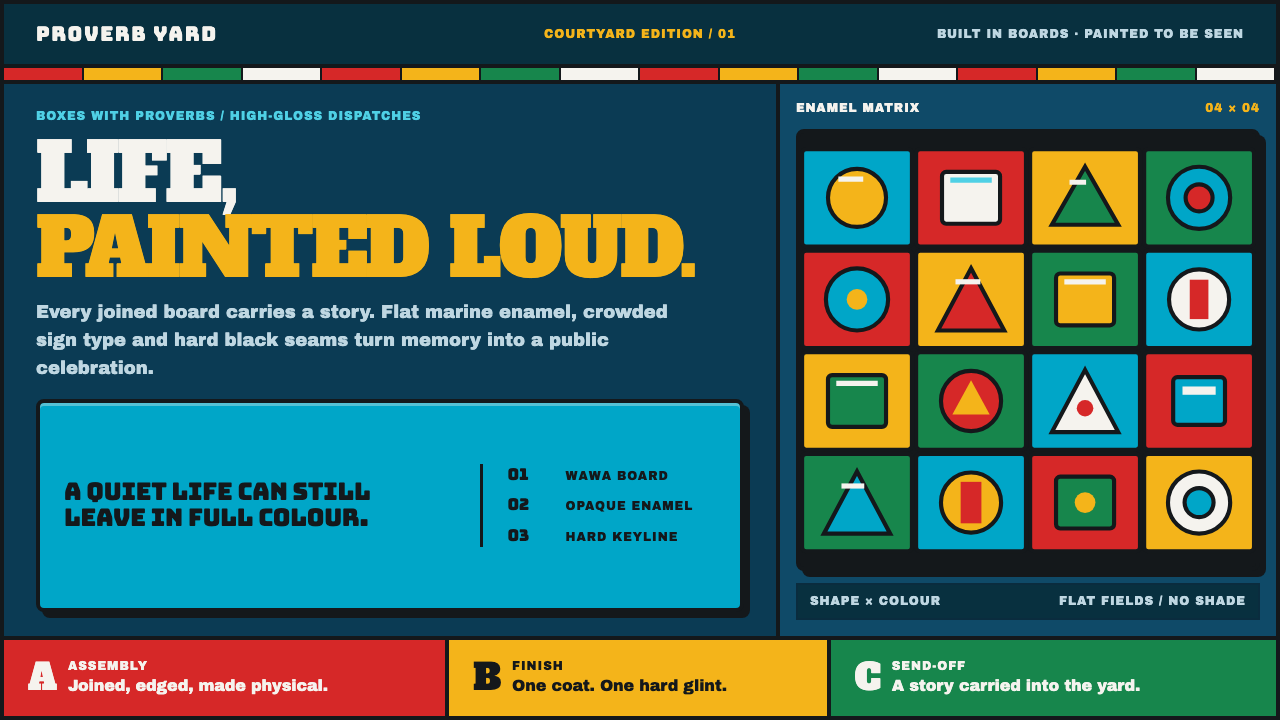 Ga Fantasy CoffinMemory refuses to whisper. Marine enamel, fat sign type and hard black seams…
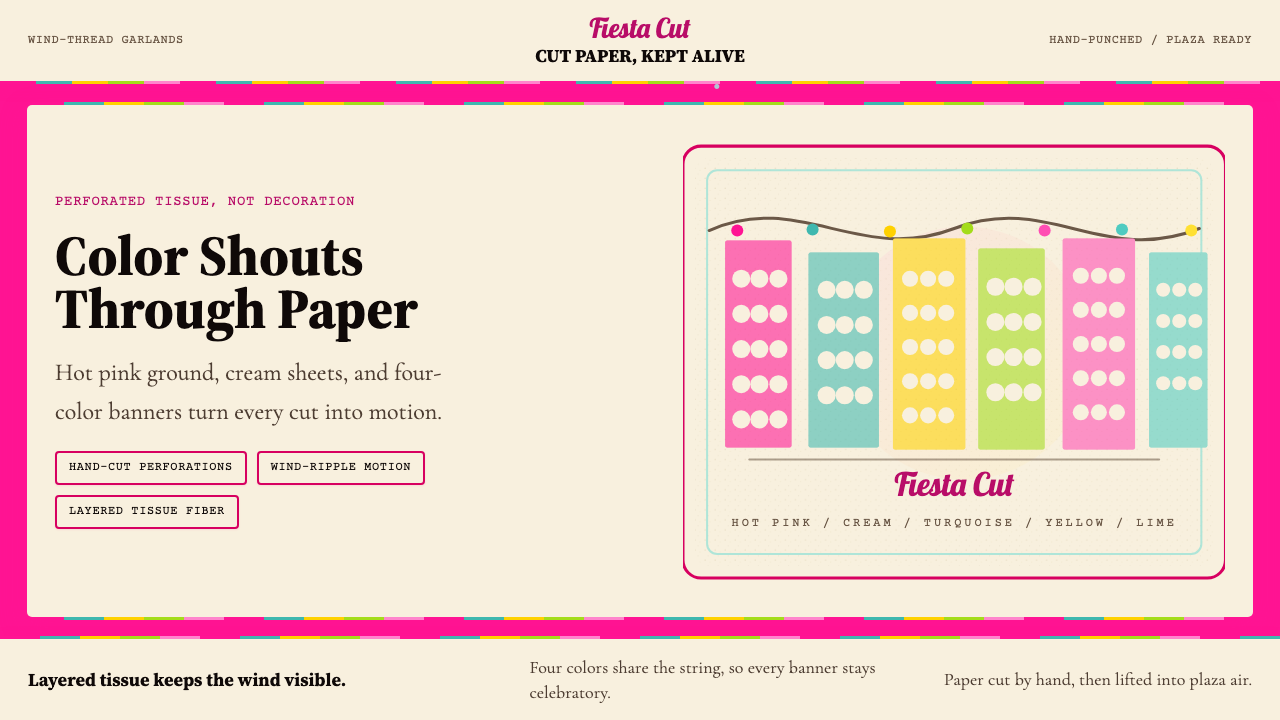 Mexican Papel Picado TissueFiesta cut paper. Hot pink, turquoise, yellow banners and hand-cut perforatio…
 Mexican Pulqueria MuralThe wall is the canvas. Hot rosa-mexicano plaster, maguey green and marigold…
 Asafo Fante Flag AppliquCloth speaks loud. Deep green field, saffron appliqué, hard seams, bold prove…