What is Vejigante Mask?
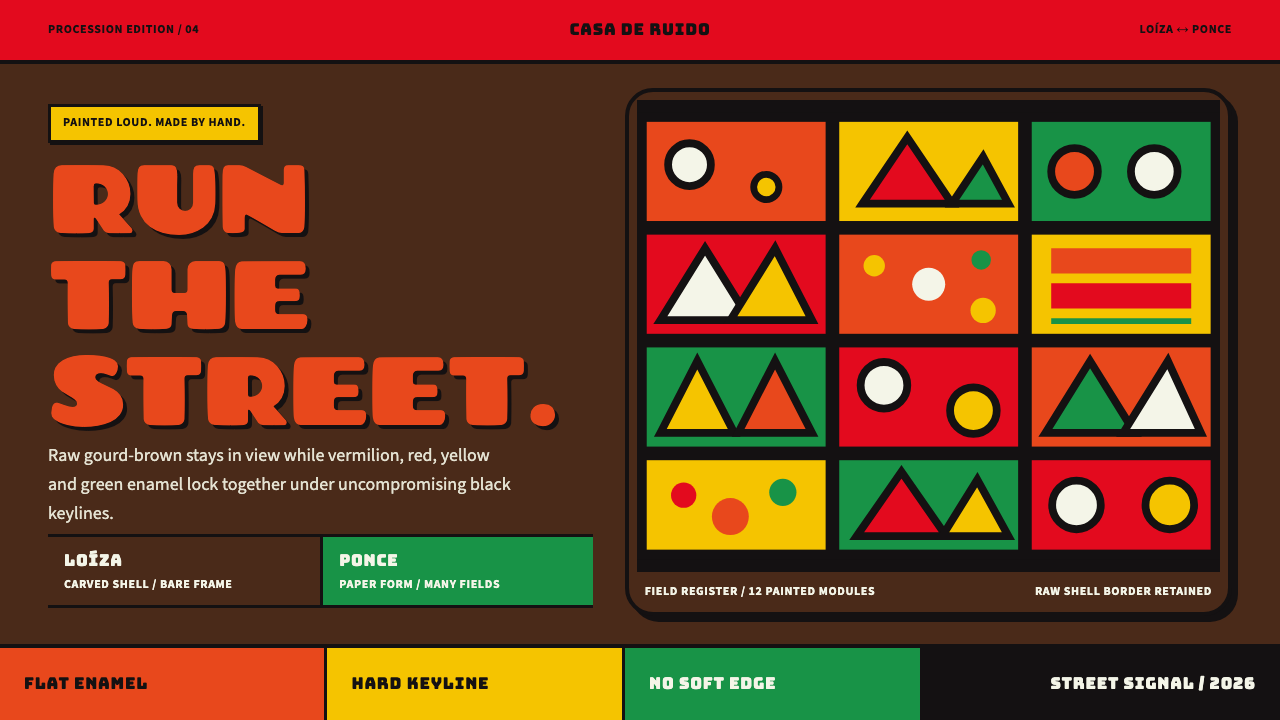
The vejigante mask is carnival paint at its most unashamed: flat enamel red, yellow and green held in thick black keylines, on a shell the maker leaves deliberately bare.
Vejigante Mask in brief
The vejigante is a horned carnival figure from Puerto Rico, a runner in batwing sleeves who swings an inflated bladder through the street. This design style takes its name from the face the figure wears: a mask with a crown of horns pointing every which way, painted in loud, flat colours.
The visual rules are paint rules. Flat enamel fills each field; thick black keylines lock one field to the next; dots, wedges and stripes are stacked over one another; and horn tips are painted in a contrasting colour. All of it sits on a dark, unpainted shell that the maker leaves bare so that the material shows.
Nothing is polished. There are no gradients and no soft airbrushed glow; brush marks stay in the paint and, on paper masks, the layers of newspaper can still be seen at the edges. The look is exuberant and handmade, and it values noise and energy over finish.
Where does Vejigante Mask come from?
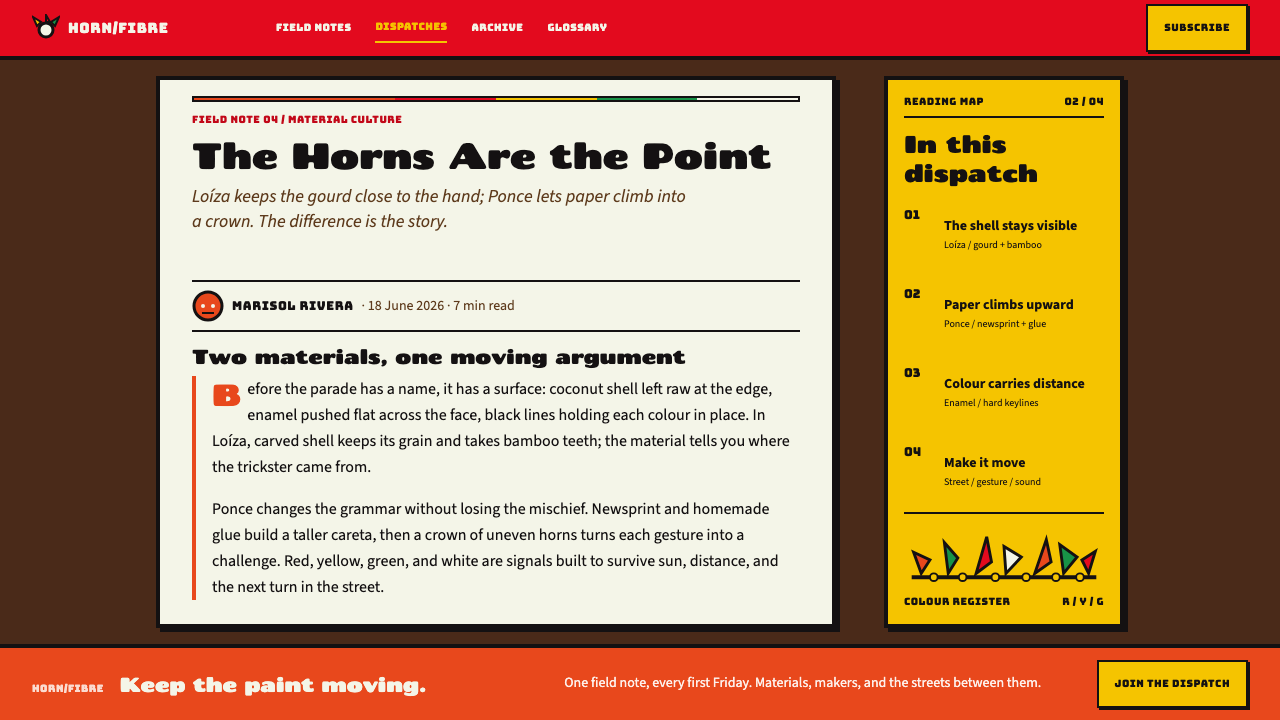
The vejigante belongs to Puerto Rico's festival calendar, in particular the Fiestas de Santiago Apóstol in Loíza on the north-eastern coast and the Ponce Carnival on the south. The procession itself is older than any documented mask: the record covers the modern forms from roughly 1900 to 1950, while the tradition behind them reaches further back. Alongside it sits Afro-Puerto Rican bomba y plena, the music and dance culture of the same world.
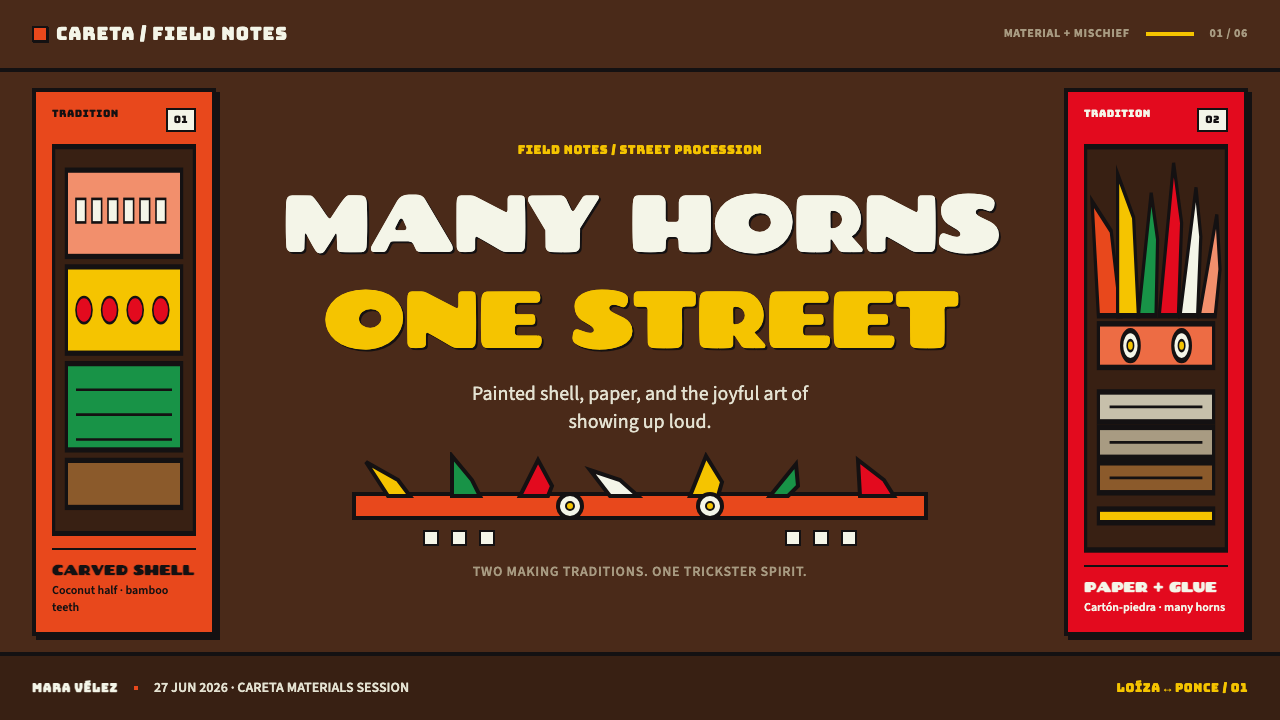
The two places make masks in two different ways, and the difference is part of the style's character. In Loíza the face is carved from half a coconut shell or from a gourd of the higuera tree, with teeth inset in bamboo slivers. In Ponce the maker builds a face of papier-mâché from newsprint and homemade paste, layer on layer, and crowns it with horns set at irregular angles. One technique starts from a hard natural shell, the other from a soft, built-up one, but both end in the same painted language.
The makers whose names the record preserves are Castor Ayala, the Ayala family workshop and the Caraballo family. Their prominence suggests something about the style: it is a family craft, handed down within workshops, with each maker holding a personal version of a shared set of rules. That would explain how a visual language can feel strict and wildly individual at the same time.
The system takes its discipline from the paint itself: flat enamel fields, thick black keylines, dots and wedges stacked over one another, horn tips in contrast, all of it sitting on a dark unpainted shell that the maker deliberately leaves bare. These are not decorative choices added afterward but the working habits of the painters, and the style borrows them as design rules, not as a costume.
What defines the Vejigante Mask look?
Flat Enamel Colour
Red, yellow and green enamel fill the fields as flat, saturated blocks. Each colour is a single even coat with no shading, no blending and no tint variation inside the block. The effect is loud and graphic, and it relies on hue contrast between neighbouring fields instead of on tonal modelling.
Black Keylines
Thick black lines separate every colour field from the next and lock the whole painting together. They are heavy and deliberate, like the leading in a window. Because they are so hard, the neighbouring colours never bleed or blur, and the black acts as both outline and ground rule.
Stacked Pattern
Dots, wedges and stripes pile on top of one another across the mask. The vocabulary is small but is applied thickly: a stripe field carries a row of dots, a wedge overlaps a stripe. The density gives the face its restless carnival energy, and it is built from a few repeating marks rather than from varied illustration.
The Horn Crown
A crown of horns points in every direction at once, set at irregular angles. The tips are picked out in a contrasting colour so each horn ends sharply. As a form it breaks any tidy symmetry: the silhouette is spiky, unbalanced and alive, which is the point of the figure.
The Bare Shell
Under the paint is a dark, unpainted shell that the maker leaves exposed on purpose. It is the ground of the whole design: a deep brown that frames the bright colours and shows what the mask is made of. The unpainted area is not a gap to be filled but a deliberate part of the composition.
Visible Making
Brush marks stay in the enamel, and on paper masks the layered newspaper is still visible at the edges. Nothing is airbrushed or smoothed over. The surface keeps a record of how it was made, and this refusal of polish tells the viewer that the object is handmade and meant to be used in a crowd.
Two Making Traditions
Carved coconut or gourd faces and built-up papier-mâché faces belong to two places with different methods. The carved shell gives a hard, rounded, dark base with teeth set in bamboo; the paper mask gives a lighter, layered body with irregular horns. Both end in the same flat-enamel, black-keyline language, which is what makes them one style.
Who shaped Vejigante Mask?
Ayala is one of the named mask makers in the record of the modern vejigante. His name marks the point where an anonymous festival object becomes the work of an identifiable hand, with a consistent way of building the face and painting the enamel.
The Ayala family workshop shows the style as a shared craft rather than a single signature. Masks made within a workshop hold to common rules, enamel in flat fields, black keylines, a bare shell, while each maker's hand supplies the variation that makes every mask different.
The Caraballo family is the other named family in the record. Along with the Ayalas they underline how the documented forms of 1900 to 1950 passed down through family lines, which is why the visual language is stable enough to be described as a system.
Loíza carvers working in coconut and gourd, and Ponce makers building papier-mâché from newsprint and homemade paste, are the two communities behind the styles. Their methods differ, but both produce a horn-crowned face painted in the same direct, flat language.
How do you use Vejigante Mask today?
Vejigante Mask is a style for energy, noise and festival. It suits subjects where exuberance is a virtue: celebration, music, food, youth, community events and anything built around a crowd. It asks the designer to be bold and to leave visible traces of the hand, so a layout that is too tidy will always look as if it is hiding something.
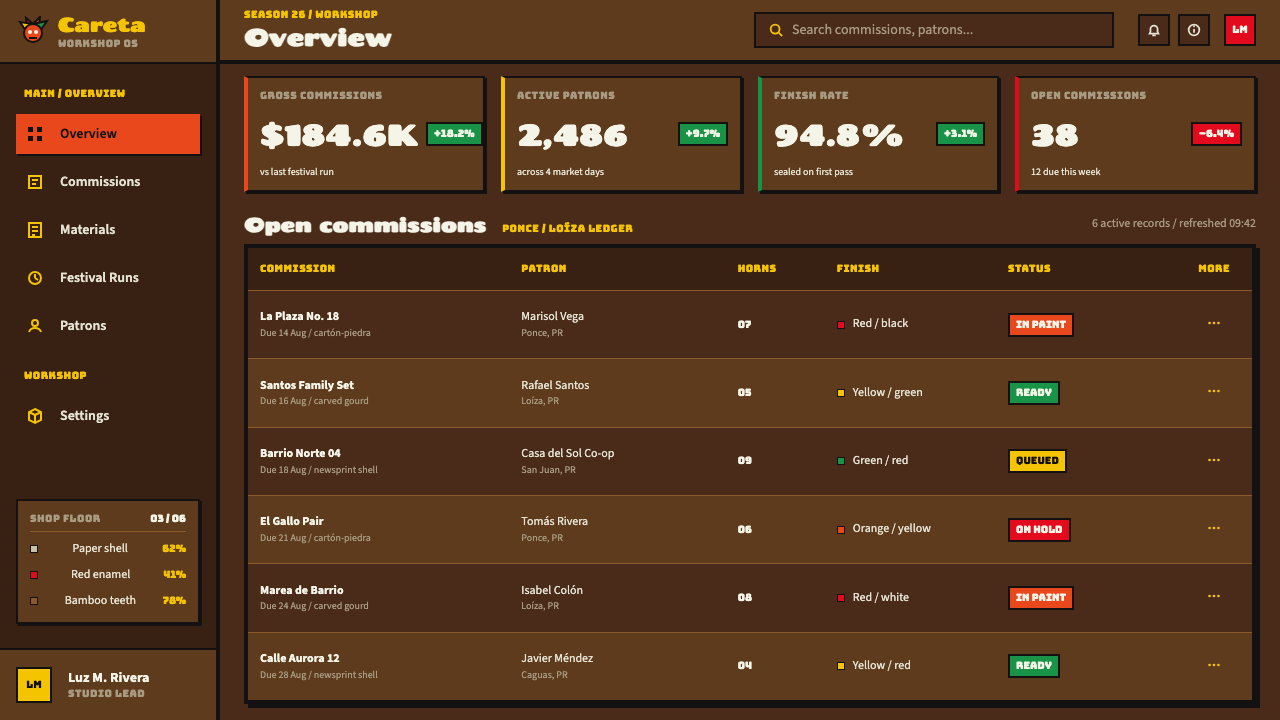
For presentation slides, a cover can be a dark brown-black field carrying large blocks of flat red, yellow and green, each held by a thick black outline, with the title set boldly on the strongest block. Content slides can use keylines to divide panels the way the mask divides its fields. Data slides suit chunky bars in flat colour with heavy outlines, and pie wedges that read like the wedges on the mask itself.
For web interfaces, the style fits event pages, music and festival sites, food brands, community projects and children's education. Cards and buttons can have thick black borders and flat fills; hover states should change hue, not add soft shadows. Keep the dark ground visible as the unpainted shell and let colour live inside the black lines. Dense dashboards are a poor fit, since the style is loud by design.
For editorial and marketing work, it supports cultural heritage features, festival guides, posters, sticker sheets and campaign materials. Headings should be chunky and direct, and photographs of real masks are the natural companion because they show the same paint language in its original setting. Credit the Loíza and Ponce traditions, as the style rests on named communities and families.
The most common mistake is cleaning it up: adding gradients, soft shadows or thin delicate outlines turns the mask into a generic tropical pattern. A second is using pastel tints in place of loud flat enamel. A third is spreading colour across so many hues that the red, yellow and green lose their punch, or filling the dark ground so that the bare shell disappears. The style works because it is blunt.
Vejigante Mask — FAQ
What is a vejigante?
A vejigante is a horned carnival figure from Puerto Rico, a runner in batwing sleeves who swings an inflated bladder and wears a mask with a crown of horns. It appears in processions such as the Fiestas de Santiago Apóstol in Loíza and the Ponce Carnival, and the mask is the part this style takes its visual rules from.
Why is the dark shell left unpainted?
Because the maker deliberately leaves it bare so the material shows. The unpainted ring frames the bright enamel, gives the colours a deep ground to push against and keeps the mask honest about what it is made of. In design terms it is the equivalent of a dark background that the colours are not allowed to cover.
What is the difference between the Loíza and Ponce masks?
In Loíza the face is carved from half a coconut shell or from a gourd, with teeth set in bamboo slivers. In Ponce it is built from newsprint and homemade paste into papier-mâché, with a crown of horns at irregular angles. The methods differ, but both are painted in flat enamel with thick black keylines.
Can the style use gradients or soft shadows?
No. The look depends on flat fields held apart by hard black lines. Gradients and soft airbrushed glow would dissolve the keylines and turn the paint into a different, more polished style. If depth is needed, create it with overlapping flat shapes and contrasting hue, not with blends.
How should the style be used respectfully in commercial work?
Treat it as the work of named communities and families in Loíza and Ponce rather than as generic tropical decoration. Credit the tradition, borrow the paint rules rather than copying a specific maker's mask, and use it for contexts of celebration and culture where its energy belongs.
Related design styles
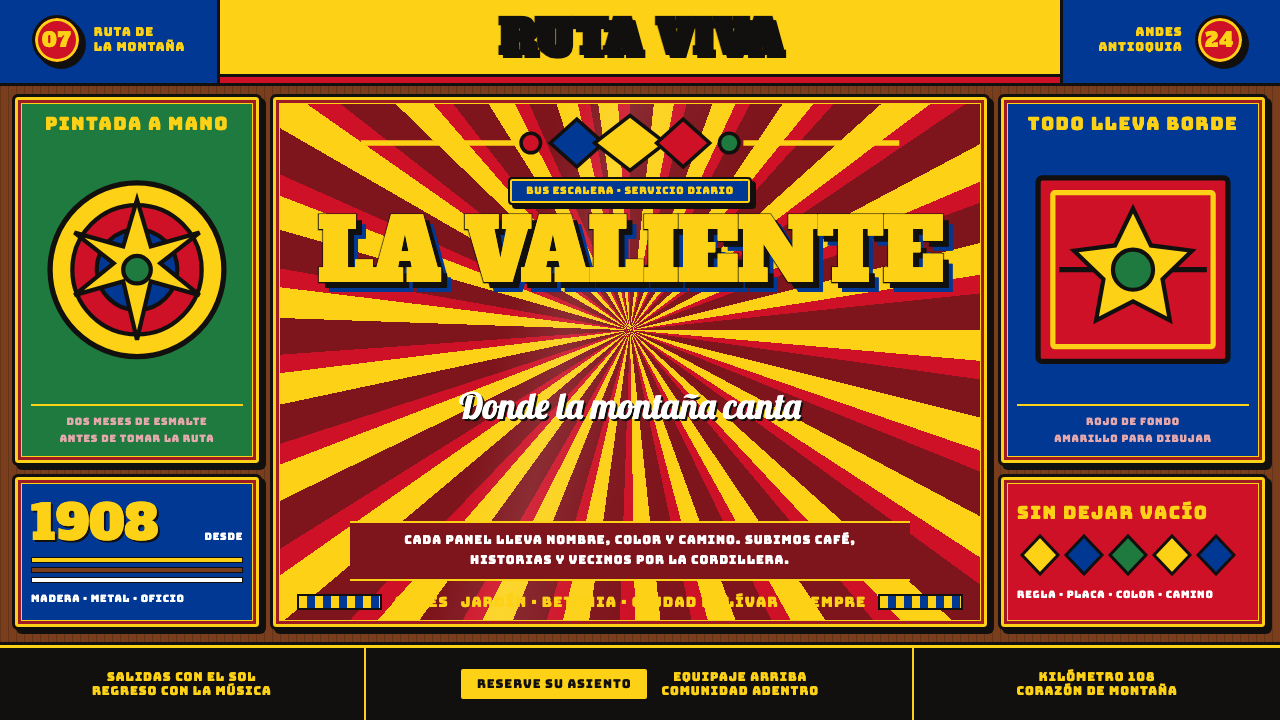 Colombian Chiva BusNothing is left unpainted. Flag-yellow rules, slab lettering and black keylin…
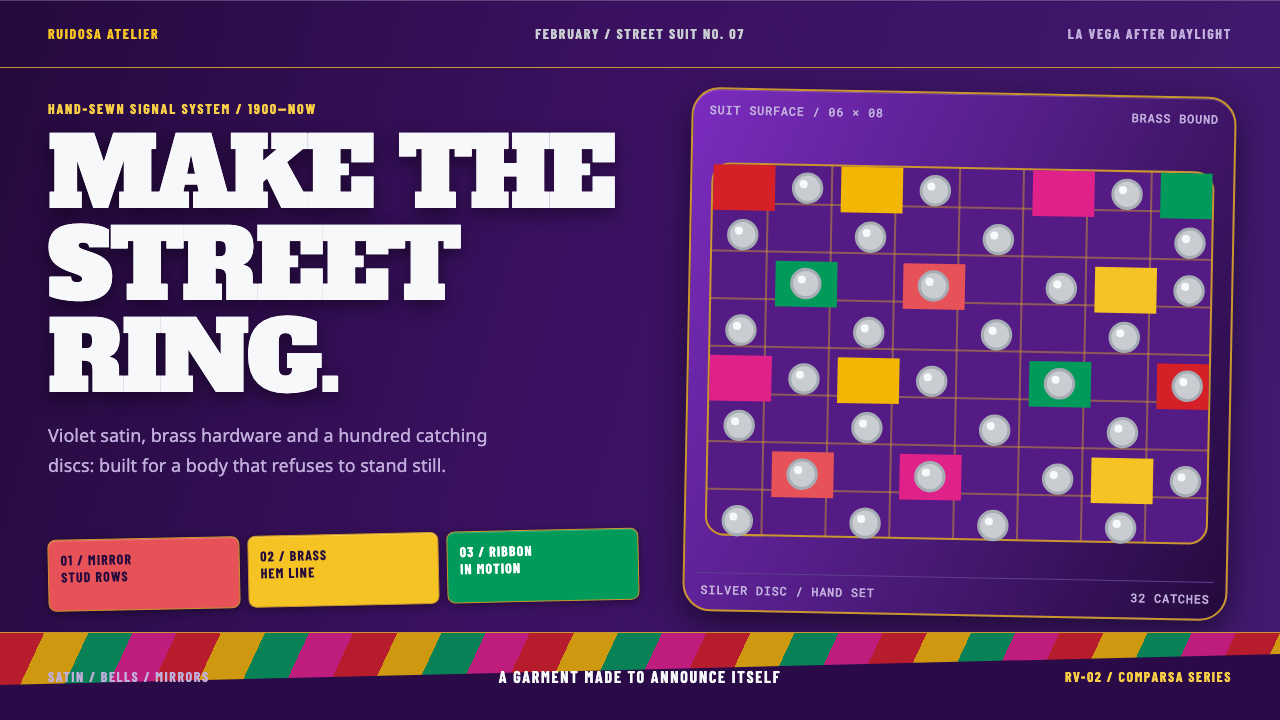 Diablo Cojuelo CostumeBuilt to be seen moving. Violet satin, brass edges, and mirror-disc grids mak…
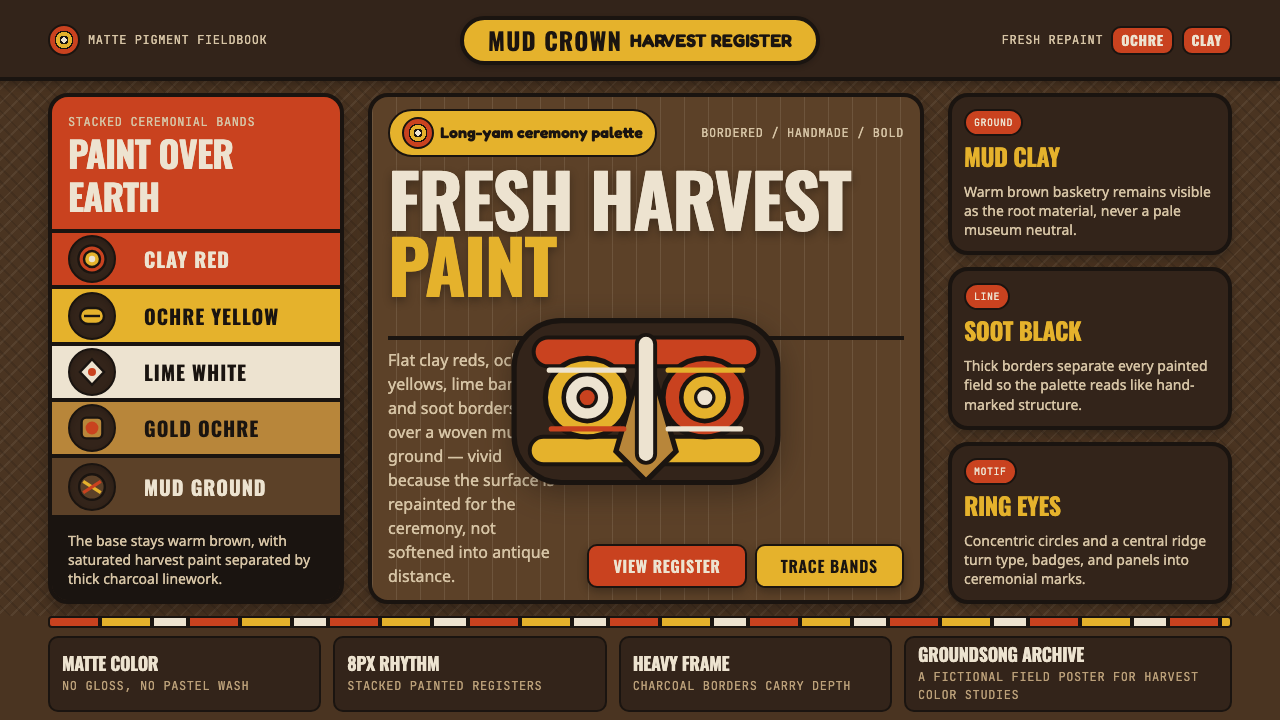 Sepik Yam Mask AbelamFresh harvest power. Clay red and ochre bands strike over warm mud-brown grou…
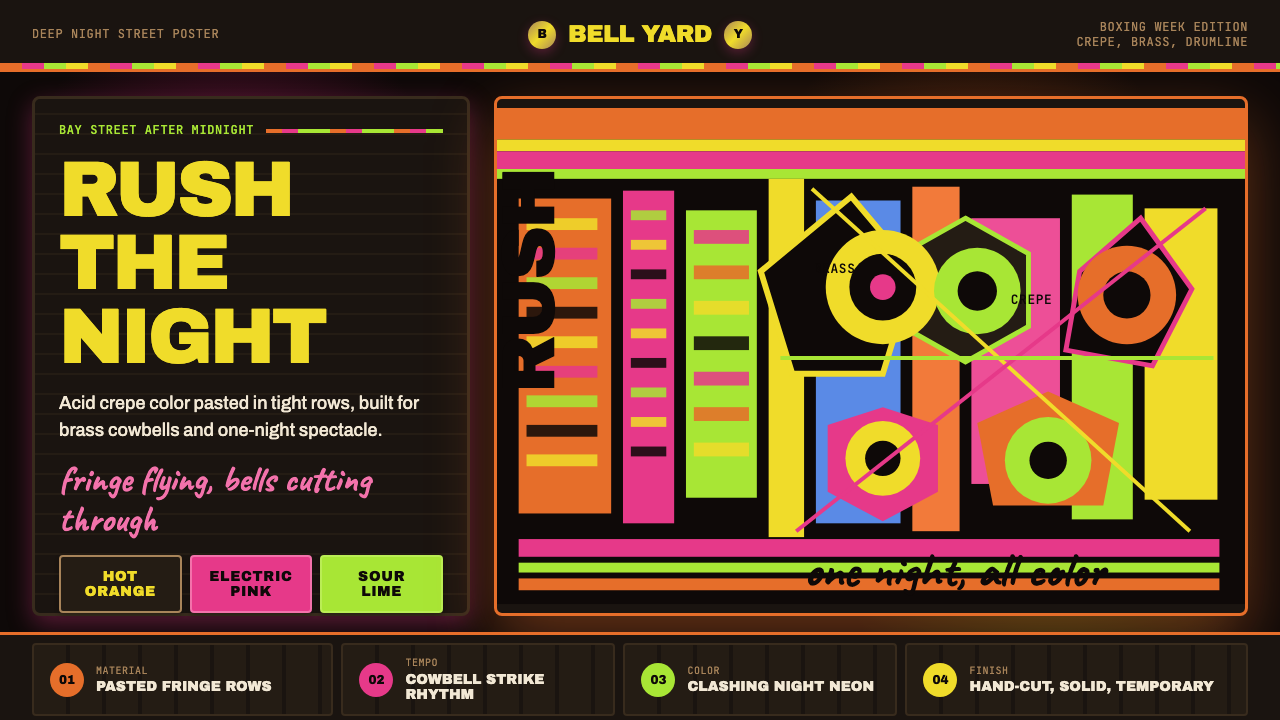 Bahamian Junkanoo CowbellNight refuses silence. Acid crepe stripes and block type collide like cowbell…
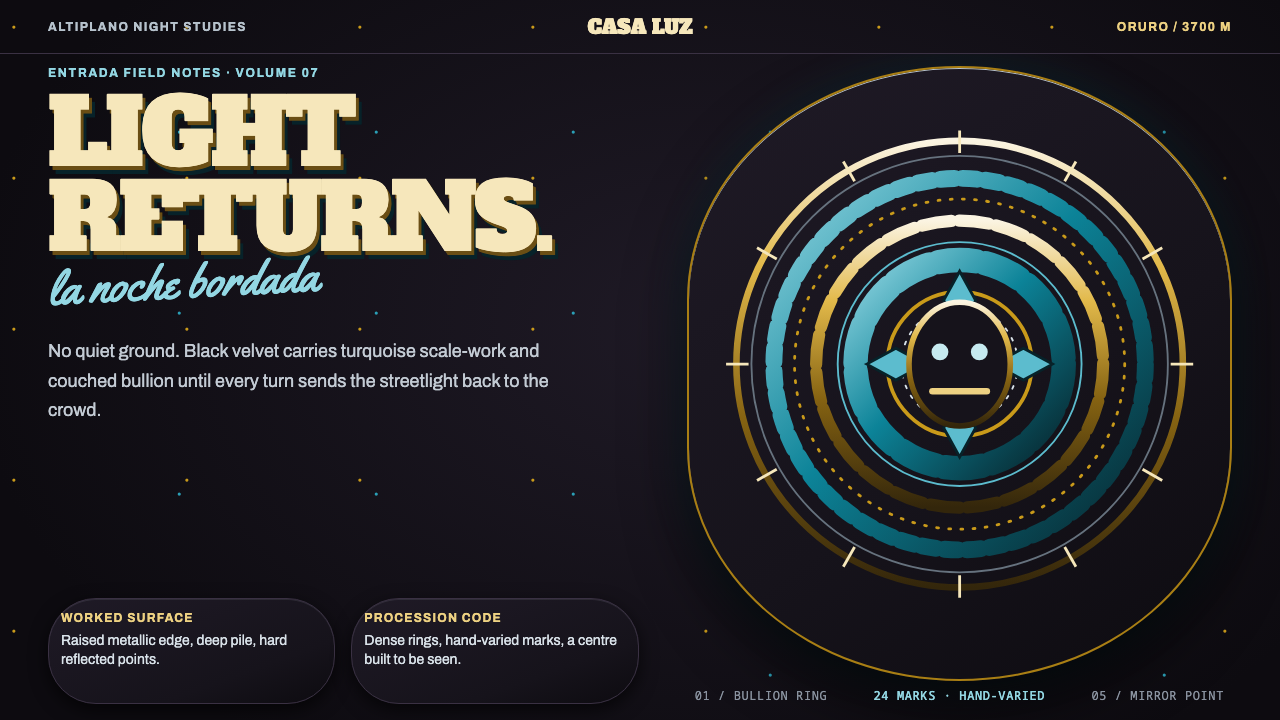 Diablada de OruroDensity throws light back. Turquoise scale-work and bullion rings electrify b…
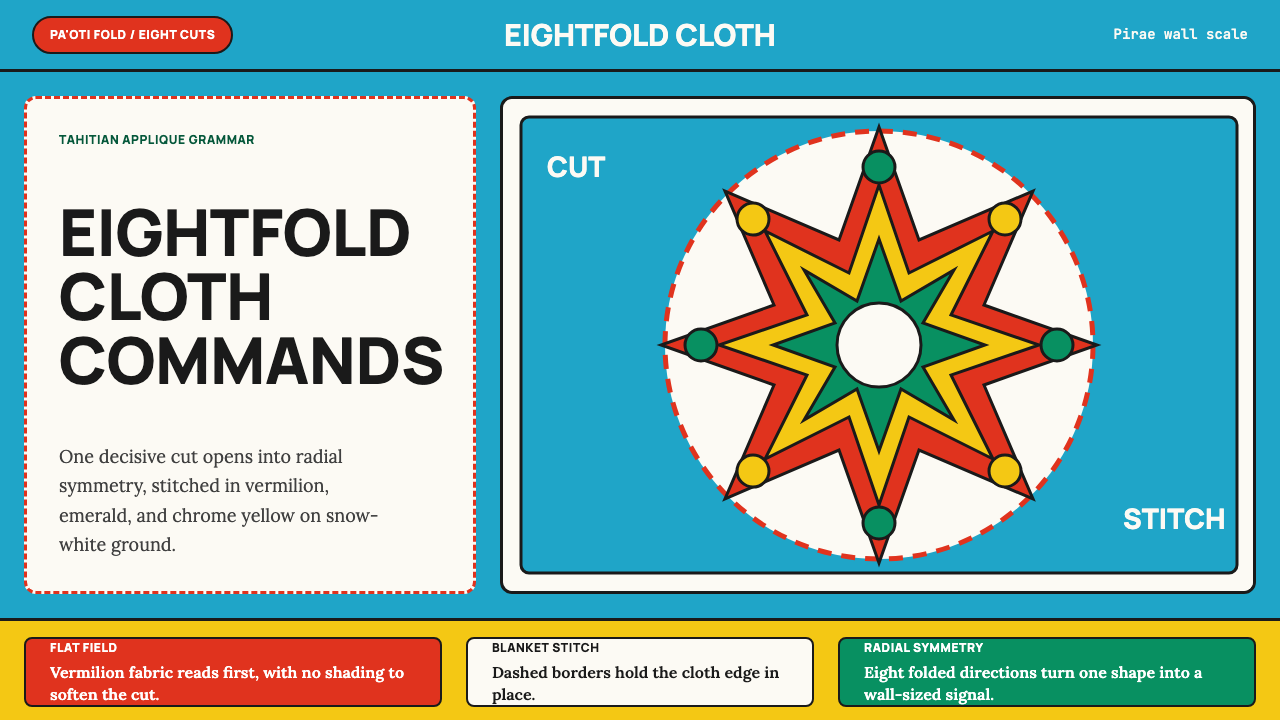 Tahitian Tifaifai (Appliqué Quilt)Flat fields command the room. Vermilion radial applique sits on Pacific cyan…