What is Semiconductor Cleanroom?
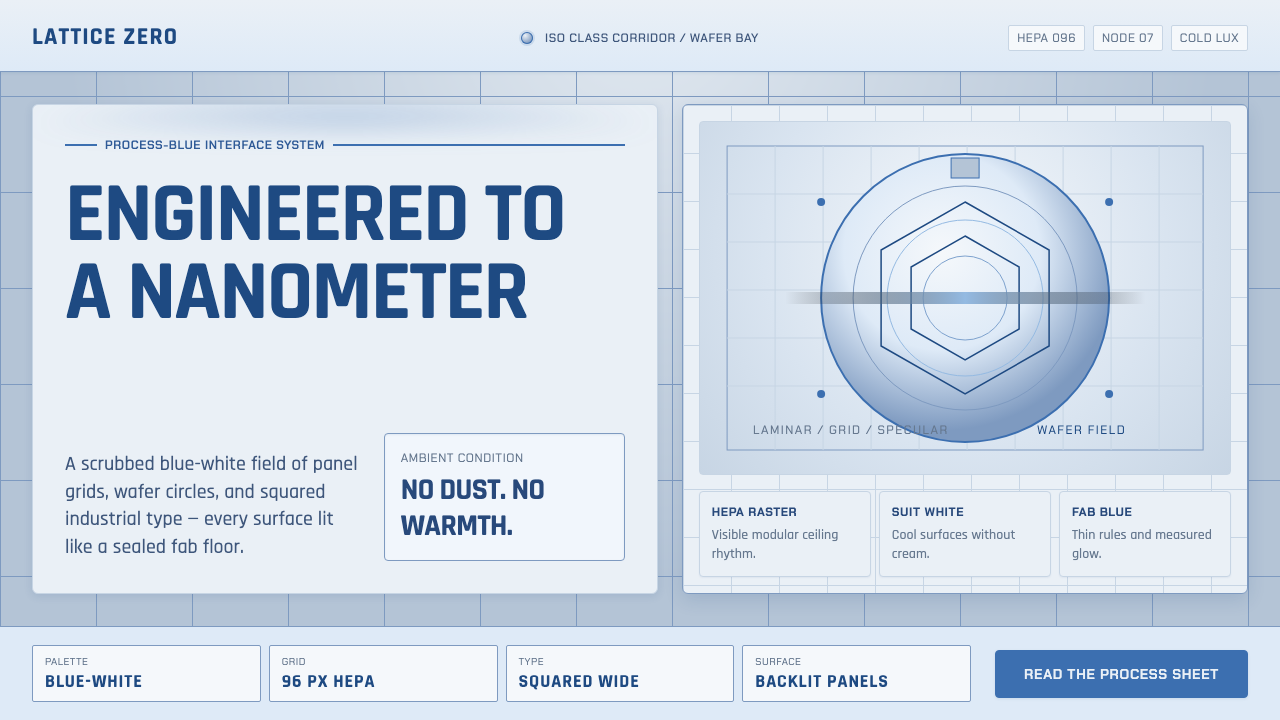
Semiconductor Cleanroom turns the cold discipline of chip fabrication into an interface language of blue-white light, wafer geometry, and uncompromising industrial order.
Semiconductor Cleanroom in brief
Semiconductor Cleanroom is a design system derived from the visual atmosphere of the modern chip fab: a controlled workplace stripped of dust, warmth, and visual excess. White protective coveralls appear under cold blue HEPA illumination; luminous filter panels repeat overhead; every surface feels measured, modular, and deliberately maintained. The aesthetic does not imitate a laboratory as decoration. It translates the operational feeling of a place where cleanliness, separation, and precision are inseparable.
Its visual vocabulary is narrow and disciplined. Cool blue-white fields replace cream, paper warmth, or domestic softness. Panel grids establish rhythm; wafer circles introduce focused geometry; squared technical rules divide information into inspectable zones. Light appears to come through the system rather than merely onto it, as though a process-blue glow sits behind translucent industrial panels. The result should feel engineered, not styled for comfort.
The emotional register is clinical but not empty. Semiconductor Cleanroom uses brightness, reflection, repetition, and controlled contrast to convey care, complexity, and exacting work. It is suited to interfaces that need to look trustworthy through structure rather than friendliness through ornament. Every visual decision should suggest that the interface has been cleaned, aligned, checked, and returned to service.
Where does Semiconductor Cleanroom come from?
Semiconductor Cleanroom originates in modern high-volume semiconductor fabrication, particularly the chip-fab culture that developed across East Asia and the global semiconductor industry from 1990 to 2010. Its source is not a named art movement or a single authored visual manifesto. It is an environment shaped by manufacturing conditions: filtered air, protective garments, modular equipment, process lighting, and spaces organized around repeatable precision.
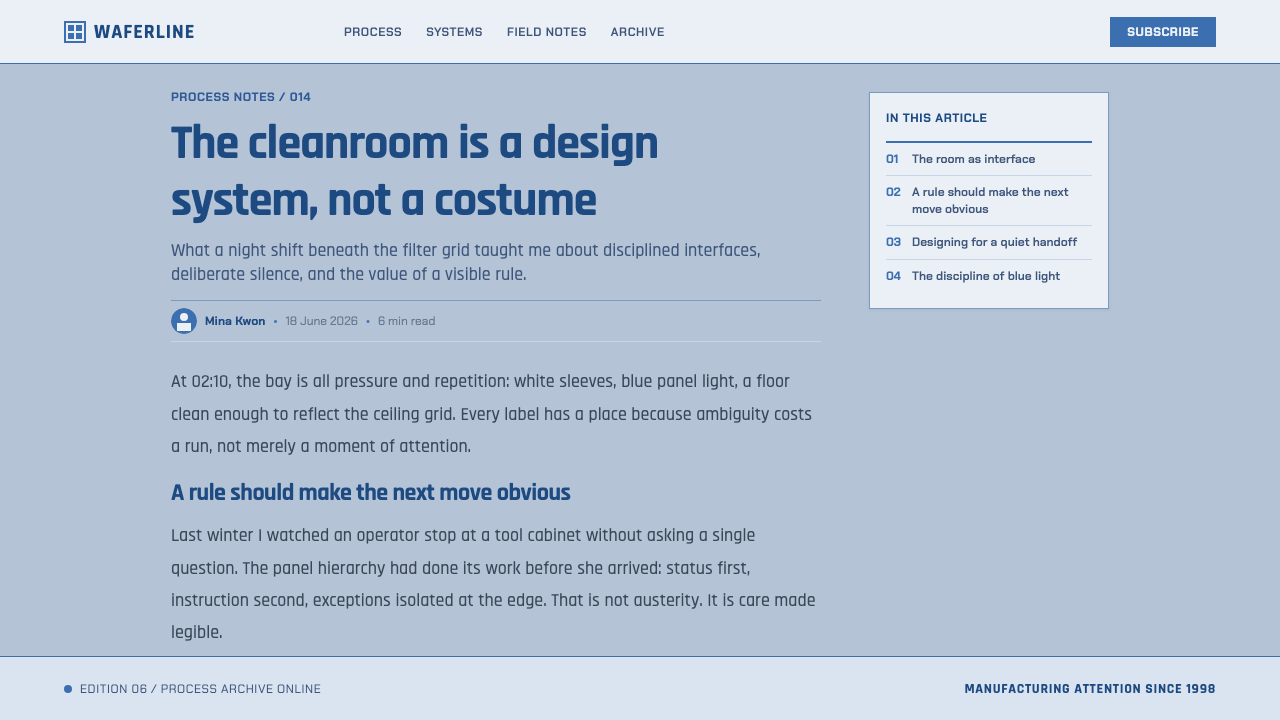
The cleanroom’s visual identity emerges from work rather than branding. Operators wear white bunny-suit coveralls because the production environment demands controlled separation. HEPA lighting and filter-panel grids become visually dominant because the ceiling itself is part of the engineered system. Wafer circles become an especially potent motif because they embody the product and the process at once: a smooth, precise, highly controlled object within a setting designed to protect it.
Fab process engineers and cleanroom operators are the key human figures behind this aesthetic, even when they are not represented as individual designers. Engineers establish the systems of measurement, modularity, and process discipline that the style evokes. Operators make the environment visible through their movement, uniforms, and adherence to procedure. Semiconductor Cleanroom therefore treats industrial culture as a visual source: its beauty comes from controlled conditions made legible.
As an interface style, Semiconductor Cleanroom carries those conditions into digital space. The goal is not nostalgia for factory imagery, nor a generic science-fiction future. It is a contemporary rendering of precision culture: cool illumination, clear partitions, reflective restraint, and forms that appear engineered for observation. The aesthetic works when it preserves the tension between a bright, sterile surface and the invisible complexity implied beneath it.
What defines the Semiconductor Cleanroom look?
Cool Blue-White Light
The palette stays decisively cool. White is illuminated rather than creamy, and blue carries the atmosphere of filtered process light. Warm accents, sunlit paper tones, and comforting neutrals interrupt the system’s sterile clarity. Brightness should feel clean and controlled, never cheerful or soft.
HEPA Panel Grid
Repeated luminous panels provide the governing structure. Their grid is not a decorative background pattern but an architectural field that organizes content, cards, and divisions. It should suggest ceiling filters, equipment bays, and a space designed for maintenance as much as for viewing.
Wafer Geometry
The wafer circle is the style’s signature organic-looking form, though it remains rigorously manufactured rather than natural. Use circles as inspection fields, focal markers, image windows, or diagrammatic anchors. Their smooth completeness is most effective when held against the squared rules and lattices around them.
Squared Technical Rules
Lines and frames are firm, orthogonal, and purposeful. They divide information as technical boundaries rather than as ornamental borders. Corners should feel machined or panelized, while junctions imply routing, containment, and orderly handoff between parts of the interface.
Industrial Typography
Type is wide, squared, and industrial in character. It should read like labeling on equipment or a process display: clear at a glance, spatially stable, and unsentimental. Hierarchy comes from measured shifts in scale, density, and placement rather than expressive type mixing or decorative lettering.
Specular Cleanliness
Surfaces can carry restrained highlights that imply polished industrial material and carefully maintained equipment. The effect is specular rather than luxurious: light catches an edge, a panel seems backlit, a white garment appears colder under blue illumination. Texture should remain minimal so cleanliness is never compromised.

Who shaped Semiconductor Cleanroom?
Fab process engineers provide the system logic behind Semiconductor Cleanroom. Their work is associated with measurement, modularity, repeatable conditions, and the closely controlled production environment the style evokes. In visual application, they stand for the insistence that every division, alignment, and illuminated field should have a functional reason.
Cleanroom operators make the culture visible. Their white bunny-suit coveralls, movement through controlled space, and procedural presence give the environment its human scale without making it warm or informal. They remind designers that sterility is an active practice, maintained through discipline rather than achieved by appearance alone.
The modern high-volume chip fab is the setting and collective author of the style. Its filtered illumination, modular panels, wafer forms, and exacting order supply the visual material. Rather than borrowing a logo or a single machine, Semiconductor Cleanroom draws from the fab as an integrated environment where process and appearance cannot be separated.
How do you use Semiconductor Cleanroom today?
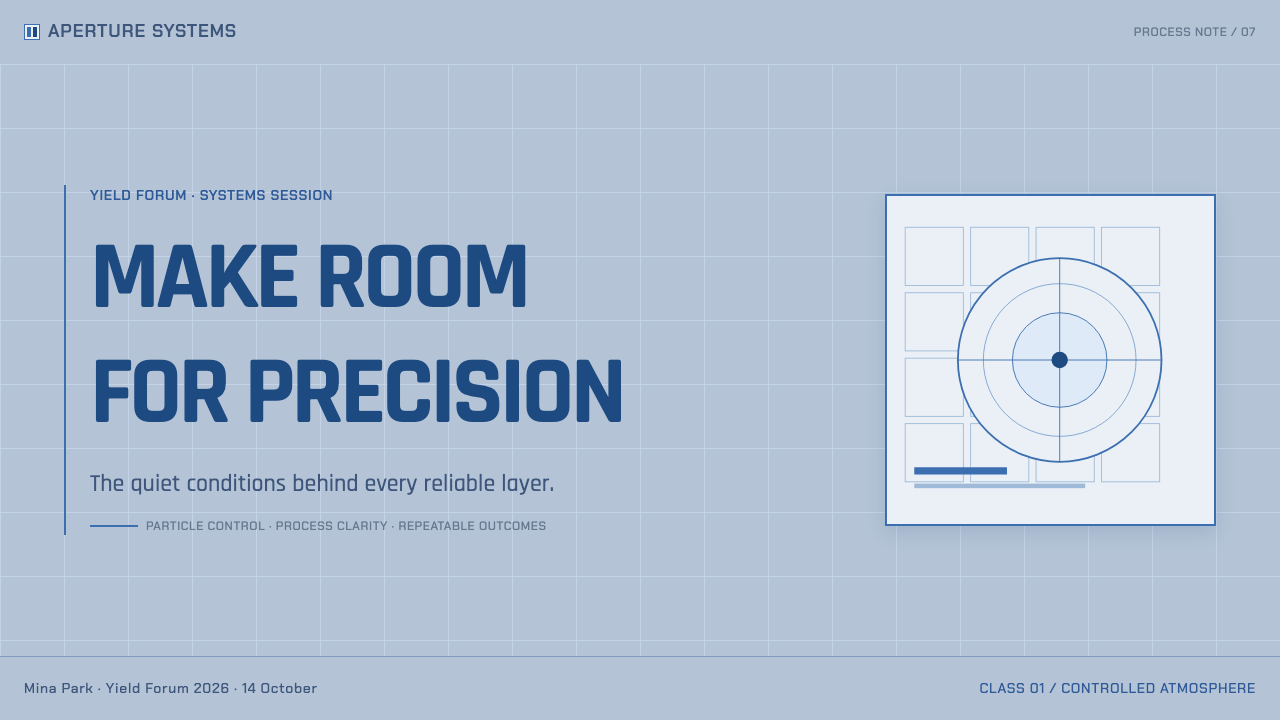
For presentation covers, use the cleanroom’s atmosphere as a single disciplined field. A luminous blue-white grid can establish the page, while a wafer circle or squared technical frame gives the title a controlled focal point. Keep the title industrial and spacious; the cover should look like an entry into a process environment, not a poster crowded with scientific symbols.
Content slides should behave like inspectable panels. Separate headings, body copy, metadata, and supporting diagrams with firm rules and calm white space. On data slides, charts can borrow the language of wafer geometry and panel lattices: circular views become deliberate inspection zones, while bars and comparison fields sit within a clear technical frame. Avoid visual effects that make data feel playful or decorative.
For web interfaces, Semiconductor Cleanroom is especially effective in dashboards, analytics products, infrastructure tools, and pricing pages where order is part of the promise. Use cool bright surfaces, blue-lit divisions, and consistent squared modules to make dense information feel managed. Interactive elements should appear integrated into a larger system, as though every state has been engineered rather than merely styled.
In editorial and marketing work, the aesthetic suits subjects involving technology, manufacturing, research, automation, or operational rigor. Long-form pages can use panel-like section breaks, restrained circular crops, and technical captions to create a sense of controlled progression. Marketing should emphasize clarity and capability rather than consumer warmth: the visual voice is precise, composed, and quietly demanding.
The common mistake is turning Semiconductor Cleanroom into generic futuristic blue. The style depends on the relationship between cold light, clean white material, grid discipline, wafer geometry, and industrial type. Too much glow, too many floating effects, or decorative science-fiction imagery weakens that relationship. The interface should feel like a maintained fabrication environment, not an entertainment vision of a laboratory.
Semiconductor Cleanroom — FAQ
Is Semiconductor Cleanroom simply a futuristic technology style?
No. It can look futuristic because it uses cool light, precision, and industrial geometry, but its source is a real modern fabrication environment. The difference is discipline. Generic future-tech styling often adds glow, complexity, and spectacle for their own sake; Semiconductor Cleanroom uses light, grids, circles, and technical divisions to communicate controlled conditions and inspectable order.
Can the style use warm colors or creamy backgrounds?
Those choices work against the style’s central atmosphere. Semiconductor Cleanroom is defined by blue-white coolness and by the removal of warmth from the visual field. A warm accent may be useful only when it marks an exceptional operational condition, but it should not become a decorative counterbalance. If warmth dominates, the interface loses the filtered, scrubbed quality that makes the system distinct.
How should wafer circles be used without becoming a decorative motif?
Give every circle an operational role. It can frame a key metric, contain an image crop, identify an inspection area, group related information, or mark a transition in a process narrative. The circle becomes decorative when it is repeated without hierarchy or relation to content. Its force comes from contrast with the squared system around it, so a small number of deliberate circles is stronger than a field of arbitrary discs.
What kinds of products benefit most from this aesthetic?
It is strongest where precision, operational visibility, and technical confidence matter: analytical dashboards, infrastructure interfaces, manufacturing tools, research products, and clear pricing or capability pages. It is less natural for experiences built around intimacy, softness, celebration, or domestic comfort. The decision should follow the product’s emotional promise as well as its subject matter.
Related design styles
 Transhumanism (H+)The body, rendered engineerable. Electric-blue circuit-anatomy schematics and…
 Cassini Saturn ImagingDeep space feels exact. Butterscotch Saturn floats in black with fine tan rin…
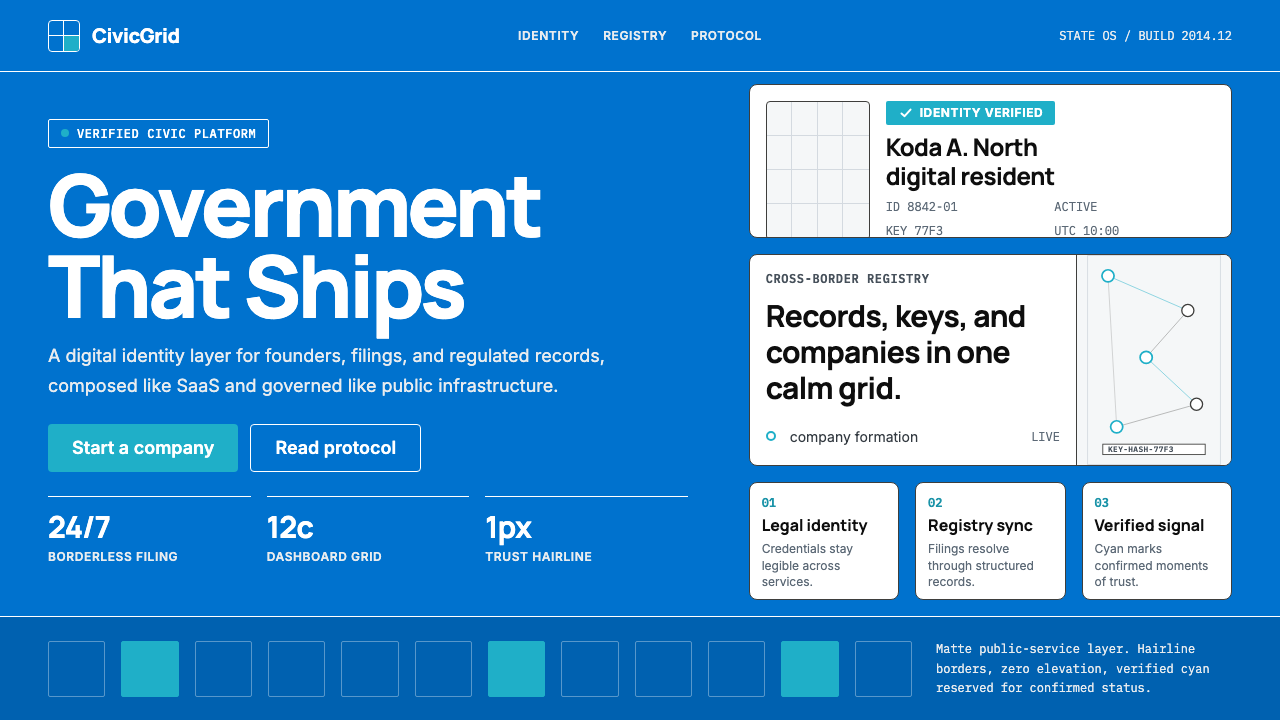 Estonia e-Residency Digital (2014)Trust without weight. Cornflower blue, 12-column grids, and cyan verified sig…
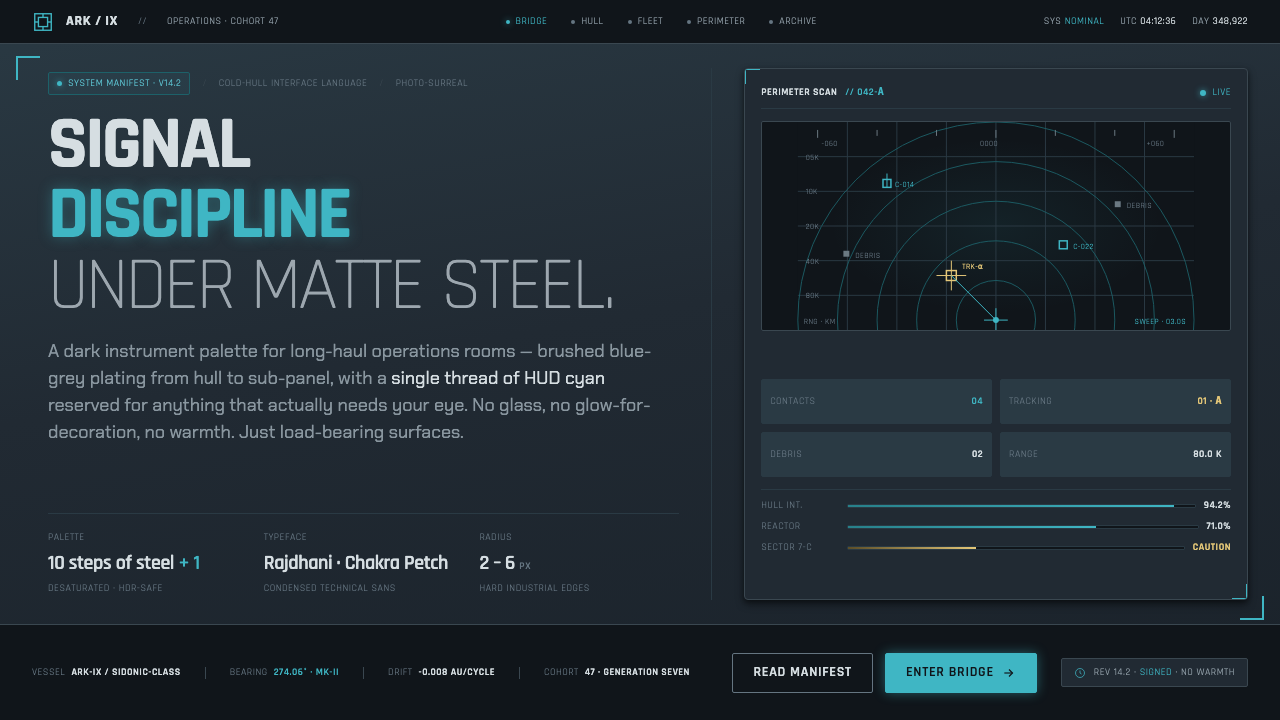 Knights of SidoniaSignal discipline under matte steel. Blue-grey hull, condensed Rajdhani, one…
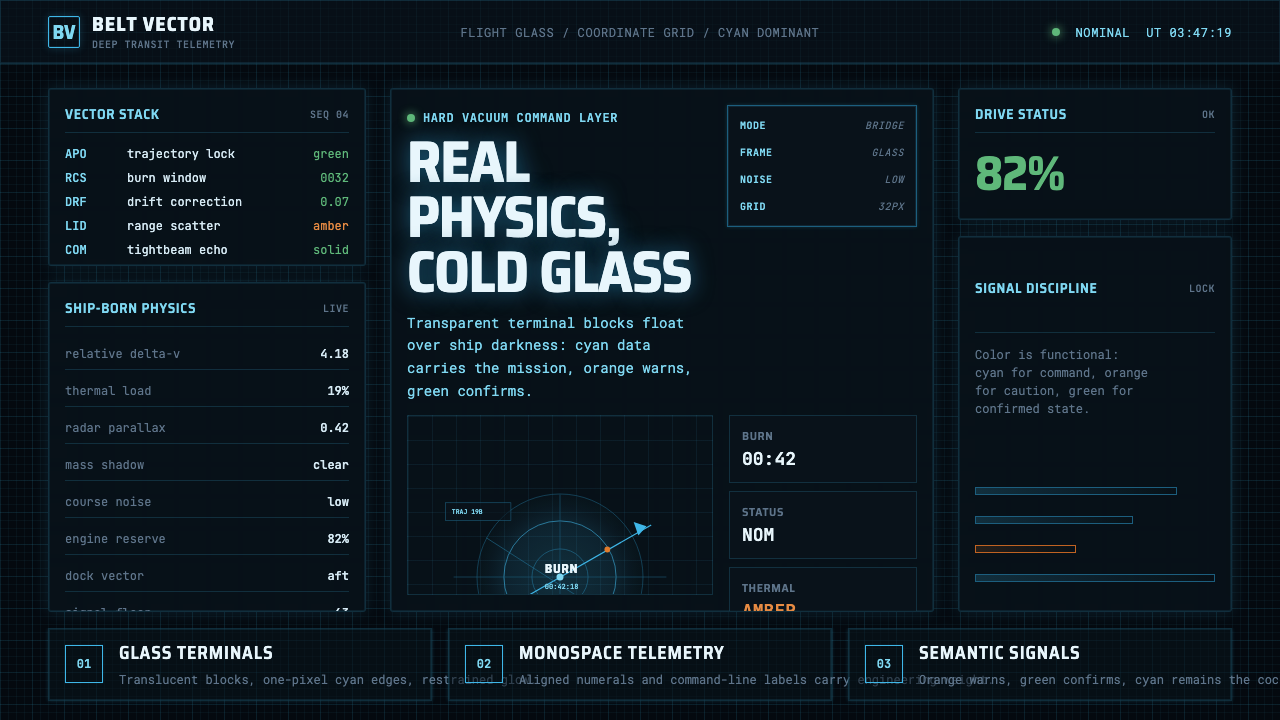 The Expanse Belter UIEngineering, not neon. Cyan glass panels, mono data, orange warnings on ship-…
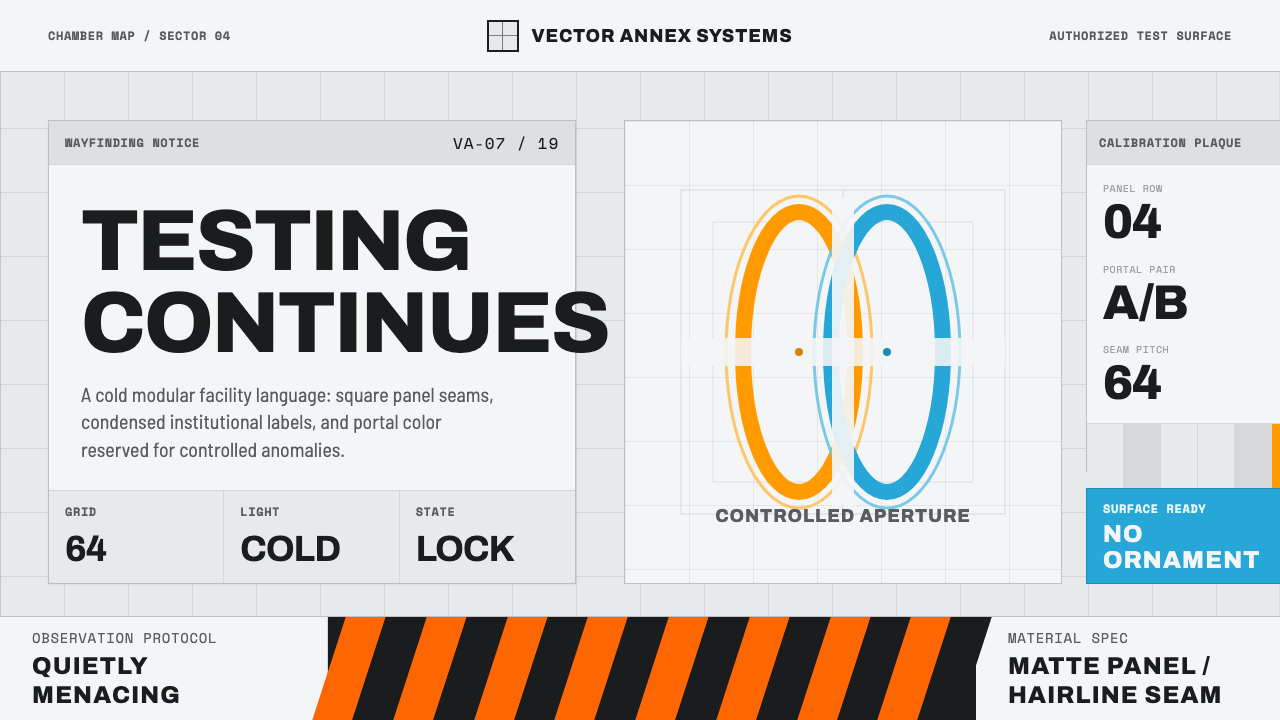 Aperture ScienceSterile authority. Cool panel seams, Archivo signage, and sparse orange-blue…