What is Estonia e-Residency Digital (2014)?
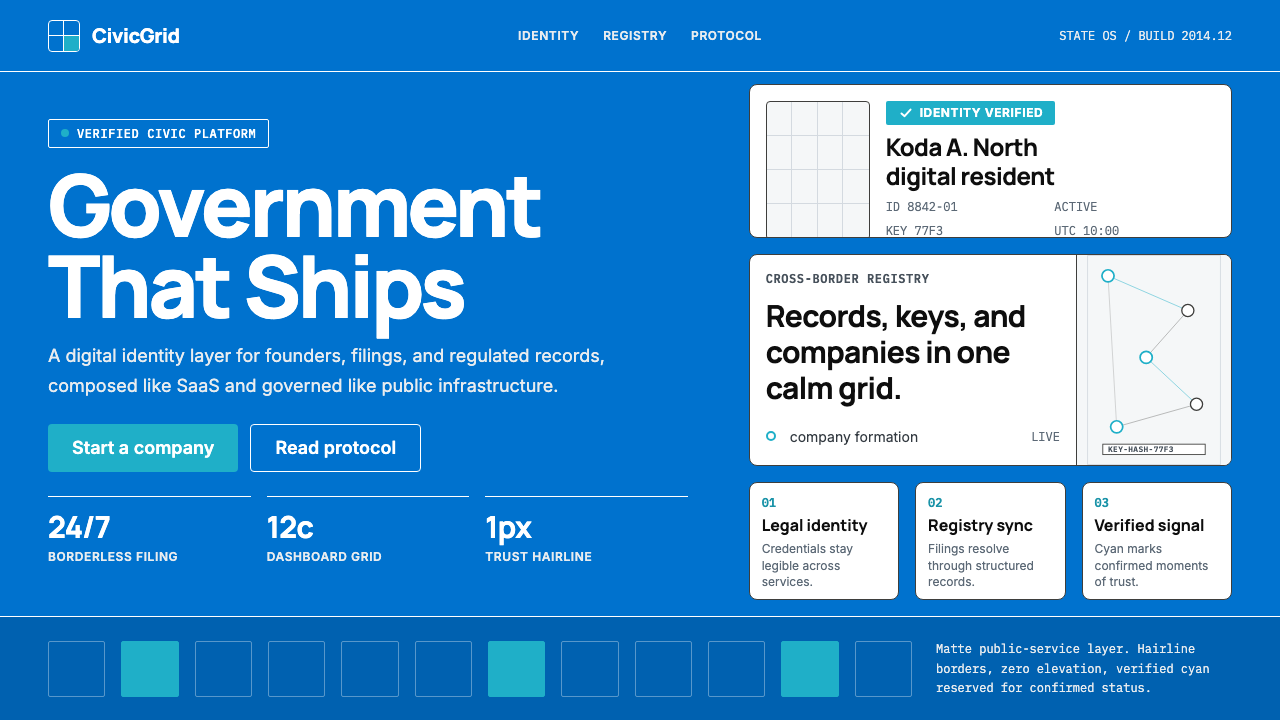
Estonia turned a small Baltic nation into the world's first digital state — and its visual language makes institutional trust feel as clean and immediate as a well-designed SaaS dashboard.
Estonia e-Residency Digital (2014) in brief
Estonia e-Residency Digital is the civic-technology design language developed alongside Estonia's groundbreaking e-Residency program, launched in December 2014. It draws its palette from the Estonian national flag — a distinctive cornflower blue paired with matte white and a verified-signal cyan — and organizes every interface around dense twelve-column grids, hairline borders, and type that handles Estonian diacritics and Latin characters with equal precision. The result reads as government infrastructure reimagined by a Nordic co-working studio: authoritative without being bureaucratic, structured without being cold.
The system is built on a single governing conviction: institutional trust can be communicated through visual discipline rather than visual weight. Where traditional government design reached for heavy seals, ornate crests, and thickly shadowed panels, e-Residency Digital reaches for restraint — thin ruled borders instead of drop shadows, flat card surfaces instead of embossed panels, generous whitespace that signals precision rather than emptiness. The aesthetic owes debts to Scandinavian public-sector design and to the broader tradition of Nordic civic minimalism, but it grafts onto that tradition a startup-era legibility suited to a government that ships software updates.
Visually, the style is immediately recognizable by its combination of cornflower blue as the primary identity hue, matte white dashboard cards as the dominant surface, and a secondary cyan that appears specifically to signal verified or active states — the digital equivalent of a green checkmark, but rendered with more graphic sophistication. Typography is clean and functional, chosen for its ability to render both Estonian-specific characters and English-language interface copy without compromise. The overall impression is of a carefully maintained design system: internally consistent, purposefully limited in its palette and decorative vocabulary, and unmistakably associated with the promise of frictionless digital governance.

Where does Estonia e-Residency Digital (2014) come from?
The roots of Estonia's digital ambitions stretch back further than the e-Residency program itself. When Estonia regained independence in 1991 after the Soviet collapse, it was one of the poorest countries in Europe, with a public administration infrastructure that was largely pre-digital. Rather than treating this as a disadvantage, the new government — guided in part by Prime Minister Mart Laar, who took office at age thirty-two in 1992 — decided to leapfrog traditional bureaucratic infrastructure entirely. By the late 1990s, Estonia had already established a national digital identity system, a paperless cabinet, and the X-Road data exchange platform that would eventually underpin the entire digital state. The X-Road infrastructure, which went live in 2001, allowed government databases to talk to one another without centralizing data — a distributed trust architecture that became the technical backbone for everything that followed.
The e-Residency program was proposed and championed by Taavi Kotka, then Estonia's Chief Information Officer, and Kaspar Korjus, who became the program's first managing director. The core concept was audacious: extend Estonian digital identity — and with it access to the European Union's legal and business infrastructure — to anyone in the world, regardless of physical location. President Toomas Hendrik Ilves, himself a technology advocate with deep roots in the Estonian diaspora, threw his personal support behind the initiative. When e-Residency officially launched on December 1, 2014, Estonia became the first country in history to offer digital residency as a government service.
The visual identity that accompanied e-Residency was shaped by the necessity of communicating credibility to an inherently skeptical international audience. A government program inviting foreigners to register businesses remotely had to overcome profound trust deficits — it needed to signal legitimacy, security, and institutional reliability through every design touchpoint. The choice to anchor the palette in the Estonian flag's cornflower blue was deliberate: it grounded the program in national identity without resorting to heraldic elaboration. The supporting language of clean grids, hairline borders, and verified-state cyan was drawn from the visual vocabulary of trusted financial and technology platforms — the aesthetic grammar that, by 2014, had become associated with reliability in the digital economy.
The design system also reflected Estonia's broader civic-technology philosophy, sometimes called the digital-state-building movement. Estonian designers and public servants operated in a space between post-Soviet pragmatism and Nordic design idealism, acutely aware that the interface between citizen and government was itself a political statement. A cluttered, heavy, opaque government interface communicated power-over; a clean, open, readable interface communicated service. This philosophical alignment between the program's governance model — radically transparent, API-first, built on distributed trust — and its visual language gave e-Residency Digital a coherence that many government design systems lack. The style was not applied as a cosmetic layer but grew directly from the values the program was trying to instantiate.
What defines the Estonia e-Residency Digital (2014) look?
Cornflower Blue as Identity Anchor
The signature blue is drawn directly from the Estonian national flag and functions as the single non-negotiable identity color across the entire system. It appears on primary action buttons, key navigation elements, and brand-facing surfaces where the program must assert its official character. The hue is cool and mid-range in saturation — present enough to read as authoritative, restrained enough not to overwhelm matte white card surfaces. In layouts with significant white space, this blue does most of the trust-signaling work without additional decoration.
Verified-State Cyan
A secondary cyan appears specifically to communicate verification, activation, and confirmed trust — the visual equivalent of a digital signature stamp. Unlike the cornflower blue, which carries brand identity, the cyan is a semantic color: it means something has been checked, validated, or granted. This deliberate separation of brand color from status color creates a clear visual grammar that users can learn quickly. The cyan is never used decoratively; every instance of it carries informational weight.
Twelve-Column Grid Discipline
All layouts are organized around a dense twelve-column grid, which allows complex dashboard information — status panels, document summaries, application progress trackers — to be arranged with spatial precision. The grid is never violated for decorative reasons; it is the structural spine of every page. This density is a deliberate choice for a system handling real bureaucratic complexity: more columns permit finer information hierarchies without resorting to nested tables or visually chaotic lists.
Hairline Borders Over Shadows
The system uses thin ruled borders — barely visible at ordinary viewing distances — rather than drop shadows or blur effects to define card boundaries and section separations. This is both a stylistic choice and a philosophical one: shadows simulate physical depth and imply a world of stacked paper; borders define boundaries without implying physicality. The hairline aesthetic reads as precise, digital-native, and deliberately opposed to the skeuomorphic government documents it was designed to replace.
Functional Sans-Serif Typography
The type choices prioritize precision and internationalization over personality. The selected faces handle Estonian's diacritical characters — letters carrying accent marks not present in the standard Latin alphabet — with the same visual balance as standard English characters, a technical requirement that eliminates most display-oriented typefaces from consideration. Type hierarchy is established through size and weight contrast rather than color variation, keeping the palette reserved for structural and semantic purposes. Letterforms are clean and open, avoiding both the coldness of narrowly engineered grotesques and the warmth of humanist serifs.
Matte White Dashboard Surfaces
The dominant surface throughout the system is a flat, near-white or pure white background — not cream, not off-white with warmth, but a clean, screen-native white that reads as contemporary and precise. Dashboard cards float against this ground without soft-shadow depth effects, relying instead on thin borders or subtle background-tone shifts to create containment. This whiteness is not blank emptiness; it is the negative space that makes the blue identity color and the cyan verification signals immediately legible.
Zero Bureaucratic Ornament
Official seals, ornamental crests, ribbon banners, and other trappings of traditional government visual communication are entirely absent. In their place, the system relies on precise information architecture — well-labeled sections, clear status indicators, consistent iconography — to communicate authority. This is a principled design choice with a political dimension: the aesthetic signals that this government communicates through clarity and competence rather than through the symbolism of accumulated institutional history.

Who shaped Estonia e-Residency Digital (2014)?
As Estonia's Chief Information Officer during the critical period of e-Residency's development, Kotka was the primary architect of the program's technical and institutional vision. He brought the mindset of a technology startup founder to a government initiative — thinking in terms of user acquisition, product-market fit, and scalable infrastructure rather than traditional policy frameworks. His insistence that the e-Residency program function like a well-engineered software product directly shaped the design philosophy that emerged: precise, functional, continuously iterable.
Korjus served as the first managing director of the e-Residency program and was responsible for translating the initiative's technical vision into a brand and communication strategy that could persuade global audiences. He effectively operated as both product manager and chief brand steward, making decisions about how the program presented itself — its tone of voice, its visual posture, its promise to the world — during the years when the design system's fundamental character was being established. His international communication work gave the visual identity its audience-first orientation.
Estonia's president from 2006 to 2016, Ilves was an unusual head of state: a technologist and long-time advocate for digital governance who wore bow ties, maintained an active presence on social media, and routinely engaged with researchers and entrepreneurs building the digital state. His personal embodiment of the program's values — thoughtful, internationally minded, deliberately unstuffy — influenced the tone of its visual communication. He served as the public face of a government that wanted to be seen as a serious-but-approachable digital partner.
As Prime Minister in the early 1990s, Laar made the foundational policy decisions that set Estonia on the path to becoming a digital state. His government liberalized the economy, invested in telecommunications infrastructure, and established the legal and institutional frameworks within which the digital state was later built. While Laar's direct involvement with e-Residency came before the program's launch, the culture of rapid, pragmatic, ideology-driven reform he established in the 1990s is the deep historical reason Estonia was able to develop such an ambitious digital governance initiative at all.
How do you use Estonia e-Residency Digital (2014) today?
Estonia e-Residency Digital is most effective in contexts that need to communicate institutional credibility, digital-native precision, and the specific emotional register of trustworthy-but-not-stuffy. It performs well for government and civic-tech products, compliance and legal platforms, financial infrastructure tools, and any service where the user must feel confident that the system is both authoritative and rigorously designed. The style is less well-suited to contexts requiring warmth, sensory richness, or consumer-facing delight — it communicates competence more readily than it communicates joy.
For presentation slides, the style excels on both cover and content pages. A cover benefits from placing the cornflower blue in a large, purposeful block — occupying a major portion of the slide — with the title set in clean, weight-contrasted type against white. Avoid centering everything; instead anchor the composition to one edge or corner and let white space carry the rest of the slide. Content slides should be treated as dashboard panels: a clear section label at the top in reduced type, the main information in a generous center column, and metadata or supporting notes in a narrow secondary column to the right. Data slides work particularly well in this style — bar charts, status indicators, and progress trackers all fit naturally within the visual vocabulary of verified-state signals and clean grid organization.
For web interfaces, the style is exceptionally well-suited to dashboards, administrative portals, document management systems, and pricing pages. Use the twelve-column grid as a genuine organizing constraint, not a suggestion — every panel, card, and form element should snap to it. Keep the page background at pure or near-white; reserve the cornflower blue for primary call-to-action elements and top navigation. Use the cyan exclusively for positive confirmation states: verified badges, completed steps, active subscriptions. Replace soft-shadow cards with thin-bordered panels; replace ghost buttons with clearly bordered alternatives. If the interface includes data visualization, treat charts as grid-aligned geometric objects rather than decorative illustrations.
For editorial and marketing work, the style supports strong information hierarchy with a civic-technology inflection. An article or report layout should use a narrow, high-legibility text column with a generous margin reserved for pull quotes, captions, or reference notes. Section breaks should be marked with a thin horizontal rule and a typographic label rather than decorative imagery. Marketing pages work best when they lean into the style's poster-like discipline: full-width feature blocks in alternating cornflower-blue-on-white and white-on-blue, with the cyan appearing only at the moment of a confirmed action or verified claim. Headlines should be set with deliberate scale contrast — significantly larger than body text — and no gradient or shadow treatment.
A common mistake when applying this style is treating the cornflower blue as a background fill for large decorative areas, which can make the result feel heavy and institutional in the negative sense rather than trustworthy. The blue is most effective as an accent and action color against a dominant white ground. A related error is introducing a third or fourth color — neutrals, warm grays, or additional accent hues — that dilute the deliberate simplicity of the two-color semantic system. The style's credibility depends on the restraint of its palette; every additional color requires a justified semantic role, not a decorative one.

Estonia e-Residency Digital (2014) — FAQ
Is this style appropriate only for government or civic-tech products?
Not exclusively, though that is where it is most naturally at home. Any product that needs to signal institutional reliability, regulatory compliance, or trust in handling sensitive personal or financial information can benefit from the visual grammar of this style. Legal technology platforms, accounting and payroll tools, digital identity services, and financial compliance dashboards have all successfully adopted similar visual languages. The key is that the product's core promise must align with the style's values — precision, transparency, and competence — rather than with warmth, playfulness, or sensory richness.
How does this style differ from generic Nordic minimalism or fintech design?
The distinction lies in the semantic specificity of its color system and the civic rather than commercial orientation of its visual posture. Generic Nordic minimalism tends toward warmth — cream tones, humanist typefaces, organic textures used sparingly. Generic fintech design often uses a darker, more dramatic palette with strong green-and-dark contrasts to signal financial authority. Estonia e-Residency Digital is specifically about verified trust — the cornflower blue is a national identity marker, and the cyan carries a precise meaning of confirmation that most commercial styles use more loosely. The overall effect is institutional precision, not lifestyle aspiration or financial aggression.
Can the style work with dark mode or dark-background layouts?
A dark variant is possible but requires careful recalibration. On a dark background, the cornflower blue shifts in perceived character — it can read as recessive rather than assertive, and the hairline border system that works crisply against white may need to be thickened or replaced with subtle background-tone differences. The cyan verification color adapts more readily to dark surfaces because it is inherently higher-contrast. If building a dark variant, it is worth treating it as a distinct design system that shares color values and typographic principles with the light version, rather than a simple inversion — the spatial logic needs to be rebuilt around the reversed ground.
What is the X-Road platform and why does it matter for understanding this design style?
X-Road, operational since 2001, is the distributed data exchange infrastructure that connects all Estonian government databases without centralizing them in a single repository. Every time an Estonian citizen or e-resident interacts with a government service, X-Road is brokering the data exchange in the background. Understanding X-Road matters for the design style because it explains why verified-state signaling is so central to the visual vocabulary: the entire technical architecture is built on the question of who has the right to access what, and when something has been confirmed. The design language's specific emphasis on confirmation signals — the cyan, the check-state indicators, the clear separation between pending and verified — is a direct translation of the underlying distributed-trust technical philosophy into visual communication.
How should imagery and photography be used within this style?
Imagery in e-Residency Digital contexts tends toward the documentary and the architectural rather than the aspirational or lifestyle-oriented. Photography of actual places — Tallinn's medieval old town alongside its glass-and-steel tech district, co-working spaces in digital nomad hubs — is used to ground the program's promise in physical reality. When photography appears in interfaces, it is cropped tightly and treated as a contained visual element within the grid rather than a full-bleed atmospheric backdrop. Abstract or decorative illustration is largely absent; information graphics — maps, process diagrams, status flows — are preferred when visual explanation is needed, and these are rendered in the two-color palette of blue and cyan against white.
Related design styles
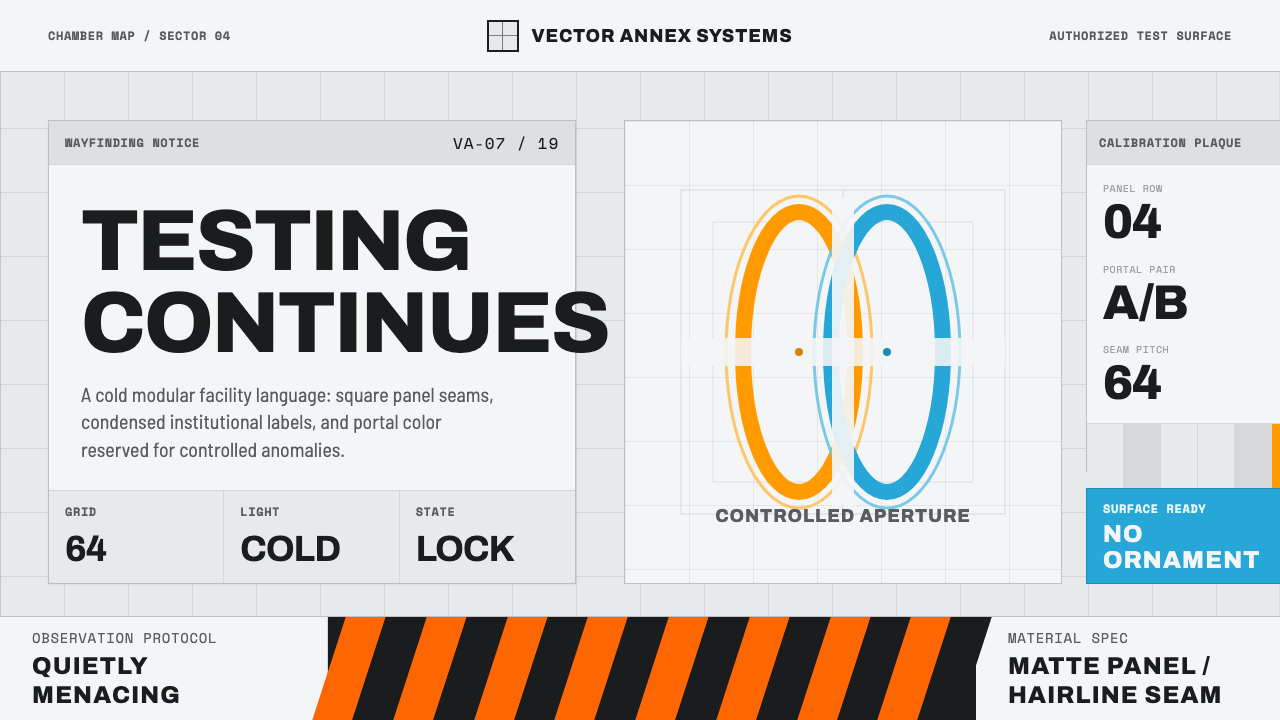 Aperture ScienceSterile authority. Cool panel seams, Archivo signage, and sparse orange-blue…
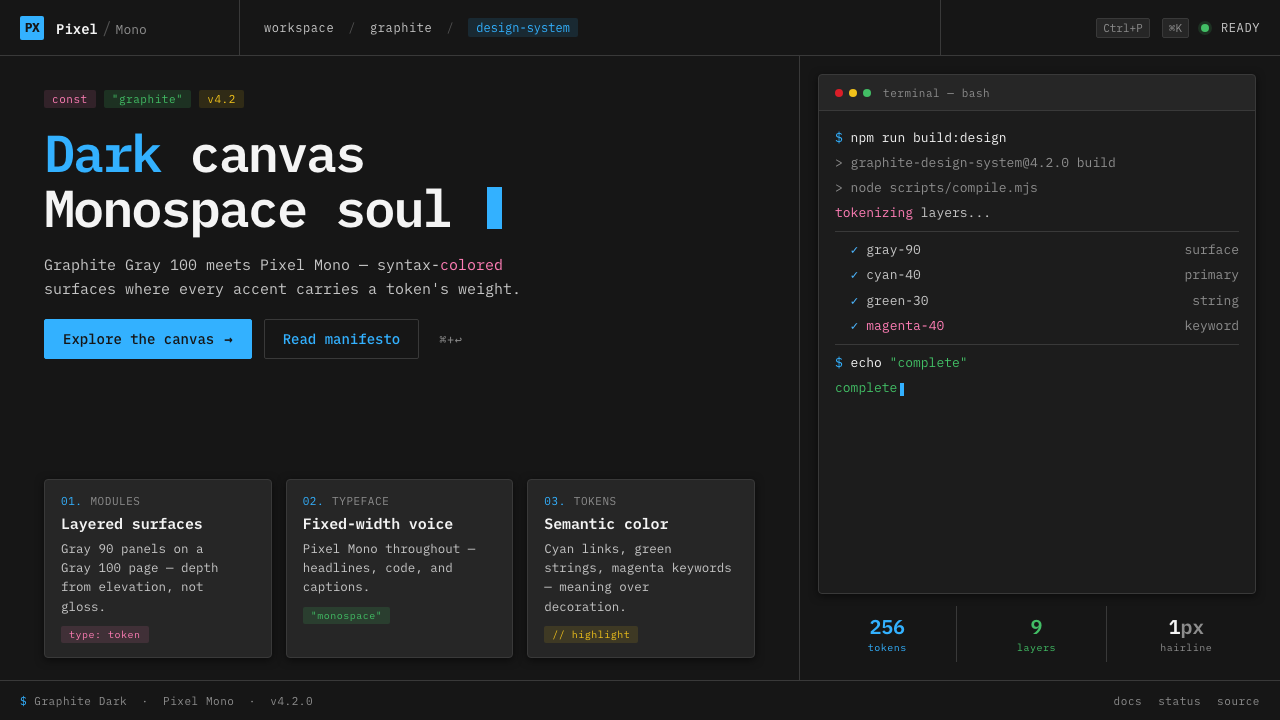 IBM Plex Mono DevColor used like syntax highlighting. Carbon Gray 100 canvas, IBM Plex Mono th…
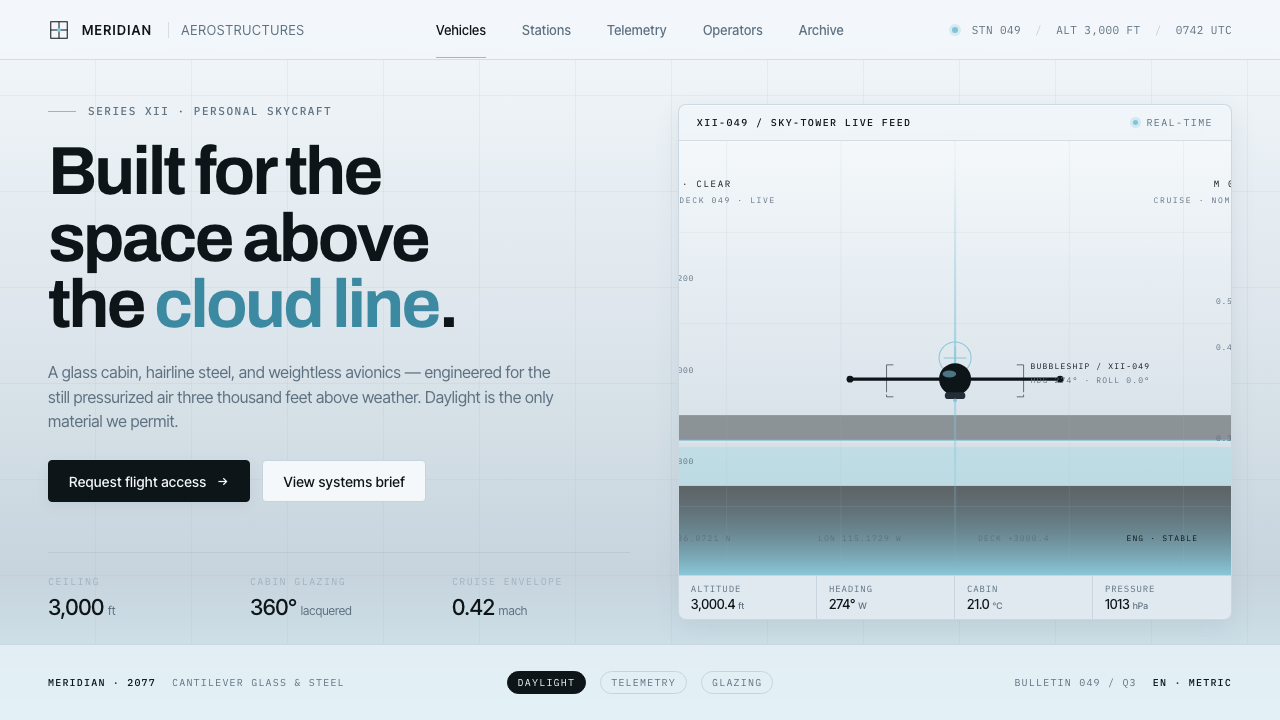 Oblivion Sky TowerSterile daylight futurism. Cool sky-grey glass, hairline steel mullions, a si…
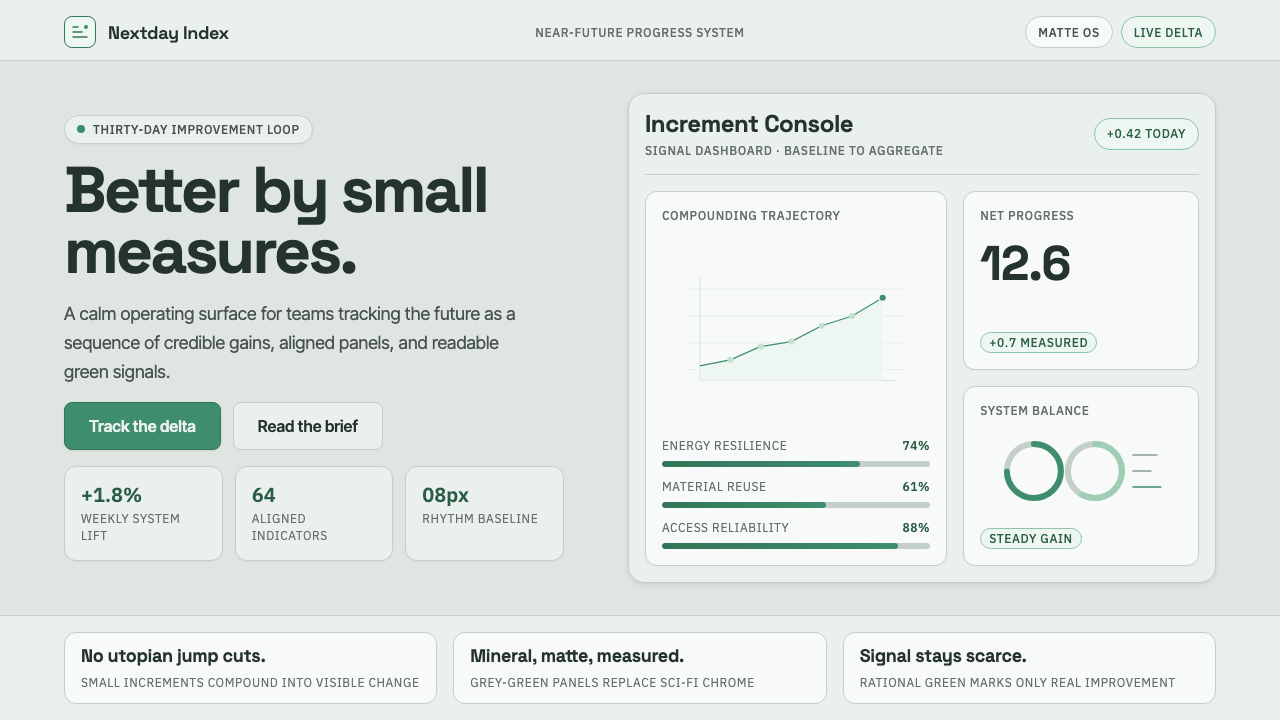 ProtopiaCalm progress, not sci-fi hype. Mineral grey-green grids make every small gai…
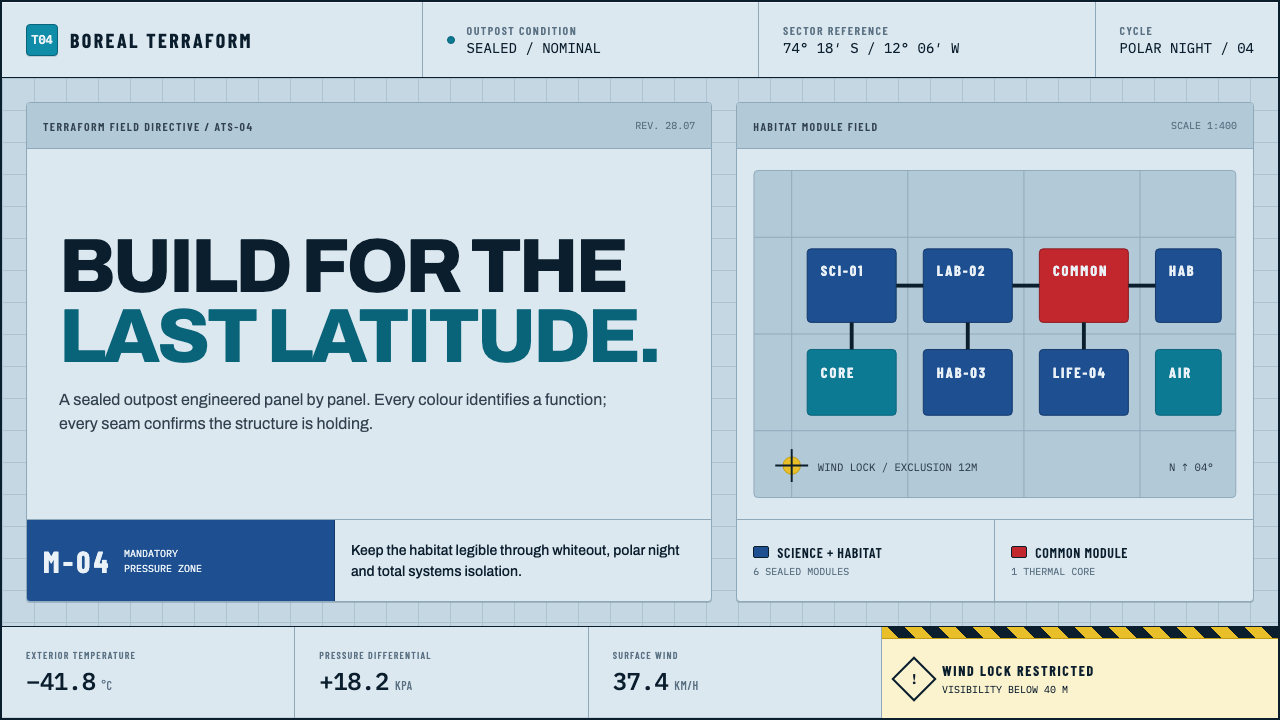 Arctic Terraform StationEvery colour carries a duty. Sky-blue panels, coded modules and hard seams en…
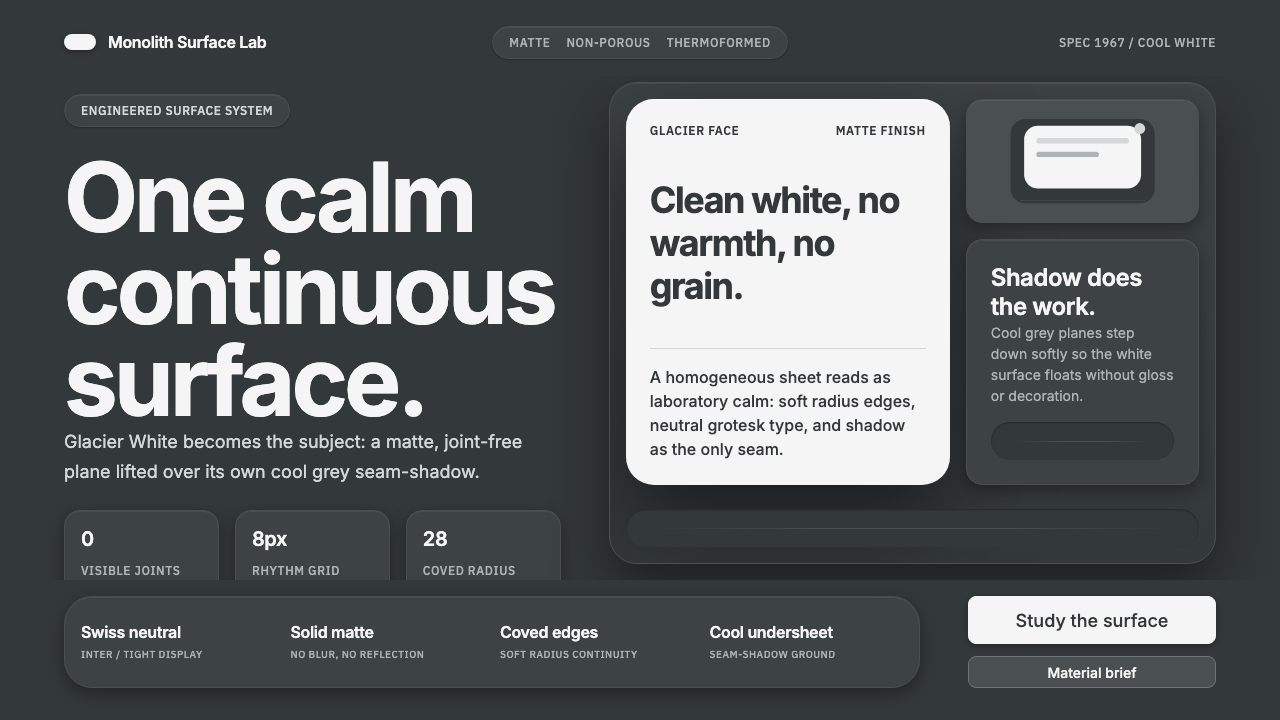 Corian Solid SurfaceSeamless matte calm. Glacier White floats over cool grey shadow with neutral…