What is Sasanian Silver Plate?
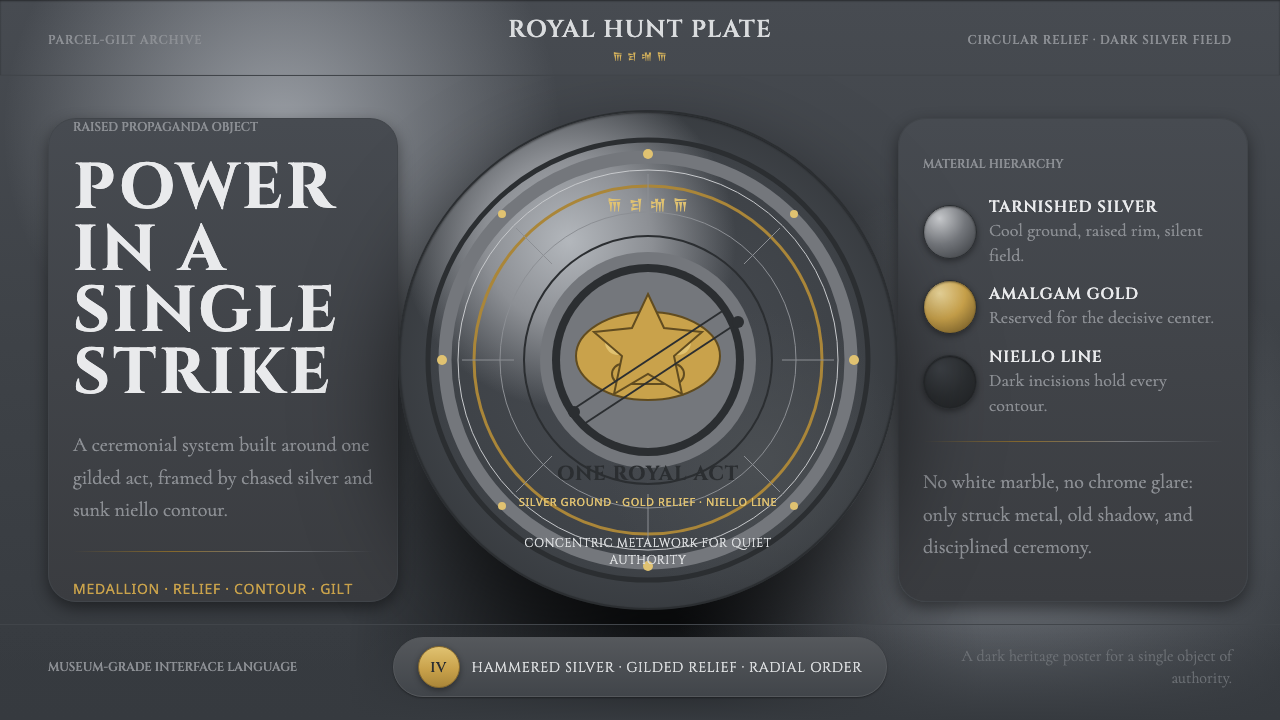
Sasanian Silver Plate turns royal hunting propaganda into a quiet interface language: tarnished metal, concentric order, and one warm gilded act held against darkness.
Sasanian Silver Plate in brief
Sasanian Silver Plate draws from royal parcel-gilt hunting dishes made in Sasanian Persia between the third and seventh centuries. These hammered silver objects carry a single raised narrative: a king on horseback spearing a lion or ram. The sovereign and the decisive action rise from the surface in warm gilding, while the surrounding silver remains cool, plain, and expansive.
The visual system is built from the plate’s material hierarchy rather than from decorative abundance. Tarnished silver becomes the ground, amalgam gold identifies the royal act, and dark niello defines contours. A circular relief functions as the center of gravity, with all secondary information arranged around it as if it had been chased into metal by hand.
Translated into contemporary design, the style is regal without becoming loud. It favors a deep metallic field over white space, one concentrated focal scene over scattered imagery, and restrained contrast over continuous visual stimulation. The result should feel ceremonial, still, and durable: less like a screen filled with components than an object whose surface has been deliberately worked.
Where does Sasanian Silver Plate come from?
The source object belongs to the Sasanian royal silver tradition of Persia, in present-day Iran and the wider Middle East. Royal parcel-gilt plates were produced from the third through the seventh centuries, using hammered silver as a broad field for a concentrated image of authority. Their scale of meaning came from the relationship between the plain metal ground and the raised royal scene, not from a crowded field of ornament.
A plate dated around 400 CE, from the period of Shapur II, provides the historical frame for this design language. The subject is not a casual hunt. The king on horseback, spear extended toward a lion or ram, turns hunting into an image of controlled force. The rider’s position, the animal’s danger, and the single decisive strike create a narrative that can be understood at a glance.
The material treatment makes that narrative legible. Cool silver establishes a restrained field; warm gold singles out the sovereign and the royal action; niello darkens selected contours so the relief remains readable. These contrasts are purposeful rather than ornamental. Each material carries a distinct task, making the plate simultaneously pictorial, ceremonial, and emphatically metallic.
For interface work, the historical plate suggests a different model of hierarchy from the usual card-based page. Rather than distributing emphasis evenly, it gathers meaning inward. The central medallion carries the story, surrounding rings organize context, and the dark field protects the silence around the focal act. This is a design language of sovereign concentration: little competes, and what remains carries consequence.
What defines the Sasanian Silver Plate look?
Tarnished Silver Ground
The ground is deep, cool, and metallic rather than clean white. It should suggest silver that has aged into shadow while retaining a muted reflective quality. This darkness is not a generic luxury backdrop; it is the quiet field against which relief, contour, and gilding become visible.
Concentric Composition
Everything orbits the medallion. Circular boundaries, radial labels, and rings of secondary information should reinforce the sense that the page has been formed around one struck center. The composition feels ceremonial because it does not merely place content near a circle; it makes the circle the governing structure.
Single Royal Act
The focal image is one raised scene, not a gallery of competing motifs. A mounted king spearing a lion or ram supplies the model: one figure, one adversary, one act of force. In modern use, the equivalent is a single dominant illustration, emblem, metric, or decision point given enough space to carry the narrative alone.
Gold as Authority
Gold is reserved for the action that matters most. It should identify a sovereign gesture, a chosen state, or a final call to attention, never become a broad decorative wash. Its warmth gains force precisely because it appears against cool silver and near-black contouring with great restraint.
Niello Contour
Dark contouring performs the work of definition. Like niello set into silver, it separates horse, rider, weapon, and prey without asking every surface to become bright. Use line and silhouette to clarify the relief, keeping the contrast precise, narrow, and subordinate to the metallic field.
Raised Relief
Depth should feel chased and hammered, not softly illuminated. The style favors an impression of forms pressed upward from metal, with edges defined by contour and selective highlights. It avoids atmospheric haze, smooth painterly transitions, and glossy simulation that would turn the plate into a generic three-dimensional object.

Who shaped Sasanian Silver Plate?
Shapur II is the named historical figure associated with the period around 400 CE that frames this source material. In a design treatment, his importance is less that of a portrait subject than of a royal condition: the plate’s central rider represents sovereign authority made visible through a single controlled act.
The mounted king is the plate’s narrative anchor. His horse, weapon, and forward movement compress the image into a decisive vertical and diagonal structure. Contemporary work can borrow this principle by giving one principal action unmistakable visual precedence rather than distributing emphasis across many equal elements.
The lion or ram provides the necessary counterforce to the royal act. It is not incidental decoration but the figure that gives the spear, rider, and gilded relief their tension. In interface terms, an opposing state, threshold, or challenge can play the same compositional role: present enough to make the central resolution meaningful, but never strong enough to displace it.
How do you use Sasanian Silver Plate today?
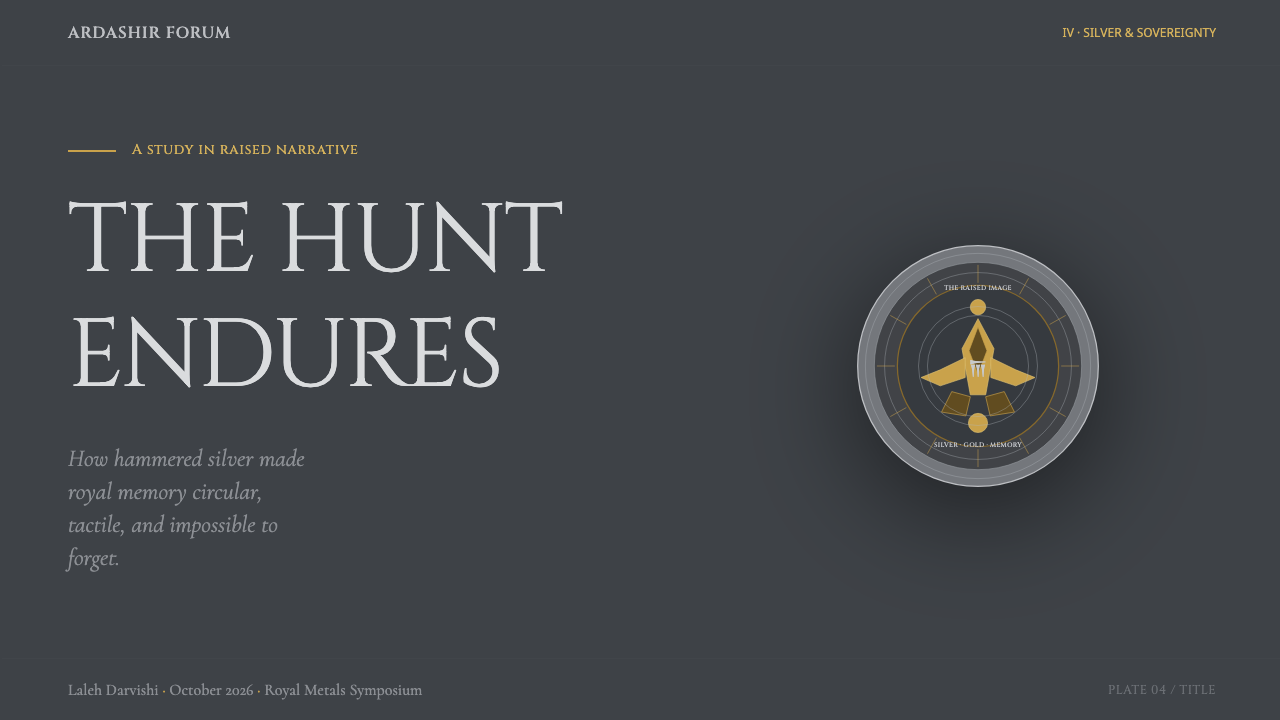
For presentation covers, build the page around one large medallion-like scene or emblem on a deep silver field. Place the title in a calm perimeter rather than overfilling the center, and let one restrained gold detail identify the subject’s decisive idea. Content slides should preserve that concentric logic: a central proposition, a surrounding ring of supporting points, and dark contour lines that establish reading order without ornamental separators.
Data slides work especially well when the primary measure is treated as a raised relief and the surrounding values act as a ring of evidence. Avoid presenting every figure with equal visual force. Let the central insight carry the gold emphasis, use the silver field to hold lower-priority context, and employ near-black marks for divisions, labels, and comparisons.
For web interfaces, the style suits dashboards, status pages, and premium pricing experiences where a single decision or summary needs authority. A circular account state, plan summary, or central metric can operate as the medallion, while navigation and secondary controls remain quiet along its perimeter. The dark silver ground should remain present across the interface so that gold feels like an event rather than a default accent.
In editorial and marketing work, Sasanian Silver Plate is strongest when a story can be distilled into a defining encounter. Use a central image or engraved emblem to lead a feature page, then allow captions, supporting copy, and calls to action to gather around it in measured rings. Marketing language should be equally restrained: the visual system promises permanence and command, so crowded badges, playful decorations, and urgent interruptions break its composure.
The common mistake is treating the style as a generic black-and-gold luxury treatment. Its character comes from the relationship between tarnished silver, selective gilding, dark niello contour, and a single narrative relief. If gold appears everywhere, if the center is crowded, or if soft glossy effects replace chased structure, the result loses the quiet authority that makes the original object compelling.
Sasanian Silver Plate — FAQ
Is this style simply a dark luxury aesthetic?
No. A dark background and gold accent are only surface signals. The defining system comes from a Sasanian silver plate: tarnished silver as ground, one raised royal hunting scene, gilding reserved for the sovereign act, niello for contour, and concentric organization around a medallion. Without that hierarchy, the result may look expensive but will not feel like this tradition.
Why should the focal composition be circular?
The circle is inherited from the plate itself. It is not merely a decorative frame but the object’s narrative and material boundary: the raised scene is held within a silver dish and read from its center outward. A circular interface focal point preserves that object logic, making surrounding information feel like a perimeter of evidence rather than unrelated modules.
How should gold be used without overwhelming the interface?
Use gold as the equivalent of parcel gilding: a selective mark on what carries royal or decisive meaning. It can identify the primary action, selected state, or most consequential number. Keep silver dominant and let dark contouring do the work of separation. Gold gains authority through scarcity, especially when it emerges from a restrained metallic field.
Does the style work for text-heavy editorial pages?
Yes, if the text is treated as a quiet perimeter rather than a competing focal image. A central engraved illustration or emblem can establish the page’s narrative, while headings, annotations, and body copy form controlled bands around it. The important discipline is to preserve the relief-like hierarchy: one dominant act, clear contour, and enough dark silver space for the page to remain still.
Related design styles
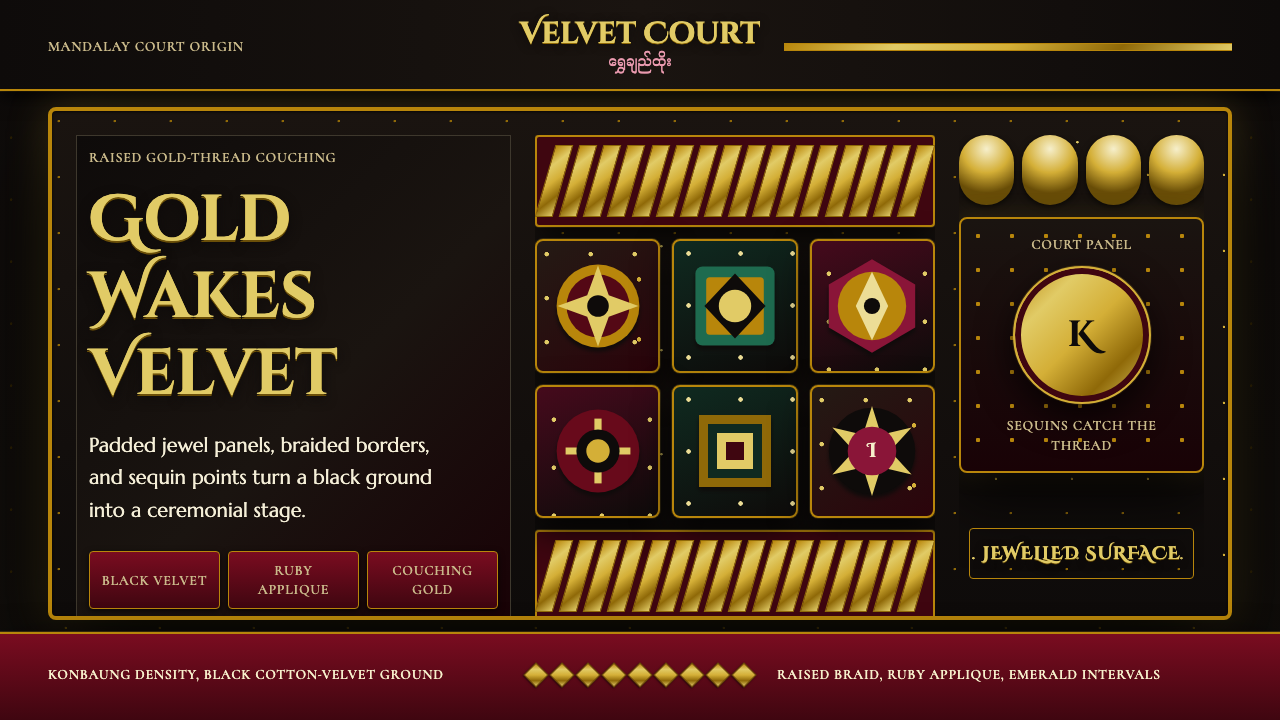 Burmese Kalaga TapestryVelvet becomes theater. Black ground, gold-thread borders, ruby and emerald p…
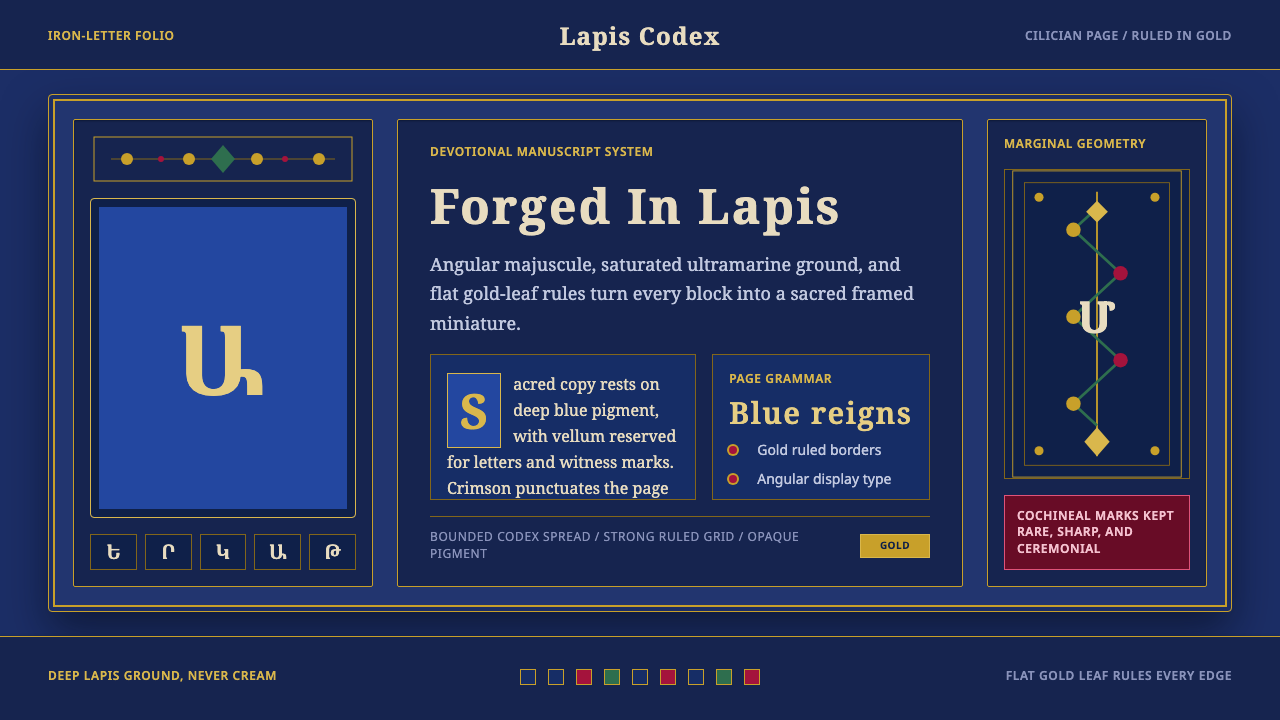 Armenian ErkatʿagirDevotional lapis reigns. Gold rules and angular serif glyphs frame a sacred g…
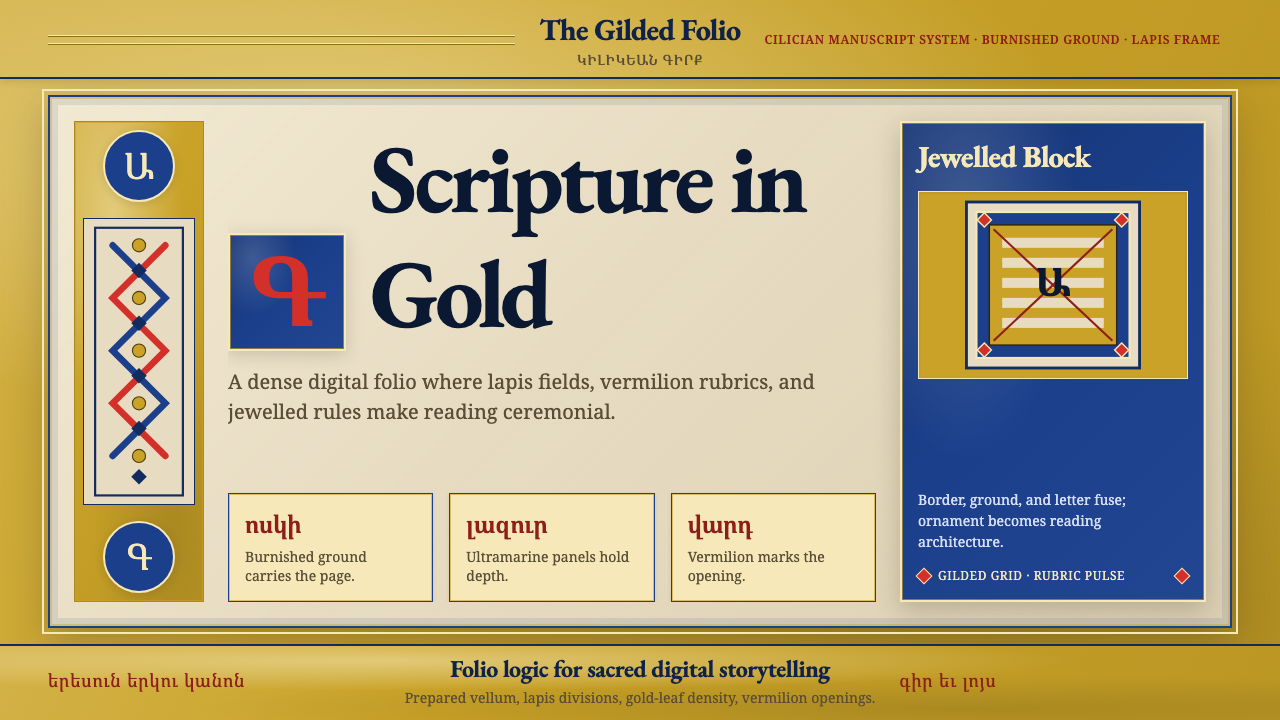 Armenian Illuminated ManuscriptGilded maximalism. Burnished gold, lapis frames, and vermilion initials build…
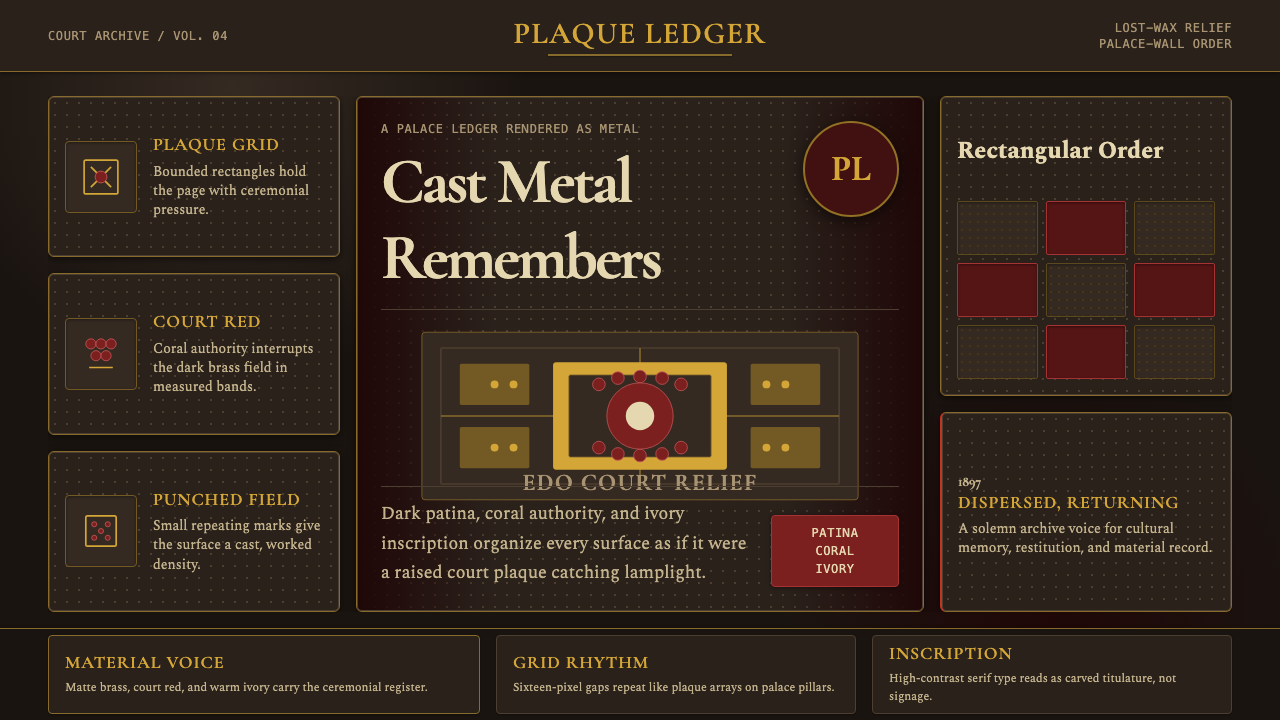 Benin Bronze Oba CourtCourt gravity in cast metal. Patinated brass grid, coral red panels, ivory se…
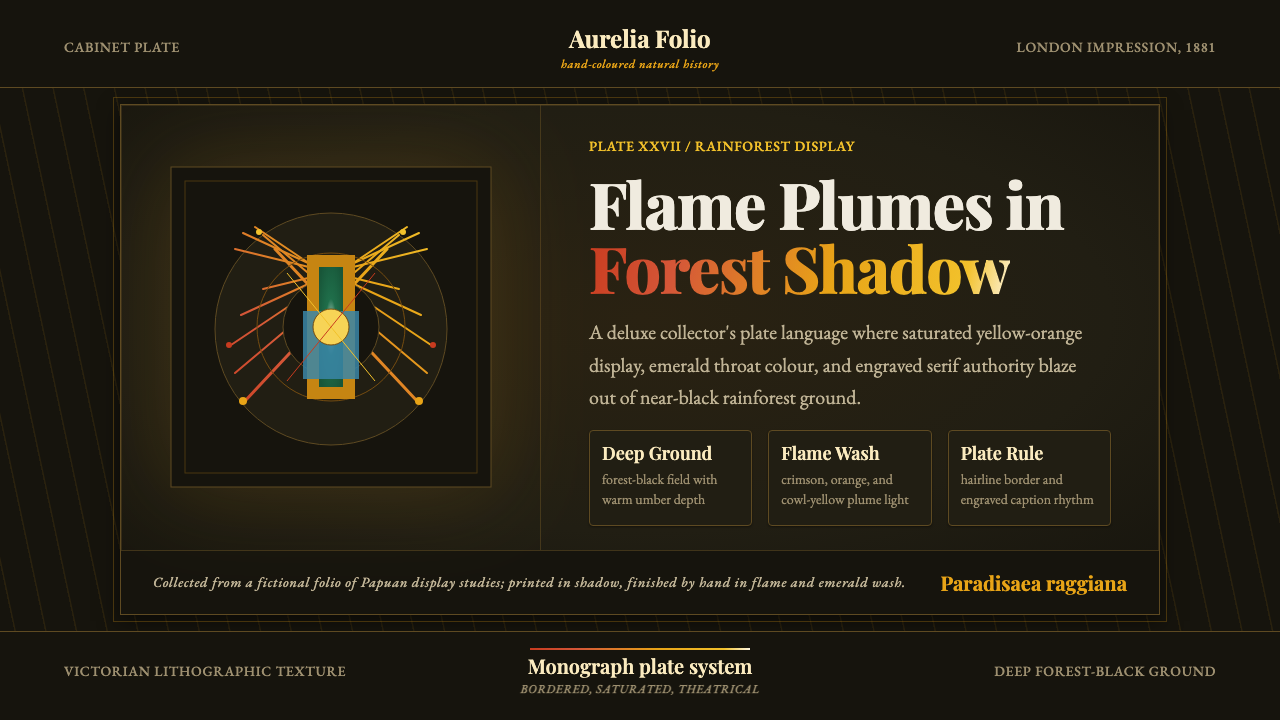 Bird of Paradise MonographTheatrical plate-book darkness. Flame plumes blaze from a bordered forest-bla…
 Burmese Shwedagon Stupa ReliefGold refuses restraint. Velvet black, teak-red lacquer, and tiered gradients…