What is San Rock Art Drakensberg?
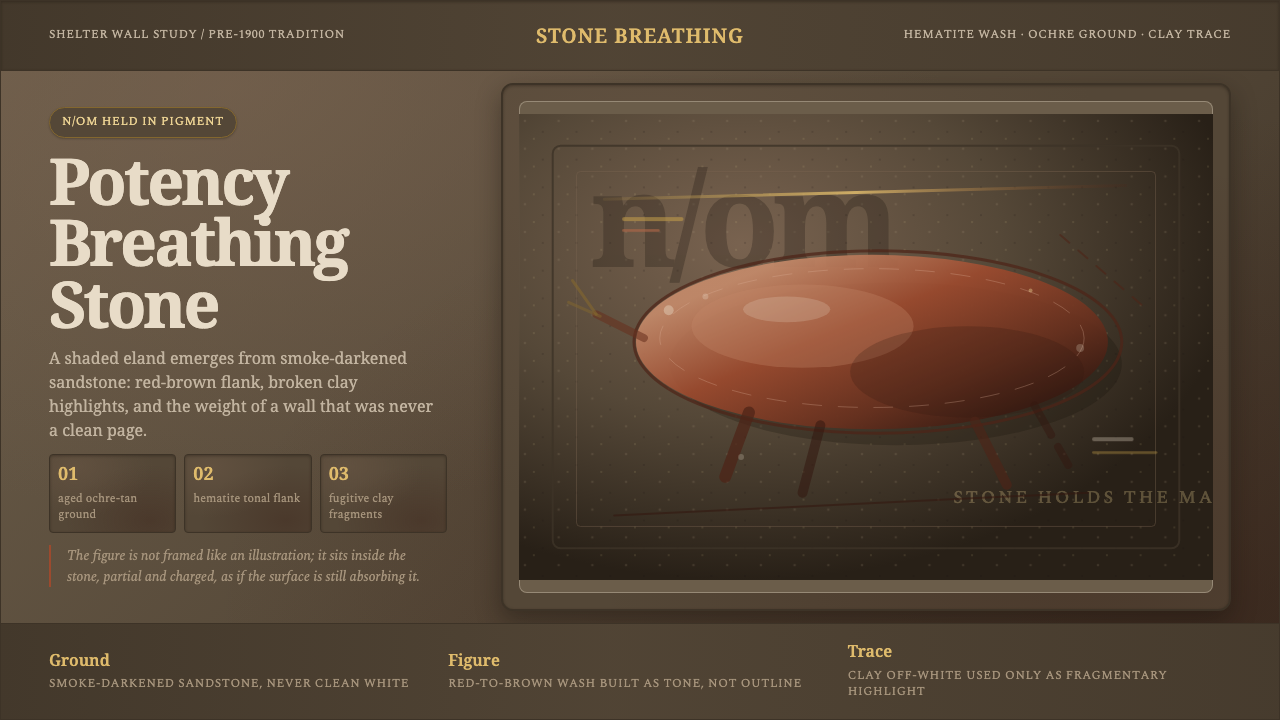
Potency stains the stone: red-brown eland emerge from smoke-dark sandstone as fragments of a living spiritual force.
San Rock Art Drakensberg in brief
San Rock Art Drakensberg refers to the shamanic painting tradition preserved in the sandstone overhangs of South Africa’s uKhahlamba-Drakensberg. Its central image is the eland, painted repeatedly not as evidence of a successful hunt but as the animal most saturated with n/om, the supernatural potency within San spiritual cosmology. The work is therefore not best understood as wildlife illustration. An eland body, a partial human figure, and the rock surface beneath them participate in the same charged field.
The style is defined by painted bodies that seem to grow out of stone rather than sit cleanly upon it. Hematite and ochre iron oxides produce deep reds, earth browns, and softened transitions across the eland’s flank. Instead of relying only on a contour to describe the animal, painters built volume through tonal movement. The result is remarkably bodily: the animal can feel warm, heavy, breathing, or already passing into another state.
Its visual condition today is inseparable from loss. The sandstone grounds are aged and smoke-patinated, closer to old leather than to a neutral gallery wall. White clay highlights were fugitive and have often flaked away, leaving figures without heads, legs, or other defining parts. These surviving forms should not be treated as damaged versions of complete pictures alone. Their incompleteness intensifies the style’s meaning: potency remains present even where the visible body has broken apart.
Where does San Rock Art Drakensberg come from?
The painting tradition belongs to the San shaman-artists who worked in the rock shelters of the uKhahlamba-Drakensberg. It spans roughly 3,000 years and beyond, placing it far outside the usual timelines through which modern design history is taught. Its continuity matters because the paintings were not isolated decorative events. They were made within a long-lived visual and spiritual practice in which image-making, ritual knowledge, animal potency, and place were closely bound together.
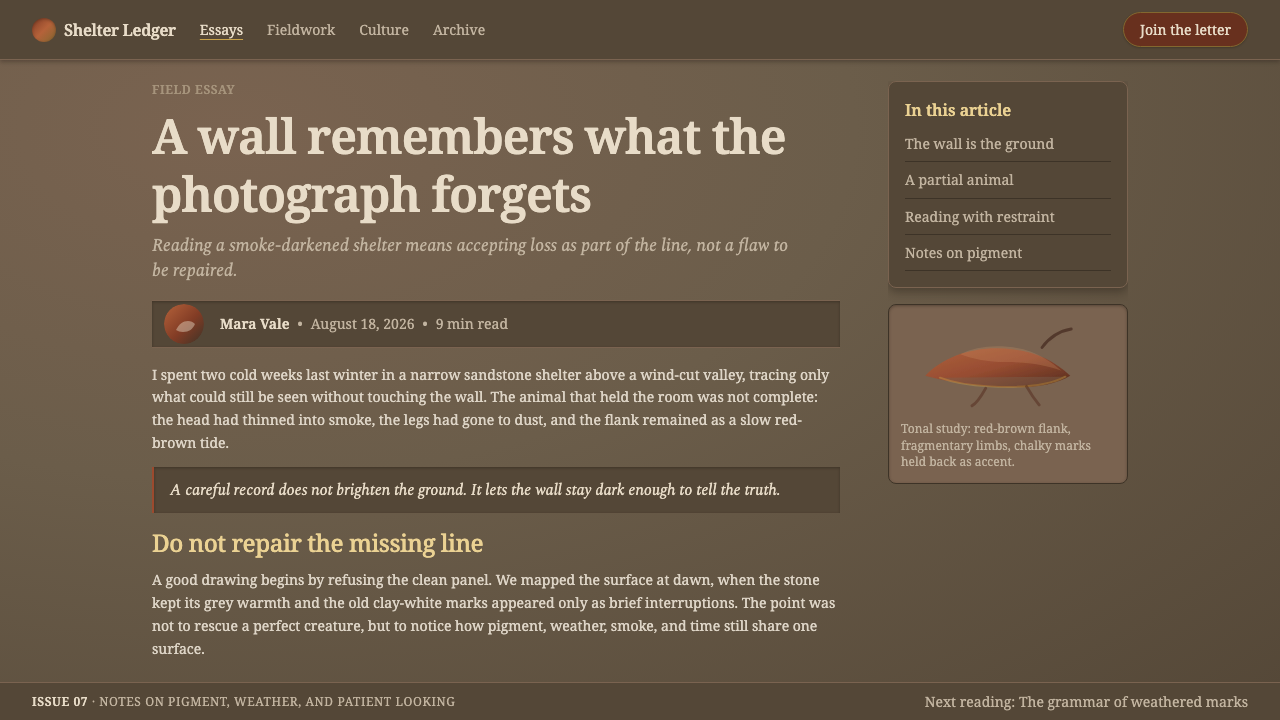
The sandstone overhang was not a blank support waiting for a composition. It was the material condition of the image. Its darkened, weathered, smoke-patinated surface shaped every decision about contrast, visibility, and color. Red and brown mineral pigments did not simply cover that ground; they worked with its existing depth. A pale mark could sharpen a body or a gesture, while a darker area could let the animal withdraw toward the wall. The setting gave the paintings their atmosphere before a brush or pigment touched stone.
Eland imagery became central because the animal held exceptional supernatural potency in San cosmology. The recurrence of the eland is thus structural rather than decorative. Repetition does not indicate a narrow subject matter; it demonstrates a visual language returning to its most powerful form. Each painted animal can be read as an encounter between a known creature, a source of n/om, a shamanic act, and the specific surface that receives it.
The shaded-polychrome approach is especially significant. Hematite and ochre were used to create tonal gradations across animal forms, achieving an effect of volume without abandoning the material directness of mineral paint on stone. This technique predates its later documentation as an artistic invention in European histories by centuries. Yet its importance is not that it anticipates a foreign tradition. Its importance lies in the fact that tonal modeling was already serving a distinct San visual and spiritual purpose: making potency perceptible in the body of the eland.
What defines the San Rock Art Drakensberg look?
Stone as Ground
The ground is never visually neutral. Smoke-dark sandstone, weathering, and accumulated age remain active parts of the composition. The painter does not erase the wall’s history; red-brown pigment meets it, recedes into it, and occasionally appears to be released by it. Contemporary applications should preserve an equivalent sense of material depth rather than placing motifs on a spotless, frictionless field.
Hematite Tonality
Color moves through iron-rich reds, ochres, and browns rather than appearing as detached flat swatches. The eland’s body is built through delicate tonal gradation, allowing pigment to describe weight, muscle, warmth, and spiritual intensity at once. The palette should feel mineral and absorbed, never synthetic, glossy, or cosmetically bright.
The Potent Eland
The eland is the style’s governing image because it is associated with n/om, not because it supplies convenient animal symbolism. Its recurrence gives the work a concentrated visual gravity. A convincing use of this language treats the animal as a presence with spiritual consequence, not as rustic decoration, a generic safari emblem, or a wildlife logo.
Fragment and Loss
Flaked white clay highlights have left many figures incomplete, with missing heads, limbs, or contours. This incompleteness creates an aesthetic of emergence and disappearance. The surviving painted body carries more force because it is not fully available to the eye. Reconstruction that makes every figure neat, whole, and evenly legible would erase an essential condition of the work.
Softened Contour
The animal is not reduced to a hard silhouette. Subtle red-to-brown shifts model the flank and let edges breathe into the rock. This is not atmospheric polish for its own sake. Tonal softness makes the body feel unstable in a productive way: physical and spiritual, present and receding, painted and geological at the same time.
Smoke and Patina
The darkened sandstone gives the paintings a subdued, interior register. Contrast is earned rather than imposed, and lighter marks are precious because they are scarce and vulnerable. The style depends on restraint in brightness. A surface that is too clean or too luminous breaks the relation between pigment, shelter, and accumulated time.
Who shaped San Rock Art Drakensberg?
The San shaman-artists of the Drakensberg rock shelters are the makers at the center of this tradition. Their work joins mineral pigment, eland imagery, and shamanic understanding rather than separating artistic representation from spiritual practice. Treating them merely as anonymous decorators misses the intellectual and ritual depth carried by the paintings.
The painters who returned again and again to the eland established the most recognizable visual center of the tradition. Their subject was governed by potency: the animal was the richest bearer of n/om in San cosmology. This explains why the eland’s body receives such sustained tonal attention and why it cannot be reduced to naturalistic animal study.
The makers of shaded-polychrome eland paintings developed a language of red-to-brown modeling with hematite and ochre iron oxides. Their achievement is not simply technical sophistication. The gradations animate the animal as a vessel of potency and bind its painted form to the dark sandstone that surrounds it.
How do you use San Rock Art Drakensberg today?
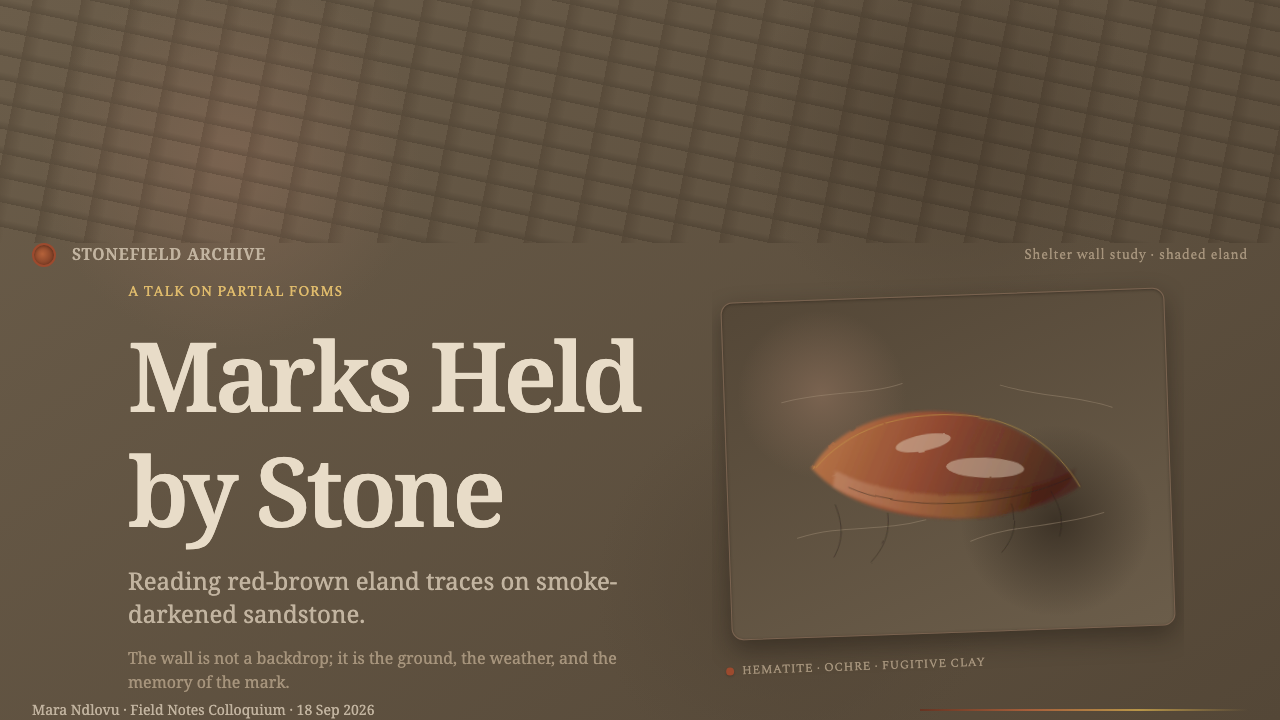
For presentation covers, use the style as an atmosphere of emergence rather than as a decorative pattern. Let a dark, weathered field carry the composition, with one eland-derived form or a partial body moving out of shadow. Titles should remain spare and subordinate to the surface, as though they have been encountered on the wall rather than placed over it. Content slides benefit from broad quiet areas, restrained headings, and image fragments that mark sections without turning the deck into a themed museum display.
Data slides require particular restraint. Use earthen tonal families to distinguish relationships, but keep charts and labels legible before introducing texture or animal imagery. A dark ground can make a single light annotation feel meaningful, echoing the rarity of surviving pale highlights. Avoid treating the eland silhouette as a chart fill or repeating it beside every metric; the visual language is strongest when its charged motif appears only where it can carry a real conceptual role.
In web interfaces, this approach suits immersive editorial pages, cultural archives, interpretive experiences, and dashboards that need a slow, contemplative register. Navigation should be calm and direct against a deep material background. Panels may feel embedded in the surface rather than floating above it, while tonal changes can guide attention more gently than bright interface signals. A pricing page can use the same system only if the product’s voice supports seriousness, place, and reflection; otherwise the symbolic weight of the aesthetic will feel unearned.
For editorial and marketing work, crop closely into pigment, stone texture, or an eland flank rather than relying on a complete scene. Let text blocks sit beside the image with enough dark space for the wall to remain visible. Marketing language should avoid conquest, wilderness fantasy, or generic ancient mysticism. The strongest messaging emphasizes attention, continuity, material memory, and the difference between seeing an image and understanding the conditions under which it endures.
The most common mistake is to turn San rock art into a rustic visual costume: rough texture, generic animal icons, and a few reddish stains arranged for atmosphere. That approach extracts surface effects while discarding the core relation between eland, n/om, mineral pigment, fragmented survival, and sandstone shelter. Another mistake is over-restoring the look with crisp white details and clean contrast. The style gains force from patina, restraint, and partial visibility, not from making every element loud or complete.
San Rock Art Drakensberg — FAQ
Is this style mainly about depictions of animals?
No. Although the eland is its most recognizable image, the animal is not a neutral subject. It is central because of its association with n/om, the supernatural potency within San cosmology. Reading the paintings as animal imagery alone removes the spiritual logic that gives their repetition, shading, and placement their force.
Why do many surviving figures appear incomplete?
White clay was used for highlights, but it was fugitive and has often flaked away. This can leave an eland or human figure without a head, limbs, or other visual information. The loss is material and historical, but it also shapes the present aesthetic: fragments remain visibly bound to the age, patina, and vulnerability of the rock wall.
Is the tonal shading comparable to later European art techniques?
The use of hematite and ochre to model the eland through red-to-brown gradation predates the later documentation of comparable shading as a European invention by centuries. But comparison should not turn San work into a preliminary version of another tradition. Here, tonal modeling belongs to a specific spiritual and material system centered on potency, animal form, and sandstone shelter.
Can the aesthetic be used respectfully in contemporary design?
It can be approached with care, but not reduced to a generic prehistoric or wilderness look. Respectful use begins with acknowledging that the eland is connected to n/om and that the dark sandstone, mineral palette, tonal shading, and surviving fragments form one inseparable system. If a project cannot carry that context, it is better to borrow broader qualities such as material depth and restrained tonal contrast without directly appropriating sacred imagery.
Related design styles
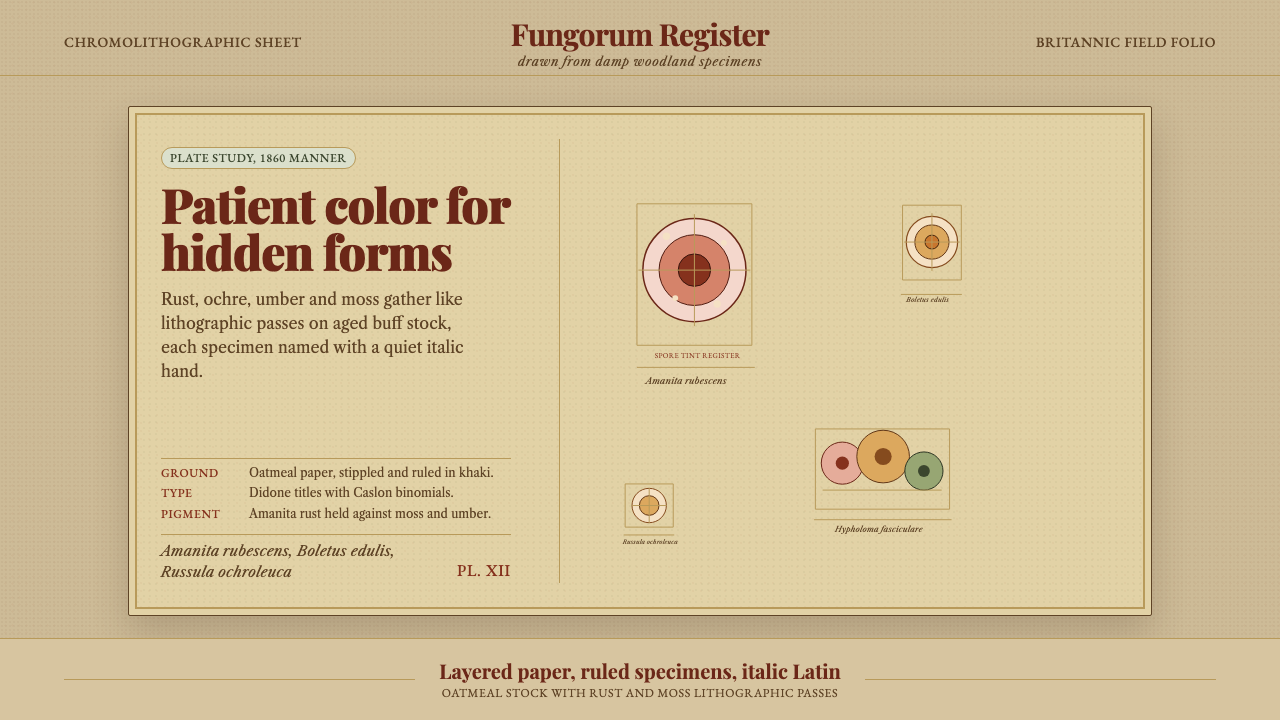 Victorian Mycology PlatePatient field science. Rust and moss specimens sit on stippled buff paper wit…
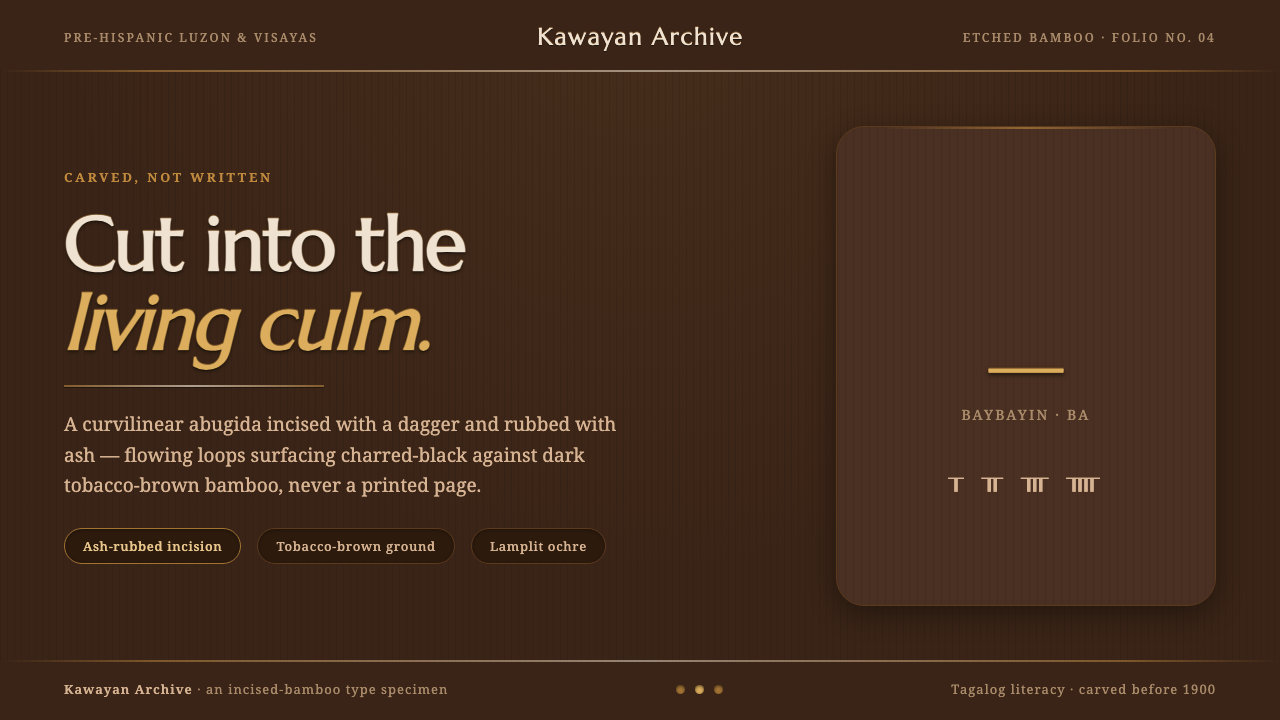 Baybayin ScriptCarved, not written. Curvilinear baybayin ash-rubbed into tobacco-brown bambo…
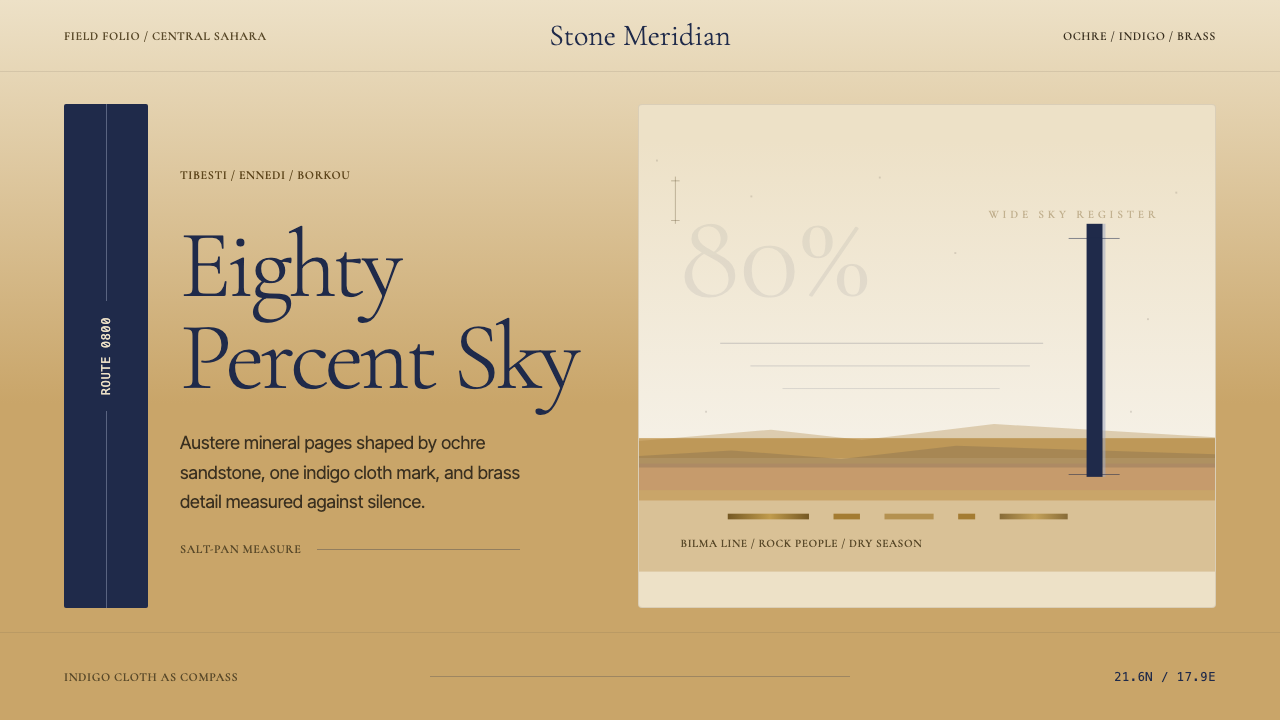 Chadian Toubou Saharan RouteRadical emptiness holds. Sandstone ochre, indigo serif, and one vertical mark…
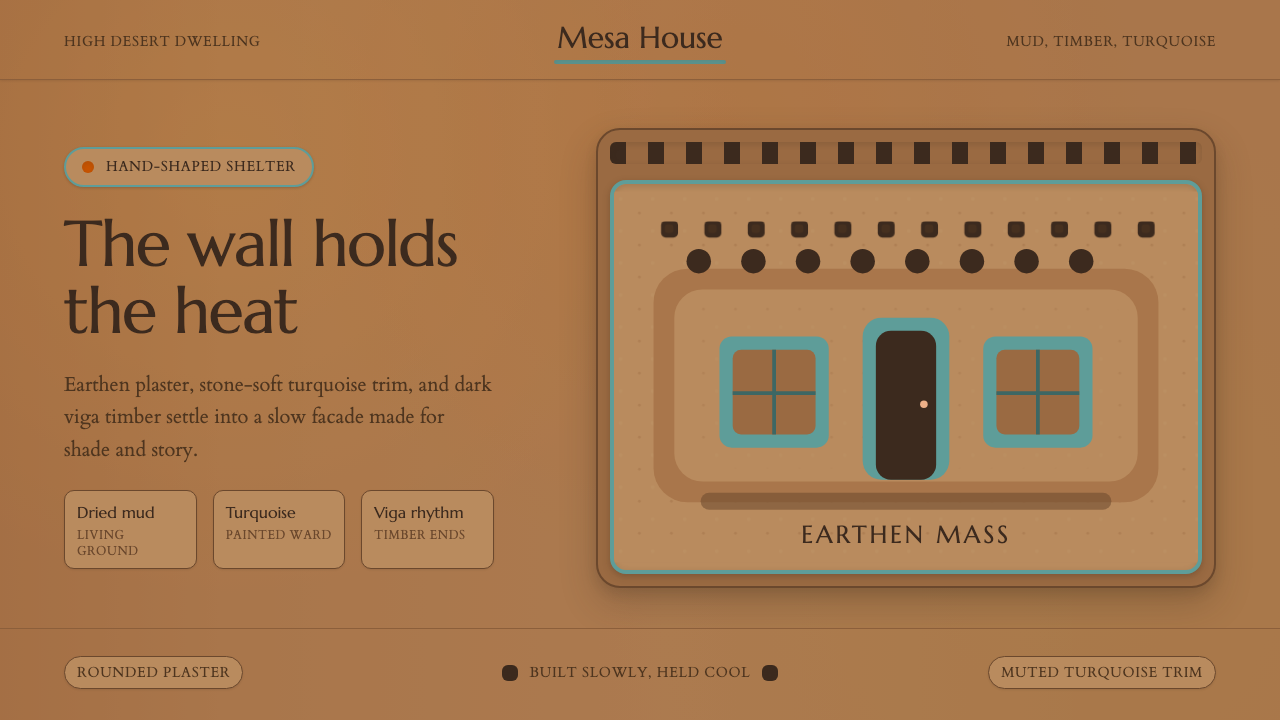 Adobe Pueblo SouthwestFeels made by hand. Earthen tan, turquoise trim, and viga rhythm shape the fr…
 Audubon Birds of AmericaAged natural history breathes. Buff rag paper, sepia rules, and italic binomi…
 Charcoal & Conté DrawingAtelier calm, in middle value. Gray-taupe tooth, smoky charcoal, and chalk-wh…