What is Samsung Galaxy?
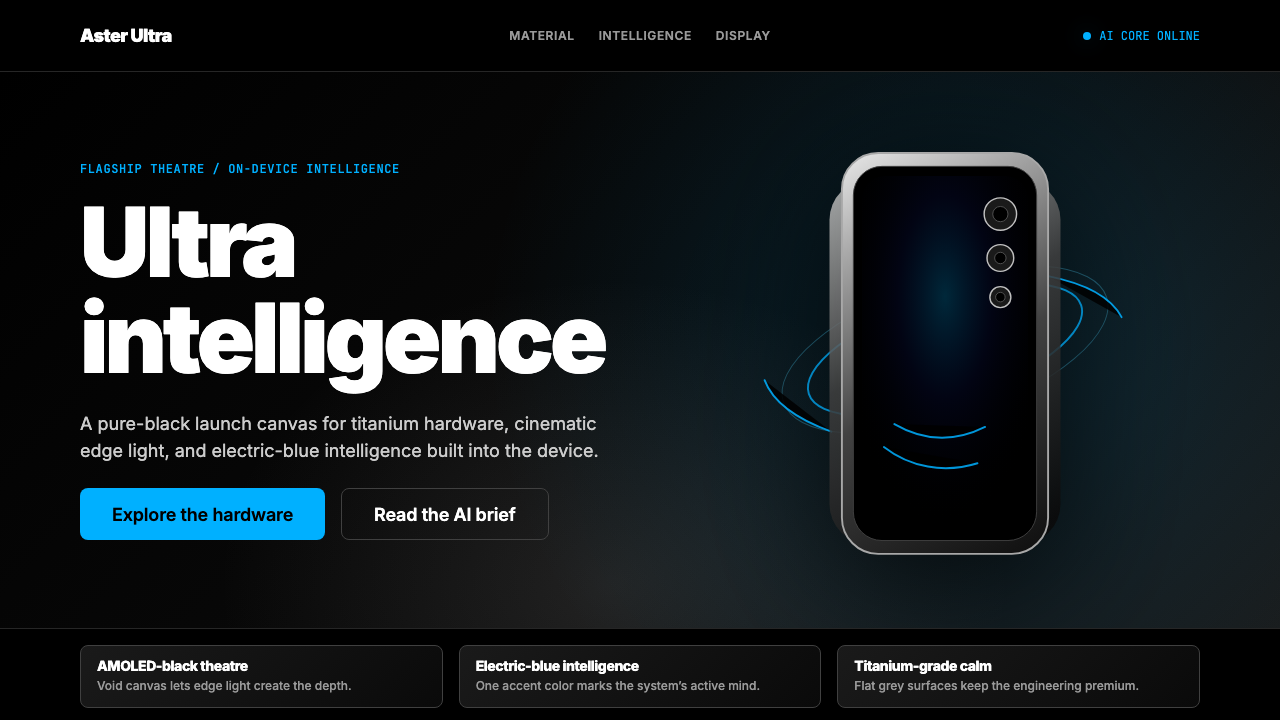
Samsung Galaxy turns the smartphone screen into a stage — pure black void, electric-blue intelligence, and titanium-cool geometry performing tech-luxury at stadium scale.
Samsung Galaxy in brief
Samsung Galaxy is a visual identity system born from over a decade of flagship smartphone competition and refined into its most concentrated form during the Galaxy AI era of 2024. Its design language speaks in three registers simultaneously: the profound darkness of AMOLED display technology, the precision of titanium and aerospace-grade materials, and the electric pulse of artificial intelligence made visible as color. Together these registers produce a brand aesthetic that is simultaneously luxurious and technical — closer in spirit to a high-end audio brand or a performance automobile than to most consumer electronics.
At its core, the Galaxy visual language is a system of controlled drama. Deep, absolute black is not an absence but an active material — the AMOLED panel's ability to produce true zero-light pixels means black carries physical weight in a way that liquid-crystal displays cannot replicate. Against this black, electric blue functions as a signal of intelligence: thin strokes, orbital rings, and radiating lines that suggest energy contained in hardware. Titanium grey and cool metallic tones occupy the middle ground, communicating precision engineering without the flashiness of gold or the coldness of pure silver.
Typography in the Galaxy system is unapologetically massive. Headlines expand to fill entire viewports at extreme weights, treating letterforms as architectural elements rather than text. This approach — borrowed partly from stadium advertising and partly from Korean pop culture's tradition of bold graphic spectacle — ensures that even at the scale of a billboard or a broadcast screen, the message lands with the same force as it does on a phone display. The result is a design system that scales from five-centimeter device bezels to five-meter exhibition walls without losing its essential character.

Where does Samsung Galaxy come from?
The Samsung Galaxy product line was launched in 2010, when Samsung introduced the original Galaxy S as a direct challenge to Apple's iPhone. The early Galaxy visual identity was unsettled — borrowing liberally from then-dominant interface conventions, navigating the constraints of Android customization, and searching for a distinctive brand voice in a market Apple had largely defined. Through the early 2010s, Samsung's design language evolved pragmatically: glossy surfaces, rounded forms, and a palette that shifted with each product generation rather than cohering into a system.
The decisive shift toward the current Galaxy visual language began around 2018 and accelerated through the S20 and S21 series, as Samsung's industrial design team in Seoul moved the hardware toward flatter, more architectural forms. The introduction of the Ultra tier in 2020 — with its S Pen integration and camera array treated as a deliberate design statement rather than an engineering necessity — signaled that Samsung was positioning Galaxy as a luxury technology object rather than a commodity smartphone. The visual language followed the hardware: darker backgrounds, more restrained color use, and photography that treated devices as sculpture.
The Galaxy AI era of 2024, announced with the S24 series at Samsung's Unpacked event in San Jose, crystallized this trajectory into a complete visual identity. The introduction of on-device artificial intelligence — circle-to-search, live translation, generative editing — demanded a visual language capable of making invisible computation feel tangible and trustworthy. Electric blue, already present as an accent in earlier Galaxy materials, became the primary signal for AI features: a color that reads as neither the cold blue of corporate technology nor the warm blue of consumer apps, but as something charged and precise.
The geographic and cultural roots of the Galaxy visual language are inseparable from Seoul's position in global consumer culture. Samsung's brand and design teams operate from the city that also produces some of the most visually sophisticated entertainment media in the world — the scale, boldness, and cinematic production values of Korean pop culture's visual output are legible in Galaxy marketing, from the monumental scale of launch events to the theatrical lighting of product photography. This is not coincidence: the design language deliberately draws on the tradition of spectacle that Korean creative industries have developed over decades, translating it into a technology brand context where drama and precision must coexist.
What defines the Samsung Galaxy look?
AMOLED Black as Material
The Galaxy palette treats black not as a neutral backdrop but as an active, physical material. This distinction matters: the deep black of an AMOLED display carries an optical weight that printed black or LCD-simulated black cannot replicate, and the Galaxy visual system is calibrated to this specific quality. Compositions are built outward from black, with every other element — metallic highlight, electric accent, typographic mass — existing in relationship to it rather than on top of it. When the same design is reproduced in lighter contexts, the entire spatial logic shifts, and compensatory adjustments are necessary.
Electric Blue as Intelligence Signal
Blue in the Galaxy system is not decorative — it carries functional meaning. Saturated and slightly shifted toward cyan, this electric blue reads as energy made visible: it appears on AI feature callouts, on interactive indicators, on orbital diagrams representing connectivity, and on the glowing rings and lines in product photography that suggest the device is alive with computation. Used sparingly and consistently, it functions as a punctuation mark — the moment where the design tells you something intelligent is happening. Overuse destroys this signal value; the system depends on restraint.
Titanium and Metallic Texture
Between the absolute black and the electric accent sits a range of cool metallic tones — the brushed, slightly warm silver of titanium hardware and the cooler grey of aerospace engineering. These tones are rendered in the visual identity through gradients that simulate anisotropic reflection: light that shifts directionally across a surface, as it does on machined metal, rather than as a uniform highlight. This specific texture communicates precision manufacturing and signals that the object has been made with the same care as a watch movement or a camera lens — luxury associations that distinguish Galaxy from competitors who rely on plastic or unfinished aluminum.
Monumental Typography
Headlines in the Galaxy design language operate at extremes of scale and weight. Type fills the viewport — not as a layout decision but as an architectural one, treating the letterform itself as the visual event. This approach requires typefaces with strong geometric construction and extreme optical performance at large sizes; the Samsung One typeface was developed partly to satisfy these requirements across the multilingual demands of a global brand. The scale also creates a specific reading experience: at very large sizes, letters become shapes before they become words, and the viewer moves from overall composition to legible message as they focus in.
Cinematic Product Photography
Galaxy product photography treats the device as a protagonist in a narrative rather than an object on display. Devices float in deep space, illuminated by controlled, directional light that emphasizes material boundaries — the edge where glass meets titanium, the optical geometry of the camera array. Glowing halos and light trails are added in post-production to suggest energy emanating from the hardware. The compositional language borrows from science fiction film design and high-end automotive photography: isolation, drama, and a sense that the object under observation is capable of more than it is currently revealing.
Spatial Depth and Layering
Unlike design systems that enforce flatness as a principle, the Galaxy visual language actively constructs depth — but does so through precise means. Layers are separated by sharp light and shadow rather than by soft blur or elevation values. Foreground elements have hard, specular edges; background elements are dark and recede into the void. This creates a theatrical sense of space, as if the composition is a stage set lit for maximum drama rather than a document designed for readability. The technique works at its best in video and animation, where movement through layers reinforces the sense of engineered depth.
Restrained Accent Economy
The Galaxy system uses its electric blue accent with a discipline that is as important as its presence. In a composition dominated by black and metallic tones, a single vivid accent carries enormous visual weight — and the system leverages this by deploying the accent only at moments of semantic importance: a feature name, an interactive affordance, a product tier callout. Accent overuse collapses this hierarchy instantly; the viewer's eye can no longer distinguish signal from decoration. Designers applying this system must develop a deliberate economy of emphasis, treating the accent color as a finite resource to be spent, not an aesthetic default.

Who shaped Samsung Galaxy?
TM Roh became President and Head of Samsung's Mobile eXperience division in 2019, overseeing the hardware and software direction of the Galaxy product line during its most significant design repositioning. Under his leadership, Samsung moved the Galaxy brand decisively upmarket — introducing the Ultra tier, deepening the integration between hardware design and software identity, and overseeing the 2024 Galaxy AI launch that crystallized the current visual language. Roh has been the most visible executive advocate for treating Galaxy as a luxury technology brand rather than a volume smartphone business.
The Samsung global brand team, working from Suwon and Seoul, is responsible for the visual identity system that underpins all Galaxy marketing and product communication. This team's work includes the development of Samsung One — the bespoke typeface commissioned to satisfy the demands of the Galaxy design language at monumental scale across Latin, Korean, and other scripts — and the systematic definition of the AMOLED black palette, the electric blue AI accent color, and the metallic texture vocabulary. Their work represents one of the most significant corporate identity investments in Korean industrial history.
Samsung Design Seoul is the in-house design organization responsible for the holistic product experience of Galaxy devices — the intersection of physical industrial design, software interface, and brand communication. Designers at SDS have navigated the complex challenge of creating a coherent visual identity across a product portfolio that includes budget devices, flagship phones, foldables, tablets, and wearables. The consistency of the Galaxy visual language across this range — the ability of a consumer to recognize a Galaxy device from its design alone — represents the cumulative output of the SDS team's work over multiple product generations.
The 2024 Galaxy AI campaign represents the most concentrated and deliberate expression of the Galaxy visual language to date. The creative direction — applied across global broadcast, digital, and out-of-home channels simultaneously — deployed the electric blue AI accent as a narrative device: a color that appeared wherever AI capability was being demonstrated, creating a visual shorthand that trained audiences to associate the hue with intelligence before any feature was explained. The campaign's visual coherence, maintained across dozens of markets and multiple languages, demonstrates the maturity of the Galaxy design system as a global communication tool.
How do you use Samsung Galaxy today?
The Galaxy design language translates effectively to presentation work when its core logic is preserved: deep backgrounds, a restrained palette of near-black, cool metallic mid-tones, and a single vivid accent deployed sparingly. Cover slides work well with full-bleed dark fields where the title typography operates at maximum weight and scale, letterforms expanding to claim the entire frame. Supporting visuals — product renders, orbital diagrams, abstract light-trail imagery — float in the dark field rather than sitting in bounded containers. The impression should be cinematic: the slide is a frame of a film, not a page in a document.
Content slides in this system require discipline. The natural temptation is to match the cover's dramatic weight throughout, but this exhausts the viewer — drama requires contrast, and contrast requires restraint on the majority of pages. Body content slides should reduce the visual intensity: lighter type weights, more generous spacing, content organized on a clear grid. The vivid accent appears only at moments of genuine semantic emphasis — a key statistic, a product tier name, an action item — not as ambient decoration. Data visualizations in this system are most effective when treated as product photography: bars and lines rendered with the same precision as a hardware edge, thin and deliberate, against a dark ground.
For web interfaces and dashboards, the Galaxy approach produces work that reads as authoritative and technologically precise. The system is well-suited to analytics platforms, security products, developer tools, and any interface where the user needs to feel that the software is as capable and as engineered as the most sophisticated hardware. Apply a dark or near-dark base, use cool metallic tones for secondary elements, and reserve the vivid accent for interactive states and critical alerts. Card components work well with visible border highlights rather than soft shadows — the edge is structural, not atmospheric. Navigation and labeling should be direct and typographically clean, with no decorative iconography beyond functional geometric indicators.
In editorial and marketing contexts, the Galaxy language supports a very specific kind of authority — technological, aspirational, and global rather than warm or approachable. Feature announcements, product launch pages, and technology editorial that wants to signal capability and precision are natural fits. Full-bleed dark hero sections with monumental type sit above more detailed content sections where the visual intensity relaxes. Accent colors in calls to action should remain consistent with the overall system rather than switching to a warmer or higher-contrast alternative. Marketing materials that need to communicate AI capability specifically can adopt the orbital and radiating-line motifs that the Galaxy system uses to visualize intelligence — but these should feel engineered, not decorative.
The most common mistake when applying Galaxy-influenced design is the loss of restraint: using the electric accent across too many elements, rendering metallic textures too uniformly across all surfaces, or filling every composition with the full range of the palette simultaneously. The system's drama depends entirely on the ratio of darkness to accent — once that ratio collapses into visual noise, the effect reads not as tech-luxury but as dated consumer electronics. A second common error is applying the deep-black, AMOLED-first logic to contexts where it creates contrast issues: light-background interfaces, print, or low-brightness display environments require careful adaptation rather than direct transposition of the dark-field rules.

Samsung Galaxy — FAQ
Can Galaxy design work on a light or white background?
The system was built for dark backgrounds, and transposing it to white or cream requires substantive adaptation rather than a simple inversion. On a light ground, the electric blue accent loses much of its drama — it reads as a pleasant corporate accent rather than a signal of charged intelligence. The metallic tones also lose their contrast relationship with the background and may appear flat. A light-background adaptation works best when it treats the system as a family of cool, precise tones — slate greys, brushed silvers, and a desaturated or deeper blue as the accent — rather than attempting to replicate the drama of the AMOLED dark-field original. Think of it as the same product in daylight rather than in a darkened theatre.
How does Galaxy design differ from other dark-mode tech aesthetics?
Several major technology brands have developed dark-first design languages, but Galaxy is distinguished by a specific combination of elements: the AMOLED-calibrated depth of its black (deeper and more absolute than most dark interfaces), the electric-blue accent specifically coded to mean artificial intelligence rather than simply 'technology', and the cinematic scale of its typography and photography. Competitor dark-mode systems tend toward softer greys, warmer neutral tones, or rely on gradient-heavy depth simulation. Galaxy is drier, colder, and more architectural — it has more in common with the visual language of precision instruments or aerospace design than with the warm-dark aesthetic of entertainment streaming platforms or the gradient-rich dark UI of audio applications.
Is the monumental type scale essential, or can Galaxy design work with more moderate typography?
The monumental scale is one of the most distinctive aspects of the Galaxy system, but it is not universally mandatory — it is a device appropriate to certain moments, not a rule for every element. In practice, the system operates across a wide range of scales: marketing materials and launch communications use typography at extreme sizes, but product interfaces and documentation use more measured, functional type hierarchies. What is essential is not the extreme scale itself but the contrast principle that motivates it: within any composition, the ratio between the largest and smallest typographic elements should be dramatic. Whether that means a very large headline and a small body, or a medium headline and a very small caption, the system's energy comes from the tension between scales, not from absolute size.
What kinds of products or brands should avoid the Galaxy visual language?
The Galaxy language is optimized for products where precision, power, and technological sophistication are the primary brand values. It is poorly suited to contexts that require warmth, accessibility, or cultural softness: healthcare applications where patients need reassurance, children's products, food and beverage brands where sensory richness matters, wellness services, community platforms, and any brand positioning that depends on approachability over authority. The design language's coldness and architectural scale can also create accessibility challenges — very dark backgrounds with fine metallic detail push contrast ratios in ways that may not meet accessibility standards without careful calibration. Brands built on heritage, craft, or natural materials will also find the Galaxy system's technological industrial aesthetic fundamentally incompatible with their identity.
How should the orbital and radiating-line motifs be used without becoming clichéd?
The orbital rings, radiating lines, and particle-trail motifs that appear throughout Galaxy AI communications are functional at their best — they visualize invisible processes, make computation visible, and give form to the concept of intelligence distributed through hardware. They become clichéd when used generically as 'tech decoration' rather than in direct relationship to a specific capability being communicated. The discipline is to use them only when they are earning their place: when the visual is explaining something about connectivity, computation, or spatial awareness, the motif supports the communication. When it is simply filling visual space or signaling 'this is technology' without further specificity, it contributes noise rather than meaning. Applied sparingly and with clear semantic intent, these motifs remain powerful; applied liberally, they collapse into the visual vocabulary of every undifferentiated tech brand.
Related design styles
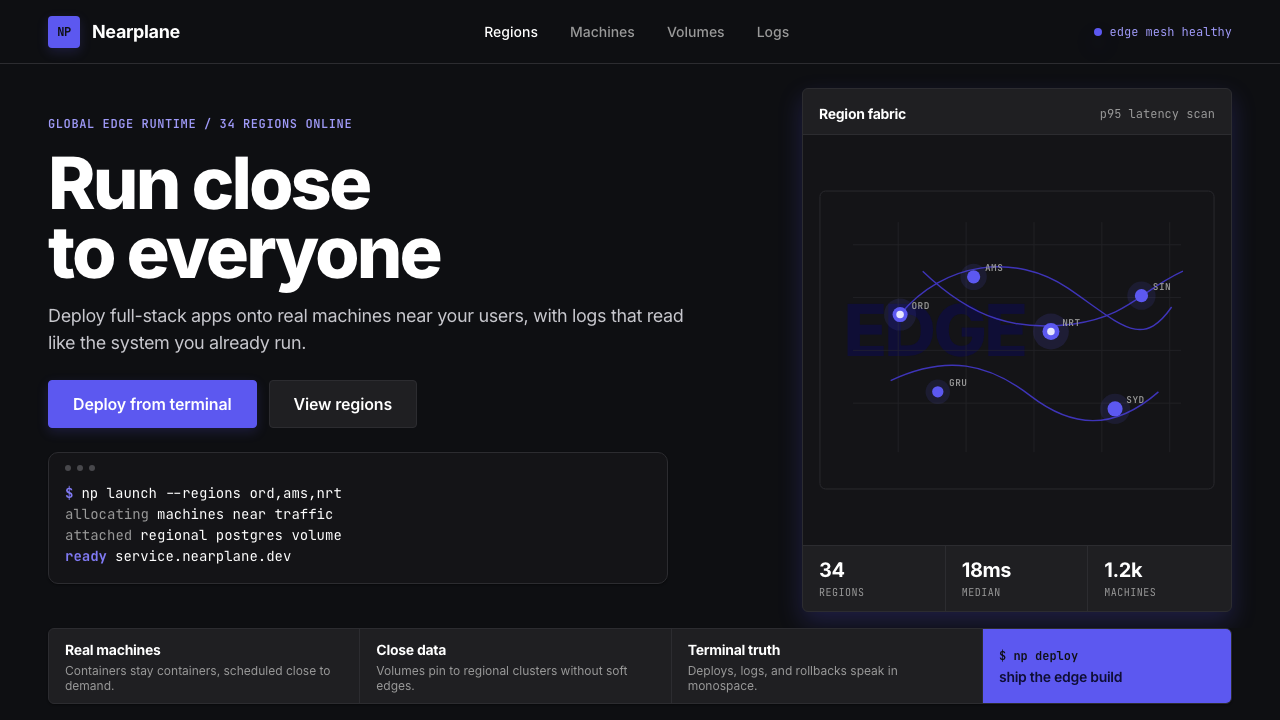 Fly.io Edge-Compute PurpleEdge-cloud with discipline. Electric purple nodes, Inter type, and terminal b…
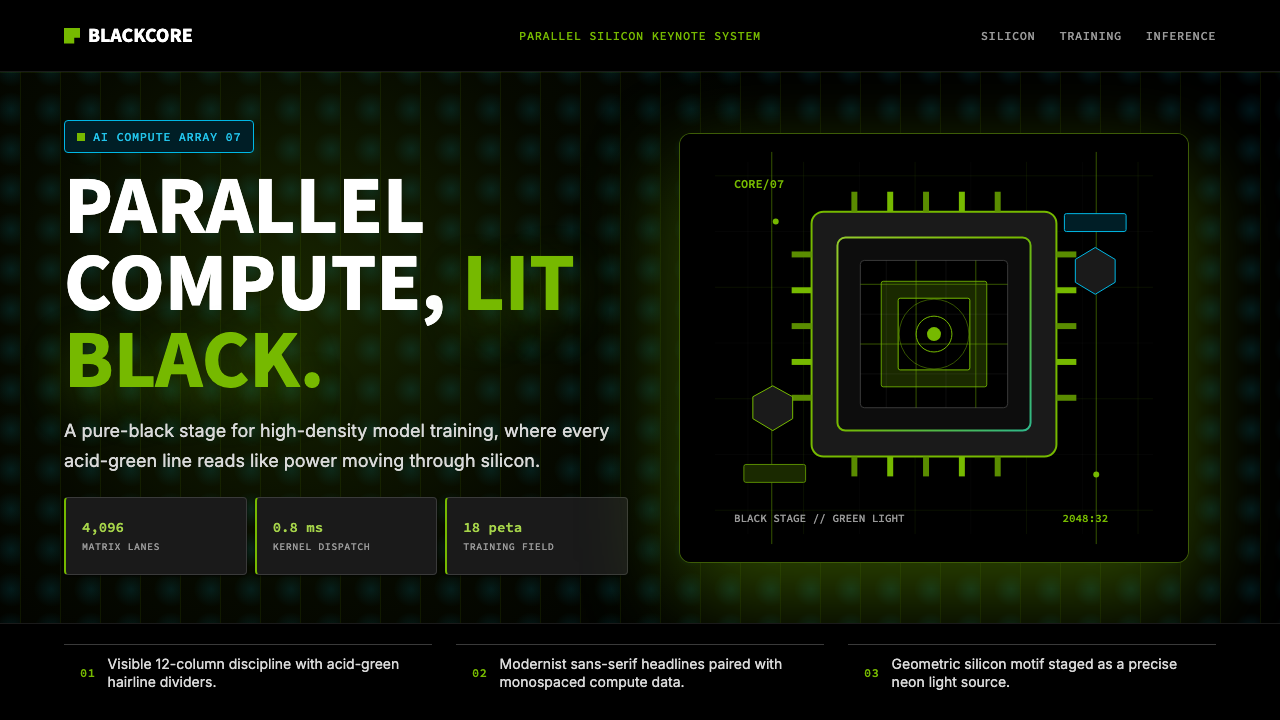 NVIDIA GPU Green-BlackPure black turns compute theatrical. Acid green hairlines and chip geometry s…
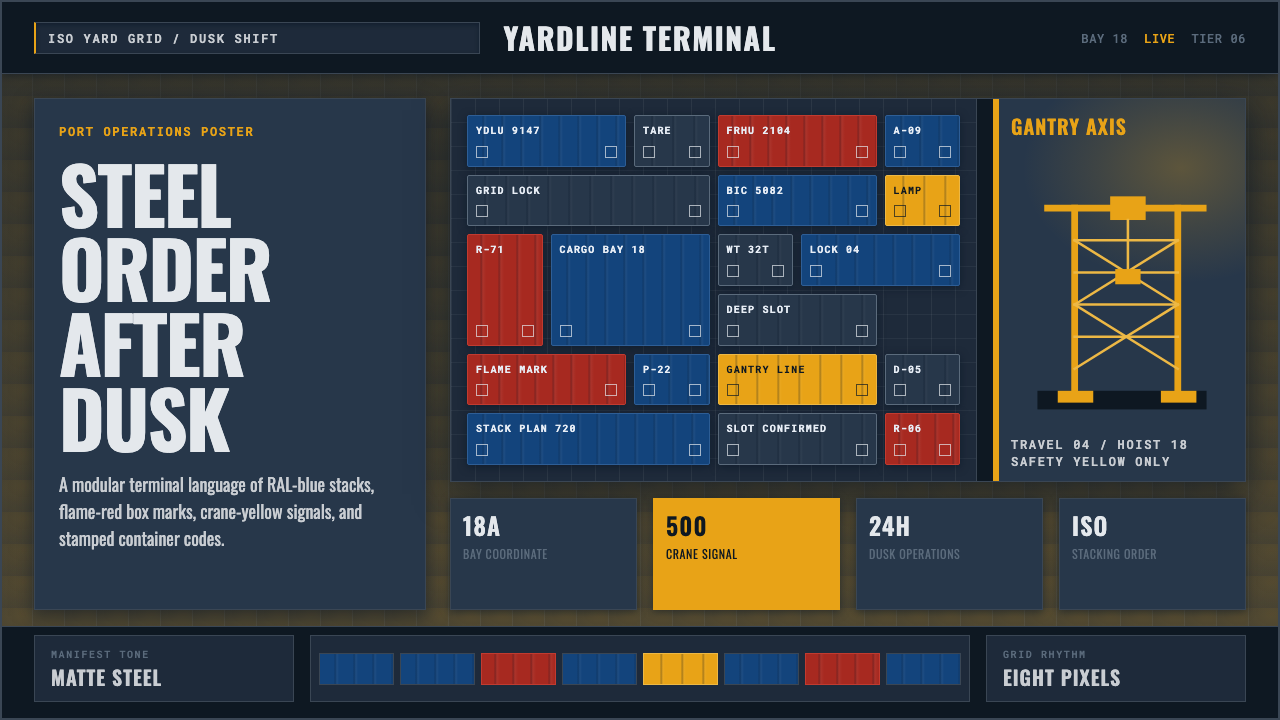 Container PortIndustrial dusk, standardized. Slate grid, RAL-blue stacks, and crane-yellow…
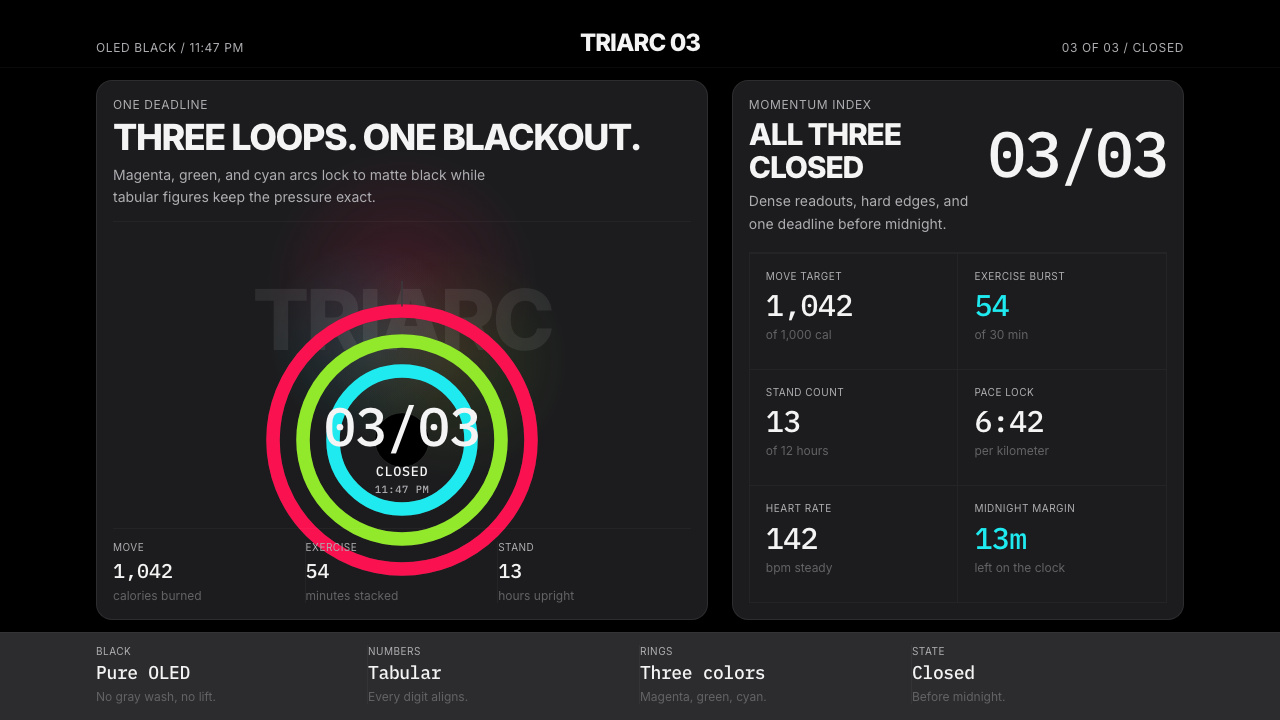 Apple Fitness Rings Closed (2024)Midnight feels exact. Magenta, green, and cyan rings lock onto OLED black.
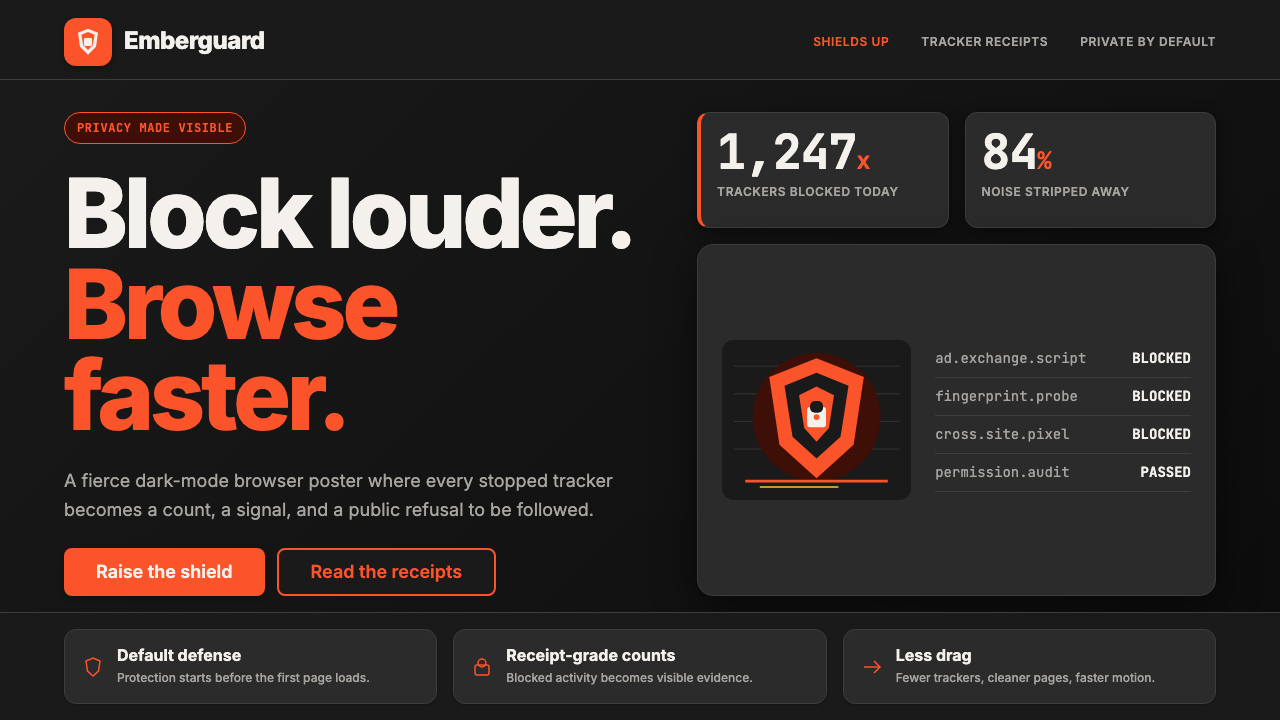 Brave Browser Lion OrangePrivacy gets loud. Lion-orange counters and shield geometry cut through warm…
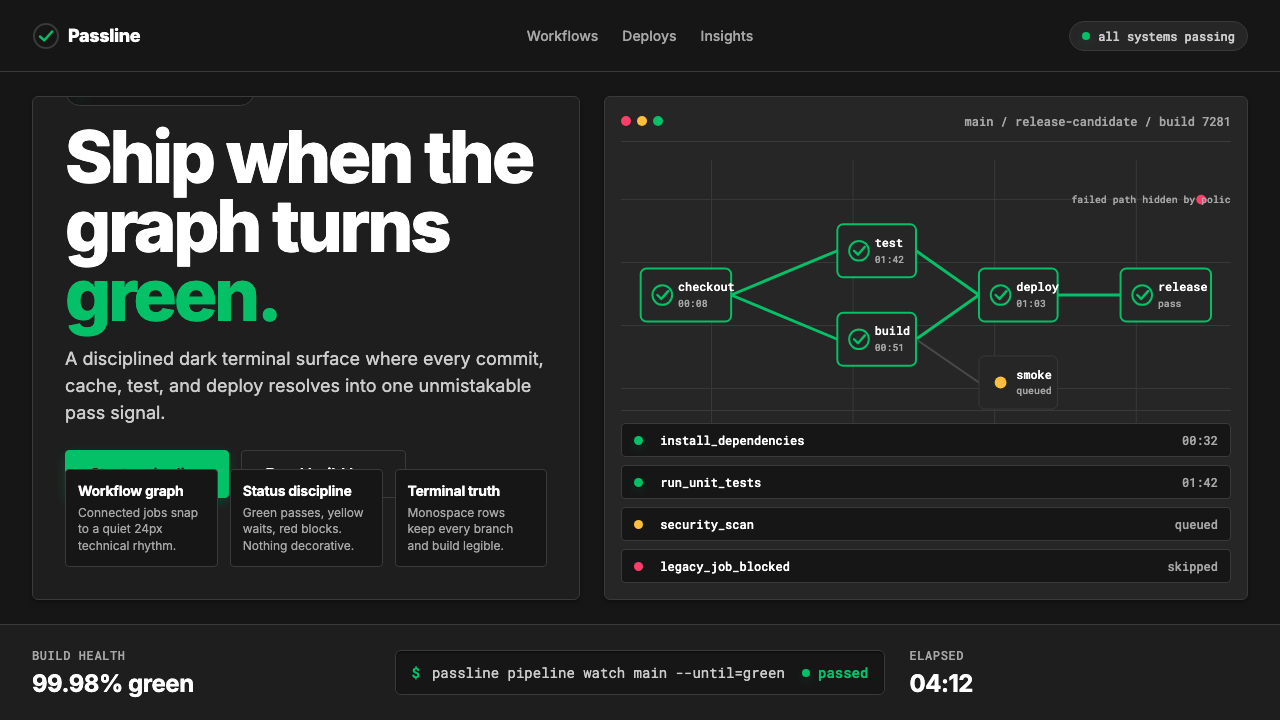 CircleCI Pipeline-GreenConfidence goes green. Emerald status lines cut through terminal-black pipeli…