What is Phad Scroll Painting?
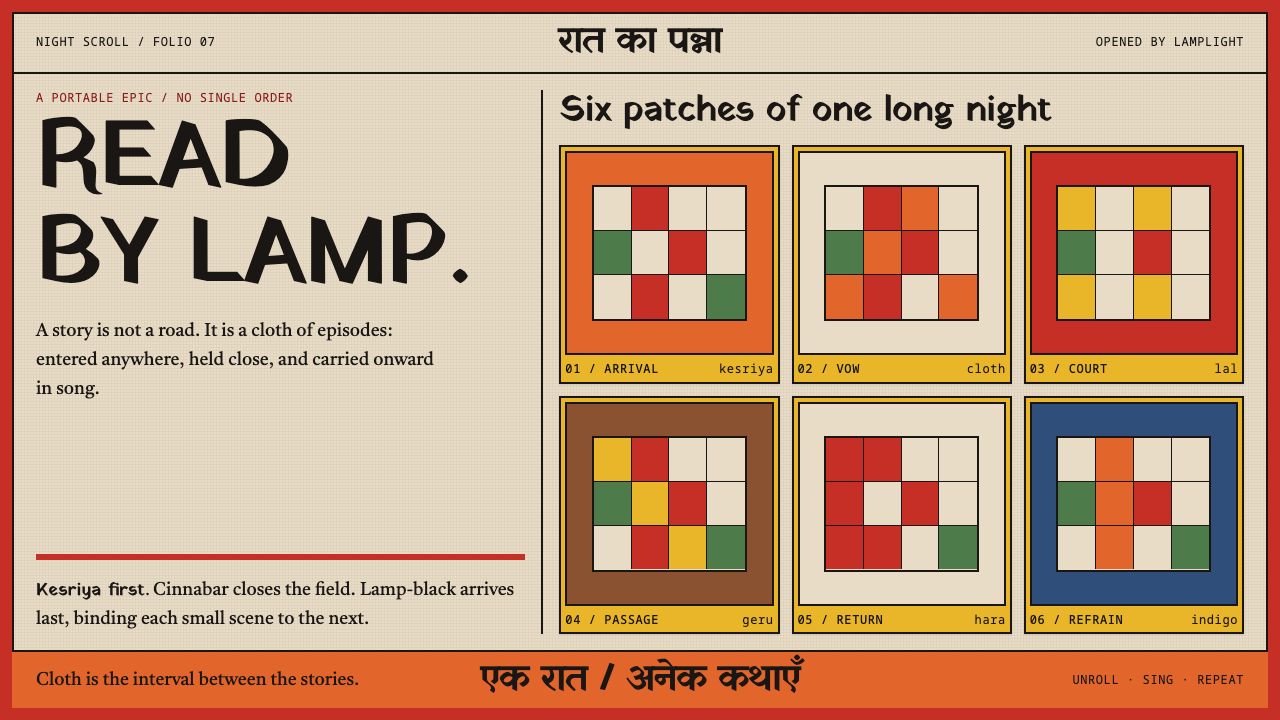
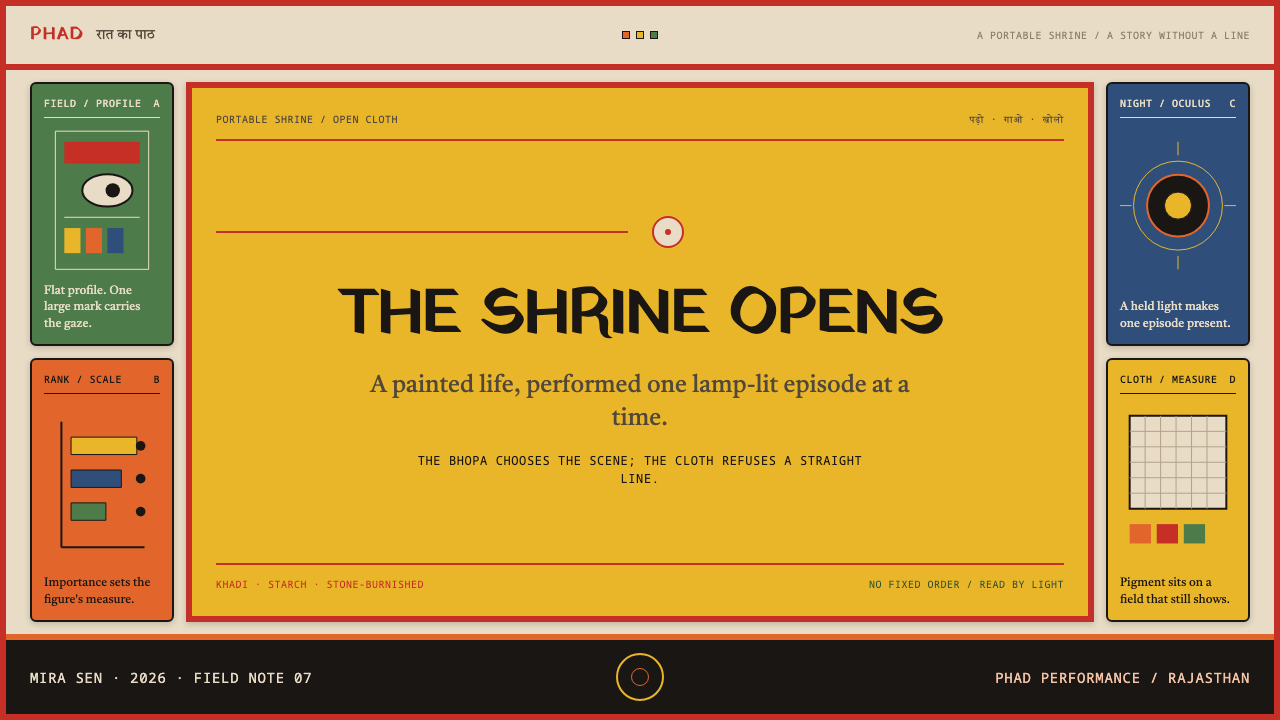
A phad holds a whole epic in one continuous painted field and is read by lamplight a patch at a time — a design language that refuses a single order and never leaves a surface empty.
Phad Scroll Painting in brief
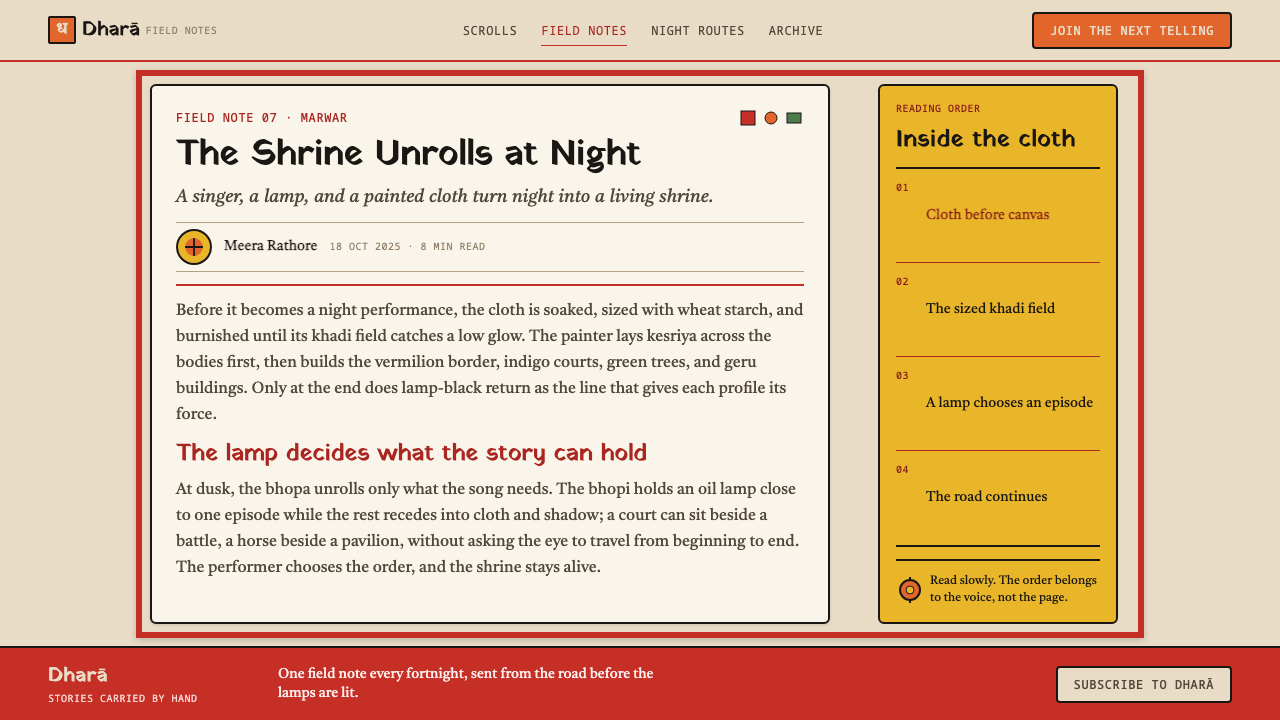
A phad is a painted cloth of the Rajasthani folk narrative tradition, five feet high and up to thirty feet long, that holds an entire epic in one continuous field. It is not hung on a wall. The bhopa, a priest and singer, unrolls it at night as a portable shrine and sings episodes from it, while the bhopi holds an oil lamp against one section at a time. The audience never sees the whole; it sees whatever the lamp is lighting.
That way of being seen is the design principle. The phad does not read in order and it does not read all at once. It reads out of order, lit a patch at a time, and each patch must therefore stand on its own while still belonging to the whole. The style is built in cells: episodes enclosed by firm cinnabar rules, each warmed by a base of kesriya orange, each complete enough to be understood the moment the lamp reaches it.
The materials and the order of work explain the look. Kesriya orange goes down first. Cinnabar red encloses everything. Lamp-black outline goes on last, over finished paint. And the sized khadi cloth beneath is never hidden: it is the space between the figures. The result is a style of warm, saturated, confidently outlined color fields set on a plain cloth ground, filled to the edge, with nothing left blank because, in a phad, blank would mean unfinished.
Where does Phad Scroll Painting come from?
The painted cloth comes from the folk narrative painting of Rajasthan, India. The record places the painters in Shahpura and Bhilwara, and the performance in Marwar and the villages of the Thar. Its span runs from before 1900 to the present, and the source record is careful on one point: the Pabuji epic and its bhopa performance long predate the modern Shahpura workshops. The song and its performance came first; the modern workshops are the latest chapter in making the cloth that accompanies them.
The epic is the heart of the matter. Pabuji and Devnarayan are the two epic repertoires named with the tradition, and the bhopa sings them while the cloth is displayed. The cloth is called a portable shrine for a reason: it is the thing the singer carries between places, the surface on which the story's characters are present when the song calls them. That is why it is unrolled at night and approached with a lamp. It is not a picture displayed for viewing but a setting for performance and devotion.
The itinerant shrine tradition shapes the form. A cloth that travels must roll and unroll without damage, and must stay legible in poor, flickering light, and the phad's firm, bounded cell structure, strong outlines, limited and symbolic palette, and surface dense from edge to edge suit those conditions well. The working order fits too: the warm color that gives the figures their bodies goes down first, the red structure encloses them, and the black line that makes them readable comes last, over everything.
The modern workshops of Shahpura and Bhilwara carry this painting tradition forward, and the record names three people connected with it: the painters Shree Lal Joshi and Kalyan Joshi, and John D. Smith, the scholar who studied the Pabuji epic. Taken together they show the tradition from three sides — the hand that paints, the family line that keeps the painting, and the outside reader who recorded and explained the sung epic. A design system built on the phad inherits all three: material discipline, the cell structure, and a duty to treat the source with care.
What defines the Phad Scroll Painting look?
A Continuous Field
The whole epic lives in one unbroken field instead of a sequence of separate pages. Episodes are cells within it, bounded by rules, not screens to be flipped through. In design terms the unit is the wide plane, not the page: a large surface that can be entered at any point, where nearby cells relate to each other spatially and no one is forced to start at the beginning.
Kesriya First
Kesriya, a warm saffron orange, goes down first, filling the faces and bodies of the figures and giving each cell its base warmth. Because it is laid before anything else, it is the foundation color, a flat and generous field rather than an accent. Everything that follows is placed on or around it, and it keeps the whole surface feeling lit from within.
Cinnabar Frame and Rules
Cinnabar red draws the garments and also the heavy border that encloses the whole painting, along with the rules that divide the cells. It is the structural color: it holds, separates and contains. A thick red frame is not a decorative edge but a promise that the story is bounded and protected, and the internal rules make sure each episode is a distinct, readable room.
One Yellow, for Jewelry
A mineral yellow is held back for jewelry alone. Because it appears so rarely, it works as a small bright signal of ornament and value on the figures, not as a general highlight. The lesson for a system is economy: a color with one job is more potent than a color used everywhere.
Lamp-Black Last
The outline is lamp-black, applied last, over paint that is already finished. This reverses the habit of sketching a line first and filling afterward: here the color is laid down loosely and the line comes as a final decision that gives every figure definition and edge. The black is therefore authoritative but sparing; it clarifies rather than constructs.
The Khadi Ground
The ground is hand-woven khadi, sized with wheat paste, dried and burnished with a stone to a semi-matte finish, in a warm unbleached beige. It is never covered up; it is the space between the figures. The cloth is the page, and its tooth and warmth carry through every cell. A plain, slightly textured, warm-neutral base is as much a part of the palette as any pigment.
Read by Lamplight
The surface is full to the edge, with no blank margin, because in a phad blank means unfinished. It is read out of order, a lit patch at a time. Each cell is therefore self-contained and dense, and the hierarchy comes from what the lamp falls on rather than from a fixed sequence. Space is used as a continuous, inhabited surface, not as breathing room.
Who shaped Phad Scroll Painting?
Shree Lal Joshi is named in the record as one of the painters connected with the Shahpura and Bhilwara workshops, the modern center of phad painting. His name stands for the painter's side of the tradition: the hand that lays kesriya first, frames the cells in cinnabar and closes each figure with lamp-black. A system that draws on his work inherits a sequence of operations as much as a palette.
Kalyan Joshi is the second painter named with the tradition, of the same Joshi painting family. The record's inclusion of two painters of one name points to something essential about phad: it is a lineage craft, passed on by working beside the maker. For design, that means the style is learned by repeating a procedure, not by copying a surface, and the procedure is what a faithful system should preserve.
John D. Smith is the scholar named in the record for his work on the Pabuji epic, which he studied, transcribed and translated. His role is that of the careful outsider: someone who made a sung, performed epic available as a text for readers beyond Rajasthan while keeping clear that the song is the primary thing. For designers, he is a reminder to credit the source and to treat the cloth as a living part of performance rather than as pattern stock.
The bhopa and bhopi are the performers without whom the cloth is silent: he unrolls it and sings, she lights it with an oil lamp, one section at a time. They embody the style's central idea, that the cloth is read in partnership with light and voice. A design inspired by the phad should remember that its surfaces are staged by someone, and that the audience sees only what is lit.
How do you use Phad Scroll Painting today?
The phad style suits work whose content is a story told in episodes, or a body of material that is naturally divided into self-sufficient parts: cultural organizations and museums, storytelling and education projects, festivals, food and craft brands with a regional voice, and products that organize many parallel items. It is a warm, dense, full-surface style, so it works best where richness and clarity of units matter more than a minimalist calm.
On a cover slide, give the title a bounded cell of its own: a heavy cinnabar frame around a warm kesriya field on a plain cloth-toned ground, with the title in lamp-black. Content slides work as a lit cell, one idea per frame, each readable on its own without needing the slide before it. For data slides, set each metric in its own cell with its own red rule, so that a reader can enter at any point; use the yellow only for the one figure that counts as the jewel of the slide.
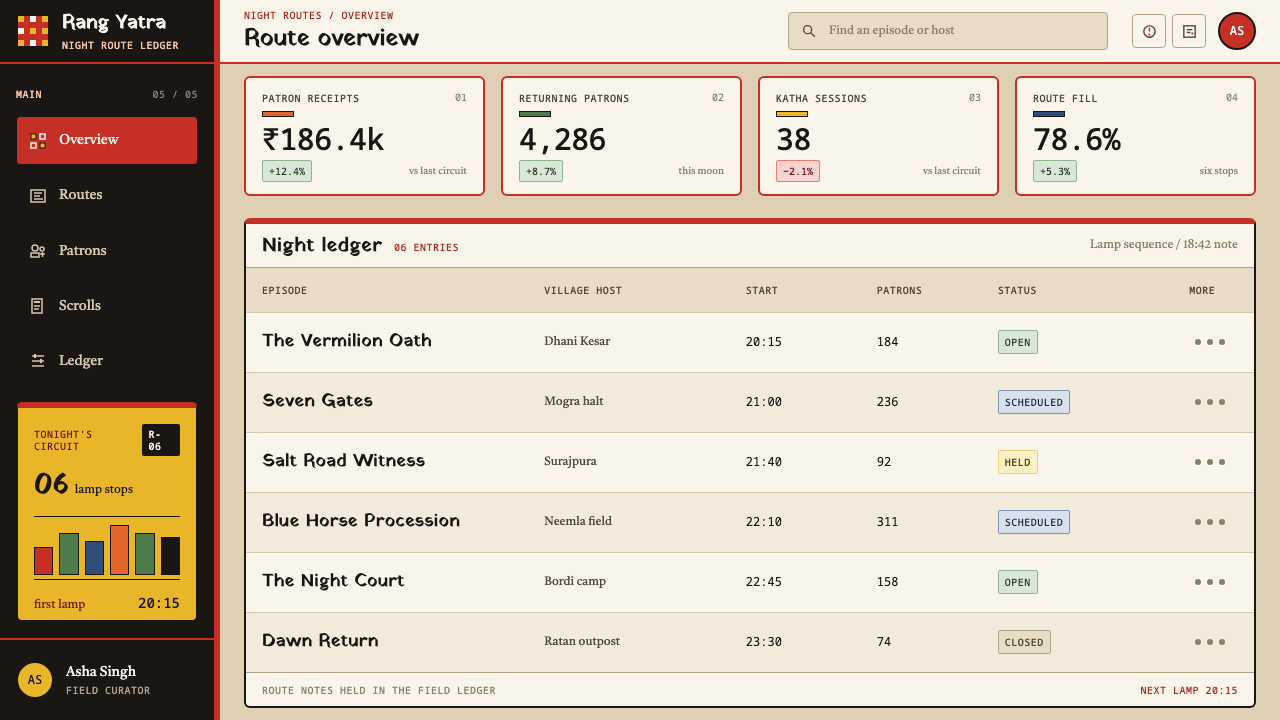
On the web, think of dashboards and landing pages as a continuous cloth of cells: a grid of framed panels where each is complete in itself and none depends on being read first. A pricing page can present tiers as adjacent cells under a shared frame, with the single yellow reserved for the recommended plan. Navigation should not force a linear path; let visitors land on any cell and still understand where they are. Dense, full-width layouts are welcome, but each cell must stay legible.
In editorial and marketing work, the style supports episodic narrative. A timeline, a story told in chapters, a map of events or a tour of products can be laid out as a long field of panels read in any order. Keep photographs and illustrations inside the cells, give each a bold outline, and let the cloth tone show between them. Copy should be spoken rather than written: short passages that work one at a time, like lines sung under a lamp.
The most common mistake is to leave generous empty space, which is the opposite of how a phad works; here blank means unfinished, and an airy layout reads as a different style altogether. Another mistake is to apply the palette as a decorative 'ethnic' skin, with kesriya and red scattered across a conventional layout without the cell structure, the cloth ground or the order of work that make them mean something. Finally, remember that a phad is a portable shrine used in performance. Treat its imagery respectfully: do not strip sacred figures out of context to use as stock decoration, and credit the tradition.
Phad Scroll Painting — FAQ
What exactly is a phad?
A phad is a painted cloth from Rajasthan, five feet high and up to thirty feet long, that holds an entire epic in one continuous field. It is not hung up for display. The bhopa unrolls it at night as a portable shrine and sings episodes from it, while the bhopi holds an oil lamp against one section at a time. It is as much an instrument of performance as a painting.
What do the bhopa and the bhopi do?
The bhopa is the priest and singer who unrolls the cloth and sings the epic. The bhopi holds an oil lamp against one section of the cloth at a time, lighting the part of the story being sung. Together they control what the audience sees and when. This is why the style insists that each cell be readable on its own: the lamp decides the order, not the layout.
Why does the style leave no white space?
In a phad, blank means unfinished. The surface is filled to the edge. The khadi ground does show, but as the space between figures, a visible, warm, textured cloth rather than empty breathing room. If a layout needs air, the cinnabar rules and the cloth tone between cells provide it; large untouched margins belong to a different tradition and weaken the style.
Why is the black outline applied last?
Because the painter lays color first and then makes the final decision about each figure's edge. Lamp-black over finished paint gives the outline authority and corrects the fill beneath it. For design, it means line should be treated as a finishing layer rather than a skeleton: build blocks of color and cells first, then define edges once, with confidence.
How can the style be used respectfully?
Learn the structure before borrowing the surface: the cell logic, the order of work, the cloth ground and the roles of each color. Do not use devotional figures as stock decoration, avoid turning the palette into a generic 'ethnic' look, and credit the Rajasthani tradition and its painters and performers. A design that respects why the phad exists, as a portable shrine for sung epics, will tend to look more truthful as well.
Related design styles
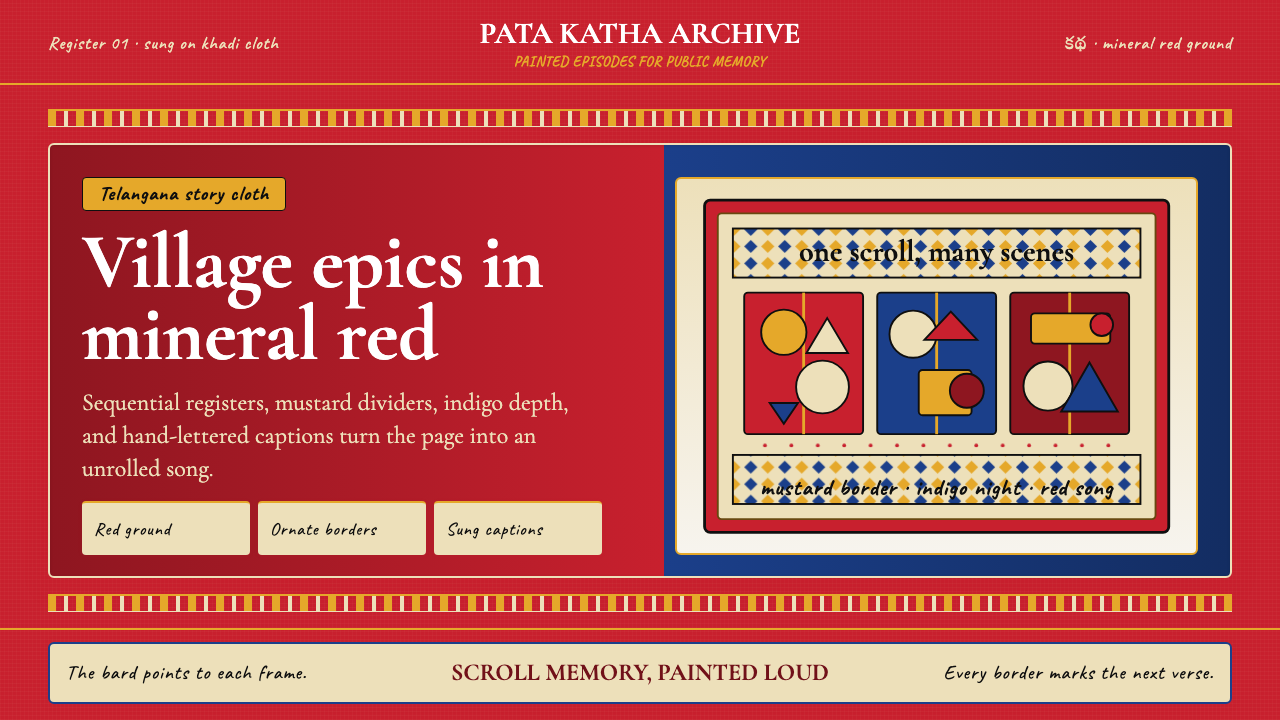 Andhra Cheriyal Scroll PaintingSaturated oral memory. Mineral red registers, mustard diamonds, and serif son…
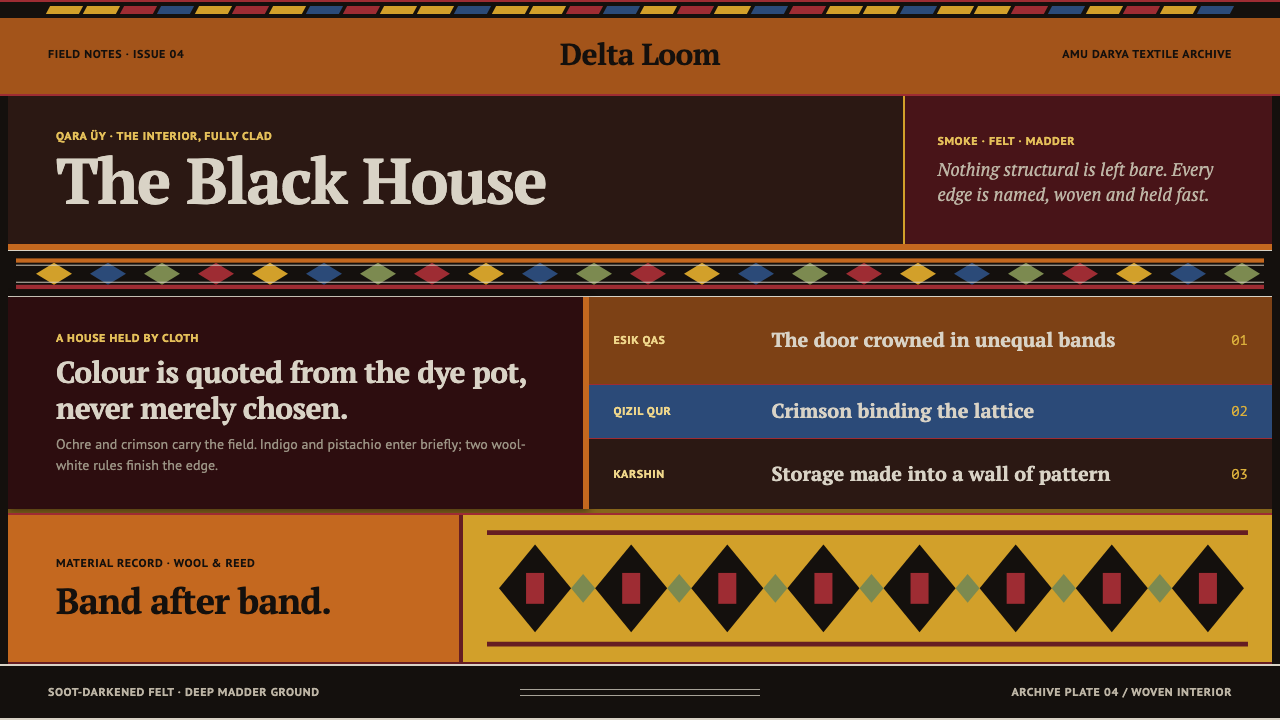 Karakalpak Yurt InteriorNo surface is left bare. Ochre, crimson and indigo bands wrap a smoke-darkene…
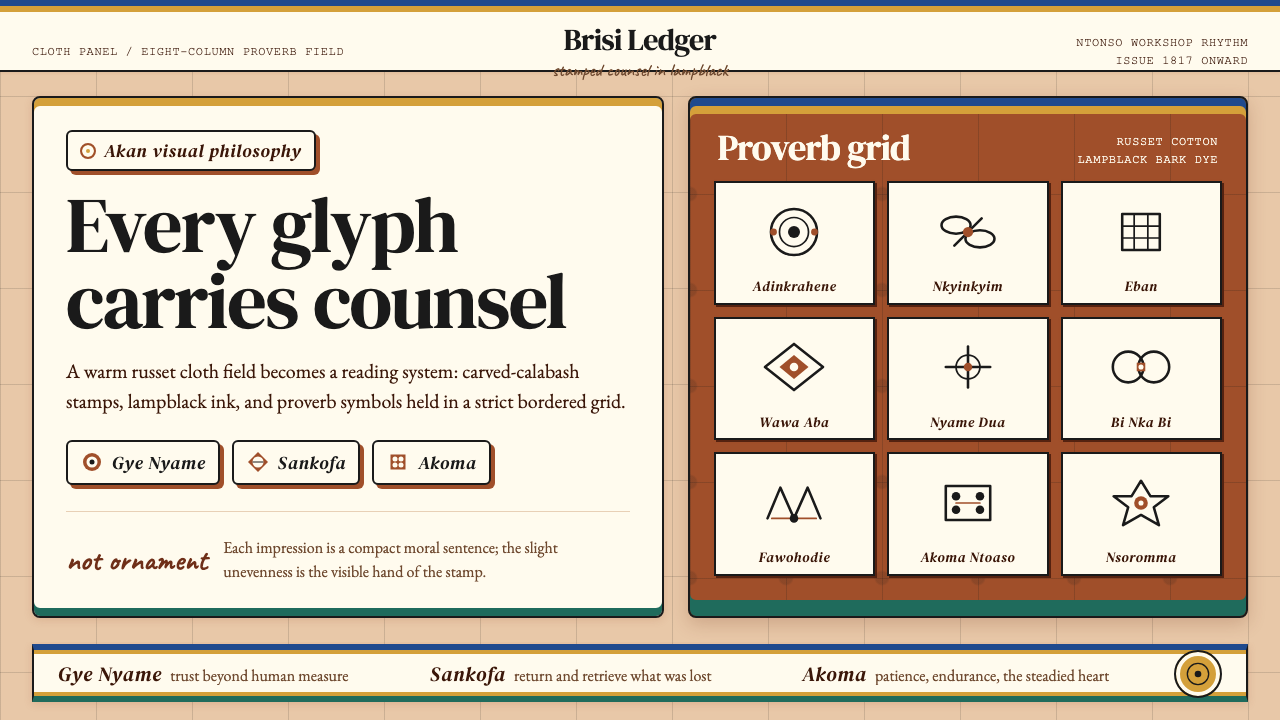 Akan Adinkra (Ghana)Proverbs become cloth. Russet grids, lampblack serif marks, and gold-edge ban…
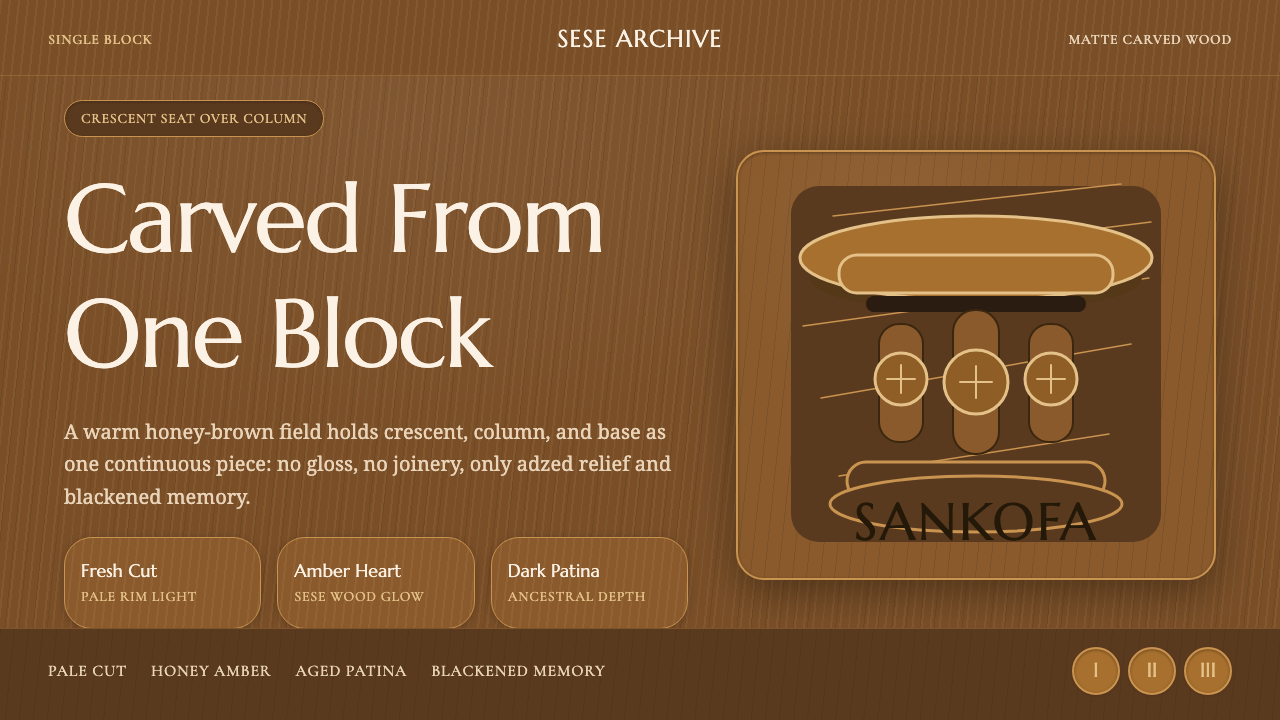 Akan Carved StoolMatte wood carries memory. Honey amber, Marcellus type, and crescent-column r…
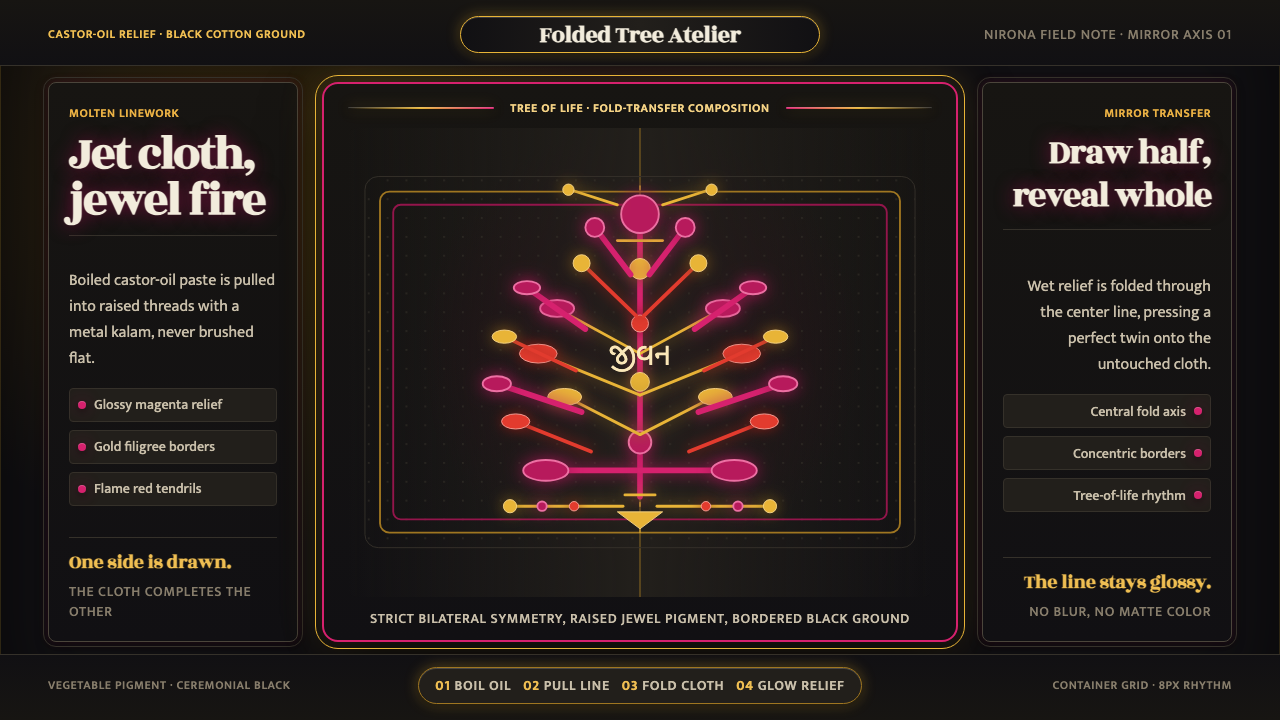 Kutch Rogan Castor-Oil PaintingGlossy symmetry holds the dark. Magenta castor-oil lines mirror across black…
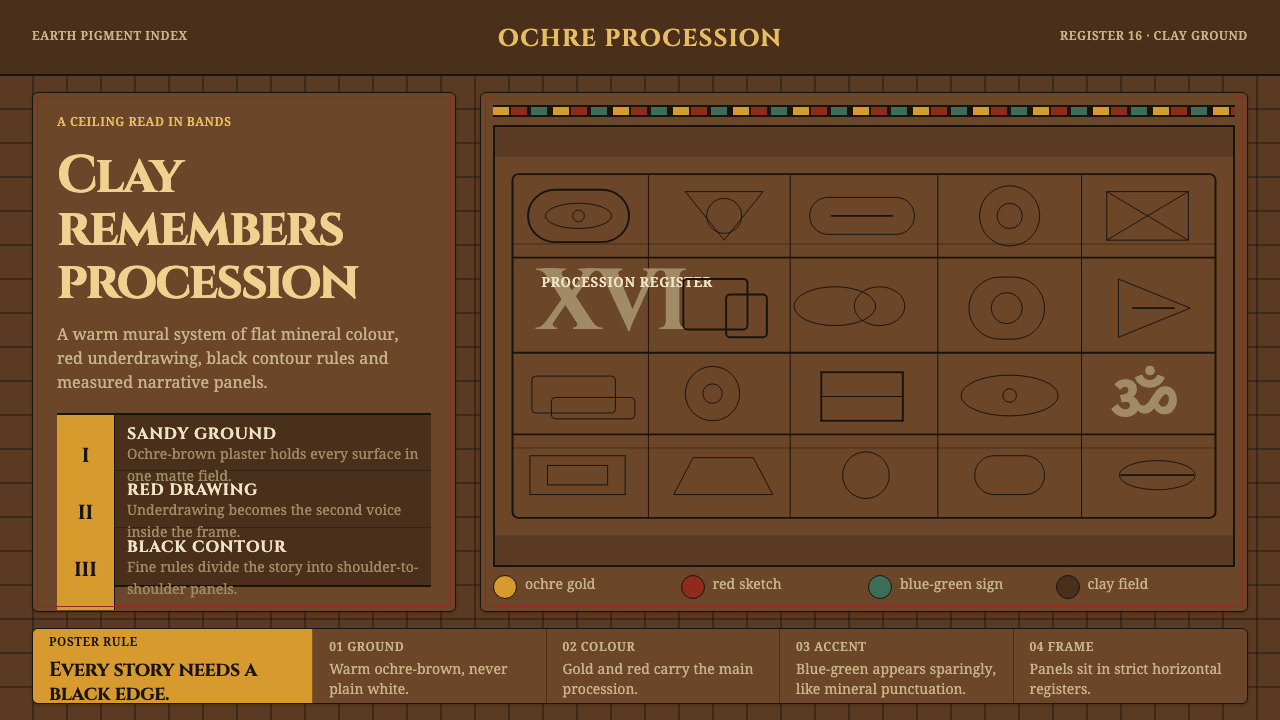 Lepakshi Vijayanagara CeilingEarth remembers in registers. Ochre gold, red underdrawing and black rules ma…