What is Radio Telescope Array?
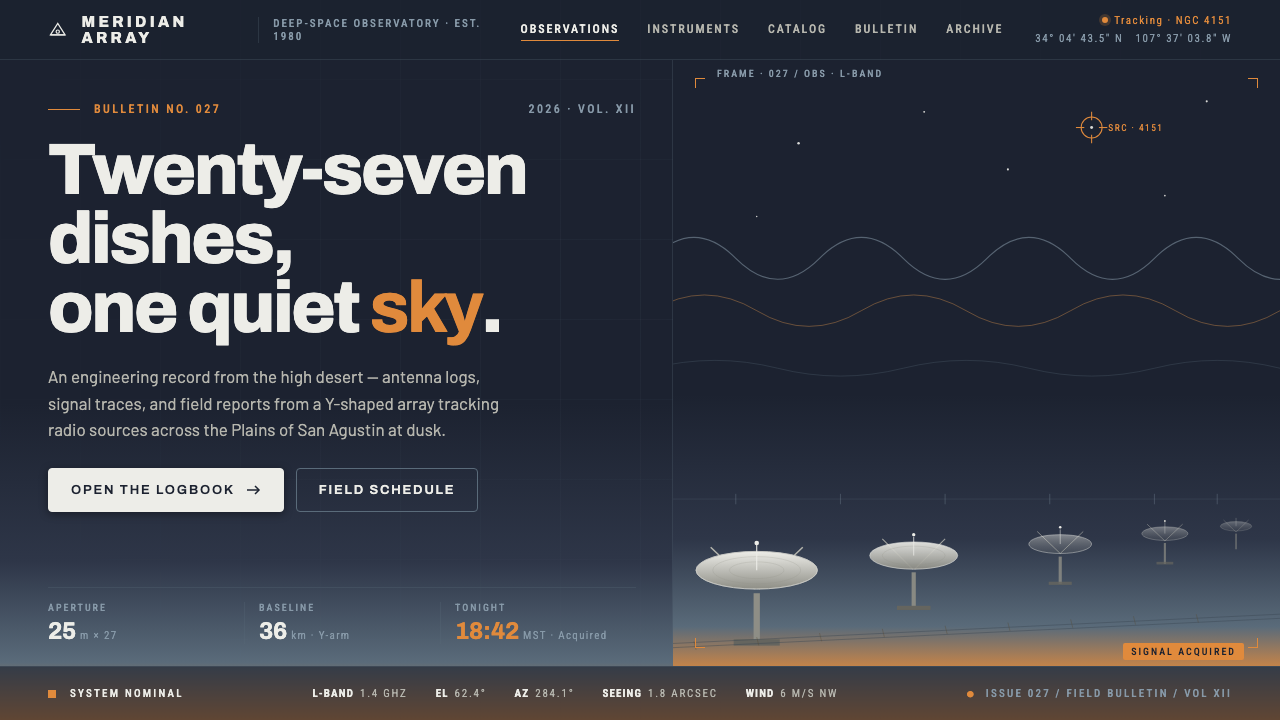
Radio Telescope Array turns dusk-bound scientific infrastructure into a visual language of precision, distance, and quiet signal.
Radio Telescope Array in brief
Radio Telescope Array is a dark design system drawn from the Very Large Array: twenty-seven white parabolic dishes arranged in a Y formation across the pale-tan high desert of the Plains of San Agustin in New Mexico. Its central image is engineering at dusk. Steel-white antennas tilt together beneath a sky that has deepened toward blue-gray, while the ground retains a final amber warmth at the horizon.
The system does not treat astronomy as decorative science fiction. It takes its cues from instruments, alignment, and observation. A deep dusk field establishes the page as open sky; white belongs to the dishes and to the information that must read with the greatest certainty. Receding parabolic silhouettes establish scale without turning the scene into a literal landscape.
Its visual atmosphere is professional, restrained, and technical. Faint waveform traces suggest signals crossing distance, while repeated antenna forms imply measurement, coordination, and a collective gaze aimed beyond the visible horizon. The resulting style feels less like a control room full of activity than a carefully calibrated observatory after daylight has withdrawn.
Where does Radio Telescope Array come from?
The visual source is the Very Large Array, commissioned in 1980 and associated here with its signature radio-astronomy imaging era from 1990 to 2010. The array stands on the Plains of San Agustin, a high-desert setting whose pale-tan terrain is as important to the image as the antennas themselves. The contrast between exposed ground and an immense darkening sky gives the system its foundational contrast: warmth below, cool depth above.
The VLA is described through a highly legible engineered order: white parabolic dishes, shared tilt, and a Y-shaped formation. Those elements make repetition meaningful rather than ornamental. A single dish can operate as a crisp emblem; a procession of dishes can show receding scale and coordinated purpose; the formation can inform layouts that branch outward from a stable center.
Its origin belongs to big-science engineering and deep-space exploration, but the style arrives through an observational lens rather than a dramatic one. Observatory documentary photography supplies the emotional register: infrastructure seen at the threshold between day and night, monumental without spectacle, exact without feeling sterile. Twilight is not merely a backdrop; it is the condition that reveals the white instruments most clearly.
NRAO and the Very Large Array provide the named institutional and physical anchors for the system. Their presence supports a design language that values disciplined composition over cosmic fantasy. The page should feel constructed for observation: information is placed with purpose, directional elements behave like measured traces, and empty dark space carries as much meaning as the objects placed within it.
What defines the Radio Telescope Array look?
Twilight Ground
The dominant field is a deep dusk ground, closer in feeling to a sky after sunset than to generic black. It should remain spacious and quiet, allowing the composition to suggest open air and extreme distance. A restrained horizon warmth can appear low in the frame, but the page should always feel governed by the descending night.
Instrument White
White is reserved for the dishes and for information that needs instrument-grade clarity. Against the dark field, it reads as steel, reflected daylight, and calibrated attention. It is not a broad decorative wash; its authority comes from appearing in precise, high-contrast places.
Parabolic Recession
Parabolic silhouettes are the signature form. They work best when repeated at changing apparent scale, so the eye can move from a near dish toward distant counterparts. The form should remain clean and structural, with recognizable curvature and a sense of deliberate tilt rather than playful abstraction.
Aligned Direction
Shared antenna tilt creates a powerful directional cue. Elements should appear aligned toward an implied target, even when the target is outside the frame. This gives titles, diagrams, and image crops a sense of coordinated looking rather than isolated visual activity.
Signal Traces
Faint waveforms and measured linear traces introduce the idea of invisible transmission. They should sit lightly on the dusk field, functioning as evidence of signal rather than as a decorative pattern. Their restraint keeps the system scientific and prevents the interface from becoming a conventional futuristic display.
Horizon Warmth
Amber belongs near the desert horizon, where the final light touches pale-tan ground. Used sparingly, it gives the dark system physical atmosphere and prevents its technical rigor from becoming anonymous. It should feel like a distant environmental condition, never like a loud interface accent competing with the white dishes.
Who shaped Radio Telescope Array?
NRAO, the National Radio Astronomy Observatory, is the institutional name provided with this theme. Within the design language, it anchors the sense that the imagery belongs to scientific observation and organized engineering rather than to a fictional space setting.
The Very Large Array is the system's primary visual subject: twenty-seven white parabolic dishes in a Y-shaped formation on the Plains of San Agustin. Its repeated instruments, shared orientation, and high-desert scale supply the style with its defining geometry and atmosphere.
The Plains of San Agustin provide the landscape condition: pale-tan high desert below an evening sky. This setting explains why the palette depends on a restrained meeting of dark blue-gray depth, steel-white instruments, and distant amber ground.
How do you use Radio Telescope Array today?
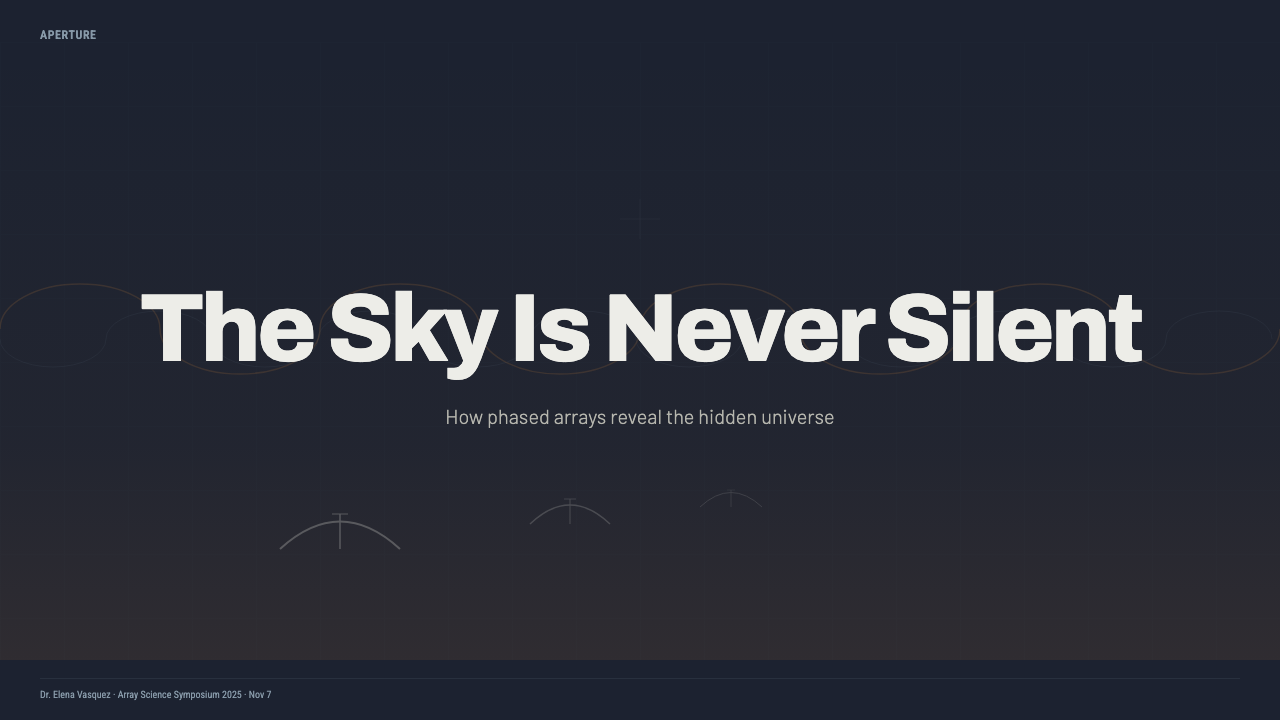
For presentation covers, begin with a large dark field and let one or several dish silhouettes establish direction. A title should read as a measured observation rather than a promotional shout, with white information placed where the composition is clearest. Reserve the low horizon for a restrained amber cue, and let the empty sky carry scale.
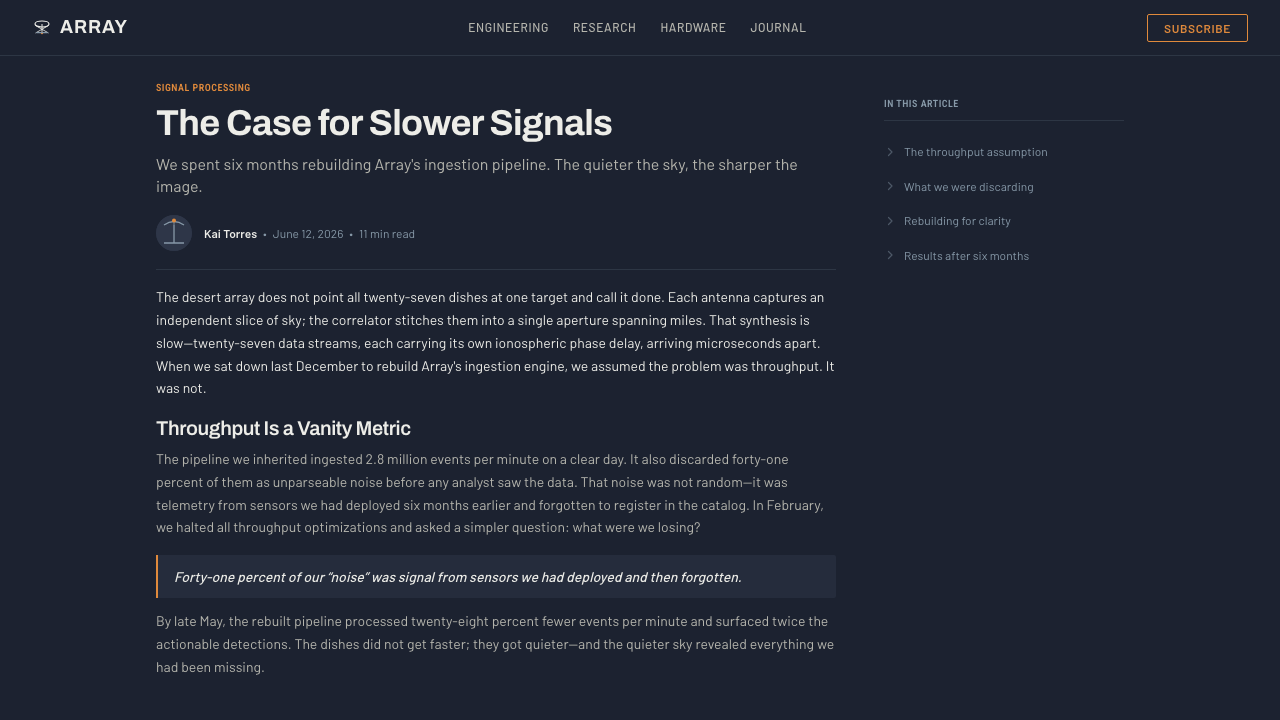
Content slides should behave like instrument panels with generous breathing room, not dense scientific dashboards. Use a recurring directional axis, concise labels, and a clear hierarchy of white text. On data slides, charts can echo the array through repeated arcs, aligned markers, and trace-like lines; the visual metaphor should clarify relationships rather than disguise the data.
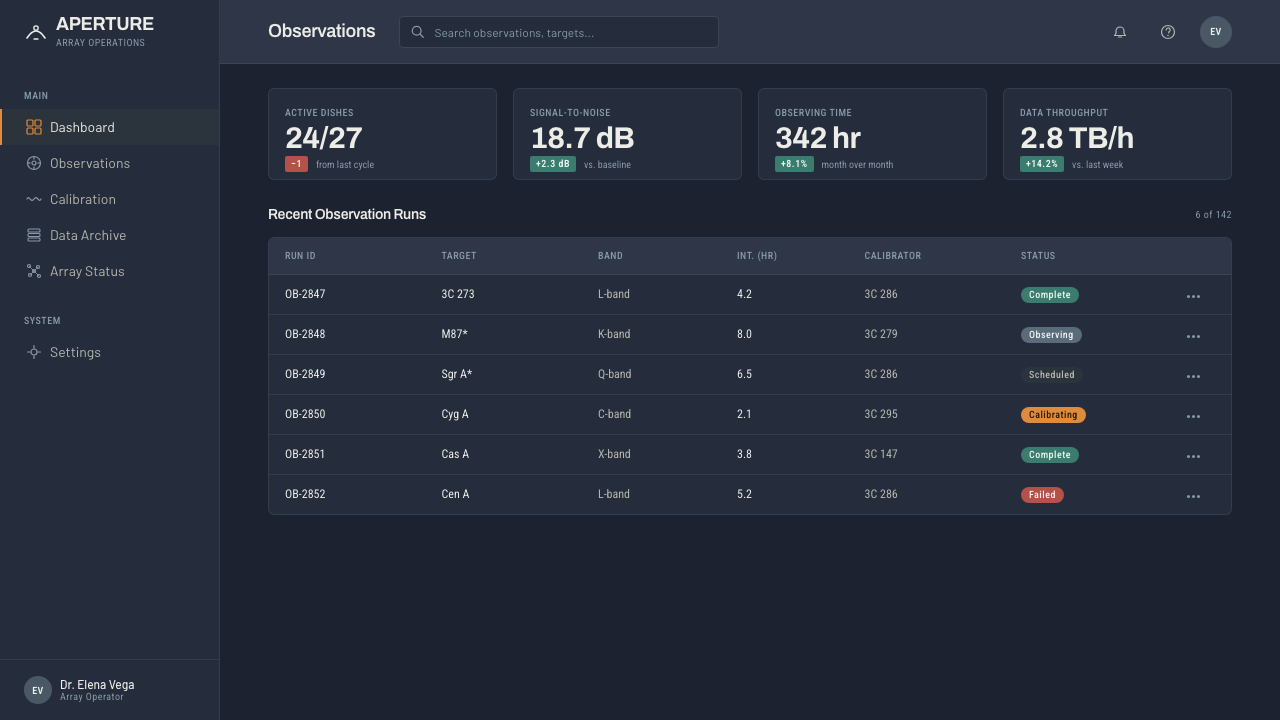
For web interfaces, the style is especially effective for research dashboards, observability products, analytical tools, and technical pricing pages. Dark space can separate groups of information without excessive framing, while white highlights primary readings, selected states, and critical actions. Signal traces work best as quiet contextual layers behind functional content, never as an obstacle to scanning.
In editorial and marketing work, use the system to frame technical stories with a sense of real place. Wide dark panels can hold a cropped antenna image or an abstract parabolic silhouette, while text blocks remain calm and legible beside it. The amber horizon is useful for transitions, pull quotes, or concluding sections because it introduces warmth without abandoning the observatory mood.
The common mistake is turning the source into generic space-interface decoration: bright effects everywhere, busy pseudo-data, or constant waveform activity. That loses the distinction between a measured observatory and a fictional cockpit. Keep signals faint, compositions sparse, and white purposeful; the most convincing result comes from alignment, distance, and restraint.
Radio Telescope Array — FAQ
Is Radio Telescope Array a generic sci-fi style?
No. Its source is a real radio-astronomy array and a specific engineering-at-dusk atmosphere. The system can feel futuristic because it uses dark space, signals, and precise instruments, but its strongest applications remain grounded in observation, scientific order, and the physical landscape of the high desert.
Why should white be used so selectively?
White is the visual property of the dishes against dusk, so it carries special authority. If it is spread across every surface, the contrast that makes the instruments feel exact disappears. Keeping it selective lets it identify the antenna forms and the information that deserves immediate, confident reading.
Can the system include warm color?
Yes, but the warmth should come from the supplied dusk scene: amber at the horizon and tan desert ground. It works as an environmental counterpoint to the dark sky, not as a collection of energetic accents. Its role is to locate the engineering in a real evening landscape.
What should signal waveforms communicate?
They should communicate the presence of radio observation and transmission across distance. Waveforms are most convincing when they remain faint and measured, like traces detected by an instrument. Once they become dominant ornament, they stop suggesting scientific attention and begin to read as visual noise.
Related design styles
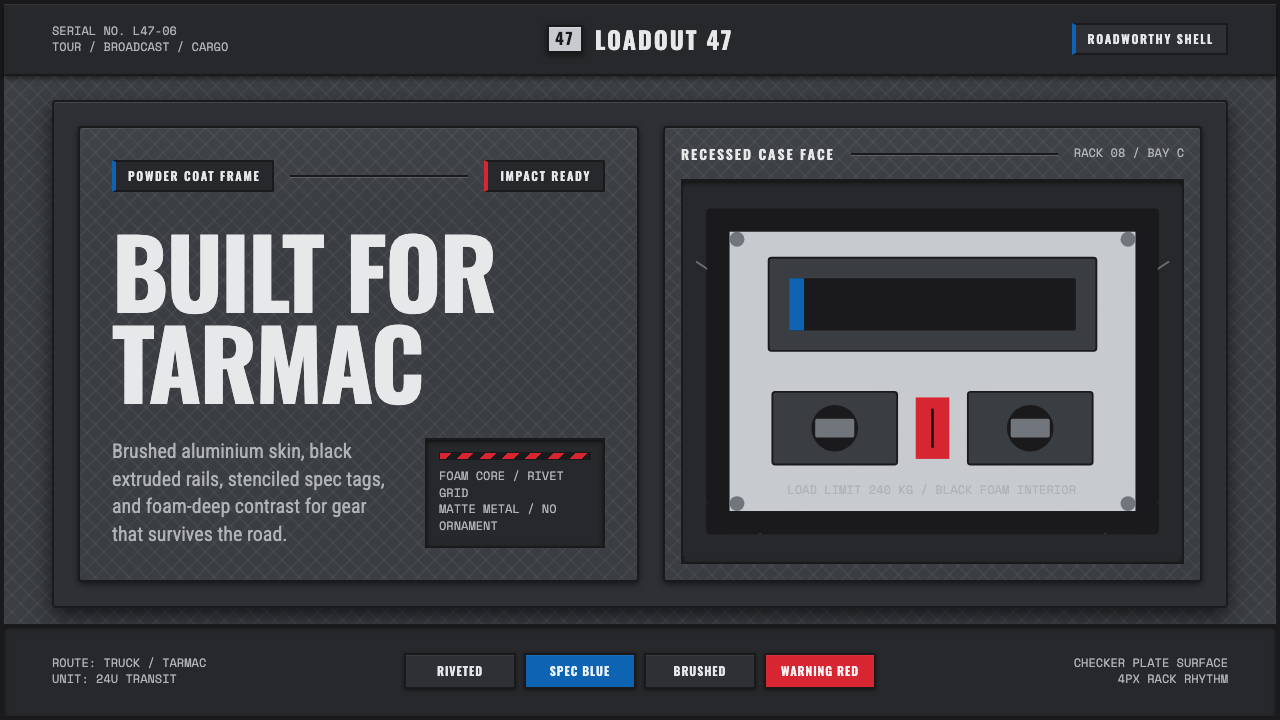 Aluminium Flight CaseRoadproof and exact. Diamond-plate gray, stencil type, black frames, blue-red…
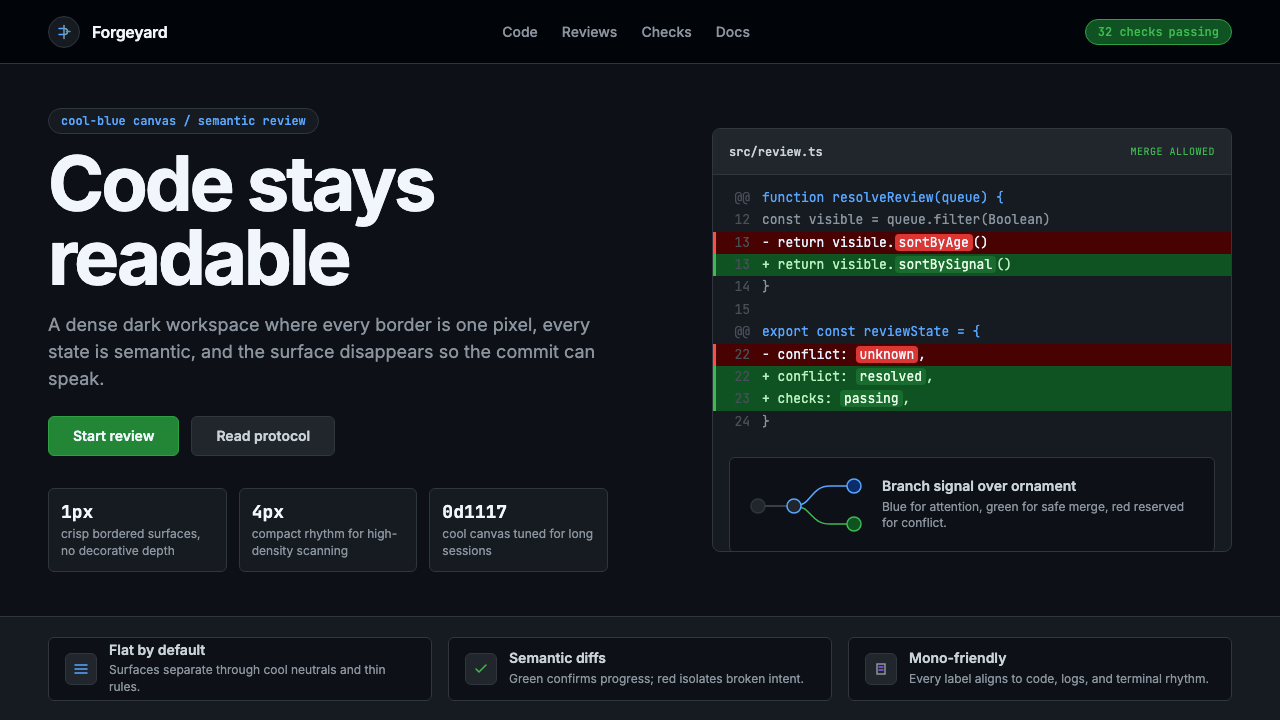 GitHub DarkCode-first darkness. Cool-blue canvas, 1px borders, green/red diff lines.
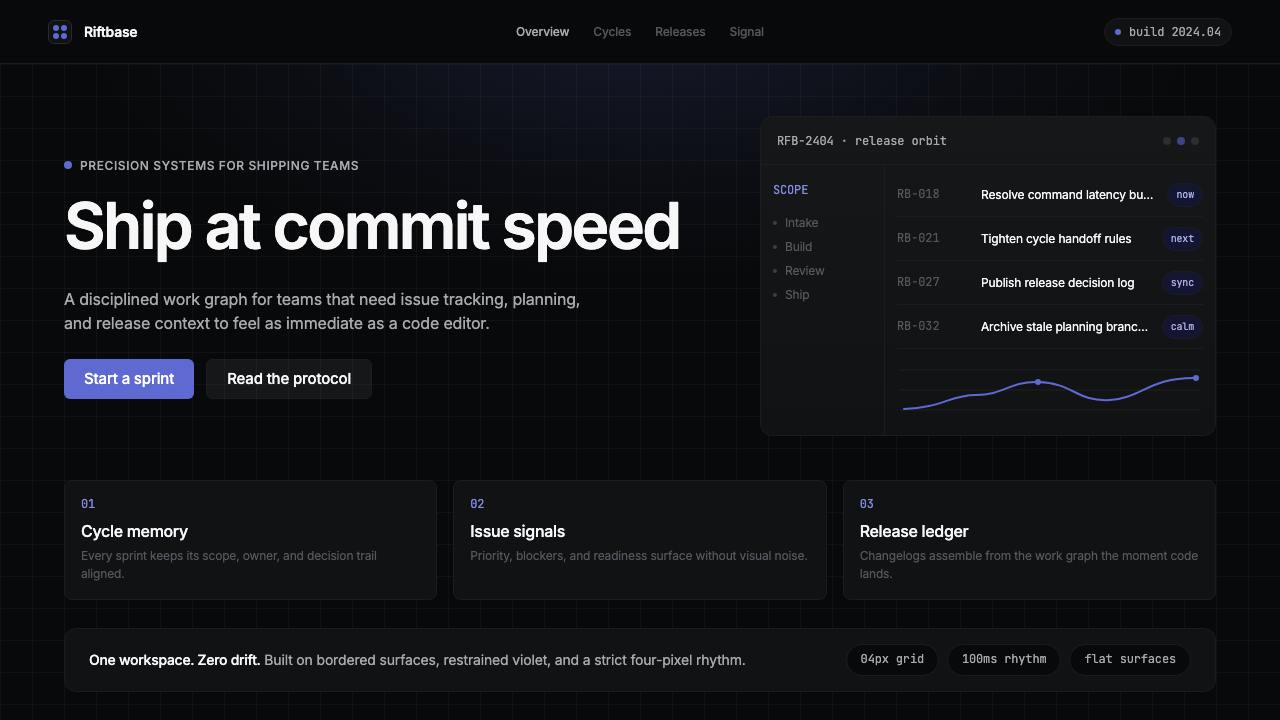 Linear 2024Precision down to the millisecond. Near-black, indigo-violet accents, Inter D…
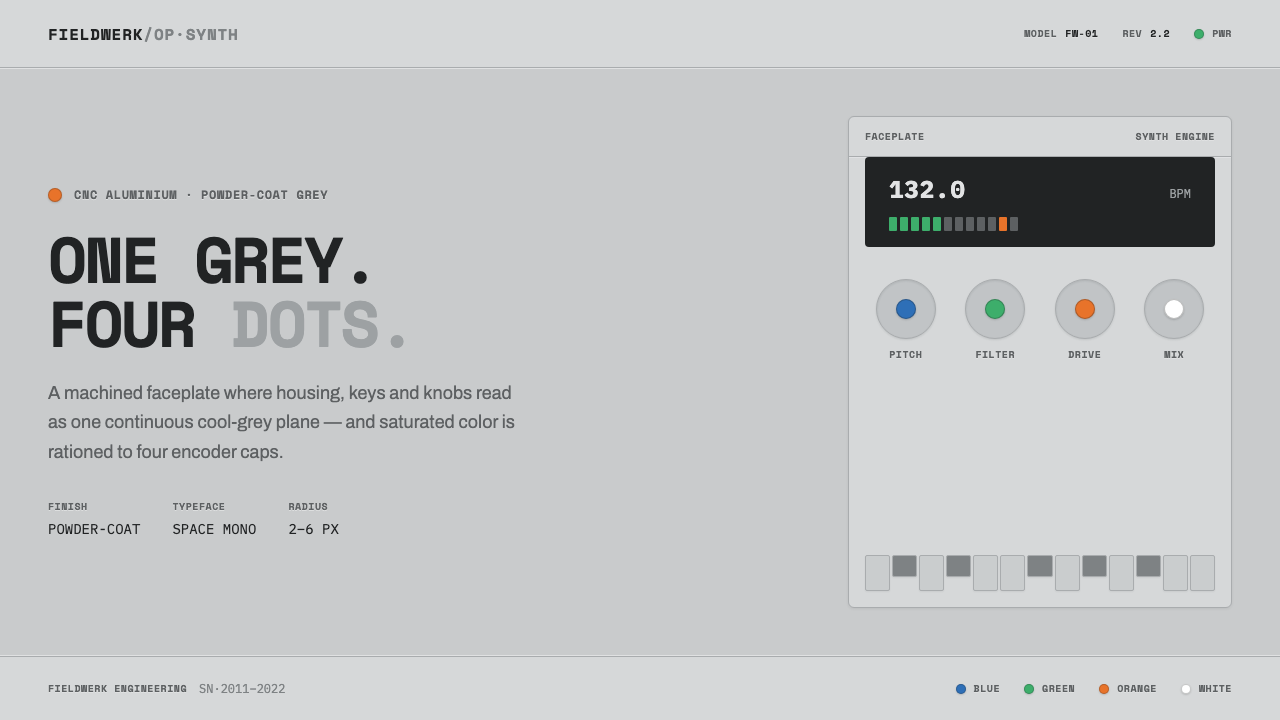 Teenage Engineering OP-1One grey, four dots. Machined aluminium in Space Mono, color rationed to tiny…
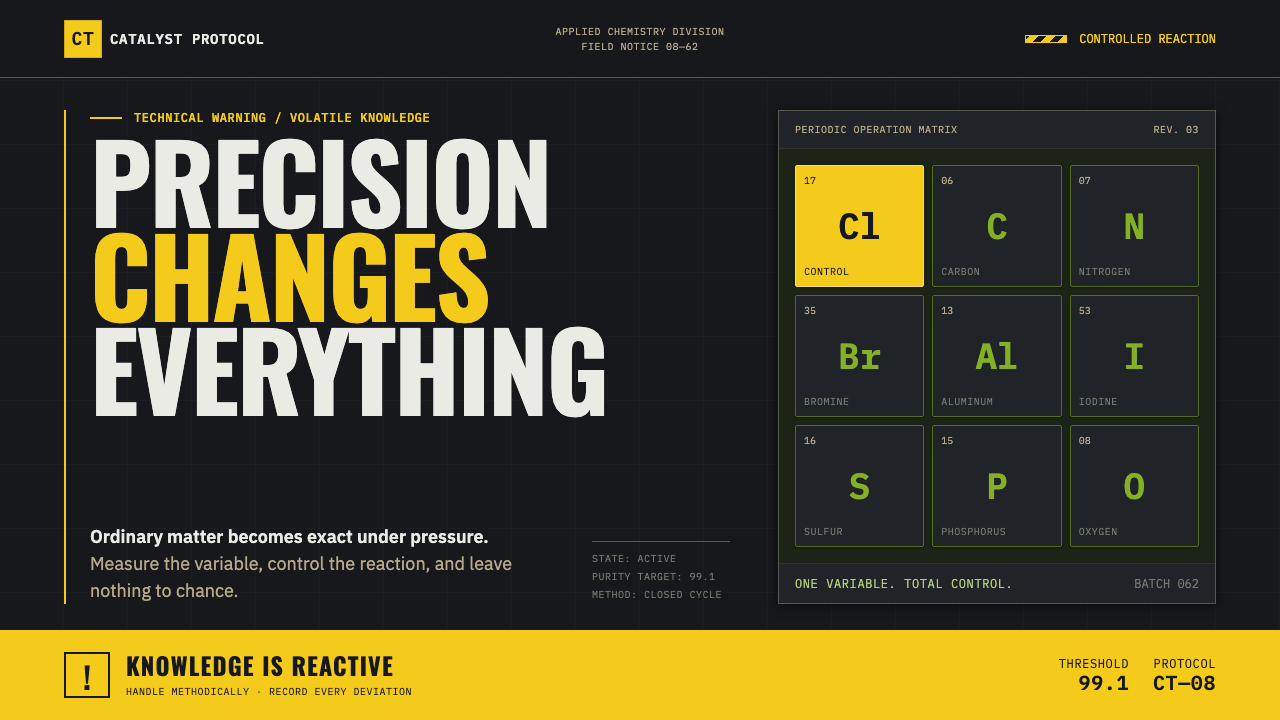 Breaking Bad (2008)Precision turns dangerous. Hazmat yellow and element tiles cut through asphal…
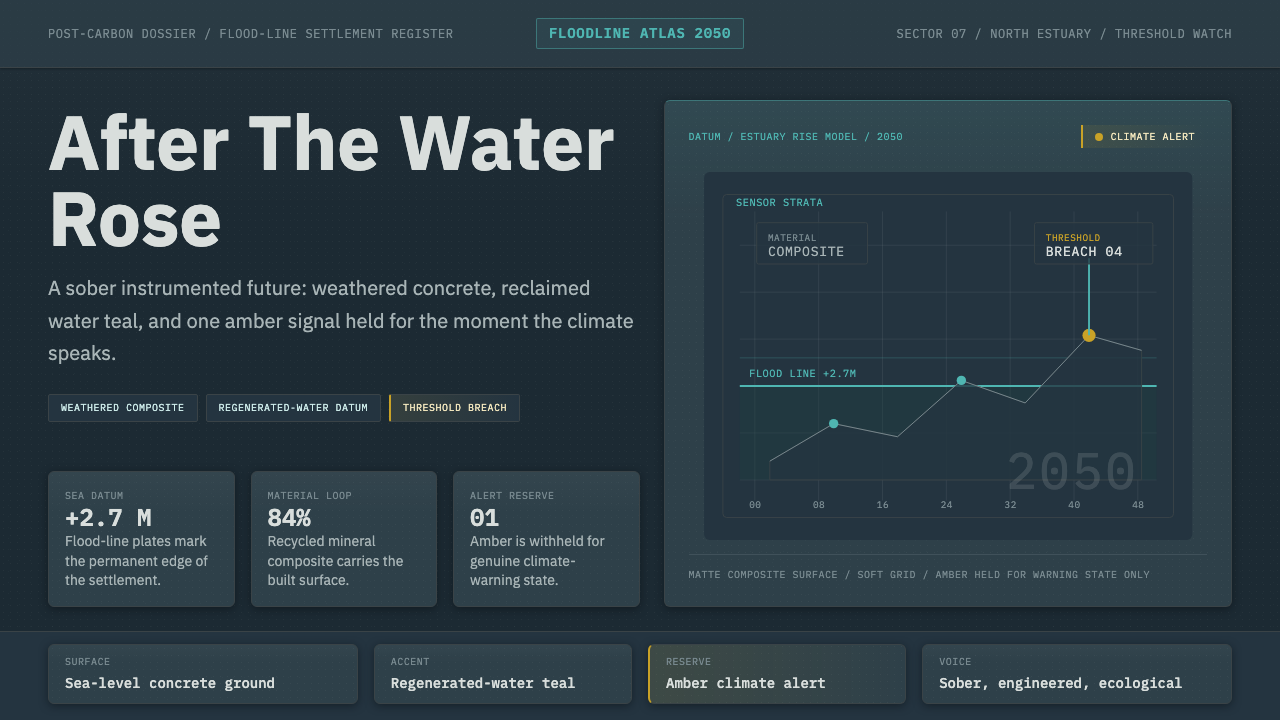 Cli-Fi 2050Pragmatic after the flood. Concrete blue-gray, muted teal, and one amber aler…