What is Pithora Rathwa Ritual Wall?
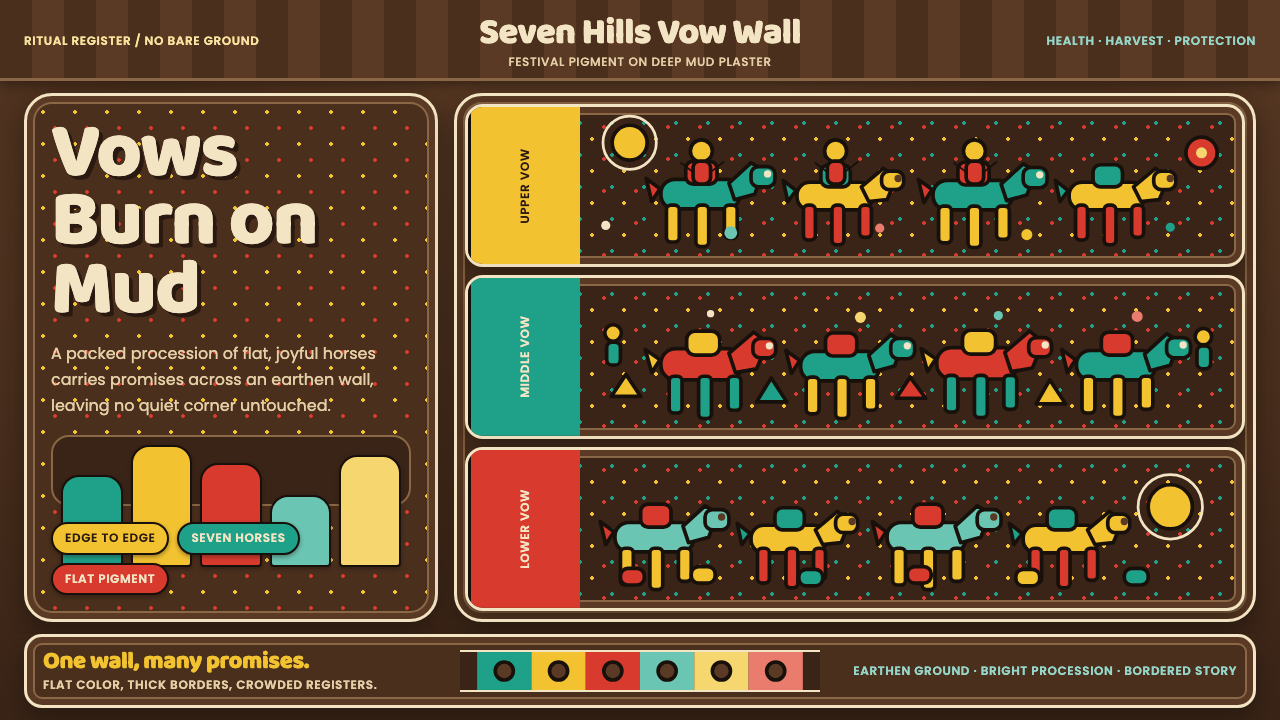
Pithora turns a household wall into a fulfilled promise: bright horse processions press across dark earth until devotion leaves no empty ground.
Pithora Rathwa Ritual Wall in brief
Pithora is a living ritual wall-painting tradition made by Rathwa, Bhil, and Bhilala communities in Chhota Udaipur, Gujarat, and adjoining Madhya Pradesh. It is named for Pithora Baba and commissioned by a household after a vow has been made for health, a good harvest, or protection. The resulting image is not a detachable decoration. It belongs to the wall, the household, and the act of fulfillment that called it into being.
Male painters known as lakhara make the painting under the direction of a badva priest. Their task is expansive rather than selective: flat fields of red, green, orange, blue, and pink spread across the wall until its surface is densely occupied. The deep mud-brown ground in this interpretation is important because it retains the feeling of unlimed plaster and gives the painted colors a hot, immediate presence.
Rows of simplified, geometric horses form the dominant motif. They carry gods, goddesses, and ancestors, while suns, trees, and human figures pack the remaining space. Traditionally, seven horses correspond to seven hills. The visual effect is neither a quiet landscape nor an isolated emblem. It is a crowded ritual map in which repeated forms, direct color, and total coverage make the wall feel active with petition, memory, and protection.

Where does Pithora Rathwa Ritual Wall come from?
Pithora belongs to a living votive tradition documented from approximately the 1960s to the present. Its geographic center is Chhota Udaipur in Gujarat, with practice extending into adjoining Madhya Pradesh. That continuity matters when discussing its appearance: the wall is not a historical style waiting to be reproduced at will, but a ritual form whose visual language remains connected to community practice.
The act begins with a household vow. Health, harvest, and protection are named in the source material as reasons for commissioning the wall. The painting therefore records an answer to a specific domestic need rather than serving as generalized ornament. Its density has a ritual logic: the wall becomes full because the fulfilled vow deserves a complete visual field.
The lakhara painters are the makers of the image, while the badva priest directs the ritual context. This relationship prevents an easy separation between artistic authorship and ceremonial authority. The painter supplies the visible vocabulary of horses, figures, trees, suns, and pigment; the priest situates that vocabulary within a vowed and fulfilled household act.
The wall preparation also belongs to the tradition’s visual identity. Dung, clay, and lime prepare the surface, while this dark version emphasizes the unlimed mud-plaster state. Against that earthen field, flat pigments do not simulate light, atmosphere, or material depth. They declare themselves as color laid onto a domestic wall, making the physical surface and the ritual image inseparable.
What defines the Pithora Rathwa Ritual Wall look?
Earthen Ground
The dark mud-brown field is not empty background. It preserves the rustic character of unlimed plaster and makes every bright painted mark appear more immediate. The ground remains visible in narrow intervals, holding the crowded composition together without becoming a neutral void.
Flat Pigment
Reds, greens, oranges, blues, and pinks are laid down as clear, flat areas. Their force comes from adjacency and contrast against the earth-dark wall, not from modeled volume or gradual tonal transitions. Color reads as a ceremonial assertion before it reads as naturalistic description.
Horse Procession
Rows of naive, geometric horses organize the wall into a procession. They carry gods, goddesses, and ancestors, turning repetition into narrative structure. The traditional grouping of seven horses for seven hills gives recurrence a devotional rather than merely decorative role.
All-Over Density
Pithora resists the modern instinct to protect large areas of negative space. Horses, suns, trees, and people press edge to edge until the wall seems inhabited rather than composed around a single focal point. Fullness communicates abundance, presence, and the seriousness of a fulfilled vow.
Direct Geometry
The horses and accompanying figures are simplified into legible geometric forms rather than rendered through naturalistic detail. This directness keeps the imagery readable within a crowded field. It also gives repeated motifs a steady visual rhythm, even when each figure is part of a larger ritual story.
Ritual Surface
The image cannot be understood apart from its prepared wall and commissioned purpose. Dung, clay, lime, pigment, household vow, lakhara painter, and badva priest together make the surface meaningful. The aesthetic is therefore inseparable from the making situation that gives it authority.

Who shaped Pithora Rathwa Ritual Wall?
Rathwa lakhara painters are among the named makers of Pithora walls in the Chhota Udaipur tradition. Their work gives visible form to the vow through flat color, horse rows, and densely populated ritual imagery. They should be understood as practitioners within a living community tradition, not as anonymous suppliers of a decorative look.
Bhil and Bhilala lakhara painters are likewise identified with the practice across Gujarat and adjoining Madhya Pradesh. Their inclusion makes clear that Pithora is rooted in several connected tribal communities. The shared vocabulary of bright pigment, horses, and filled walls belongs to ritual practice rather than to a detached single-author school.
The badva priest directs the ritual setting in which the wall is made. This role locates Pithora beyond image-making alone: the painted wall fulfills a vow under ceremonial guidance. Any contemporary reference to the aesthetic should preserve awareness that priestly direction and household intention are part of the original work’s meaning.
How do you use Pithora Rathwa Ritual Wall today?
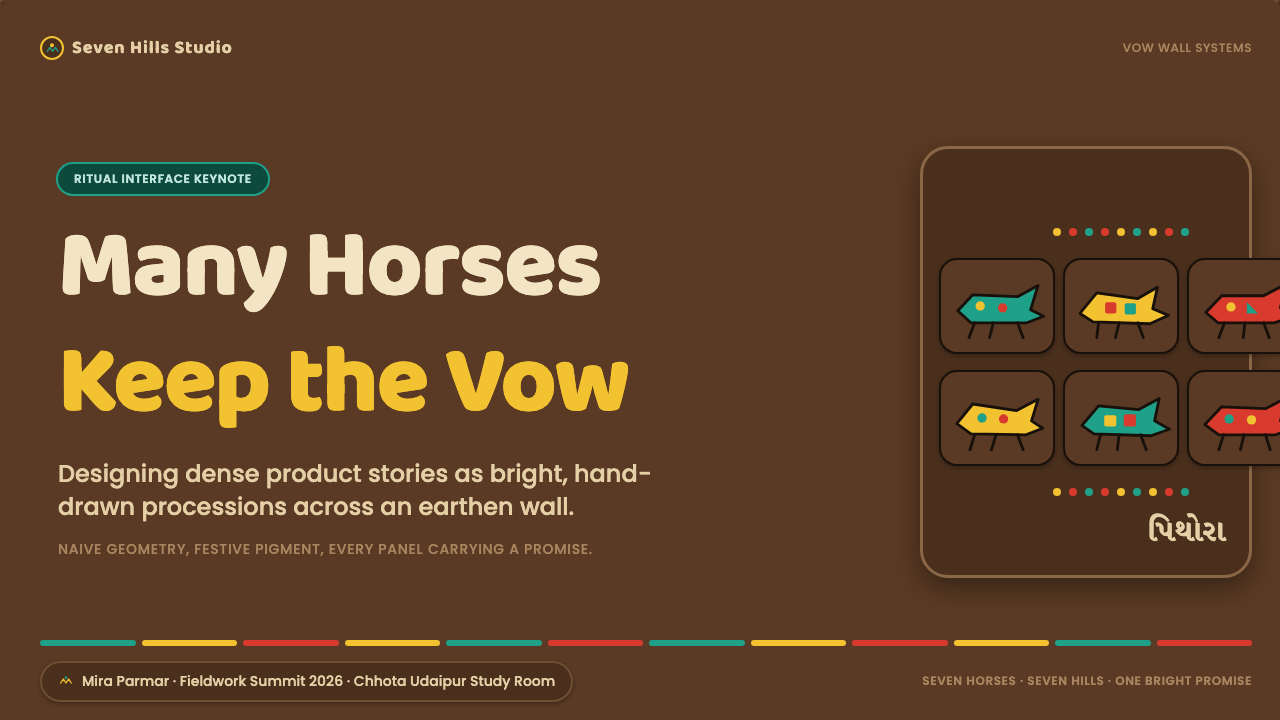
For slides, use Pithora as a lesson in procession and abundance rather than as a generic pattern. A cover can begin with an earth-dark field and one strong row of simplified horse-like forms moving across the title area. Keep the title clear enough to read, but allow the composition to feel occupied and ceremonial rather than sparse or corporate.
Content slides can organize ideas as repeated visual units: a sequence of related symbols, short statements, or image panels moving across a dark ground. Data slides are best treated cautiously. Use repeated marks to show categories or sequences, while retaining labels that make the information legible; do not turn sacred horse imagery into a casual decorative chart symbol.
For web interfaces, the strongest translation is usually a campaign, exhibition, cultural archive, or editorial feature rather than a productivity dashboard. A dark earthen background can support bright, flat illustration and dense storytelling modules. Pricing pages and transactional flows should borrow only the clarity of flat contrast and repeated rhythm, not the specific ritual motifs.
Editorial and marketing work can use full-bleed bands of dense illustrated activity, followed by quieter reading areas that explain context, commission, and community. The contrast between crowded image fields and measured text is useful when the objective is cultural education. Credit the tradition plainly, avoid stripping it of its ritual origin, and do not imply that a contemporary adaptation is itself a Pithora wall.
The common mistake is to extract the bright horses and dark-brown palette as an exotic surface treatment. Pithora is not defined by color alone, nor by a free-floating folk pattern. Its density, domestic wall, household vow, lakhara painters, and badva priest are connected. A respectful design reference should preserve that context, avoid inventing symbolic meanings, and keep ceremonial imagery away from trivial calls to action.
Pithora Rathwa Ritual Wall — FAQ
Is Pithora simply a folk-art pattern?
No. The source material describes a ritual vow wall-painting commissioned by a household for health, harvest, or protection. Its repeated horses, bright flat color, and total wall coverage are tied to that fulfilled-vow context. Treating the imagery as an uncredited generic pattern removes the household, painters, priest, and ritual purpose that make it meaningful.
Why is the wall so densely filled?
The source describes horses, gods, goddesses, ancestors, suns, trees, and human figures packed together until no ground shows through. This fullness is central to the wall’s ritual presence. It makes the image read as an inhabited map of devotion, not as a composition organized around modern ideas of restraint or empty space.
What do the horses represent?
The horses are the dominant motif and carry gods, goddesses, and ancestors. The source also notes a traditional set of seven horses corresponding to seven hills. Beyond those stated relationships, it is better not to assign universal symbolic meanings to individual colors, poses, or horse forms without community-specific context.
Can a dark-background digital design be inspired by Pithora?
It can, especially when the dark ground is treated as an earthen surface that intensifies flat, bright marks. But inspiration should remain distinct from replication. Use the contrast, processional rhythm, and all-over energy to support education or contextual storytelling, while avoiding claims of authenticity and avoiding direct ritual imagery in unrelated commercial contexts.
Related design styles
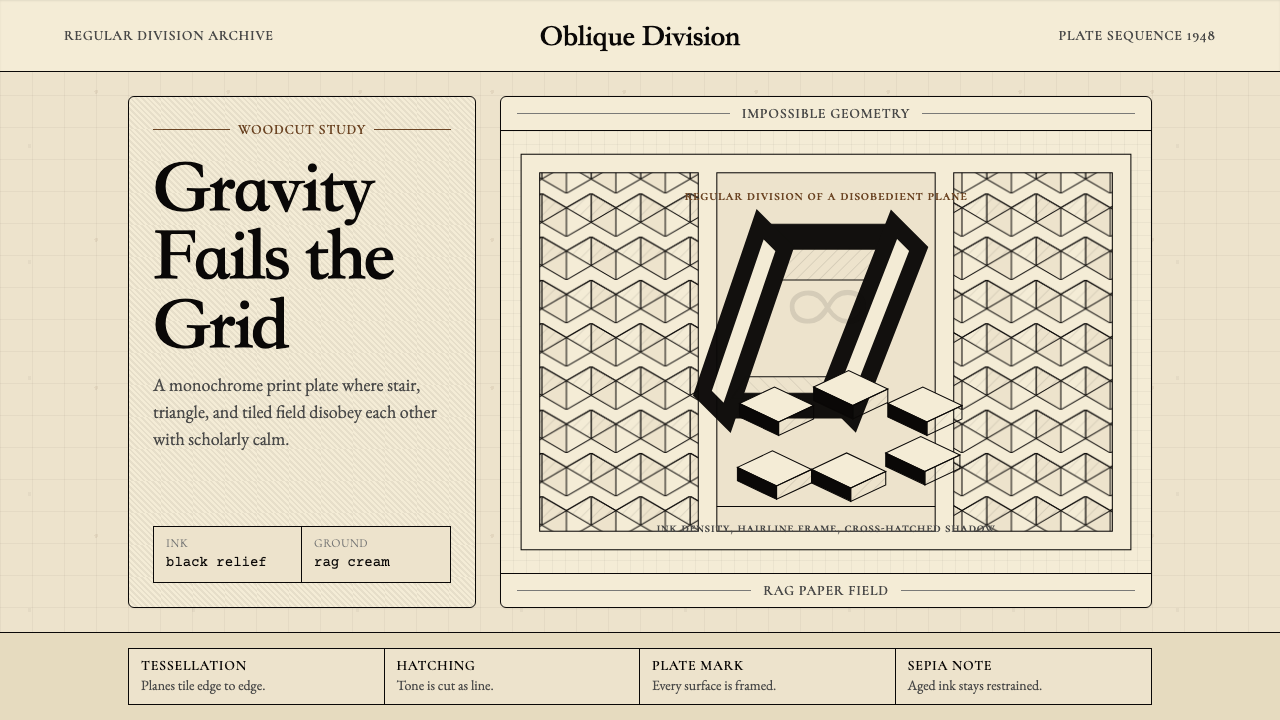 M.C. Escher ImpossibleImpossible calm. Ink-black tessellations and hatching fold cream paper into p…
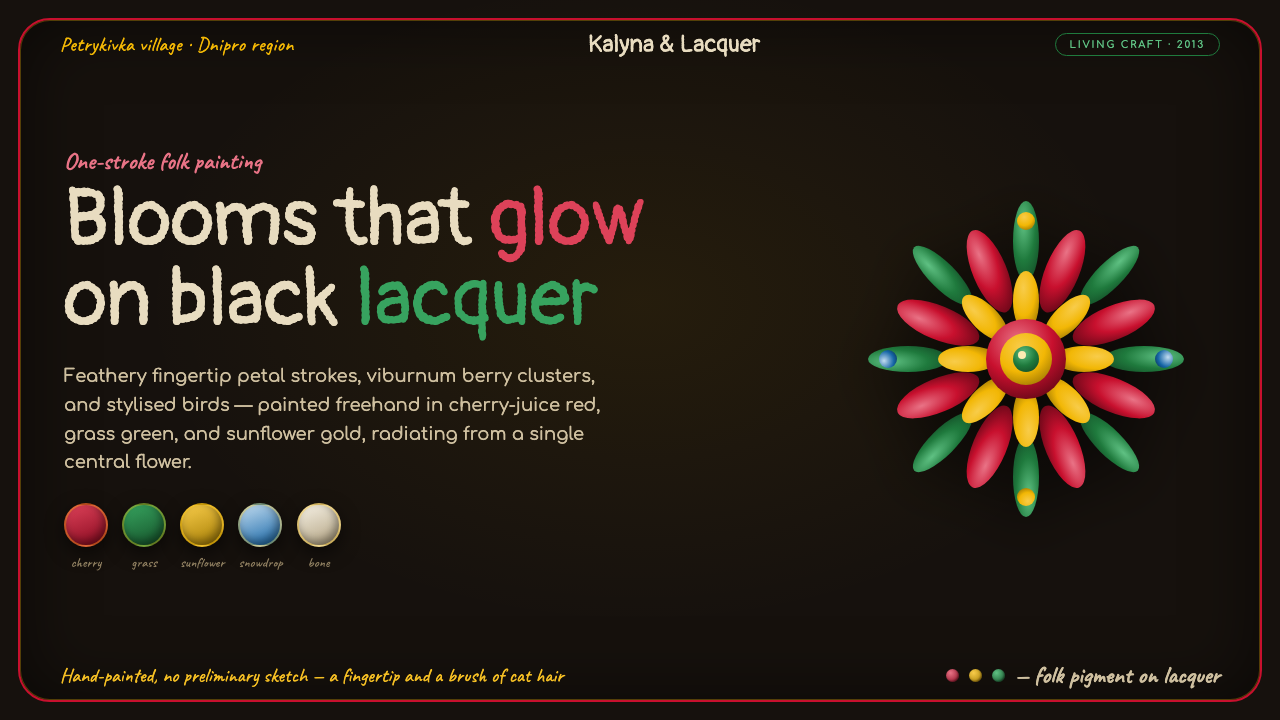 Petrykivka Folk PaintingFolk maximalism that glows. One-stroke red-green-gold blooms radiate from a c…
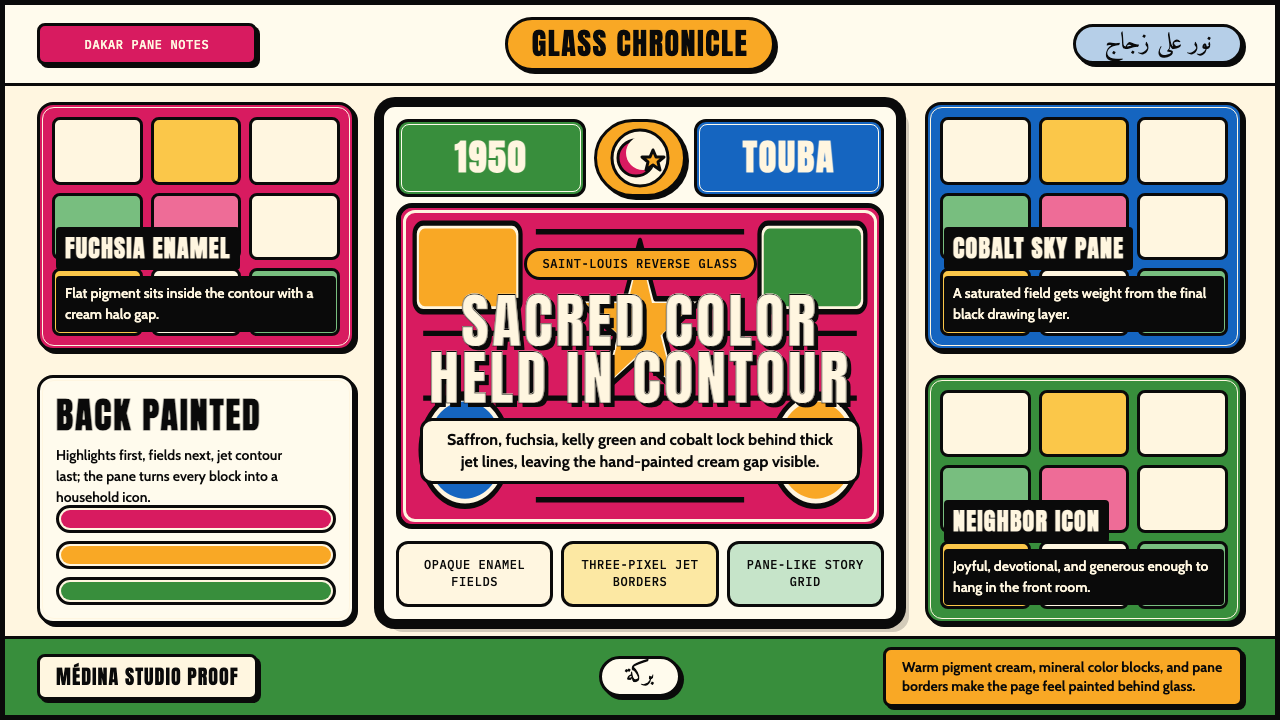 Senegalese Sous-VerreSacred joy in enamel. Fuchsia and saffron panes lock behind thick jet contour…
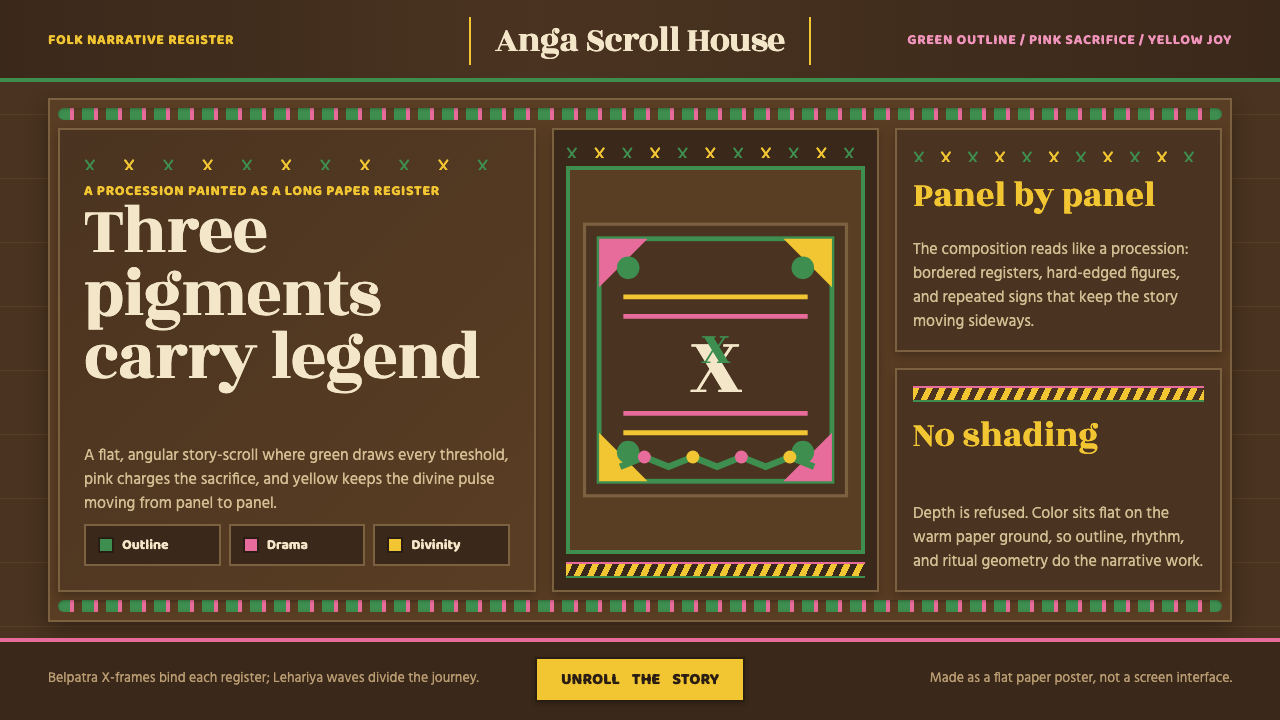 Manjusha Anga Snake-ScrollLegend moves in three pigments. Green outline, pink drama, yellow divinity on…
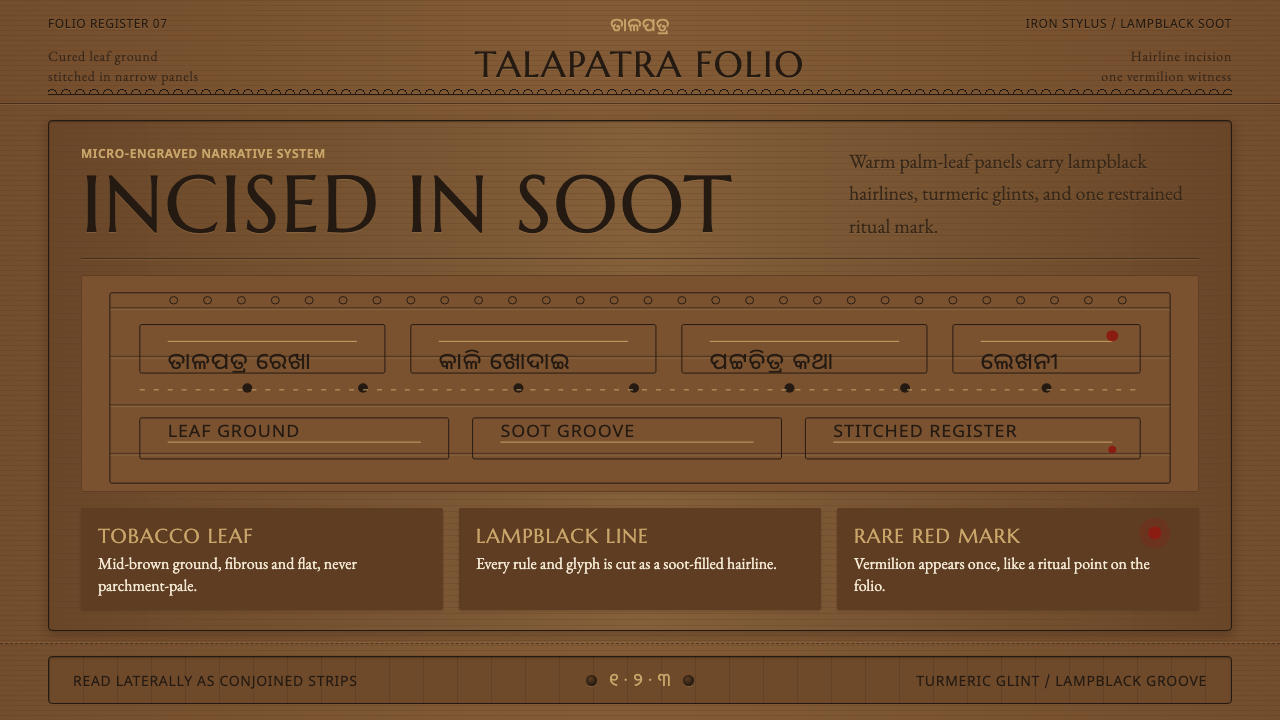 Odisha Palm-Leaf EtchingSacred narrative goes microscopic. Lampblack hairlines cut tobacco-brown leaf…
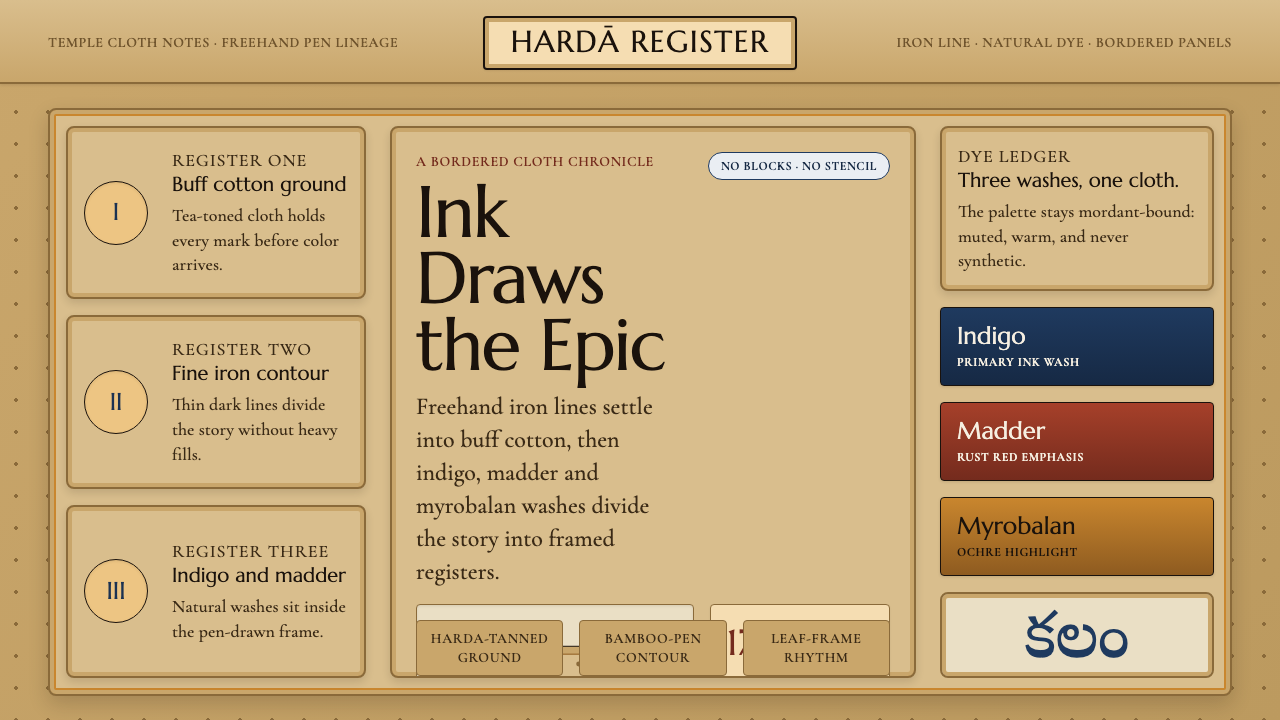 Srikalahasti Kalamkari Pen-WorkHand-drawn cloth storytelling. Buff tan ground, iron lines and indigo-rust pa…