What is Pink Panther Cartoon (1963)?
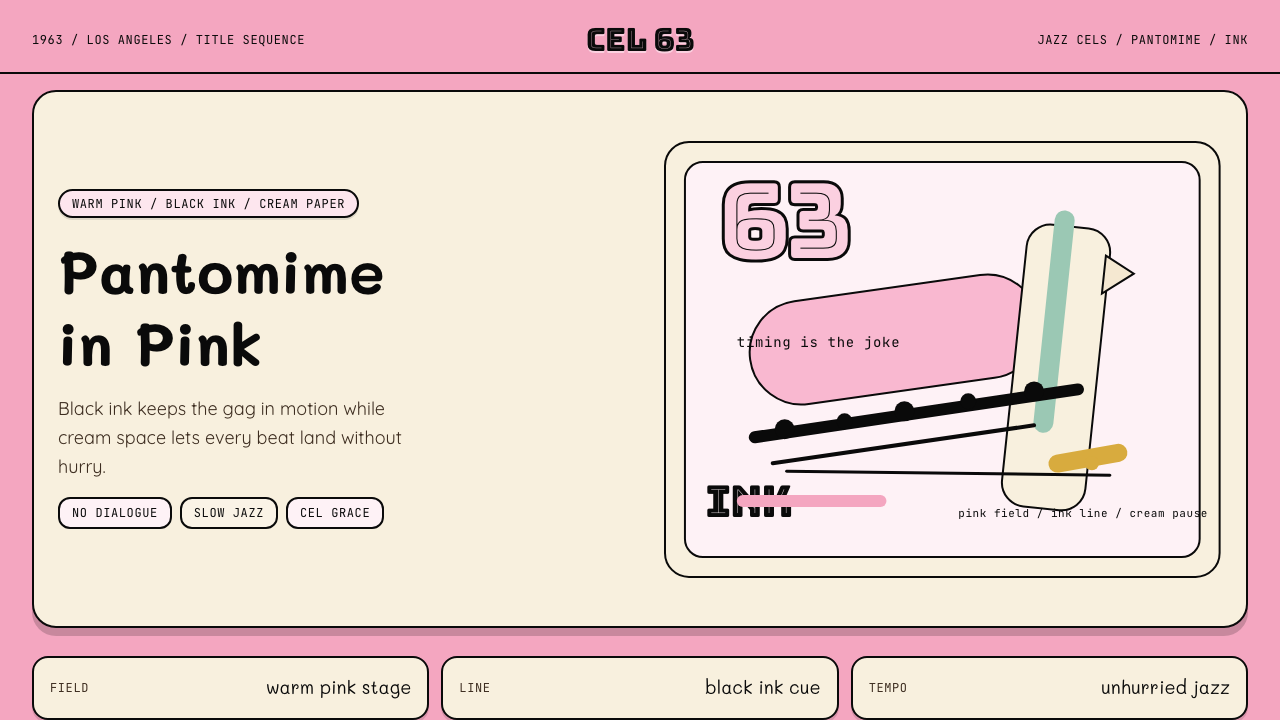
Pink Panther distilled the whole swinging sixties into a single color — cool coral-pink, black ink, and the unhurried confidence of a jazz saxophone.
Pink Panther Cartoon (1963) in brief
Pink Panther Cartoon (1963) is a mid-century American animation aesthetic originating from the DePatie-Freleng studio's theatrical shorts and television series. Its visual grammar is built on a deliberately restricted palette — warm coral-pink grounds, cream cartoon-cel fields, and hand-drawn black ink outlines — applied with the flat, unhurried economy that defines the jazz-cartoon era. No shading, no rendered volume, no photographic illusion: every form is confidently two-dimensional.
The style belongs to the tradition of UPA-influenced minimalism that distinguished West Coast American animation from the lush, naturalistic productions of the same era. Where other studios piled on backgrounds, the Pink Panther's world is almost stage-set spare — a single-color wash, a ruled horizon, an expressive ink gesture. The result reads less like a cartoon and more like a moving illustration, closer to a jazz-club poster than a Hollywood production.
As a design system, Pink Panther Cartoon (1963) is built around the radical premise that one dominant hue — deployed with confidence across nearly every surface — can carry an entire visual identity. The black ink line is its second principle: not a border but a statement, not a contour but a character. Together, pink field and black line produce a graphic sensibility that is simultaneously playful and architecturally resolved.

Where does Pink Panther Cartoon (1963) come from?
The Pink Panther was born from a commission, not a concept. In 1963, filmmaker Blake Edwards needed a title sequence for his live-action comedy film about a bumbling French detective and a stolen diamond. He hired the small Hollywood studio DePatie-Freleng Enterprises — founded that same year by director Friz Freleng and producer David H. DePatie after the pair left the shuttered Warner Bros. Animation — to design an animated sequence. What emerged was an elongated, lavender-pink animated panther who moved through the title cards with a lounging, self-amused elegance entirely at odds with the slapstick chaos of the film beneath.
The visual sensibility of that first title sequence drew from the UPA movement of the late 1940s and 1950s. United Productions of America had broken from the rounded, organic naturalism of Disney and Fleischer by championing flat color fields, stylized outlines, limited animation cycles, and compositions that owed more to modern graphic design than to theatrical realism. By 1963, that influence had filtered through much of American animation, but DePatie-Freleng pushed it further — stripping backgrounds to near-abstraction, reducing the panther himself to a few confident curves, and letting the coral-pink negative space do the narrative work that other studios assigned to rendered detail.
Henry Mancini's theme music was inseparable from the visual system. The saxophone-led jazz score set a tempo of cool detachment — unhurried, slightly ironic, aware of its own elegance — that became the pacing logic for the animation itself. Art director Hawley Pratt, who had worked under Chuck Jones at Warner Bros., developed the panther's character design: a long, horizontally relaxed silhouette whose movements were drawn in broad arcs rather than tight mechanical cycles. The character never spoke; the ink line and the jazz cadence carried every comedic beat.
The success of the Edwards film led directly to a series of theatrical short films beginning in 1964, eventually numbering 124 entries across nearly two decades. The Saturday morning television series launched in 1969 broadened the audience to children while maintaining the studio's flat-color minimalism — a practical choice as much as an aesthetic one, since limited animation was far less expensive to produce for weekly television. By the early 1970s, the panther's pink-and-black graphic language had become one of the most recognizable animated identities in the world, and the style's influence extended beyond animation into product design, poster art, and eventually digital visual culture.
What defines the Pink Panther Cartoon (1963) look?
Dominant Single-Hue Field
The foundational move of this style is committing one warm, coral-pink tone to nearly every surface — backgrounds, character fills, negative space, and decorative elements. Rather than using pink as an accent within a multi-color system, the aesthetic treats it as the ground from which all other elements emerge. This totality gives the style its distinctive calm: nothing competes with the base field, so the eye rests and the black line reads with maximum clarity.
Expressive Hand-Drawn Ink Line
The ink outline in this style is not a neutral contour — it carries weight, rhythm, and personality. Lines vary from confident, sweeping curves that define the panther's elongated silhouette to quick, gestural strokes that suggest secondary details. The line's variable thickness communicates both form and emotion: a swelling curve signals relaxed elegance, a sudden angular jab signals comic surprise. This hand-made quality distinguishes the style from later, vector-clean animation.
Cream Cel-Space Negative Area
Where the coral-pink field is the active ground, cream or near-white areas function as deliberate breathing space — the animation equivalent of an unprinted page. These lighter zones appear in backgrounds simplified to flat washes, in costume details, or in the undefined space surrounding a scene's main action. The cream tone warms the negative space without competing with the pink, keeping the overall palette unified around two closely related warm neutrals.
Flat-Pastel Color Economy
When additional colors appear beyond the coral-pink, cream, and black triad, they are invariably softer, lower-saturation pastels — pale blues, muted yellows, dusty lilacs — that never challenge the dominant warmth. There are no hard primaries, no high-contrast secondaries, no neon intrusions. Every supporting color is dialed back to a tone that can coexist comfortably with the pink without fracturing the palette's serene cohesion.
Pantomime-Driven Composition
Because the Pink Panther character never speaks, every compositional decision must serve physical storytelling. Poses are broad and silhouette-legible — readable even when reduced to a thumbnail. Staging favors the full-body or three-quarter view over close-ups, because the gag lives in the whole posture rather than the facial expression. This principle translates directly into graphic design: compositions work when they communicate their essential content through shape and arrangement alone, without relying on labels or explanatory text.
Jazz-Tempo Visual Pacing
The Pink Panther aesthetic carries what might be called a rhythmic coolness: elements are placed with an offhand confidence that suggests they could not be anywhere else, yet they never feel rigid or over-calculated. Spacing between elements is generous and consistent, like the rests between jazz phrases. Nothing is crowded, nothing is rushed. This quality — easy authority without visible effort — is the hardest aspect of the style to achieve consciously and the most immediately recognizable when it is present.
Mid-Century Cartoon Minimalism
The style participates in a specific historical moment when American commercial animation, influenced by the graphic design avant-garde and constrained by television production economics, arrived at an aesthetic of productive restraint. Backgrounds are reduced to flat washes or left entirely empty. Props and secondary objects are drawn with the fewest possible lines. What remains after this reduction is not empty — it is charged with the wit and confidence of a style that knows exactly what it does not need.

Who shaped Pink Panther Cartoon (1963)?
Isadore 'Friz' Freleng was a veteran Warner Bros. animation director whose career spanned the golden age of Hollywood cartoons. He co-founded DePatie-Freleng Enterprises in 1963 and directed many of the earliest Pink Panther theatrical shorts. His compositional instincts — honed across decades of working with Bugs Bunny, Tweety, and Sylvester — gave the new studio's minimalist aesthetic a timing precision that prevented its restraint from becoming blankness. Freleng understood that reduction without rhythm produces emptiness, and his direction ensured the pink-and-black compositions breathed with comedic intelligence.
David DePatie provided the production and business infrastructure that made DePatie-Freleng's prolific output possible. As co-founder and chief executive of the studio, he negotiated the original United Artists deal that launched the Pink Panther series and oversaw the studio's expansion into Saturday morning television. His production philosophy — maintaining quality aesthetic standards under the economic constraints of limited animation — shaped the consistent visual identity across 124 theatrical shorts and multiple television series. Without DePatie's organizational and commercial acumen, the distinctive graphic style might have fragmented across different directors and formats.
Henry Mancini's Academy Award-winning theme for the 1963 Pink Panther film is inseparable from the visual system's identity. The saxophone-led melody established a mood — cool, knowing, unhurried — that became the pacing template for the animated character himself. In the subsequent cartoon series, Mancini's musical vocabulary of jazz phrasing, syncopated rhythm, and spare orchestration directly influenced how the animation team staged gags: a musical rest suggested a visual pause, a melodic swoop prompted a physical arc. Mancini demonstrated that in this design system, sound and image are the same argument.
Hawley Pratt served as art director on the original Pink Panther theatrical shorts and is primarily responsible for the visual design of the panther character himself. A veteran of Chuck Jones's unit at Warner Bros., Pratt brought to the new studio a sophisticated understanding of how line economy produces personality. His design for the panther — that impossibly elongated torso, those lazy-lidded eyes, the tail used as a punctuation mark — achieved maximum expressiveness through minimum means. Pratt's layouts also established the compositional grammar of the series: the wide, horizontally oriented staging that placed the character in generous negative space.
Though primarily known as a live-action filmmaker, Blake Edwards was the creative catalyst for the entire Pink Panther visual universe. His decision to commission a sophisticated, jazz-inflected animated title sequence for what could have been a purely conventional spy comedy film created the context in which DePatie-Freleng's distinctive aesthetic could develop. Edwards's own visual sensibility — elegant, witty, and comfortable with silence — aligned precisely with the animation team's strengths. He retained DePatie-Freleng for subsequent films in the franchise, ensuring continuity of the visual language across multiple decades.
How do you use Pink Panther Cartoon (1963) today?
Pink Panther Cartoon (1963) is a style that rewards commitment over compromise. Because its entire visual logic depends on the dominance of a single warm hue, applying it correctly means accepting that dominance rather than treating the pink as one element among many. The designer who reaches for this aesthetic while hedging with a full multi-color palette will lose the style's defining quality — its calm authority — before the first slide is finished. Decide first whether the project can carry a pink-dominant identity; if yes, commit fully.
For presentation slides, the style offers a distinctive solution for both cover and content contexts. A cover built in this system works through a single large compositional gesture: the dominant coral-pink field, a bold ink-weight typographic treatment in black, and — if imagery is used — a character or object rendered as a flat silhouette against the field rather than a photograph. Content slides should embrace the style's generous negative space: text sits in wide, unhurried margins, data is encoded in flat geometric shapes without decorative chart furniture, and every slide has at least as much open pink field as it does content. Avoid the temptation to fill slides — emptiness in this system is not waste, it is the style's primary texture.
For web interfaces, the aesthetic is particularly well-suited to landing pages, feature announcements, and any context where personality and distinctiveness matter more than neutral usability. Dashboard and pricing page applications work when the coral-pink is used as the page's macro background rather than as a UI component fill, with black and cream handling all functional typography and interactive elements. Navigation elements should be typographically simple — black letterforms on the pink field, with no icon decoration. Avoid using the style in dense data-entry interfaces or anywhere that cognitive load is already high: the style's spaciousness requires room to exist.
For editorial and marketing work, Pink Panther Cartoon (1963) produces immediate poster-quality impact. A marketing page built in this system alternates between full-width pink-field sections with black headline type, and cream-field sections for longer body copy — the visual rhythm mimics the bebop alternation of solo and comping. Pull quotes and call-to-action elements appear as black ink outlines enclosing pink-filled shapes, never as conventional button rectangles. In print applications, the style's flat-color structure means it can be executed in two-color printing — pink and black — without any loss of visual richness.
A common mistake when applying this style is reaching for additional colors to add variety or interest. The Pink Panther palette is not poverty — it is a choice. Adding a third distinct hue beyond the pink-cream-black triad immediately weakens the dominant-pink logic and makes the work read as generically retro rather than specifically rooted in this aesthetic. Similarly, replacing hand-drawn-feeling lines with geometric vector strokes removes the gestural warmth that distinguishes the style from mid-century graphic design more broadly. The most frequent production error is using a pink that is too saturated, too violet, or too neon: the authentic tone is warm, slightly orange-leaning coral — the temperature of a sunset rather than a neon sign.

Pink Panther Cartoon (1963) — FAQ
How is Pink Panther Cartoon (1963) different from other retro cartoon styles?
The key distinction is the single-hue dominance. Most retro cartoon styles — Hanna-Barbera, early Disney, vintage Fleischer — rely on a diverse, multi-color palette with a relatively neutral background. Pink Panther's visual logic inverts this: the background itself is the character, the pink field is the statement, and everything else is a gesture against that ground. The result is closer in spirit to a monochrome poster than to a conventional cartoon. The style is also distinguished by its jazz-tempo restraint — it never tries hard, never overexplains, and leaves more space than most animation-derived aesthetics consider appropriate.
Can this style work for professional or corporate contexts, or does it read as too playful?
The style carries more sophistication than its cartoon origins suggest. The Pink Panther aesthetic is fundamentally about cool restraint — it is not energetic or busy in the way that makes cartoon styles feel juvenile. Applied correctly, with generous negative space, disciplined typographic hierarchy, and the warm-coral rather than bubblegum-pink tonality, it reads as confident and distinctive rather than playful. It suits creative studios, cultural institutions, entertainment brands, and consumer products where personality is a feature. It is less appropriate for contexts demanding perceived neutrality — financial services, healthcare, legal — where the pink dominance may undermine rather than reinforce trust.
What is the right way to handle photography within this style?
Naturalistic photography is fundamentally incompatible with this aesthetic — a photograph brings the logic of the real world into a system built on confident graphic abstraction, and the two do not reconcile. When imagery beyond pure illustration is needed, there are two approaches that preserve the style's integrity. The first is aggressive silhouetting: a photographic subject cut out against the pink field with all background removed, ideally then treated with a flat-color overlay to reduce it to a near-silhouette. The second is duotone treatment: the photograph reproduced using only pink and black tonal values, collapsing it into the palette. Both approaches make the photography serve the graphic system rather than fighting it.
How should dark mode or light mode choice be approached with this style?
This style was conceived as a light-field system: the coral-pink and cream are warm, luminous grounds that depend on their lightness for their quality. A strict dark-mode inversion — replacing the pink ground with dark charcoal and using pink as a type or accent color — is technically possible but loses the style's defining warmth and spatial openness. If dark contexts are required, the most authentic approach is to treat the dark ground as a night scene — black field, cream type, with pink used only as a single focal accent rather than the dominant ground. Think of it as the same character moving from daytime to a jazz club at midnight: same personality, different light.
Does this style suit typography-heavy content, or does it favor minimal text?
The Pink Panther aesthetic is most legible and most itself when text is sparse and given generous surrounding space — consistent with the pantomime logic of the original character, who communicated everything without a single word. That said, the style can accommodate text-heavy layouts if a clear visual hierarchy is maintained and the type is treated with the same graphic decisiveness as other elements: one dominant text level in large ink-weight black, secondary text in a noticeably smaller size, and nothing in between competing for attention. The mistake is running long text blocks at a single undifferentiated size against the pink field — the contrast and warmth of the background will work against readability rather than for it. Cream or near-white panels should be used for extended reading passages, with the pink reserved for headline and structural moments.
Related design styles
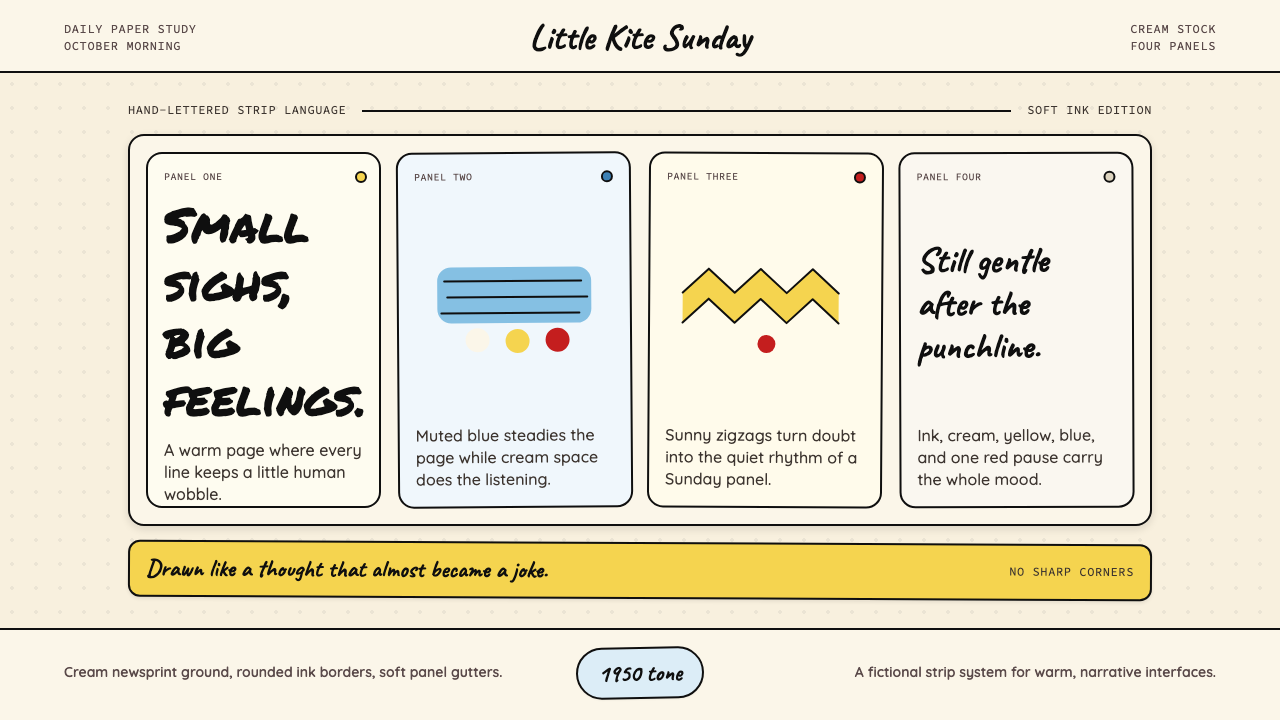 Peanuts Comic Schulz (1950)Gentle melancholy on newsprint. Caveat lettering, cream panels, yellow and bl…
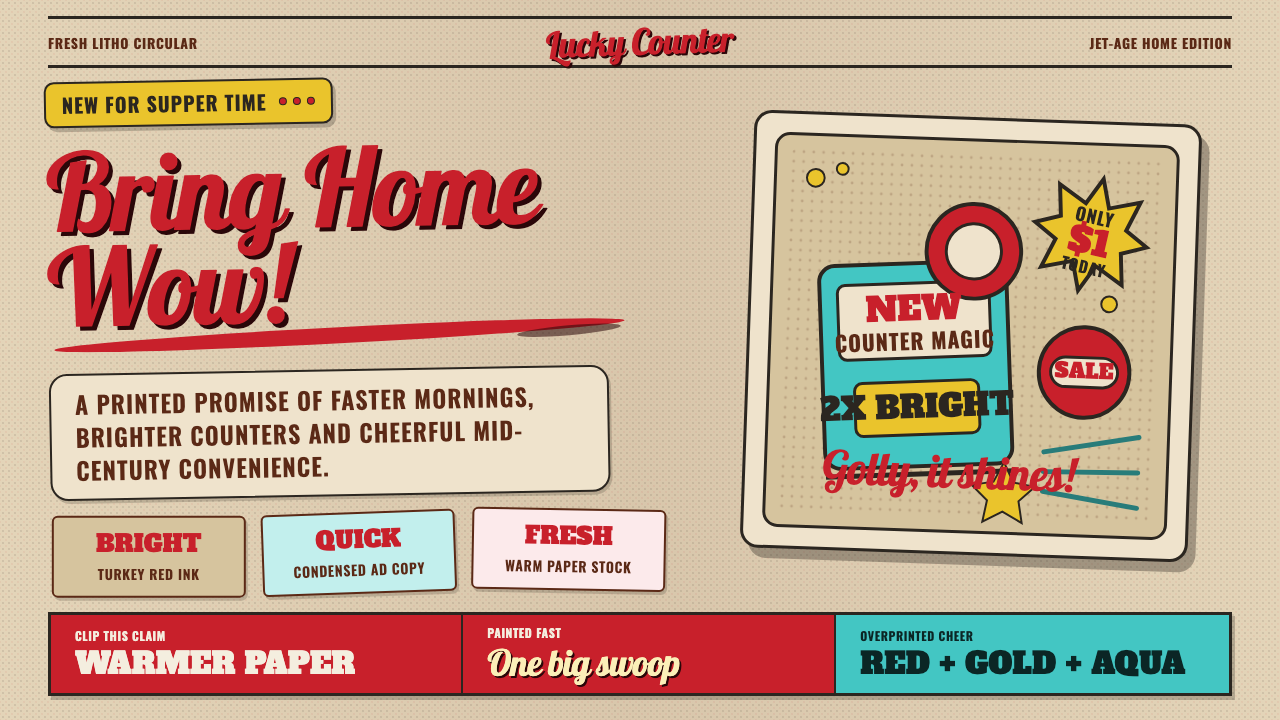 1950s Brush Script AdSells tomorrow in one swoop. Turkey red script, tan paper, starbursts, and ha…
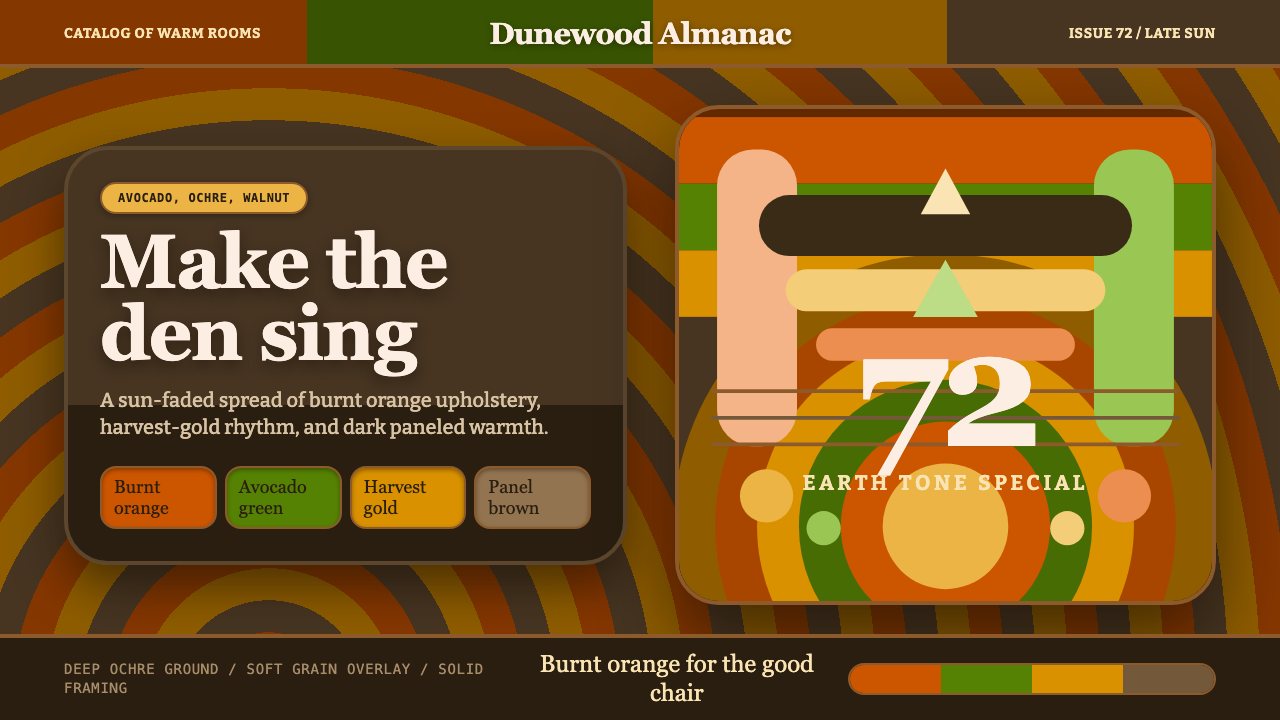 1970s Earth TonesWarm maximalism stays muddy. Bulbous slabs, avocado bands, and harvest-gold r…
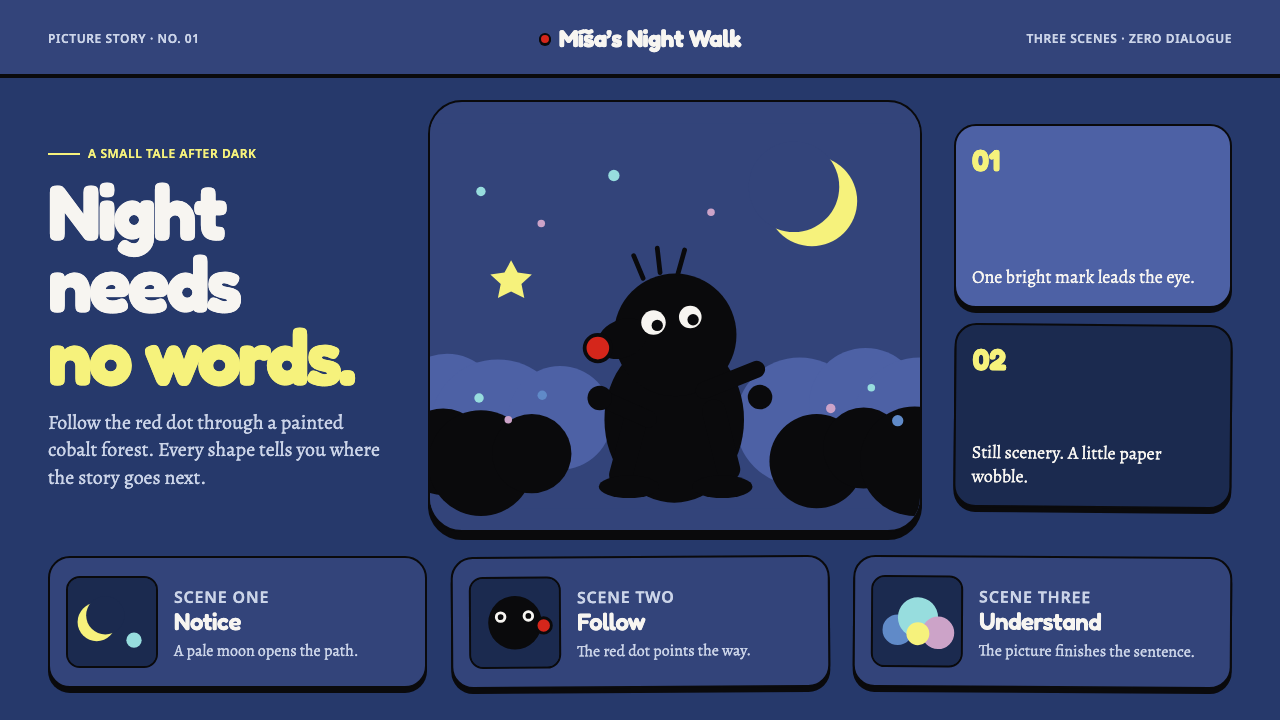 Krtek AnimationWordless wonder. Cobalt gouache stages black paper forms, guided by one red d…
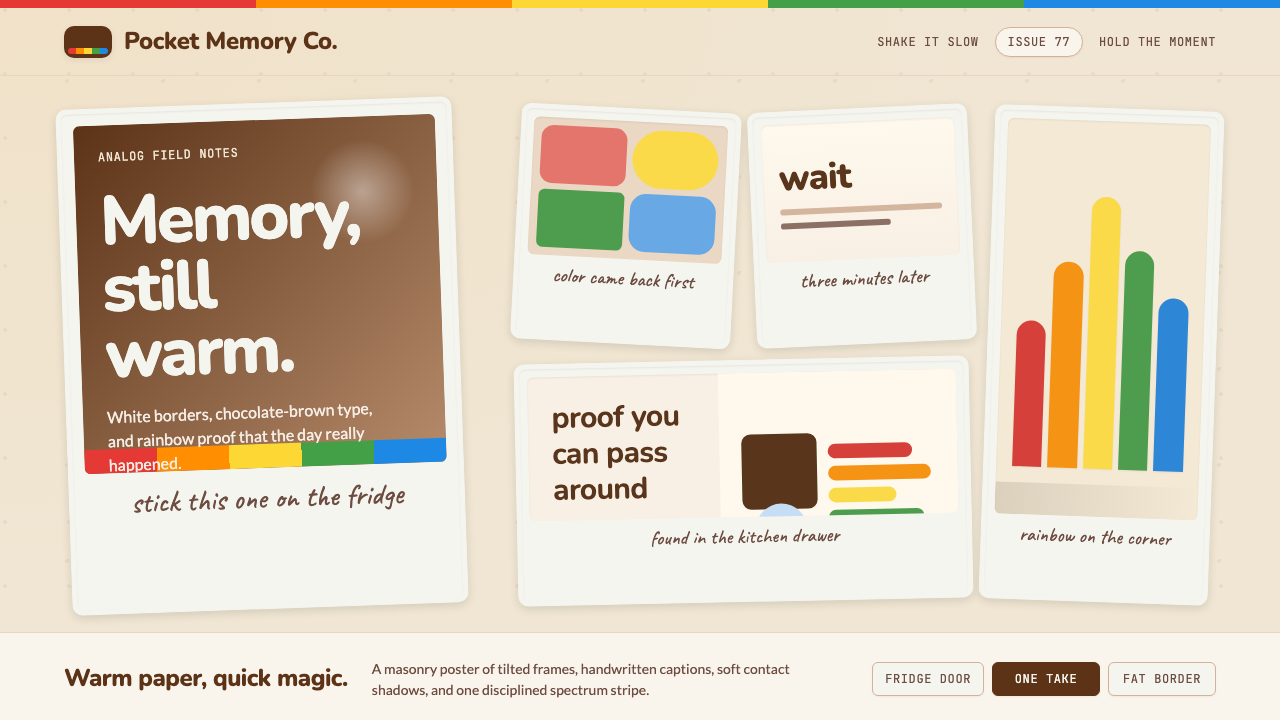 Polaroid InstantMemory made tangible. Photo-white frames tilt on aged paper with a warm rainb…
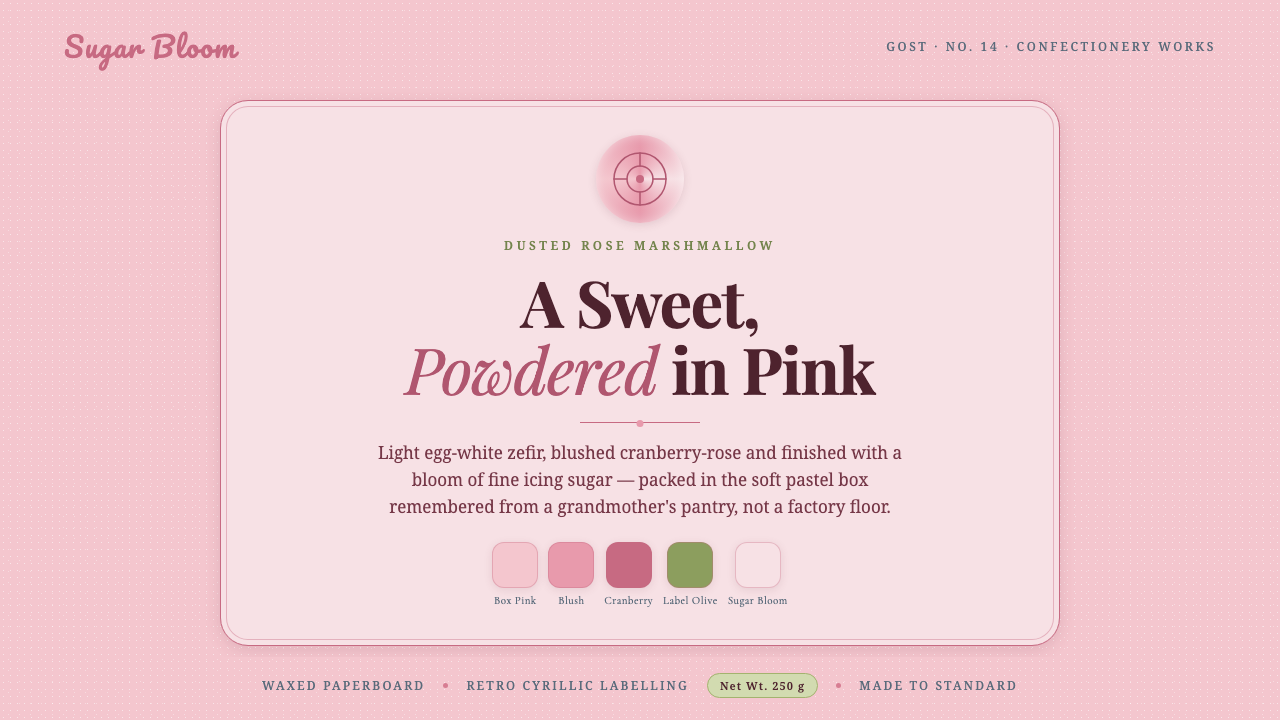 Soviet Zefir ConfectioneryA sweet remembered, not manufactured. Sugar-pink waxed-box ground, berry-rose…