What is Penny Dreadful Victorian Headline (1850)?
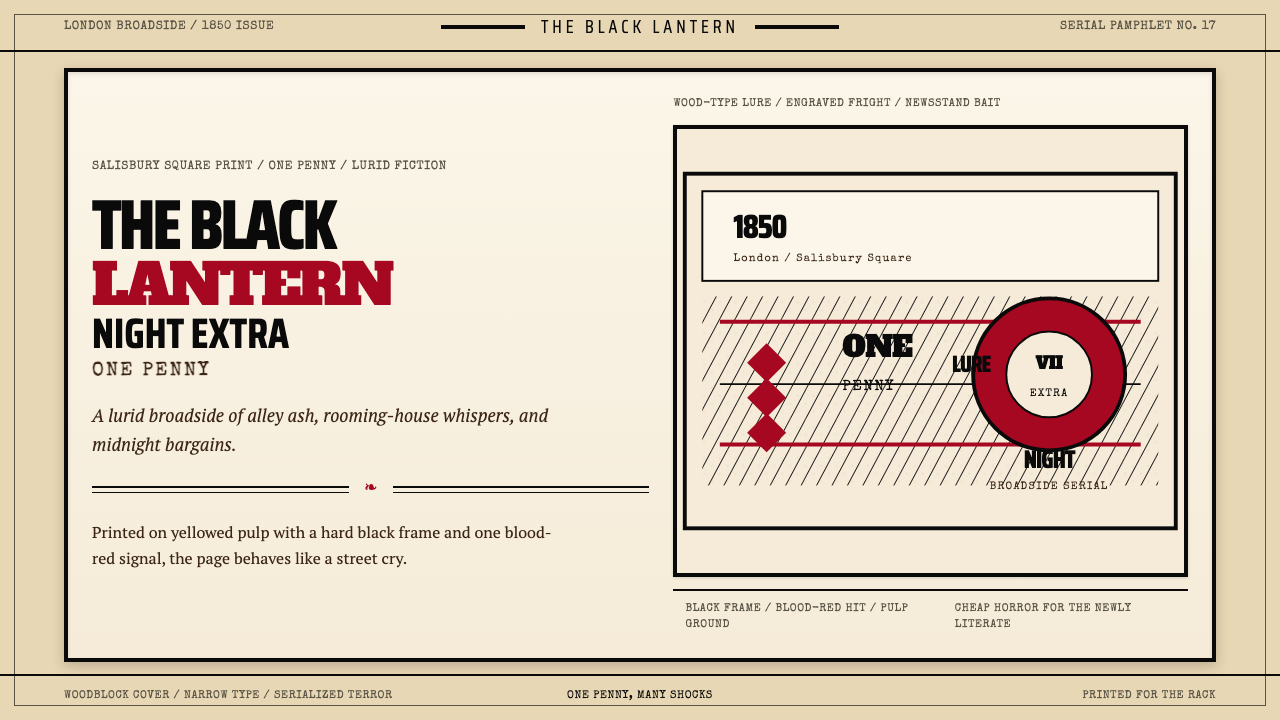
A penny bought you murder, vampires, and spring-heeled demons — and the condensed wood-type headline screaming from the newsstand told you exactly what you were getting.
Penny Dreadful Victorian Headline (1850) in brief
Penny Dreadful Victorian Headline is the design language of Victorian England's cheapest popular fiction — the one-penny serial pamphlets sold to newly literate working-class readers from roughly 1830 through the 1880s. Its visual identity was forged entirely by economic constraint and competitive necessity: every compositional decision was made to outshout the adjacent pamphlet on a crowded newsstand rack.
The system is built around a small number of high-tension elements. Extra-condensed wood-type headlines stack vertically in maximum-weight bold, compressing as much drama as possible into a narrow column. A single blood-red spot color punctuates the otherwise black-and-sepia composition — used sparingly on a key word, a woodblock illustration detail, or a border rule — and becomes the signal for something lurid. Ornamental border rules divide the page like a broadside bill-poster, and the substrate itself — rough, yellowed pulp paper — is as much a part of the aesthetic as any ink on it.
The effect is poster-in-miniature: every page functions as a broadside, and every broadside is designed to arrest the eye from a distance before the reader has committed to picking it up. This is a design vocabulary of pure sensationalism — not as a failing, but as a consciously deployed commercial and communicative strategy.

See the Penny Dreadful Victorian Headline (1850) design system
Where does Penny Dreadful Victorian Headline (1850) come from?
The penny dreadful emerged in the 1830s as a direct response to a new social reality: a working-class readership that had acquired basic literacy through Sunday schools and charity education but had no access to the three-volume novels circulated among the middle and upper classes. Publishers centered around London's Salisbury Square — an area that became synonymous with cheap print production — recognized this market and moved to fill it. The format was standardized quickly: eight to sixteen pages per installment, printed in a small upright format that fit inside a coat pocket, sold for one penny each.
The key publishers were entrepreneurs who understood that the content and the design were inseparable commercial propositions. Edward Lloyd, who operated from Fleet Street and later Salisbury Square, became the most prolific producer of penny fiction in the 1840s, publishing weekly serials in enormous print runs. James Malcolm Rymer and Thomas Peckett Prest were among the most productive authors working in this space, responsible for the canonical texts that defined the genre: Rymer is credited with 'Varney the Vampire' (1847), and Prest with an early version of the Sweeney Todd story. James Catnach of Seven Dials was another major figure — he came from the broadsides and street-ballad trade and brought that tradition's visual grammar directly into cheap fiction publishing.
The typography was determined entirely by what was available and affordable. Wood type — large letterforms carved in end-grain wood — had been developed in the 1820s primarily for poster use, because metal type at large sizes was prohibitively heavy and expensive. For penny dreadful publishers, wood type became the headline instrument of choice: it could be set quickly, it could be printed at the same time as body text on a common press, and the condensed display faces available in wood came with the visual weight and drama that the sensational content demanded. Extra-condensed variants, which could fit a long title into a narrow column, were especially prized.
The woodblock engravings that accompanied most penny dreadfuls were produced by a network of commercial engravers working to tight deadlines. These illustrations were frequently reused across different titles — the same image of a struggling figure might illustrate a pirate story one week and a vampire tale the next — which contributed to a visual vocabulary that felt generic in the best sense: immediately legible to readers across many different storylines. The blood-red spot color, where used, was applied as a second ink pass, making it a deliberate production investment that signaled the publisher's commitment to the most lurid effect possible.
What defines the Penny Dreadful Victorian Headline (1850) look?
Extra-Condensed Wood-Type Headline
The defining element of the style is the headline typeface: a drastically condensed bold letterform that compresses maximum visual mass into a narrow vertical column. In authentic penny dreadful design, the headline consumes nearly the full width of the text block, stacks across two or three lines, and is set at a size that dwarfs the body copy beneath it. The condensed proportion is not a stylistic flourish — it is the most efficient way to get a long, dramatic title into a confined format without reducing legibility. The letterforms have strong vertical stress, flat or minimal bracketing on serifs, and ink-trapping corners that give the type a slightly battered, high-pressure quality consistent with fast commercial printing.
Blood-Red Spot Color
A single accent color — a deep, vivid crimson applied as a second ink pass — is the most immediate visual signal of the penny dreadful tradition. Its use is deliberately restrained: one word in the headline, one element in the woodblock illustration, or one border rule. Because it is a production cost beyond the base single-color print run, its presence signals intent. The red is never used as a background fill or a structural tone; it punctuates, it highlights, it marks the most dangerous word on the page. In contemporary applications, matching this logic means treating the accent color with the same economy — one hit per composition, positioned at the point of maximum narrative tension.
Ornamental Border Rules
Thick-and-thin border rules — often composed of multiple parallel lines of varying weight — frame the composition and divide internal sections in the manner of a broadside bill-poster or theater playbill. These rules serve both structural and atmospheric functions: they contain and organize the dense typographic content, and they signal that the reader is holding something in the tradition of street advertising rather than a literary publication. The borders are typically printed in the same black ink as the body text but at a weight heavy enough to read as a distinct visual element from a distance.
Yellowed Pulp Ground
The substrate of the penny dreadful is cheap wood-pulp paper — off-white when new, aging quickly to a warm straw-yellow or tobacco tone under exposure to light and air. This yellowing is not incidental: it is the chromatic signature of the form. Contemporary applications of this aesthetic treat the background as a warm, aged off-white rather than a clean neutral, giving the entire composition a sense of material history even in digital or high-quality print contexts. The yellow tone also functions as a middle ground that allows both the black typography and the red accent to read at maximum contrast without competing with each other.
Woodblock Illustration Register
Illustrations in the penny dreadful tradition are woodblock engravings — high-contrast, heavily cross-hatched, with stark black areas and coarse white-line detail. Figures are dramatically posed, frozen at the moment of maximum action or horror. The engraving technique naturally produces an image that reads as flat and graphic rather than three-dimensional and painterly, which keeps it coherent with the typographic material surrounding it. Contemporary design influenced by this tradition uses illustration or image treatment that shares these qualities: high contrast, limited mid-tones, graphic outline emphasis, and a slight coarseness that references hand-production.
Stacked Vertical Typography
The layout logic of the penny dreadful is vertical and hierarchical in a way borrowed directly from the trade-card and broadside poster tradition. The headline breaks across multiple short lines — each line a complete phrase or even a single emphatic word — creating a stacked rhythm that drives the eye downward rapidly. Subtitle lines follow in a slightly smaller size but still dramatically larger than body text. This vertical stacking maximizes the impact of a narrow-format page and creates a reading tempo that mimics the urgency of the content.
Restrained Palette of Maximum Contrast
The penny dreadful palette is not rich — it is extreme. Ink-black type and rules on a yellowed warm ground, with a single crimson accent, constitutes the complete tonal and chromatic range. There are no mid-weight grays, no background textures in color, no additional accent tones. The restriction is partly economic (every additional ink is an additional cost) and partly rhetorical (contrast is the visual equivalent of a shout). The restraint also means that any departure from the three-element palette — black, warm ground, blood-red — reads immediately as a violation of the system.

See the Penny Dreadful Victorian Headline (1850) design system
Who shaped Penny Dreadful Victorian Headline (1850)?
Lloyd was the most commercially successful publisher of penny fiction in Victorian England, operating first from Fleet Street and later from Salisbury Square. In the 1840s he ran weekly penny serials in print runs that dwarfed those of mainstream literary publishers, targeting a working-class readership that had never been served by the established book trade. His design approach — bold headline typography, woodblock illustration on the cover page, and a consistent visual identity across all his titles — established the template that competitors imitated for decades. Lloyd later transitioned to respectable newspaper publishing, founding Lloyd's Weekly Newspaper, which became one of the highest-circulation papers in Victorian England.
Rymer was one of the most prolific authors in the penny dreadful genre, credited with 'Varney the Vampire, or The Feast of Blood' (1847), a serial that ran to 220 installments and introduced many of the conventions that would later define Victorian vampire fiction. Rymer understood the genre's visual contract as well as its narrative one: the stories were written to generate maximum headline-worthy moments — scenes of transformation, pursuit, and revelation — that could be illustrated with woodblock engravings designed to arrest attention on the newsstand. His work demonstrated that sensational typography and sensational narrative were designed as a unified system.
Prest was a prolific author and adapter who worked extensively for Edward Lloyd, producing penny fiction at astonishing speed. He is associated with early versions of the Sweeney Todd narrative — the demon barber of Fleet Street whose murders fed a neighboring pie shop — which became one of the most recognizable characters in Victorian popular culture. Prest's craft was the craft of the penny dreadful as a whole: compression, escalation, and the sustained delivery of shock installment after installment. His work helped define what the visual design of the format was asked to deliver — a promise of ongoing sensation, renewed with each weekly issue.
Catnach operated from Seven Dials in London, one of the most densely printed districts in the city, and built his reputation on broadsides — single-sheet printed documents sold for a halfpenny or penny that reported sensational news, executions, and disasters. His contribution to the penny dreadful aesthetic was the direct inheritance of broadside visual grammar: the heavy border rules, the stacked headline typography, the use of stock woodcut illustrations repurposed across different stories. Catnach demonstrated that the design language of cheap sensation was continuous from street ballads and execution broadsides to serialized horror fiction — a single commercial print tradition with shifting content.
Salisbury Square, just off Fleet Street in the City of London, became the center of cheap serial fiction publishing from the 1830s onward. The concentration of printers, publishers, engravers, and paper suppliers in this small area created an industrial ecosystem for penny fiction production that operated at speeds and volumes impossible elsewhere. The design language that emerged from Salisbury Square was collaborative rather than authored: typesetters, engravers, and press operators each contributed to the visual identity of the penny dreadful, and the resulting aesthetic was a collective production standard rather than the vision of any single designer. This collective origin is part of why the style has such consistency — it was optimized by commercial repetition across dozens of competing publishers rather than designed from first principles.
How do you use Penny Dreadful Victorian Headline (1850) today?
Penny Dreadful Victorian Headline is a style of maximum rhetorical intensity — it is not suited to subdued, balanced, or multi-topic layouts. Applied correctly, it transforms a design surface into something that functions like a broadside: a single dominant message delivered with theatrical urgency. The correct application question is not 'does this look Victorian?' but 'does this communicate with the same directness and compression that a newsstand cover had to achieve in 1855?'
For presentation slides, the style is most powerful on cover and section-divider slides. A cover in this aesthetic uses the entire slide as a broadside: a stacked extra-condensed headline across the upper two-thirds, a woodblock-style illustration or decorative woodcut motif in the lower third, a single blood-red word or rule as the accent, and the whole composition on a warm yellowed ground. Content slides should be used sparingly with this style — it is a high-intensity treatment that fatigues if applied uniformly. Where content slides do carry the aesthetic, they work best with one strong statement per slide rather than dense bullet lists, and section headers set in condensed bold that visually echoes the cover.
For web interfaces, this design language maps most naturally to landing pages, event pages, campaign microsites, and horror or thriller genre platforms where personality is more important than corporate legibility. Dashboard and data-heavy UI is poorly suited to this treatment — the ornamental border rules and headline-dominant hierarchy work against the scannable, information-dense layouts that functional UI requires. The exception is marketing overlays, splash screens, or promotional banner elements within a larger UI system, where the Penny Dreadful treatment can be confined to a contained zone without disrupting surrounding functionality.
For editorial and marketing work, the style is well matched to book cover design, event posters, Halloween or horror-themed seasonal campaigns, and any context where a brand wants to signal authenticity within the gothic, horror, or Victorian sensational tradition. Magazine spreads can use it for chapter openers or feature lede pages — the woodblock register for illustration and the condensed headline hierarchy give these pages strong visual identity without requiring the entire publication to adopt the aesthetic. The key discipline is restraint in color: the blood-red accent works because it is used once per composition, not repeatedly as a highlight system.
A common mistake when applying this style is treating it as a general Victorian or steampunk aesthetic and adding decorative complexity — additional ornament, multiple color tones, textured backgrounds with visible grain patterns, or illustrations with soft rendering styles. Authentic penny dreadful design is spare by necessity: it has three tonal values (black ink, warm ground, blood-red accent), a dominant headline with everything else subordinate, and no element present that does not serve the single message. Adding visual complexity undermines the compressed urgency that defines the style. Another error is rounding the edges — softening the border rules, using serifed text for body copy in a lighter weight, or applying the red as a warm glow rather than a flat hit. The style requires hardness: hard rules, hard contrast, flat ink.
The style transfers well to physical print — it was born in print and retains a physical quality that digital reproduction sometimes flattens. On coated or uncoated warm paper stocks, with real ink weight in the headline type and a genuine second-color pass for the red, the penny dreadful aesthetic recovers a material presence that digital mockups only approximate. For designers working in physical media — event programs, zines, limited-edition publications, or packaging — committing to the original production logic of the format (heavy ink, warm stock, minimal color) will produce results closer to the source than any digital simulation.

See the Penny Dreadful Victorian Headline (1850) design system
Penny Dreadful Victorian Headline (1850) — FAQ
Is this style appropriate for non-horror content, or is it locked to the horror genre?
The penny dreadful aesthetic carries strong genre associations with horror, crime, and the macabre, but its underlying design logic — condensed bold headline, high contrast, spot color on a warm ground, ornamental rules — is not inherently genre-specific. It works for any content that benefits from theatrical urgency: event announcements, music concerts, limited-edition releases, brand campaigns built around bold personality, or editorial work that wants to signal a working-class or populist register. The key test is whether the content can sustain the promise of intensity that the design makes — if the content is actually mundane, the high-drama visual treatment creates ironic distance rather than genuine impact.
How do I avoid this looking like a costume rather than a coherent design language?
The costume trap comes from applying surface markers — a vaguely Victorian-looking typeface, some hatching texture, a sepia tone — without understanding the structural logic behind them. Authentic penny dreadful design works because every element is doing a specific job: the condensed headline is maximizing legibility at small sizes in a narrow column; the warm ground is the cheapest available paper, not a stylistic choice; the red accent is a second-ink investment, not a decorative flourish. When you understand why each element exists, your applications will have the same internal consistency as the source material. Conversely, if you add elements because they feel Victorian — a decorative initial cap, a soft vignette background, a worn texture applied universally — you are costuming rather than designing.
Can I use multiple accent colors instead of just blood-red?
In the historical source, the economics of letterpress printing meant that a second ink color was already a significant cost — a third was rare to the point of nonexistence in the penny dreadful format. The single-accent rule is therefore not an arbitrary aesthetic preference but a production constraint that became an aesthetic principle. You can adapt it — a deep forest green or a bruised purple could work in a modern application while maintaining the spirit of the single-accent logic — but introducing two accent colors simultaneously undermines the system. The power of the blood-red in the original comes entirely from its singularity: one hit of saturated color against a near-monochrome composition.
How does this style relate to later horror design traditions — film posters, pulp magazine covers, punk typography?
The penny dreadful is the direct ancestor of several later popular print traditions. American pulp magazines of the 1920s and 1930s inherited the condensed headline, warm-ground color, and woodblock-register illustration directly, scaling them up to full-color magazine format. Mid-twentieth century horror film poster design — Universal, Hammer — maintained the blood-red accent and the high-contrast black treatment while adding painted illustration. Punk typography of the 1970s inverted some elements (rough cutting, photocopier texture) but kept the compressed urgency and the refusal of elegant spacing. Understanding the penny dreadful as the original form makes it easier to distinguish authentic applications from revivalist pastiches that borrow surface elements without the underlying commercial logic that generated them.
What makes a headline feel authentically penny dreadful rather than just condensed and bold?
Three factors beyond condensed bold type define the authentic headline character. First, the line breaks: penny dreadful headlines were broken across multiple short lines to maximize vertical stacking, with each line carrying a complete dramatic phrase or a single emphatic word — not broken for hyphenation convenience. Second, the weight relationship: the headline should feel categorically heavier than everything else on the page, not just slightly larger. The gap between headline weight and the next text level should feel like a shout versus a speaking voice. Third, the context: the headline should be framed by the complete system — warm ground, ornamental border, subordinate subheads, the promise of the blood-red accent — not floating on a neutral white background. A condensed bold headline on a clean white ground is a modern design choice; the same headline on a warm yellowed ground inside a thick rule border becomes penny dreadful.
Related design styles
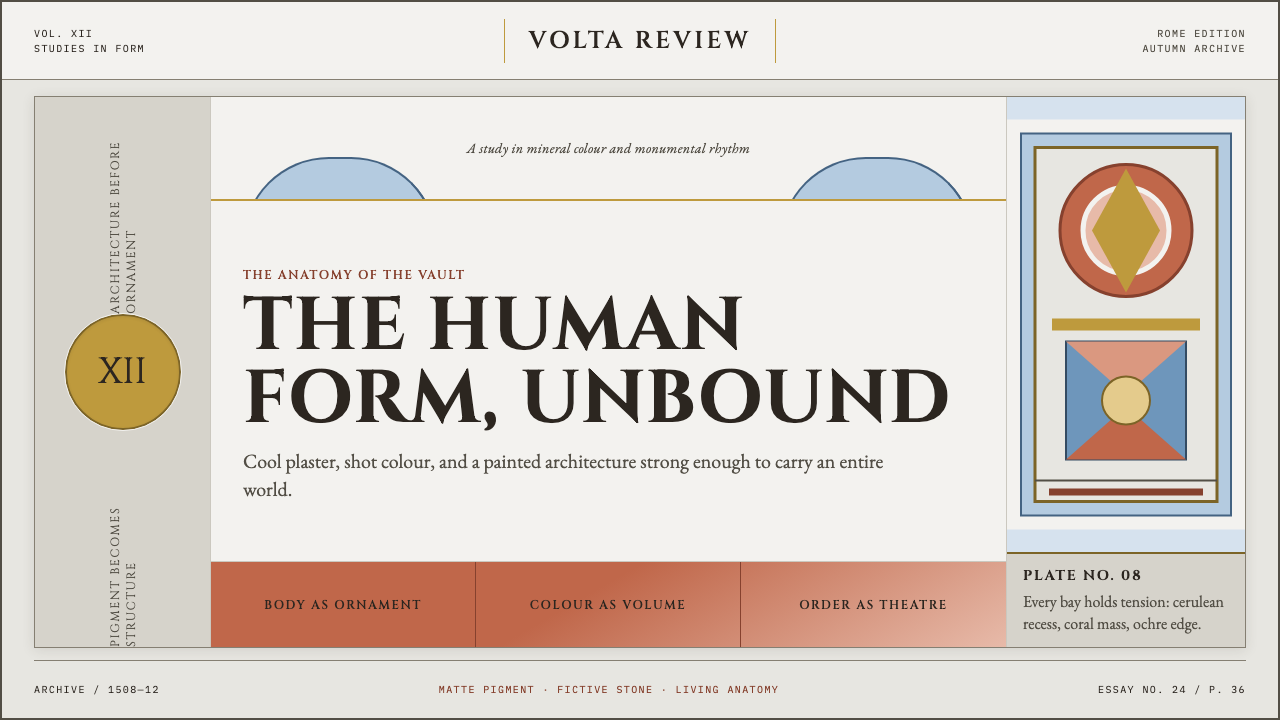 Michelangelo Sistine Ceiling (1512)Paint becomes monumental. Coral, cerulean and ochre figures strain against a…
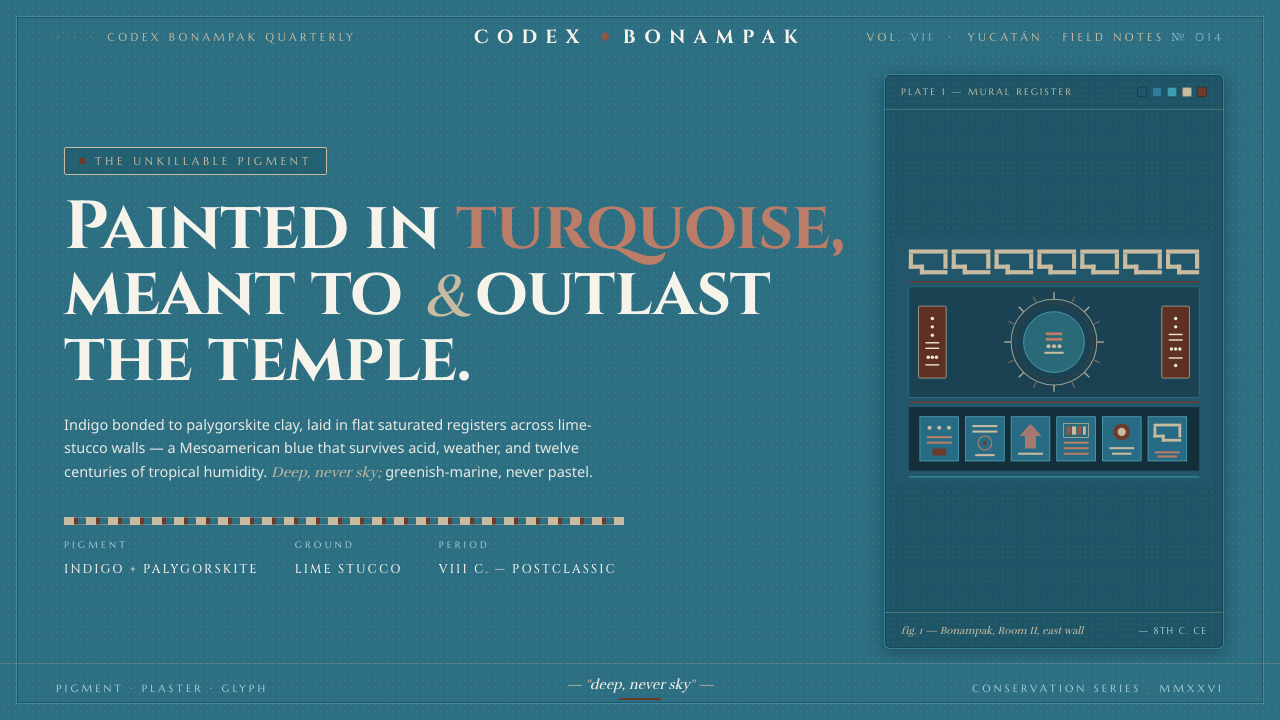 Maya Blue PigmentDeep, never sky. Saturated turquoise mural fields, ochre cartouches, carved-s…
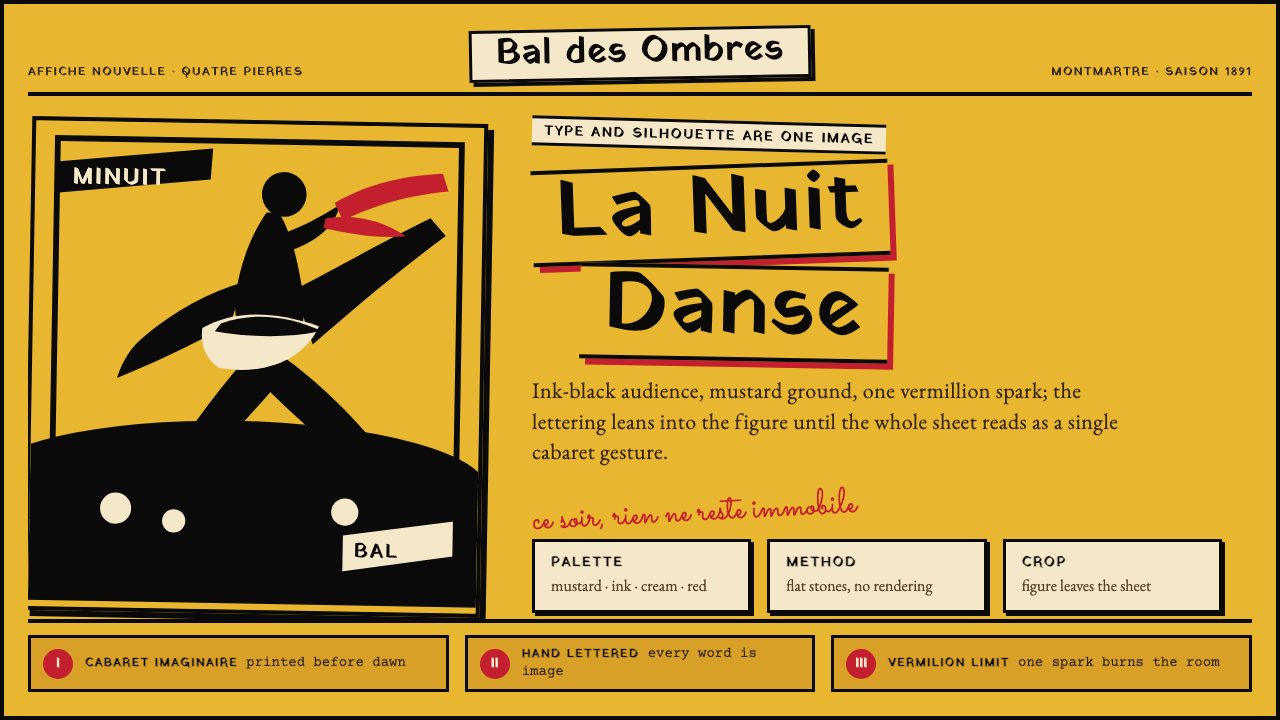 Toulouse-Lautrec Belle ÉpoqueNight becomes gesture. Mustard ground, black silhouette, hand lettering, one…
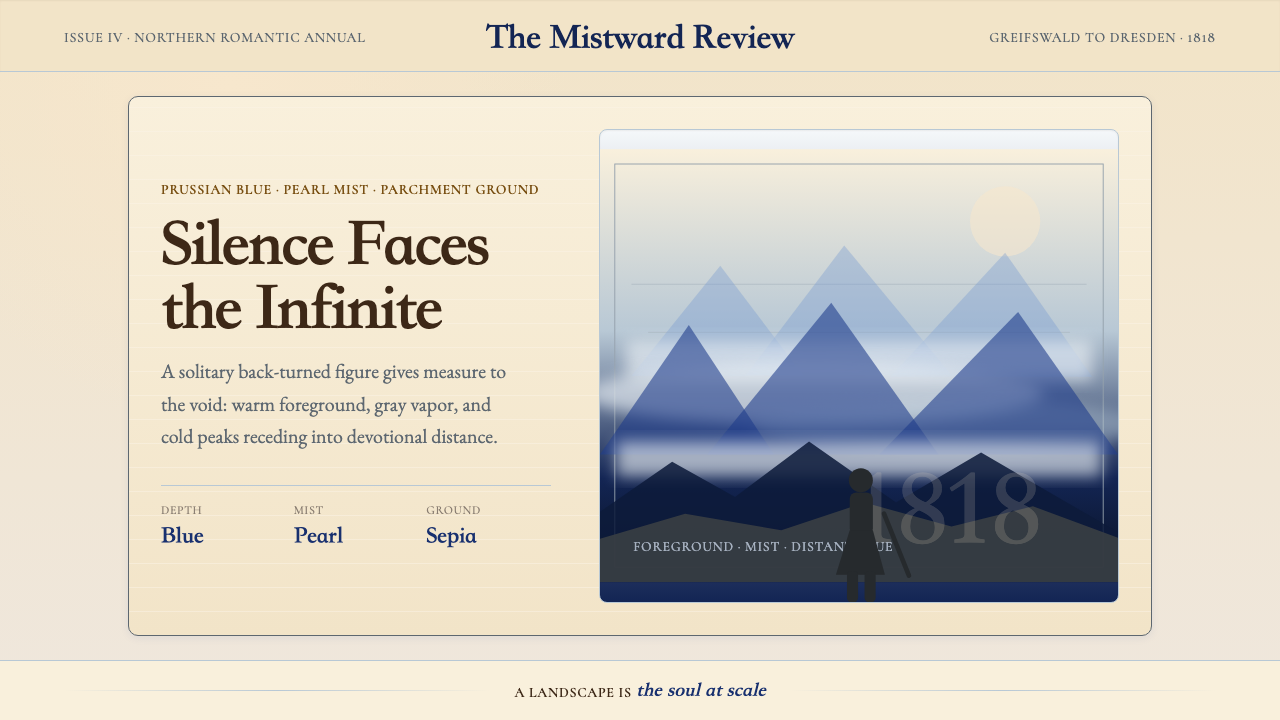 Caspar David FriedrichSilence becomes vast. Prussian blue depth, pearl mist, and parchment framing…
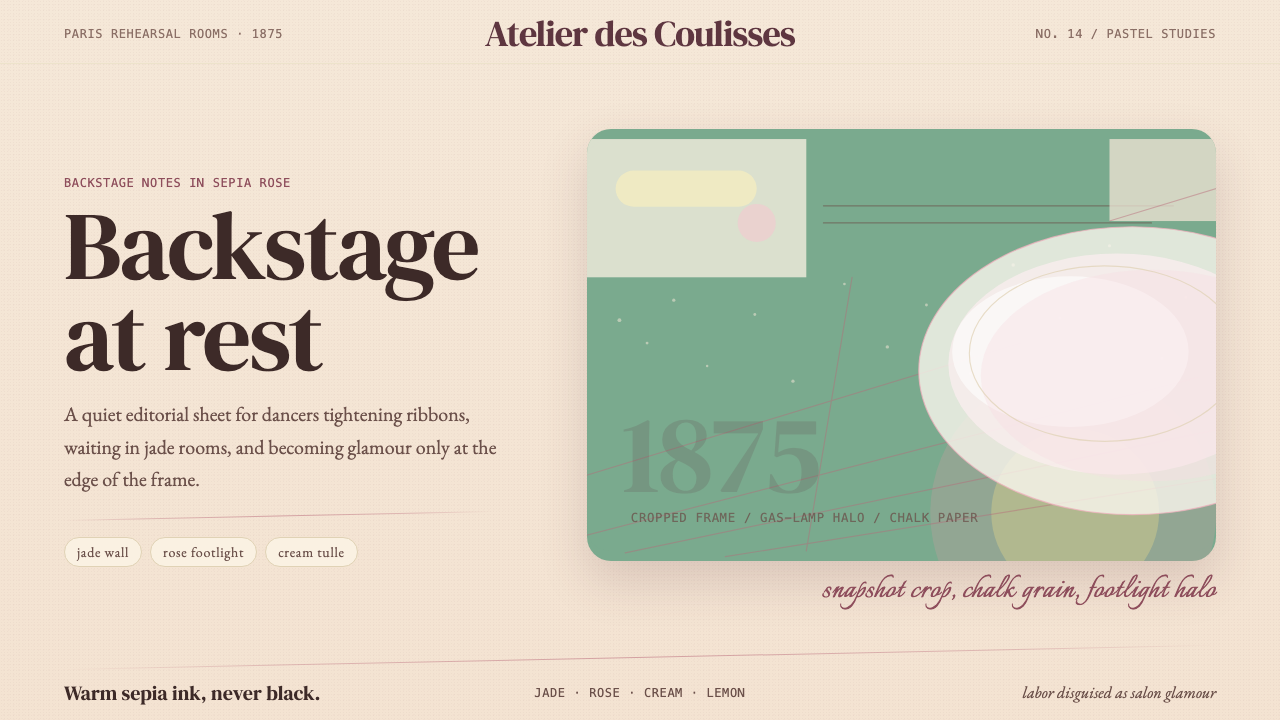 Degas Ballet PastelsBackstage glamour is labor. Jade walls, rose footlights, cropped serifs on cr…
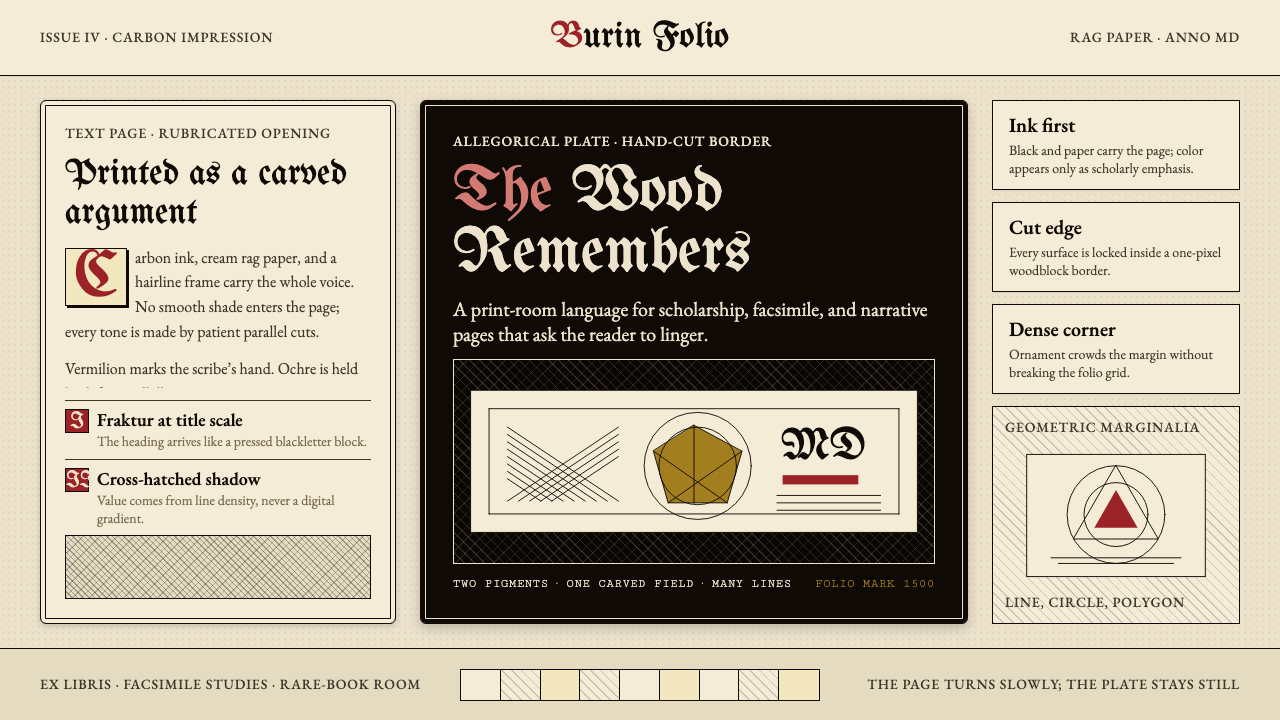 Dürer WoodcutInk remembers everything. Fraktur titles, rag-paper cream, and cross-hatched…