What is Patreon 2017?
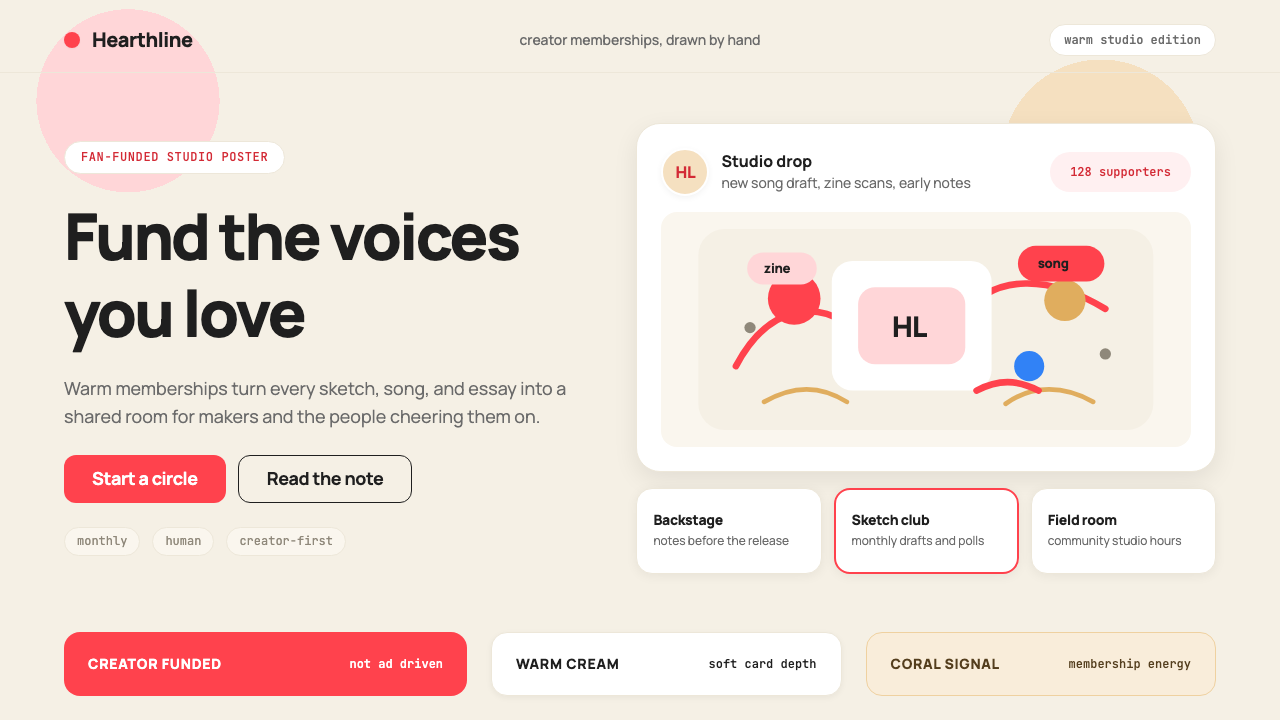
Patreon's 2017 redesign proved that a platform for funding creativity could feel as warm and personal as the art it supports.
Patreon 2017 in brief
Patreon 2017 is the visual identity system introduced through a major brand overhaul that transformed the platform from a functional but unremarkable startup interface into one of the most recognizable design voices in the creator economy. Built around a warm coral-red and soft cream palette, rounded card layouts, and hand-drawn illustration accents, the style communicates trust, warmth, and creative possibility without ever feeling corporate or transactional.
At its core, the Patreon 2017 aesthetic rejects the cold, blue-tinted neutrality of most fintech and platform design. Where payment and subscription platforms typically reach for visual sobriety to signal trustworthiness, Patreon chose the opposite: approachable warmth as the signal of authenticity. The coral primary color is energetic but not aggressive, inviting but not naive. The cream ground softens the overall feel, keeping the interface from reading as either clinical or playful in excess.
The style is immediately legible as belonging to the era of the creator economy — a moment when independent musicians, writers, podcasters, and illustrators became a recognized economic category with their own cultural identity. Patreon 2017's design is the visual declaration that this identity deserved its own aesthetic language, distinct from both the sterile professionalism of enterprise software and the loud urgency of consumer social media.

Where does Patreon 2017 come from?
Patreon was founded in San Francisco in 2013 by Jack Conte, a musician and YouTube creator, and Sam Yam, a software engineer. Conte's founding insight was personal: he had released a viral music video that generated millions of views but negligible revenue. The platform he and Yam built was designed to let fans pay creators directly on a recurring basis, replacing the advertising-driven model with one based on direct patronage — the concept borrowed consciously from Renaissance-era art sponsorship.
The original Patreon interface, launched in 2013, was a straightforward crowdfunding aesthetic — practical but undistinguished. By 2016, the platform had grown significantly in both creator base and cultural visibility, and the leadership recognized that the design needed to match the ambition of the product. In 2017, Patreon engaged Wolff Olins, the London-based brand consultancy responsible for identities including the 2012 London Olympics and AT&T, to lead a comprehensive brand overhaul. The brief was to create a visual language that felt human, creative, and unmistakably distinct from the grey neutrality of most platform design.
Wolff Olins developed the coral and cream palette as a deliberate departure from the blue-dominant color language of Silicon Valley platforms — PayPal, Facebook, Twitter, and LinkedIn all occupied the cool spectrum. Coral sits at the warm intersection of red and orange, carrying associations of energy, optimism, and approachability. Combined with the cream ground rather than pure white, it creates an analogue warmth that digital interfaces rarely achieve. The hand-drawn illustration style, developed as a supplementary visual layer, emphasized the human and creative dimension that Patreon's core user base — artists and their fans — would recognize as authentic.
The 2017 system remained visually stable through approximately 2024, making it unusually durable for a technology brand identity. This longevity reflected how well the aesthetic had attached itself to a cultural moment: the creator economy continued to grow, and Patreon's visual language grew with it as the defining look of the sector. Subsequent brand updates refined but did not fundamentally disrupt the coral-cream-rounded system, confirming that Wolff Olins had built something with unusual staying power.
What defines the Patreon 2017 look?
Color
The palette anchors around a warm coral-red as the primary action and accent color, deployed against a soft cream or off-white ground. This combination was chosen deliberately to register as warm and human rather than cool and institutional. Black is used for primary text and structural elements. The coral carries enough red to feel energetic without veering into alarm, and enough orange to feel inviting rather than aggressive. Secondary palette uses earthy tones drawn from the same warm spectrum, maintaining the overall sense of analogue warmth even at high information density.
Typography
The type system uses a humanist sans-serif — a class of typefaces whose letterform proportions are loosely derived from classical calligraphy, giving them a friendlier cadence compared to geometric or grotesque sans-serifs. This choice aligns with the platform's warmth imperative: the same typeface that feels readable in a legal disclaimer also feels personal in a creator introduction. Hierarchy is established through scale and weight rather than switching between families. Headlines are generous in size, creating an inviting visual entry point; body text maintains comfortable reading measure with relaxed line spacing.
Shape and Rounding
Rounded corners are applied consistently and generously to cards, buttons, input fields, and container elements. The radius is substantial enough to be immediately felt rather than a subtle softening — this is a deliberate aesthetic choice rather than a technical default. Rounded corners carry psychological associations with safety, approachability, and human-made objects, as opposed to the sharp angles associated with precision and authority. The consistency of rounding across all interactive elements creates visual cohesion and reinforces the platform's warmth at every point of contact.
Hand-drawn Illustration
The illustration system uses a loose, hand-drawn quality that deliberately shows the trace of the human hand. Lines are not perfectly smooth; forms are slightly irregular; textures suggest pencil or ink rather than vector precision. This approach was chosen to evoke the creative process itself — the platform's core subject — and to distinguish the brand from the slick, polished illustration styles common in the broader tech industry. Illustrations appear as hero imagery, decorative accents, and empty-state graphics, always reinforcing the sense that creativity is personal and handmade rather than automated.
Spatial Generosity
The layout system uses abundant white space and generous internal padding within components. Cards breathe; text has room around it; sections are separated by visible air rather than rules or dividers. This spatial generosity serves both aesthetic and functional purposes: aesthetically it reinforces the warm, unhurried tone; functionally it ensures that content-heavy creator pages feel organized rather than crowded. The approach resists the compression impulse common in platforms trying to maximize information density, instead prioritizing the feeling that each piece of content is given proper attention.
Soft Depth
Unlike the hard-shadow aesthetics of some vintage and maximalist styles, Patreon 2017 uses soft, diffused elevation shadows on cards and modal surfaces to create a gentle sense of layering. The shadows are subtle enough not to dominate the visual field but present enough to establish clear hierarchy between content layers. This soft depth approach aligns with the material design language emerging in the mid-2010s, but applies it with a warmer, creamier ground that makes the depth feel more analogue than digital.
Humanist Tone
Every element of the system — color, type, illustration, spacing — is calibrated toward a single tonal outcome: the interface should feel like it was made by and for people who care about creative work. This is achieved not through any single visual device but through the accumulation of warm choices. The coral says warmth; the rounded corners say approachability; the hand-drawn illustration says someone made this; the generous space says we are not in a hurry. The consistency of these choices is what distinguishes the style from a superficial application of any individual element.

Who shaped Patreon 2017?
Conte co-founded Patreon in 2013 after experiencing firsthand the disconnect between creative visibility and financial viability as a musician on YouTube. His founding experience shaped the platform's core value proposition — that creative work deserves sustainable compensation — and that same conviction became the emotional brief that the 2017 design system was built to express. As CEO, Conte remained closely involved in the platform's brand direction, ensuring that the visual language reflected genuine empathy for the creator experience rather than being an exercise in market positioning.
Yam co-founded Patreon alongside Conte, contributing the engineering and product infrastructure that made the platform technically viable. As co-founder and CTO, Yam helped define the product architecture that the 2017 design system would need to express at scale — a membership platform handling diverse creator types, from podcasters to visual artists to writers, each with different relationship dynamics with their fan communities. The breadth of creator types the platform needed to serve was a key design constraint that pushed the visual system toward warmth and flexibility rather than category-specific branding.
Wolff Olins is the London-founded brand consultancy engaged to lead Patreon's 2017 redesign. The firm, established in 1965 by Wally Olins and Michael Wolff, has a long history of brand identities that challenged category conventions — including the 2012 London Olympics identity, which provoked substantial controversy with its fractured, dynamic logo. For Patreon, Wolff Olins developed the coral-cream palette, the rounded visual vocabulary, and the overall brand architecture that positioned the platform as the antithesis of corporate platform design. The engagement produced one of the more durable brand identities of the mid-2010s tech sector.
The in-house brand and design team at Patreon was responsible for extending and maintaining the Wolff Olins system across the full range of product touchpoints — web, mobile, marketing, email, and creator-facing tools. Their work over the years following the 2017 launch demonstrated how a well-constructed visual system scales: the coral-cream-rounded language remained coherent across hundreds of individual design decisions because the underlying principles were clear enough to generate consistent outputs without requiring case-by-case adjudication. The team's maintenance of the system is in many ways as significant a creative achievement as the original identity work.
How do you use Patreon 2017 today?
Patreon 2017 is a style best understood as a warmth-forward platform aesthetic — it works in contexts where approachability, creative community, and human connection are values the design needs to express. Its most natural applications are in creator economy products, membership platforms, community tools, and any digital product whose users think of themselves as participants in a shared creative project rather than consumers of a service.
For presentation slides, the style is especially effective for cover pages and section dividers. A cover page should lead with generous whitespace on a cream ground, the coral reserved for a single dominant visual element — a shape, an accent, a prominent CTA — with the title in a large humanist sans-serif. Section dividers benefit from the hand-drawn illustration language as a full-bleed background or a decorative corner element, signaling transition while maintaining visual warmth. Content slides should prioritize spatial generosity: use fewer elements per slide, increase padding inside containers, and allow section headings significant visual breathing room.
For web UI design, the system performs strongly in membership dashboards, creator profile pages, and pricing or tier selection flows. Dashboard layouts benefit from the rounded card language as the primary organizational unit, with soft elevation shadows distinguishing active content areas from background. Navigation and primary actions in coral maintain clear wayfinding without relying on harsh visual interruption. Data visualizations — supporter counts, earnings charts, engagement metrics — take on a friendlier quality when rendered in the warm palette rather than the default grey-blue range of most analytics tools. Pricing pages are a natural fit: the warmth of the system reduces the transactional anxiety that tier and price displays often trigger.
For editorial and marketing materials, the style supports content about creative culture, creator success stories, and community features. Marketing pages should use the full range of the system: alternating full-width sections in cream-on-white and coral-on-cream, hand-drawn illustration as section heroes, and typography sized ambitiously enough to feel poster-like rather than informational. Email templates in the system benefit from the same spatial generosity — wide margins, generous line spacing, a single coral call-to-action per email — and the hand-drawn illustration language scales down effectively to small accent graphics at thumbnail scale.
A common mistake when applying this style is overloading the coral. The warmth of the system depends on the coral being used sparingly against the softer cream ground — when coral fills large areas or appears in multiple competing locations on a single layout, it loses its warmth and reads as garish. Similarly, mixing the hand-drawn illustration system with photography without careful integration breaks the tonal consistency: photography is cool and indexical, hand-drawn illustration is warm and expressive. When both must coexist, photography should be treated with a warm tint or placed in a way that the illustration carries the primary emotional register.

Patreon 2017 — FAQ
How is Patreon 2017 different from other warm, friendly platform styles like early Mailchimp or Basecamp?
Mailchimp's early visual identity was also warm and illustration-forward, but it leaned on quirky, character-driven illustration and a yellower palette — the result felt more playful and cartoonish. Basecamp used earth tones and a no-nonsense layout language that conveyed warmth through simplicity rather than visual expression. Patreon 2017 sits between these: more polished than Mailchimp's early chaos, more expressive than Basecamp's austere utility. Its distinctiveness comes from the coral specifically — a color that has enough visual warmth to feel personal but enough chromatic intensity to function as an action color in a product interface.
Can this style work for non-creator platforms, or is it too associated with Patreon specifically?
The coral-cream palette is strongly associated with Patreon in the creator economy context, so direct reuse in a competing creator platform would read as derivative. However, the underlying visual principles — humanist sans-serif type, rounded corners, soft elevation, hand-drawn illustration accents, warm tonal palette — are not proprietary design elements and transfer well to membership platforms, community tools, educational products, and wellness applications in entirely different categories. The key is to express the warmth-first principle through a palette that is distinct from Patreon's specific coral, while keeping the structural choices that make the system feel human rather than corporate.
How do you apply this style in dark mode contexts?
Patreon 2017 is fundamentally a light-ground system, and the cream-and-coral warmth depends significantly on that light foundation. A true dark mode inversion is challenging: replacing cream with a deep charcoal or near-black preserves the coral accent well, but the overall warmth dissipates because dark grounds naturally read as cool. The most successful dark adaptations retain the coral as the primary accent color, reduce the illustration system to simpler line treatments, and compensate for the lost warmth by softening text contrast — using a slightly warm off-white for body text rather than pure white against the dark ground.
Is the hand-drawn illustration style essential to the system, or can it be dropped?
The hand-drawn illustration is the most optional layer of the system, but also the layer most responsible for distinguishing the style from generic warm-palette design. Without it, a coral-cream rounded interface reads as pleasant but not specifically Patreon-coded — it could belong to any number of consumer apps from the mid-2010s. The illustration system is what gives the aesthetic its creative identity signal, its sense that this platform is about human-made work rather than automated content. If production constraints prevent custom illustration, even a consistent use of a commercially available hand-drawn icon set or a textured brushstroke divider can partially fulfill this function.
How does this style age, given that it was established in 2017?
Patreon 2017 has aged unusually well for a mid-2010s digital design system. Many styles from that era are strongly marked by the flat design wave and look dated today, but Patreon's reliance on warmth and human illustration rather than purely flat geometric abstraction gave it more perennial qualities. The coral-cream combination has become associated with the creator economy as a cultural phenomenon rather than with any specific UI fashion. That cultural attachment is its best durability mechanism: as long as the creator economy remains a recognized sector, the aesthetic that defined it visually retains contemporary relevance. Its main aging signal is the illustration style, which reflects mid-2010s illustration conventions that have since evolved — this layer benefits most from updating if a refresh is considered.
Related design styles
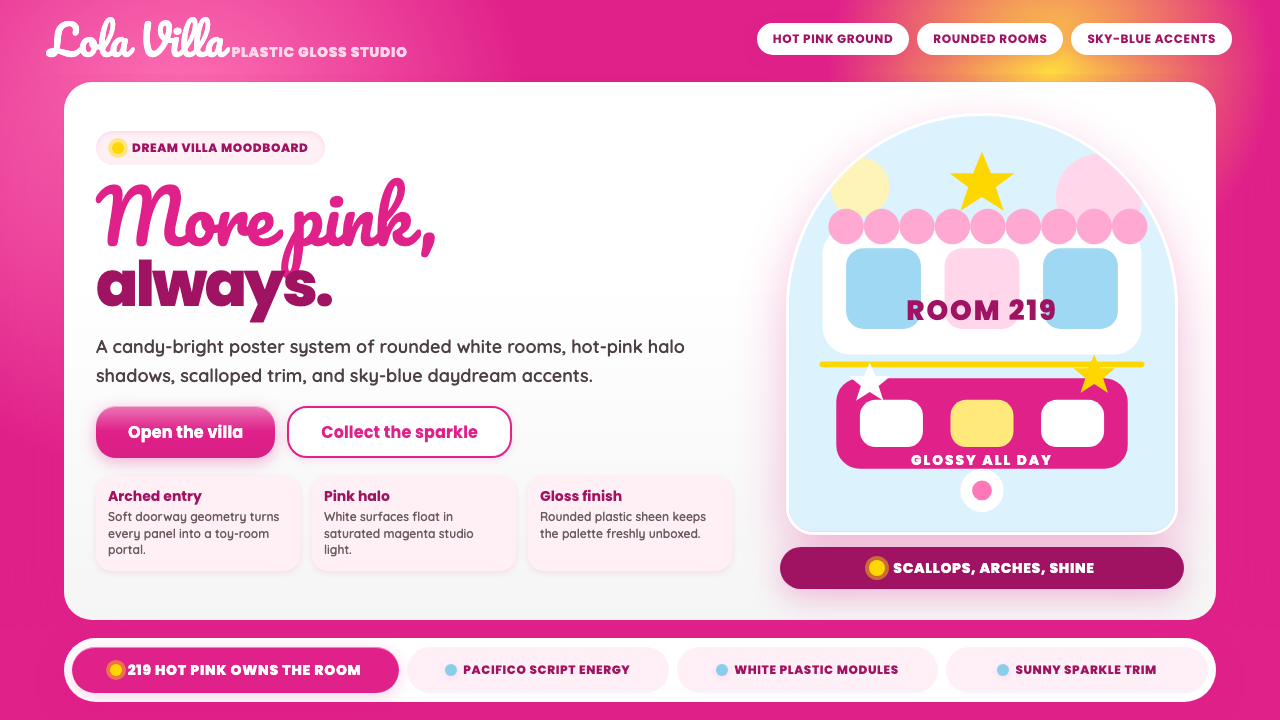 Barbie DreamhousePink is the whole world. Hot magenta ground, Pacifico script, scallops and gl…
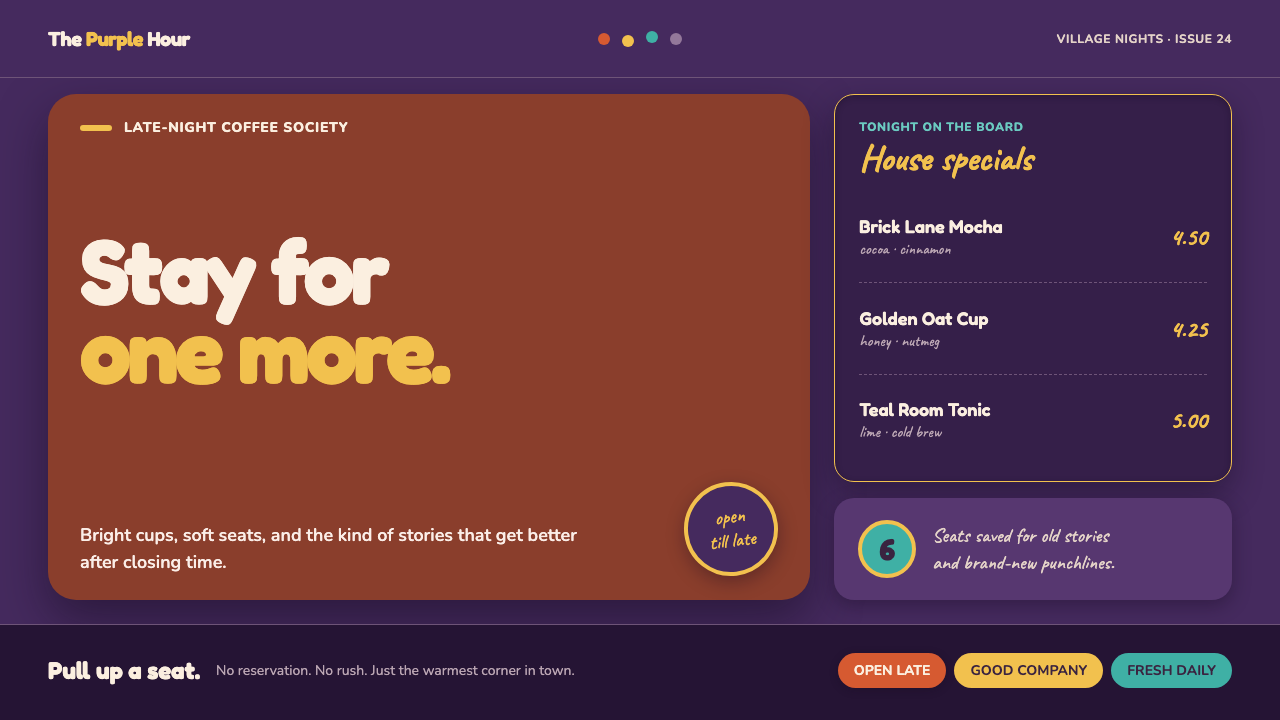 Friends Central Perk (1994)Sitcom warmth, turned TV-bright. Grape walls, couch orange, and bouncing colo…
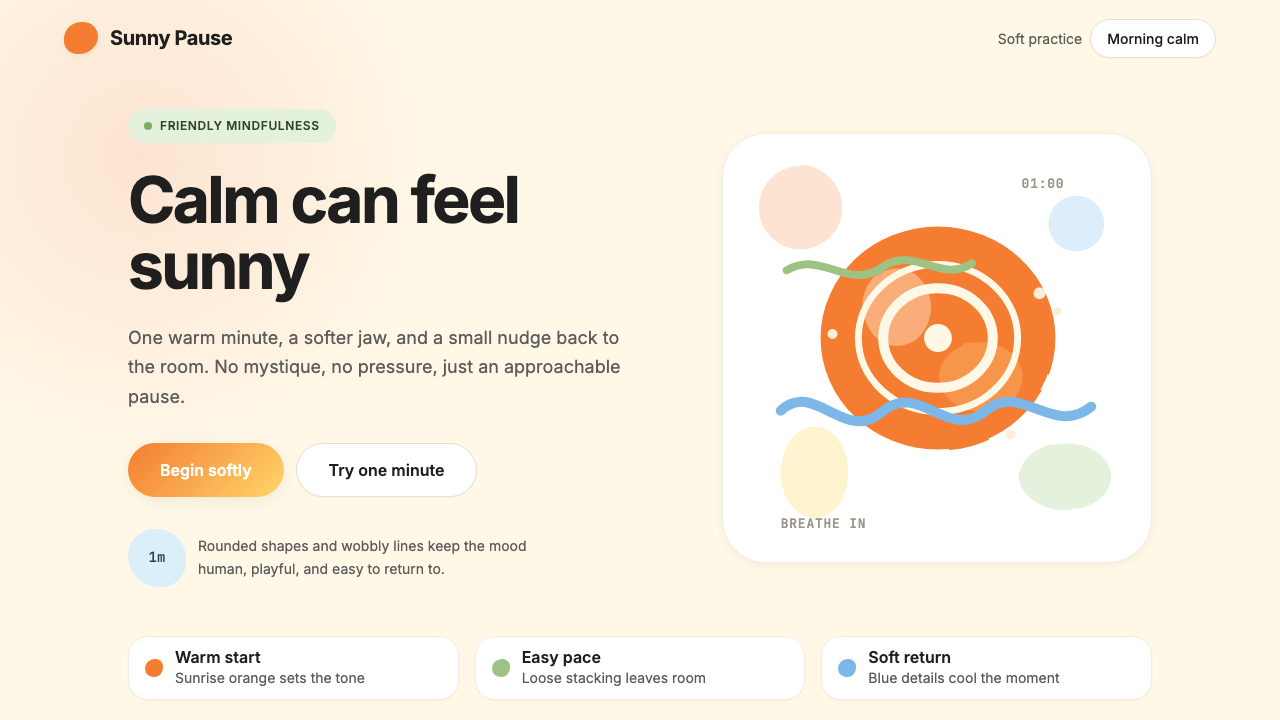 HeadspaceOptimism makes calm approachable. Sunrise orange and wobbly rounded forms bre…
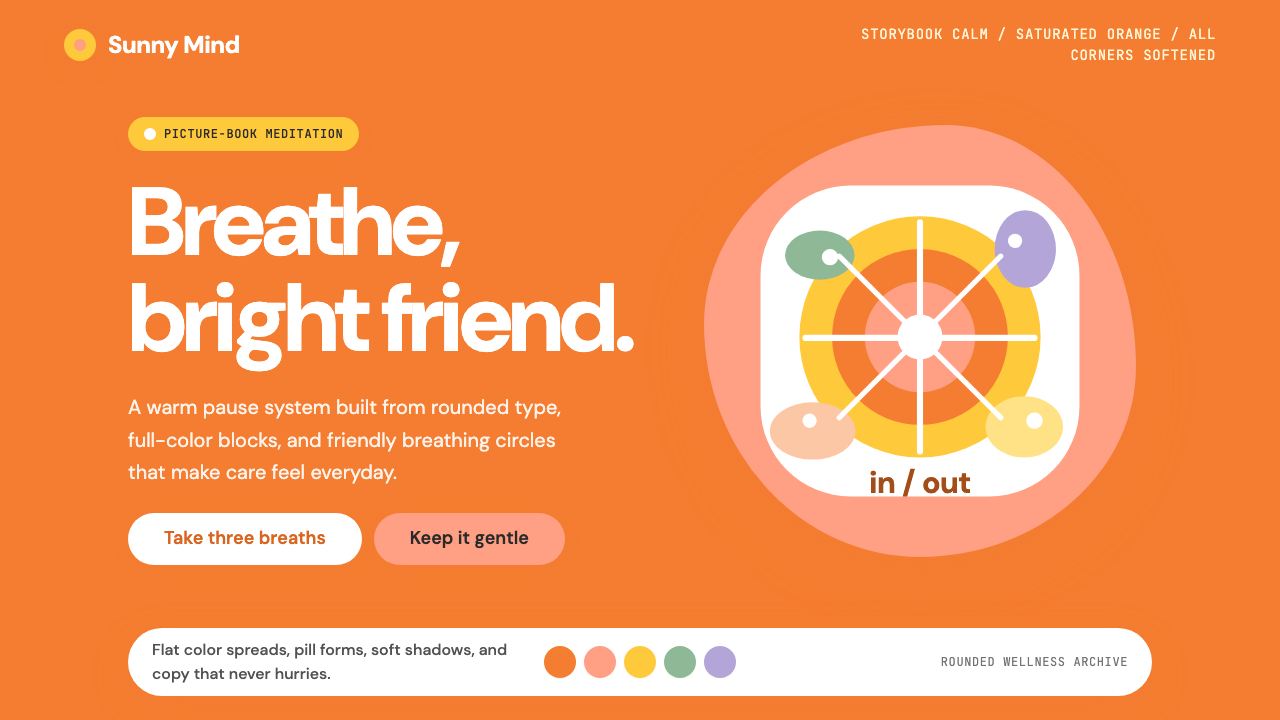 Headspace Orange MeditationMeditation becomes friendly. Orange blocks, DM Sans, and pill shapes soften e…
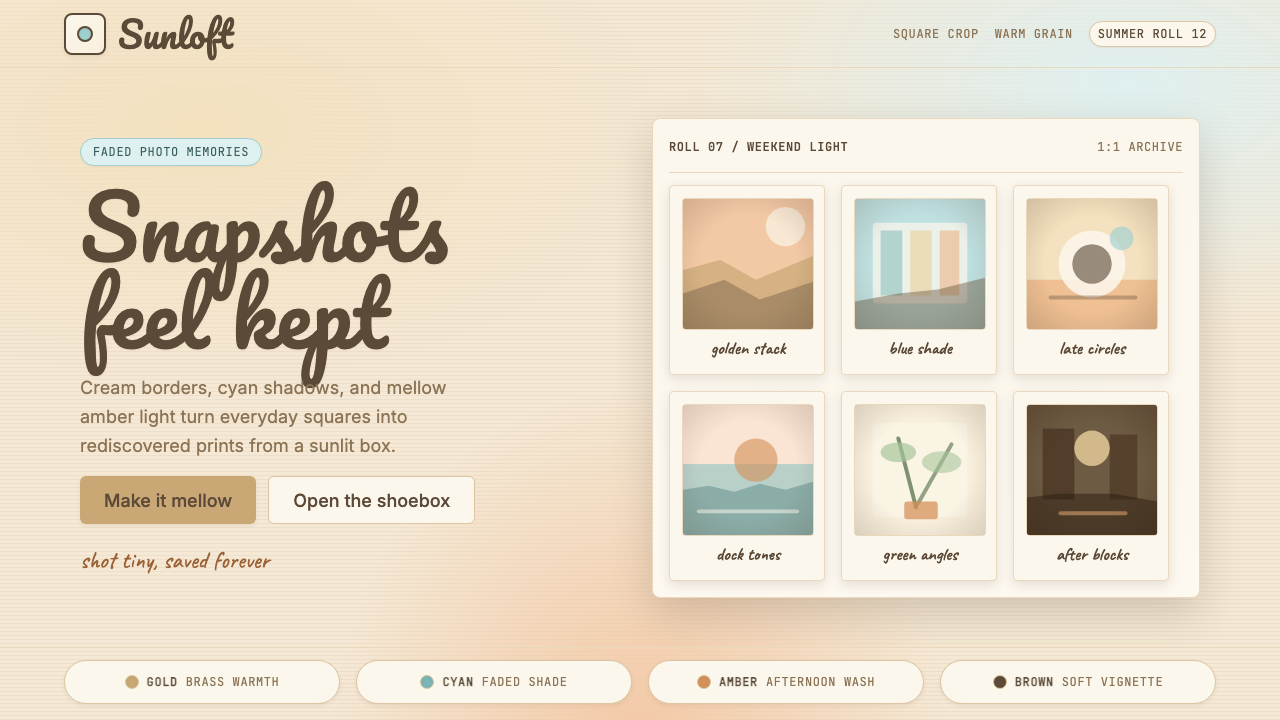 Instagram 2010s FilterWhen photos felt like memories. Faded warmth, dark vignettes, cream-tinted Po…
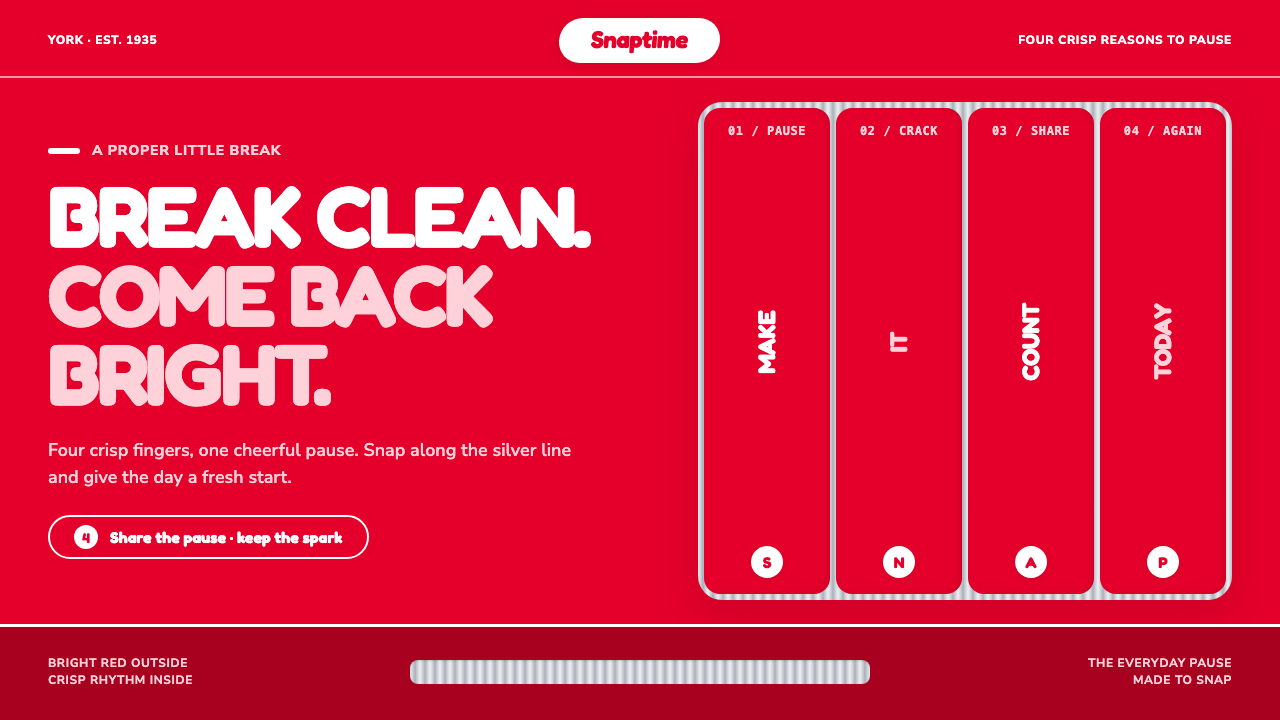 KitKat (1935)A break you can hear. Pillar-box red, plump white type, and silver grooves se…