What is Ovambo Basketry?
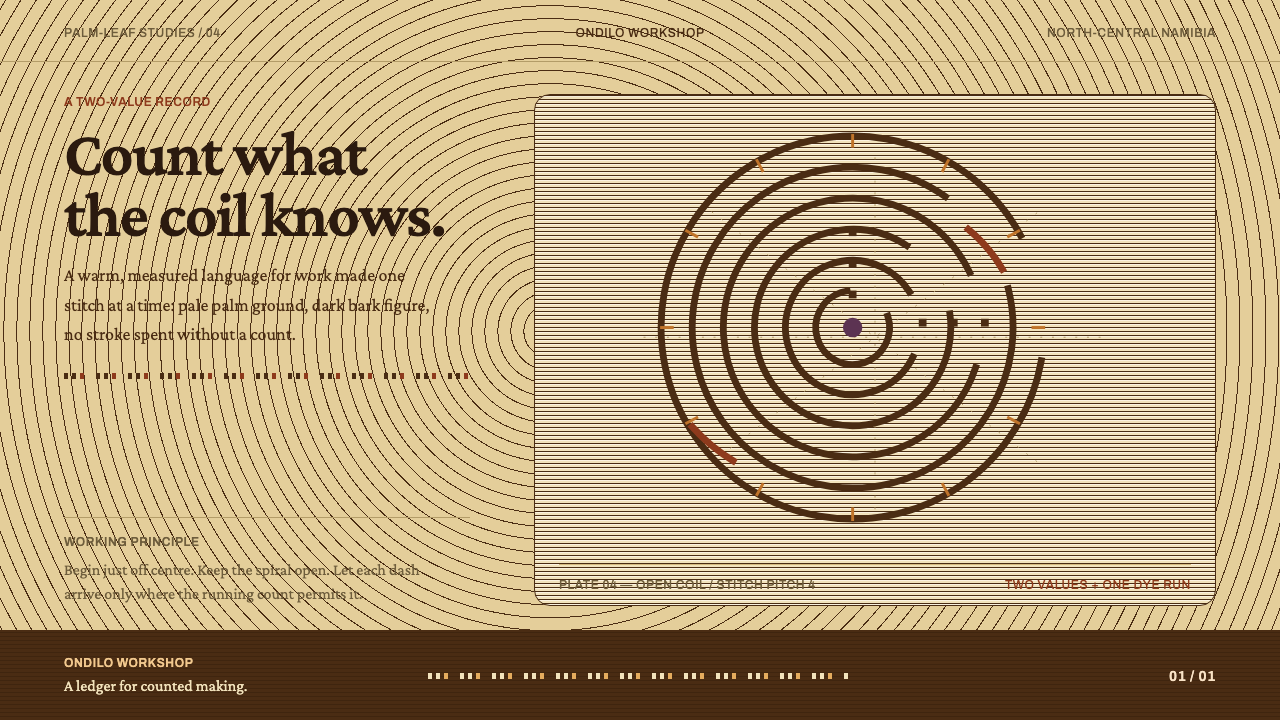
Ovambo Basketry builds order from counting: one unbroken spiral of palm strip, two honest values of straw and bark, and a pattern that exists only because someone counted the stitches.
Ovambo Basketry in brief
Ovambo Basketry is a design language drawn from the coiled baskets of the Aawambo of north-central Namibia, a people whose name is spelled Ovambo in older usage. The baskets are made from the young leaves of the makalani fan palm, split into strips and wrapped around a grass core in one unbroken spiral that runs from the centre of the base out to the rim. There is no frame, no warp and no weft. A single continuous line becomes a vessel.
Visually, the style is built on two values. The palm leaf dries to a pale, warm straw and stays that way, so the undyed leaf is the ground and the light value. Colour arrives only through dye made from boiled bark and roots, and the classic work holds exactly one dark: a deep omuve brown. Nothing is drawn. Every dash, chevron and triangle is a consequence of the spiral carrying it, laid down stitch by stitch as the coil turns.
The system keeps that discipline in its layouts. Rings never quite close, motifs land on the count, and the occasional dye colour is spent as sparingly as a weaver spends a scarce batch. The result is warm, patient and rhythmic, tactile without imitating texture. It is a good fit for products and pages where order should come from repetition and measure rather than from ornament, and where a reader can feel the rule without being told what it is.

Where does Ovambo Basketry come from?
The basketry belongs to the Aawambo kingdoms of north-central Namibia, Ondonga, Uukwanyama and Uukwambi, and to the household economy of the homestead. The record dates it as a household craft from before 1900, continuous through the twentieth century and into today's cooperatives. That continuity matters: the style is not a revival or a reconstruction but the visible output of a craft that has been handed on, and its rules are the rules of the work as it is actually done.
Material decides the palette. The makalani leaf dries to a warm, pale straw, but its surface is waxy and resists dye. Colour therefore has to be forced in: bark and roots are boiled together with the leaf strips for days. The dark of the classic work is the deep brown of omuve bark. A palette of two values is not a restriction a designer imposed; it is what the plant and the dye pot allow. Red, orange and purple dyes exist, but they take effort, and so they appear only as a few scattered rings.
Technique decides the pattern. In a coil, the strip is wound around a grass core and stitched to the ring below, so the basket grows outward and upward one turn at a time. The weaver cannot sketch a motif and then fill it in. Instead the pattern is counted, so many dark stitches, then so many pale, round after round, and a diamond, chevron or triangle only becomes visible when enough rings have been built to show it. The start of the spiral may sit slightly off-centre, and a ring never quite closes on itself.
The record also notes how this craft reached outsiders: through Finnish mission-press documentation, in which Martti Rautanen is the name that appears, and, after independence, through basketry cooperatives that organise the work today. These are the three movements listed with the style: Aawambo homestead craft, mission-press documentation, and post-independence cooperatives. Together they trace a path from household object to documented heritage to organised enterprise, with the technique unchanged.
What defines the Ovambo Basketry look?
Warm Straw Ground
The undyed palm leaf is the light value and the ground: a pale, warm straw, matte and slightly golden. It is never a blue-white screen white. Because the leaf stays this colour permanently, the ground should feel like a material rather than an absence, with no texture overlay needed to prove it.
Omuve Brown
The single dark of the classic work is a deep brown from omuve bark, so dark it almost reads as black against the straw. It carries all the pattern, all the text and all the structure. Treat it as the only full-strength dark, applied in solid, matte strokes without softening or transparency.
The Unbroken Spiral
The form is one continuous line wound outward from a centre. In layout this becomes concentric rings, circular marks and curved flows that read as a single movement, not as separate closed circles. The start may sit slightly off-centre, and rings do not quite close, which keeps the geometry human and prevents it from becoming a machine-perfect target.
Counted Pattern
Every motif lands on a stitch grid. The unit is one stitch, and shapes are built by repeating a count: so many dark, so many pale. Spacing between marks is therefore regular and quantised, never nudged by eye. When a motif does not fit the count, it is the motif that changes, not the grid.
Dash, Chevron, Triangle
The vocabulary is small and geometric: the dash, the chevron and the triangle, with diamonds arising where chevrons meet. These marks are legible at small scale and sit well in rows and bands. They should read as rhythm first and picture second, and they should be repeated with discipline rather than combined into elaborate scenes.
Scarce Dye Accents
Red, orange and purple appear only as a handful of rings against the straw and brown, never as a full secondary palette. Each should feel as if it cost something: one accent in one place, repeated only if the weaving would plausibly repeat it. Where two accents compete, remove one.
Open Coil Rhythm
The surface is a visible sequence of turns and stitches, so rhythm is the main texture. It is conveyed by the regular spacing of marks and bands, not by a photographic straw image or a rough filter. Gloss, glow and soft shadow would contradict a material that is dry, matte and handmade.

Who shaped Ovambo Basketry?
A Finnish missionary whose name is attached to the Finnish mission-press documentation of Aawambo life and language. His presence in the record reflects how much of what outsiders know about this craft passed through the mission press. For designers, it is a reminder to read such sources critically: they preserve valuable detail, but they were written from outside, and the makers themselves are the real authorities.
The three Aawambo kingdoms named in the record as the home of the craft. Each had its own homesteads and traditions, and the basketry belongs to all of them rather than to a single centre. When a design system calls itself Ovambo, it is referring to this regional family of practices, and it should resist flattening it into one uniform pattern.
The unnamed makers of the baskets. Their work is a household craft, continuous from before 1900 into the present. The whole style rests on their way of making: a strip wound round a core, a pattern held in the head as a count, and dye used as sparingly as the batch allows. The rules in this system are theirs, written down by outsiders after the fact.
The cooperatives that organise basketry work after Namibian independence. They connect a household craft to markets and to continuing training, which is one reason the technique has remained alive rather than frozen. A design system drawn from this craft should credit them as part of its living lineage, not only the historical homestead.
How do you use Ovambo Basketry today?
Ovambo Basketry is a system of measure. It rewards designers who think in units, repeats and counts, and punishes those who reach for decoration. Before applying it, decide the stitch: the smallest unit of spacing and mark that everything else will be a multiple of. Once that is fixed, the rest of the layout follows almost mechanically.
On cover slides, use a large off-centre spiral or set of concentric rings built from counted marks, with the title set plainly beside it in the dark brown on the straw ground. Content slides can use bands of dashes and chevrons as dividers and bullet markers, each band a different but countable repeat. Data slides are the style's natural home: unit charts, dot arrays, tallies and heat strips in which one stitch equals one unit, so that the reader can literally count the value instead of reading a smooth bar.
In product interfaces, build dashboards on a visible grid of cells and let status be shown by counts of filled units instead of gradients. Sparklines can become rows of chevron-like ticks. Pricing pages work well in two values, with the recommended plan flagged by one scarce dye accent in a single place, never across the whole card. Forms and controls stay flat and matte, with solid dark fills and hard edges, and the spiral appears as loading and progress indicators where it earns its place.
In editorial and marketing work, the style suits craft, textile, natural-material, sustainability and community-enterprise subjects, as well as anything that wants to say that it was made patiently and by hand. Use generous straw ground, a single dark ink, and repeated bands for rhythm in long articles. For product packaging or catalogues, a counted border can frame a title, and one dye colour can mark a collection. Name the Aawambo and the cooperatives in captions rather than using the look as anonymous African decoration.
The most common mistake is to draw it. Perfect centred circles, smooth organic curves and patterns that are not on the stitch grid all lose the principle that pattern is counted, never drawn. A second mistake is spending dye colours freely: a rainbow of red, orange and purple destroys the scarcity that makes each accent meaningful. A third is adding fake straw texture, a photographic basket or gloss to prove that the style is handmade; the handmade quality comes from rhythm and restraint. Finally, do not flatten it into a generic African pattern, because this is a specific craft with its own rules.

Ovambo Basketry — FAQ
What is Aawambo coiled basketry?
It is a household craft of the Aawambo of north-central Namibia, in which the young leaves of the makalani fan palm are split into strips and wrapped around a grass core in one continuous spiral. The leaf dries pale warm straw, and colour comes only from boiled bark and root dyes, so classic baskets use just undyed palm and a deep omuve brown. Pattern is counted stitch by stitch as the coil turns. The record dates the craft from before 1900 and describes it as continuous into today's cooperatives.
Why does the style use only two main colours?
Because the materials allow only two. The palm leaf dries to a warm straw and stays that colour, and its waxy surface makes it resist dye, so bark and roots must be boiled with the strips for days to get any colour at all. The classic dark is the deep brown of omuve bark. A design in two values is therefore the honest expression of the craft, and extra hues should be rare, small and clearly deliberate.
What does ‘counted, never drawn’ mean for a layout?
It means that every mark sits on a grid of equal units and that no motif is placed by eye. Choose a smallest unit, make all spacing and sizes multiples of it, and build patterns by repeating a count of marks. In practice this gives you tallies, unit charts, dot arrays and banded dividers, and it rules out freehand blobs, organic curves and arbitrary ornaments. If something does not fit the count, change the thing, not the grid.
Why must rings never quite close?
Because a coil is one continuous spiral, not a set of separate circles. Each turn flows into the next, and the start may sit off-centre. A ring that closes perfectly turns the spiral into a bullseye and removes the sense of a single line wound by hand. Leaving a small gap, offset or drift in each ring keeps the geometry human and preserves the reading of one unbroken movement.
Where does Ovambo Basketry work best, and where does it struggle?
It works best for data-led pages, craft and sustainable-goods brands, educational material, and products that want warmth with structure. Unit charts, trackers and dashboards benefit from its counting logic. It struggles with products that depend on glossy, high-energy or multi-colour visuals, such as gaming, nightlife or fast-fashion promotions, and with contexts that need photographic richness. Its strength is patient, measured order.
Related design styles
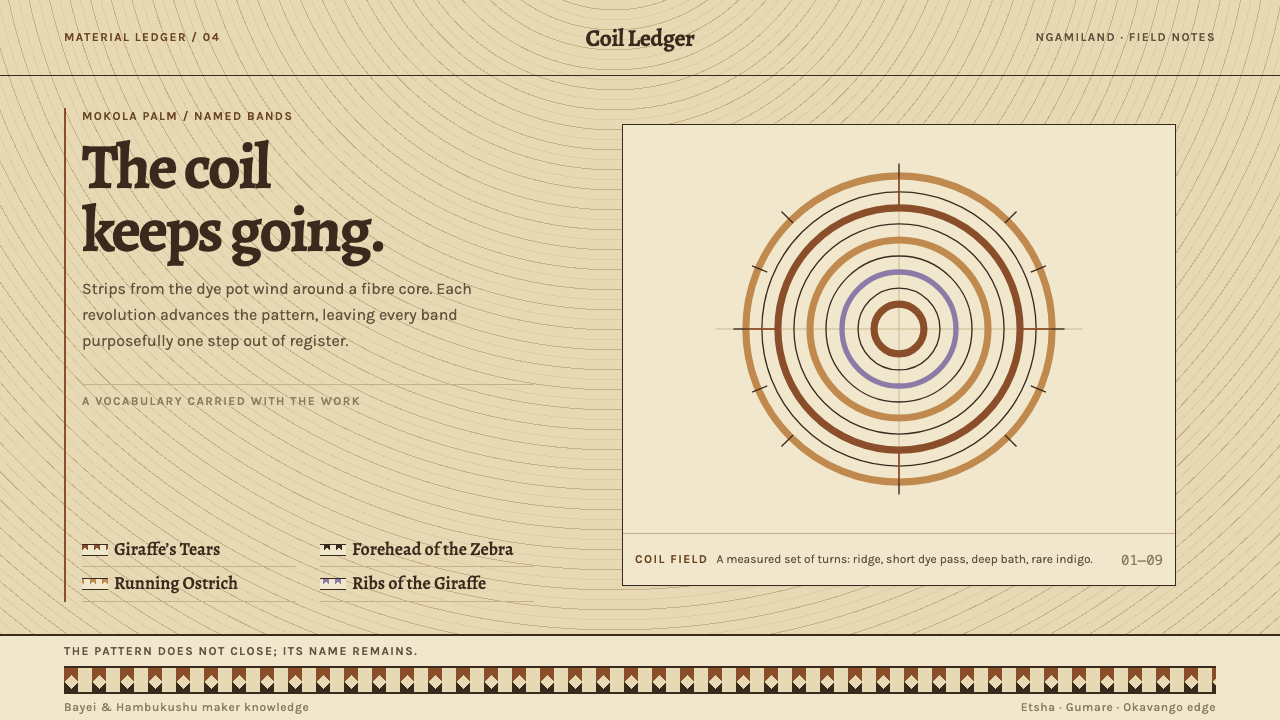 Botswana Coiled BasketThe pattern keeps travelling. Bark-brown stepped bands wind across a straw co…
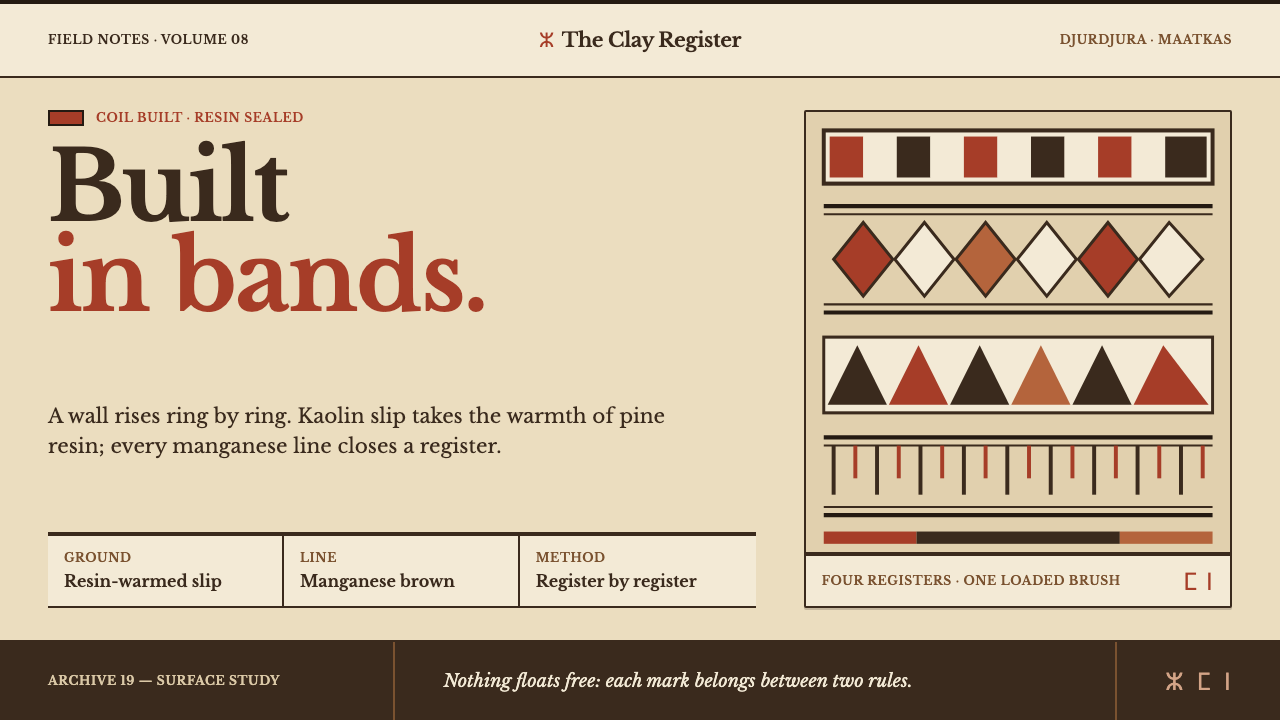 Kabyle PotteryBuilt band by band. Resin-warm kaolin carries manganese rules and iron-red ge…
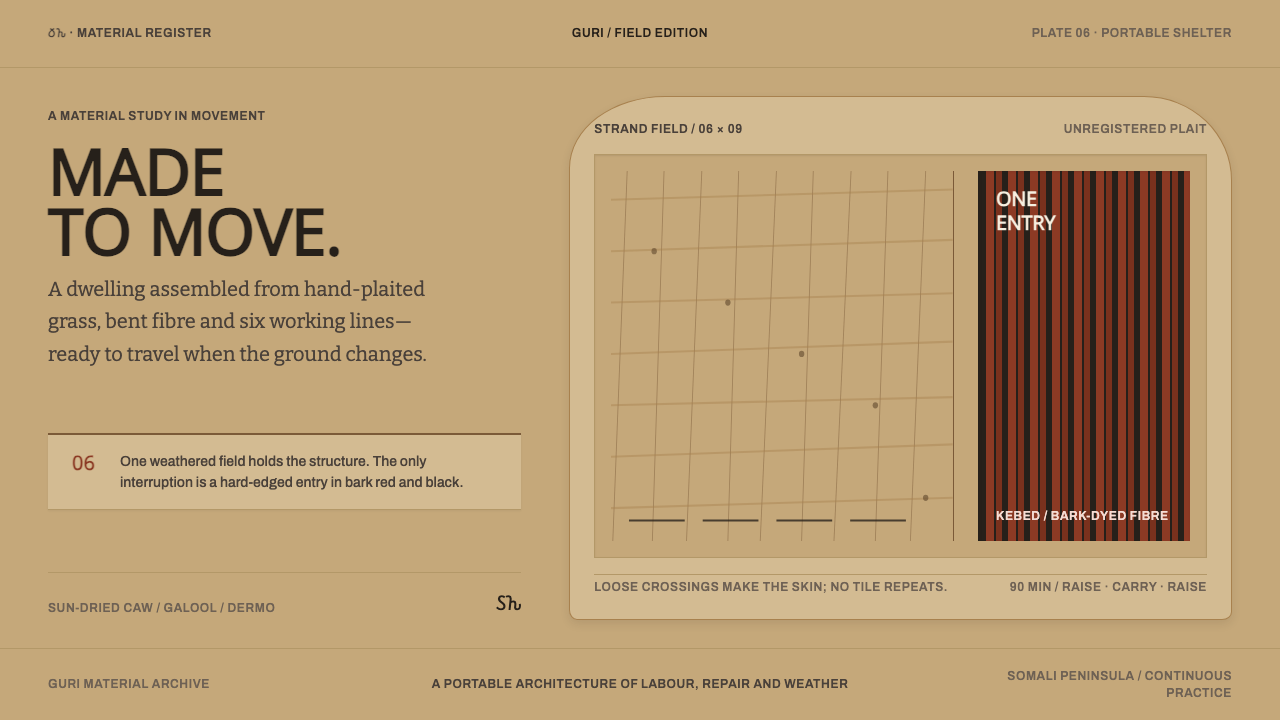 Somali AqalA house made to move. Sun-dried mat fields yield once to a bark-red, black en…
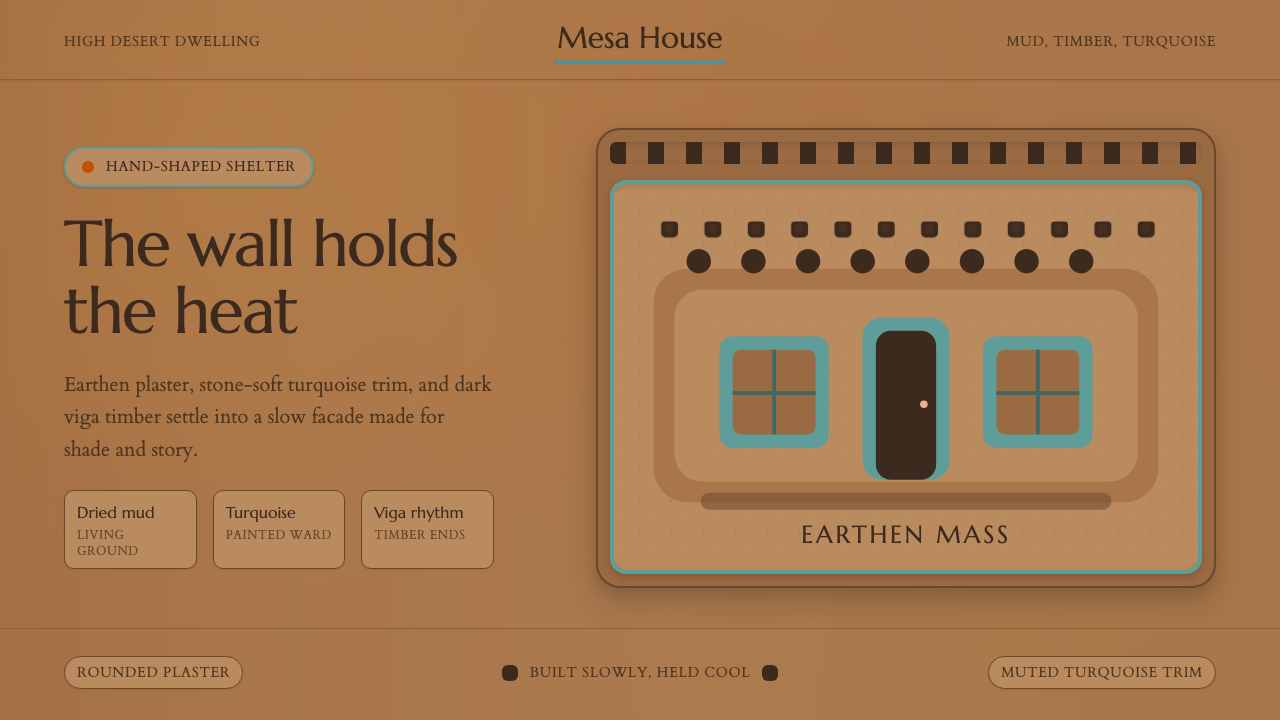 Adobe Pueblo SouthwestFeels made by hand. Earthen tan, turquoise trim, and viga rhythm shape the fr…
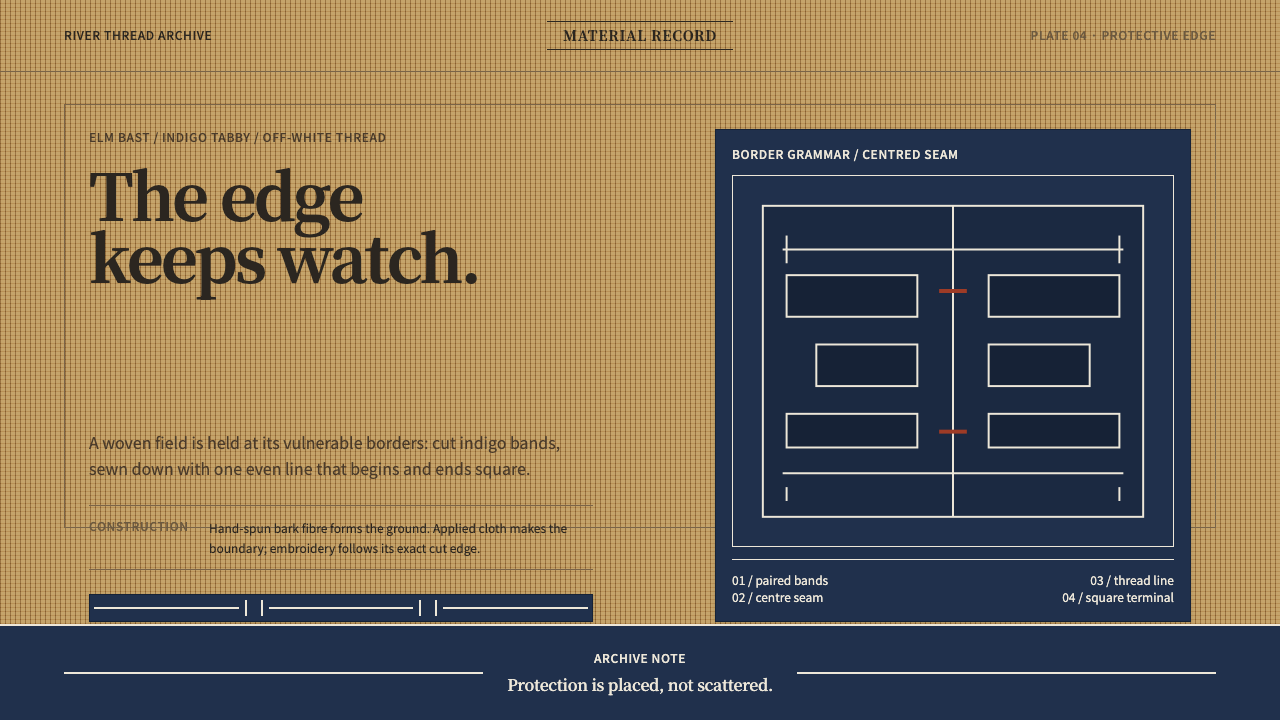 Ainu Attus RobeProtection is cut, not painted. Indigo bands and square-ended thread hold elm…
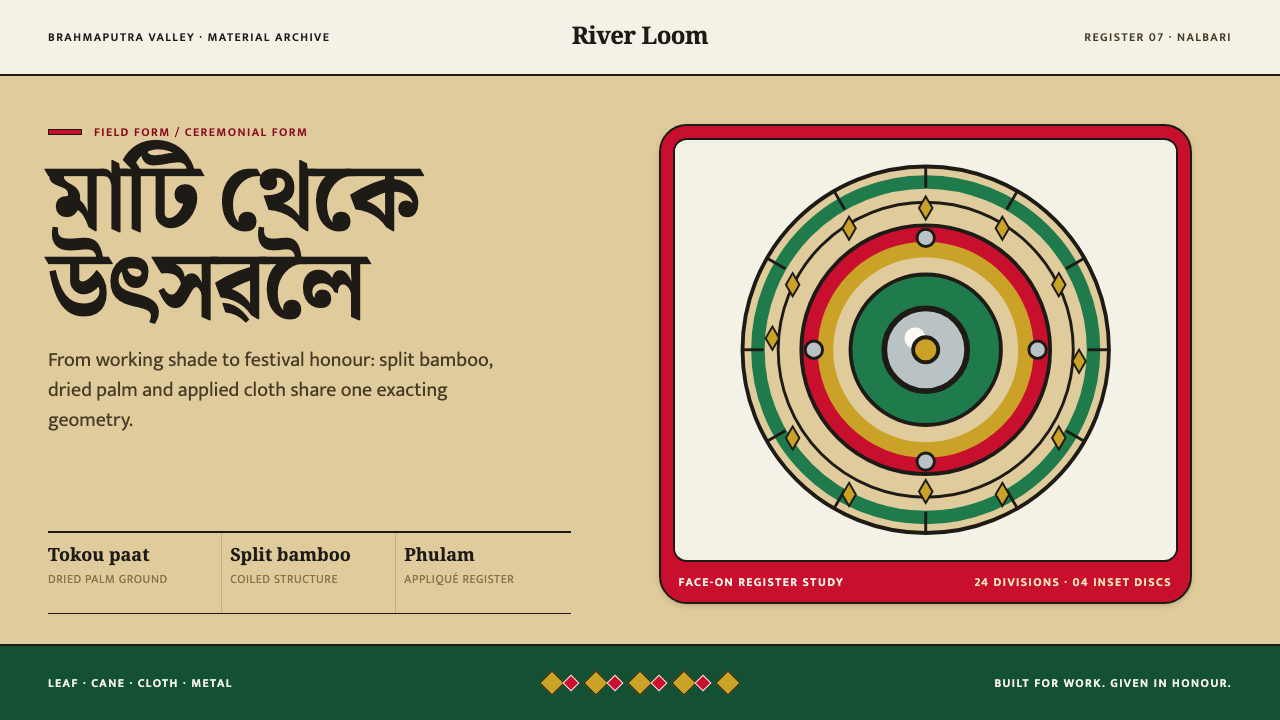 Assamese JapiWork becomes ceremony. Straw-gold rings carry green appliqué, festival red an…