What is Ottoman Hammam?
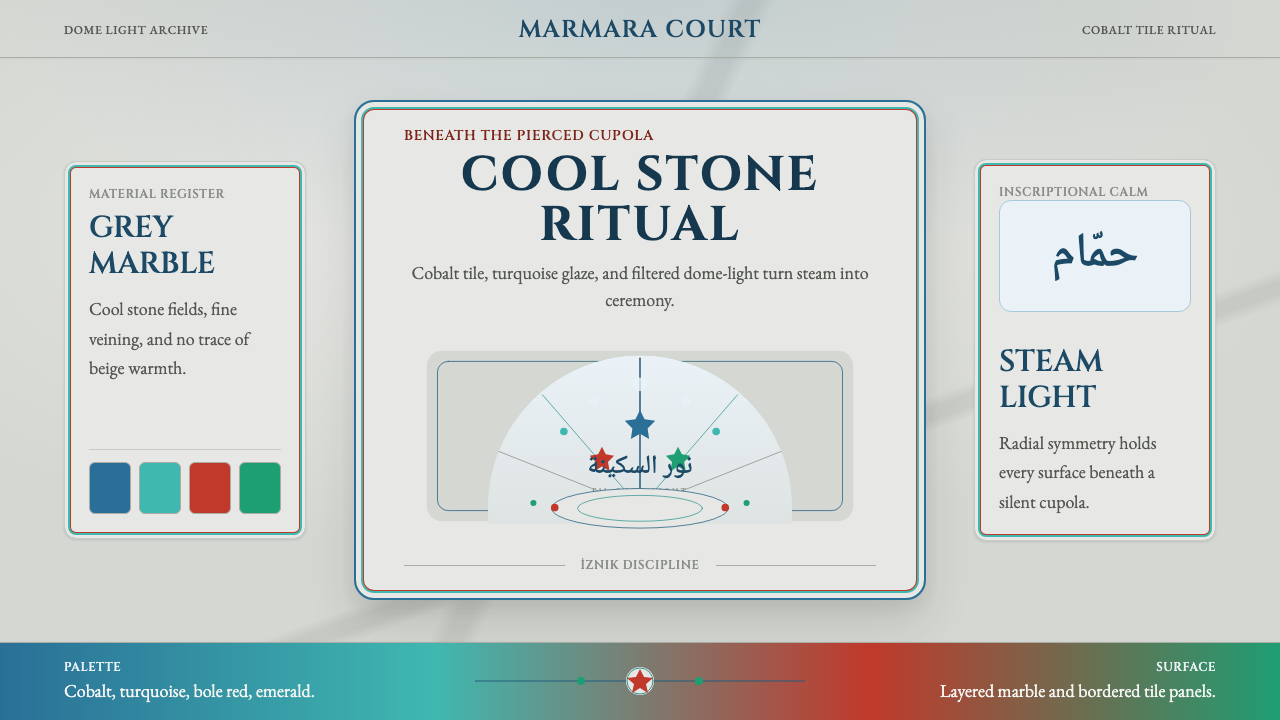
The Ottoman hammam is architecture felt before it is seen — a domed chamber of cool marble and pierced light that this style translates into cobalt tile, radial symmetry, and disciplined ornament.
Ottoman Hammam in brief
Ottoman Hammam draws its identity from the classical Turkish bathhouse: a hemispherical dome pierced with small star- and eye-shaped openings that drop soft columns of daylight into a chamber faced in cool, grey-veined marble. At the center sits a heated stone platform, and the walls carry glazed İznik tilework in cobalt, turquoise, and touches of bole-red and emerald. This system carries that chamber's logic — rather than its literal furniture — into a page: cool stone tones as the ground, a disciplined ceramic palette as accent, and a composition organized around a central axis the way a bather's experience is organized around the dome overhead.
What makes the style distinct from generic 'spa' or 'wellness' visual language is that its luxury is cold rather than warm. The stone is genuinely grey, never pushed toward beige or cream, and the light is diffused and even rather than golden or ambient. Ornament is present but disciplined: it is drawn from a specific, recognizable repertoire of tile motifs — stylized carnations, tulips, and saz-leaf scrollwork — rather than free decorative invention, and it is deployed as accents and borders rather than covering every surface.
The overall effect is serene and formal rather than relaxed and casual. Symmetry is not decorative but structural, echoing the way a hammam's plan radiates outward from the domed hot room. Inscriptional lettering — capitals in the spirit of monumental Ottoman inscriptions, and flowing naskh calligraphy — appears as an anchor for the Ottoman register, giving the whole system a sense of ceremony that a purely 'spa' aesthetic would not carry.
Where does Ottoman Hammam come from?
The Turkish bath did not begin with the Ottomans — it is the latest link in a chain stretching back to the Roman thermae and the Byzantine bathhouses that continued their tradition in the eastern Mediterranean. Roman baths relied on the hypocaust, a system of raised floors and wall cavities through which hot air circulated to heat rooms and water. When the Seljuk and later Ottoman Turks encountered this bathing culture as they moved into Anatolia and Byzantine territory, they adopted and transformed it, folding it into Islamic traditions of ritual purity and communal life to produce something recognizably new: the hammam.
The classical Ottoman hammam plan, refined over centuries, organizes bathing as a progression through spaces of increasing heat: a cool entry and changing room (soğukluk), a temperate transitional space (ılıklık), and finally the hot room (sıcaklık) — the domed chamber that gives the building type its iconic silhouette. At the center of the hot room sits the göbektaşı, a large heated stone platform where bathers would lie to sweat and be massaged. Around it, private washing alcoves (halvet) line the walls, each supplied with basins of hot and cold water rather than communal pools, reflecting Islamic preferences for running rather than standing water.
This architectural type reached its highest refinement in the sixteenth century under Mimar Sinan, the chief imperial architect during the reign of Suleiman the Magnificent and his successors. Sinan, who designed hundreds of buildings across the Ottoman Empire including mosques, bridges, and palaces, also designed some of the most celebrated hammams of the era, most famously the Hürrem Sultan Hamamı in Istanbul, commissioned by Suleiman's wife Hürrem (Roxelana) and built directly beside the Hagia Sophia. Sinan's hammams demonstrated a mastery of dome construction and light — the small pierced openings in the dome, often star- or eye-shaped, were engineered to admit just enough daylight to illuminate the steam-filled room without letting in direct heat loss or rain.
Alongside the architecture, the İznik ceramic workshops — centered in the town of İznik in northwestern Anatolia — supplied the glazed tilework that faced hammam walls, mosques, and palaces throughout the empire from roughly the fifteenth through the seventeenth centuries. İznik potters developed a distinctive quartz-frit ceramic body and a palette built around a saturated cobalt blue, later expanded to include turquoise, a bole (Armenian) red made from a specific iron-rich clay slip that sat in slight relief, and green, painted in stylized floral and vegetal motifs — the carnations, tulips, hyacinths, and saz-style curling leaves that remain the visual signature of Ottoman decorative art.
What defines the Ottoman Hammam look?
Cold Marble Ground
The base surface reads as true grey-veined marble — cool, never warmed toward beige or cream. This coldness is deliberate: it signals refined luxury rather than cozy comfort, matching the actual thermal sensation of stone underfoot in the cooler transitional rooms of a real hammam.
Cobalt and Turquoise Ceramic
The core accent palette comes directly from İznik tilework: a saturated cobalt blue paired with turquoise, used for pattern and border elements rather than large flat fields. These are ceramic colors, not textile or paint colors — they read as glazed and slightly luminous rather than matte.
Bole-Red and Emerald Accents
A warmer, secondary accent pair appears sparingly: a deep bole-red (echoing the raised, iron-rich red slip of classical İznik ware) and emerald green, used only in small doses to highlight a detail within the cobalt-turquoise field rather than to compete with it for dominance.
Radial Symmetry
Composition organizes around a central axis or focal point, echoing the way a hammam's hot room radiates outward from the domed center. Elements balance left-to-right and, where possible, suggest a sense of looking upward toward a central dome rather than reading purely left-to-right like a page of text.
Pierced-Light Motifs
Small repeated star- or circular-shaped openings, referencing the fil gözü ('elephant eye') and star apertures pierced through a hammam dome, appear as decorative punctuation — dropping implied columns of soft, diffused light rather than harsh directional glare.
Disciplined Floral Ornament
Ornament draws from a specific, recognizable repertoire — stylized carnations, tulips, hyacinths, and saz-leaf scrollwork — rather than free decorative invention. Pattern is confined to borders, panels, and accents; large surfaces remain calm and unornamented, letting the pattern read as precious rather than as wallpaper.
Inscriptional and Naskh Lettering
Typography carries two registers: a monumental, capital form for headline moments — echoing carved Ottoman inscriptions — and a flowing, cursive-derived form for supporting text, referencing naskh calligraphy. Together they give the system a ceremonial gravity distinct from a purely decorative 'exotic' pattern language.

Who shaped Ottoman Hammam?
As chief imperial architect under Suleiman the Magnificent and his successors, Sinan designed some of the most celebrated hammams of the classical Ottoman period, including the Hürrem Sultan Hamamı beside the Hagia Sophia. His mastery of dome construction and calculated light-piercing established the architectural template — the domed hot room lit by small star- and eye-shaped openings — that this style draws its spatial logic from.
Wife of Suleiman the Magnificent, Hürrem Sultan commissioned the double hammam beside the Hagia Sophia that bears her name, one of Sinan's most celebrated works. Her patronage exemplifies how Ottoman elite women shaped the era's architectural and decorative culture, commissioning buildings that combined function, prestige, and refined craft.
Centered in the Anatolian town of İznik, these workshops developed the distinctive quartz-frit ceramic body and cobalt-turquoise-bole-red palette that faced Ottoman hammams, mosques, and palaces from roughly the fifteenth through seventeenth centuries. Their stylized floral vocabulary — tulips, carnations, saz leaves — remains the defining visual signature of Ottoman decorative art.
How do you use Ottoman Hammam today?
Ottoman Hammam suits any product that wants to communicate serene, considered luxury without warmth or coziness — the opposite emotional register from a rustic spa or a golden-hour wellness brand. It works especially well wherever formality, heritage, and craft are values worth signaling.
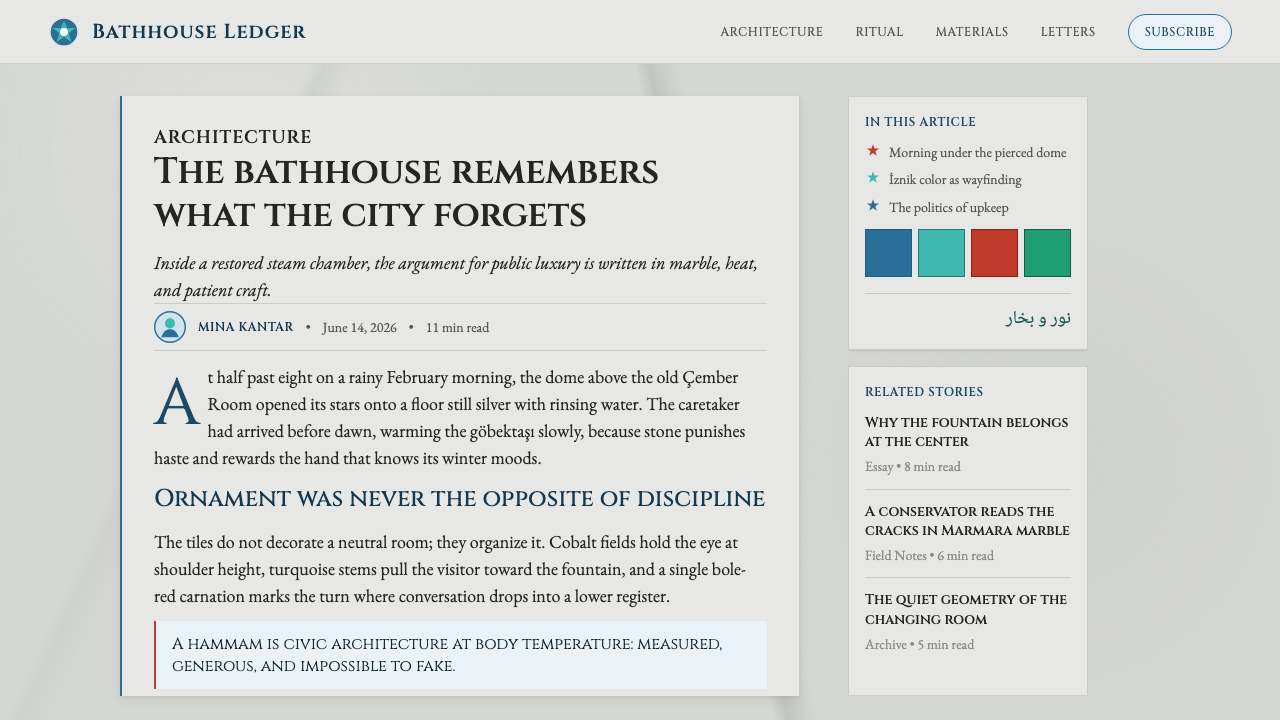
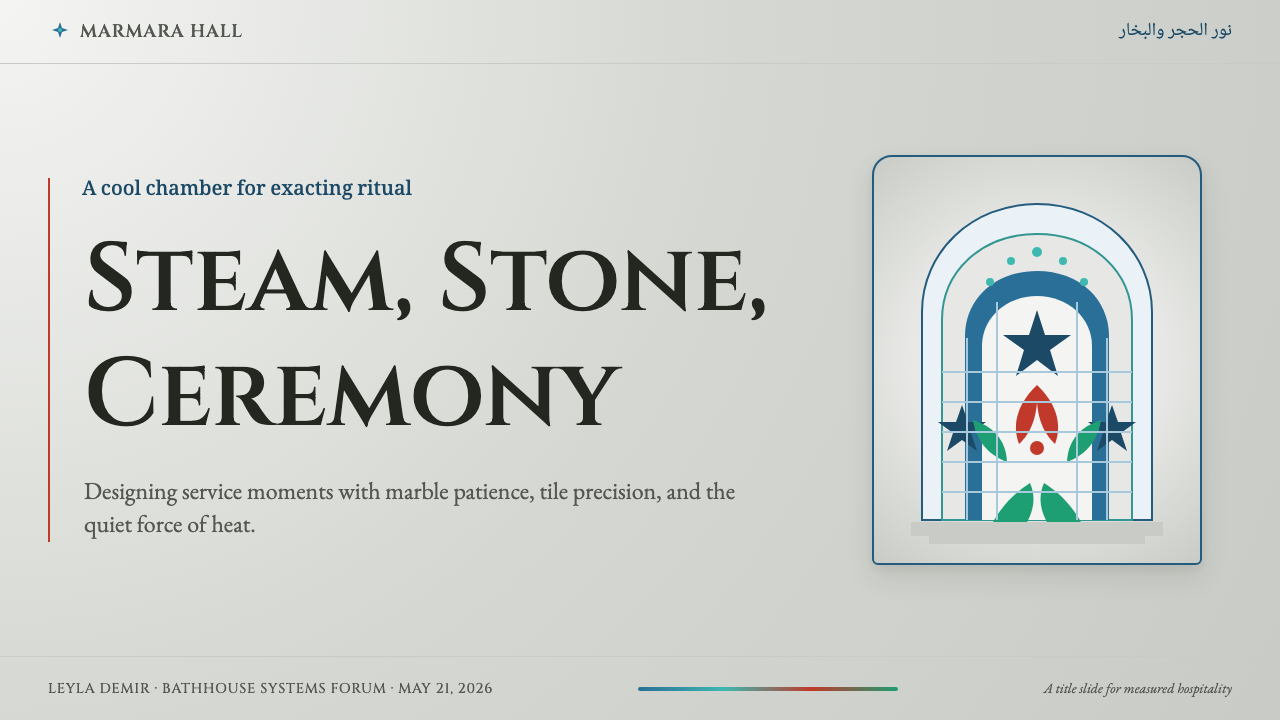
For presentation slides, a cover page benefits from the style's radial symmetry: a centered motif or title framed by cobalt-turquoise border ornament against a cool marble-toned field reads immediately as considered and premium. Content slides should keep large areas calm and unornamented, reserving the tile-derived pattern for borders, dividers, and small accent panels rather than filling the whole page — this mirrors how the real tilework is deployed against large expanses of plain marble.
For web interfaces, the style suits high-end hospitality, wellness, jewelry, and heritage-brand contexts particularly well, including dashboards and account pages where a calm, cool-toned base with restrained ceramic-color accents for interactive states communicates quiet confidence. Pricing pages can use the radial, symmetric composition to frame tier comparisons as a considered ritual rather than a bare table.
For editorial and marketing work, the style favors long-form storytelling about craft, travel, or cultural heritage. Feature articles benefit from generous cool-toned whitespace punctuated by small, precise ornamental flourishes at section breaks, echoing the way a hammam's plain marble walls are interrupted only occasionally by a tiled panel. Marketing pages should resist the temptation to cover every surface in pattern — the style's power comes from ornament as a rare, precious accent, not a background texture.
A common mistake is warming the palette — pushing the marble toward beige, adding golden or amber lighting effects, or leaning on generic 'Middle Eastern' pattern clichés instead of the specific İznik floral vocabulary. Another is over-patterning: because the ceramic colors are vivid, designers are tempted to spread them across large areas, which collapses the disciplined luxury of the original into something closer to a busy textile print.
Ottoman Hammam — FAQ
Is Ottoman Hammam the same as generic 'Moroccan' or 'Middle Eastern' design?
No. It is anchored to a specific building type (the classical Ottoman bathhouse), a specific ceramic tradition (İznik ware, with its particular cobalt-turquoise-bole-red palette and floral vocabulary), and a specific architectural feature (the domed, pierced-light hot room). Generic 'Middle Eastern' design language tends to borrow loosely from many unrelated traditions — Moroccan zellige, Persian miniature painting, generic arabesque — without this specificity. Ottoman Hammam stays disciplined precisely because it refers back to one real building and one real ceramic tradition.
Why is the marble described as cold rather than warm luxury?
Because a real hammam's transitional and washing spaces are lined in genuinely cool, grey-veined stone — that coolness against skin is part of the physical experience the building was designed around, distinct from the intense heat of the central hot stone platform. Pushing the palette warm (toward beige or cream, as many generic 'spa' aesthetics do) erases this contrast and collapses the style into something closer to a resort brochure than the specific, cooler luxury of Ottoman bath architecture.
How much ornament is appropriate before it stops feeling authentic?
The rule of thumb is that ornament should read as rare and precious, confined to borders, panels, and accent moments, with large areas remaining plain. In a real hammam, the vast majority of wall and floor surface is unadorned marble; İznik tilework appears in specific bands, niches, and focal panels rather than covering every surface. If more than roughly a quarter of a composition carries visible pattern, the balance has likely tipped from disciplined luxury toward decorative excess.
What role does symmetry play, and can it be broken?
Symmetry here is structural rather than merely decorative — it echoes the radial plan of a hammam's hot room, which organizes itself around a central dome and central heated platform. Breaking it entirely undermines the sense of ceremony the style depends on. That said, perfect mirror symmetry is not required at every scale; a composition can hold an overall balanced, centered feel while allowing smaller supporting elements to sit asymmetrically, much as a hammam's private washing alcoves are arranged around — but not identical to — the central chamber.
Is this style suitable for products aimed at a broad, casual consumer audience?
It works best for audiences who value formality, heritage, and craft — premium hospitality, cultural institutions, high-end wellness, or heritage brands. For a casual, playful, everyday consumer product, the coldness and ceremonial symmetry can read as distant or overly serious rather than inviting. In those contexts, a warmer, more relaxed style is usually a better fit.
Related design styles
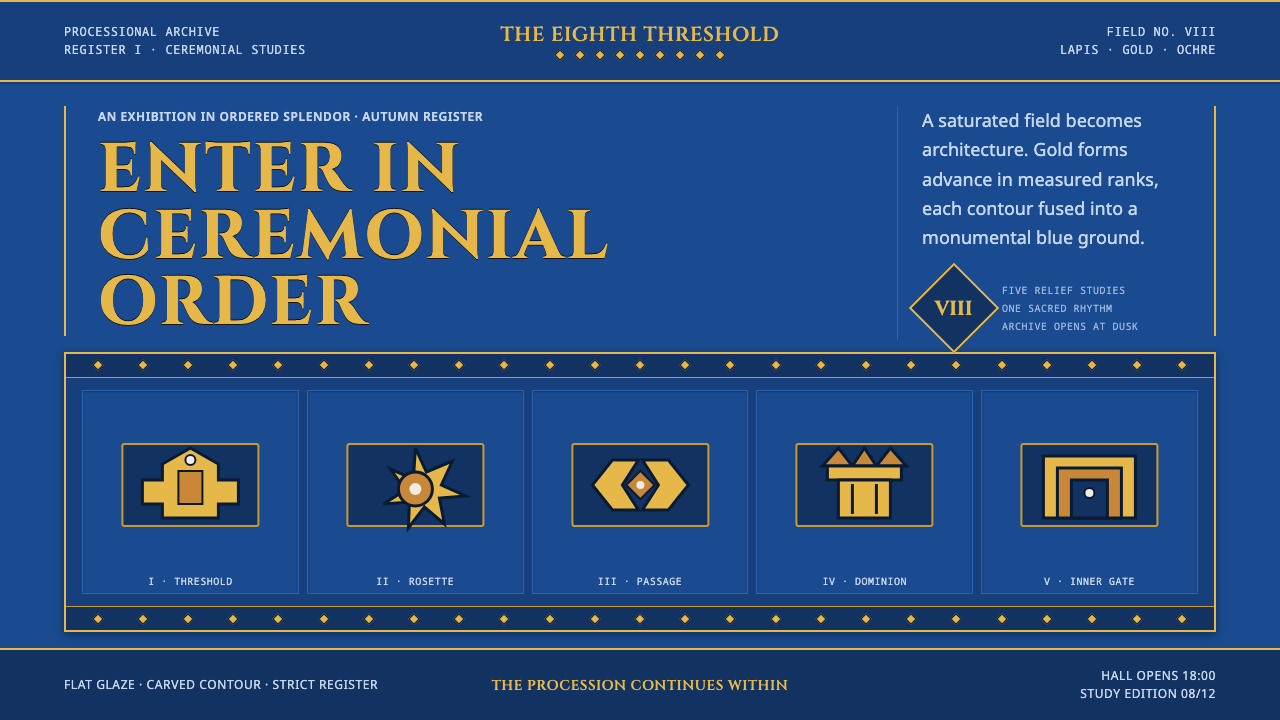 Babylonian Ishtar GateMonumental by procession. Lapis brick, gold registers, and carved capitals ho…
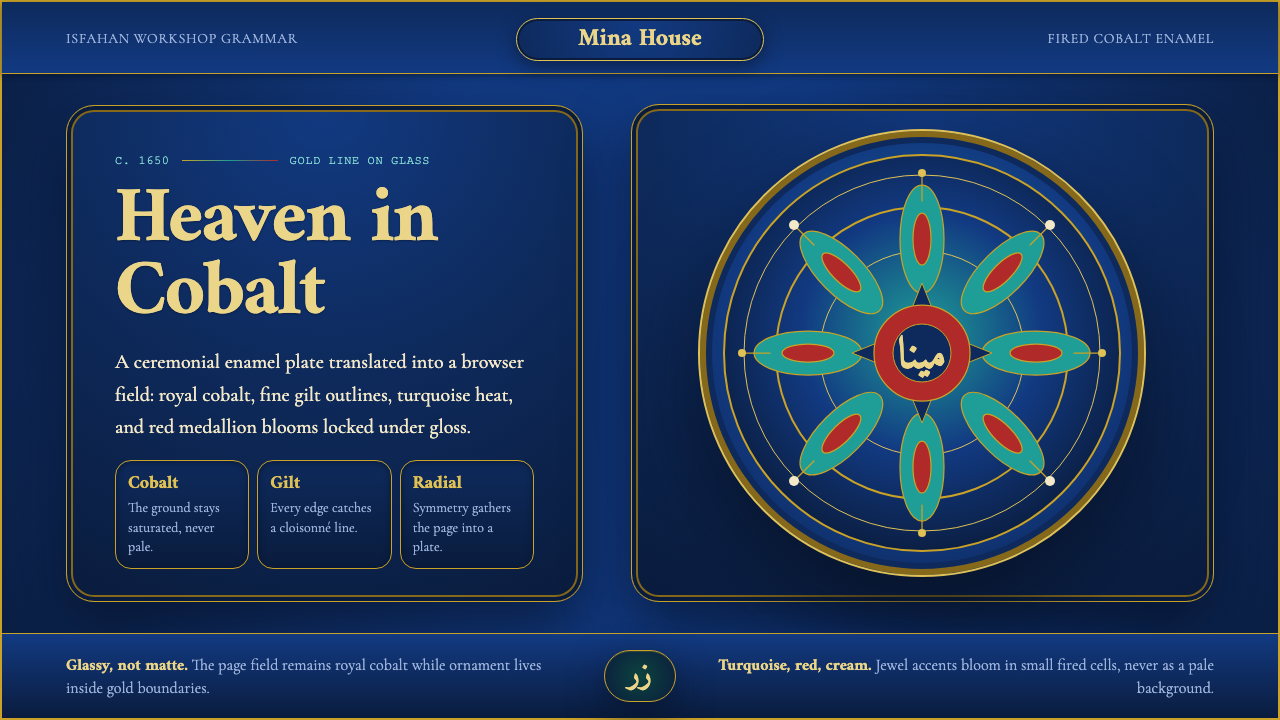 Isfahan Minakari EnamelJewel-bright ceremony. Cobalt enamel, gold cloisonné lines, and radial blooms…
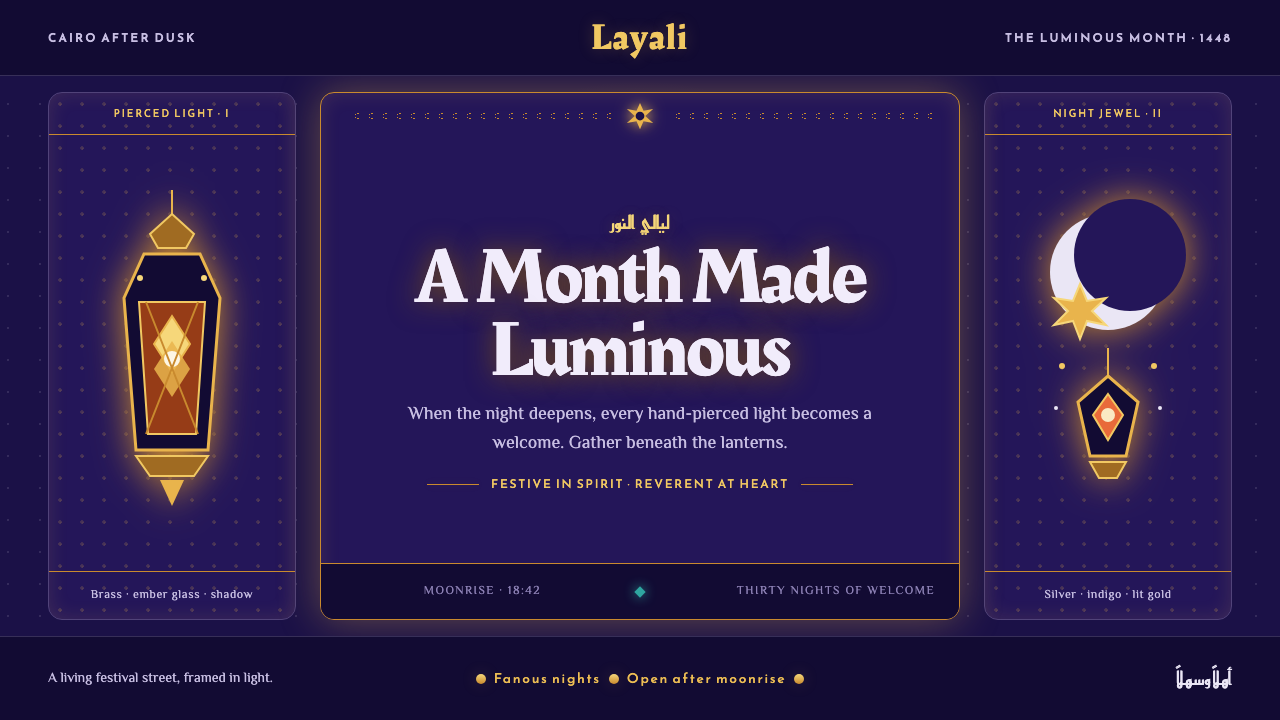 Ramadan Lanterns (Fanous Nights)Night becomes sacred light. Pierced brass and amber glow burn across bottomle…
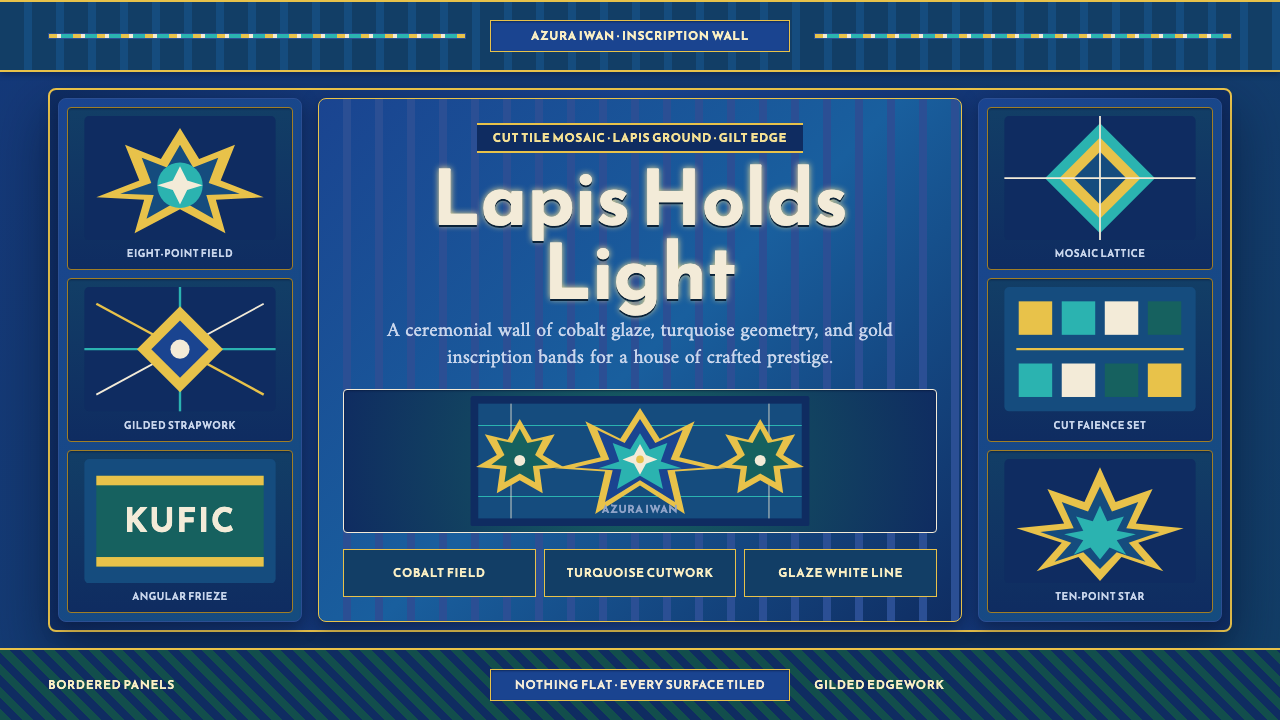 Samarkand TileworkOrnament is the architecture. Lapis panels, gold Kufic bands, and star geomet…
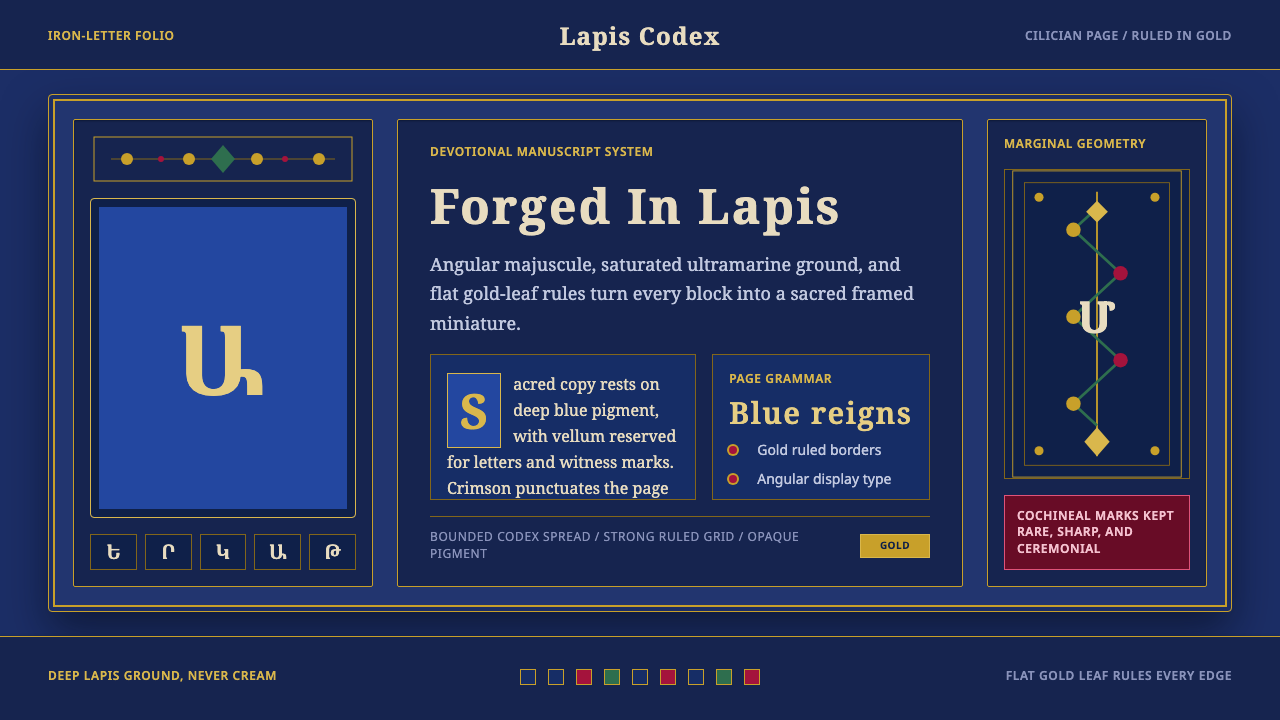 Armenian ErkatʿagirDevotional lapis reigns. Gold rules and angular serif glyphs frame a sacred g…
 Armenian Manuscript FolkloreJewel-dense devotion. Lapis ground, gold uncials, and vermilion arcades fill…