What is Niuean Hiapo Ponga Tapa?
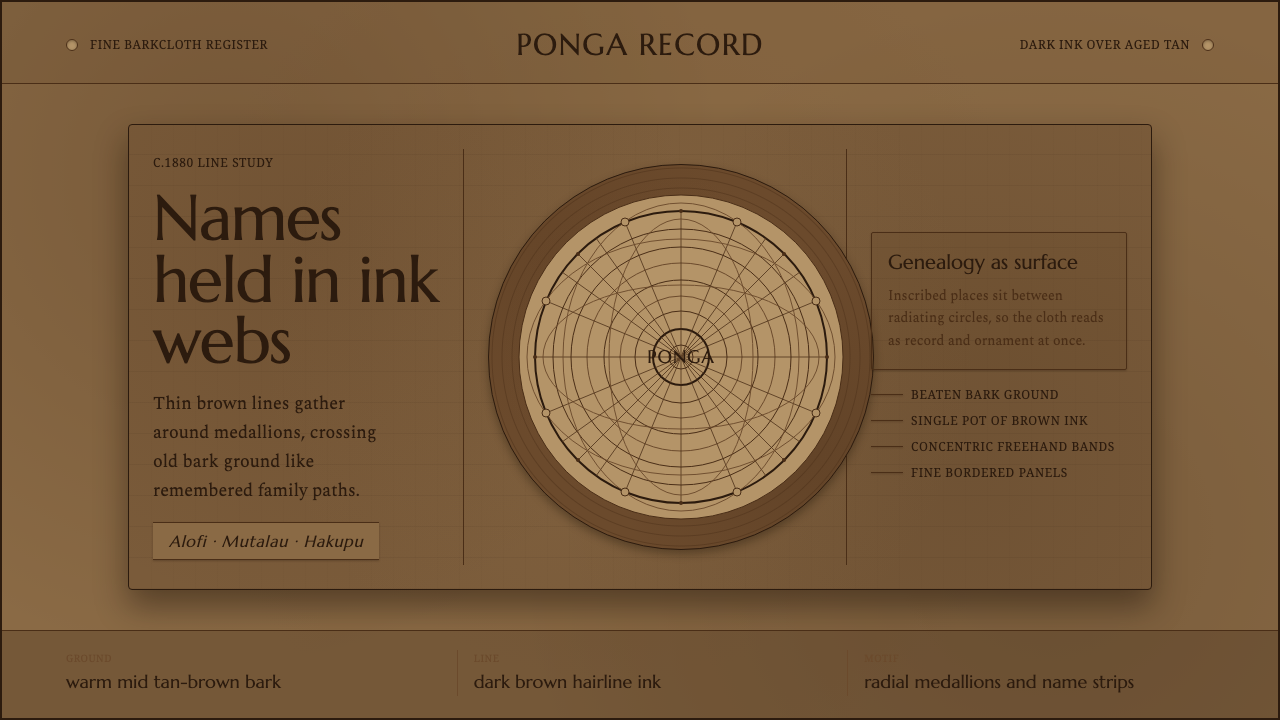
Niuean Hiapo Ponga Tapa turns barkcloth into a field of memory: dark brown lines, fern-guided medallions, and family names spreading across an aged tan ground.
Niuean Hiapo Ponga Tapa in brief
Hiapo is the barkcloth tradition of Niue in Polynesia. Makers beat the inner bark of the paper-mulberry tree into cloth, then Niuean women paint its surface freehand in dark brown ink. The resulting object is neither merely fabric nor merely image: its ground retains the warm, fibrous presence of bark, while its drawn surface becomes dense with marks, motifs, and inscriptions.
The fine freehand hiapo tradition associated with the later nineteenth century is defined by exceptional linear delicacy. Painters pressed ponga, or fern fronds, onto the cloth as rubbed guides, then developed concentric circles, spirals, and radiating motifs around and beyond those impressions. Forms often diminish as they extend outward, creating a visual rhythm that feels at once botanical, diagrammatic, and continuously expanding.
Many surviving hiapo include handwritten family and place names among their medallions. These inscriptions make the cloth a genealogical document as much as a crafted textile. A faithful contemporary reading should preserve that layered meaning: an aged mid tan-brown bark ground crossed by an intricate web of dark brown line, never cleaned into paper white or reduced to a generic tropical pattern.
Where does Niuean Hiapo Ponga Tapa come from?
The fine freehand hiapo tradition belongs to Niue and is associated with the period from about 1850 to 1900. It sits within Pacific tapa, or barkcloth, craft, yet its visual language is distinctly Niuean. Its central material is the inner bark of paper-mulberry, transformed through beating into a receptive cloth surface rather than concealed beneath an even manufactured finish.
Niuean women barkcloth makers were central to this practice. Their work joined material preparation and painted expression: a surface made through repeated physical labor became the ground for extremely controlled freehand line. The distinction matters because the visual system grows from the cloth itself. Its tan field is not an empty backdrop; it is the aged body of the object and an active part of the composition.
Ponga motif painters used fern fronds as rubbed guides. Rather than simply reproducing a leaf, they used its structure as a starting point for concentric circles, spirals, and radiating plant-like forms. Fine lines accumulate into medallions and networks, allowing the surface to appear both carefully organized and alive with variation.
Handwritten names of families and places added another register to surviving cloths. Set among the decorative medallions, the words turn ornament into record. The tradition therefore carries genealogy through material, image, and inscription at once: barkcloth holds the marks, the marks create patterned order, and the names connect the cloth to people and place.
What defines the Niuean Hiapo Ponga Tapa look?
Aged Bark Ground
The essential field is a warm mid tan-brown rather than cream, white, or a digitally neutral canvas. It should suggest beaten bark with age and material depth already present before any line is added. This ground keeps the design rooted in barkcloth and prevents the dark drawing from becoming a sterile ink illustration.
Dark Brown Linework
Dark brown ink forms the visual skeleton. Lines are very thin, freehand, and persistent rather than heavy or calligraphically expressive. Their power comes from accumulation: individual marks remain delicate, but together they build an intricate web that can cover the cloth without flattening its bark ground.
Ponga-Guided Motifs
Fern fronds provide the guiding structure for ponga motifs. The reference is not rendered as a naturalistic botanical picture; it becomes an organizing trace from which circles, radiating branches, and patterned extensions emerge. The result should feel observed from plant structure but translated into an abstract textile grammar.
Concentric Expansion
Concentric circles and spirals establish local centers, then radiating motifs carry the eye outward. Shapes frequently diminish as they move away from those centers, producing a sense of growth and propagation rather than a fixed emblem placed on an empty field. Repetition should remain hand-made, never mechanically identical.
Medallions and Webs
The composition is made of dense medallion-like regions joined by lines, rings, and radiating structures. No single motif needs to dominate. Visual attention travels through connected clusters, reading the cloth as a continuous field whose order emerges from relationships between marks rather than from a central illustration.
Genealogical Inscription
Handwritten family and place names belong within the patterned field, not apart from it as a modern caption. Their presence gives writing equal visual and documentary force. Text should feel embedded among medallions and lines, carrying specific connection to kinship and location without becoming a decorative type treatment.
Who shaped Niuean Hiapo Ponga Tapa?
Niuean women made hiapo from the inner bark of paper-mulberry, transforming beaten bark into cloth and preparing the material ground on which the painted system could exist. Their role joins process, surface, and cultural record in one object.
Ponga motif painters developed the fine freehand language of dark brown lines, using fern fronds as rubbed guides and extending them into circles, spirals, and radiating forms. Their method makes structure emerge through patient accumulation rather than through a single pictorial scene.
Surviving hiapo that carry handwritten family and place names preserve the tradition’s documentary dimension. The inscriptions place genealogy inside the visual field, showing that pattern and written connection can operate together rather than as separate layers.
How do you use Niuean Hiapo Ponga Tapa today?
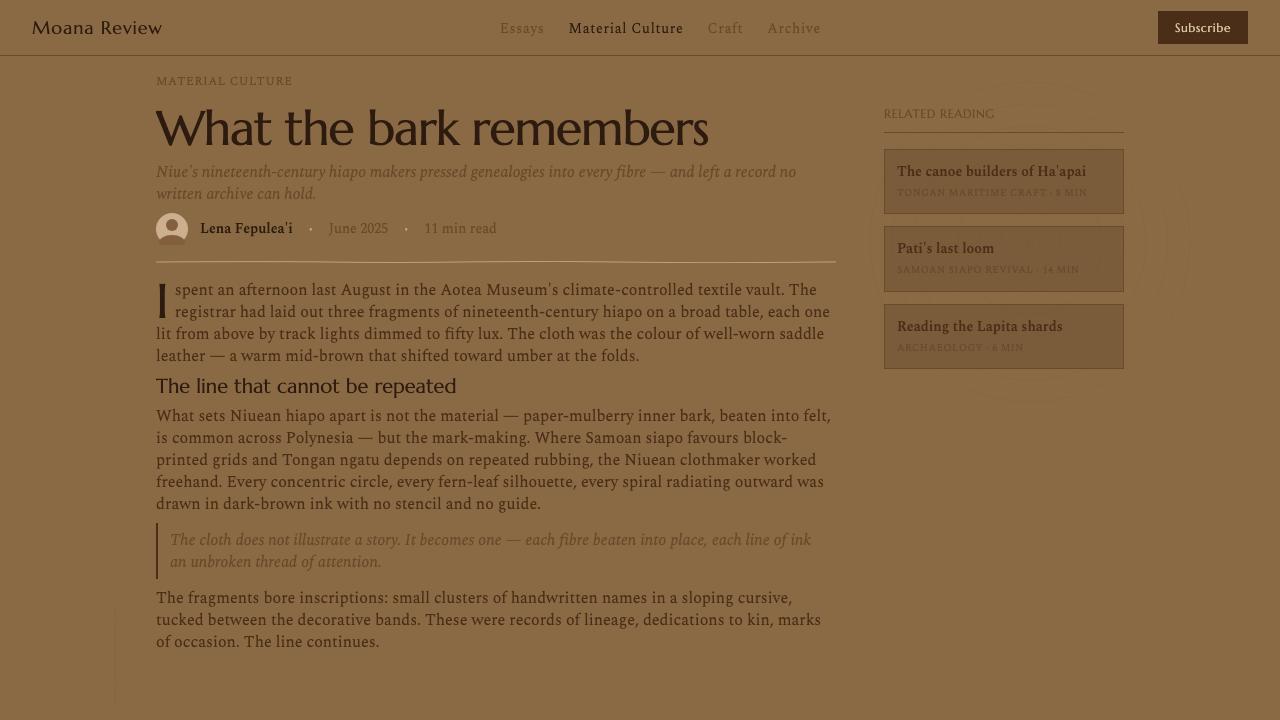
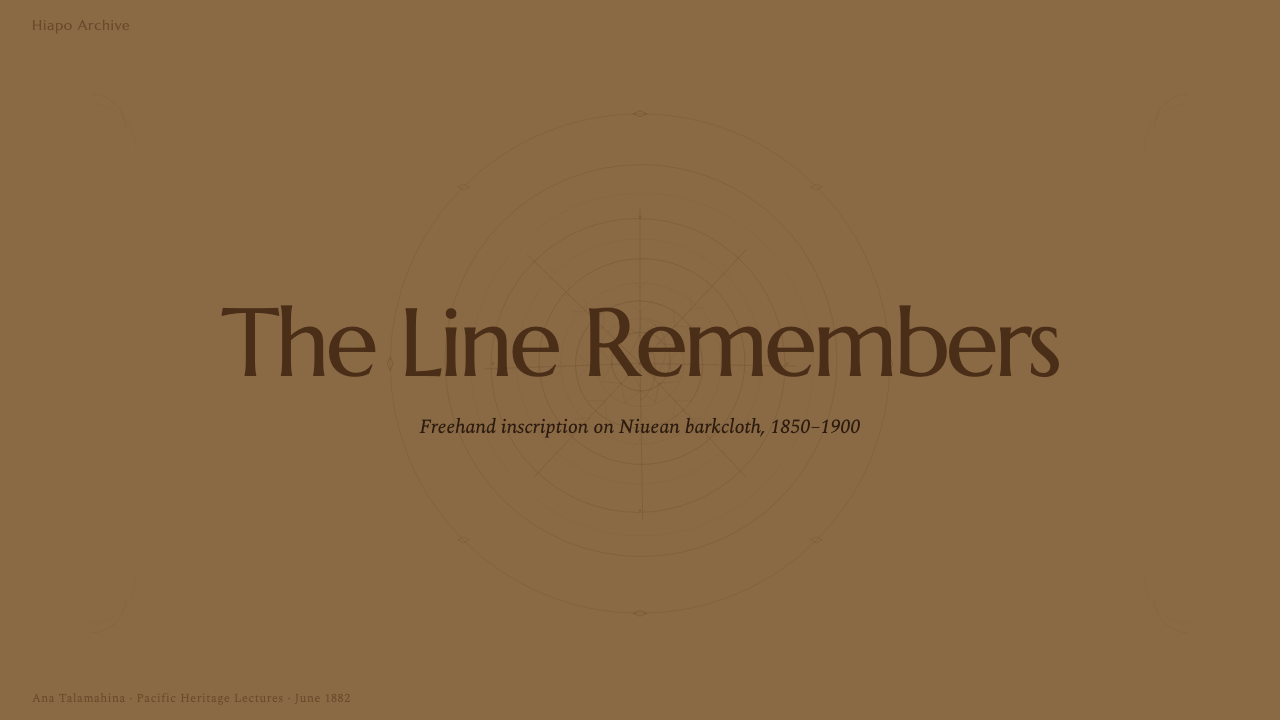
For presentation covers, treat the page as an aged bark field rather than a blank digital surface. Let a dense ponga-derived cluster gather near one edge or spread behind the title area, leaving enough quieter ground for the title to remain legible. Content slides work best when linework frames sections, labels, and imagery rather than functioning as a busy all-over wallpaper. On data slides, medallion logic can organize related groups, while radiating lines can suggest relationship or movement without pretending to be a conventional chart.
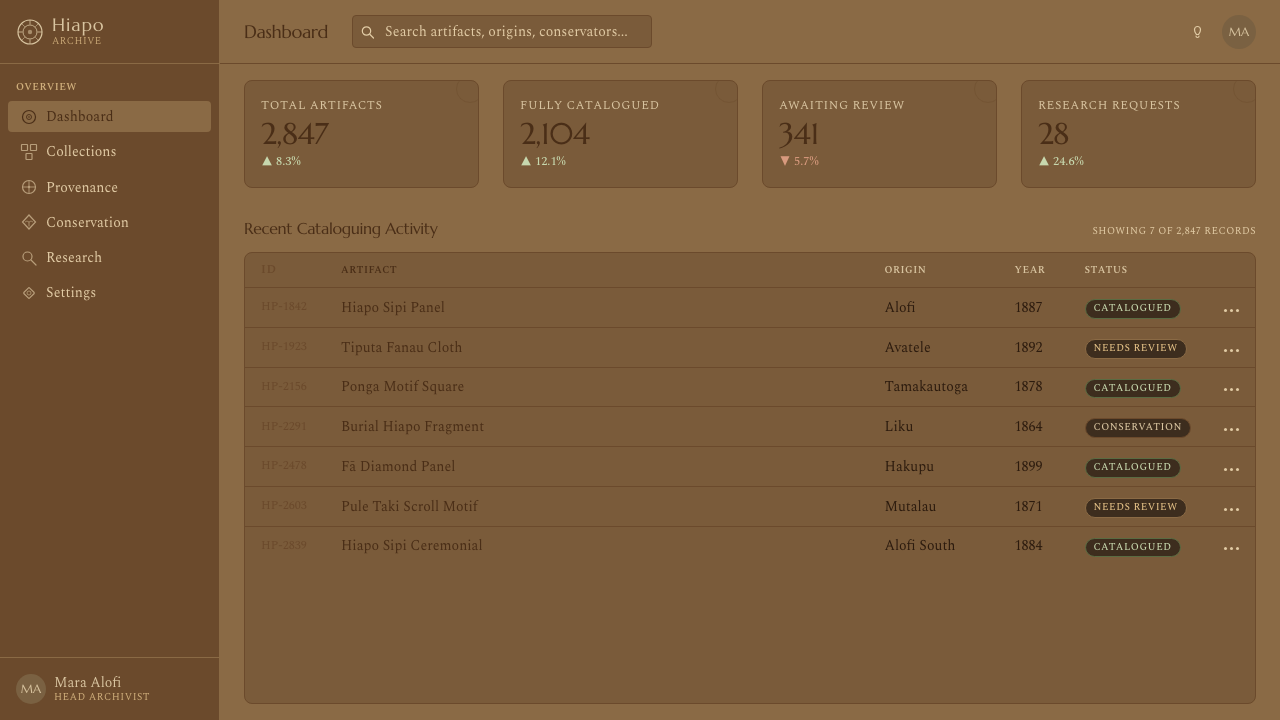
For web interfaces, Hiapo Ponga Tapa is best used as a material and framing language rather than as the primary navigation system. It can bring a distinctive identity to dashboards, archive views, collection pages, and pricing surfaces when the dense pattern is held at the edges, in panels, or within generous background areas. Interface text, controls, and data need clear calmer zones; the pattern should enrich the setting without competing with task completion.
Editorial and marketing work can draw on the tradition’s documentary quality. A feature story may use hand-drawn line clusters to introduce sections, with names, locations, or source notes integrated carefully as meaningful inscriptions rather than ornamental filler. Campaign pages can use the aged bark ground to establish warmth and continuity, then reserve the densest medallions for moments that need visual emphasis, such as a hero area or a closing invitation.
The common mistake is to turn hiapo into a generic dark tropical pattern. Avoid pure white grounds, glossy polish, symmetrical wallpaper repetition, thick tribal-looking outlines, or brightly colored fills that erase the discipline of dark brown line on tan bark. Do not treat genealogical writing as random texture. The style is strongest when its hand-made irregularity, material age, fern-guided structure, and connection to family and place remain visible.
Niuean Hiapo Ponga Tapa — FAQ
Is Hiapo Ponga Tapa simply a fern pattern?
No. Ponga fern fronds serve as rubbed guides, but the finished language expands far beyond botanical depiction. Painters build concentric circles, spirals, radiating forms, and dense line networks from that guide. The fern is a structural starting point, not a naturalistic illustration to copy.
Why should the background remain tan-brown instead of white?
Because hiapo begins with beaten paper-mulberry bark. Its warm aged tan-brown ground is part of the object’s material identity, not a replaceable backdrop. Whitening that field makes the dark linework appear like ordinary ink on paper and weakens the barkcloth reading that gives the tradition its character.
Can the linework be made perfectly symmetrical or repeated digitally?
That approach can preserve a loose visual resemblance but loses the fine freehand character of hiapo. The tradition depends on very thin drawn lines, gradual variation, and motifs that develop across the cloth. Repetition should feel related and organized, yet remain visibly made through hand-guided accumulation.
How should family and place names be handled in a contemporary adaptation?
They should be treated as meaningful inscriptions, because surviving hiapo uses handwritten family and place names as part of its genealogical record. Do not add invented names as visual filler. If no appropriate text is available, let the medallions and linework carry the composition rather than imitating documentary writing without its connection to people and place.
Related design styles
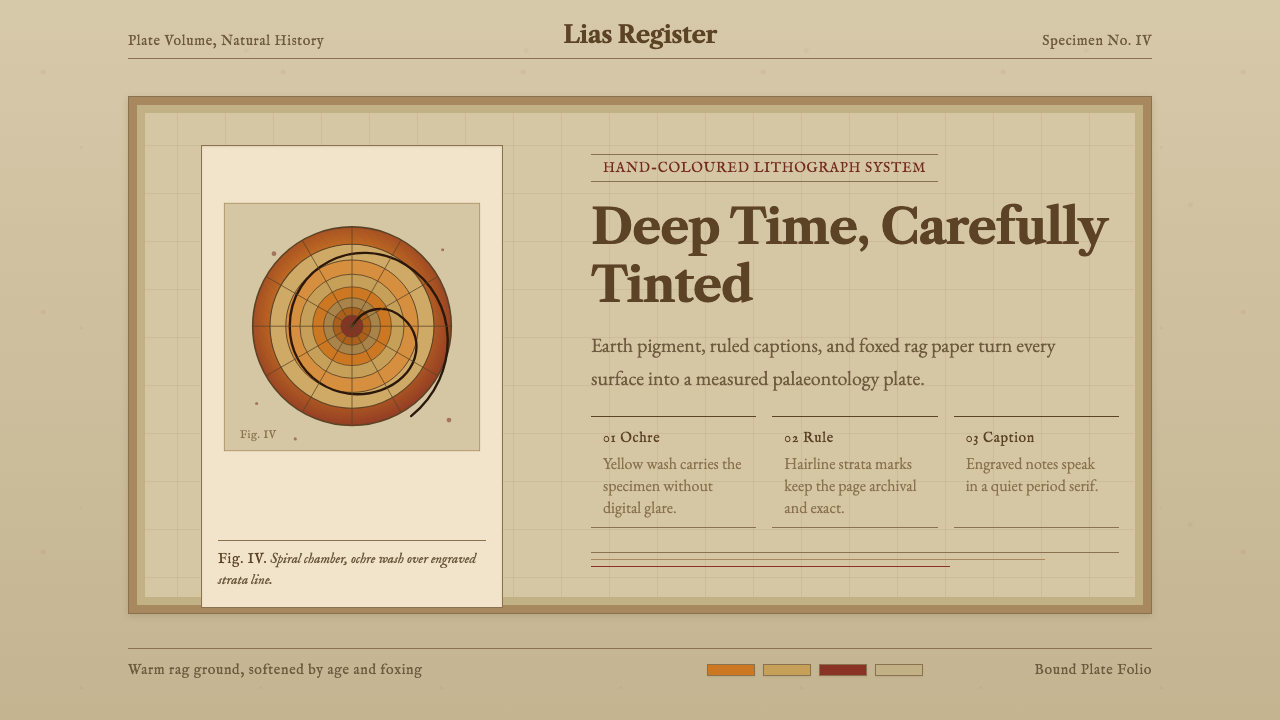 Ammonite Fossil PlateDeep time feels hand-tinted. Ochre spiral, foxed paper, and engraved captions…
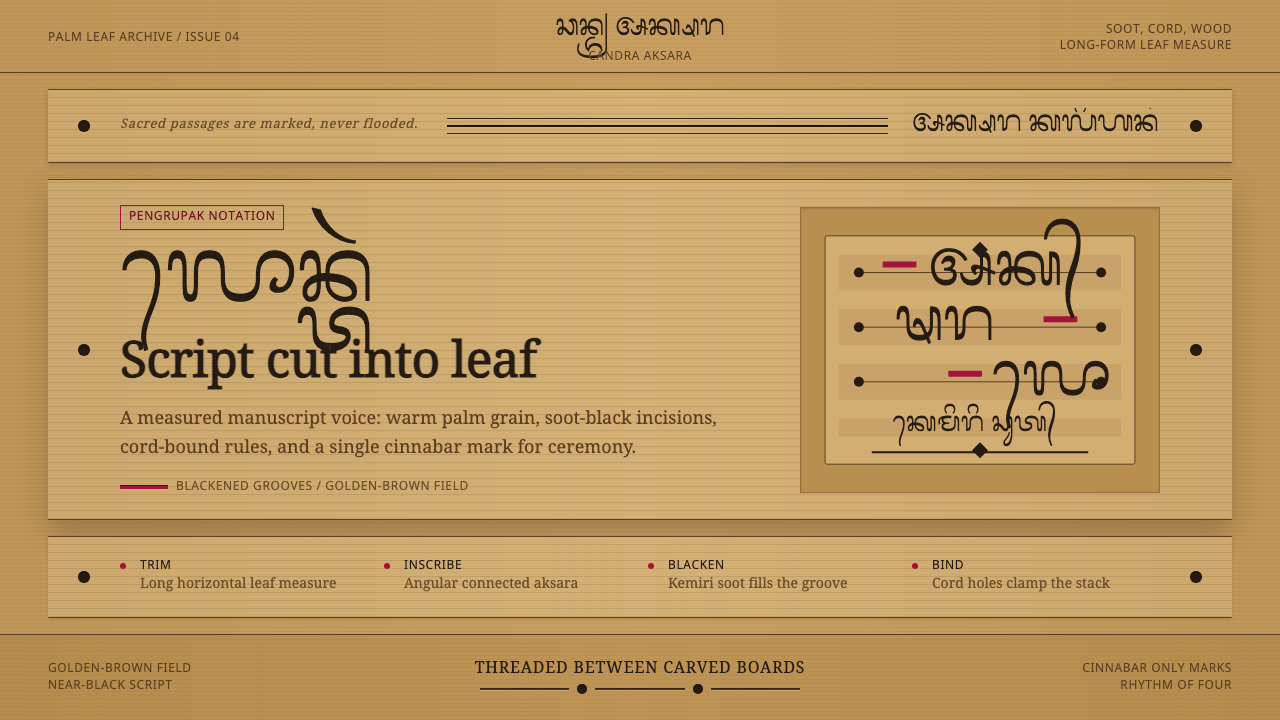 Balinese LontarHandmade memory, incised. Golden leaf strips carry soot script and spare cinn…
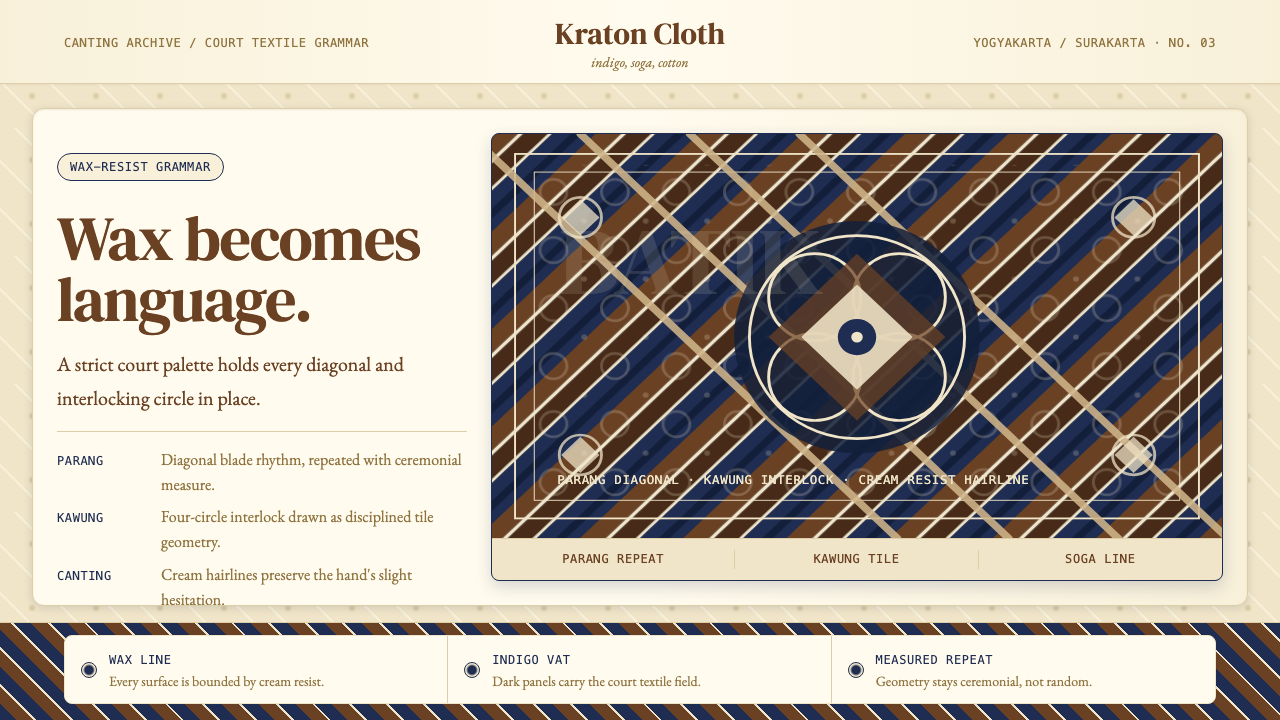 Javanese BatikCeremonial repetition. Indigo, soga, and cream frame a tiled canting motif.
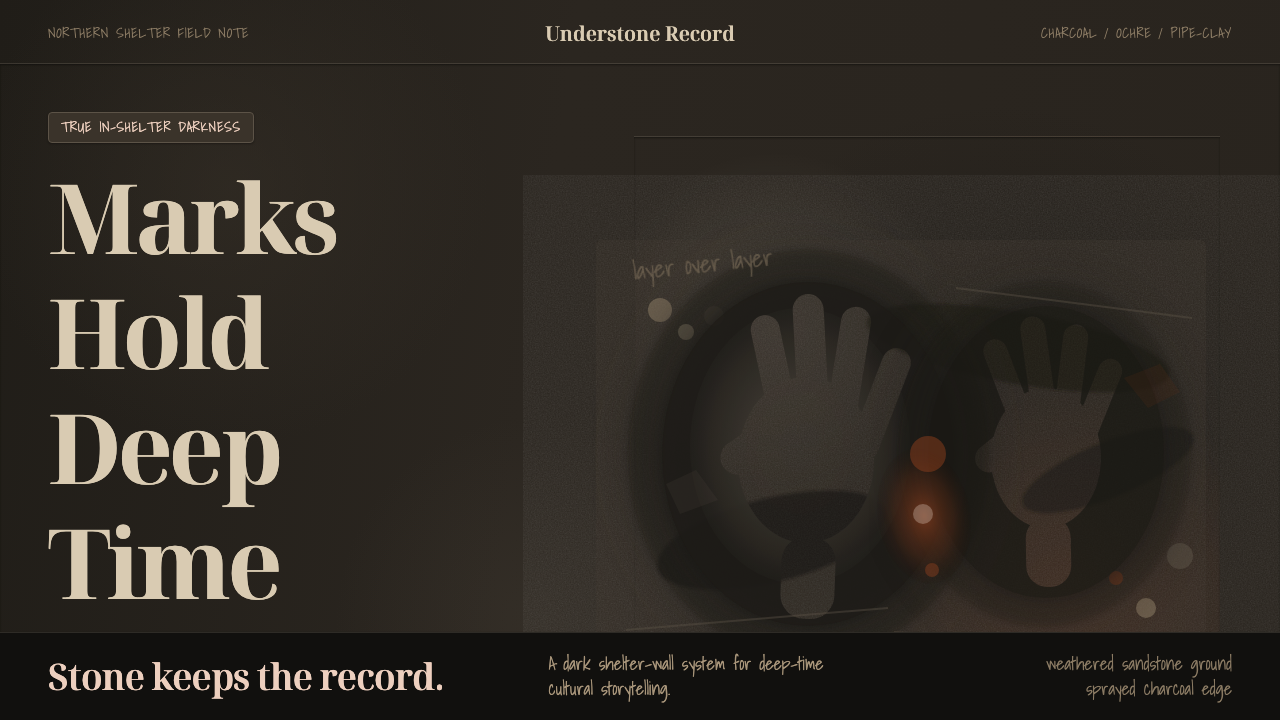 Kakadu Rock Shelter CharcoalDarkness carries memory. Charcoal stencils and haematite dust sit on weathere…
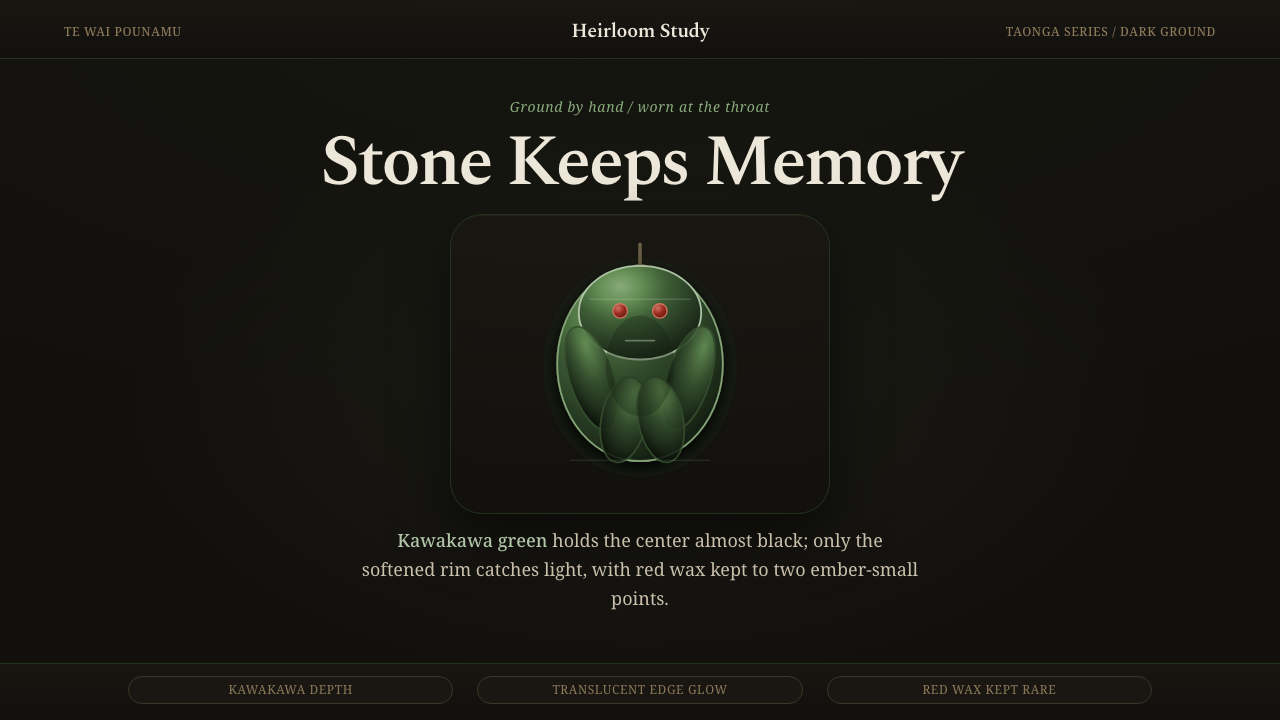 Māori Hei-Tiki PounamuQuiet mana in dark stone. Moss-green pounamu glows at the edge, red wax held…
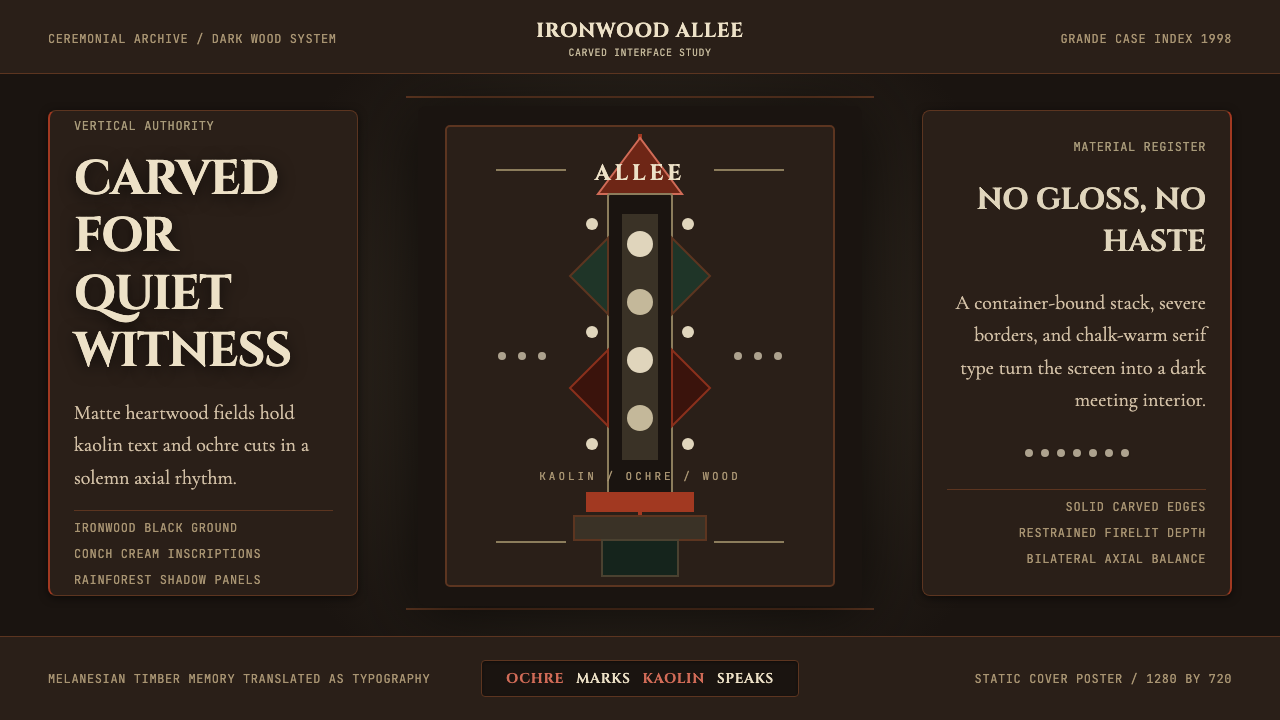 New Caledonia Kanak TotemSolemn carved darkness. Ochre axis, kaolin serif type, and conch dots hold th…