What is Ni-Vanuatu Slit Gong Ambrym?
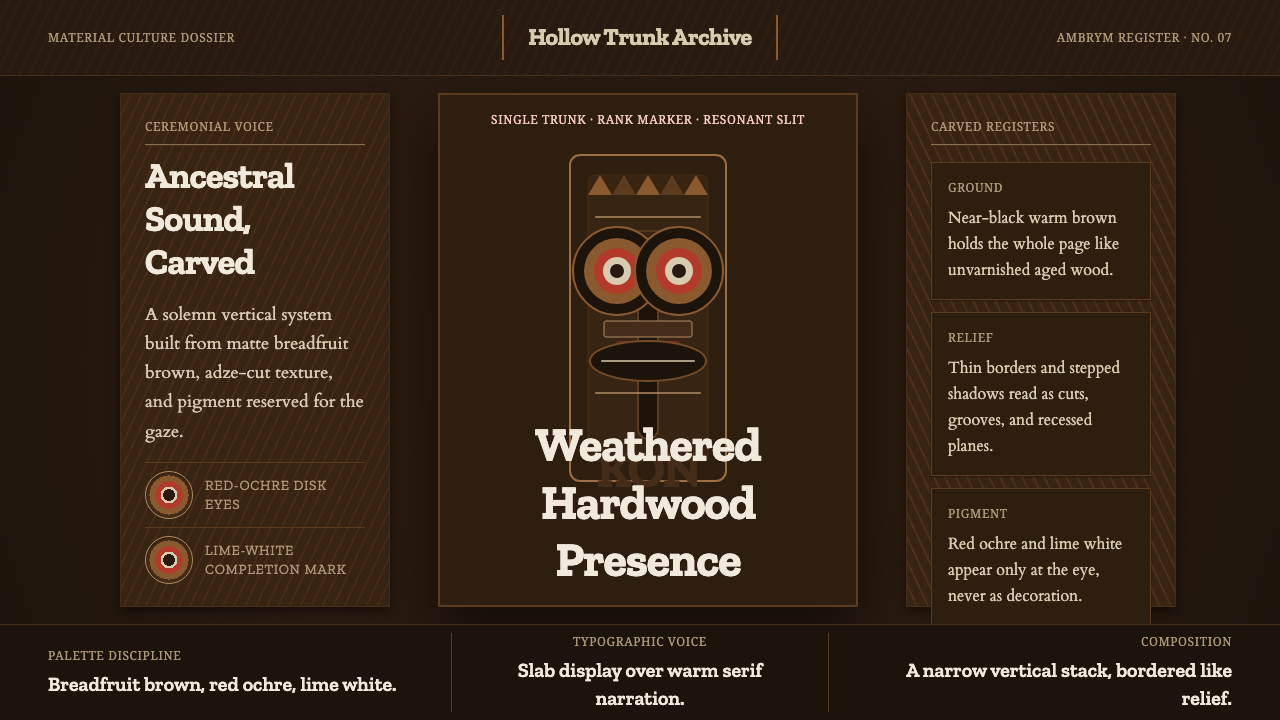
Ni-Vanuatu slit-gong imagery from Ambrym turns a single hollowed breadfruit trunk into a grave, monumental language of ancestry, rank, carved rhythm, and watchful eyes.
Ni-Vanuatu Slit Gong Ambrym in brief
The Ni-Vanuatu Slit Gong Ambrym style draws from the atingting kon, a towering slit gong carved from a single breadfruit trunk on Ambrym Island in Vanuatu. Its starting point is not decorative pattern for its own sake, but a functional drum transformed into a monumental ancestral portrait. The visual force comes from the object’s vertical presence, its hollowed body, and the carved face that crowns it. Every feature reads as a deliberate mark of lineage and ceremonial status.
The face is the system’s central device. Concentric disk eyes create an immediate, frontal gaze; deeply cut brows give that gaze gravity; serrated rows suggest hair through repeated incision rather than soft depiction. Beneath the face, the curled tusker-pig motif introduces another compact sign of carving, rhythm, and ceremonial meaning. The result is neither naturalistic portraiture nor abstract decoration. It is a severe symbolic presence made through recognizable carved forms.
In a digital translation, the style keeps the material character of weathered hardwood rather than imitating a polished luxury surface. Deep warm brown establishes the field, while red ochre and lime white are reserved for the eye disks and their ceremonial emphasis. Borders should feel incised, repeated, and materially connected to the face. The mood is dark and deliberate: forms emerge as if cut into wood, carrying age, restraint, and ritual weight.
Where does Ni-Vanuatu Slit Gong Ambrym come from?
This visual language belongs to the pre-1900 ceremonial carving tradition that continues on Ambrym today. Its named setting is Fanla village on Ambrym Island, Vanuatu, where master carvers hollow a single breadfruit trunk to create an atingting kon. The object’s construction matters because its visual identity begins with an actual tree trunk: a tall, solid form opened into a slit gong rather than assembled from separate ornamental parts.
The relevant carving tradition is Ni-Vanuatu tam-tam slit-gong carving, joined here to ancestral-face monumental sculpture. That pairing explains the style’s unusual balance of utility and presence. The gong is functional, yet its carved upper portion carries one or more ancestral faces. Its face is therefore not a detachable logo applied to an object; it is integral to the monument and to the meaning carried by its carved body.
Ambrym master carvers establish the visual vocabulary through adze-cut wood, concentric eyes, deep brows, serrated hair rows, and the curled tusker-pig motif. These elements do not depend on smooth rendering or ornamental abundance. Their force lies in depth, repetition, and contrast between broad trunk surfaces and sharply worked marks. The wood is never varnished, allowing the direct evidence of cutting and weathering to remain visible.
Traces of red-ochre and lime-white pigment on the eye disks provide the strongest color contrast within the source material. They are described as marks of authenticity and ceremonial status, not as casual embellishment. Any contemporary use should therefore understand the style as an interpretation of a solemn carved presence rooted in Ambrym’s living tradition, not as a generic tropical pattern or a collection of freely interchangeable motifs.
What defines the Ni-Vanuatu Slit Gong Ambrym look?
Dark Breadfruit Wood
The base impression is deep, warm breadfruit brown with the gravity of unvarnished hardwood. Surfaces should appear worked and weathered rather than glossy or perfected. Broad dark fields create the sense of a trunk, while subtle carved variation prevents the composition from becoming an empty black surface. Material presence comes before visual polish.
Concentric Eye Disks
The eye disks are the strongest focal mechanism. Their concentric construction makes the face feel frontal, alert, and ceremonial without requiring realistic facial detail. Red ochre and lime white belong here as concentrated signals, used to make the gaze legible against dark wood. The eyes should command attention through contrast and repetition, not glow or digital effects.
Carved Facial Relief
Deep brows and hollowed cuts establish a face through relief rather than illustration. Forms should feel removed from the material, as though an adze has exposed the image by cutting inward. This gives interfaces and graphics a solemn directional logic: recesses hold darkness, ridges carry emphasis, and the face remains a carved structure rather than a soft portrait.
Serrated Hair Rows
Repeated serrated marks create rhythm at the edge of the ancestral face. They are compact, tactile, and emphatically hand-worked. In contemporary layouts, this quality can become an incised divider, a repeated border, or a controlled framing device. It should remain sharp and sparse, preserving the sense of carved recurrence rather than becoming a dense decorative texture.
Tusker-Pig Curl
The curled tusker-pig motif introduces a compact spiral counterpoint to the frontal geometry of the eyes and brows. It is most effective when treated as a single consequential sign, placed with restraint beneath or near the face. Repeating it indiscriminately weakens its force. The curl should read as carved meaning, not as a generic ornamental flourish.
Incised Borders
Borders should feel cut into the same dark material as the central form. Their role is to contain, divide, and reinforce ceremonial gravity, not to add visual richness at every edge. A border may use repeated notches, a carved line, or a restrained rhythm of relief. Its authority comes from continuity with the wood and the face.
Who shaped Ni-Vanuatu Slit Gong Ambrym?
Ambrym master carvers are the named makers behind the atingting kon tradition described here. Their work hollows a single breadfruit trunk and gives the slit gong its towering carved presence. The style’s digital vocabulary should remain accountable to this making process: depth, incision, exposed wood, and facial structure are consequences of carving, not merely a visual costume.
Fanla village lodge sculptors identify the local setting attached to this ceremonial carving language. Their inclusion keeps the style located in Fanla village on Ambrym rather than detached into an anonymous regional aesthetic. For public-facing work, that specificity matters: the reference is a living cultural practice with a named place, not a mood board category.
Ni-Vanuatu tam-tam slit-gong carving is the named movement through which the object’s functional and monumental qualities meet. It provides the structural source for the visual system: a hollowed trunk, a slit gong, carved ancestral faces, and marks of ceremonial status. It is best understood as the cultural framework of the style rather than as an interchangeable image bank.
How do you use Ni-Vanuatu Slit Gong Ambrym today?
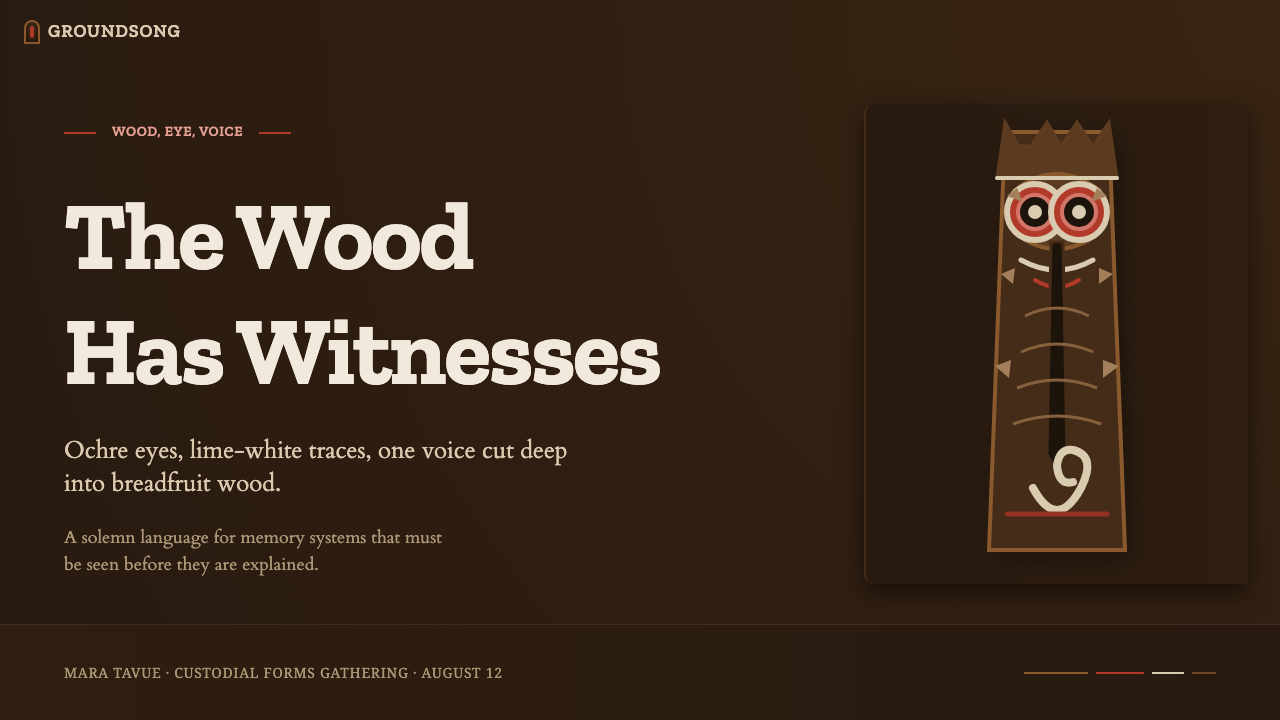
For presentation covers, begin with a deep wood-like field and organize the composition around one monumental face or a closely cropped pair of concentric eye disks. Let the title sit with the seriousness of an inscription, supported by an incised border or a restrained serrated rhythm. Content slides should become calmer carved panels: establish clear text areas, use eye disks or a tusker-pig curl only as structural anchors, and preserve large areas of darkness so the imagery retains its monumental scale.
Data slides benefit when charts are treated as carved marks rather than bright dashboard decoration. Use the dark field to establish hierarchy, reserve the red-ochre and lime-white contrasts for the most important readings, and make dividers resemble scored or incised lines. The goal is not to turn every data point into a motif. It is to make information feel deliberate, legible, and held within a coherent ceremonial frame.
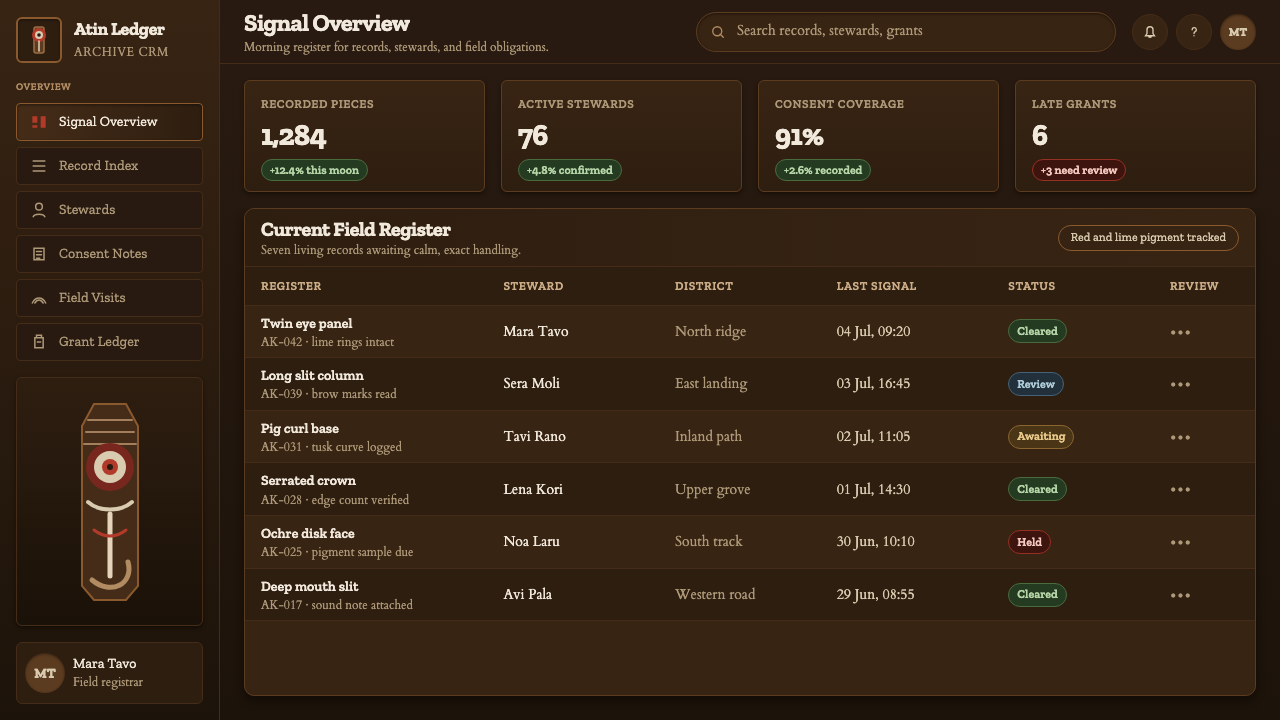
For web interfaces, this language suits dashboards, analytical tools, and pricing pages that need gravity, focus, and a strong sense of identity. A dashboard can use the dark wood field as a stable ground, with carved borders separating groups of information and eye-disk accents calling attention to key states. A pricing page can treat each offering as a tall carved panel, making comparison clear while allowing the visual system to remain solemn rather than aggressively promotional.
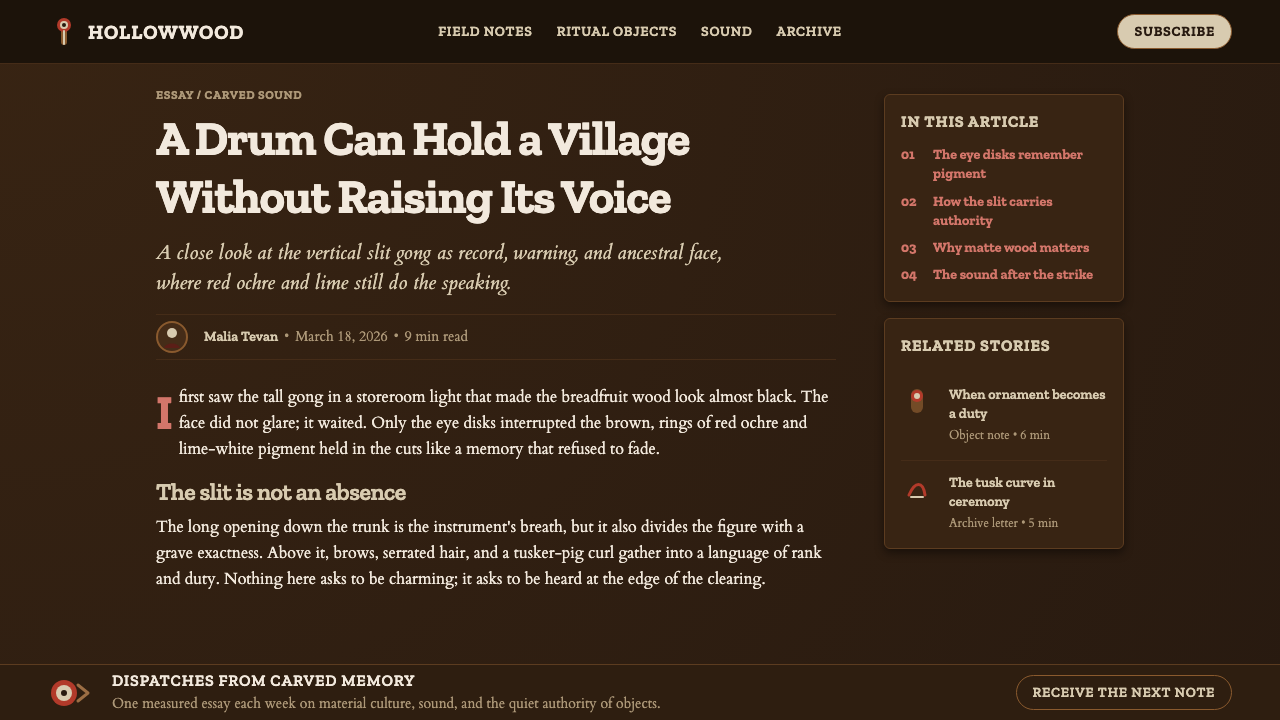
Editorial and marketing work should use the style’s verticality and framing. An article can open with a large ancestral-face image or abstracted eye disks, then place body text inside broad dark panels interrupted by spare carved rules. Marketing sections can alternate between expansive wood-like fields and lighter passages that give the eye relief, while red ochre and lime white remain meaningful accents. The strongest result feels like a considered encounter with carved presence, not a themed campaign surface.
The common mistake is to reduce the source to dark brown backgrounds, tribal-looking borders, and repeated eye symbols. That approach strips the imagery of its structure and local specificity. Avoid indiscriminate pattern repetition, glossy wood effects, playful cartoon expressions, or decorative overload. Keep the face frontal, the cuts consequential, the pigment accents rare, and the reference clearly connected to Ambrym, Fanla village, and the Ni-Vanuatu slit-gong carving tradition.
Ni-Vanuatu Slit Gong Ambrym — FAQ
What is an atingting kon?
An atingting kon is a towering slit gong carved from a single breadfruit trunk on Ambrym Island in Vanuatu. Master carvers hollow the trunk and crown it with one or more ancestral faces. In the source material, the object is both a functional drum and a monumental portrait connected to lineage and rank.
Why are the eyes so important in this visual language?
The concentric disk eyes are a signature feature of the carved ancestral face. Against the deep warm-brown wood, traces of red ochre and lime white make them especially legible. The source material identifies these pigments as marks of authenticity and ceremonial status, so the eyes should be treated as concentrated visual meaning rather than as a decorative pattern.
Should this style imitate polished wood?
No. The source material specifically describes wood that is adze-cut and never varnished. A convincing digital interpretation should favor exposed grain-like variation, carved recesses, and weathered depth over reflective shine. The desired impression is solemn hardwood shaped by cutting, not a luxury furniture finish.
Can the carved motifs be used as generic decoration?
They should not be treated that way. The source material locates the imagery in Fanla village on Ambrym Island and identifies it with Ni-Vanuatu tam-tam slit-gong carving and ancestral-face monumental sculpture. A respectful application preserves that context, uses motifs sparingly, and avoids turning the eyes, serrated rows, or tusker-pig curl into unrelated ornamental wallpaper.
Related design styles
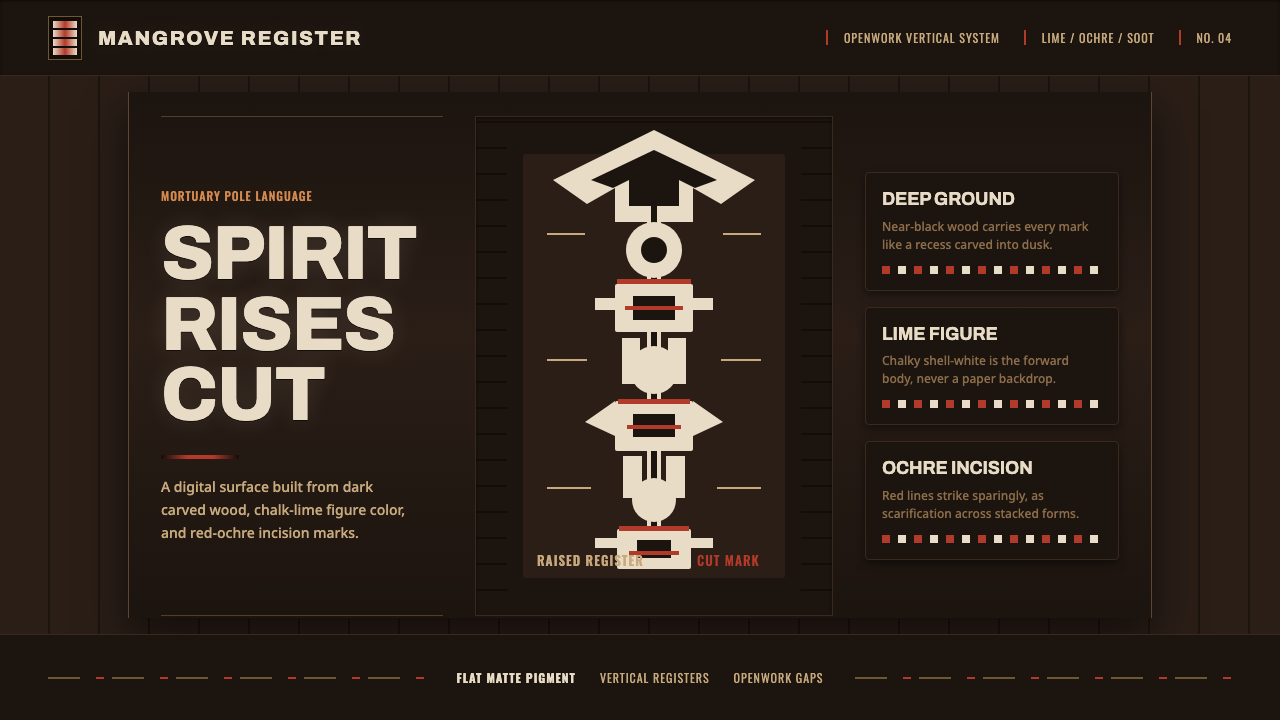 Asmat Bisj Ancestor PoleCeremonial vertical force. Lime-white figures rise from dark wood with red-oc…
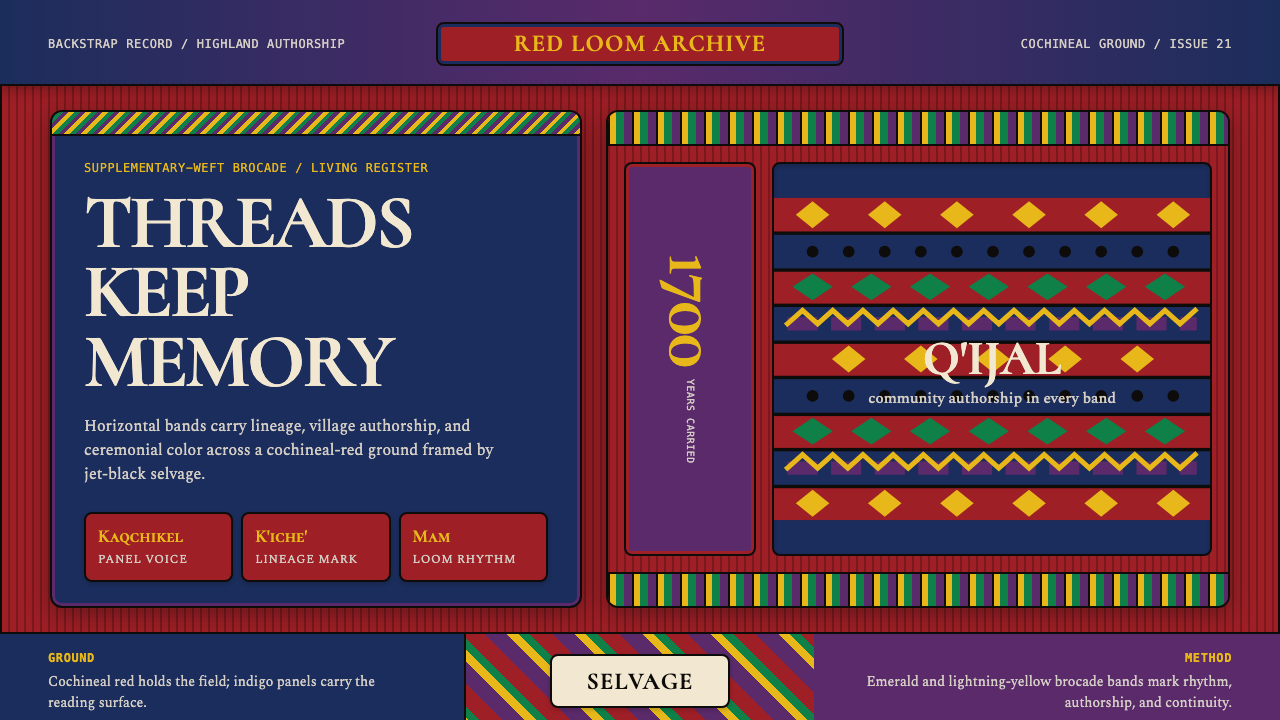 Guatemalan Huipil Maya WeaveMemory is woven dense. Cochineal red, black selvage, and brocade bands hold t…
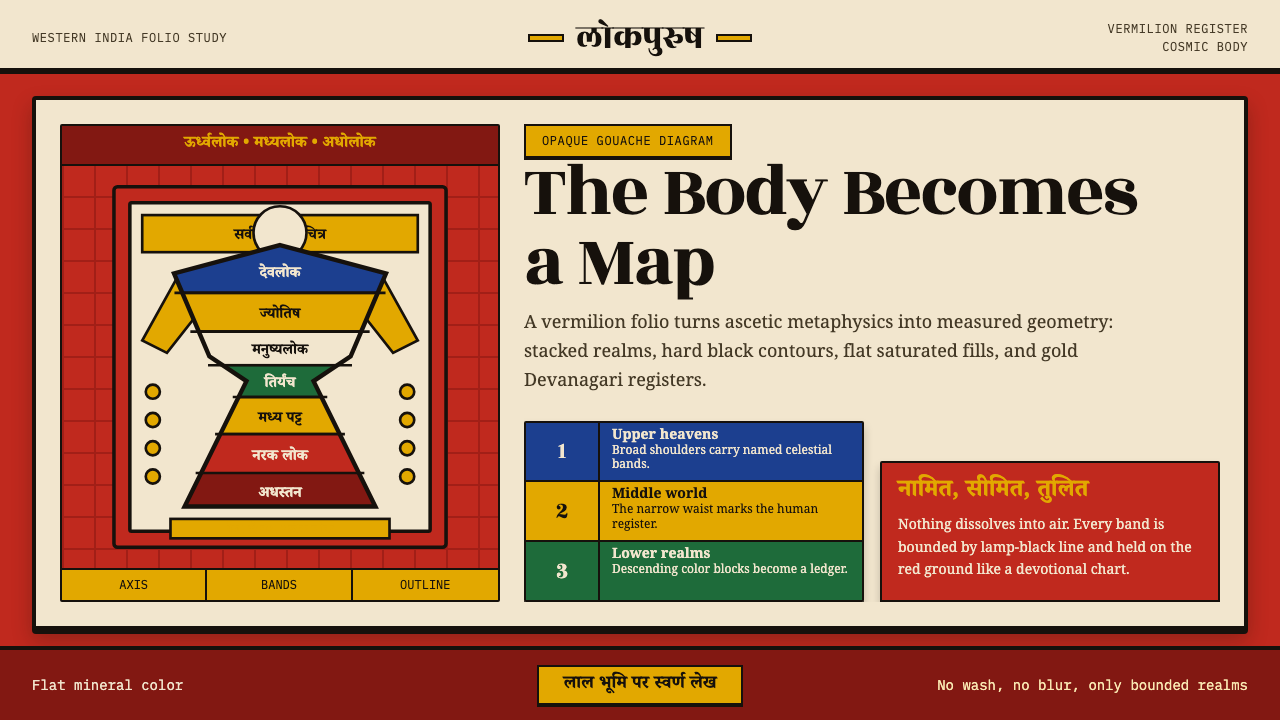 Jain CosmologyAscetic geometry, made visible. Vermilion ground, black contours, gold Devana…
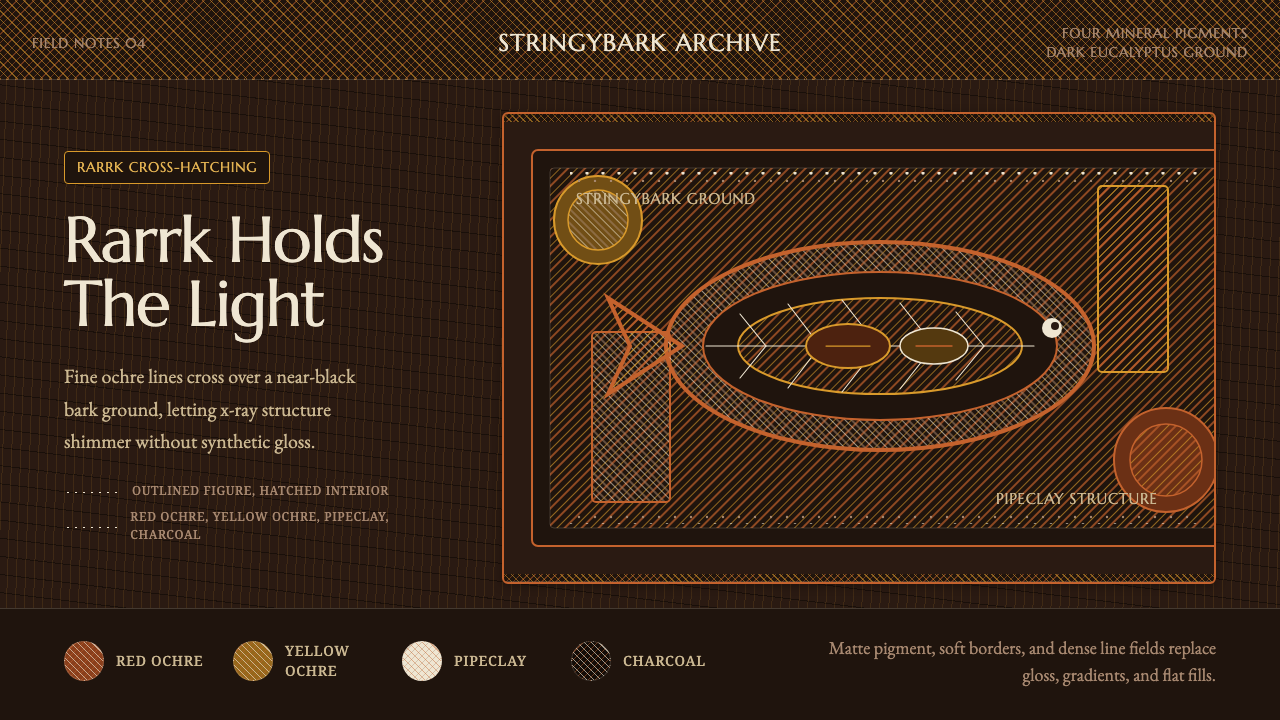 Arnhem X-Ray Bark PaintingShimmers without gloss. Ochre rarrk lines vibrate on dark stringybark.
 Fijian Masi (Bark Stencil)Stencil memory stays sharp. Soot black and burnt coral strike bark-fibre band…
 Malagan CarvingCarved for the dead feast. Ochre, lime and charcoal pierced into dark wood, e…