What is Kathmandu Thamel Trekking?
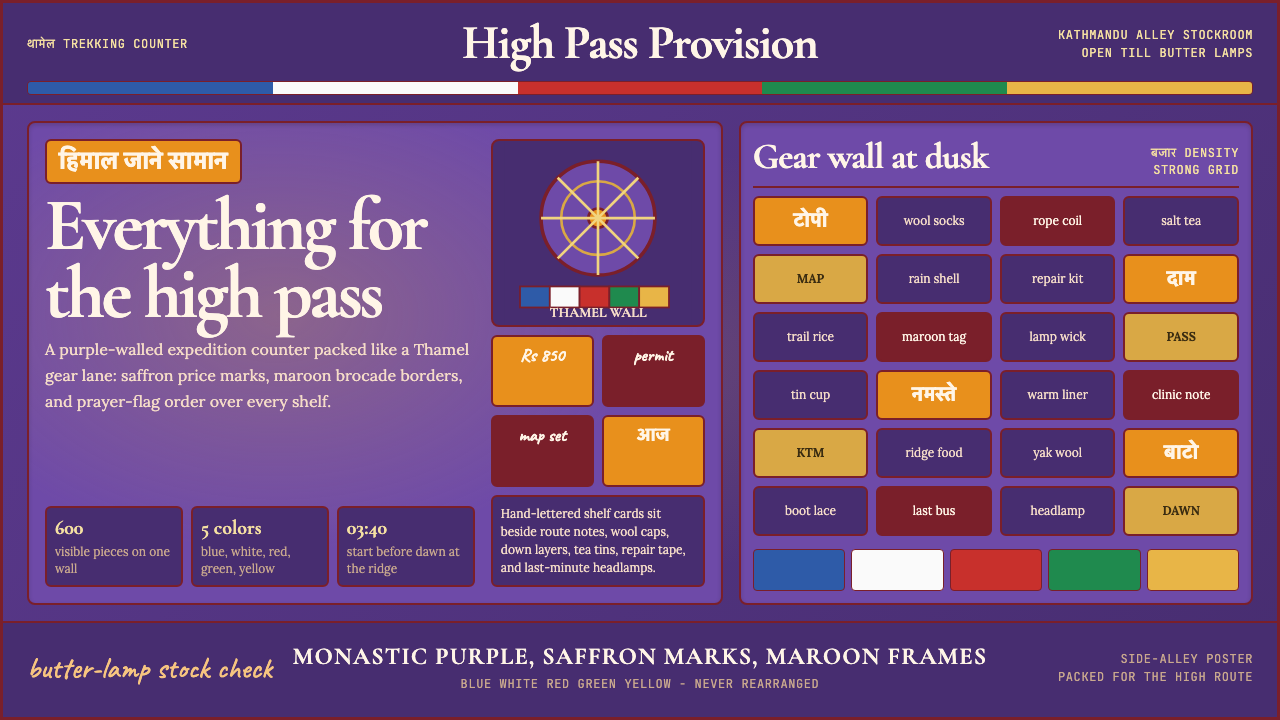
Kathmandu Thamel Trekking captures the layered, unapologetically saturated visual world of Nepal's most famous trekking bazaar — where Tibetan-Buddhist iconography and mountaineering commerce have coexisted in productive chaos since the 1980s.
Kathmandu Thamel Trekking in brief
Kathmandu Thamel Trekking is a design style rooted in the visual culture of Thamel, a compact trekking district in central Kathmandu where Buddhist monastery aesthetics and the commercial energy of a global outdoor-gear market have merged into something wholly unique. The style is defined by deep monastic purple walls, saffron-toned accent elements, the five sacred colors of Tibetan prayer flags used as rhythmic dividers, and Devanagari script treated as a primary visual texture rather than supplementary signage.
The layouts are deliberately dense, echoing the sensory abundance of a Thamel gear shop that stocks hundreds of items on a single wall. Where many contemporary design systems prize restraint and negative space, this style treats visual fullness as a cultural virtue — every surface carries meaning, every divider carries color, and the total effect is one of generous, almost overwhelming richness.
The typography pairs warm humanist letterforms with Devanagari script, grounding the design in Himalayan cultural specificity. This bilingual typographic approach is not a stylistic choice layered over a neutral base; it is the backbone of the system, ensuring that the cultural context of the Kathmandu bazaar remains legible even when the style is applied to digital interfaces far from Nepal.
Where does Kathmandu Thamel Trekking come from?
Thamel's visual identity emerged from the convergence of two powerful forces in the late twentieth century. The first is Tibetan-Buddhist iconographic tradition — one of the most codified and spiritually charged visual systems in the world, with roots stretching back many centuries. The prayer flag's five colors (blue for sky, white for air, red for fire, green for water, yellow for earth) represent a cosmological order that precedes modern design by millennia. The second force is the dramatic growth of Himalayan trekking tourism, which accelerated sharply after Nepal opened to foreign visitors in 1950 and expanded into a major industry through the 1970s and 1980s.
By the 1980s and into the 1990s, Thamel had crystallized into a one-square-kilometer district that served as the mandatory departure point for virtually every major Himalayan expedition. Gear shops, teahouses, thangka painting galleries, and currency-exchange windows competed for visual attention on every street. The hand-painted Devanagari signage of those years — typically rendered in warm earth tones and saffron against deep purple or brick-red backgrounds — was not designed according to any system; it evolved organically as shopkeepers responded to one another's visual strategies, and as Buddhist decorative conventions filtered down from the monastery walls that surrounded and interpenetrated the commercial district.
Key figures in codifying and transmitting this visual culture include Tashi Sherpa and Sonam Lama, whose work in Himalayan trekking commerce helped establish the aesthetic conventions that would later be recognized as distinctively Thamel. Robert Beer, a British scholar and artist who has spent decades documenting Tibetan iconography, provided crucial academic frameworks for understanding how Buddhist visual motifs traveled from sacred to commercial contexts without losing their symbolic weight. The broader movements that shaped the style include Himalayan trekking tourism as a global industry, Tibetan-Buddhist diaspora visual culture (dispersed but intensified after 1959), and the Nepali fair-trade artisan export economy, which brought monastery aesthetics into contact with international markets.
The style's relationship to authenticity is complex. Thamel's visual culture is simultaneously deeply rooted in centuries-old Himalayan spiritual tradition and a product of commercial improvisation responding to the tastes of Western trekkers. This productive tension — between the sacred and the commercial, between ancient symbol and modern market — is not a contradiction to be resolved but a defining characteristic of the style. The prayer flag stripes that divide a Thamel gear shop's signage carry the same sacred color order as those strung between monastery rooftops; the context has changed, but the cosmological structure has not.
What defines the Kathmandu Thamel Trekking look?
Color
The palette is structured around a deep monastic purple that functions as the dominant wall tone, paired with saffron as a warm, luminous accent. The five sacred colors of the Tibetan prayer flag — sky blue, wind white, fire red, water green, and earth yellow — appear in their prescribed sequential order as stripe dividers and rhythmic banding elements. Color is never neutral here; every hue carries cultural and cosmological weight. The overall effect is saturated and warm, with deep shadows that feel like candlelight rather than harsh illumination.
Typography
Devanagari script serves as a primary visual rhythm, not supplementary annotation — it occupies headline positions alongside Latin letterforms and is treated with equal graphic weight. The Latin type leans toward warm humanist serifs that carry a hand-crafted quality reminiscent of hand-lettered shop signage. Type is set with generous leading and warm optical spacing that reflects the organic, hand-painted origins of the Thamel sign tradition. The bilingual pairing is structural rather than decorative.
Layout Density
Thamel Trekking layouts embrace deliberate visual fullness as a cultural expression rather than an organizational failure. Where Swiss-derived systems treat empty space as an asset, this style treats every available surface as an opportunity for meaning. Sections are separated by prayer-flag stripe bands rather than whitespace. Product information is layered — price, category, cultural note, and visual sample coexist in close proximity. This density is not clutter; it is the visual equivalent of a bazaar's productive abundance.
Iconography and Motif
Buddhist iconographic motifs — the endless knot, the lotus, mandala geometries, mountain silhouettes — appear as texture and structural ornament throughout the system. Unlike styles that borrow surface patterns from non-Western traditions without regard for meaning, Thamel Trekking preserves the symbolic specificity of each motif. Mountain silhouettes anchor compositions and provide visual hierarchy; lotus forms soften corners and dividers. These elements are not interchangeable decoration — they carry a specific cultural vocabulary.
Texture and Material Quality
The style evokes hand-made and artisan material surfaces: rough plaster walls, aged wood, woven textile patterns. In digital application this translates to gentle surface variation that avoids clinical flatness — backgrounds carry a slight material warmth, borders feel hand-drawn rather than perfectly ruled. This textural quality distinguishes the style from any kind of minimal or flat-design tradition, aligning it instead with the physical richness of the Himalayan craft environment.
Sacred-Commercial Balance
Perhaps the most distinctive characteristic of this style is its comfort with the coexistence of sacred symbol and commercial function. A prayer flag stripe can divide a price list; a mandala geometry can organize a product grid; Devanagari script can headline a discount promotion. This is not irreverence — it reflects the actual visual ecology of Thamel, where commercial and sacred have interpenetrated for decades. The style handles this tension by preserving the symbolic color order and motif integrity of the Buddhist elements, even when their context is transactional.
Warmth and Illumination
The style's light quality is warm and amber-toned, evoking butter lamps and lantern light at dusk rather than daylight or artificial white illumination. This warm cast affects how all other colors are experienced: the purples lean toward red, the whites warm toward cream, the saffrons glow rather than simply appearing bright. Shadow is treated softly and organically, recalling the irregular illumination of a candlelit alleyway rather than the hard geometry of a designed drop shadow.
Who shaped Kathmandu Thamel Trekking?
A figure whose work in Himalayan trekking commerce helped establish the aesthetic conventions that define the Thamel visual identity. Through the operation of trekking businesses in the Kathmandu district, Sherpa's commercial practice embodied the fusion of Sherpa cultural heritage with the practical demands of an international mountaineering market — a fusion that lies at the heart of the Thamel aesthetic.
Sonam Lama represents the strand of Thamel's visual culture rooted in Tibetan-Buddhist diaspora practice. The Lama tradition of thangka painting, temple decoration, and iconographic craft entered Thamel's commercial visual environment through practitioners like Sonam Lama, who carried monastery aesthetics into the bazaar without stripping them of their symbolic structure. This transmission is what gives the Thamel style its religious and cultural depth beyond mere surface pattern.
A British scholar and artist who has spent decades documenting Tibetan iconography, Beer provided essential academic frameworks for understanding how Buddhist visual motifs travel from sacred to commercial contexts while retaining their symbolic coherence. His meticulous cataloguing of Tibetan symbols — the eight auspicious signs, the endless knot, the wheel of dharma — allows designers working in this tradition to use these elements with informed respect rather than superficial borrowing. Beer's work bridges the scholarly and the practical, making the Tibetan visual canon accessible without flattening it.
The true authors of the Thamel visual style are not a single individual but the aggregate of hundreds of shopkeepers who, from the 1980s onward, made visual decisions in response to one another — painting their walls a deeper purple to stand out from a neighbor, choosing saffron for their price tags because it read well in lantern light, arranging prayer flag stripes across their awnings because the tourists recognized and trusted them. This collective, uncoordinated authorship produced a coherent visual identity through market dynamics rather than design intent, making Thamel one of the rare design languages genuinely evolved rather than designed.
How do you use Kathmandu Thamel Trekking today?
Kathmandu Thamel Trekking is a style that rewards application in contexts where cultural richness, warmth, and a sense of authentic place are primary values. It is most naturally suited to products and brands connected to travel, adventure, cultural heritage, artisan goods, outdoor equipment, and wellness — any context where evoking the feeling of a specific, meaningful place matters more than projecting clinical efficiency. The key to applying it correctly is understanding its fundamental principle: fullness is the virtue, not a failure of restraint.
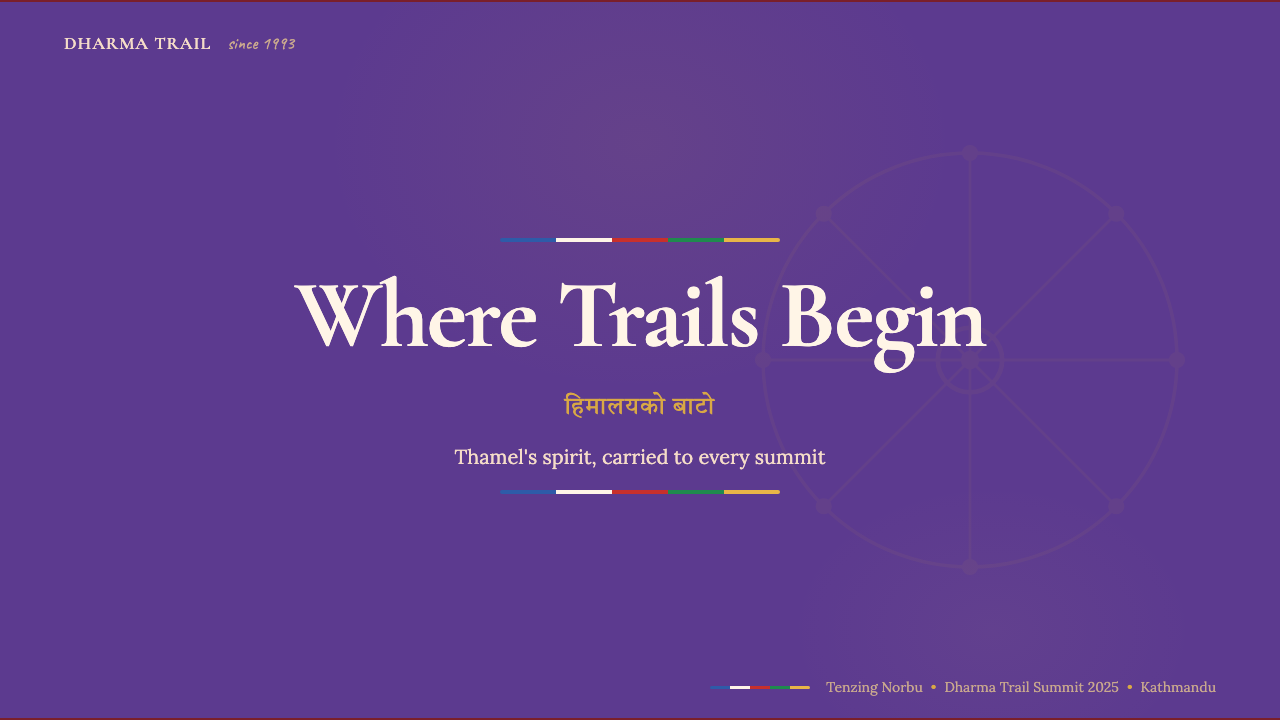
For presentation slides, the style works powerfully on cover pages anchored by a deep purple field, prayer-flag stripe banding at the top or bottom edge, and headline type set in a warm humanist serif alongside a secondary Devanagari line. Content slides should embrace layered information — two or three elements occupying the same spatial zone, separated by color rather than white space, with mountain silhouette motifs used to provide visual hierarchy. Data slides take on a thangka-like quality when bar elements are colored in the five sacred hues in their prescribed sequential order, transforming utilitarian charts into culturally grounded visual objects.
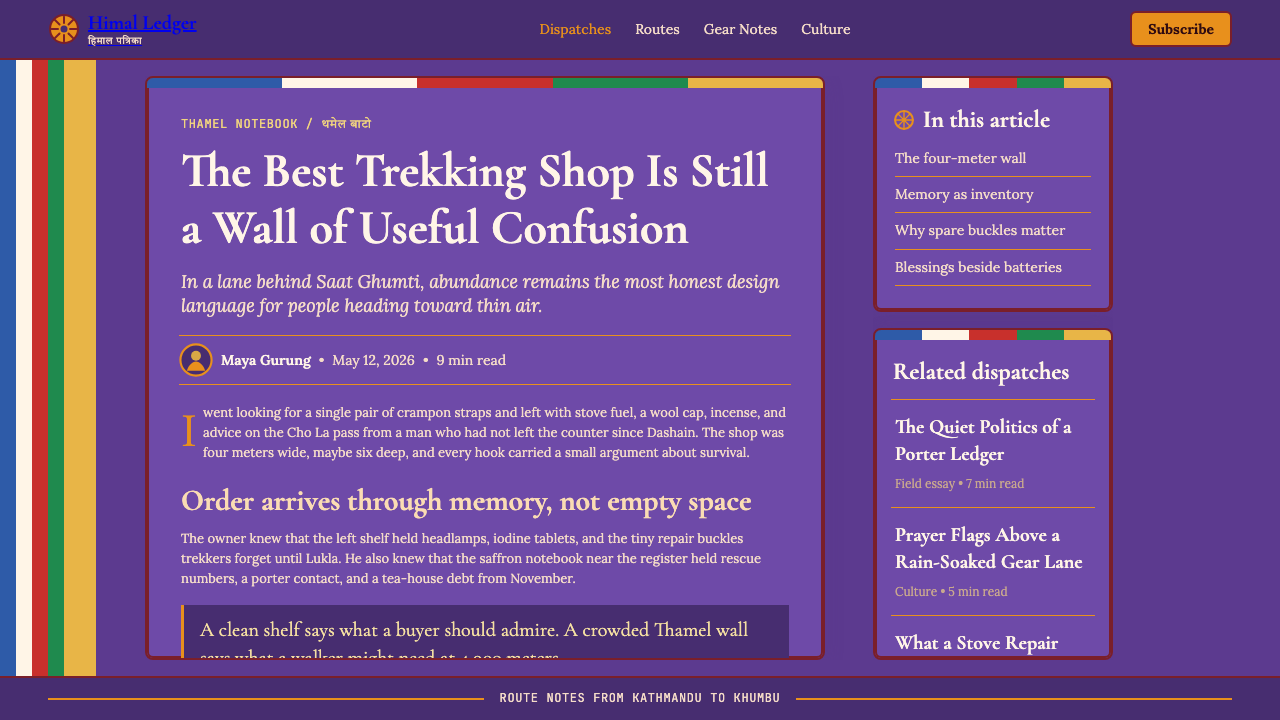
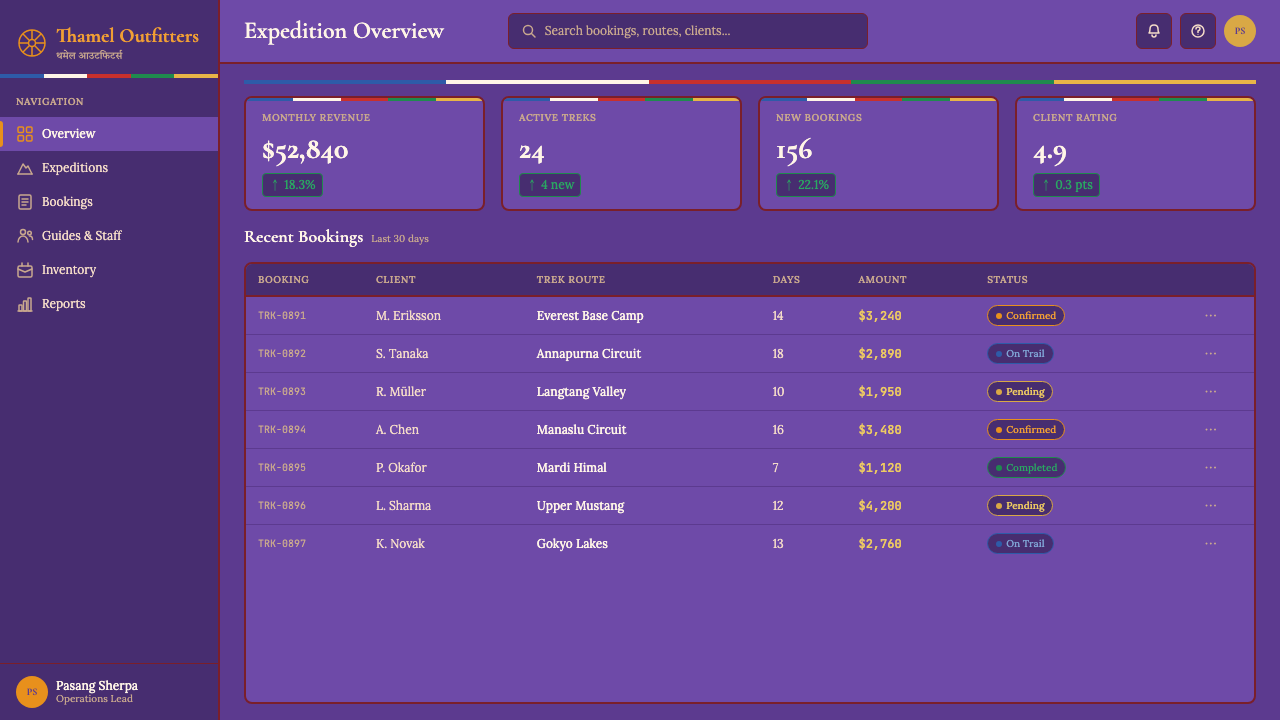
For web interfaces, the style suits discovery-oriented surfaces — product galleries, cultural collections, travel booking flows, and marketplace dashboards where browsing and ambient richness are more important than task efficiency. A Thamel-inspired pricing or comparison page uses saffron for the recommended tier, prayer-flag stripe dividers between plan columns, and deep purple for section headers. The style does not suit stripped-down transactional interfaces where cognitive load reduction is paramount — it is built for exploration, not for form-filling.
For editorial and marketing work, the style creates immediate visual differentiation in crowded fields. A Thamel-inflected editorial layout uses a prayer-flag stripe as the primary running header, deep purple pull-quotes against cream body text, and Devanagari display type as a graphic element in feature spreads. Marketing pages benefit from the style's poster energy: full-width purple hero sections carry saffron headlines and white body text, with sacred motif textures providing surface variation. The style's cultural specificity makes it credible for brands with genuine connections to Himalayan or Buddhist heritage — applying it to unrelated products risks appearing appropriative.
A common mistake when applying this style is reducing it to its most legible elements — the purple and saffron palette — while discarding the typographic and structural features that give it depth. Purple and saffron alone become generic bohemian decoration. The style requires the prayer-flag color sequence, the Devanagari typographic presence, the deliberate density, and the warm light quality working together. Similarly, designers accustomed to negative-space-driven systems often instinctively add breathing room where the style calls for productive compression — resist this impulse. The fullness is the message.
Kathmandu Thamel Trekking — FAQ
Is this style appropriate for brands with no connection to Nepal or Himalayan culture?
This requires careful judgment. The Thamel Trekking style draws directly on Tibetan-Buddhist iconographic traditions that carry deep spiritual and cultural meaning for living communities — it is not a historical style safely abstracted from its origins, like Art Deco or Bauhaus. Brands with genuine connections to Nepal, Tibet, Himalayan travel, Buddhist practice, or artisan craft traditions can use it authentically. Brands with no such connection risk appearing appropriative, particularly when they use the prayer flag color sequence, Devanagari script, or mandala geometries as mere surface decoration. A safer approach for unrelated brands is to draw on the style's structural principles — dense layering, warm saturation, bazaar-like fullness — without deploying its most culturally specific iconographic elements.
How does this style handle dark mode or dark-background variants?
The Thamel Trekking style is naturally dark-ground-compatible because its canonical palette already features deep monastic purple as the dominant wall tone. A dark variant shifts the lightest elements — cream body text, saffron highlights, prayer flag whites — forward against near-black or deep aubergine backgrounds, while the purple, which was already a dark midtone, becomes a structural mid-field element rather than the dominant background. The warm amber light quality remains essential in the dark variant; resist the temptation to introduce cool blue-black backgrounds, which would clash with the style's fundamentally warm, lantern-lit atmosphere. The prayer flag stripe sequence reads well against dark grounds because the five colors maintain their individual legibility.
What is the prayer flag color order and why does it matter in this style?
The five colors of the Tibetan prayer flag follow a prescribed order — blue, white, red, green, yellow — corresponding to sky, air, fire, water, and earth. This sequence is not arbitrary; it encodes a cosmological model that has been consistent across Tibetan Buddhist practice for centuries. In the Thamel Trekking style, using this color sequence in its correct order preserves the symbolic integrity of one of the system's most culturally specific elements. Using the five colors in a different order — to suit a design's hierarchy or aesthetic preference — breaks the symbolic structure and reduces a cosmological statement to mere colorful striping. If the symbolic weight of the prayer flag sequence is important to a project, the order should be respected; if the project only needs the visual rhythm of multicolor banding without the cultural specificity, a different color system should be used instead.
Can this style work for digital products aimed at Western audiences unfamiliar with Himalayan culture?
Yes, with the right framing. Western trekking culture has been engaging with Thamel's visual environment since the 1970s — the style's iconographic elements are legible to a much wider audience than their geographic origin would suggest. Prayer flag color stripes, Devanagari script, and deep purple-and-saffron combinations read as culturally specific and exotic-in-a-positive-sense to Western audiences who associate them with adventure, spiritual depth, and authentic craftsmanship. The risk is not illegibility but rather flattening: Western audiences may respond to the style's surface warmth without engaging with its symbolic depth. For products where cultural authenticity is a selling point, the depth is an asset; for products where it is not, the style can still deliver its aesthetic qualities while the cultural specificity becomes ambient rather than central.
How does this style differ from other Asian-influenced design traditions like Japanese wabi-sabi or Chinese ink-brush aesthetics?
The differences are fundamental rather than superficial. Japanese wabi-sabi values deliberate incompleteness, restraint, and the beauty of impermanence — its aesthetic is quiet, monochromatic, and spatially generous. Chinese ink-brush aesthetics prize negative space, gestural mark-making, and the philosophical weight of emptiness. Thamel Trekking operates on entirely opposite principles: it is saturated rather than restrained, dense rather than spacious, and commercially exuberant rather than meditative. The Tibetan-Buddhist visual tradition from which it draws is itself distinct from East Asian Buddhist aesthetic traditions — it is more iconographically explicit, more color-saturated, and more architecturally ornamental. Mixing elements from these traditions produces cultural incoherence rather than synthesis.
Related design styles
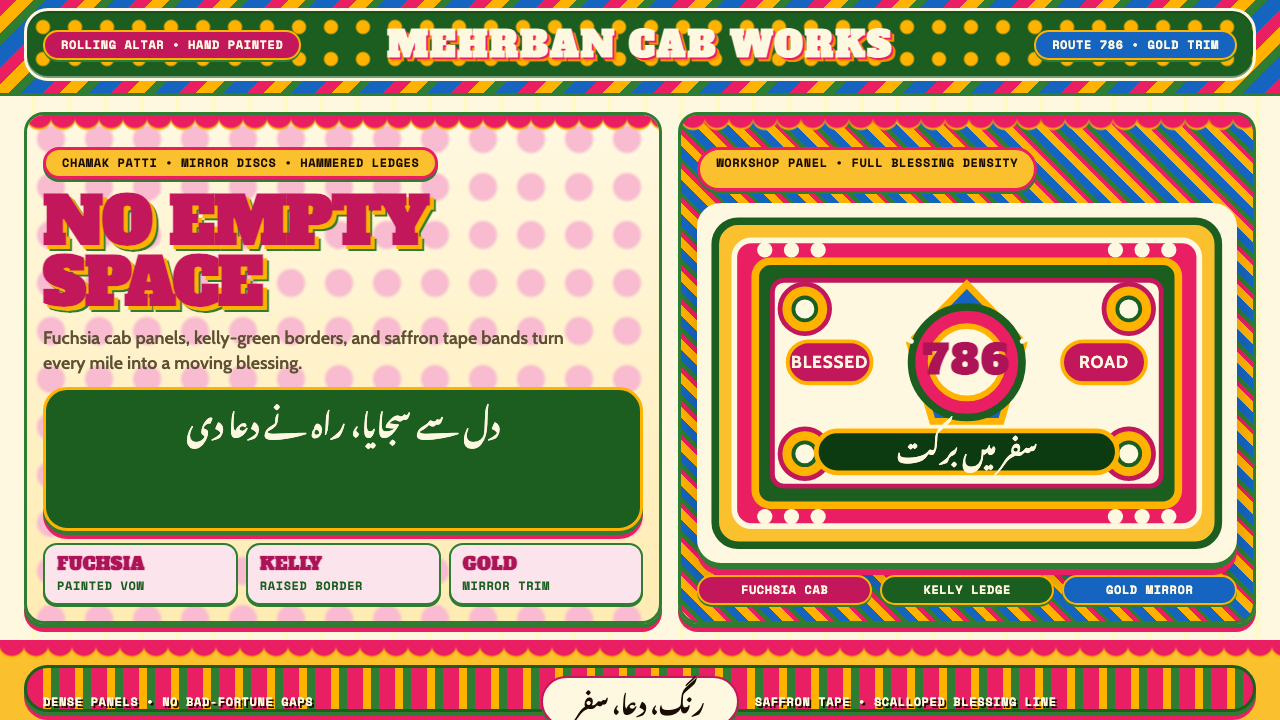 Pakistani Truck ArtBlessing crowds every inch. Fuchsia, kelly green, and gold stack into scallop…
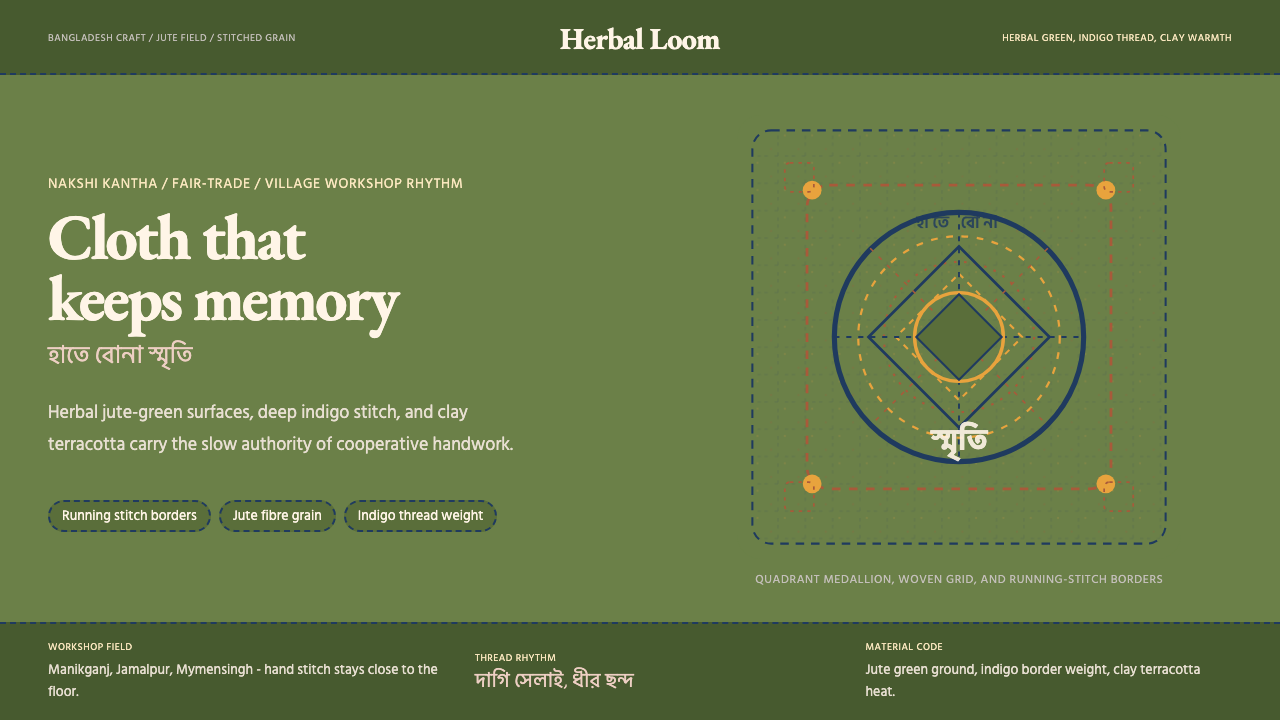 Bangladeshi Jute CraftMemory stays stitched. Jute green, indigo borders, terracotta warmth.
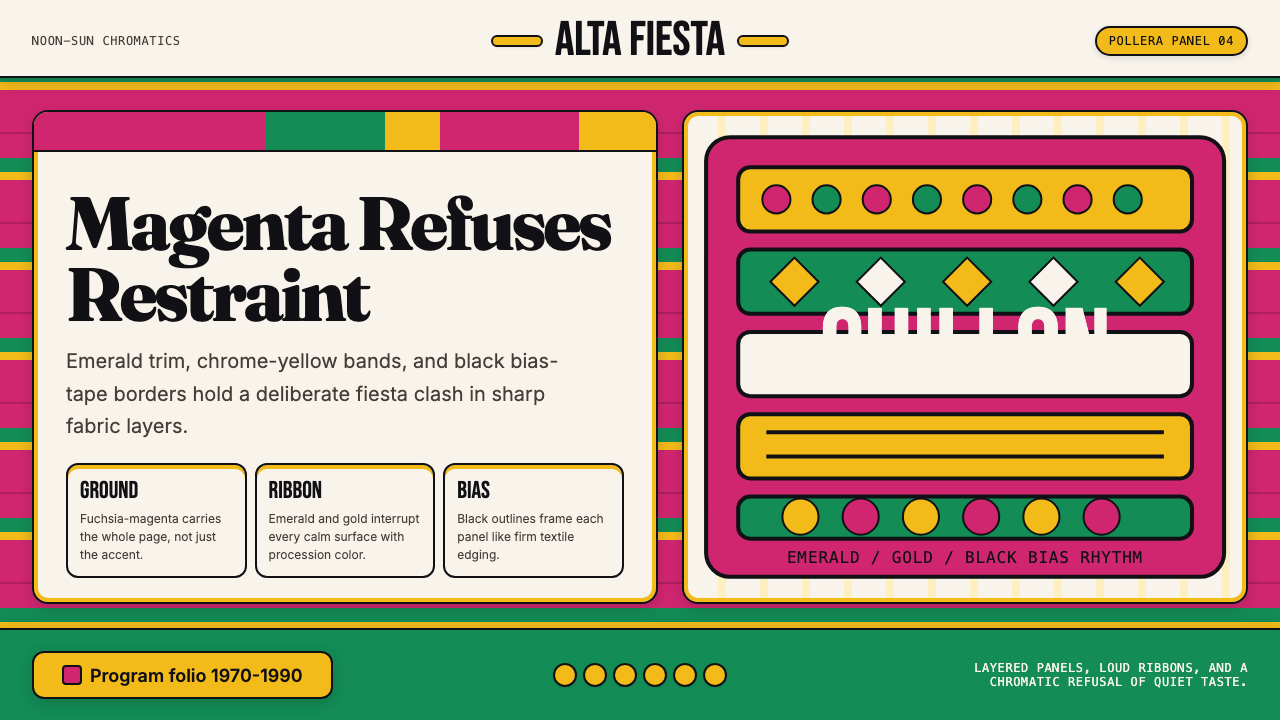 Bolivian Pollera Fiesta MagentaChromatic defiance. Magenta ground, emerald bands and black outlines clash li…
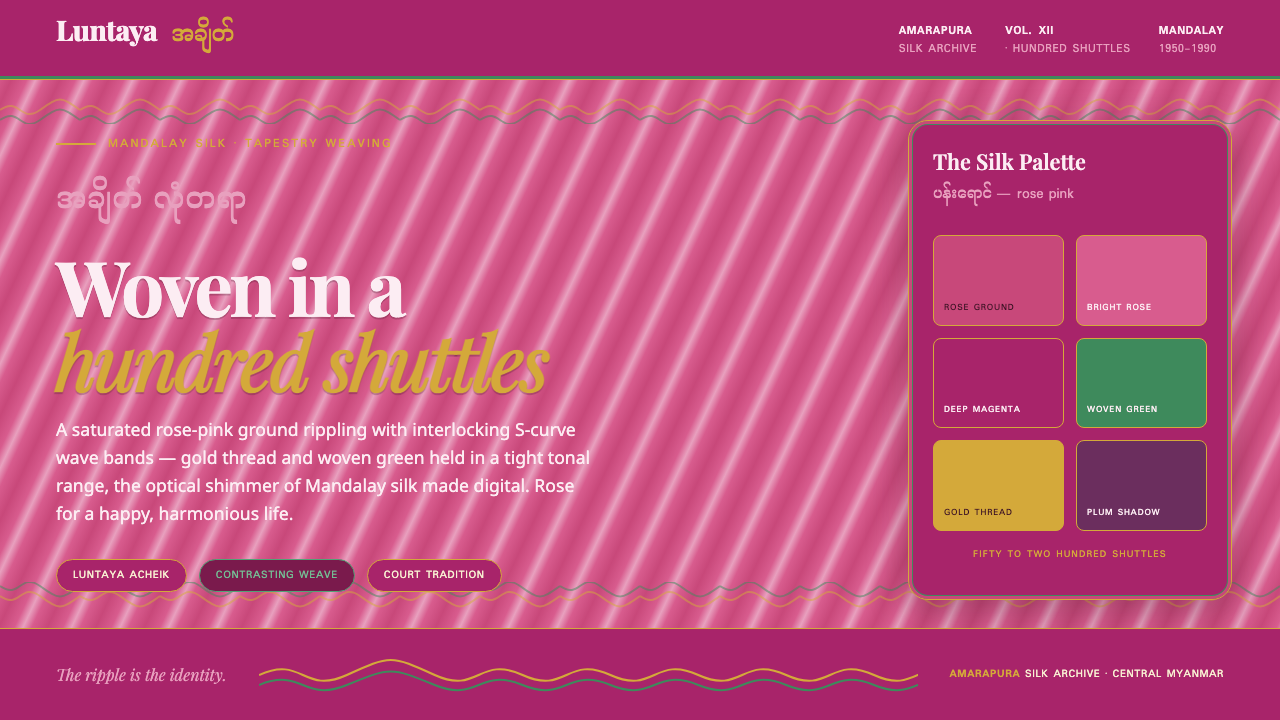 Burmese Acheik LongyiWoven silk shimmer, made digital. Rose-pink ground rippling with gold-and-gre…
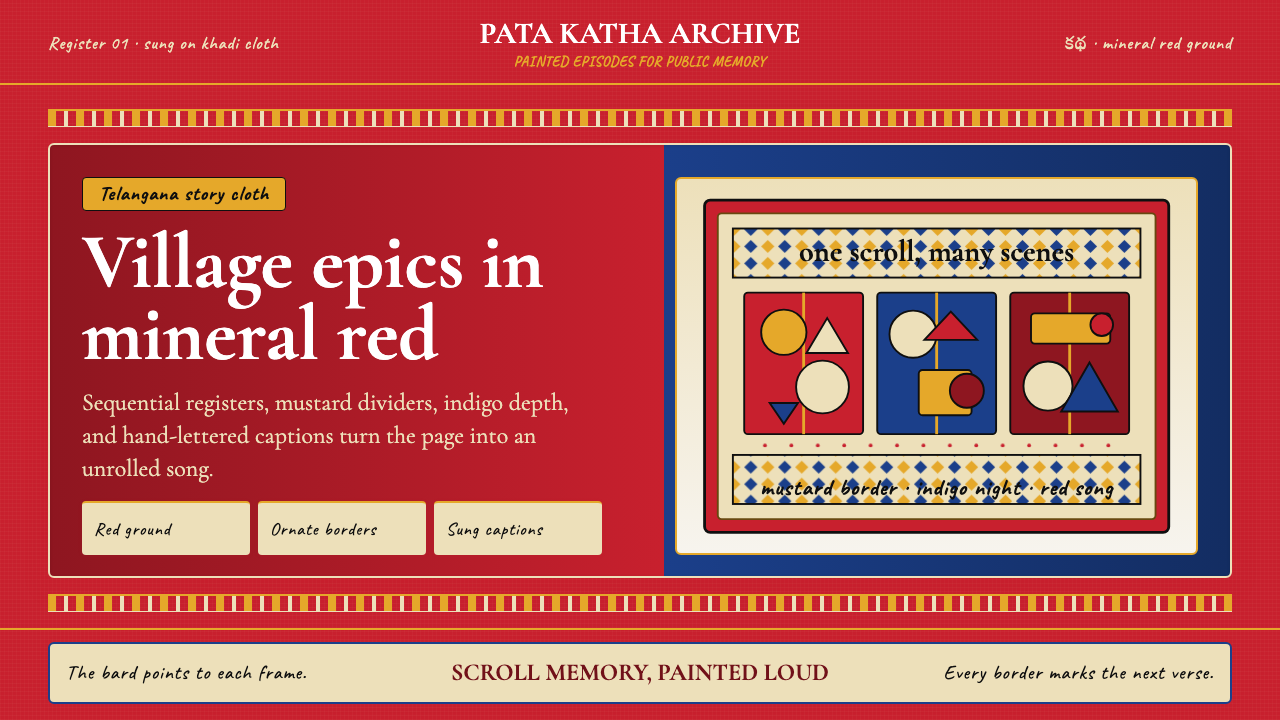 Andhra Cheriyal Scroll PaintingSaturated oral memory. Mineral red registers, mustard diamonds, and serif son…
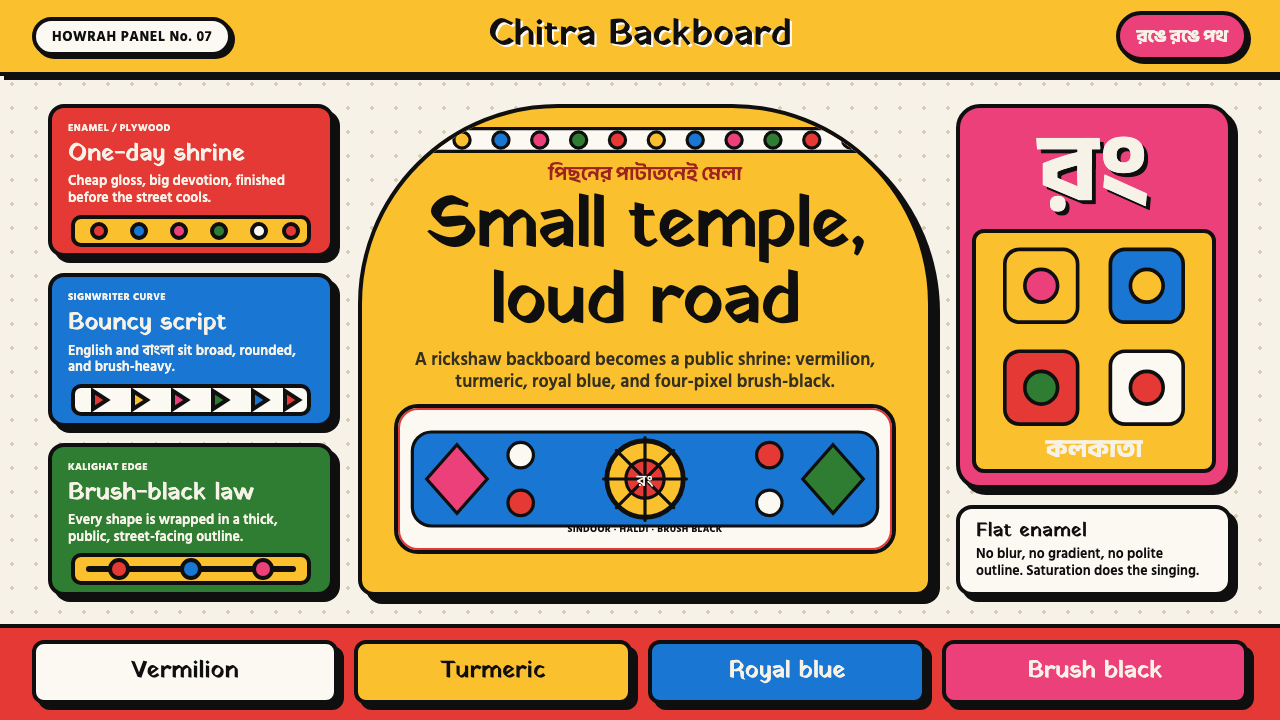 Bengali Rickshaw ArtStreet devotion shouts. Vermilion-haldi panels and brush-black arches turn pl…