What is Naver Webtoon (2024)?
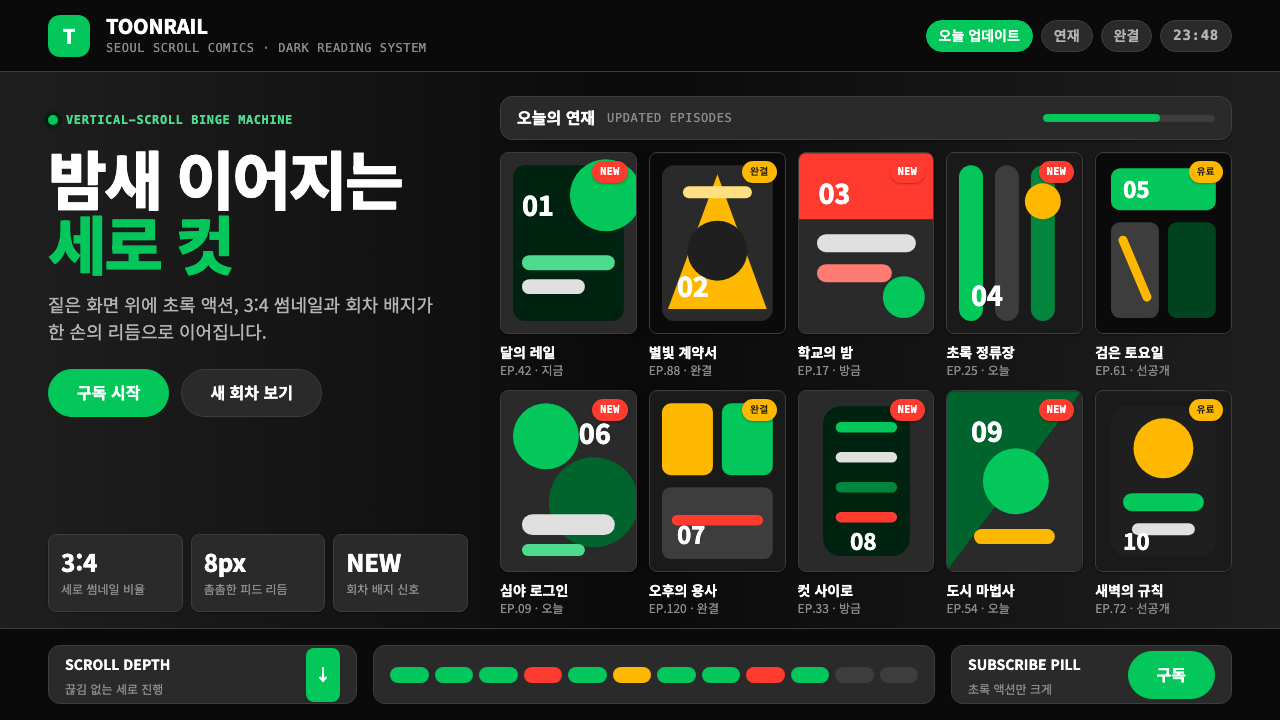
Naver Webtoon turned the smartphone screen into an infinite comic canvas — charcoal darkness, electric green signals, and a vertical grammar invented for the thumb-scrolling generation.
Naver Webtoon (2024) in brief
Naver Webtoon is the visual and interaction design system of Korea's dominant vertical-scroll comics platform, refined over two decades and crystallized into its most mature form in the 2024 era. The system is not a general-purpose aesthetic — it is a purpose-built reading environment engineered for one very specific behavior: a reader, alone, late at night, phone in hand, scrolling through episodic illustrated stories in near-total darkness.
The defining visual signature is the pairing of a deep charcoal ground with Naver's signature green — a vivid, slightly cool accent that appears on subscription buttons, episode-count badges, and interactive calls to action. Against the dark field, thumbnail grids of comic cover art create rhythmic vertical sequences, each cell a miniature poster. The overall impression is immersive and cinematic, closer to a streaming video interface than to a traditional print comics page.
What makes Naver Webtoon a coherent design language rather than a collection of conventions is its discipline around a handful of structural elements: the pill-shaped button, the badge system for episode counts and update states, the tight vertical thumbnail grid, and the typographic hierarchy built around a humanist Korean typeface. These components repeat at every scale — from the home feed to the reader chrome to the creator dashboard — producing a platform that feels instantly legible no matter which surface the reader lands on.

Where does Naver Webtoon (2024) come from?
Naver Webtoon's visual lineage begins in Seoul in 2004, when Naver — at that point Korea's leading internet portal — launched a free comics service to differentiate itself from competitors. The founding context matters: Korean internet penetration was already extremely high, mobile phones were becoming a primary access device, and a generation of independent cartoonists had no viable print publishing channel. The platform offered them free hosting in exchange for building the content library that would define the medium.
The term 'webtoon' itself was coined by this period — a portmanteau of 'web' and 'cartoon' that the Korean industry adopted as a formal genre designation. The critical design innovation was not the content but the format: instead of the page-turn model inherited from print manga and American comics, Naver's engineers and early designers adopted an infinite vertical scroll in which panels flowed continuously down the screen. This was not a recreation of an existing format but a native response to the smartphone's physical affordances — the thumb scrolls naturally downward, and a long vertical canvas maps perfectly to that gesture.
The visual identity went through several iterations over its first decade and a half, tracking the evolution of mobile screen technology. Early versions relied on lighter backgrounds and simpler color systems suited to the lower-contrast OLED panels of the mid-2000s. As AMOLED screens became the standard for Korean smartphone manufacturers — particularly Samsung — and as their black rendering improved dramatically, the platform shifted decisively toward the deep charcoal dark-mode aesthetic that would become its signature. By the early 2020s, the dark ground was not merely a visual choice but an engineering one: on AMOLED displays, true blacks consume almost no power, and a platform used for long nightly reading sessions benefits directly from reduced battery draw.
The 2020–2024 period saw Naver Webtoon formalize its design system at scale, driven by the platform's international expansion — it launched in English-speaking markets as Webtoon, and later in Southeast Asia, France, and other territories. This expansion required the design language to work across languages and scripts, which strengthened the system's emphasis on visual hierarchy over purely typographic organization. The green accent that had long been associated with the Naver brand became more precisely calibrated, the badge system was regularized, and the pill button became the platform's signature interactive shape — a form that reads clearly across cultures and scripts without relying on text alone.
What defines the Naver Webtoon (2024) look?
Dark Ground
The base environment is a deep, neutral charcoal — not pure black but a softer dark that reduces eye strain during extended reading sessions. This ground is consistent across the home feed, episode lists, and the in-strip reading interface, creating a seamless visual environment that does not break the immersive reading experience as users move between surfaces. The darkness is functional: on the dominant screen technology used by the platform's core audience, it directly extends reading session duration by reducing display power consumption.
Naver Green Accent
A vivid, slightly cool green — immediately recognizable as the Naver brand hue — serves as the system's single interactive accent. It appears on subscribe and follow buttons, on episode-count indicators, on 'new episode' badges, and on the active state of bottom navigation items. Against the charcoal ground, the green carries high luminance contrast, making every actionable element immediately legible without requiring additional visual complexity. The restraint is important: the accent never bleeds into backgrounds or decorative uses, so its appearance always signals interactivity or status.
Vertical Thumbnail Grid
The core browse surface is organized as a tight vertical grid of comic-cover thumbnails, each formatted to a consistent portrait aspect ratio. The grid gives equal visual weight to each title, functioning less like a curated editorial layout and more like a densely packed catalog — appropriate for a platform where users often browse by genre and update schedule rather than by editorial recommendation. Each thumbnail cell carries a small overlay layer for title text and status badges, maintaining readability against the varied color fields of the cover artwork.
Pill-Shaped Button
The platform's signature interactive component is the fully rounded rectangular button — what the interface world often calls a pill shape. Subscribe buttons, episode-start prompts, and genre filter tags all share this form. The pill reads clearly as a tap target on small screens regardless of surrounding text script, and its rounded softness contrasts deliberately with the geometric severity of the grid and badge system, providing a visual cue that these elements are invitational rather than informational.
Badge and Status System
A compact badge vocabulary communicates the real-time state of a comic's publication cycle without requiring the reader to interpret text. Episode-count figures, 'UP' indicators for freshly updated titles, 'AD' markers for titles with promotional episodes, and completion status labels all appear as small, high-contrast chips attached to thumbnail corners or list rows. The system is especially important for mobile contexts where the reader scans at speed — a glance at the badge layer conveys all scheduling information before any text is read.
Humanist Korean Typography
The typographic backbone of the platform is a humanist sans-serif Korean typeface — specifically the Noto Sans KR family — chosen for its wide script coverage, warm stroke proportions, and strong legibility at small sizes on backlit screens. The type hierarchy is tight: a moderate size differential between title labels, episode information, and metadata communicates structure without the aggressive scale contrasts found in Western editorial design. The Latin and numeric characters in the same typeface maintain visual consistency across the platform's multilingual content.
Immersive Reader Chrome
When a reader enters a strip, the surrounding interface chrome recedes to near-invisibility. Navigation controls appear as minimal dark overlays that fade after a moment of inactivity, leaving the comic artwork as the only significant visual element. This stripping-back of chrome is a deliberate design decision: the reader has committed to a specific strip, and the platform's task shifts from discovery to immersion. The transition from the badge-rich browse grid to the minimal reader environment is one of the most effective contextual mode-shifts in mobile interface design.

Who shaped Naver Webtoon (2024)?
Kim Junkoo co-founded the webtoon format as a platform strategy during Naver's early portal era and is widely credited with establishing the vertical-scroll reading convention that now defines the global webtoon industry. His decision to provide free hosting for independent cartoonists — compensating them through ad revenue and later through paid episode models — created the economic structure that made the platform viable and attracted the density of creators whose visual diversity became the platform's distinctive character.
An early platform architect whose work on Naver Webtoon's content infrastructure established the technical and editorial conventions — episode segmentation, the comment layer beneath each strip, the reader-engagement metrics — that would shape how the design system prioritized information. The decision to surface episode counts and completion status prominently in the browse interface reflects an editorial philosophy that treats the reader's time investment as a central design variable.
As a key figure in Naver Webtoon's design and product evolution during its internationalization phase, Lee Jong-bum's work on the platform's visual system helped reconcile the Korean-first design DNA with the requirements of a multilingual, multicultural product. The calibration of the badge and button system to function legibly across Korean, English, Japanese, and Thai interfaces — while preserving the dark-mode reading environment — represents one of the more difficult localization challenges in contemporary consumer app design.
The visual richness of the Naver Webtoon design system is inseparable from the enormous range of artists and studios who created content for the platform. Many creators developed distinct panel layouts, color worlds, and visual rhythms that the platform's thumbnail grid had to accommodate — driving the design system's neutrality in the browse environment so that the creator's artwork, not the platform chrome, commands attention. Several Naver Webtoon originals — including titles later adapted into K-drama and film — helped define the visual vocabulary of contemporary Korean popular culture.
The internal design organization at Naver has maintained the visual system across two decades of platform evolution, navigating the transition from a desktop web portal aesthetic to a mobile-native dark-mode product. The team's most consequential decision was committing to the AMOLED-optimized dark ground as the primary environment rather than offering it as an option — a choice that positioned the platform as a native mobile experience at a time when most Western platforms were still defaulting to light backgrounds.
How do you use Naver Webtoon (2024) today?
Naver Webtoon's design language translates most naturally to digital products that share its core use case: long-session consumption of visual content in low-light environments. The system's principles — dark ground, single vivid accent, restrained badge vocabulary, immersive content-first chrome — are directly applicable to any streaming, reading, or content-browsing interface where the user's attention should be directed entirely at the content rather than the surrounding UI.
For presentation slides, the style works best for cover and section-break pages rather than dense content slides. A cover built on this system uses the deep charcoal as the full-bleed background, positions the title in a large, clean sans-serif at high contrast, and deploys the green accent sparingly — as a single underline, a geometric block, or a highlighted word. Content slides should keep backgrounds dark and use the accent color exclusively for data highlights or key terms, never as a decorative fill. Data visualizations benefit from the system's discipline: charts rendered as clean geometric forms against the dark field with the accent color marking the primary data series read with exceptional clarity at a distance.
For web interfaces, the aesthetic translates directly to dark-mode dashboards, media streaming pages, and any catalog-style browse experience. The approach is to establish the charcoal ground across the full viewport, define a thumbnail or card grid using consistent proportions, and build the interactive layer entirely from pill buttons in the accent color and flat badge chips for status communication. Pricing pages and subscription interfaces are particularly well-served: the pill button form and the color-coded badge system communicate tier and action without requiring elaborate visual metaphors.
For editorial and marketing materials, the system's cinematic quality makes it effective for entertainment brands, gaming companies, cultural organizations, and any product in the creative or media sector. A Naver Webtoon-inflected marketing page uses the dark ground as a stage, presents content in a bold thumbnail-grid rhythm, and uses the accent color for calls to action and headline emphasis. The style's Korean visual heritage gives it a distinct cultural signal that can itself be a deliberate brand positioning choice for products targeting audiences who follow Korean entertainment.
A common mistake when applying this style is overusing the accent green or substituting it with other saturated hues to create visual variety. The system's power comes from the restraint: one vivid color against a near-neutral dark field. Adding secondary accent colors, softening the dark ground to grey, or applying decorative gradients to the badge and button components immediately collapses the system's clarity. Similarly, the dark ground must be genuinely dark — a mid-grey is not a substitute and reads as an unfinished attempt rather than a deliberate environment. Commit to the darkness and the single accent, and the system rewards that commitment with exceptional legibility and atmosphere.

Naver Webtoon (2024) — FAQ
Is this style only appropriate for entertainment or comics products?
Not exclusively, though it originated there. The core system — dark ground, single vivid accent, restrained badge and button vocabulary — translates cleanly to any product where immersive consumption or long-session focus is a design goal: music streaming interfaces, reading applications, developer tools and code editors, financial dashboards used in trading contexts, and any professional product that needs to work well in low-ambient-light environments. The style becomes inappropriate when the product requires warmth, accessibility for broad age ranges, or association with outdoor or daytime use.
How does Naver Webtoon's dark mode differ from a generic dark mode?
Generic dark modes are typically a light-mode design inverted — the same hierarchy, the same component shapes, the same accent logic, just with backgrounds darkened and text lightened. Naver Webtoon's dark environment was designed dark from the beginning, which means every compositional decision — the proportion of the thumbnail grid, the role of the accent color, the weight of the badge type — was made with the dark ground as the primary assumption rather than an alternative. The result is a system that feels coherent rather than adapted: nothing looks like it was designed for white and then flipped.
Can the green accent be swapped for a brand's own color?
Yes, the green in Naver Webtoon is a brand-specific choice, not a structural necessity. The structural requirement is that the accent color be a single, high-luminance hue that creates strong contrast against the charcoal ground. Vivid blues, saturated oranges, bright magentas, and electric yellows all work within the system logic — provided they are used with the same restraint as the original green: one accent, deployed only on interactive states and status indicators, never as a decorative fill or background tone. Colors with low luminance against dark grounds — deep purples, forest greens, navy blues — do not substitute effectively because they lose the contrast that makes the system readable.
How should the vertical thumbnail grid be adapted for wider screens?
On mobile, the Naver Webtoon grid typically shows two or three columns of portrait-oriented thumbnails at comfortable tap-target proportions. On tablet and desktop breakpoints, the grid expands in column count while preserving the portrait thumbnail aspect ratio — the form is not changed, only multiplied. The dark ground and badge overlay system work at any width. The mistake to avoid is switching to a landscape-oriented card layout at larger sizes; the vertical thumbnail is a deliberate aspect-ratio choice tied to the comic-cover format and should remain consistent across breakpoints to maintain the catalog-browsing feel.
Does this style work for print or physical media?
With significant adaptation. The deep charcoal ground that forms the system's visual foundation is optimized for backlit screens — on paper, dark backgrounds are expensive to print, difficult to achieve in matte finishes without muddying, and can reduce type legibility in low-contrast environments. A print adaptation of the Naver Webtoon aesthetic typically inverts the ground to a pale tone while retaining the accent color and badge-style information system. Event posters, merchandise packaging, and promotional print materials for entertainment brands can carry the system's visual vocabulary — the pill shape, the badge chips, the single accent on dark — if the dark ground is treated as a spot-color or foil application rather than a full-coverage ink flood.
Related design styles
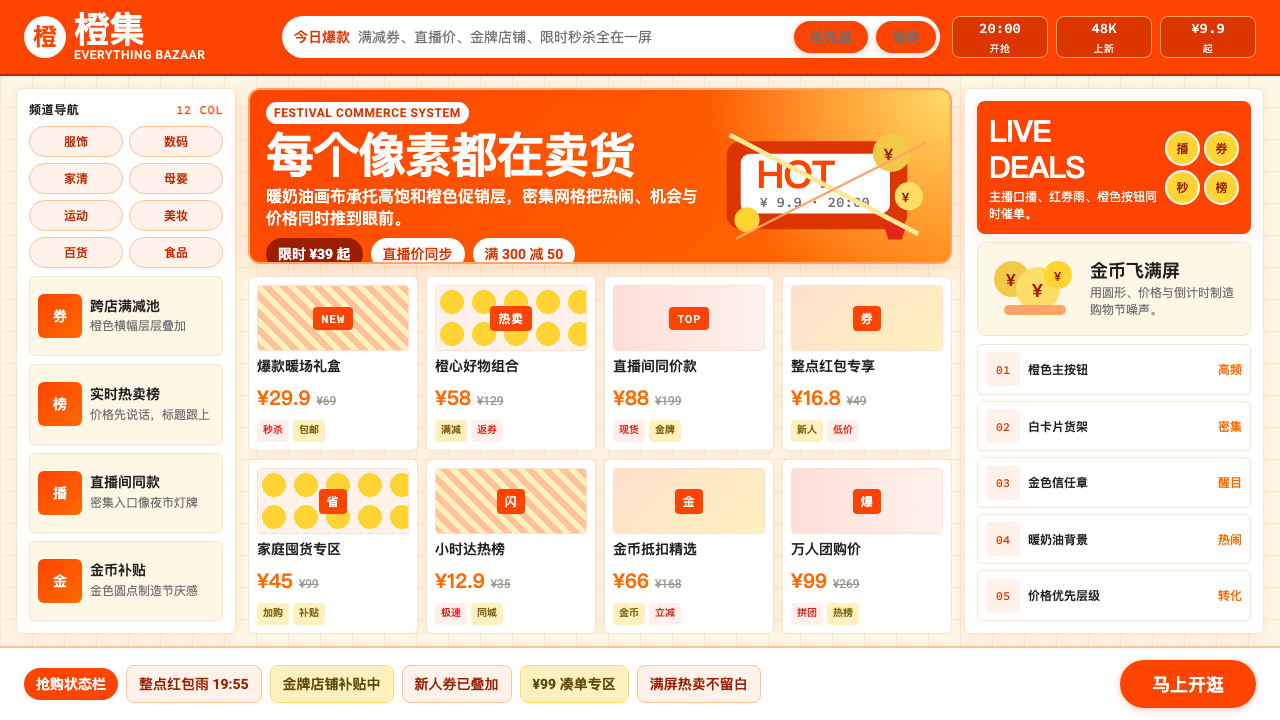 Taobao (淘宝)Every pixel sells. Orange on cream, dense price grids and gold coins shout ab…
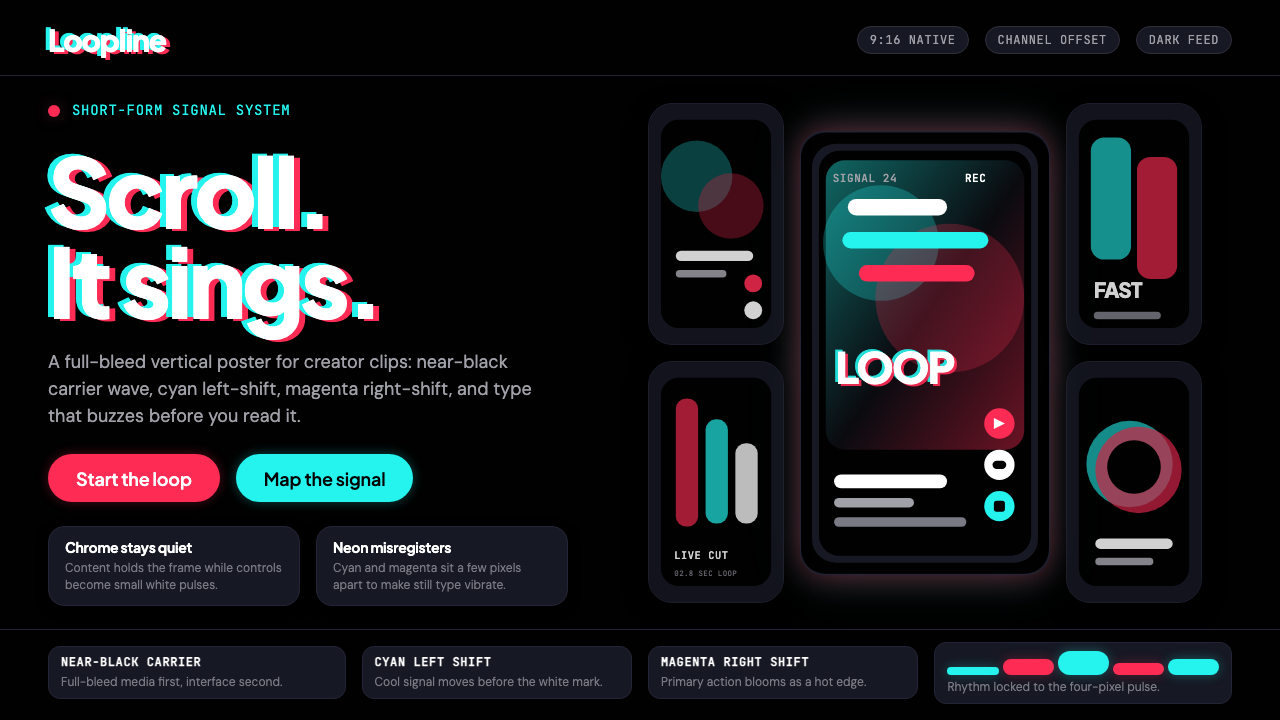 TikTok 2024Attention vibrates. Near-black feed, cyan-magenta offsets, and vertical frame…
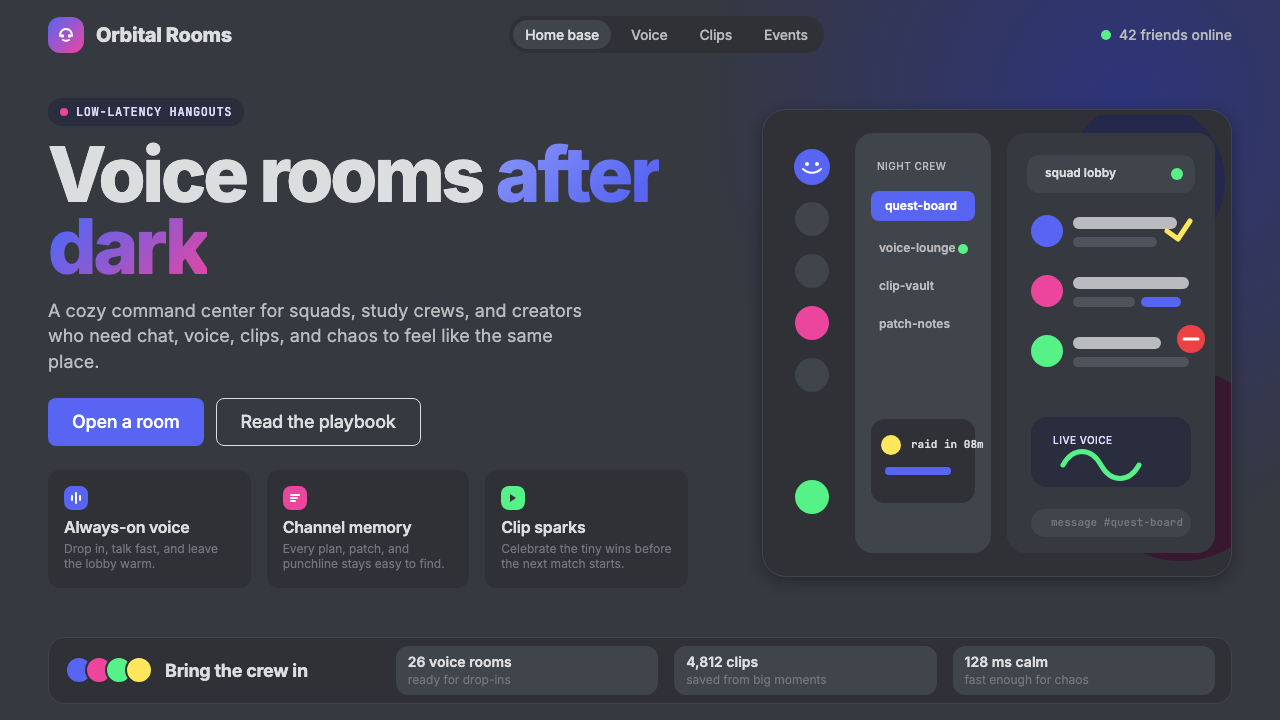 Discord 2024Blurple cozy. Charcoal grounds, illustrated characters — every surface says '…
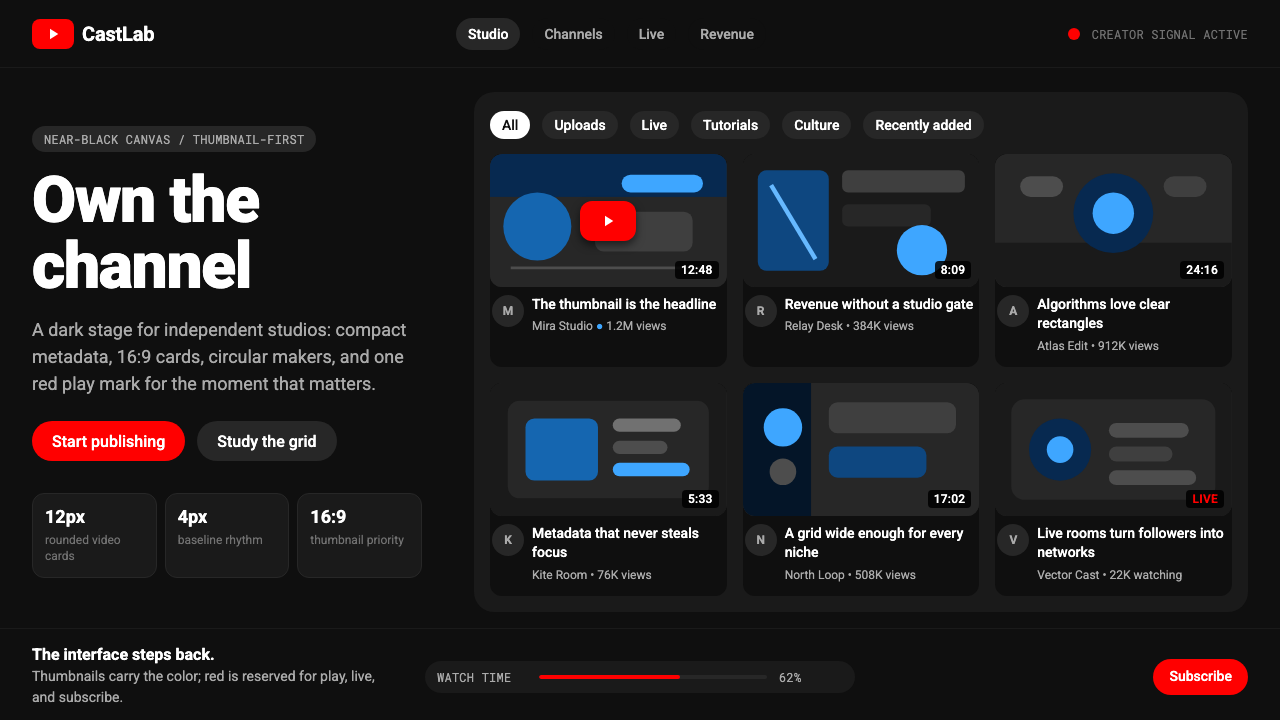 YouTube Creator EconomyThe UI disappears. Near-black Roboto grids let thumbnails shout; red only mea…
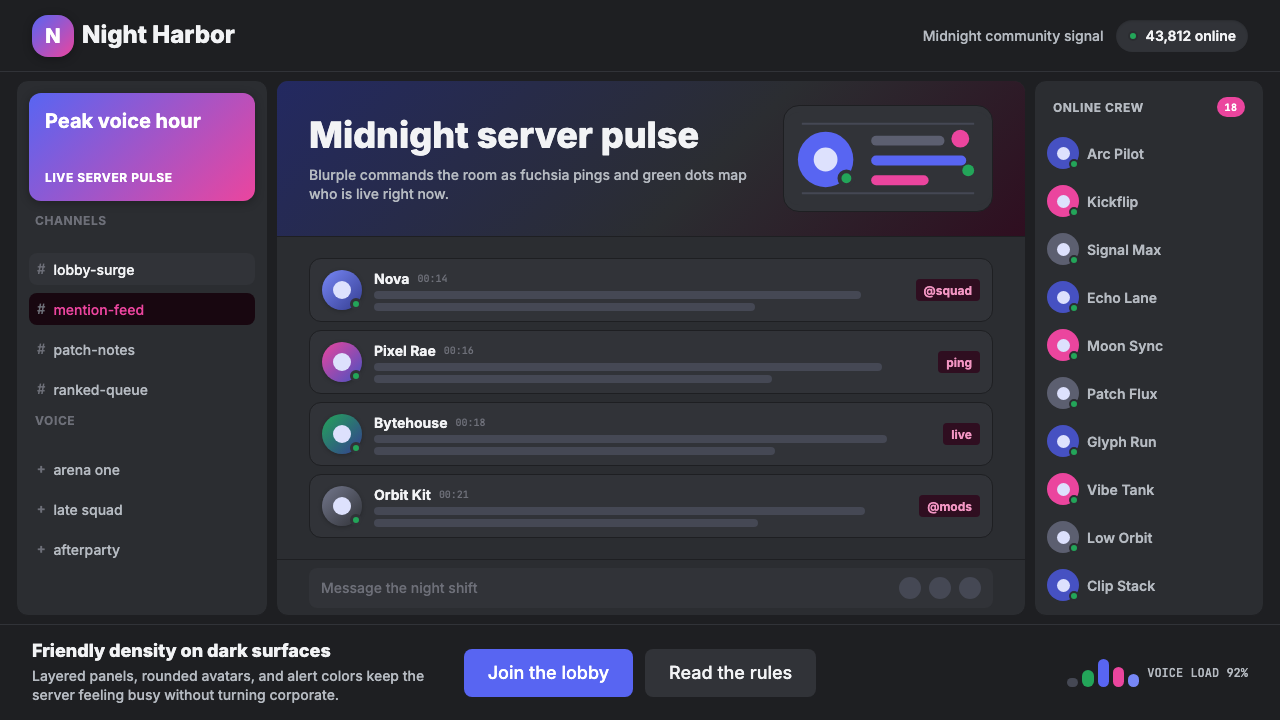 Discord Blurple Server (2020)Midnight server energy. Blurple panels, fuchsia pings, and green status dots…
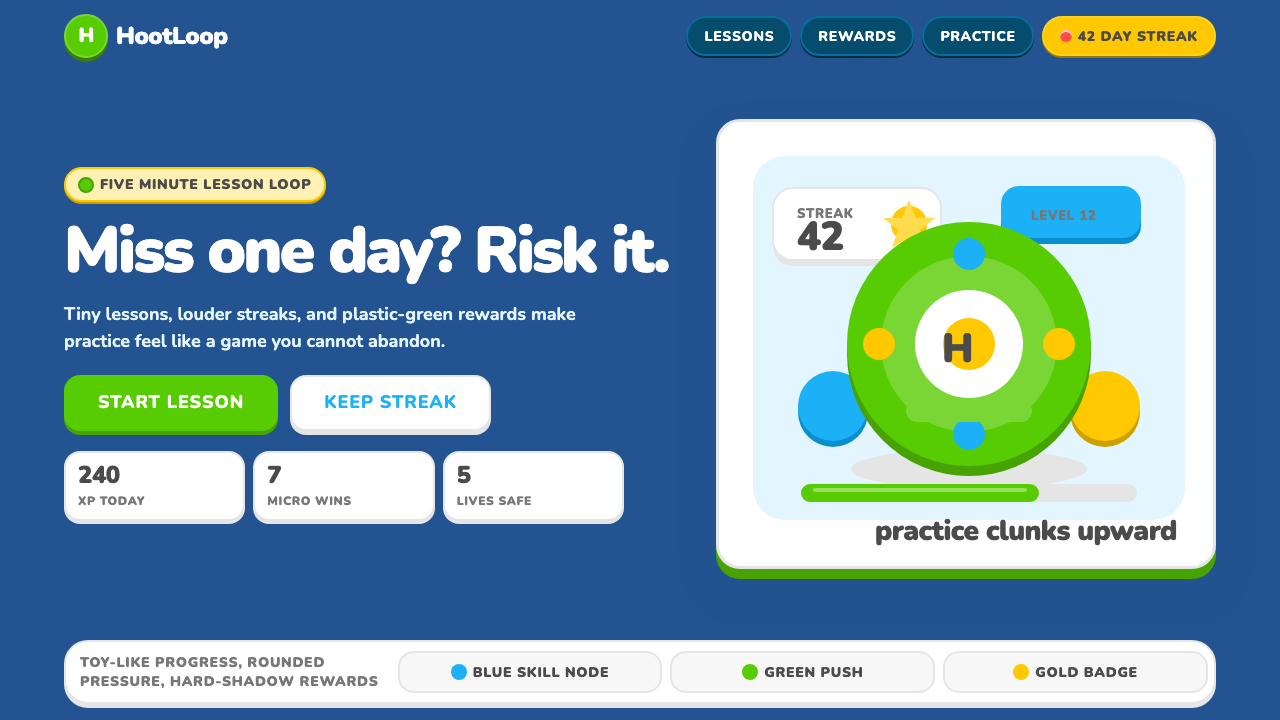 Duolingo 2024Adorable pressure wins. Feather Green, Nunito heft, rounded push-shadows gami…