What is Duolingo 2024?
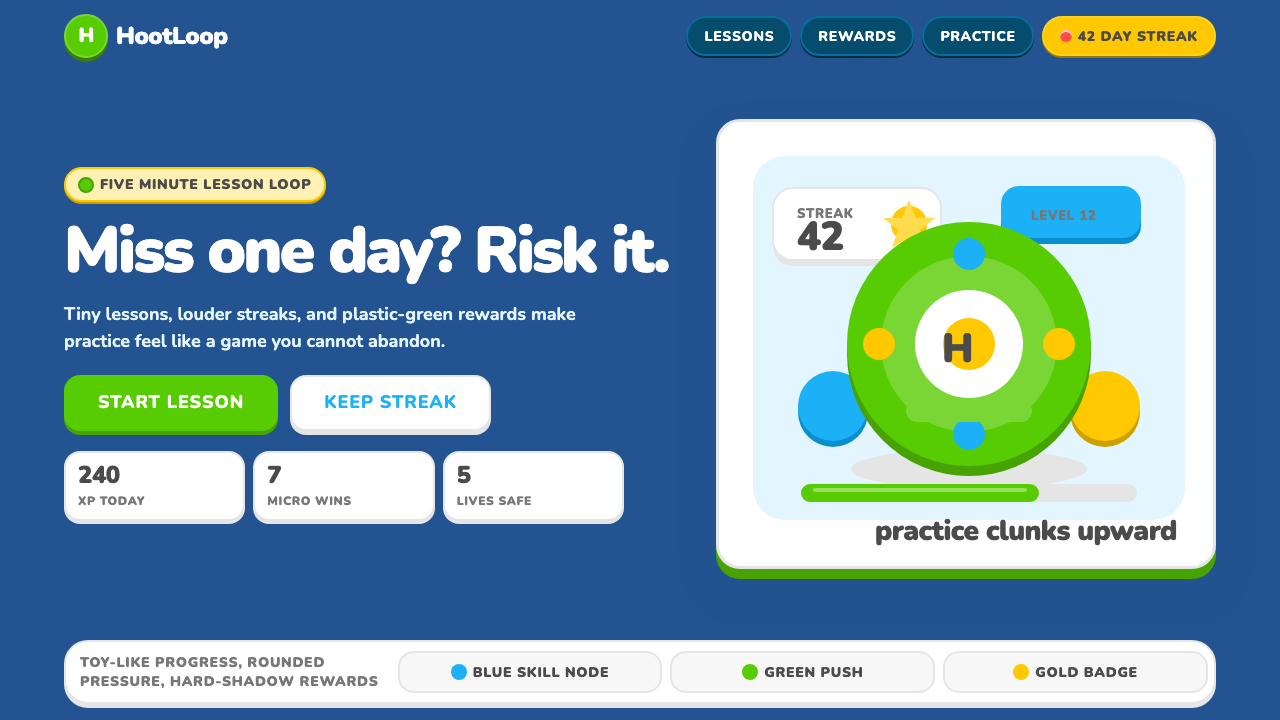
Duolingo turned language learning into a guilt-powered toy — rounded corners, thick push-shadows, and a green owl who knows exactly how long you have ignored your streak.
Duolingo 2024 in brief
Duolingo 2024 is the visual language of the world's most-downloaded education app — a system built entirely around the logic of mobile gaming rather than the conventions of academic software. Every surface is rounded, every interactive element begs to be tapped, and the mascot Duo the Owl functions less as a logo and more as a character who follows you across every screen with the persistence of a well-meaning but slightly menacing friend.
The aesthetic rests on three interlocking ideas: gamification made tactile, reward made visible, and anxiety made charming. Buttons sit on exaggerated bottom-shadows that give the illusion of physical depth — pressing one feels like squeezing a toy. Hearts represent lives, fire icons represent streaks, and progress bars fill with the same satisfying weight as a mobile RPG's experience meter. The visual vocabulary borrows directly from casual games and applies it to vocabulary drills and grammar exercises.
What makes the system coherent rather than chaotic is its tonal consistency. Every element — from the chunky geometric letterforms of the wordmark to the springy animation curves that govern every interaction — communicates the same register: this is serious learning disguised as play, and the disguise is the point. The 2023 rebrand pushed this further, making Duo himself more expressive and meme-ready, and saturating the signature green to a more aggressive, attention-commanding pitch.

Where does Duolingo 2024 come from?
Duolingo was founded in 2011 by Luis von Ahn and Severin Hacker in Pittsburgh, Pennsylvania. Von Ahn, who had previously invented CAPTCHA and sold reCAPTCHA to Google, approached language learning as a computational problem: how do you deliver instruction at scale, keep dropout rates low, and do it for free? The answer was behavioral design — specifically, the application of game mechanics to learning sequences. The earliest version of the app was functional but visually generic; the distinctive character of the current system evolved through successive rebrands as the product scaled.
The key visual inflection point came with the 2023 rebrand, which the Duolingo design team described as a deliberate escalation. The green — long associated with the brand — was pushed to a more saturated, almost electric register. Duo's face gained more expressive range, enabling the viral meme formats that became a major component of the brand's social media presence. The geometry of UI components became rounder and chunkier. The push-shadow on interactive buttons, previously a subtle affordance cue, was thickened into a defining visual signature.
The design draws on a lineage of mobile-game visual language that crystallized in the early 2010s with titles like Angry Birds and Candy Crush — games that demonstrated how tactile, toy-like interfaces could sustain engagement far longer than conventionally polished software. Duolingo applied this grammar to an educational context and refined it over more than a decade of A/B testing, retention analysis, and user behavior data from hundreds of millions of learners.
The mascot-driven approach has roots in a long tradition of educational characters — from McGruff the Crime Dog to Clippy — but Duo's contemporary incarnation is notably different in register. Where earlier educational mascots were reassuring and didactic, Duo operates in an ironic, internet-native mode: the owl's expressions range from cheerful encouragement to barely concealed menace, and Duolingo's social media team has leaned into the threatening-owl meme with a self-awareness that has made the brand unusually legible to younger audiences who are fluent in meme literacy.
What defines the Duolingo 2024 look?
Feather Green and the Core Palette
The brand's signature green — internally called Feather Green — is the visual anchor of the entire system. It sits at a high saturation level, positioned to be immediately readable on white backgrounds and to stand out in notification icons on phone home screens. The broader palette introduces a warm red for hearts and error states, a vivid yellow-gold for streaks and achievement highlights, a soft blue for secondary actions, and an off-white that gives the interface its characteristic airy warmth. Every color carries a specific semantic meaning tied to game mechanics: green for success and brand identity, red for lost lives, yellow for ongoing streaks, blue for supplementary actions.
Push-Shadow Buttons
The most immediately recognizable element of the Duolingo visual system is the push-shadow on interactive buttons. Rather than a soft diffuse shadow that suggests elevation, each button sits on a thick, hard-edged shadow rendered in a darker tone of the button's own color. When the button is pressed, the shadow collapses and the button drops to meet the surface — a physical metaphor for a toy being pushed down. This mechanism gives every interactive element a tactile, toy-like quality that reinforces the gamified framing of the product. The shadow thickness is deliberately exaggerated far beyond what a utility-first design system would use, making it a stylistic statement as much as a functional affordance.
Rounded Geometry and Chunky Type
Every geometric element in the Duolingo system — button corners, card containers, icon backgrounds, avatar frames — is rounded to a degree that approaches the circular. There are no sharp corners in the primary interface components; angularity is reserved for data visualizations and decorative streak motifs. The typeface used throughout the interface is selected for its rounded terminals and generous letter spacing, giving body text a friendly, approachable weight without sacrificing legibility. Headlines are set in a heavier weight that reads as bold but not aggressive, maintaining the playful register. The overall effect is one of deliberate softness: a system that has been rounded at every possible point to remove anything that might feel cold or clinical.
Game-Layer Visual Metaphors
The interface borrows its primary structural metaphors from mobile games rather than productivity software. Hearts function as a life system, visually displayed as a counter that depletes with mistakes and refills over time or through in-app purchases. A flame icon tracks daily streaks, growing more elaborate and animated as the streak lengthens. Experience points accumulate in bars that fill toward a league placement, with users ranked against peers in weekly competitions. Badges, trophies, and achievement icons are rendered in a bold illustrative style that evokes the reward screens of casual games. These elements are not metaphors grafted onto an educational shell — they are the primary interface, with the learning content threaded through them.
Mascot as Interface Element
Duo the Owl is not simply a brand logo that appears at launch — he is an active participant in the interface, appearing to celebrate correct answers, express disappointment at mistakes, and deliver push notifications with an increasingly meme-aware tone. His design uses a simplified, highly readable silhouette: large round eyes, a compact beak, and a body shape that scales cleanly from notification icon to full-screen celebration animation. The 2023 redesign gave Duo a wider expressive range, with poses that range from triumphant to vaguely menacing — the latter being the basis for the viral social media content that made Duo recognizable far beyond the app's user base. Mascot expressiveness is treated as a design material, not a marketing decoration.
Bouncy Motion and Micro-Animation
Motion is treated as a first-class design element in the Duolingo system, not an afterthought. Every correct answer triggers a small celebration animation; every wrong answer produces a brief but legible shake. Buttons compress slightly on press before rebounding. Progress bars fill with a spring-like elasticity rather than a linear slide. Characters scale up with a slight overshoot that gives their appearance a sense of physical arrival. These micro-animations are calibrated to feel satisfying and toylike — they borrow the vocabulary of physical objects being compressed, released, and settling. The total effect is an interface that feels alive and responsive in a way that most utility software deliberately avoids.
Thick Outlines and Bold Illustration
Icons, character illustrations, and decorative elements throughout the Duolingo interface use thick, consistent outlines that give the visual system a cartoon-like coherence. This outline approach originated in print illustration traditions designed for small reproductions — thick borders ensure legibility at low resolutions — but in Duolingo's case it also serves to unify wildly different content (vocabulary images, character expressions, reward icons) under a single visual grammar. The illustration style for learning content images is bold and slightly exaggerated, avoiding photorealism in favor of a simplified, universally readable cartoon register. Colors within illustrated areas are flat and saturated, with the outline doing the structural work that shading would otherwise perform.

Who shaped Duolingo 2024?
Von Ahn co-founded Duolingo after selling reCAPTCHA to Google and is credited with establishing the core thesis that language education could be delivered at global scale for free by applying game mechanics to learning sequences. His background in human computation and crowd-sourced problem-solving directly shaped Duolingo's early approach to curriculum design, where users' translation work simultaneously trained language models and produced learning content. As CEO, he has consistently championed the visual direction that prioritizes engagement and accessibility over the conventions of academic software.
Hacker co-founded Duolingo as CTO, overseeing the technical architecture that enables the app's behavioral loop — the push notification systems, streak mechanics, A/B testing infrastructure, and learning algorithms that underpin the gamified experience. The tight feedback cycles between engineering and product that Hacker established created conditions for the rigorous optimization of engagement metrics that shaped not just the product logic but the visual design decisions that emerged from behavioral data.
The 2023 rebrand was executed by Duolingo's in-house design team, working in close collaboration with brand and motion designers. Rather than engaging a single external agency, the team treated the rebrand as an internally driven evolution, preserving institutional knowledge about what had worked across years of user testing while pushing the visual language further in the direction of expressiveness, toy-like physicality, and social-media legibility. The team's decision to exaggerate the push-shadow, deepen the green's saturation, and expand Duo's expressive range simultaneously are cited as the three most impactful changes of the rebrand.
Duo is not a human designer but merits a figure entry because the owl mascot functions as a design system element with its own design history and evolution. The original Duo was a simpler, more symmetrically friendly illustration. Through successive iterations — particularly the 2023 redesign — Duo gained asymmetric poses, a wider vocabulary of expressions, and a character range that extended from wholesome encouragement to what the internet has collectively described as low-grade menace. This deliberate expansion of Duo's character range gave the brand social media material that performed on platforms where educational content rarely reaches, making the mascot an active design decision with measurable cultural impact.
As one of the lead motion designers on the Duolingo team, Quintero has been publicly credited with shaping the bouncy, spring-curve animation language that defines how the interface feels in motion. The decision to treat micro-animations as primary design deliverables — rather than post-production polish — is central to why Duolingo's interface feels physically alive. The animation principles codified by the motion team, including the slight overshoot on character entrances and the elastic compression of button presses, are among the most widely studied examples of gamified motion design in contemporary mobile product design.
How do you use Duolingo 2024 today?
Duolingo 2024 is a highly specific visual system tied to gamification, mascot-driven branding, and mobile-first interaction. Applying it to other contexts works best when the product genuinely shares those qualities — or when the design goal is to deliberately import the register of educational play into a different domain, such as a language-learning side project, a certification platform, or a productivity tool that wants to reward habit formation.
For presentation slides, the style translates most directly to consumer-facing decks, pitch materials for edtech products, or internal team culture presentations. A cover slide works well with a full-bleed saturated green background, white headline type in a rounded weight, and a bold illustrative element in the lower corner. Content slides should use card-based layouts with generous rounded corners and distinct color blocks per section, mimicking the visual chunking of a lesson interface. Data slides benefit from the thick outline convention applied to chart elements — bars and segments with bold borders read more playfully than conventionally rendered charts, consistent with the energetic register of the system.
For web interfaces, the style fits best on landing pages for education tools, children's platforms, wellness apps, and any product where habit formation and daily engagement are central to the value proposition. Navigation bars should carry a light background with the signature green as the primary action color. Call-to-action buttons must use the push-shadow treatment — flat buttons without the thick bottom shadow will read as visually incomplete within this system. Pricing pages work well with color-coded tier cards, each rendered in the palette's distinct semantic colors, with the recommended plan receiving the signature green shadow treatment.
For editorial and marketing materials, the Duolingo visual language supports high-energy announcements, social media assets, and short-form educational content. Social cards work particularly well: a bold headline in rounded type, a mascot-style illustration or expressive character element, and a single-color saturated background create thumb-stopping compositions. Print applications are rarer but possible — the style's reliance on bold outlines and flat fills means it reproduces cleanly in limited color printing, which is useful for educational posters and classroom materials where print budgets may constrain color options.
The most common mistake when applying this style is importing only the color palette while leaving the tactile, toy-like structural elements behind. A flat button in Feather Green on a white background without the push-shadow reads as generic app design, not Duolingo. The shadow, the roundness, and the bouncy motion language are inseparable from the palette — they are collectively what produces the gamified feeling. A second common mistake is using the brand green pervasively across all elements, which collapses the semantic system: the green must retain its specific meaning as a success and brand signal, with secondary colors handling other states. Overusing the mascot energy without the underlying grid structure also produces chaos — the Duolingo system is playful but rigorously consistent in spacing and alignment, which is what separates it from visual noise.

Duolingo 2024 — FAQ
Is the Duolingo style appropriate for adult or professional contexts, or does it skew too young?
The style skews toward a broad consumer audience rather than a specifically young one — Duolingo itself has tens of millions of adult users. However, the visual register is unmistakably playful and anti-institutional, which makes it unsuitable for contexts where authority, credibility, or formal professionalism are primary values: legal platforms, financial services, enterprise B2B software, or medical applications. The style performs well where the product's value proposition is about motivation, habit, and accessible learning. It struggles where users need to feel that the product is serious in a conventional sense.
How does Duolingo 2024 differ from other gamified design systems like those used in fitness or productivity apps?
The most significant difference is the role of the mascot and the expressive illustration language. Fitness apps that gamify workouts — like those using ring systems or streak mechanics — typically maintain a sleek, athletic visual register that suggests performance and precision. Productivity apps that borrow game mechanics lean toward clean grids and subdued palettes. Duolingo is distinctive in making the cartoon, the character, and the toy-like physicality central rather than peripheral. The push-shadow button, the chunky rounded type, and Duo himself collectively signal that the product is comfortable operating in a register that other apps avoid — one where silliness and earnestness coexist.
Can the push-shadow button style be used sparingly, or does it require full system commitment?
It can be used selectively, but with caution. The push-shadow works well as a highlight mechanism — applying it only to the single most important call-to-action on a page, while other buttons use conventional treatment, can create a useful focal point without requiring a full system adoption. However, using the shadow inconsistently across multiple interactive elements within the same product will read as unresolved rather than intentional. The safest selective application is as a campaign accent: a landing page built otherwise in a more neutral style that uses the push-shadow button on the primary conversion element to add energy and specificity.
How does the Duolingo visual system handle dark mode?
The Duolingo system is fundamentally light-mode-native — the signature green, the off-white warmth, and the color-coded semantic system all originate in and are optimized for bright backgrounds. A dark mode variant exists in the app, but it requires significant adjustments: the green must be slightly de-saturated to avoid eye strain against dark backgrounds, the push-shadows shift to slightly lighter tones rather than darker ones, and the overall warmth of the palette is reduced. The illustrated characters and mascot elements translate more easily to dark backgrounds than the typographic and structural components. Any dark-mode application of this visual language should be treated as a separate palette calibration rather than a simple color inversion.
What is the relationship between the Duolingo visual style and the underlying behavioral science it expresses?
The visual language is not separate from the behavioral design — it is the behavioral design made visible. Every aesthetic choice maps to a psychological mechanism: the push-shadow buttons trigger haptic anticipation; the streak flame exploits loss aversion (missing a day feels like losing something tangible); the heart counter creates scarcity; the league table activates social comparison. The rounded, toy-like geometry lowers perceived effort by signaling that the environment is low-stakes and forgiving. The mascot's expressiveness creates a social presence that users respond to emotionally in ways they do not with abstract interfaces. Understanding this mapping is essential for anyone using the style — stripped of its behavioral context, the visual elements become decoration rather than function.
Related design styles
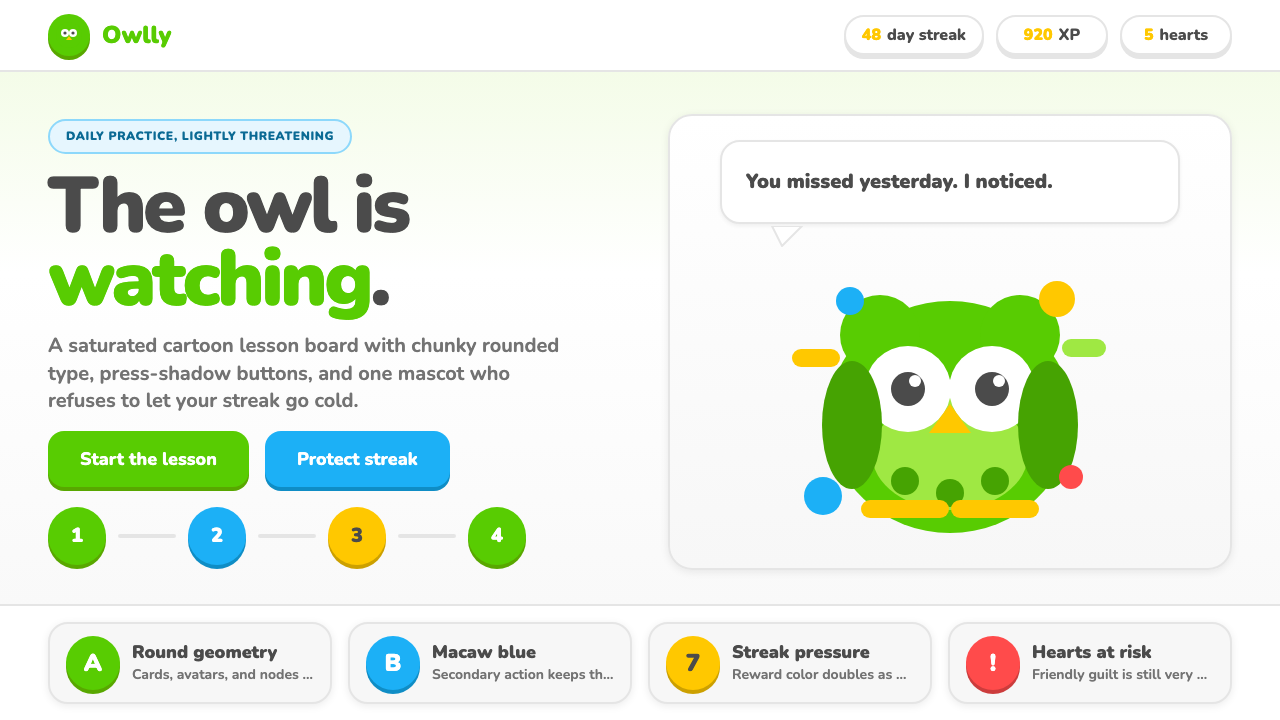 Duolingo Green Owl MascotFriendly guilt goes loud. Saturated green, Nunito heft, and press-shadow butt…
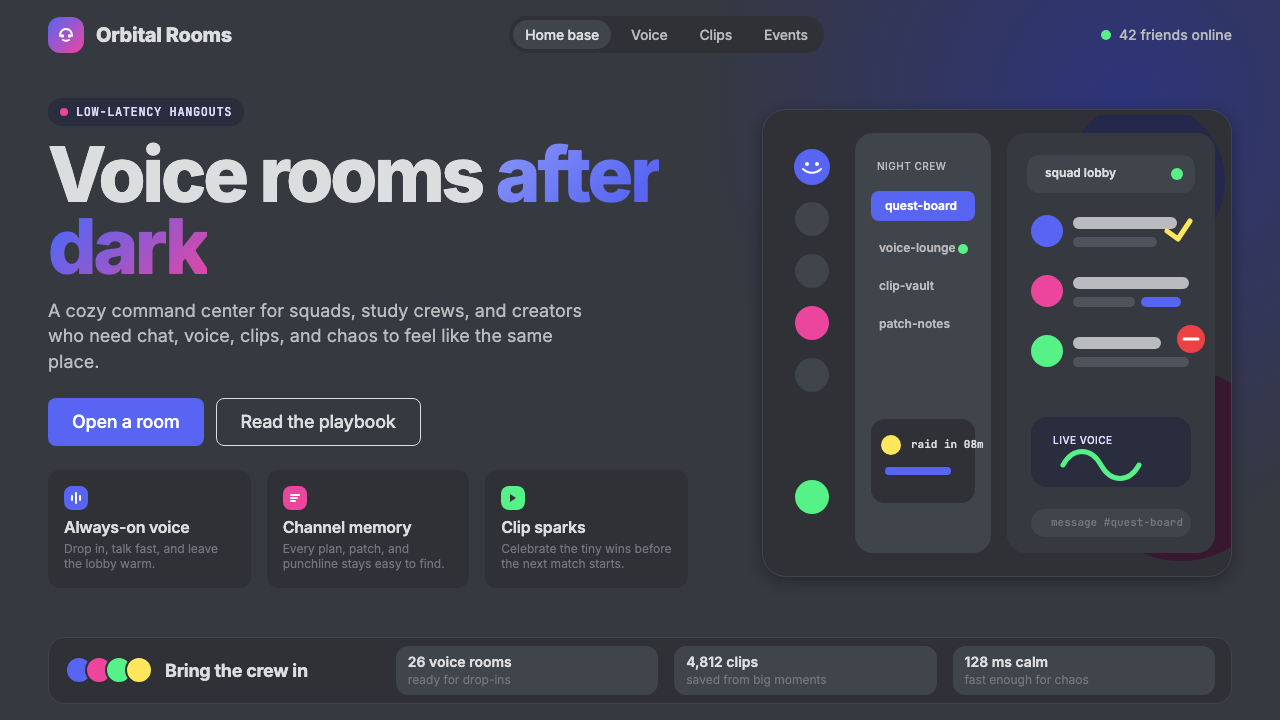 Discord 2024Blurple cozy. Charcoal grounds, illustrated characters — every surface says '…
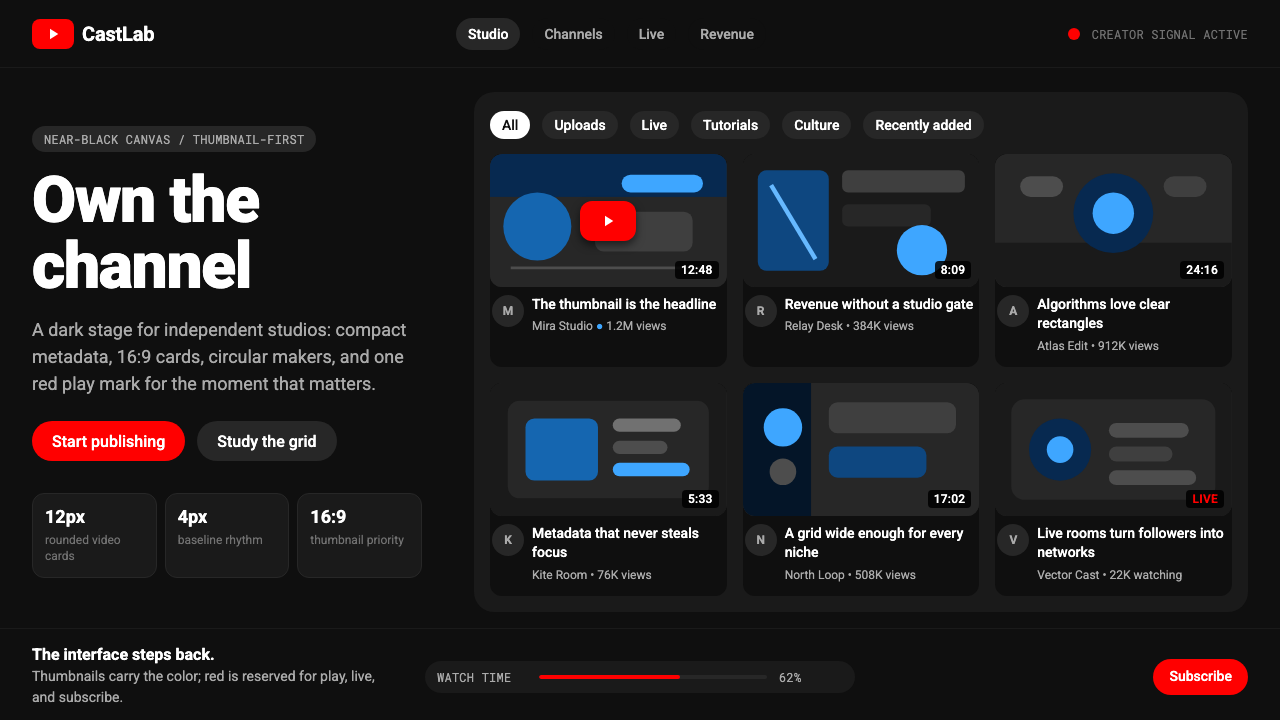 YouTube Creator EconomyThe UI disappears. Near-black Roboto grids let thumbnails shout; red only mea…
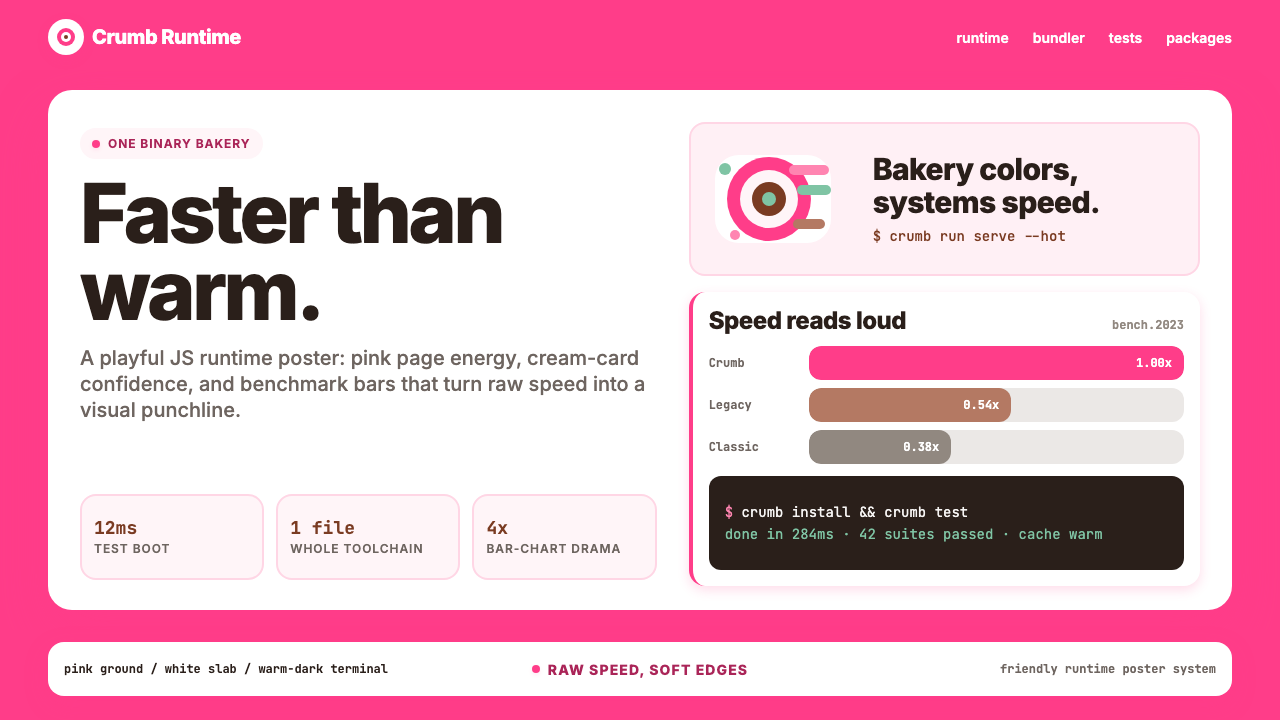 Bun JS Runtime Pink 2023Dev speed gets bakery-bright. Hot pink grounds white slabs, mono bars, and wa…
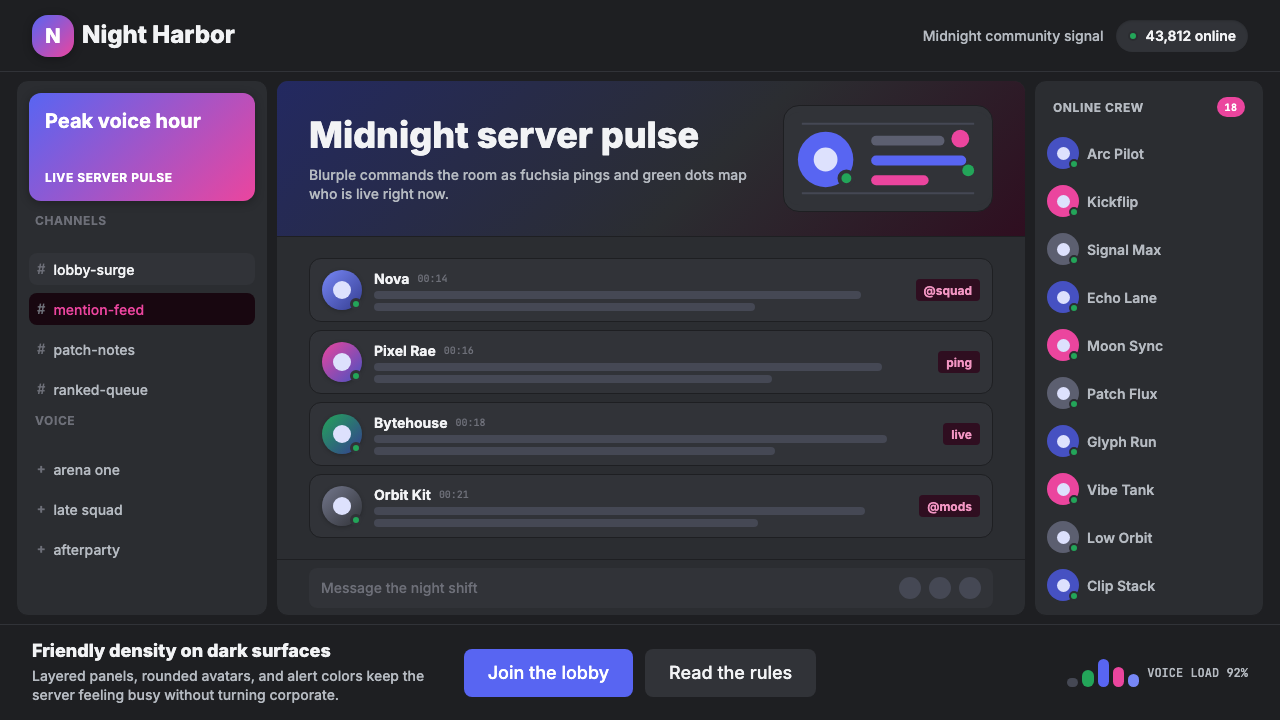 Discord Blurple Server (2020)Midnight server energy. Blurple panels, fuchsia pings, and green status dots…
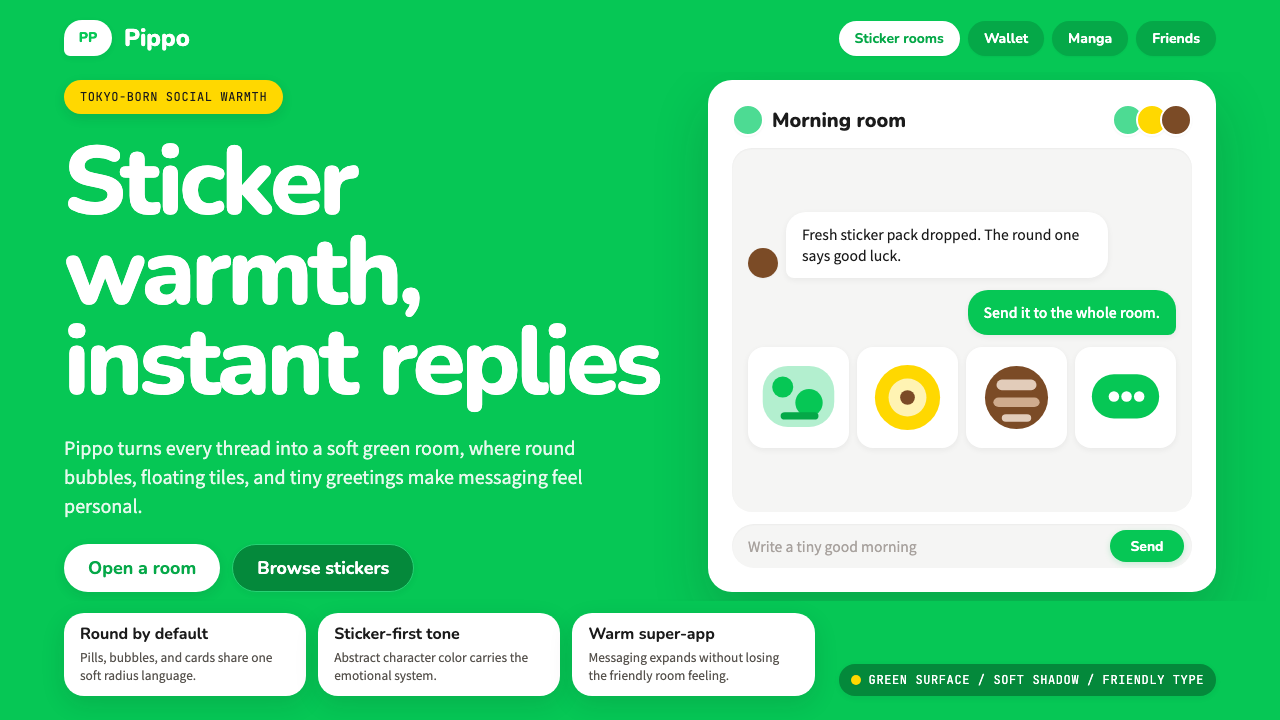 LINE Messenger GreenChat feels like a sticker. Bright green, pill bubbles, and rounded Nunito kee…