What is Bun JS Runtime Pink 2023?
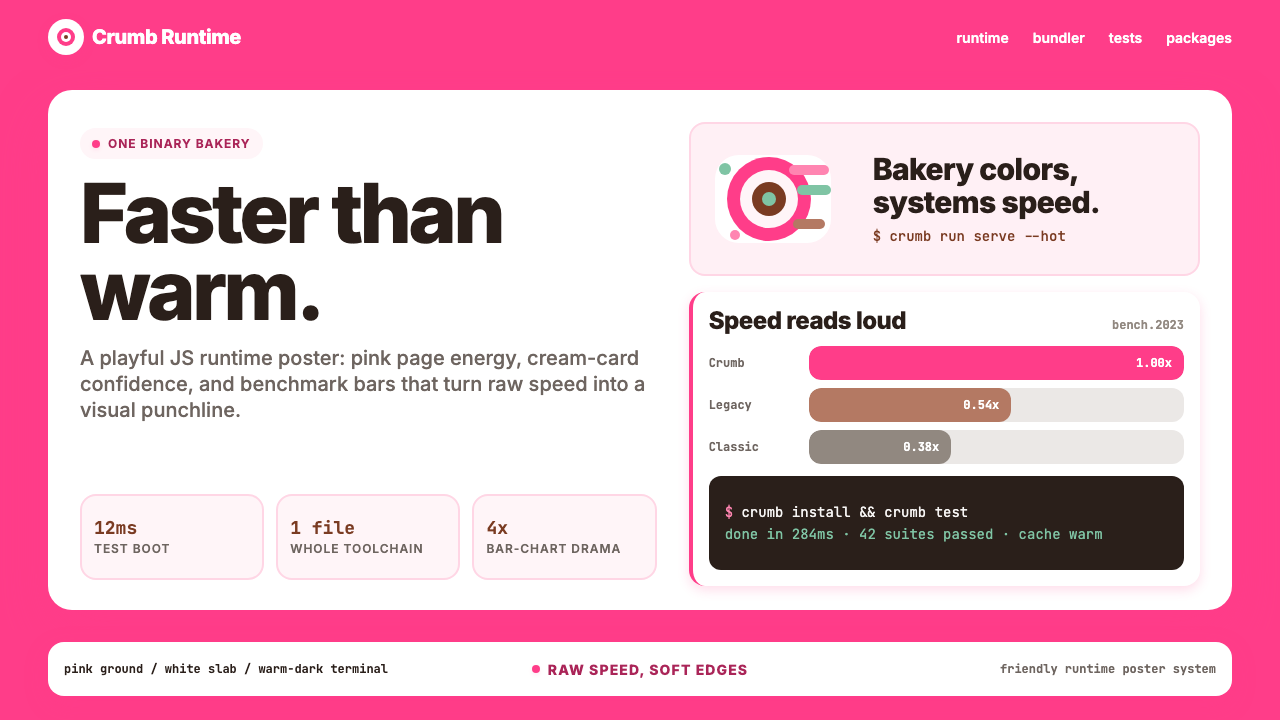
Bun brought bakery warmth to developer tooling — blazing hot-pink energy, benchmark obsession, and a cinnamon-bun mascot that dares the performance era to have a sense of humor.
Bun JS Runtime Pink 2023 in brief
Bun JS Runtime Pink 2023 is the visual identity of Bun, an all-in-one JavaScript runtime that combined a package manager, bundler, and test runner into a single binary built for raw execution speed. The design language arrived fully formed with the 1.0 release in September 2023: saturated hot pink as the dominant hue, expansive white surfaces for content, monospaced elements that echo the terminal environment, and a warm bakery undertone that kept the relentless performance focus from feeling austere.
The aesthetic belongs to a specific moment in developer-tools history — when a new generation of runtimes competed aggressively against the established Node.js ecosystem and chose bold, personality-driven branding to stand out. Where many developer tools defaulted to dark terminals and muted palettes, Bun inverted the convention entirely, betting that maximum visual confidence would signal maximum engineering confidence.
At its core the style is a study in deliberate contrasts: the warmth of a bakery against the precision of benchmark charts, the playfulness of a mascot against the seriousness of systems programming, hot pink against cool white. These tensions are not accidental — they are the brand's argument that high performance and approachability can coexist in the same tool.
Where does Bun JS Runtime Pink 2023 come from?
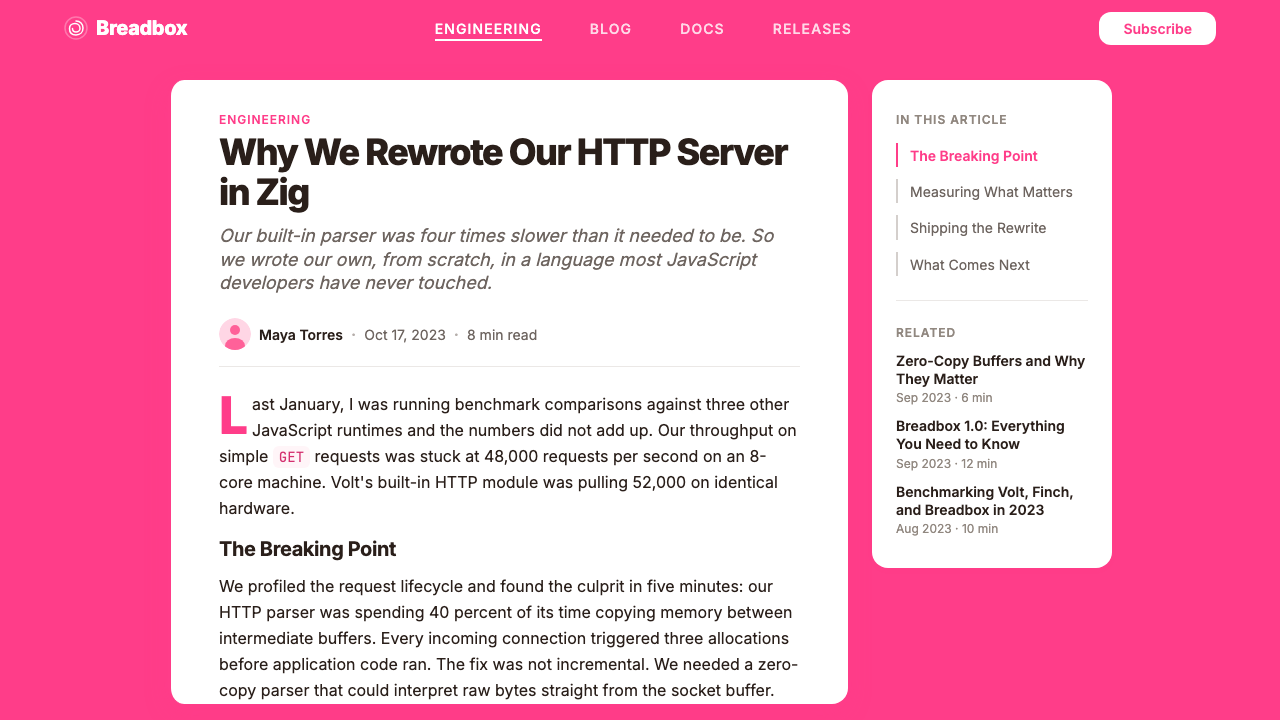
Bun was created by Jarred Sumner and first made public in 2022, developed under the company Oven, Inc., headquartered in San Francisco. Sumner wrote the runtime in Zig, a systems programming language that gave him low-level memory control without the complexity of C++. The choice of Zig was itself a statement — it positioned Bun outside the JavaScript-in-JavaScript tradition of many tooling projects and aligned it instead with a wave of performance-first infrastructure thinking that characterized the early 2020s.
Oven raised its Series A from investors who had backed Stripe, bringing professional fintech-grade capital into what had been largely a solo engineering project. The funding enabled Sumner to build a small, focused team — Ashcon Partovi, Dylan Conway, Colin McDonnell, and others — and to invest in the kind of marketing and design that turned a technical achievement into a cultural moment. The hot-pink visual identity emerged from this investment: a deliberate decision to make Bun impossible to ignore at a conference, in a tweet, or on a documentation page.
The cinnamon-bun mascot was central to the brand from the beginning, riffing on the product name in the most literal way possible and giving the project a cheerful, self-aware personality that contrasted with the project's genuinely demanding technical ambitions. The mascot softened the benchmark-chart aggression — instead of reading as a threat to competing runtimes, Bun read as an enthusiastic contender who happened to be very, very fast.
Bun 1.0 landed in September 2023 to significant industry attention. The announcement benchmarks showed the runtime dramatically outperforming established alternatives on common workloads, and the visual identity amplified every claim: the benchmark bars were rendered in the brand's signature pink against white, the typography was oversized and confident, and every page felt like a team that had been working quietly and was now ready to make noise. The overall effect captured a moment in the post-Node ecosystem where raw speed had become a genuine competitive differentiator and where the marketing language of developer tools had, almost for the first time, become genuinely fun.
What defines the Bun JS Runtime Pink 2023 look?
Hot Pink Dominance
The defining color of the Bun identity is a saturated, assertive hot pink that operates at full vibrancy — not softened into blush, not darkened into mauve, but confrontationally bright. It fills page backgrounds, saturates headline type, and energizes benchmark-bar fills. The effect is immediately recognizable and deliberately polarizing: pink in a developer-tool context signals that the project refuses to follow convention, and the specific intensity of this pink communicates confidence rather than whimsy.
White Slab Contrast
Against the hot-pink ground, content areas are rendered as clean white slabs — card-like containers with generous internal padding that create a visual breathing room within an otherwise intense palette. These white zones host documentation, code samples, and explanatory text, letting the eye rest before returning to the pink energy of surrounding elements. The contrast between saturated pink and pure white is high enough to create strong hierarchy without requiring additional color differentiation.
Monospaced Infrastructure
Monospaced type threads through the visual system as a persistent signal of technical authenticity. Terminal commands, benchmark numbers, package names, and code snippets are all set in monospace, honoring the environment where Bun actually lives and works. The monospaced elements create a visual rhythm distinct from the display and body type, and they ground the more exuberant pink-and-white environment in the reality of command-line tools and shell scripts.
Benchmark Bar Iconography
The horizontal performance-comparison bar chart became Bun's most recognizable visual motif beyond its color palette. These charts appear throughout the marketing and documentation with Bun's bar consistently the longest — a visual argument rendered as data. The bars themselves are rendered flat and clean with no gradients or dimensional effects, and their arrangement prioritizes immediate legibility: the fastest runtime is always the most visually prominent. The chart pattern became so associated with the brand that it functions almost as a logo alongside the cinnamon-bun mascot.
Warm Bakery Undertone
Beneath the performance intensity runs a warmth that the cinnamon-bun mascot embodies and the brand copy reinforces. Terminal backgrounds and dark-mode surfaces lean warm rather than cool-gray or pure black, giving the night-mode experience a comfortable depth rather than a stark contrast. This warmth is subtle enough to avoid contradicting the technical seriousness of the product, but consistent enough to make the overall identity feel approachable — a developer tool that wants to be used by real humans, not just admired by engineers.
Oversized Confident Typography
Display type in the Bun identity runs large and heavy, used to state performance claims with the visual conviction of a headline rather than the hedged language of a technical specification. Headlines occupy significant vertical real estate and are set at weights that feel definitive. Body text contrast is high, maintaining readability against both the white slabs and the occasional pink-ground sections. The typographic system is not decorative — it is argumentative, using scale and weight as the primary tools for building the case that Bun is fast.
Mascot-Integrated Brand Voice
The cinnamon-bun mascot is not decorative clip art — it is a structural element of the brand voice that softens the intensity of the performance-first messaging. Placed alongside benchmark charts and technical documentation, the mascot signals that the creators of this tool have a sense of humor about what they have built. This self-awareness is itself a design choice: it positions Bun's authors as confident enough to joke, which implies they are confident enough in the product to let the benchmarks speak. The mascot prevents the aggressive performance narrative from tipping into parody by never taking itself too seriously.
Who shaped Bun JS Runtime Pink 2023?
The creator of Bun, Sumner architected the runtime in Zig before most of the industry had considered the language viable for production infrastructure. His decision to build a fully integrated toolchain — runtime, package manager, bundler, and test runner in one binary — came from direct frustration with the fragmentation of the Node.js ecosystem. Sumner's public presence on social media and at conferences was itself part of the Bun brand: technically authoritative, occasionally combative, and consistently willing to let benchmark numbers do the arguing.
An early core contributor to Bun, Partovi worked on the foundational systems that made the runtime's performance claims achievable in production. The presence of a small team of focused contributors around Sumner gave Bun's architecture a coherence that single-author projects often lack — each contributor brought deep systems experience, and the shared commitment to Zig as the implementation language unified the codebase at a fundamental level.
A core member of the Oven team, Conway contributed to the development of Bun's bundler and other core tooling features. The all-in-one toolchain vision required engineers capable of working across multiple distinct problem domains simultaneously — parsing, linking, module resolution, and runtime internals — and Conway was among those who helped make that breadth coherent under a single binary.
Another member of the early Oven team, McDonnell contributed to the development of Bun's APIs and documentation. Good documentation was essential to Bun's adoption strategy: the runtime was technically sophisticated enough to be intimidating, and clear, opinionated documentation helped developers understand not just how to use Bun but why its architectural choices were deliberate rather than incidental.
How do you use Bun JS Runtime Pink 2023 today?
The Bun identity is built around a specific tension — performance-first technical authority delivered with warmth and humor — and working with this style means committing to both halves of that tension. Applied correctly, it communicates engineering confidence without condescension and technical complexity without intimidation. The dominant hot pink should anchor a composition rather than saturate every surface: one bold pink field or zone per layout establishes the brand statement, while white and near-neutral surfaces do the actual content work.
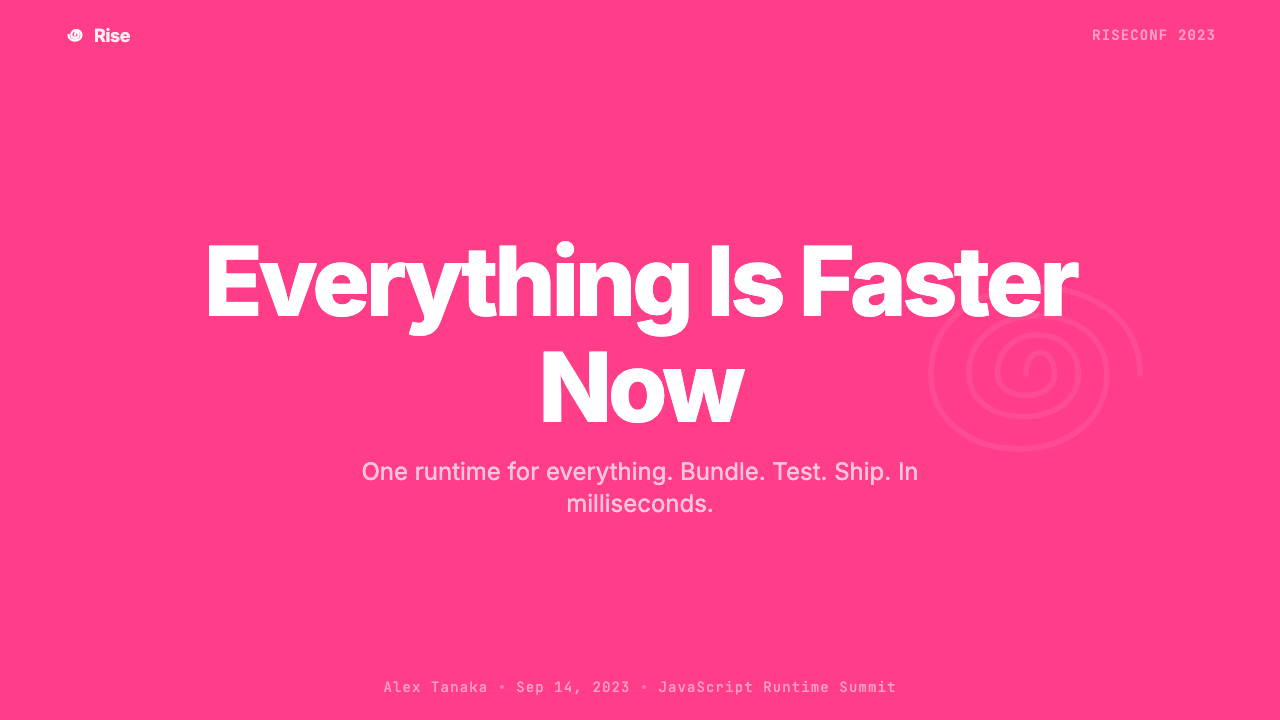
For presentation slides, the style works exceptionally well when the content involves comparison or argument. Cover slides benefit from the full pink-and-white contrast — a large, high-weight headline against a pink or white ground with generous negative space. Content slides that present performance data, architectural decisions, or technical trade-offs should use the benchmark-bar format as a model: horizontal comparison elements rendered flat and clean, with the key value always the most visually prominent. Avoid cluttering data slides with decoration; let the numbers do the arguing, and let the pink accent mark the winner.
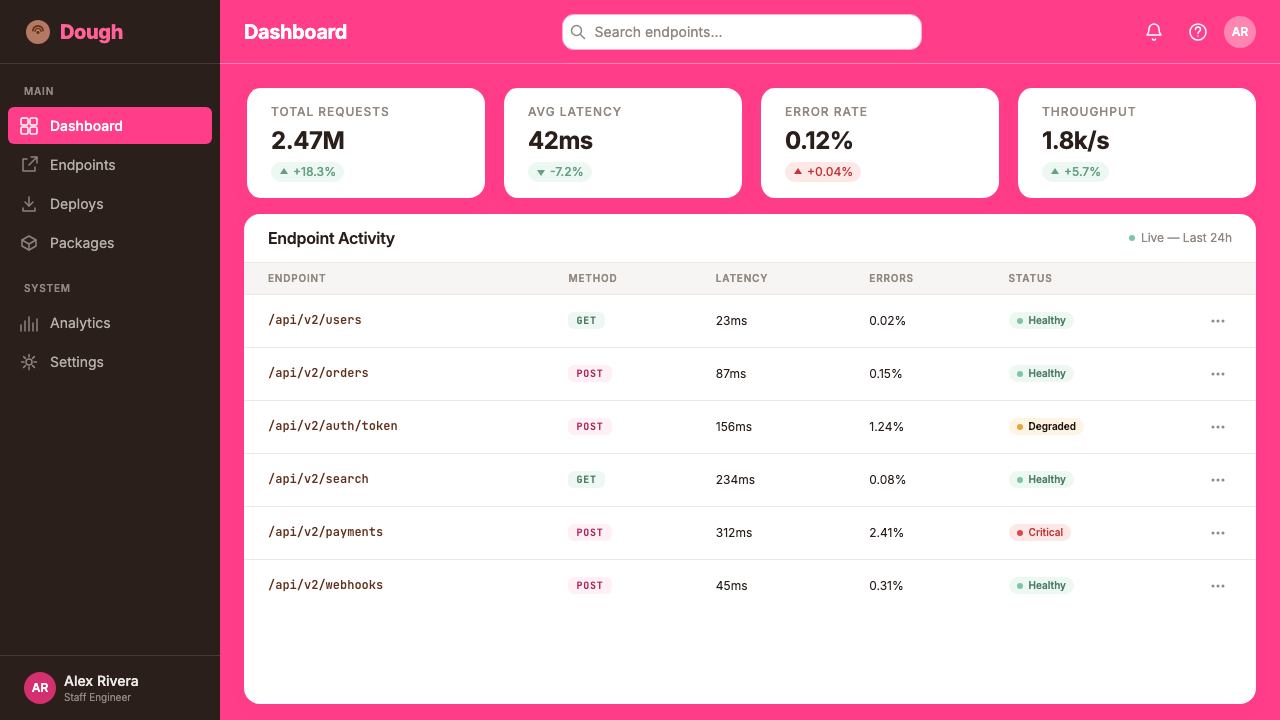
For web UI and dashboards, the style suits any context where clarity and confidence are more important than softness. Navigation and headers can carry the pink energy; content areas should default to white or a warm near-white. Interactive states — hover, active, selected — are natural recipients of the pink accent, creating a system where color carries meaning without being arbitrary. Monospaced type should appear wherever technical values, commands, or identifiers are displayed, reinforcing the connection between the visual system and the technical environment it references.
For editorial and marketing work, the Bun aesthetic has particular strength in launch announcements, performance reports, and technical comparisons. A marketing page using this style alternates between pink-ground feature statements and white-ground explanatory content, with benchmark visuals occupying prominent positions. The mascot or brand personality elements should appear at moments of transition or celebration rather than as persistent decoration — they earn their place by breaking the intensity at the right moment.
The most common mistake when applying this style is using the hot pink as wallpaper — saturating every surface and element until the color loses its ability to signal emphasis. The pink works because it contrasts; when everything is pink, nothing is pink. A related mistake is adopting the playful brand voice without the underlying technical confidence: the humor in the Bun identity works because it is backed by genuine benchmark data. Without that foundation, the warmth and mascot energy read as decoration rather than self-assurance.
Bun JS Runtime Pink 2023 — FAQ
Is this style appropriate for products outside the developer-tools category?
With adaptation, yes. The hot-pink and white combination is bold enough to work across consumer product launches, performance marketing, and startup brand moments where the goal is to be impossible to ignore. What translates is the contrast logic and the confidence of the typographic scale. What requires reconsideration is the benchmark-bar motif and the monospaced-type infrastructure, which carry strong developer-tool connotations. A consumer brand using this palette would substitute its own data visualization conventions and drop the terminal-referencing elements while keeping the color energy and mascot-driven warmth.
How does this style handle dark mode?
The Bun identity's dark mode is one of its most thoughtful aspects. Rather than simply inverting to black, the dark surfaces lean warm — closer to a very deep cinnamon brown than to a neutral charcoal. This preserves the bakery undertone that runs through the light-mode experience and prevents the dark version from reading as a generic dark UI. The hot pink maintains its presence in dark mode, used for interactive elements, accent marks, and the logo itself, which glows at full saturation against the warm dark ground.
Can this style coexist with code syntax highlighting?
Yes, and Bun's own documentation demonstrates this well. Code blocks are rendered on near-neutral or warm-dark backgrounds that step back from the hot-pink energy of the surrounding page, creating a visual separation between brand expression and technical content. Syntax highlighting within those blocks can use a standard warm-toned scheme without conflict — the pink accent color is reserved for the brand layer and does not compete with the code's internal color logic. The monospaced type in code blocks harmonizes with the monospaced infrastructure elsewhere in the identity.
What distinguishes authentic use of this style from simple pink-and-white branding?
Three things: the warmth undertone, the data-first composition logic, and the self-aware personality. Generic pink-and-white branding uses pink as a softening or feminizing device, often at lower saturation. Bun's pink is hot — it asserts rather than softens. Generic pink-and-white branding centers lifestyle imagery; Bun's centers performance data and technical claims. And generic branding either takes itself seriously or deploys humor as a marketing layer; Bun's mascot and voice integrate humor into the technical argument itself, making playfulness a form of confidence. When all three elements align, the result has the specific Bun register. When only the color is borrowed, it reads as pink branding rather than Bun-derived design.
How does this style age as the runtime landscape continues to evolve?
The hot-pink identity is tied to a specific cultural moment — the 2023 JavaScript runtime wars — which means it carries both the energy of that moment and its time-stamp. In the short to medium term, the style benefits from its strong differentiation: as developer tools continue to proliferate, a bold pink identity with a mascot is more memorable than another dark-background monospace-only interface. Over a longer arc, the style's durability will depend on whether Bun's performance claims continue to hold and improve — the design and the technology are deeply integrated. If the benchmarks remain authoritative, the pink identity will read as confident; if the runtime loses its performance edge, the same visual language could start to feel like overstatement.
Related design styles
 Discord 2024Blurple cozy. Charcoal grounds, illustrated characters — every surface says '…
 Arc Browser Prismatic (2023)Color is architecture. Pink-violet-cyan ribbons glow over onyx glass and roun…
 Bluesky AT Protocol 2024Open tech feels warm. Pale sky, cloud cards, Inter, and one cobalt accent car…
 Discord Blurple Server (2020)Midnight server energy. Blurple panels, fuchsia pings, and green status dots…
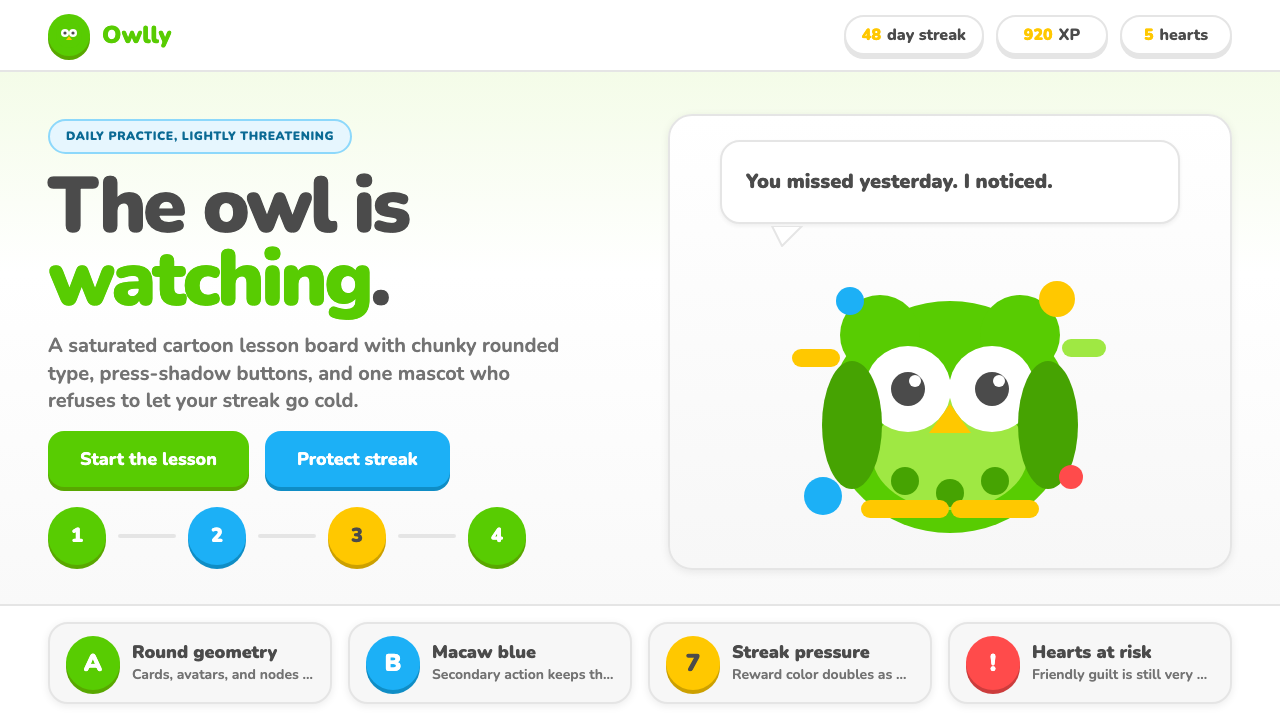 Duolingo Green Owl MascotFriendly guilt goes loud. Saturated green, Nunito heft, and press-shadow butt…
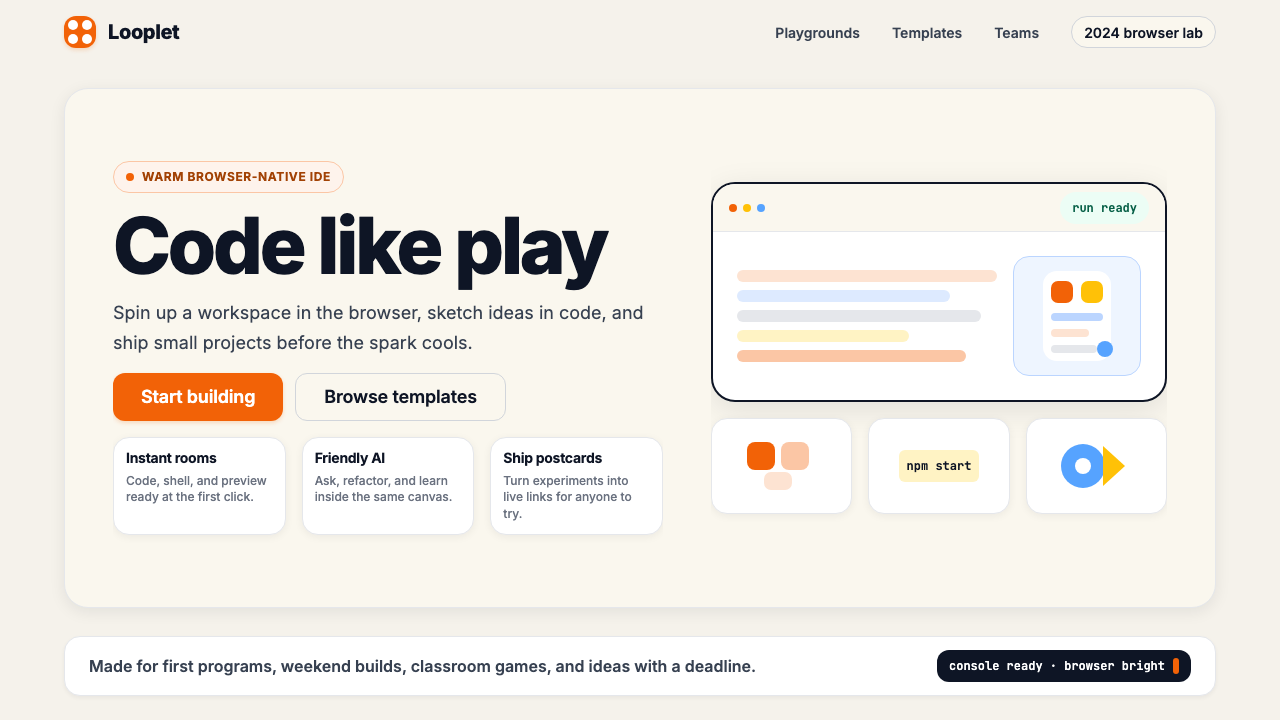 Replit 2024Coding feels warm. Coral buttons, cream panels, rounded code tiles make build…