What is Navajo Blanket?
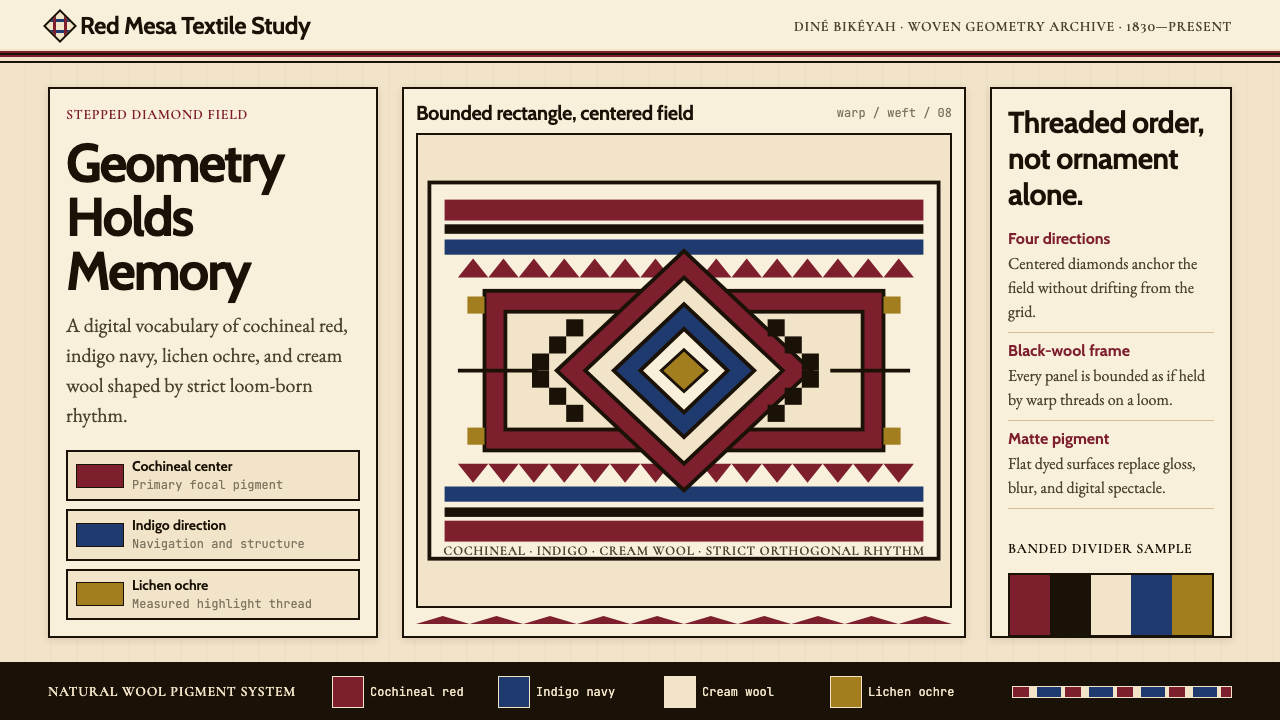
Woven from hand-spun churro wool dyed with cochineal red and indigo, Navajo blankets encode centuries of Diné cosmology into stepped diamonds and serrated zigzags that remain among the world's most powerful geometric compositions.
Navajo Blanket in brief
Navajo blanket design is North America's most refined indigenous textile tradition — a visual system built from strict orthogonal geometry, saturated natural pigments, and an unwavering commitment to bilateral and rotational symmetry. The stepped diamond, the serrated zigzag, and the horizontal band are its primary vocabulary. Deployed on a plain-weave ground in hand-spun churro wool, these motifs create compositions that read simultaneously as flat abstraction and as encoded cosmological maps.
What distinguishes the Navajo system from other textile traditions is its disciplined constraint. The loom imposes a grid that is absolute — every thread crosses at a right angle, every curve must be approximated through staircase steps. Rather than fighting this limitation, Navajo weavers exploited it: the stepping itself became a formal device, giving diamonds and chevrons their characteristic hard-edged, crystalline quality. The result is a geometry more rigorous than most twentieth-century avant-garde work, arrived at through centuries of material practice rather than theoretical program.
Color in the classic tradition is built from a small set of natural dyes — cochineal red (introduced via Spanish trade in the seventeenth century), indigo blue, yellow from local lichens and plants — combined with the natural undyed tones of churro wool: cream, brown, and charcoal black. These hues interact in strong simultaneous contrast: a band of deep red against cream reads as incandescent, while indigo against the same cream reads as deep and recessive. The palette is never decorative in the pastel sense; it is structural, using hue and value contrast to define form.

Where does Navajo Blanket come from?
The Diné (Navajo) people adopted upright-loom weaving from their Pueblo neighbors sometime in the late seventeenth century, following the complex upheavals of the Pueblo Revolt of 1680 and the subsequent resettlement period. Before that, the Diné were primarily hunters and gatherers with a pastoral tradition; after sustained contact with Pueblo weavers — and with Spanish colonists who introduced the churro sheep in the sixteenth century — they developed what would become the world's most celebrated indigenous textile tradition within roughly two generations. The speed and completeness of this cultural absorption was remarkable: by the mid-eighteenth century, Navajo blankets were already being traded across the Southwest and were considered luxury goods among both Native and Spanish communities.
The Classic Period (approximately 1700–1863) represents the height of Navajo weaving before external disruption. Blankets of this era are characterized by wide horizontal banding, simple terraced and stepped triangles, and a palette built almost entirely from natural undyed wool and hand-prepared cochineal and indigo dyes. The most iconic Classic Period form is the Chief's blanket — not actually worn by chiefs exclusively, but named for its prestige — a wide horizontal composition in three phases, with bands of color interrupted by expanding stepped diamonds. These were worn as shoulder garments by both men and women throughout the Southwest and as far east as the Great Plains, where they became prestige trade items among Plains nations.
The Bosque Redondo period (1864–1868) was catastrophic. Under U.S. Army orders, approximately eight thousand Diné were forcibly relocated to a reservation in eastern New Mexico — an event the Diné call the Long Walk. During internment, weavers had access only to factory-spun Saxony and Germantown yarns in aniline-dyed colors, and they produced what are now called Transition Period blankets: a technically different but visually explosive body of work in vivid commercial reds, purples, and greens that had no precedent in the natural-dye palette. When the Diné returned to their homeland after the 1868 treaty, they brought these new color sensibilities with them.
The Trading Post era (roughly 1890 onward) transformed Navajo weaving from a blanket tradition into a rug tradition. Anglo traders — most famously Lorenzo Hubbell at Ganado, Arizona, and J.B. Moore at Crystal, New Mexico — began commissioning heavier-weighted weavings designed to lie flat on floors rather than drape over shoulders, and they encouraged regional design variations that became codified as distinct styles: Ganado (deep red grounds, black and white geometric accents), Two Grey Hills (natural-colored fine wool, complex geometric borders), Teec Nos Pos (heavy outline-bordered designs), and Wide Ruins (vegetal-dyed pastels without borders). These regional styles persist today and constitute a living design vocabulary that is simultaneously traditional and continuously evolving.
What defines the Navajo Blanket look?
Geometry
The Navajo visual system is built entirely from forms that the orthogonal loom can produce: horizontal and vertical lines, stepped diagonals, and the shapes derived from them — stepped triangles, terraced diamonds, serrated zigzags, and concentric stepped rectangles. Curves do not exist in the strict sense; they are approximated through staircase progressions of increasing or decreasing width. This constraint generates a distinctive crystalline hardness that is immediately recognizable and utterly different from the fluid curves of most other world textile traditions.
Color and Contrast
The classic palette is built from saturated naturals: the warm scarlet of cochineal, the cool depth of indigo, the bright acid of lichen yellow, the warm neutrality of undyed churro cream and natural charcoal brown. These colors are deployed in strong simultaneous contrast — deep red against cream, indigo against red, black against white — rather than in tonal gradation. The effect is visual vibration at the color boundaries, an optical intensity that photographs reproduce poorly and that must be experienced in person to fully appreciate.
Bilateral and Rotational Symmetry
Navajo compositions are almost universally symmetrical along both horizontal and vertical axes, and many designs achieve four-fold rotational symmetry as well. A stepped diamond reads the same when rotated ninety degrees; a Chief's blanket reads the same upside down. This structural symmetry is not a simplification but a sophisticated spatial achievement: maintaining perfect symmetry across a large woven field, where each thread decision affects the overall pattern, requires continuous mental projection of the whole composition during the act of making.
Banding and Registers
The horizontal band is the primary organizational device of the Classic Period and remains fundamental to most Navajo design traditions. Bands may be solid, striped, or contain figural motifs; their widths are varied to create rhythm and emphasis. In Chief's blankets, the standard form moves through three phases — simple stripes in early examples, then half-diamonds at the edges, then full diamonds at center and corners — demonstrating how a single composition can develop across generations while maintaining its essential structure.
Material and Textural Honesty
Navajo blankets are weft-faced plain weave: the warp threads are completely hidden by the weft, and the surface is entirely determined by weft color sequences. There is no attempt to simulate depth or shadow through weave structure; the flatness is total and intentional. This material honesty — the refusal to pretend the object is anything other than dyed wool on a loom — gives the compositions their graphic clarity. Translated to digital design, this quality corresponds to fully flat surfaces, no drop shadows, and color fields with hard rather than blurred edges.
Regional Variation and Style Lineages
Unlike a single school-based tradition, Navajo design comprises a family of regional styles, each with its own geometric vocabulary and palette conventions. Ganado blankets anchor on deep red grounds with black-and-white geometric accents; Two Grey Hills work builds intricate spider-web-like compositions in natural undyed wools; Teec Nos Pos designs surround central motifs with dense outline borders; Yei and Yeibichai rugs incorporate spirit figure imagery derived from ceremonial sand painting. Each style is identifiable at a glance while sharing the common Navajo commitment to orthogonal geometry and strong value contrast.
Encoded Meaning and Living Tradition
Navajo weaving is not merely decorative — it carries cosmological and cultural meaning rooted in the belief that Spider Woman taught the Diné to weave and that the act of weaving itself reflects the order of the universe. Certain motifs, colors, and compositional choices carry clan or ceremonial associations. Contemporary Navajo artists like D.Y. Begay have extended this living tradition by integrating contemporary materials and abstract concepts while maintaining continuity with the geometric and chromatic grammar their predecessors established. The tradition is not a museum artifact but an ongoing conversation.

Who shaped Navajo Blanket?
Mary Henderson Begay is widely regarded as one of the finest Navajo weavers of the twentieth century, known for the technical precision and design complexity of her Two Grey Hills-tradition work. Her textiles — executed in natural undyed wools ranging from cream through grey to near-black — achieve thread counts and pattern densities that remain benchmarks for the tradition. Her career demonstrated that Navajo weaving could simultaneously be a living ancestral practice, a fine art collected by major institutions, and a model of geometric design intelligence.
Daisy Tauglechee of the Two Grey Hills region produced work of such fineness that her rugs entered permanent museum collections during her own lifetime. She is credited with pushing the natural-dye Two Grey Hills style to its technical extreme: extraordinarily fine thread counts, complex interlocking geometric borders, and compositions that reward close scrutiny with layers of nested pattern. Her work established that Navajo weaving was not a folk tradition in the dismissive sense but an art form demanding the same mastery and sustained discipline as any high-prestige medium.
D.Y. Begay represents the contemporary generation of Navajo weavers who have engaged critically with the tradition's history — including the Trading Post era's influence on design — while developing a personal visual language that remains unmistakably rooted in Diné weaving. She has lectured widely, written about the cultural weight carried by textiles, and advocated for Navajo artists' intellectual property rights over their own design heritage. Her work demonstrates that the Navajo tradition is not frozen in the nineteenth century but continues to develop in dialogue with contemporary art and scholarship.
Lorenzo Hubbell established the Ganado trading post in Arizona in 1876 and became the most influential non-Navajo figure in shaping what twentieth-century audiences came to think of as 'Navajo design.' He actively encouraged the return to deeper reds and more complex geometric compositions at a time when weavers were transitioning away from Classic Period aesthetics, and he commissioned designs that were marketed to Eastern buyers as authentic expressions of the tradition. Historians debate the degree to which his interventions improved or constrained the tradition — but his role in creating the Ganado style and sustaining a market for Navajo textiles during a difficult period is undeniable.
How do you use Navajo Blanket today?
Navajo blanket aesthetics offer a distinctive alternative to the dominant minimal-neutral frameworks of contemporary digital design. Where most modern interfaces default to muted grays and rounded corners, a Navajo-derived visual system brings saturated, strongly contrasting color, strict hard-edged geometry, and a visual confidence rooted in centuries of design intelligence. Applied correctly, this translates not to ethnographic pastiche but to a bold, structured graphic system that can carry significant visual authority.
For presentation slides, the blanket tradition's banding and symmetry logic translates directly. A cover slide built on the Navajo system places a central stepped diamond or bold symmetrical motif as the dominant element, with the title set in high-contrast type against a saturated ground — deep red, warm cream, or near-black. The visual weight should feel anchored and ceremonial rather than corporate-sleek. Content slides work best treated as registers: clear horizontal bands separate sections, with color used to signal hierarchy rather than decoration. Data visualizations adopt the hard geometric aesthetic — bar charts become solid, hard-edged blocks in the primary palette; no gradients, no shadows, no softening.
For web interfaces, the tradition's strengths align most naturally with dashboards, data-heavy platforms, and portals where clear categorical separation matters. The approach: define a structure of horizontal registers or clearly bordered card zones, use a saturated accent pulled from the palette against a near-neutral ground, and rely on value contrast rather than line weight for hierarchy. Interactive states — hover, active, selected — are distinguished by strong hue shifts rather than subtle opacity changes. Borders and dividers should be hard and direct; soft hairlines break the visual grammar. Pricing pages work well with the banding logic: tiers become distinct horizontal or vertical bands, each grounded in a color from the natural palette.
For editorial and marketing work, the Navajo visual system delivers strong poster-like impact. An editorial layout using this system commits to bold color fields rather than image-heavy approaches — a deep red ground with cream text, or cream ground with charcoal and red typography, creates the saturated two-tone contrast that anchors the tradition. Marketing pages benefit from the strong symmetrical structure: features presented in mirrored compositions, calls to action centered and bold against high-contrast fields. The style suits brands that want to project heritage, craft authority, and visual confidence rather than tech-neutral minimalism.
A common mistake when applying Navajo aesthetics digitally is treating the geometric motifs as surface decoration applied over an otherwise generic interface. The pattern becomes wallpaper rather than structure. The tradition's power comes from color and geometry being inseparable — the stepped diamond is not an ornament placed on a background; it is the composition. Authentic application means letting the geometry organize the whole layout, using color to define structure rather than to embellish it, and resisting the temptation to soften hard edges with rounded corners, gradients, or drop shadows, all of which dissolve the crystalline quality that makes the tradition visually distinctive.

Navajo Blanket — FAQ
Is using Navajo blanket aesthetics in design culturally appropriate?
This is a substantive question that designers should engage with honestly. Navajo weaving is a living tradition belonging to a specific people, not a generic geometric vocabulary in the public domain. Applying the visual system responsibly means: drawing on the geometric logic and color principles rather than copying specific sacred or clan-associated motifs; acknowledging the tradition's origins in public-facing work; avoiding pretending the work is Navajo-made; and, where commercially appropriate, seeking consultation with or compensation for Navajo artists and cultural organizations. The distinction between inspiration and appropriation is real, and the geometric tradition is broad enough to work within without direct motif copying.
How does the Navajo system differ from other southwestern geometric traditions?
The Navajo tradition is distinct from Pueblo textile traditions (which historically used a different loom type and compositional logic), from Hopi weaving (which tends toward less saturated, more ceremonially specific imagery), and from the later Hispanic Rio Grande blanket tradition (which shares some formal similarity but has a different palette and weave structure). The stepped diamond and serrated zigzag are most closely associated with Navajo work, though similar forms appear in other Andean and Central American textile traditions that developed independently. Within the Southwest, the Navajo tradition stands out for the scale and complexity of its compositions and for the exceptionally fine spinning and dyeing quality of the Classic and Late Classic periods.
Can this design system work in a light and a dark color scheme?
Yes, but the two variants have different character. The traditional light-ground mode — cream or natural wool tones as the field, with saturated red, indigo, and dark brown as figural colors — produces the warm, luminous quality most associated with historic blankets. A dark-ground inversion — near-black or very deep indigo as the field — shifts the mood to something more dramatic and nocturnal, with cream and warm red as the lighter elements. Both work because the system depends on high value contrast rather than on a specific ground tone. The one critical requirement is that the contrast between figure and ground remains sharp and uncompromised; a mid-value ground that reduces the contrast between the color elements dissolves the visual structure entirely.
How should pattern complexity be calibrated for digital interfaces versus print?
Print and physical textiles can support far greater pattern complexity than screen-based design because viewing distance, material texture, and static display all favor close reading. For digital interfaces, a single strong geometric motif — a centered stepped diamond, a bold chevron border, a structured banding pattern — carries more visual force than a dense all-over composition that becomes noise at screen resolution. Use the most complex elements as contained accent zones (a header band, a card background, a cover slide) and let the surrounding interface breathe in near-neutral tones. The Navajo system's power at small scale is that a single stepped diamond at high contrast reads with the same clarity as a full composition — the motif is self-contained and scalable.
Does the Navajo blanket tradition have a relationship to modernist abstraction?
The formal parallels are striking — stepped diamonds and serrated zigzags anticipate forms that Josef Albers, Ellsworth Kelly, and Frank Stella would later develop in very different contexts — but the relationship is one of parallel independent development rather than direct influence. The Navajo tradition preceded European abstract art by centuries. What is historically documented is that mid-twentieth-century American abstract painters were aware of Navajo textiles through museum collections, and some artists acknowledged the visual dialogue. The more important point for designers is that the tradition demonstrates that geometric abstraction, high-value-contrast color composition, and strict structural symmetry are not specifically Western or modernist discoveries — they are solutions that emerge wherever rigorous geometric thinking is applied to flat-surface composition, regardless of cultural context.
Related design styles
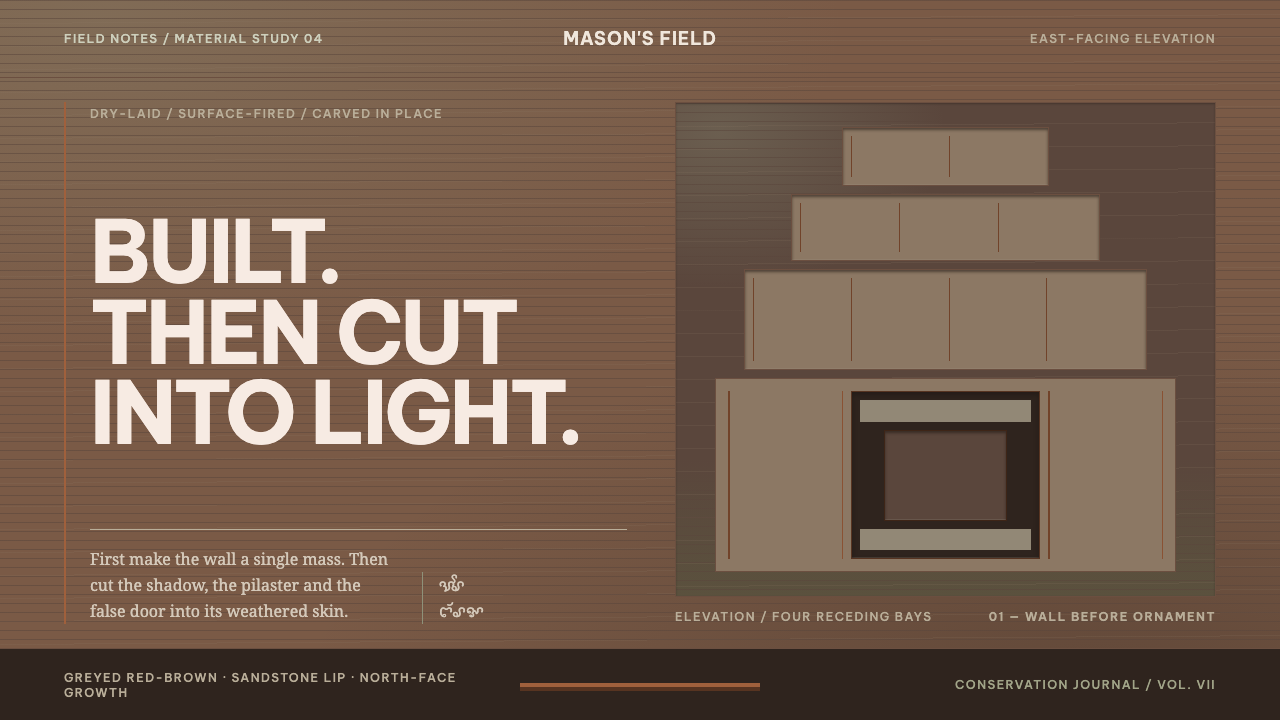 Cham My Son TowersWall before ornament. Greyed brick bays recede around cut shadows and sandsto…
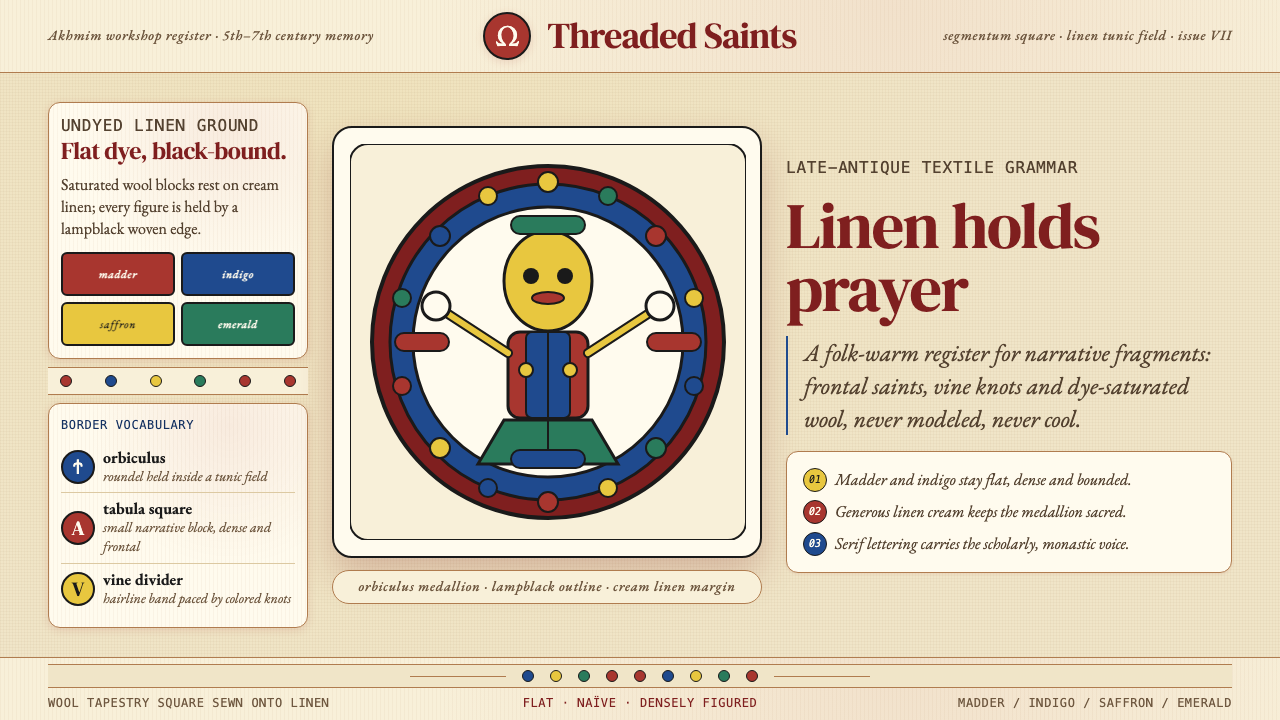 Egyptian Coptic TextileWarmth woven flat. Madder, indigo and saffron medallions sit on linen cream.
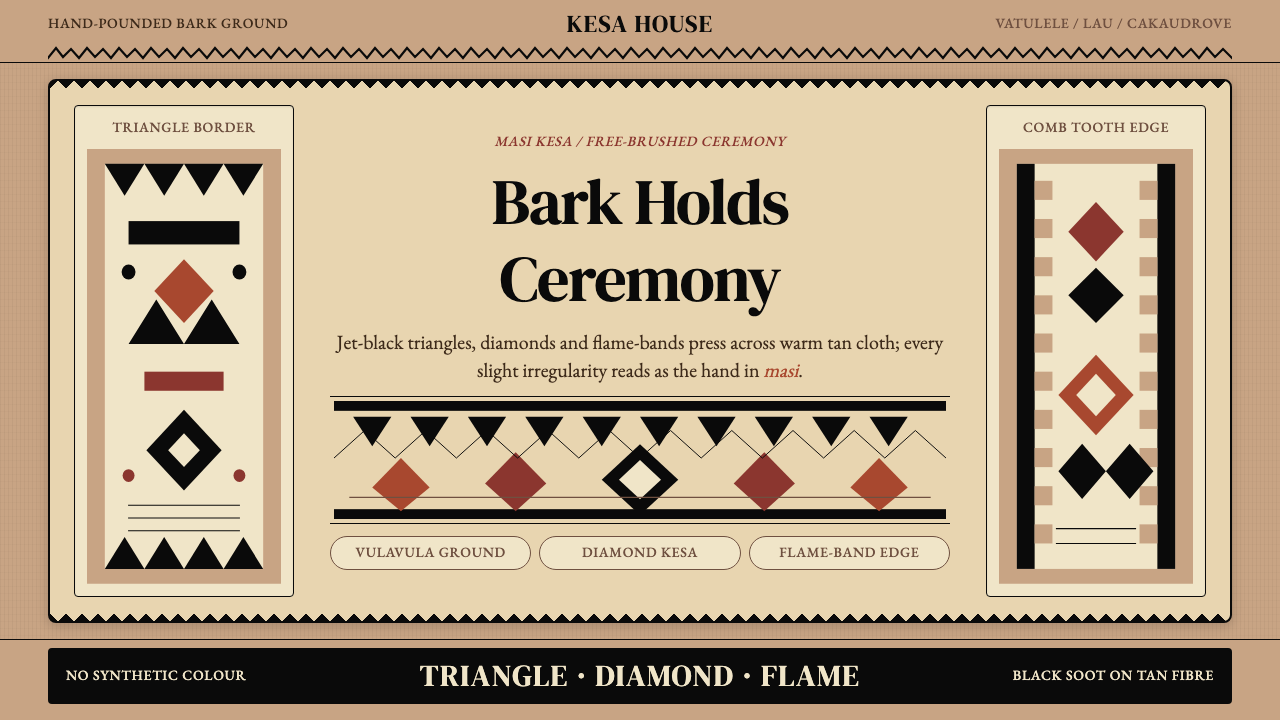 Fijian Masi (Tapa Cloth)Ceremony hits in black. Tan bark ground carries diamonds, zigzags and flame-b…
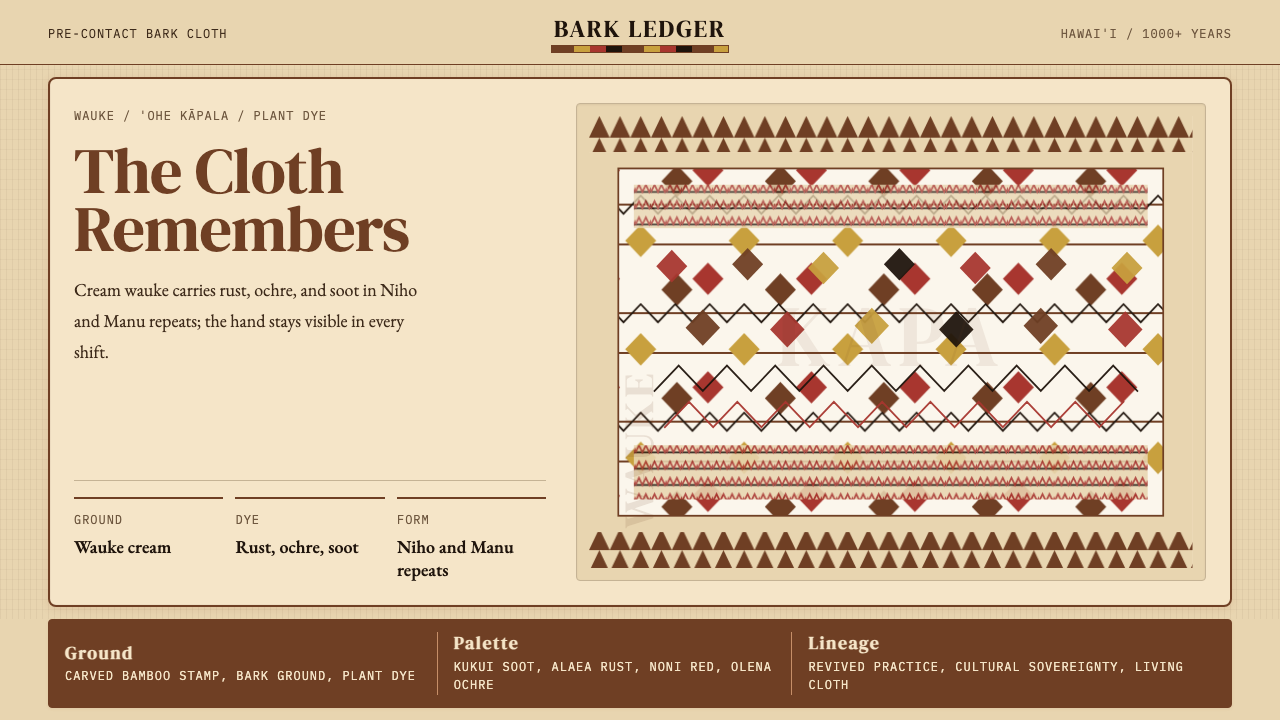 Hawaiian Kapa (Bark Cloth)Ceremonial geometry. Cream wauke, rust, ochre, and soot stamped in repeat.
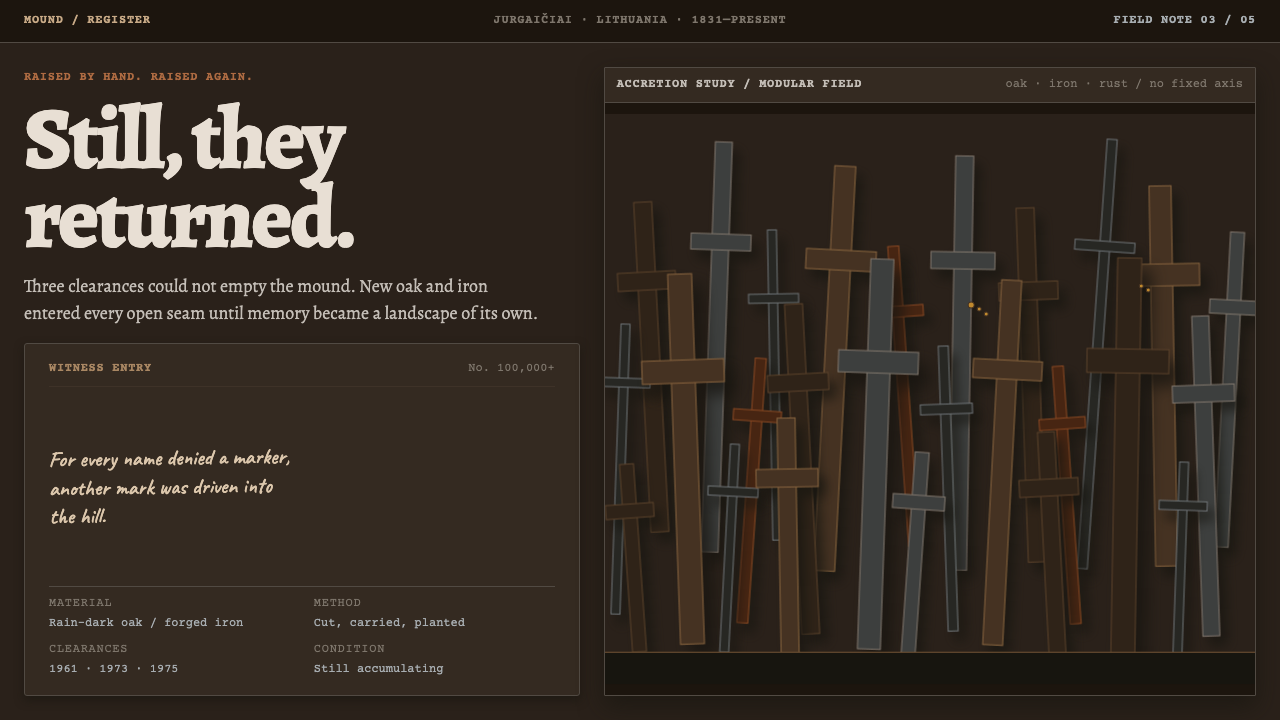 Hill of CrossesMemory returns by hand. Rain-black oak and rusted iron overlap until density…
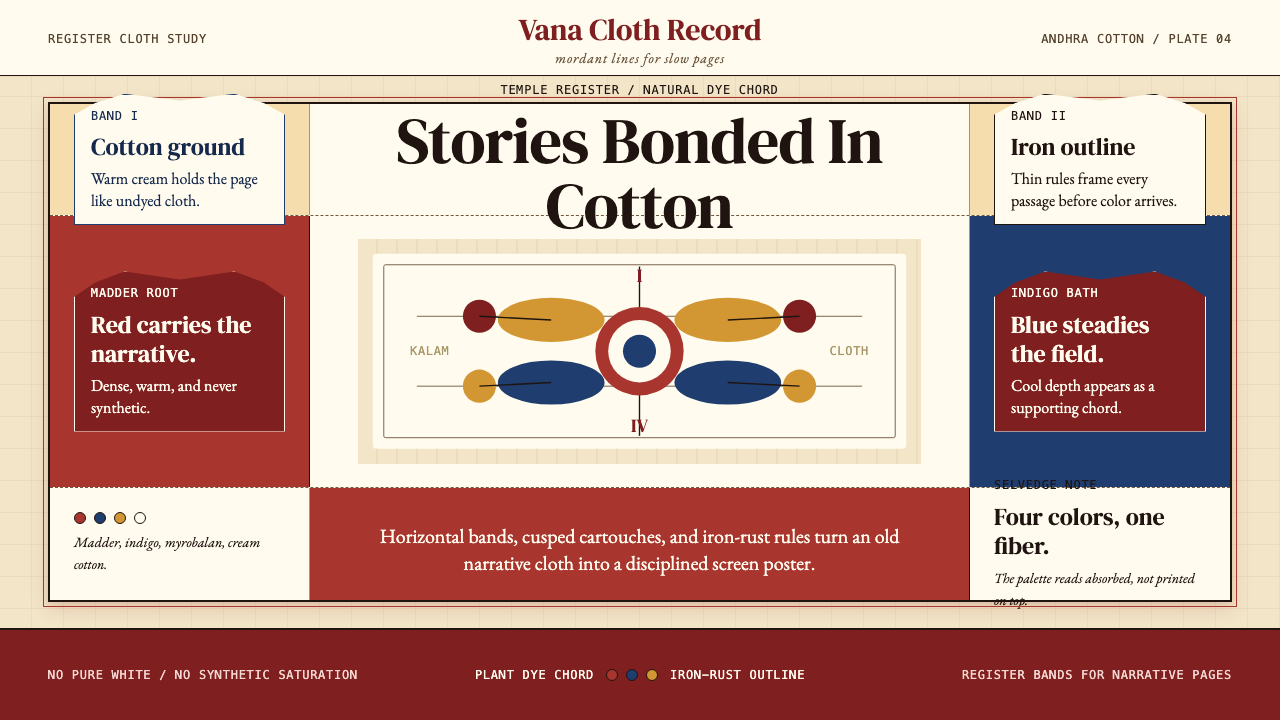 Kalamkari (Andhra Pradesh)Cloth becomes narrative. Madder bands, indigo panels, and iron rules stack li…