What is Motorola RAZR Flip (2004)?
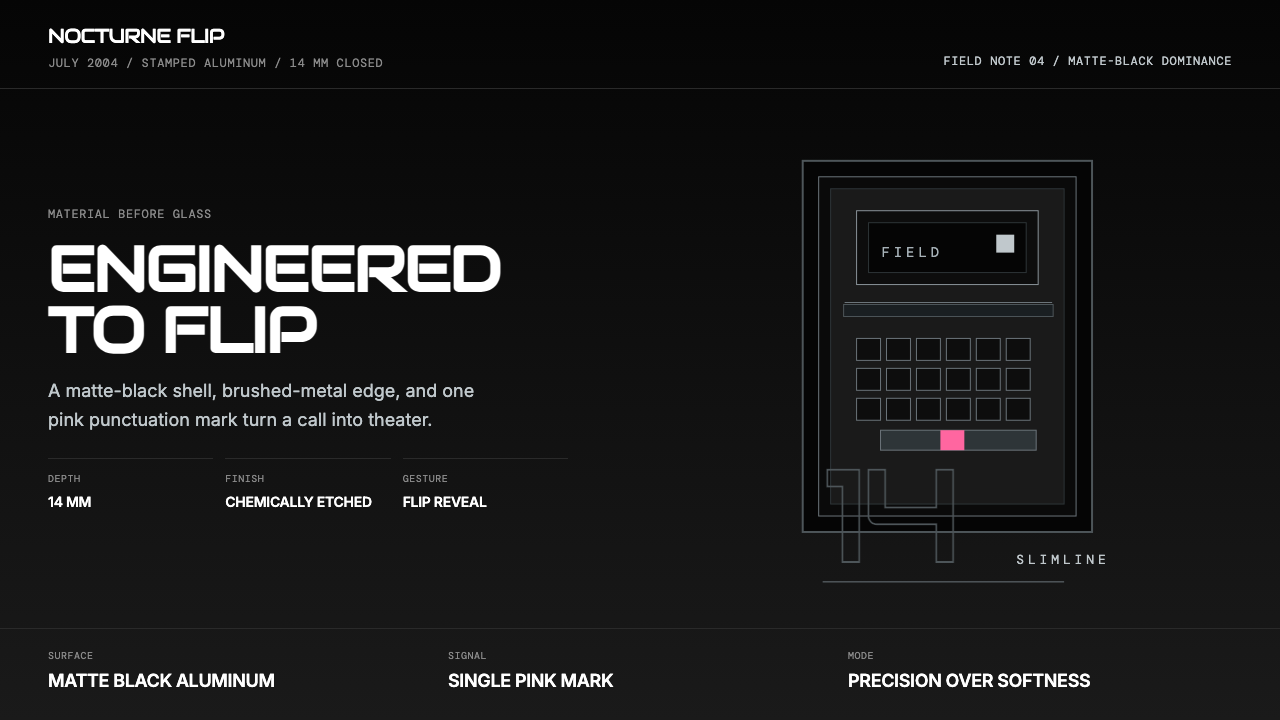
The Motorola RAZR V3 proved that a phone could be a fashion object — all chemically-etched aluminum, matte black restraint, and a single hot-pink accent that conquered a generation.
Motorola RAZR Flip (2004) in brief
The Motorola RAZR V3 design language is one of the defining visual systems of mid-2000s consumer technology — a deliberate union of industrial precision, fashion restraint, and theatrical hardware drama. Released in 2004, the phone collapsed the entire aspiration of the pre-iPhone era into an object that felt stamped from a single billet of aluminum rather than assembled from plastic parts. Its aesthetic vocabulary is built on three pillars: matte black as the dominant tone, brushed-metal surfaces as tactile accent, and a single saturated hot-pink as the only expressive punctuation.
The design operates through contrast and reveal. The flip mechanism transforms the phone from a closed slab — cool, dark, near-anonymous — into an open sculptural object with a backlit keypad that reads as a luminous grid against the dark chassis. This theater of opening and closing was central to the RAZR's cultural meaning: the phone was never just a communication device but a performed gesture, something you snapped shut for emphasis or flipped open as a statement of arrival.
Typography in the RAZR world is utilitarian and hard-edged, strictly sans-serif, following the logic of industrial instrument displays rather than consumer softness. Geometry stays rectilinear, hard-cornered, and orthogonal — there are no curves that are not structurally demanded, no radii that exceed the minimum needed for manufacture. This is premium design language before touchscreens softened everything into rounded rectangles and gradients.

Where does Motorola RAZR Flip (2004) come from?
The RAZR V3 emerged from Motorola's Libertyville, Illinois design studios in the early 2000s, at a moment when the company was fighting to reclaim relevance against Nokia's global dominance and the rising cachet of European fashion phones. The brief, shaped in large part by Geoffrey Frost — Motorola's executive vice president of marketing, who joined from Nike in 2002 — was not to build the most capable phone but the most desirable one. Frost brought the language of athletic fashion branding to consumer electronics: the phone as identity object, the device as self-expression.
The industrial design was led by Roger Jellicoe and the Motorola Mobility design team, who set themselves a target specification that most engineers at the time considered impossible: a clamshell handset less than fourteen millimeters thick when closed. Achieving that dimension required a complete reimagination of the internal architecture. The circuit board was custom-etched to fit inside the lower shell rather than stacked in the conventional manner. The keypad was chemically etched directly into an aluminum plate — a technique borrowed from aerospace manufacturing — eliminating the raised plastic buttons that added thickness on every other phone of the era.
The color system was not an afterthought. The original RAZR launched in a matte black and brushed silver palette that drew comparisons to military hardware and high-end audio equipment — a deliberate contrast to the candy-colored polycarbonate phones that dominated the market. Black was chosen as the base because it transformed under different lighting conditions: in dim environments it became almost invisible; in direct light the brushed-metal detailing emerged. This perceptual mutability was understood by the design team as a kind of product drama.
The hot-pink RAZR variant — released in 2005 and associated in popular culture with Sex and the City — introduced the single saturated accent that now defines the design system as a total visual language. The pink version did not simply recolor the black phone; it substituted a single intense hue for the neutrality of the original, making explicit what the design language had always implied: that this was a fashion object with opinions. The pink variant reportedly outsold projections by several multiples, confirming that the RAZR had crossed from technology product into cultural artifact. By 2006, more than fifty million units had been sold worldwide, making it one of the best-selling consumer electronics products of its decade.
What defines the Motorola RAZR Flip (2004) look?
Matte Black Dominance
The base palette is built almost entirely on deep matte black, a finish that absorbs light rather than reflecting it. Unlike gloss black, which reads as sleek and consumer-oriented, matte black carries associations with military hardware, precision instruments, and high-end audio equipment. This choice signals seriousness and restraint at the most fundamental level of the product's surface treatment. The matte quality also means that the finish changes character under different lighting conditions — nearly disappearing in low light, revealing subtle surface texture in direct illumination.
Brushed-Metal Accent
Against the matte black field, brushed-metal surfaces — typically the frame, antenna band, and keypad surround — introduce a secondary texture that reads as precision and craftsmanship. The brushing direction is consistent and orthogonal, reinforcing the rectilinear geometry of the overall form. This is not decoration added to the surface; it is the material itself made legible through controlled manufacturing process. The contrast between matte black and brushed metal is the visual heartbeat of the system, establishing a language of industrial refinement that had no precedent in mass-market phones.
Single Saturated Accent
The design system is structured to accommodate exactly one high-saturation punctuation color — most iconically, the hot pink borrowed from the variant that entered popular culture through Sex and the City. This accent is used with absolute economy: it appears where the design needs an emotional signature, not as a general highlight across multiple elements. The principle underlying this choice is that a single saturated color against a near-monochrome field has far greater visual force than multiple competing accents. The rest of the palette remains rigorously neutral so that the accent does not compete with itself.
Chemically-Etched Surface Detail
The keypad of the RAZR is not printed or molded in the conventional sense — its characters and grid lines are chemically etched directly into an aluminum plate, a process that removes material rather than adding it. This approach produces lettering and grid marks with razor-sharp edges and absolute consistency across the production run. The visual result is text that appears machined rather than decorated, as though information were integral to the material itself. This is the design equivalent of material honesty: the surface is doing only what the material and process honestly permit.
Flip Mechanism as Reveal
The clamshell form is not incidental to the RAZR's design language — it is the primary dramatic device. In its closed state, the phone presents a compact, near-featureless slab: dark, minimal, and hard to read as a phone at all. The act of opening it — which requires a deliberate gesture, a snap, a physical commitment — reveals the illuminated keypad and screen in a moment of transformation. This theater of opening makes every use of the phone a small performance. The design team understood that the gesture itself was part of the product's identity, and the proportions and resistance of the hinge were tuned accordingly.
Hard-Cornered Rectilinear Geometry
Every edge of the RAZR's form vocabulary is hard or near-hard. Corners are squared rather than softened into generous radii; transitions between planes are abrupt rather than gradual. This geometry creates an object that reads as machined and precise — something manufactured to tolerance rather than rounded for human comfort. In an era when every competing phone was softening its corners to feel friendlier, the RAZR's deliberate angularity was a form of opposition. It communicated performance and intentionality over approachability, targeting users who preferred to identify with precision tools rather than consumer products.
Utilitarian Sans-Serif Typography
On-screen and on-hardware typography in the RAZR system follows the logic of industrial instrumentation: strictly sans-serif, tightly spaced, with no decorative flourishes. Labels and UI text are sized for legibility at small scale rather than for visual impressiveness at large scale. The typographic choices reinforce the overall design message — this is a precision instrument whose information display is as considered as its physical form. There is no typographic sentimentality, no reference to handwriting or warmth. Every character is a functional unit.

Who shaped Motorola RAZR Flip (2004)?
Frost joined Motorola as executive vice president of marketing in 2002 after a career at Nike, where he had helped build the brand's identity as an object of aspiration and self-expression. His central insight at Motorola was that the phone market had not yet been addressed as a fashion market — that consumers would pay significantly more for a device that expressed identity rather than merely performed a function. The RAZR project was shaped by this conviction, and Frost's insistence on a design-led, desire-first brief fundamentally redirected Motorola's product strategy during its most successful commercial period.
Jellicoe served as the lead industrial designer on the RAZR V3 project, responsible for the form language and the key material decisions that defined the phone's distinctive character. His team's adoption of chemical etching for the keypad — a technique with no precedent in mass-market phones — and the insistence on a sub-fourteen-millimeter closed thickness required solving engineering problems that Motorola's manufacturing partners initially considered impossible. Jellicoe's work on the RAZR represents a high point of industrial design ambition in consumer electronics before software interfaces became the dominant design surface.
The RAZR was not the product of a single designer but of an integrated industrial design and engineering team at Motorola's Libertyville facility. The team's achievement was specifically in reconciling what had always been treated as competing requirements: extreme thinness and structural rigidity, fashion aspiration and manufacturing feasibility, premium material specification and mass-market unit economics. The design language they produced — matte black, brushed metal, chemical etch, and hard geometry — became a reference point for the entire consumer electronics industry and was widely imitated in the years immediately following the RAZR's commercial success.
The pink RAZR's association with Sex and the City was not the result of a formal product placement deal but of the show's costume and props team selecting the phone as a character-appropriate accessory for its fashion-forward protagonists. The effect was more powerful than any paid placement could have achieved: the phone appeared as an object of desire within a narrative of feminine aspiration and urban sophistication, connecting the RAZR's design language to a specific and influential cultural identity. The pink variant became the lens through which the design system's single-accent principle was understood by the general public.
Steve Jobs's iPhone, announced in January 2007, represents the most direct historical counter-statement to everything the RAZR design language stood for. Where the RAZR was angular, the iPhone was relentlessly curved; where the RAZR privileged material texture and mechanical theater, the iPhone prioritized glass and software; where the RAZR used a physically differentiated keypad as a design centerpiece, the iPhone eliminated all physical input in favor of a single touch surface. The iPhone's commercial success effectively closed the RAZR's cultural era, but the RAZR design language has retained retrospective value precisely because it represents the apex of what was possible when hardware form, material selection, and mechanical gesture were the primary design surfaces.
How do you use Motorola RAZR Flip (2004) today?
The RAZR design system is best understood as a dark-mode industrial aesthetic built around three operating principles: matte black as the field, brushed or metallic texture as the secondary surface, and one single saturated accent color as the only expressive element. Applying it successfully requires accepting all three principles simultaneously — the system fails if the background is softened to gray rather than committed to deep black, if multiple accent colors are introduced, or if the geometry is rounded beyond what structural logic demands.
For presentation slides, the RAZR aesthetic works powerfully on cover pages and section dividers where high-contrast boldness is the communicative goal. A cover should commit to a near-black field with a single title set in clean, tight sans-serif type — ideally white or the one accent color, never both. Section covers can introduce the metallic-texture reference through a thin rule or dividing line that implies precision without adding visual noise. Content slides should maintain a strict typographic hierarchy using scale and weight alone: no colored callout boxes, no gradient fills, no decorative elements. Data slides take on the character of instrument displays — charts and graphs should use the accent color as the single data highlight against neutral bars or lines.
For web interfaces, this design language is particularly well-suited to dashboards, developer tools, and premium pricing pages where a dark, instrument-like aesthetic signals capability and seriousness. The approach: commit to a deep background in the darkest range of neutral — not pure black for reading comfort, but far enough from white to read as intentional — use a near-white for all body text, reserve the single accent color for primary actions, active states, and tier-marking badges. Card components should have hard or near-hard corners; borders should be visible rather than dissolved into shadow; interactive states should shift the accent color in luminosity rather than introducing new hues.
For editorial and marketing work, the RAZR aesthetic supports a bold, fashion-forward register that works particularly well for technology brands, product launches, and premium consumer goods positioned at the intersection of performance and style. A marketing page in this system uses full-width alternating blocks: deep black field with white type, then a near-white or metallic-reference field with dark type, with the accent color appearing consistently in calls to action and feature highlights. Photography, where used, should be treated as high-contrast and directional — not soft lifestyle imagery but product-focused, lit to emphasize material texture and edge definition.
A common mistake when applying this design system is overusing the accent color. Because the system is built on near-total monochrome, the accent carries enormous visual weight, and even a modest increase in its frequency rapidly depletes its impact. A second common error is substituting cool dark gray for true deep black — this collapses the contrast that the entire system depends on, producing an aesthetic that reads as merely dark rather than precision-dark. The third recurring mistake is softening geometry: adding generous corner radii or ambient shadow blurs introduces a consumer-friendly warmth that directly contradicts the design language's industrial-instrument logic. Each of these errors individually is survivable; all three together produce something that looks like a generic dark theme with no connection to the RAZR's original visual authority.

Motorola RAZR Flip (2004) — FAQ
Is the RAZR aesthetic the same as generic dark mode design?
No. Generic dark mode design typically inverts a light-mode system — replacing white backgrounds with dark gray and adjusting text contrast — without fundamentally changing its spatial logic, geometry, or color strategy. The RAZR design system is built from first principles as a dark-field system: the deep black is not an inversion but the intentional base, the geometry is hard-cornered and orthogonal by design conviction rather than default, and the accent color economy is strict in a way that generic dark themes almost never are. The closest analog is the instrument cluster of a high-performance vehicle — every element is calibrated to convey precision, not just legibility in dim conditions.
Can this design language be used with a light background instead of dark?
A light inversion is technically possible but produces a fundamentally different aesthetic register. The RAZR's design logic depends on the relationship between deep black and its metallic and accent counterpoints — this is what gives the system its instrument-panel authority. On a light ground, the same elements (hard geometry, single accent, sans-serif type) read as a clean industrial style rather than a precision-dark one. The result is closer to the design language of scientific instrumentation catalogues or certain Scandinavian industrial design traditions. If you need a light-background variant, the core discipline to preserve is the hard geometry, strict accent economy, and absence of decorative elements — the palette itself will necessarily shift.
How does this system handle multiple competing accent colors?
It does not — and this is a defining constraint rather than a limitation to work around. The entire visual logic of the RAZR system is predicated on monochrome discipline interrupted by a single saturated signal. As soon as a second accent color is introduced, the first loses its exclusive signal value, and both begin to read as decoration rather than punctuation. If your content genuinely requires categorical color differentiation — as in a multi-series data chart or a product tier matrix — the system's prescription is to use luminosity and neutral-tone variants of the single accent rather than introducing new hues. In contexts where this is truly insufficient, a second neutral-adjacent color (deep steel blue or warm dark bronze) can be used, but it must be calibrated to read as a structural element rather than another expressive accent.
What makes the RAZR design system feel premium versus merely dark?
Premium in the RAZR register comes from specificity, not from darkness alone. The key differentiators are: first, surface texture differentiation — the interplay between the matte field and the directional brushed accent creates a material complexity that flat dark designs lack entirely; second, geometric discipline — hard corners and orthogonal lines signal precision engineering rather than casual style; third, accent economy — a single high-saturation color used sparingly carries far more cultural weight than a color-rich system, because it implies that the choice was deliberate rather than defaulted; fourth, the absence of anything soft — no rounded buttons, no ambient shadows, no gradient fills, no decorative iconography. Each of these elements is individually achievable; it is their simultaneous presence and mutual reinforcement that produces the premium register.
Is the RAZR aesthetic suited to brand categories beyond technology?
Yes, but with meaningful selectivity. The design system's values — precision, restraint, material seriousness, performance over approachability — transfer well to categories where those values are desired: high-end automotive, professional audio equipment, premium wearables, performance sportswear positioned at the intersection of function and status, and certain segments of luxury goods where craft precision is a selling point. The system struggles in categories that require warmth, organic texture, or cultural specificity that conflicts with industrial neutrality: food, wellness, children's products, community-oriented services, and brands whose identity depends on approachability or playfulness. The test is whether the brand's core promise aligns with precision and controlled restraint — if it does, the RAZR aesthetic is a strong and historically grounded choice.
Related design styles
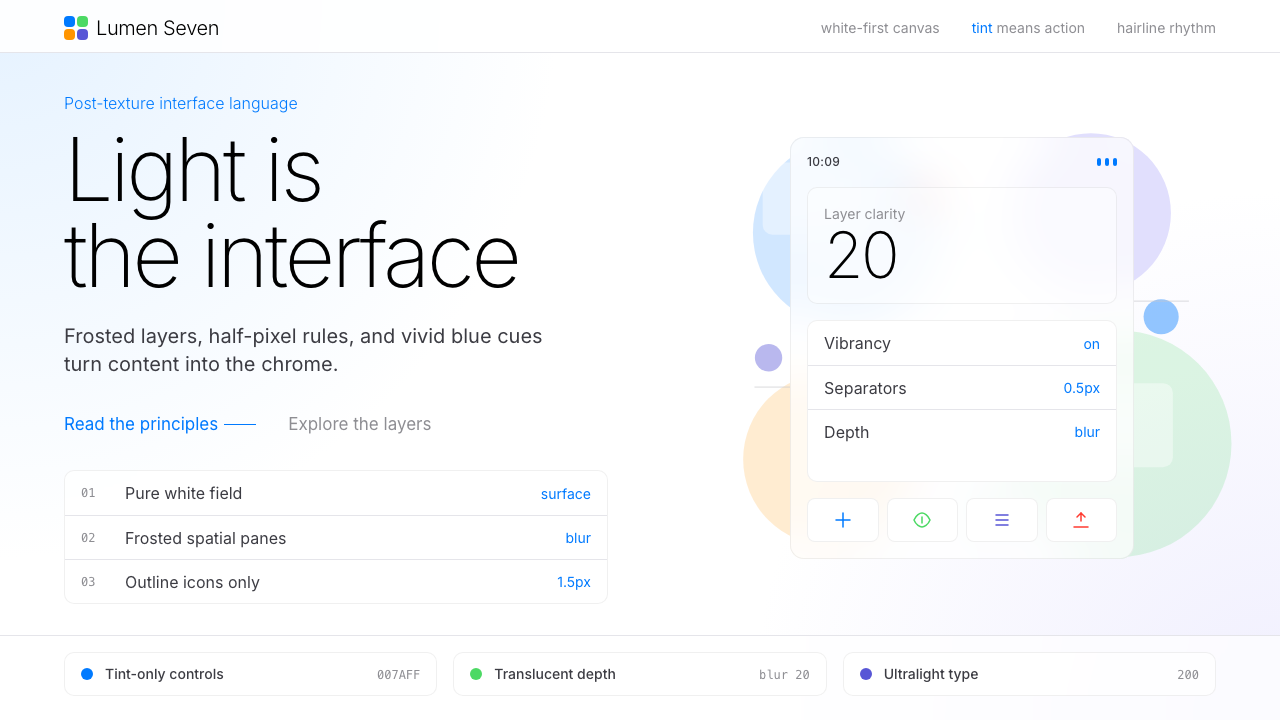 Flat Design iOS 7The day skeuomorphism died. Bright tints on white, hairline separators, frost…
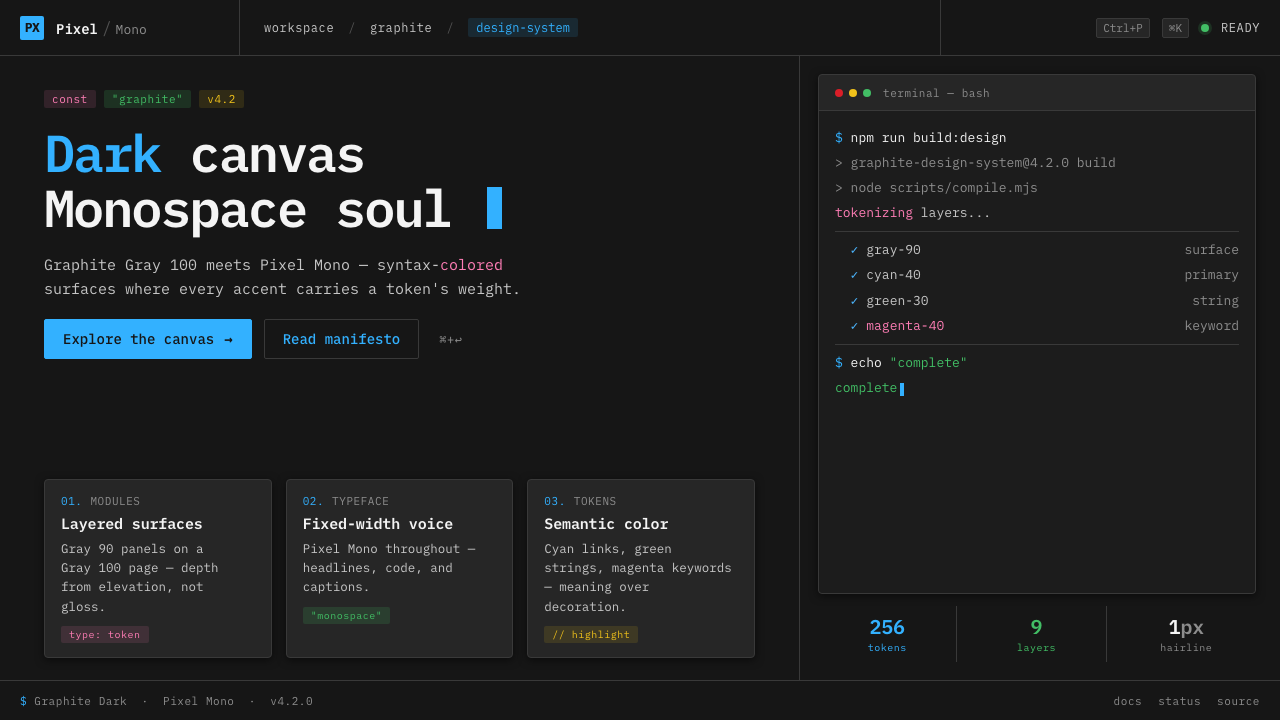 IBM Plex Mono DevColor used like syntax highlighting. Carbon Gray 100 canvas, IBM Plex Mono th…
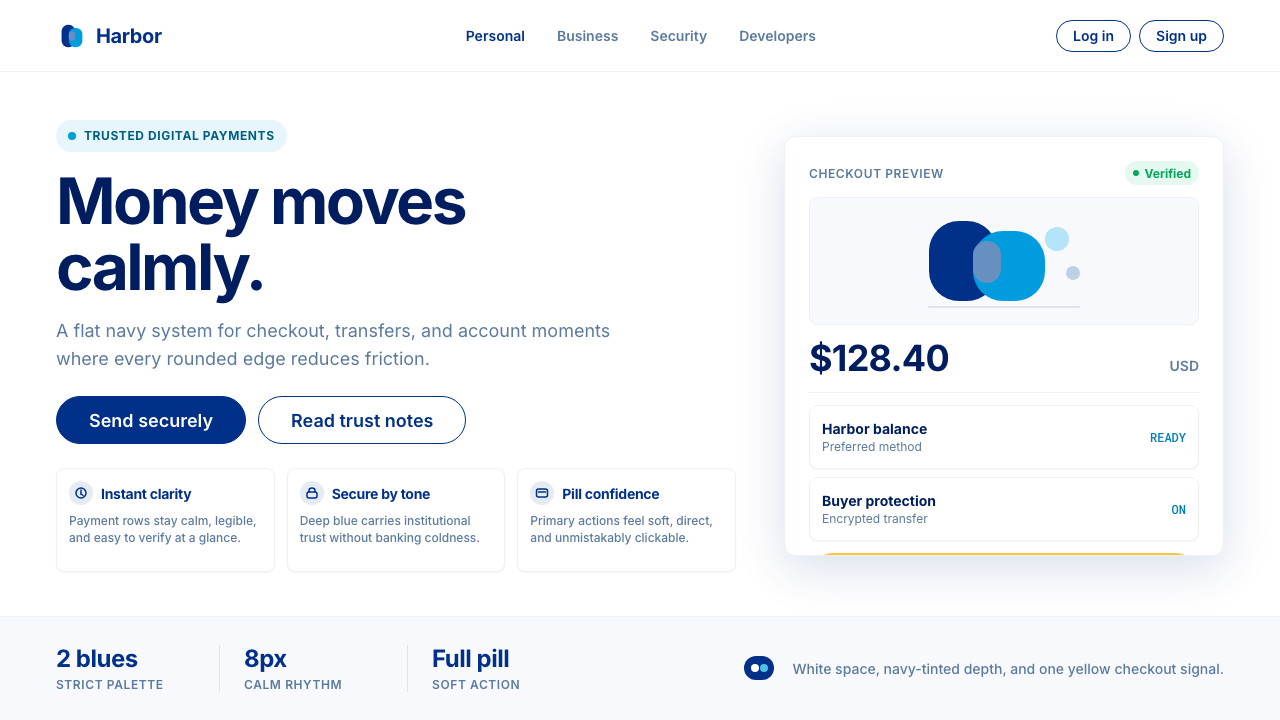 PayPalTrust without coldness. Deep navy, sky cyan, white cards, and pill checkout c…
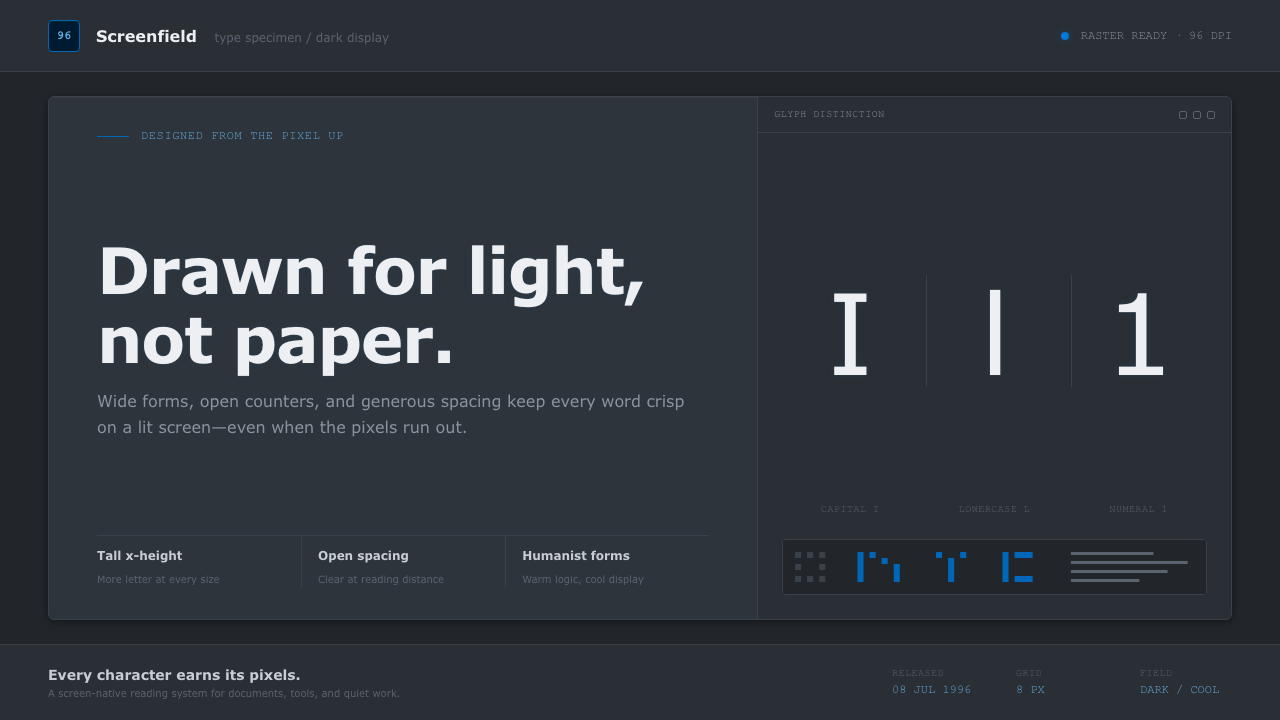 Verdana Screen SansBorn digital, built for clarity. Wide humanist letters glow in cool grey on a…
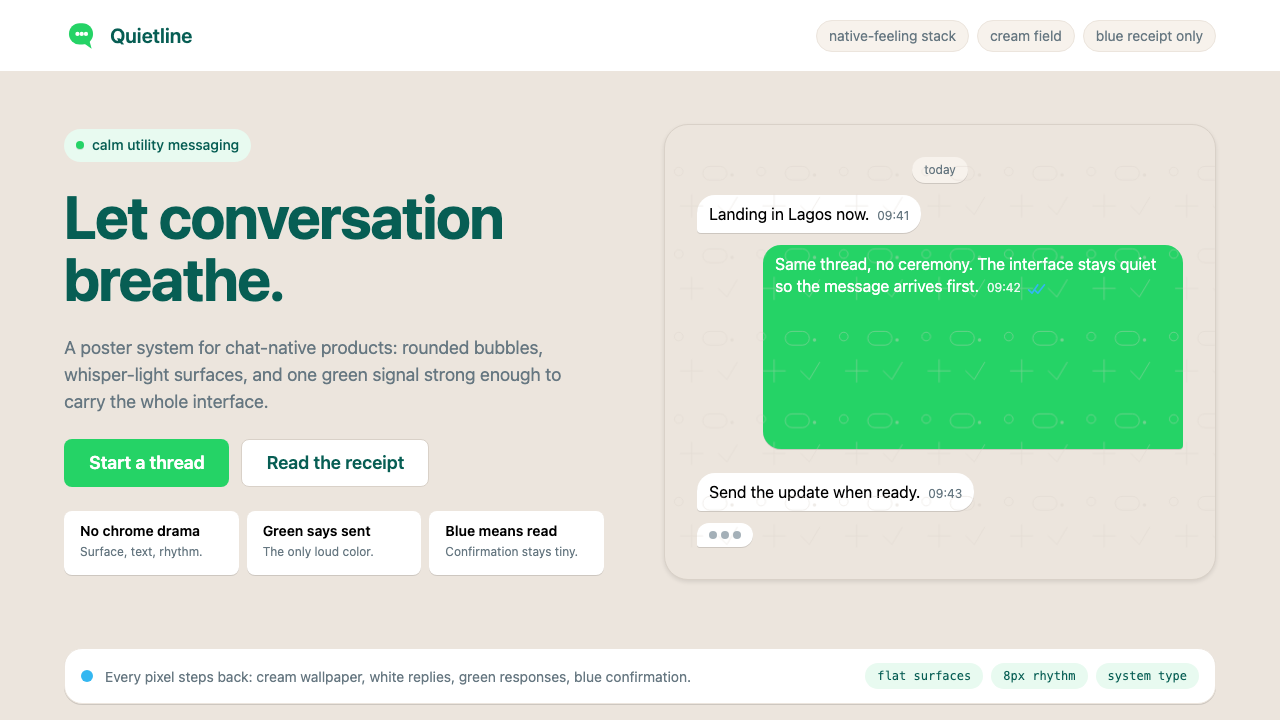 WhatsAppConversation is the interface. Cream wallpaper, green bubbles, and tiny blue…
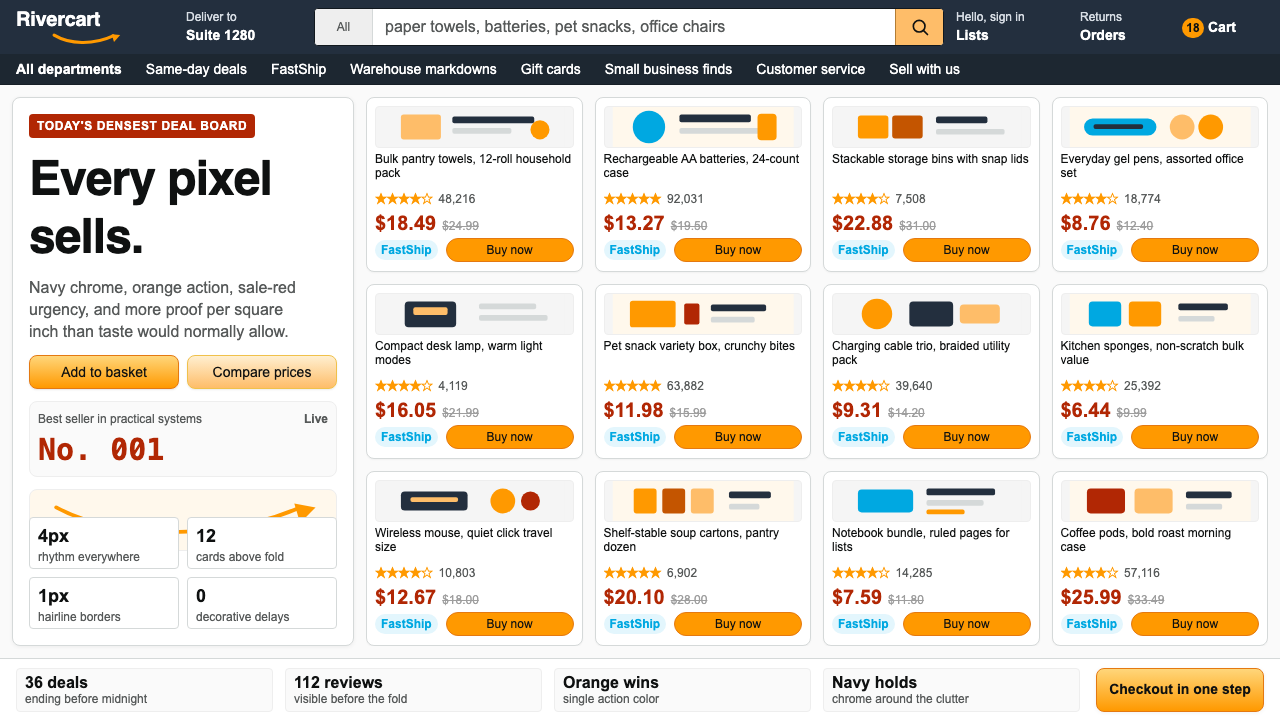 AmazonUgly sells efficiently. Navy chrome, orange buttons, red prices crowd a dense…