What is Lepidoptera Drawer?
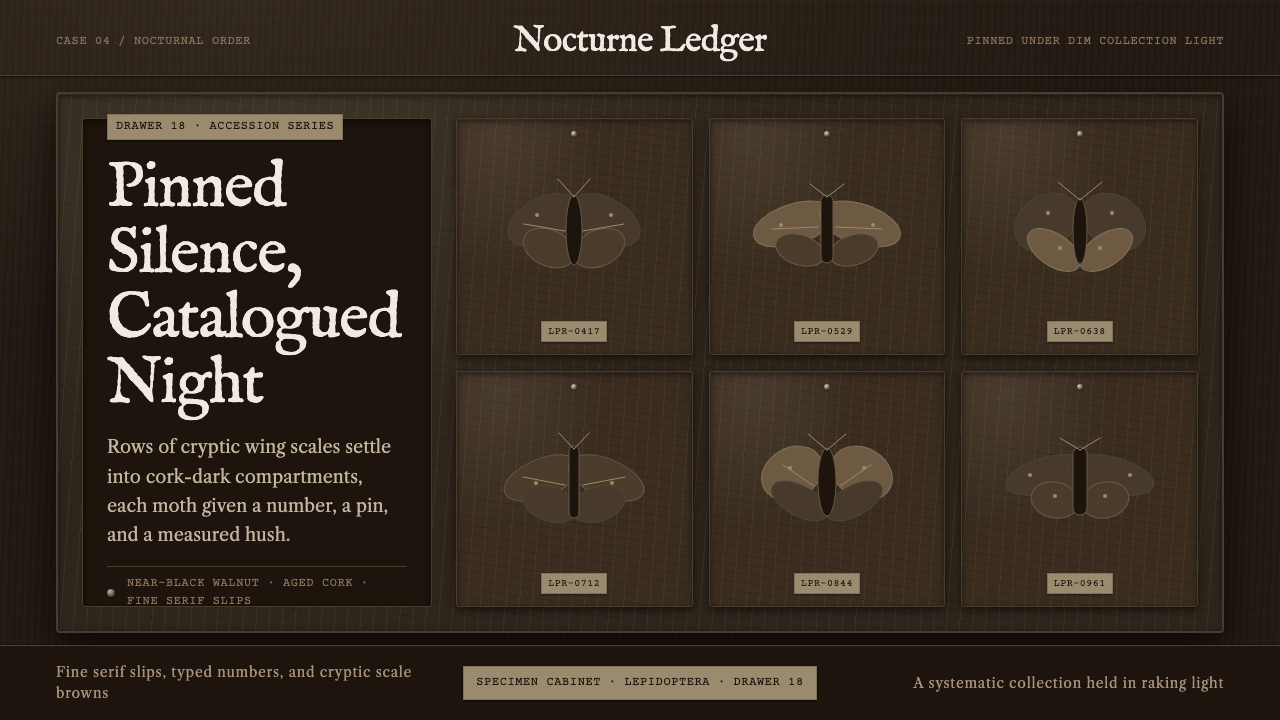
Lepidoptera Drawer recreates the hushed, glass-topped specimen drawer of a Victorian entomology cabinet, where every pinned moth sits precisely placed against near-black walnut.
Lepidoptera Drawer in brief
Lepidoptera Drawer takes its visual language from the specimen drawer of a nineteenth-century entomology cabinet: rows of pinned nocturnal moths arranged in aged cork, their cryptic brown-grey wing scales catching dim, raking light inside a specimen store or natural history collection room. This is a style built around the ritual of scientific collecting rather than around the flamboyant color of butterflies — moths, with their muted, camouflaged patterning, set the tonal register.
The ground is near-black stained walnut rather than bright or plain white — a deliberate rejection of the clinical museum-white aesthetic in favor of something closer to an antique wooden cabinet kept in low light. Every specimen and label sits against this dark wood, so color and detail emerge from shadow rather than sitting on a blank field. The moths themselves supply a narrow tonal range of browns, greys, and dusty ochres, occasionally broken by a paler eyespot or a faint iridescent sheen.
Labeling carries the system's sense of order: tiny hand-numbered pin labels set in fine serif type sit beside typed catalog numbers, evoking the meticulous record-keeping of a systematic collection. Each compartment of the drawer functions as its own small, dark world, with every specimen precisely placed and documented — the aesthetic of quiet, obsessive classification rather than decorative display.
Where does Lepidoptera Drawer come from?
Cabinet entomology — the practice of collecting, pinning, labeling, and systematically arranging insect specimens in purpose-built drawers and cabinets — reached its golden age in Victorian Britain during the second half of the nineteenth century, roughly the 1850s through the 1890s. This period coincided with a broader cultural enthusiasm for natural history as both serious science and respectable amateur hobby, fueled by the era's drive to catalog, classify, and taxonomically order the natural world in the wake of expanding global exploration and trade.
Moths in particular attracted dedicated collectors because their diversity, camouflage patterning, and nocturnal habits made them a rewarding subject for careful observation and classification, distinct from the more casually admired daytime butterflies. Collectors used specialized techniques — cyanide killing jars, careful relaxing of dried specimens, precise pinning through the thorax at a standardized height, and setting boards to spread wings symmetrically — all developed and refined during this period to produce specimens suitable for permanent scientific reference.
Institutions such as the Natural History Museum in London became central repositories for these Victorian collections, absorbing both amateur and professional specimen drawers into permanent research holdings that are still consulted by taxonomists today. The cabinets themselves were purpose-built furniture: shallow, glass-topped drawers lined with cork or a similarly pin-friendly material, housed within larger wooden cases designed to exclude light, dust, and pests that would otherwise destroy delicate specimens over time.
This era's culture of systematic entomology was inseparable from its labeling conventions — every specimen was expected to carry data on locality, date, and collector, recorded in a small, precise hand or later typed onto standardized cards. This obsession with documentation reflected the period's broader scientific ambition: not just to display natural beauty, but to build a verifiable, cross-referenced record of the natural world, one pinned specimen at a time.
What defines the Lepidoptera Drawer look?
Color
The palette stays within a narrow, muted range of browns, greys, and dusty ochres drawn directly from moth wing patterning, set against near-black stained walnut. Brighter accents are rare and small — a pale eyespot, a faint iridescent sheen — used sparingly so the overall mood remains subdued rather than decorative.
Dark Wood Ground
Near-black stained walnut replaces the bright or neutral-white backgrounds typical of many display systems, evoking an antique wooden cabinet stored in low light rather than a clinical museum case. This dark ground is essential to the mood — it is what makes the specimens read as hidden treasures found in shadow rather than objects displayed under bright light.
Raking, Dim Light
Illumination is treated as low and directional, striking specimens at an angle rather than flooding them evenly, the way a specimen store or archival room is often lit. This produces soft highlights on raised wing scales and pin heads while leaving most of the drawer in shadow, reinforcing the sense of quiet, private examination.
Grid Arrangement
Specimens are arranged in strict rows and columns within the drawer, each pinned at a standardized height and orientation, producing an underlying grid discipline beneath the organic irregularity of individual moth silhouettes. This grid is what separates a scientific collection from a decorative arrangement — order is imposed on nature, not derived from it.
Fine Serif Labeling
Small, precise labels — hand-numbered pins in fine serif lettering alongside typed catalog numbers — sit beside each specimen, carrying the documentary rigor of systematic collecting. Type here is functional and restrained, never decorative, echoing the small, careful handwriting of a nineteenth-century field notebook.
Aged Cork Texture
The pinning surface itself — aged, slightly textured cork — provides a warm, organic counterpoint to the smooth dark walnut surrounding it. Its faint pitting and discoloration signal decades of use, another marker of the collection's accumulated age and authenticity.
Compartmentalized Stillness
Each drawer compartment functions as its own sealed, dark little world, and the overall composition favors stillness and quiet symmetry over movement or dynamism. Nothing in this system suggests motion — even a moth in flight is rendered pinned and static, part of the hushed, ordered atmosphere of a specimen store.
Who shaped Lepidoptera Drawer?
One of the world's largest institutional repositories of Victorian-era pinned insect specimens, absorbing amateur and professional collections alike into a permanent research archive still consulted by taxonomists, and a key reference point for the visual conventions of drawer-based specimen display.
The broad community of amateur and professional collectors across Britain in the second half of the nineteenth century who developed and standardized the pinning, setting, and labeling techniques that define the systematic specimen drawer, driven by the era's wider enthusiasm for natural history as both hobby and science.
How do you use Lepidoptera Drawer today?
Lepidoptera Drawer works because it treats darkness, order, and quiet documentation as the load-bearing qualities of the system, rather than simply putting insect imagery on a page. Applying it well means preserving the contrast between the dark ground and the muted specimen tones, and keeping the grid discipline of the arrangement even when the content is not literally insects.
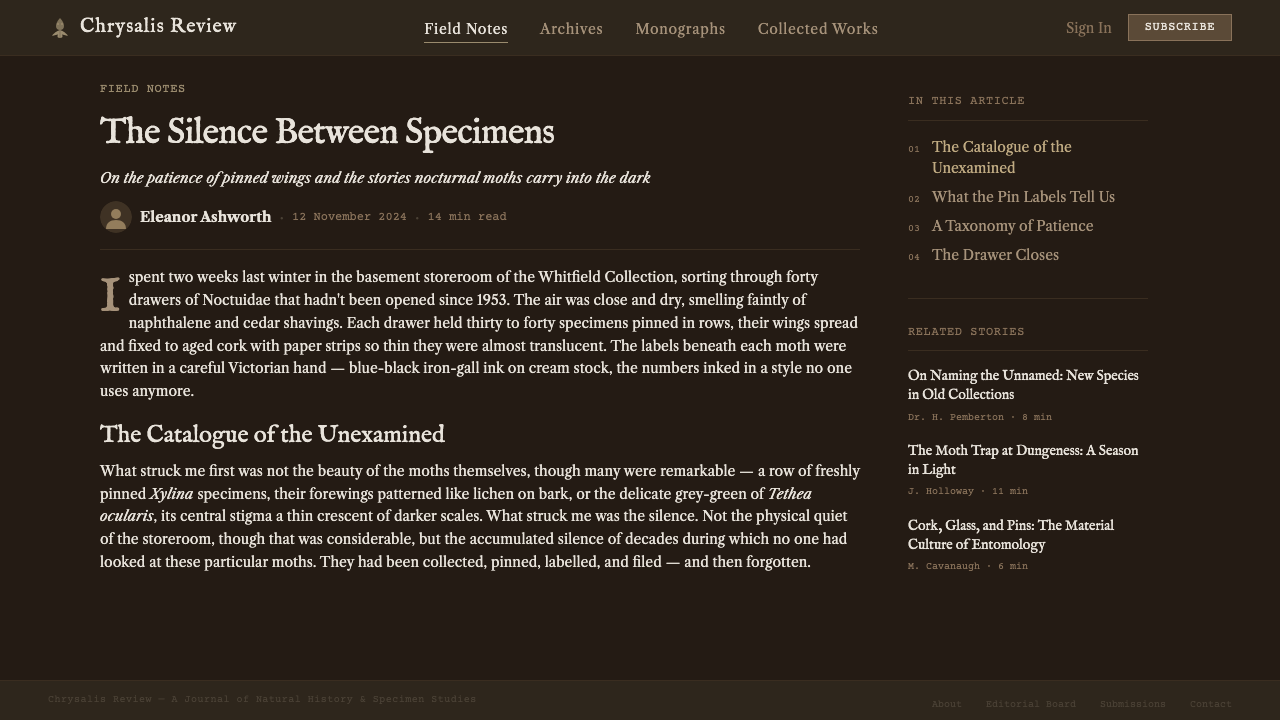
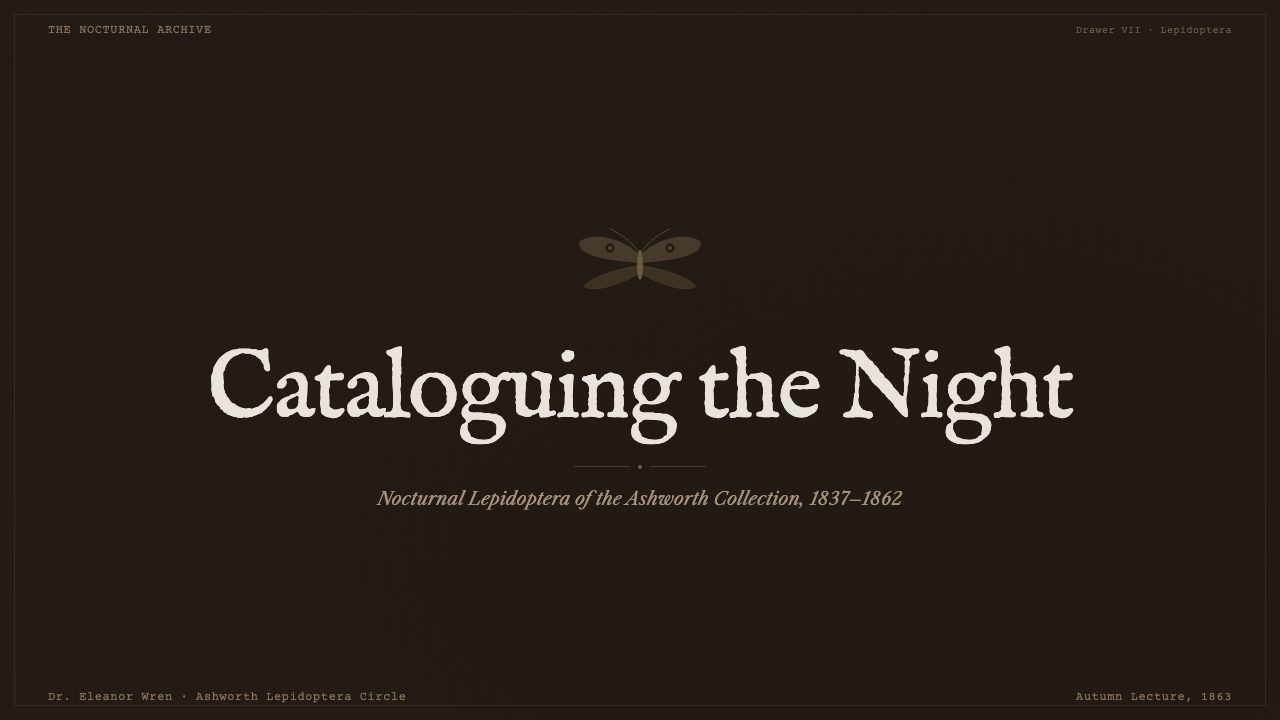
For presentation slides, this style suits cover pages and quiet, contemplative content particularly well — a dark walnut-toned field with a single specimen-like focal element and fine serif labeling in a corner evokes the mood without requiring a literal drawer illustration. Content slides should keep a grid discipline reminiscent of pinned rows: consistent spacing, consistent scale, small precise captions rather than bold decorative headlines.
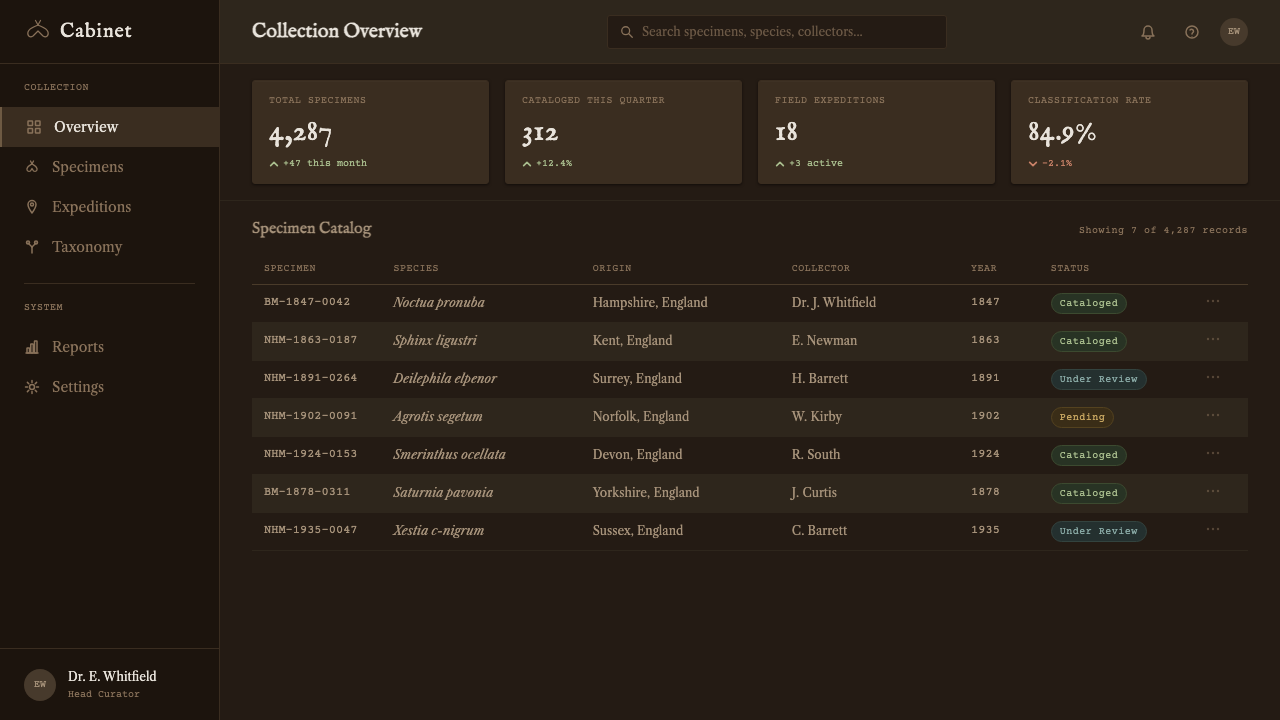
For web interfaces, the palette suits archive, research, collection, and catalog-style products — digital libraries, museum sites, and specialist reference tools — where a dark ground with muted brown-grey accents and fine serif labeling reinforces a sense of careful, curated documentation. Dashboards benefit from the grid discipline in particular: consistent row height and label placement borrowed directly from the specimen drawer's own logic of standardized pinning.
For editorial and marketing work, the style suits long-form natural history writing, archival and heritage storytelling, and any product seeking an atmosphere of quiet expertise rather than loud enthusiasm. Feature layouts benefit from generous dark negative space around a small number of carefully placed images, echoing how a specimen drawer gives each moth room within its compartment rather than crowding the page.
A common mistake is brightening the ground to a lighter neutral in the name of legibility, which removes the hushed, archival mood the style depends on — legibility here should come from careful contrast between dark wood and pale label type, not from abandoning the dark ground altogether. Another mistake is adding decorative flourishes or bright accent colors that do not correspond to actual moth patterning; the style's authenticity rests on its restraint, and any ornament not drawn from the specimen itself feels foreign to the system.
Lepidoptera Drawer — FAQ
Why does this style focus on moths rather than the more colorful butterflies?
Moths offered Victorian collectors a different kind of reward than butterflies: their subtler, camouflaged patterning and nocturnal habits made careful, close observation necessary to appreciate their variation, which suited the era's scientific rather than purely decorative interest in natural history. Visually, this translates into a muted, tonal palette rather than the bright colors associated with butterfly collections, giving the style its distinctive hushed quality.
Why is the background such a dark walnut rather than the white typically associated with museum displays?
The dark ground reflects the actual furniture used in nineteenth-century entomology cabinets — wooden cases lined with cork, built to exclude light and protect specimens rather than to showcase them under bright illumination. Bright white museum display cases are largely a later, twentieth-century convention; the older cabinet tradition this style draws from is intrinsically a dark, private, archival object rather than a public exhibition case.
How precise is the grid arrangement of specimens supposed to be?
Historically, entomologists pinned specimens at a standardized height on the pin and arranged them in strict rows within a drawer, often grouped taxonomically by species or family. In design terms, this translates into consistent spacing, alignment, and scale across repeated elements — the grid should feel imposed and disciplined, not organic or loosely scattered, since that rigor is precisely what signals a scientific rather than decorative arrangement.
Does this style require literal insect imagery to work?
No — the core transferable qualities are the dark walnut ground, the muted brown-grey-ochre tonal range, the raking dim light, the disciplined grid arrangement, and the fine serif documentary labeling. A layout that preserves these qualities while replacing moths with other small, precisely arranged content — data points, product thumbnails, archival documents — still reads as belonging to this system.
What kinds of products or brands suit this style, and where does it not work well?
It suits archives, research platforms, museum and heritage sites, specialist reference tools, and any brand seeking an atmosphere of quiet expertise, rarity, and careful documentation. It struggles for consumer-facing products aiming for energy, playfulness, or broad approachability — the dark ground and restrained tonal range read as serious and contemplative, which works against a bright, casual, or youthful brand voice.
Related design styles
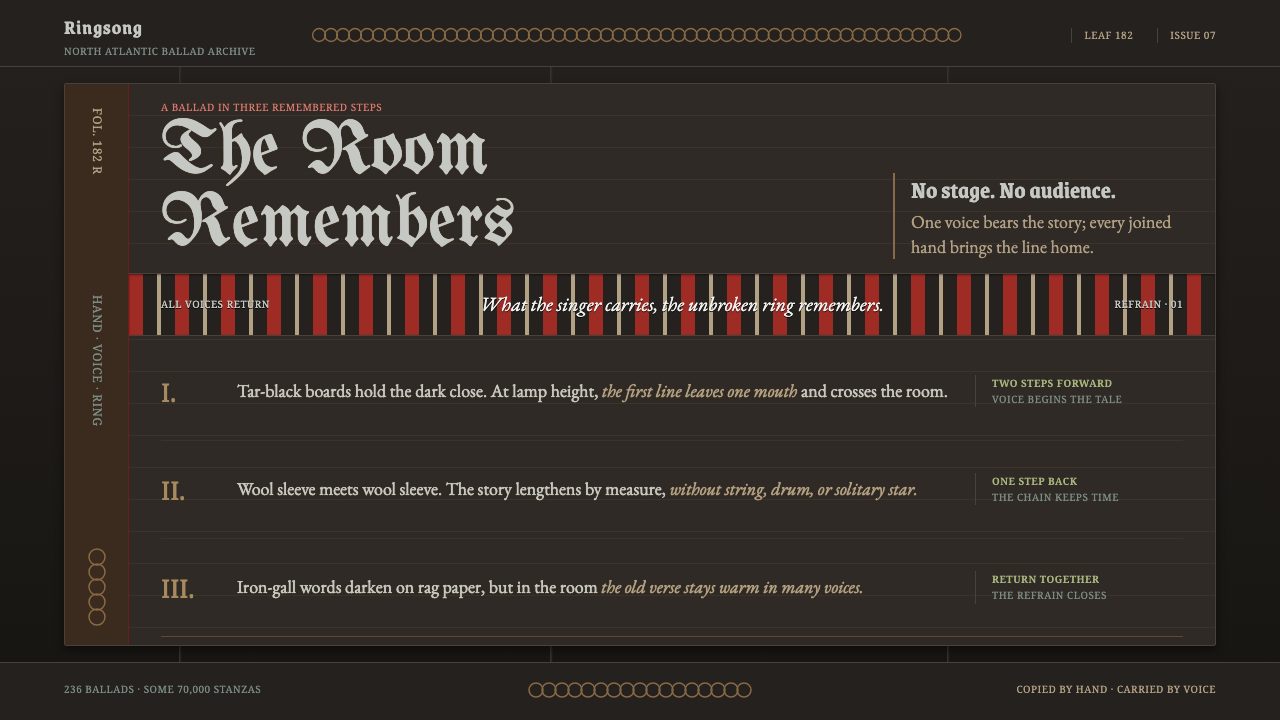 Faroese KvæðiThe room sings as one. Silver type and red refrain bands rule a tar-black man…
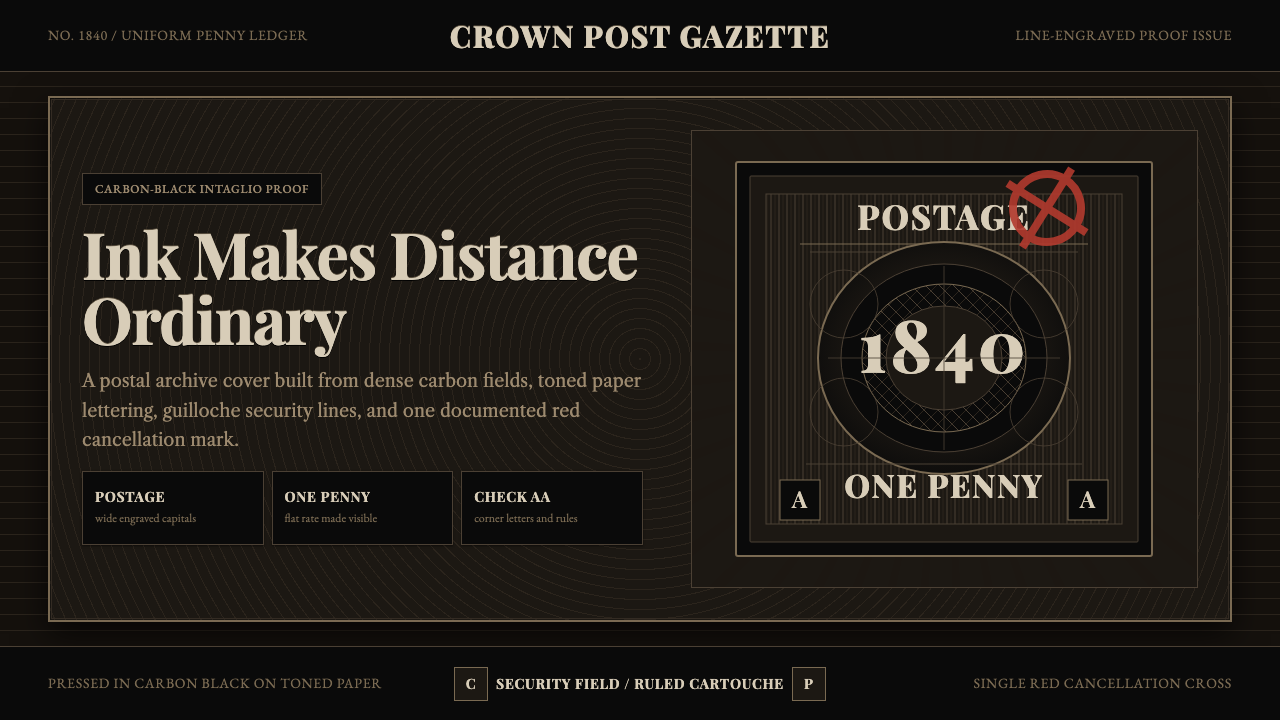 Penny Black StampBlack carries authority. Guilloche lines, Victorian serifs, and one red cross…
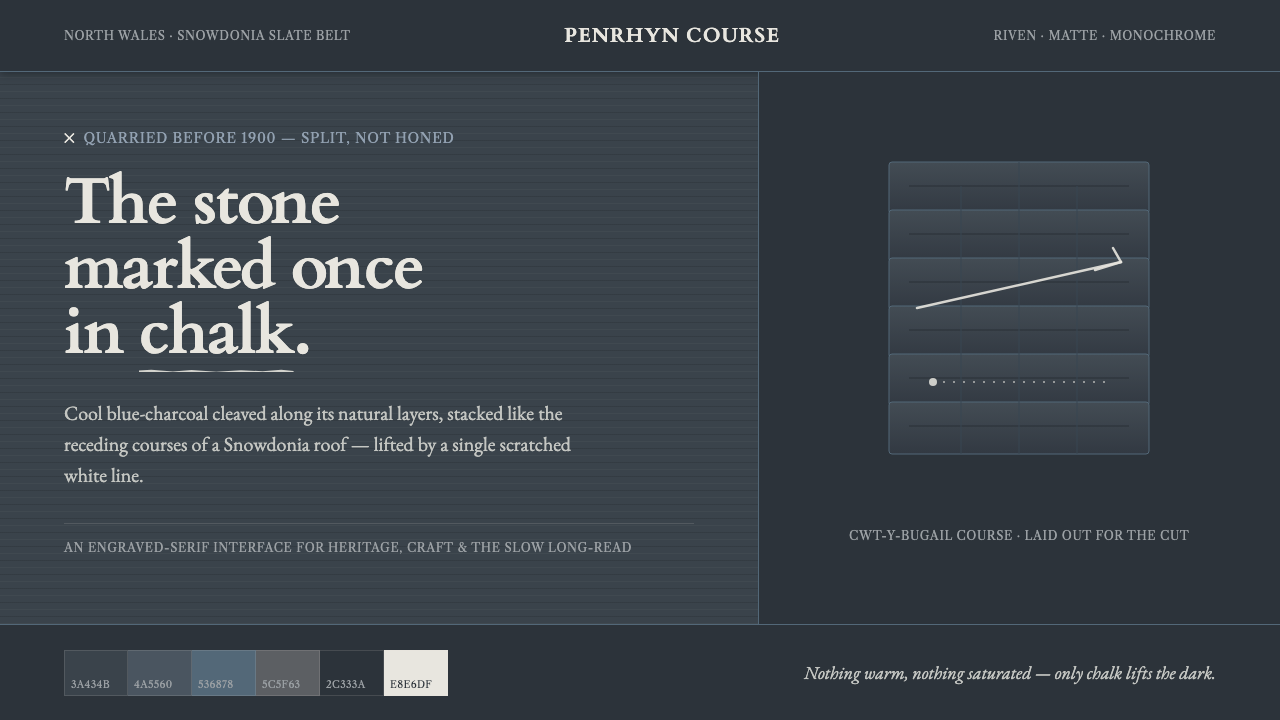 Welsh SlateCool blue-charcoal riven stone, lifted by one chalk-white mark. Stacked cours…
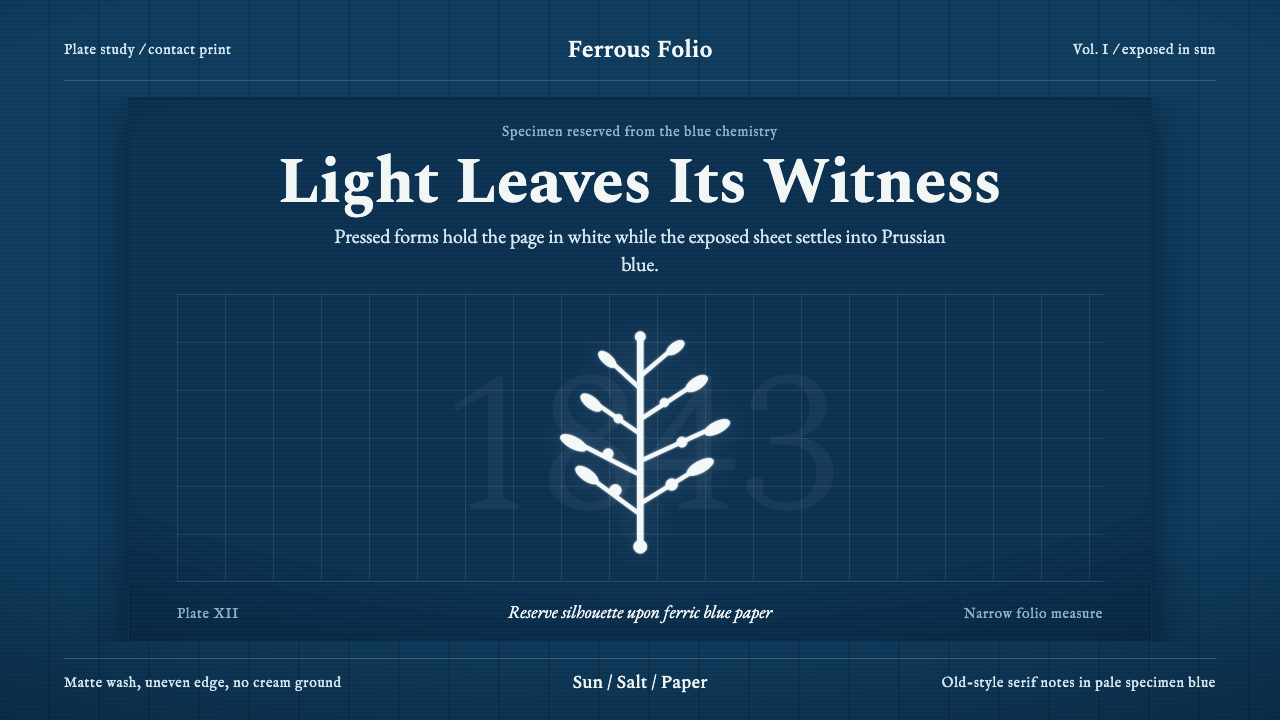 Anna Atkins CyanotypeScience turns spectral. Prussian blue ground, white reserves, Victorian serif…
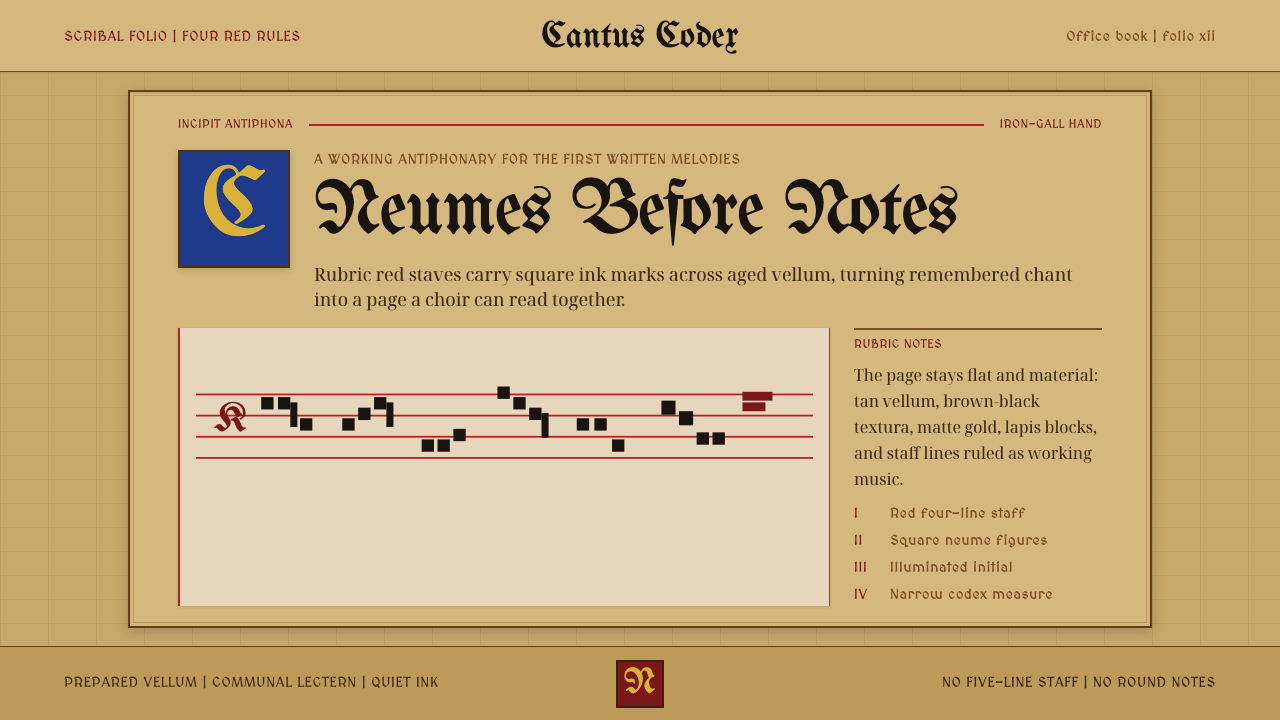 Gregorian Chant NeumesNotation becomes scripture. Rubric red staff lines and square neumes sit on t…
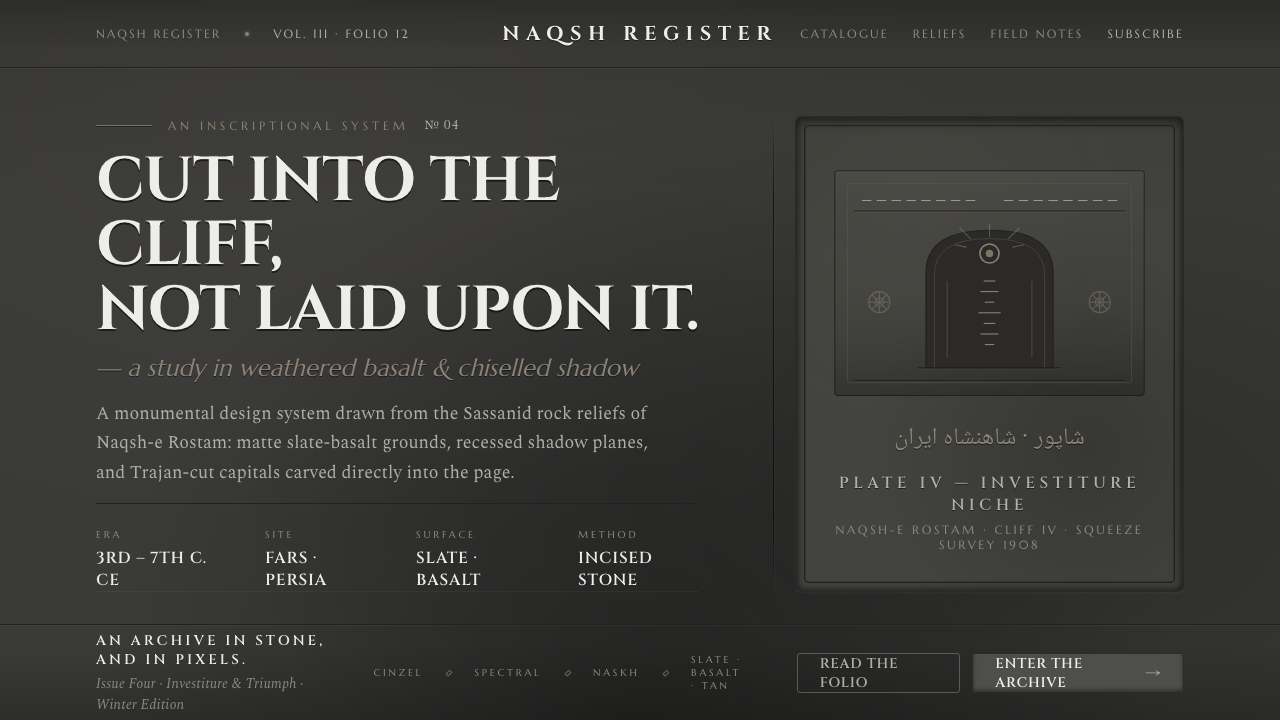 Iranian Dark Stone ReliefCarved into the cliff, not laid upon it. Slate-basalt grays, inset shadows, T…