What is Moroccan Mint Tea?
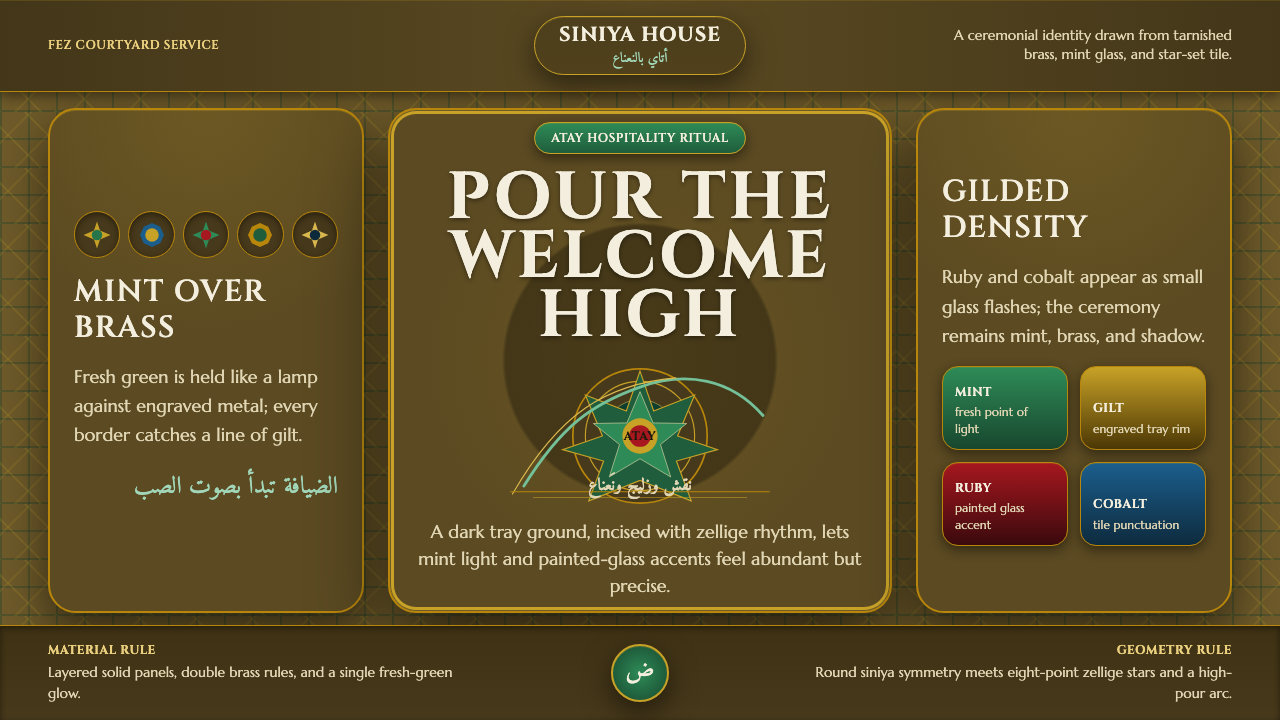
Moroccan Mint Tea turns a daily hospitality ritual — sweet green tea poured from a silver pot into gilded glasses — into a full visual system of brass, mint, and gold.
Moroccan Mint Tea in brief
Moroccan Mint Tea takes its visual language from atay, the tea ceremony that structures hospitality across Morocco and much of the wider Maghreb. In its classic form, gunpowder green tea leaves are steeped with generous fresh spearmint and sugar, then poured from a height out of a long-spouted silver or silver-plated teapot called a berrad into small gilded glasses arranged on an engraved brass tray known as a siniya. The pour itself is a small performance — lifting the pot high above the glass produces a thin, aerated stream and a light foam on top, considered a sign of a well-made tea.
The palette follows the objects of the ceremony rather than an abstract color theory: fresh spearmint green sits against the warm, slightly tarnished glow of brass and silver, with small hits of gold leaf, deep ruby red, and cobalt blue used as jewel-like accents against the darker metal ground. Nothing here is meant to look clinical or new — the brass carries a patina, the glasses carry gilded rims worn soft with handling, and the overall mood is intimate and lived-in rather than pristine.
Structurally, the system borrows from Islamic geometric ornament as much as from the tea objects themselves. Star-polygon zellige patterning, the engraved concentric circles of a brass tray, and the long curved arc traced by a high pour all supply repeatable structural motifs. Typography carries the same duality as the ritual itself: carved, formal Latin display lettering for headings paired with Arabic naskh script, together evoking the atmosphere of a Fez madrasa courtyard rendered for a screen.
Where does Moroccan Mint Tea come from?
Green tea itself is not native to Morocco. Historical accounts describe it entering Moroccan and wider Maghrebi consumption significantly through nineteenth-century trade — Chinese gunpowder tea reaching North African ports through European, and especially British, merchant channels, at a time when established tea markets elsewhere were disrupted. Sugar, already established in the region through longer Mediterranean and Saharan trade routes, and locally grown fresh spearmint (nana mint) combined with the tea leaf to produce the specific sweetened, minted brew now considered inseparable from Moroccan identity.
By the later nineteenth century, mint tea had become thoroughly entrenched as the centerpiece of Moroccan diyafa — the cultural obligation of hospitality toward guests, in which the offer and preparation of tea is itself an act of respect. Refusing a offered glass of tea in many Moroccan households carries real social weight; the ceremony is not casual refreshment but a structured social ritual with its own etiquette, typically involving at least three servings from the same pot, each described locally as tasting a little different — the first said to taste as gentle as life, the second as strong as love, the third as bitter as death.
The specific material objects of the ritual — the tall silver-spouted berrad teapot, the engraved brass siniya tray, and small colored glass tumblers, often gilded around the rim — developed alongside Morocco's broader tradition of metalwork craft, centered historically in cities such as Fez, with strong artisan lineages in silver and brass engraving passed through family workshops. These objects were, and often still are, valued as heirlooms and wedding gifts as much as functional tea equipment, reinforcing the ceremony's role as a marker of hospitality and family status rather than mere beverage service.
The wider Maghrebi tea culture that Morocco shares with neighboring regions absorbed influences from Andalusian craft traditions carried across the Strait of Gibraltar after the fall of Muslim Iberia, from sub-Saharan trade routes that brought decorative metalwork techniques north, and from the ornamental vocabulary of zellige tilework that had already defined Moroccan architectural surfaces for centuries. Mint tea culture, in this sense, is a relatively young ritual (entrenched over roughly the last two centuries) built on top of a much older decorative and craft foundation.
What defines the Moroccan Mint Tea look?
Color
Fresh spearmint green functions as the primary accent, set against the warm, slightly aged glow of brass and silver metalwork rather than a neutral background. Small, jewel-like hits of gold, ruby red, and cobalt blue punctuate the composition, echoing the colored glass tumblers and gilded rims of the tea glasses themselves. The overall register is warm and metallic rather than cool or clinical.
Patina and Age
Metal surfaces are rendered with visible tarnish and wear rather than mirror-polished newness — the brass tray and silver pot carry the soft glow of long handling. This patina is essential to the mood: it signals a ritual repeated daily over generations rather than a product freshly unboxed, and any treatment that polishes the metal to a flawless shine undercuts the style's intimacy.
Geometric Ornament
Star-polygon zellige tessellation and engraved concentric brass-tray circles supply the system's structural geometry, echoing centuries of Moroccan tilework and metal engraving. These patterns appear as borders, dividers, and background texture rather than isolated decorative flourishes, giving the composition an underlying architectural order.
The Pour as Motif
The long, high, curving arc of tea poured from height is treated as a recurring compositional line — a graceful diagonal sweep that can organize a layout the way a rule line or divider might in other systems. It carries movement and ceremony into an otherwise static composition of objects.
Bilingual Typography
Carved, formal Latin display lettering pairs with Arabic naskh script, so headings carry a dual visual identity rather than a single Western typographic voice. The Latin type favors a chiseled, engraved quality that echoes the brass tray's incised lines, while the Arabic script supplies flowing calligraphic contrast.
Intimate Scale
Compositions favor small, close-in groupings — a tray, a pair of glasses, a pot — over sweeping panoramic scenes, mirroring the intimate, face-to-face scale of the actual ceremony. This keeps the mood personal and hospitable rather than grand or monumental.
Warm Darkness
Grounds tend toward dark, warm metal tones rather than bright white or cool grey, so that gold leaf, mint green, and jewel accents glow against the darker field the way lamplight catches a tray at dusk. This warm-dark contrast is closer to candlelit hospitality than to daylight clarity.
Who shaped Moroccan Mint Tea?
Generations of craftsmen in Fez developed the engraved brass and silver traditions behind the berrad teapot and siniya tray, working within family workshops that passed down specific engraving patterns and metal-forming techniques over centuries, giving the tea service its recognizable ornamental vocabulary.
Craftsmen associated with the broader Maghrebi metalwork and textile tradition, whose techniques for engraving, gilding, and forming decorative household objects fed into the material culture surrounding the tea ceremony across Morocco and neighboring regions.
The cultural framework of hospitality obligation that elevated tea preparation and pouring from a simple beverage service into a structured social ritual with its own etiquette, symbolism, and expectations around guest and host behavior.
How do you use Moroccan Mint Tea today?
Moroccan Mint Tea works best when a designer treats warmth, patina, and ceremony as the load-bearing qualities, rather than simply applying green and gold to a generic layout. The system depends on the interplay between a warm dark metal ground and small, precise accents of color and gilding — remove either half and the effect collapses into generic 'exotic' decoration.
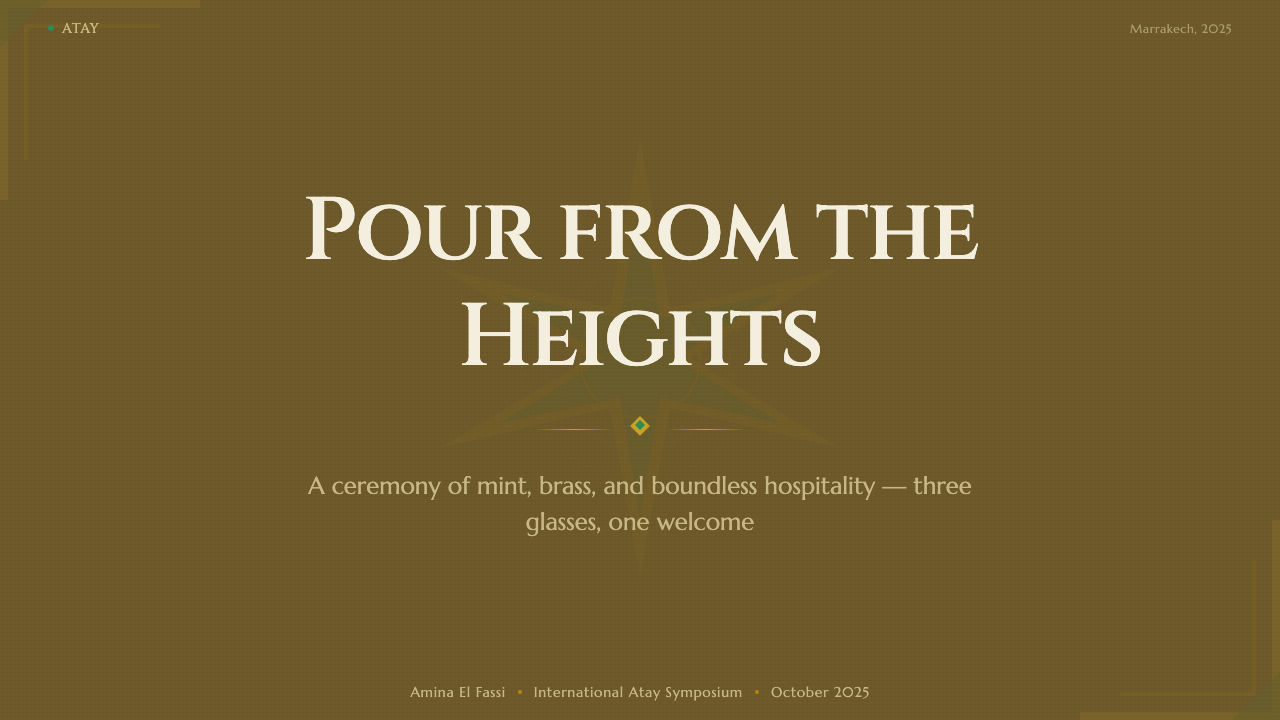
For presentation slides, this style suits cover pages and hospitality-themed content particularly well: a dark brass-toned ground with a single curved gold or mint accent line evokes the pour of tea without needing literal imagery. Content slides should keep body text on a slightly lighter inset panel against the darker ground, using the geometric zellige patterning sparingly as a border or divider rather than a full background texture, which would compete with text legibility.
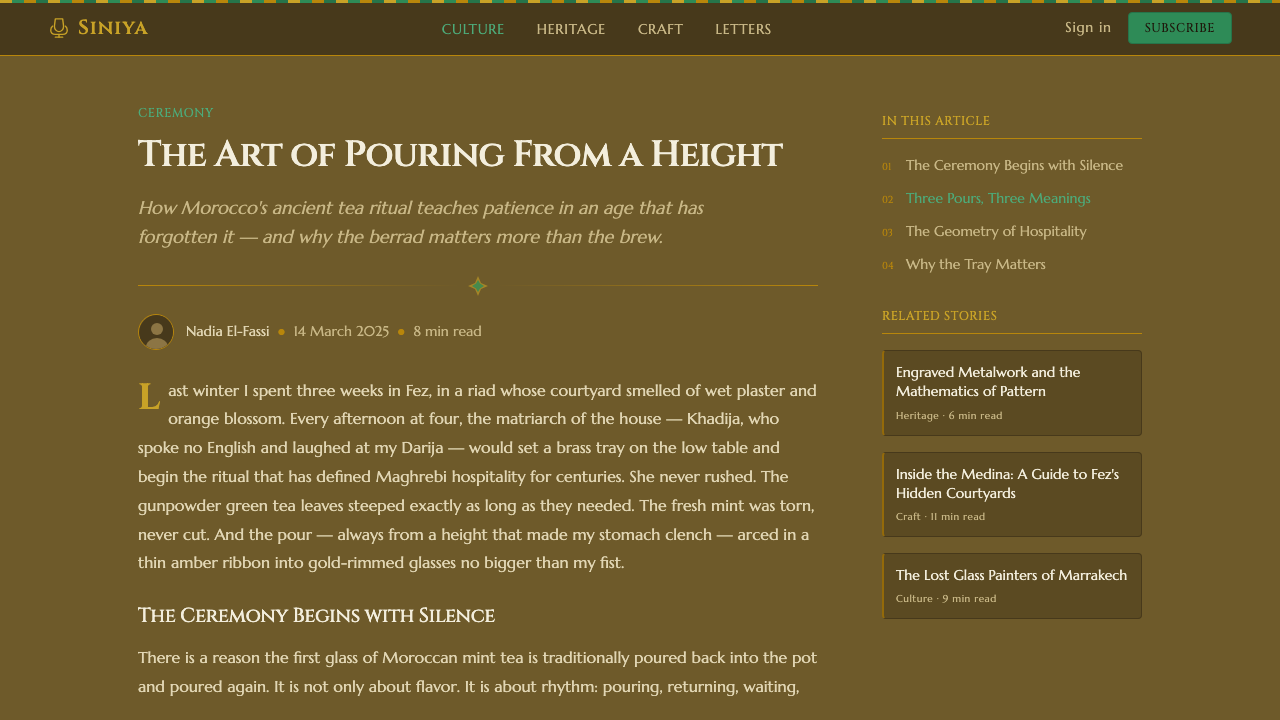
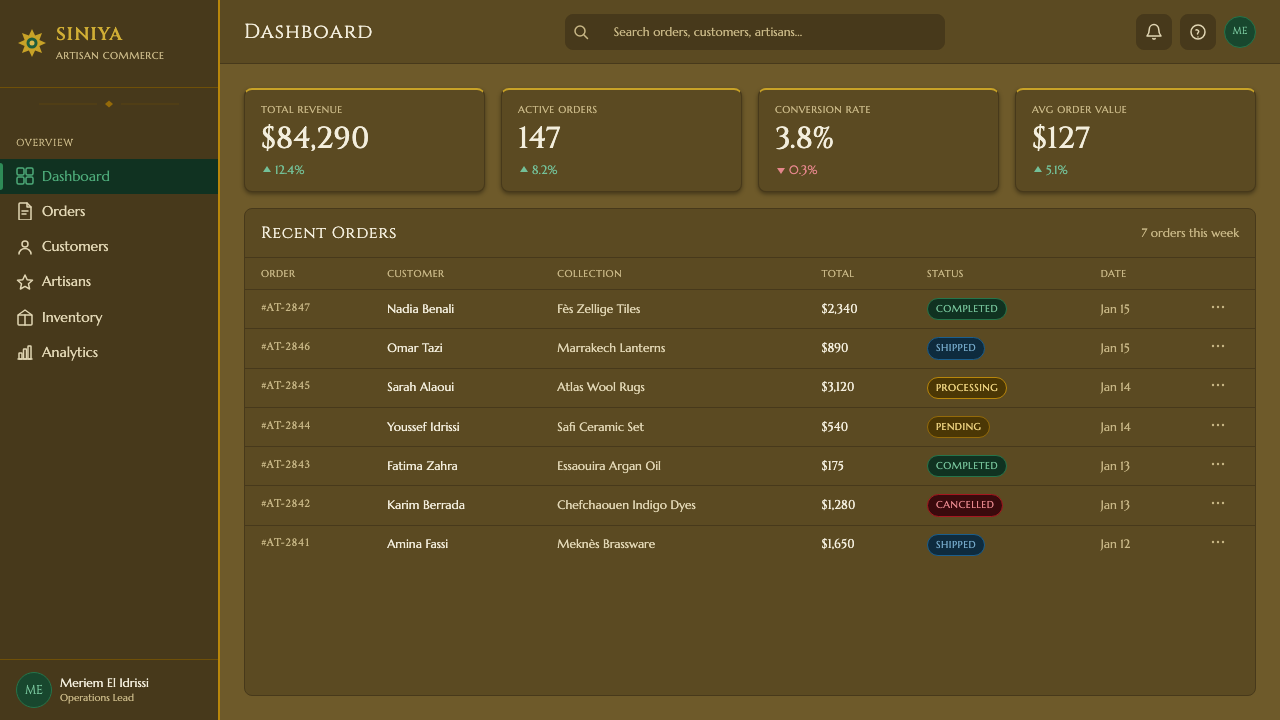
For web interfaces, the palette is well suited to hospitality, food and beverage, and lifestyle brand sites, particularly landing pages and about pages where mood matters more than dense data display. A warm dark header with gold-accented navigation and a single mint-green call-to-action button captures the ceremony's contrast without overwhelming the interface. Dense dashboards and data tools are a poor fit — the intimate, warm palette works against the clarity that data scanning requires.
For editorial and marketing content, the style rewards storytelling formats — recipe features, travel writing, cultural profiles — where photography or illustration of the tea objects themselves can anchor the page, with typography in the carved Latin and naskh pairing reserved for headlines rather than body copy, where legibility matters most. Marketing pages selling a product or experience benefit from the same warm, close-in framing used in the ceremony itself: intimate scale rather than sweeping panoramic hero imagery.
A common mistake is treating this as simply 'green and gold Moroccan decoration' without the patina and warmth that make it feel lived-in — a clean, bright, high-saturation treatment reads as generic exotic branding rather than an authentic reference to the ceremony. Another mistake is overusing the geometric zellige patterning as a dense background texture behind text, which fights legibility; the ornament works best as border, accent, and structural framing, not as wallpaper.
Moroccan Mint Tea — FAQ
Is mint tea a very old Moroccan tradition, or relatively recent?
Relative to Morocco's much older architectural and craft traditions, mint tea culture is fairly young — green tea entered wider Moroccan and Maghrebi consumption significantly through nineteenth-century trade, and the ceremony became firmly entrenched as a hospitality centerpiece over the following decades. The metalwork objects and ornamental vocabulary that surround the ceremony, however, draw on much older Moroccan craft traditions that predate the tea ritual itself by centuries.
Why is the pouring technique — lifting the pot high — such an important part of the visual system?
The high pour is both functional and performative: it aerates the tea, producing the light foam considered a mark of a well-made brew, and it is visually striking, the long curving stream becoming a small piece of theater at the table. As a design motif, that arc gives the system a sense of movement and ceremony that a static tray of objects alone would not convey.
Why does the style favor tarnished, aged metal instead of polished, new-looking metal?
The tea ceremony is understood as a daily, repeated ritual passed through families and generations, and the objects used in it — pots, trays, glasses — are often heirlooms rather than freshly purchased goods. Rendering them with visible patina signals this lived history and intimacy; a mirror-polished treatment would suggest a showroom object rather than a well-used piece of hospitality equipment.
How does this style differ from other Moroccan-inspired design systems, such as riad interiors or Majorelle blue?
All three share Moroccan geometric ornament and a confident use of color, but each centers on a different object and mood. Mint tea centers on small metal objects, warm dark grounds, and intimate hospitality scale; riad interiors center on architectural courtyard symmetry, tilework, and cool water-centered calm; Majorelle blue centers on a single overwhelming painted color applied to architecture and garden at a much larger scale. They are related regional cousins rather than the same system rebranded.
What products or brands does this style suit, and where does it not work well?
It suits hospitality, tea and food brands, cultural and travel storytelling, and lifestyle products seeking warmth, ceremony, and craft authenticity. It struggles for enterprise software, financial tools, or any product requiring cool, neutral clarity, since the dark warm ground and ornamental density work against the fast, low-friction scanning those contexts demand.
Related design styles
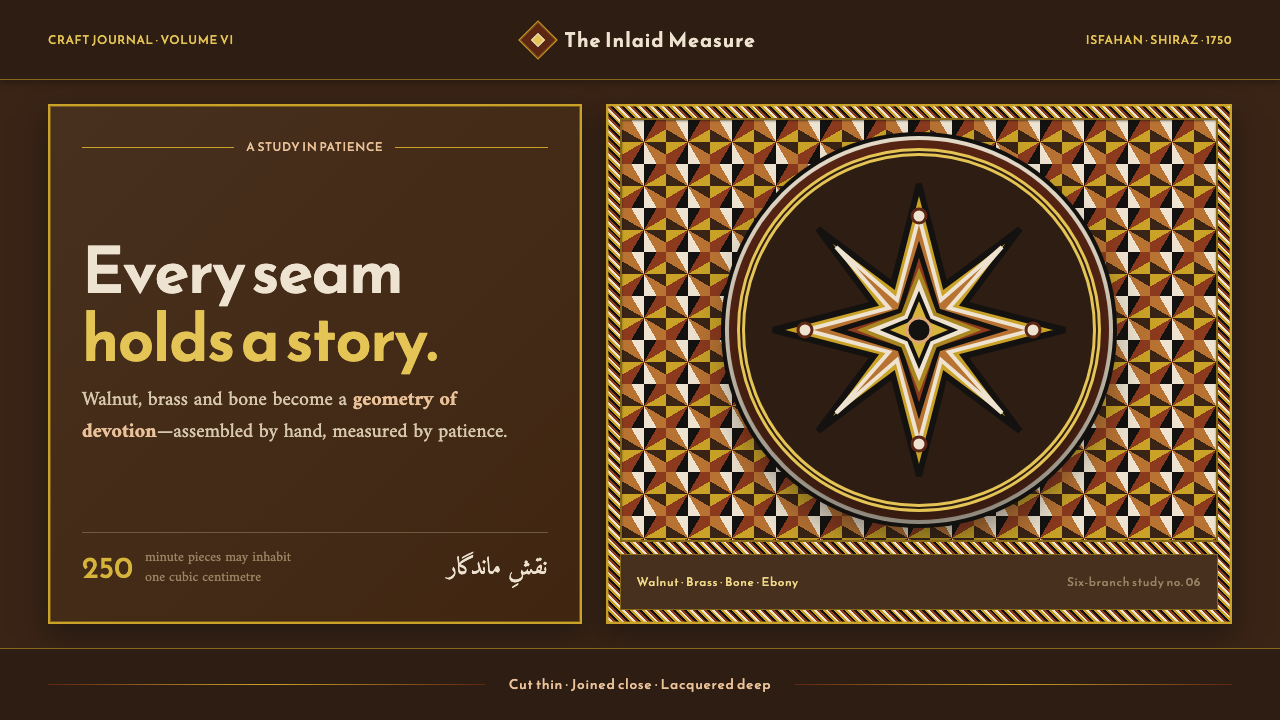 Persian Khatam MarquetryPatience becomes pattern. Brass-and-bone stars tessellate across lacquered wa…
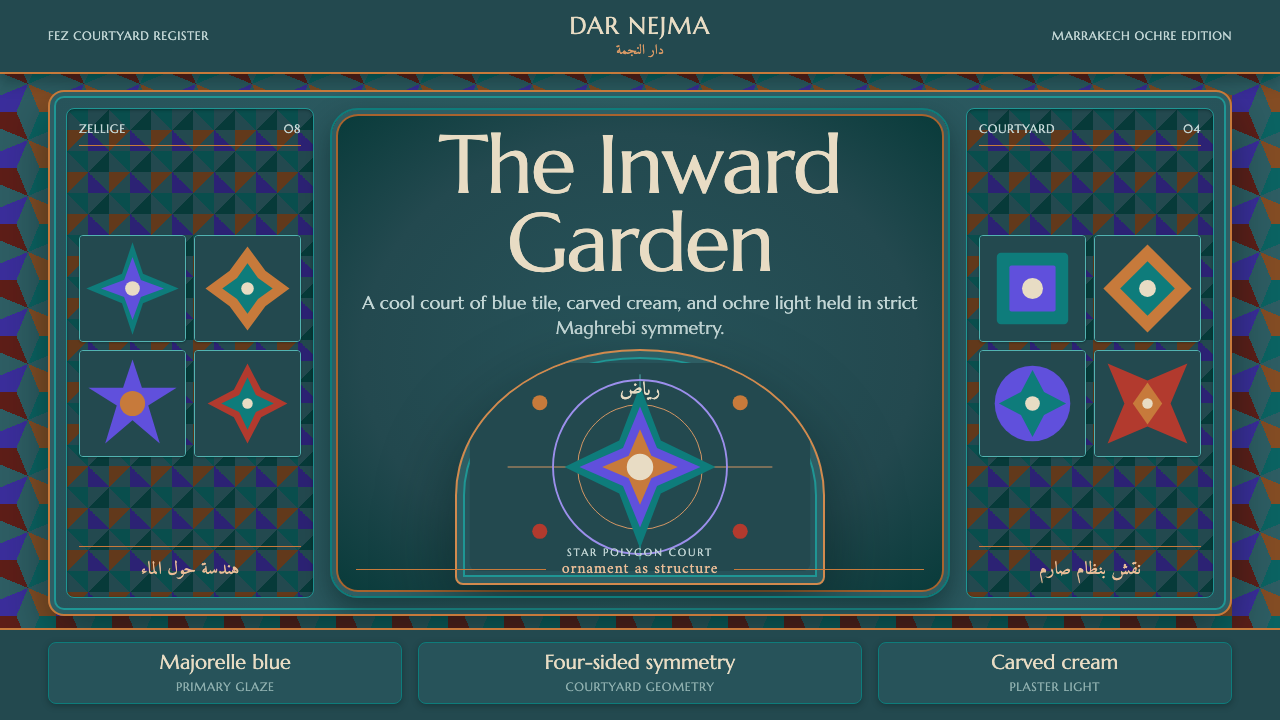 Moroccan RiadOrnament is structure. Majorelle blue and teal zellige frame a symmetrical ar…
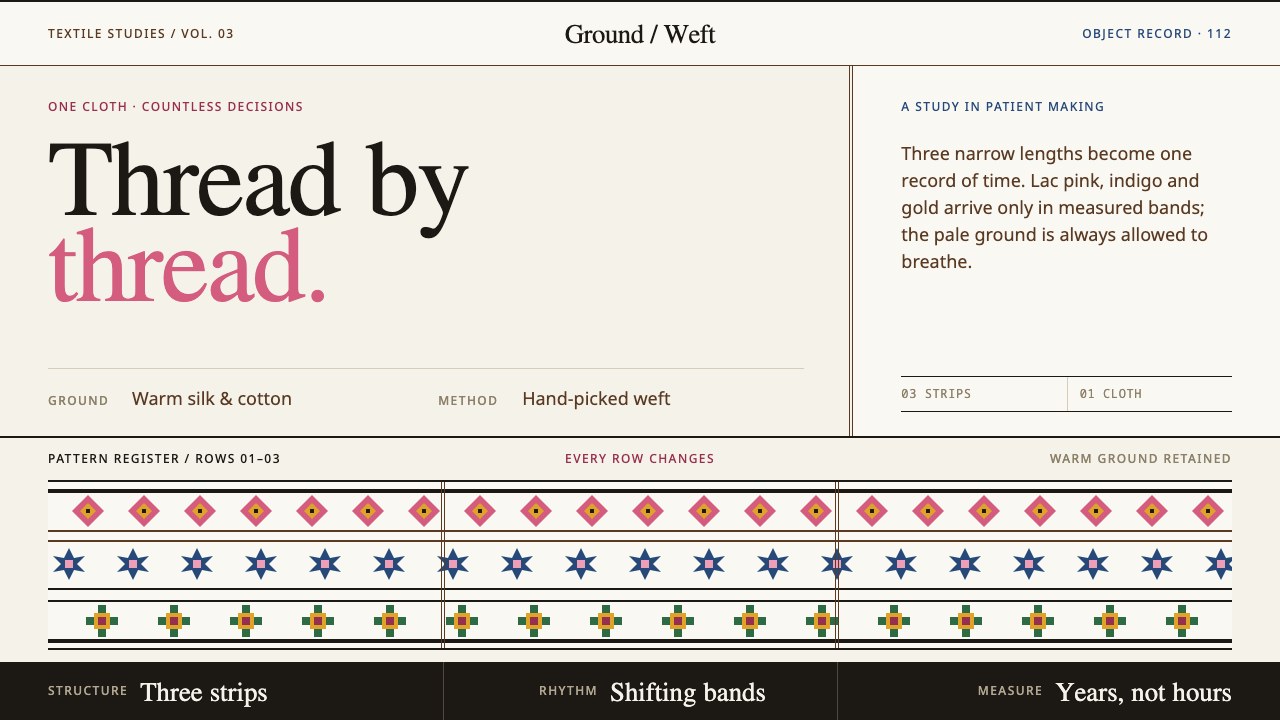 Bhutanese KushutharaPatience made visible. Lac pink and indigo bands shift across a warm silk gro…
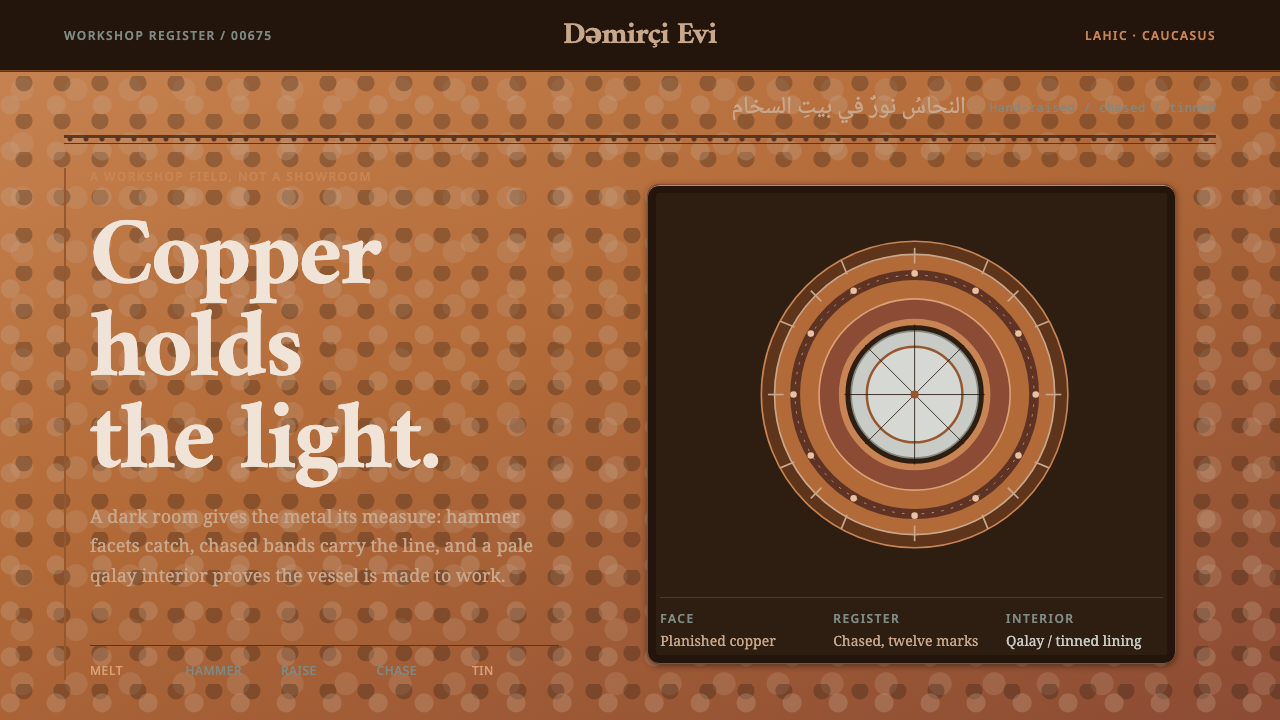 Lahic CoppersmithCopper becomes light. Soot-black bands, Amiri type, hammer facets and tin rev…
 Talavera Poblana CeramicBaroque craft breathes. Cobalt scrollwork on warm tin-glaze cream frames stri…
 Turkmen Bukhara RugHeraldic and earthbound. Madder red, ivory hairlines, and octagonal güls lock…