What is Mistral Le Chat French AI?
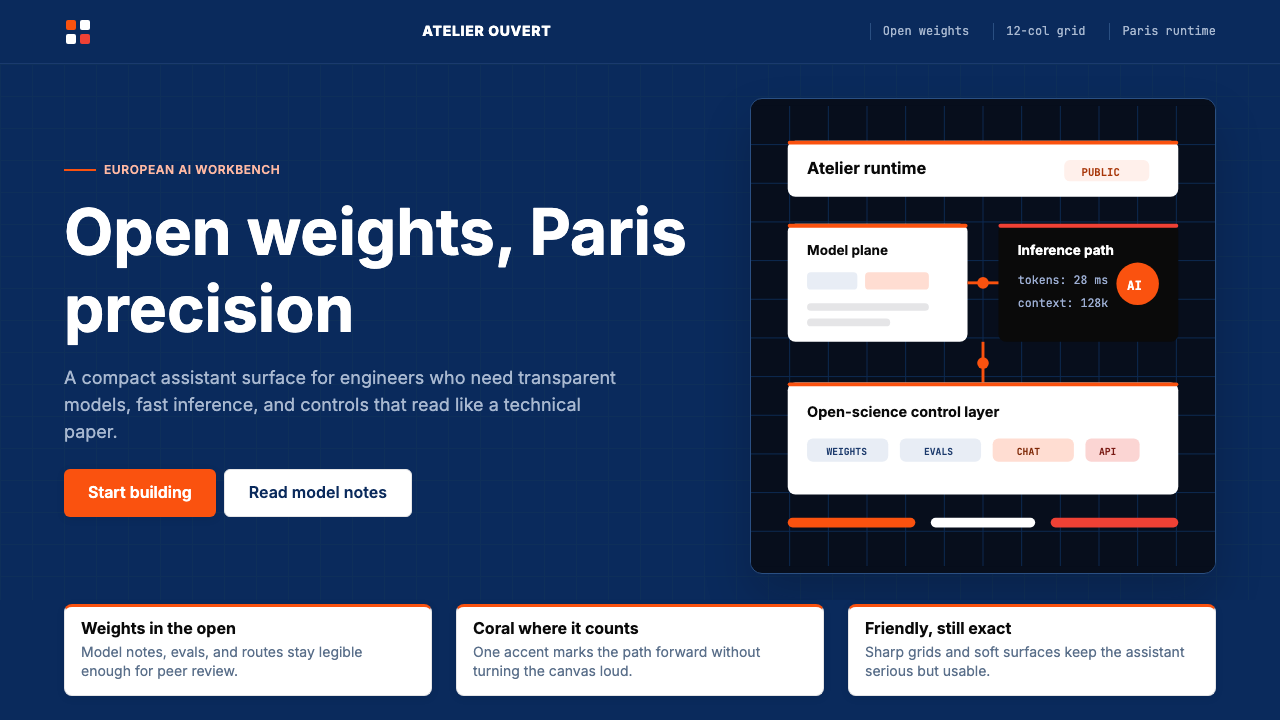
Mistral AI's visual identity proves that open-weights science and French elegance can share the same page — a deep navy canvas lit by a single streak of coral orange.
Mistral Le Chat French AI in brief
The Mistral Le Chat French AI design style is the visual identity born from Mistral AI's public-facing products, most prominently the Le Chat consumer assistant launched alongside the company's core model releases. It fuses the precision of an engineering research culture with the warmth of a Parisian brand sensibility — a combination that feels simultaneously rigorous and approachable.
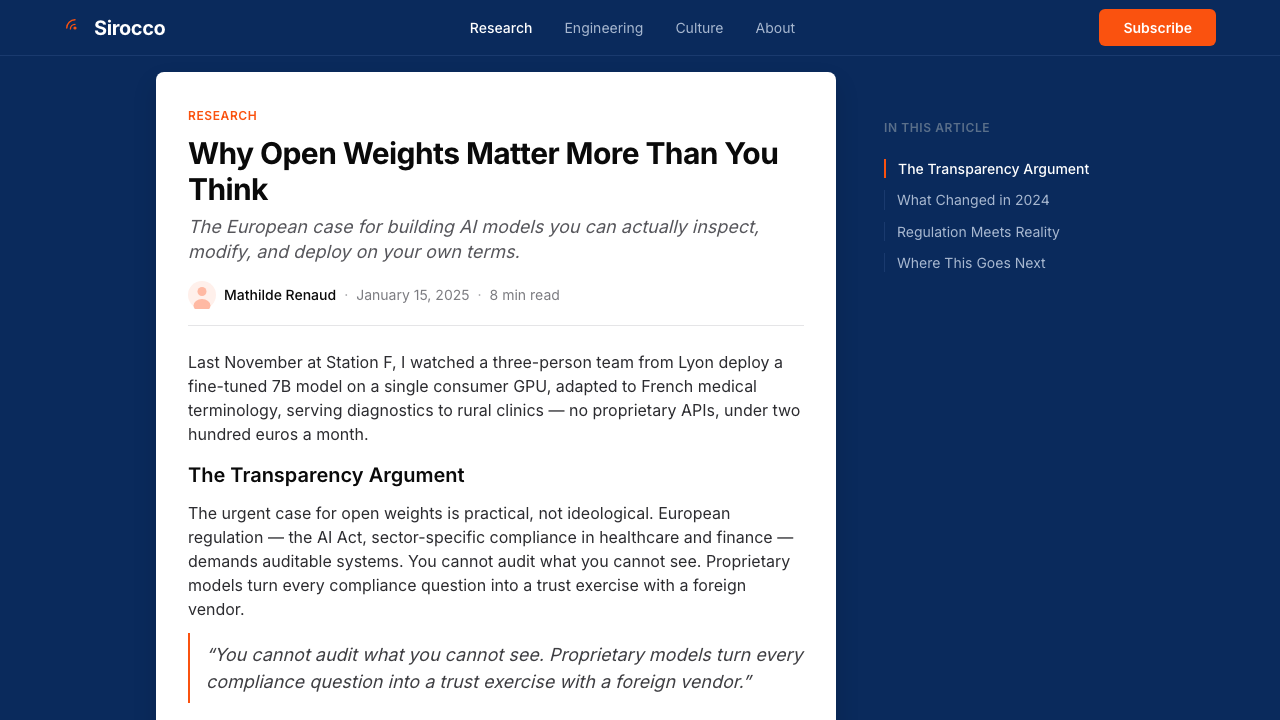
At its core the aesthetic is a dark-ground system: deep tricolore navy serves as the primary canvas, and a saturated coral orange acts as the single accent color. White card panels float on that navy field like architectural drawings laid on a drafting table, creating strong figure-ground contrast without relying on multiple competing hues. The result is a palette that feels authoritative but not austere, technical but not cold.
What distinguishes this style from generic dark-mode tech interfaces is its cultural specificity. The coral accent echoes the warmth of French vernacular design — a café awning, a metro-line marker, a Grand Palais exhibition banner — while the underlying grid discipline speaks directly to the engineering culture of the lab. The Le Chat cat mascot adds a further layer of approachability, softening what could otherwise read as a stark research aesthetic into something genuinely consumer-friendly.
Where does Mistral Le Chat French AI come from?
Mistral AI was founded in Paris in April 2023 by Arthur Mensch, Guillaume Lample, and Timothée Lacroix — three researchers who had worked at DeepMind and Meta FAIR respectively. The founding story is remarkable for its speed: within five months of incorporation, the company released Mistral 7B, an open-weights model that outperformed larger closed models on several benchmarks. This rapid release strategy was itself a kind of brand statement, and the visual identity that emerged around it needed to match: credible, transparent, and European.
The brand's French identity is not incidental. Mistral AI emerged at a moment when European AI sovereignty had become a policy priority, and the visual language reflects that position deliberately. The name Mistral itself refers to the powerful cold wind that sweeps down the Rhône Valley — a natural force, distinctly regional. Le Chat, the consumer product name, is simply French for 'the cat,' invoking a sense of everyday familiarity rather than technological intimidation. The current visual identity, which solidified around 2024, carries this French-Republican clarity: rigorous, principled, and unafraid of strong graphic statement.
The coral-orange accent has antecedents in French institutional graphic design — a tradition that runs from the SNCF railway's orange livery to the Centre Pompidou's bold primary signage. Against a deep navy field, this particular orange reads as simultaneously warm and precise, a combination that suits a company whose positioning is both technically serious and publicly accessible. The navy itself echoes the French tricolore, grounding the brand in a national identity without resorting to literal flag imagery.
Audrey Herblin-Stoop, as a senior communications figure at the company, helped shape the public-facing voice and visual coherence that made the brand recognizable at a time when European AI was fragmented and noisy. The Le Chat mascot — a simple, friendly cat rendered in the same coral-orange accent — became a focal point for the consumer product line, serving as the human-scale counterpart to the technical seriousness of the underlying model research. Together these elements produced a visual identity that felt both engineered and lived-in, both French and international.
What defines the Mistral Le Chat French AI look?
Deep Navy Canvas
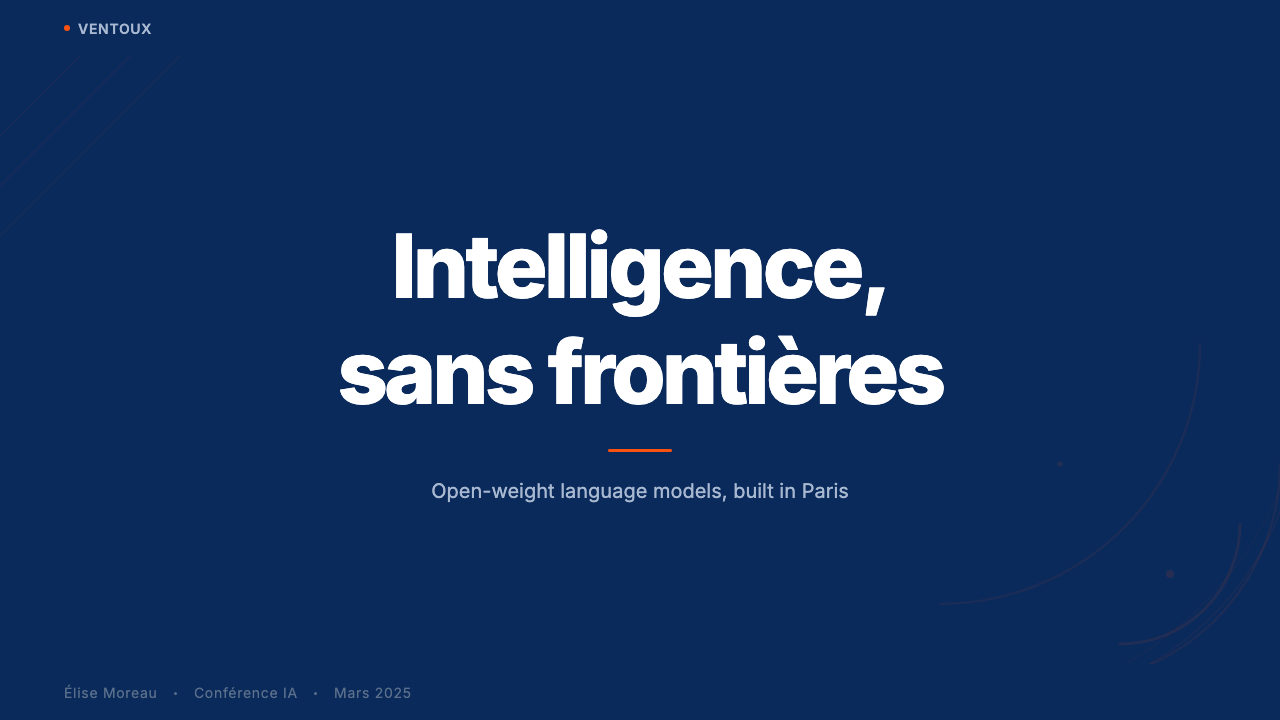
The dominant ground is a rich, saturated navy — deep enough to absorb ambient light and give white and coral elements strong luminance contrast, but warm enough not to feel purely black or corporate. This navy anchors the tricolore reference without literal flag imagery and signals the seriousness of scientific communication. Panels and cards placed on this ground appear almost to float, their white or light-grey surfaces catching implied illumination from above.
Coral Orange Accent
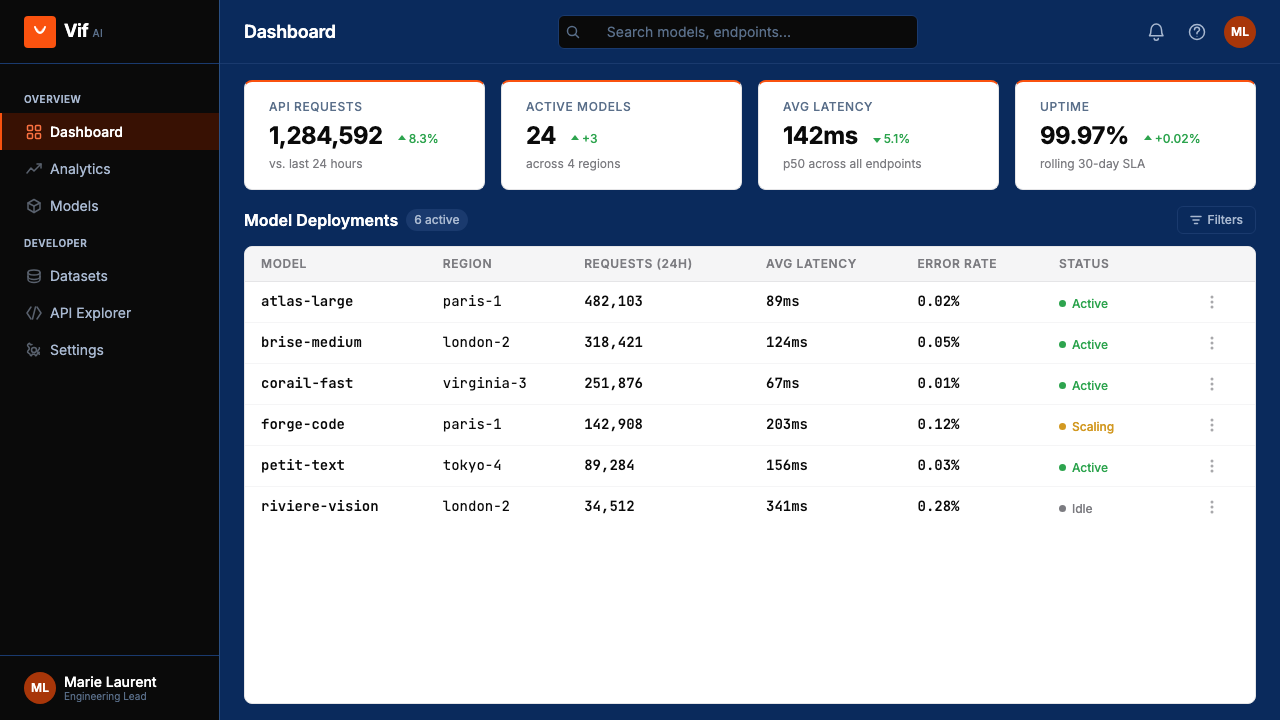
The coral orange is the system's single variable color — everything else is navy, white, or neutral grey. It appears on primary buttons, active states, the Le Chat mascot, and key navigational markers. The hue sits between pure red-orange and salmon, giving it warmth without aggression. Against the navy ground it has an almost luminescent quality, the visual equivalent of a lit window in a dark courtyard. Used sparingly in this way, it carries enormous semantic weight: wherever it appears, it signals action, invitation, or identity.
Floating Card Panels
White or very light card panels on the dark navy field create the system's primary structural rhythm. Each card is treated as a discrete container — rounded corners soften the engineering severity, and gentle elevation shadows distinguish foreground from background without introducing sharp visual noise. The metaphor is architectural: white cards on navy read like floor plans pinned to a drafting board, organizing information spatially rather than linearly.
Grid-Strict Layout
Layouts are governed by a disciplined columnar grid with consistent gutter widths and generous internal padding. Content areas rarely bleed to the edge of the container; instead, white space is treated as a structural element — breathing room that signals precision rather than emptiness. This grid discipline, tight enough for an engineering paper, is the visual inheritance from Mistral's research culture and gives the interface an analytic clarity distinct from the looser, more expressive layouts common in consumer tech.
Sans-Serif System Typography
Inter serves as the typographic backbone across the system — a typeface chosen for its legibility at small sizes, neutral warmth, and deep optical calibration for screen rendering. Hierarchy is established through size and weight contrast rather than through multiple typeface families: a display weight headline at a large size, a regular weight for body, a muted grey for metadata. The result is a typographic system that feels unified and purposeful rather than assembled from disparate parts.
Mascot as Accent Object
The Le Chat cat mascot is not a decorative afterthought but a functional component of the visual system. Rendered in the same coral orange as the primary accent, it operates as the brand's most recognizable mark at small sizes and as a focal warmth element at larger sizes. Its simplicity — almost an icon rather than an illustration — means it reproduces cleanly at any scale and retains legibility against both the dark navy and the white card surfaces. The mascot mediates between the system's technical rigor and its consumer aspirations.
Restrained Depth and Motion
Depth cues in the system are minimal and consistent: card shadows are soft but not dramatic, hover states shift subtle background tones rather than triggering large movements, and transitions feel measured rather than playful. This restraint keeps the interface reading as a precision instrument rather than an entertainment product. When motion is used — page transitions, loading states, the animated chat indicator — it follows the same disciplined logic: purposeful, brief, and never decorative.
Who shaped Mistral Le Chat French AI?
Co-founder and CEO of Mistral AI, Mensch previously worked at DeepMind on large language model research. His decision to release Mistral 7B as an open-weights model — counter to the prevailing trend of closed frontier models — was both a technical bet and a brand-defining act that shaped the entire visual and communicative identity of the company: transparency, openness, and European self-determination as literal product features.
Co-founder and chief scientist, Lample brought research depth from Meta FAIR where he worked on foundational NLP systems. His presence as a named researcher-founder gave the brand scientific credibility that the visual identity needed to mirror — the grid-strict, engineering-paper aesthetic of the product can be read as a direct expression of the lab culture he helped define. Lample has been a public communicator of the open-weights rationale, aligning the brand's technical communication with its visual openness.
Co-founder and chief technology officer, Lacroix was instrumental in the architectural decisions behind the Mixtral mixture-of-experts models. His engineering leadership contributed to the culture of rigorous technical documentation and benchmarking that runs through the company's public communications. In a brand whose visual identity is built partly on the aesthetics of an engineering paper — strict grids, clear hierarchy, no decorative excess — Lacroix's orientation is part of the DNA.
Head of communications at Mistral AI, Herblin-Stoop played a central role in shaping the public-facing voice and visual coherence of the brand during its critical early phase. In a company where the founders are engineers, a communications lead who understands both technical substance and brand expression is particularly important. Her work helped ensure that the visual openness of the brand — the coral accent, the Le Chat mascot, the French cultural references — matched the substantive openness of the company's model releases.
Not a person but a designed entity, the Le Chat cat mascot warrants inclusion as a distinct creative contribution. As a branded character it occupies a rare position: simultaneously a product name, a mascot, and a visual system anchor. Its deliberate simplicity — reduced to the minimum geometry needed to read as a cat at small sizes — is itself a design decision consistent with the overall system's discipline. The mascot humanizes the brand without sentimentalizing it, achieving warmth through restraint rather than through cuteness.
How do you use Mistral Le Chat French AI today?
The Mistral Le Chat French AI style is well-suited to contexts where credibility and warmth need to coexist — AI products, research-backed tools, European tech brands, and any interface that wants to signal both scientific seriousness and genuine consumer approachability. The deep navy plus single coral accent architecture is highly portable and requires only disciplined restraint to apply successfully.
For presentation slides, the style works best when it commits fully to the dark ground. Cover slides benefit from the navy-as-canvas approach: a white card panel holds the title while the coral accent marks the eyebrow line or decorative element. Content slides should carry the same card-on-navy logic — each point or section contained in a distinct white panel, with the coral accent reserved for the single most important element per slide. Data slides become particularly strong in this system: charts and graphs rendered in white and coral against navy read as genuinely analytic rather than decorative, with the accent color used to highlight the key data series rather than to decorate the axes.
For web dashboards and product interfaces, the system's structural discipline maps naturally onto component-based design. Cards are the primary unit, and their white or near-white surfaces against the dark field create inherent hierarchy without requiring visual weight to be added artificially. Navigation should be minimal and typographic, with the coral accent used for active states, primary call-to-action buttons, and notification indicators only. Pricing pages work exceptionally well: the navy background makes highlighted tiers appear to glow, and the coral accent on the recommended plan reads as both prominent and trustworthy rather than aggressive.
For editorial and marketing contexts — blog posts, press materials, feature announcements — the style supports strong headline-first layouts. A navy page with a white card body and a coral-accented eyebrow line creates an immediately recognizable format. Marketing pages for AI products in particular benefit from the system's ability to feel both approachable and credible simultaneously: the mascot can appear as an illustration element at the top of a hero section while the body copy sits in a white card panel below, maintaining the dual register of warmth and rigor.
The most common mistake when applying this style is reaching for additional accent colors — adding a secondary green or blue to extend the palette. The system's power comes specifically from its monochromatic restraint with a single warm accent; diluting that with additional hues dismantles the core tension that makes it legible. A related error is softening the navy to a lighter, more generic dark blue: the depth and saturation of the original navy is what gives the coral accent its luminescent quality, and a lighter ground makes the whole system feel generic rather than distinctive.
Mistral Le Chat French AI — FAQ
How is this style different from generic dark-mode tech design?
Generic dark-mode tech design typically uses near-black backgrounds with multiple accent colors, often blue, green, or purple, in a palette that signals digital modernity without referencing any specific cultural tradition. The Mistral Le Chat style differs in two key respects: it uses a specific deep navy rather than a flat near-black, and it commits to a single warm coral accent rather than a cool or multi-hued palette. The navy carries tricolore cultural weight, and the coral references French vernacular warmth. These choices give the system a geographic and cultural specificity that generic dark-mode tech design deliberately avoids.
Can the style work on a light background?
The style can be adapted to a light ground — navy type and elements on a white or very light grey background, with coral orange retained as the accent. This inversion is sometimes used for document-heavy or text-heavy contexts where sustained reading is required and a dark background would be fatiguing. However, the light inversion loses some of the system's defining quality: the sense that the coral accent is luminescent against a dark field. On a light ground, the coral reads as warm but not glowing, and the navy elements carry more visual weight than they do as text-on-dark. The light inversion works better for secondary surfaces — embedded documentation, help articles, form flows — than for primary marketing or brand-defining contexts.
Is the Le Chat mascot required when using this style?
No. The Le Chat mascot is a brand-specific element belonging to Mistral AI's product identity. When applying the visual system in other contexts — an AI product inspired by this aesthetic, a presentation using the color language, a dashboard referencing this structural logic — the mascot should not be used, as it would create brand confusion. The style transfers without the mascot: the navy canvas, coral accent, card-on-dark structure, Inter-scale typography, and grid discipline are all freely reusable as a design language. The mascot is a proprietary element; the visual grammar it lives within is what makes the system worth studying.
How does this style handle data visualization?
Data visualization in this system works best when it extends the navy-and-coral logic directly into the chart layer. Line charts use coral for the primary series and white or light grey for secondary series or grid lines. Bar charts follow the same logic: coral for the highlighted or most important category, neutral tones for comparison bars. Background chart areas remain dark, consistent with the canvas treatment of the broader interface. The key discipline is using the coral accent for exactly one data story per chart — the insight you most want the reader to take away — and letting everything else recede into the neutral field. This approach gives the system's data visualizations the same analytic clarity that characterizes its overall layout philosophy.
What kinds of products are a poor fit for this style?
The style struggles in contexts that require organic warmth, sensory richness, or cultural humility. Food and beverage brands need texture and appetite appeal that a precise dark-field system actively suppresses. Children's products require a wider, more exuberant color range than single-accent systems allow. Wellness and mindfulness applications depend on softness — rounded forms, muted naturalistic tones, gentle transitions — that conflict with the system's engineering precision. Cultural institutions in non-European contexts may find the French-Republican clarity of the aesthetic misaligned with local visual traditions. The style is at its strongest when the product values align with its core proposition: precision, openness, and European intellectual confidence.
Related design styles
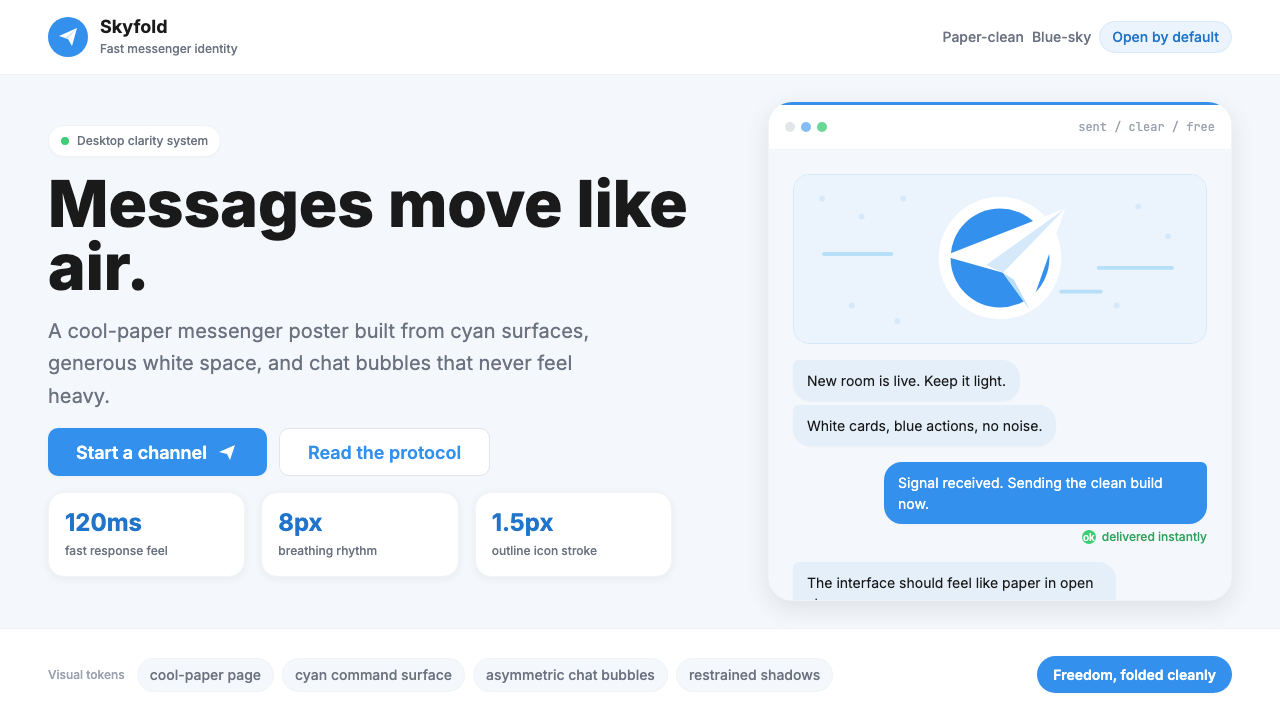 Telegram Blue Paper PlanePaper-clean speed. Cyan planes, white cards, and chat bubbles carry the ident…
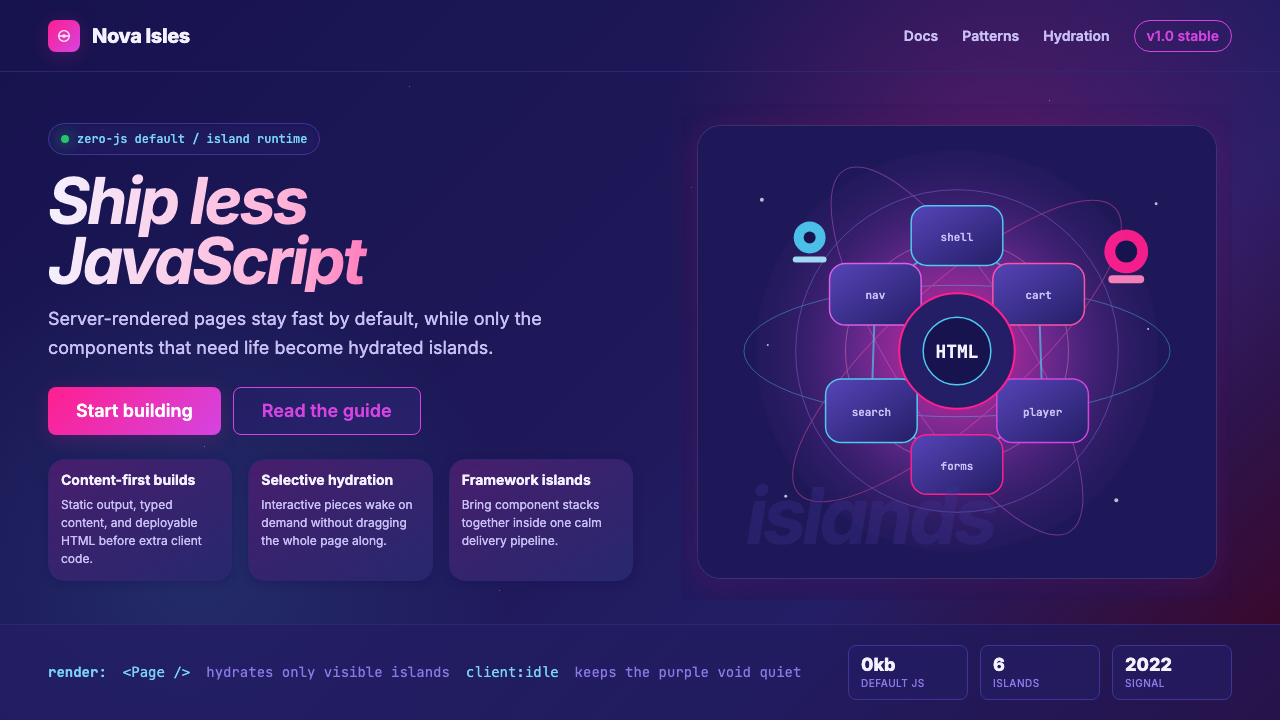 Astro Islands Architecture 2022Warm cosmic devtools. Deep violet, magenta glow, Inter clarity, and island ge…
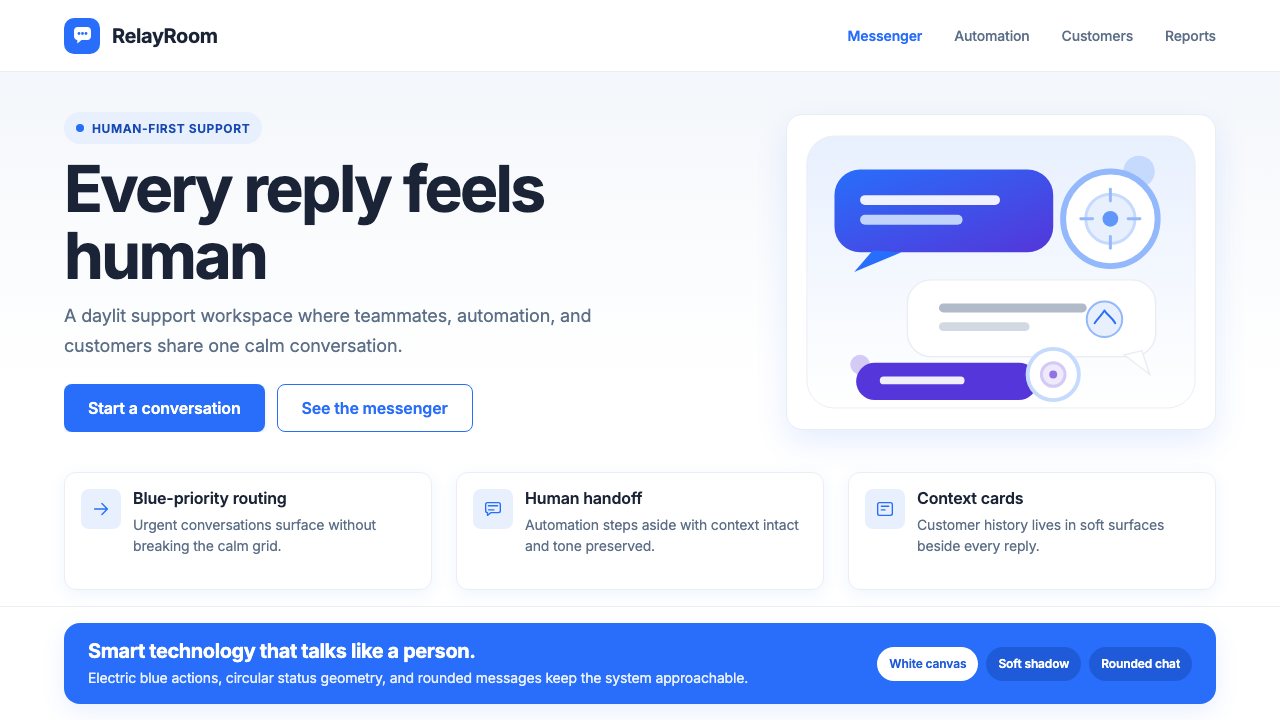 Intercom ModernWarm chat, sharp software. Electric blue bubbles on a daylit white grid.
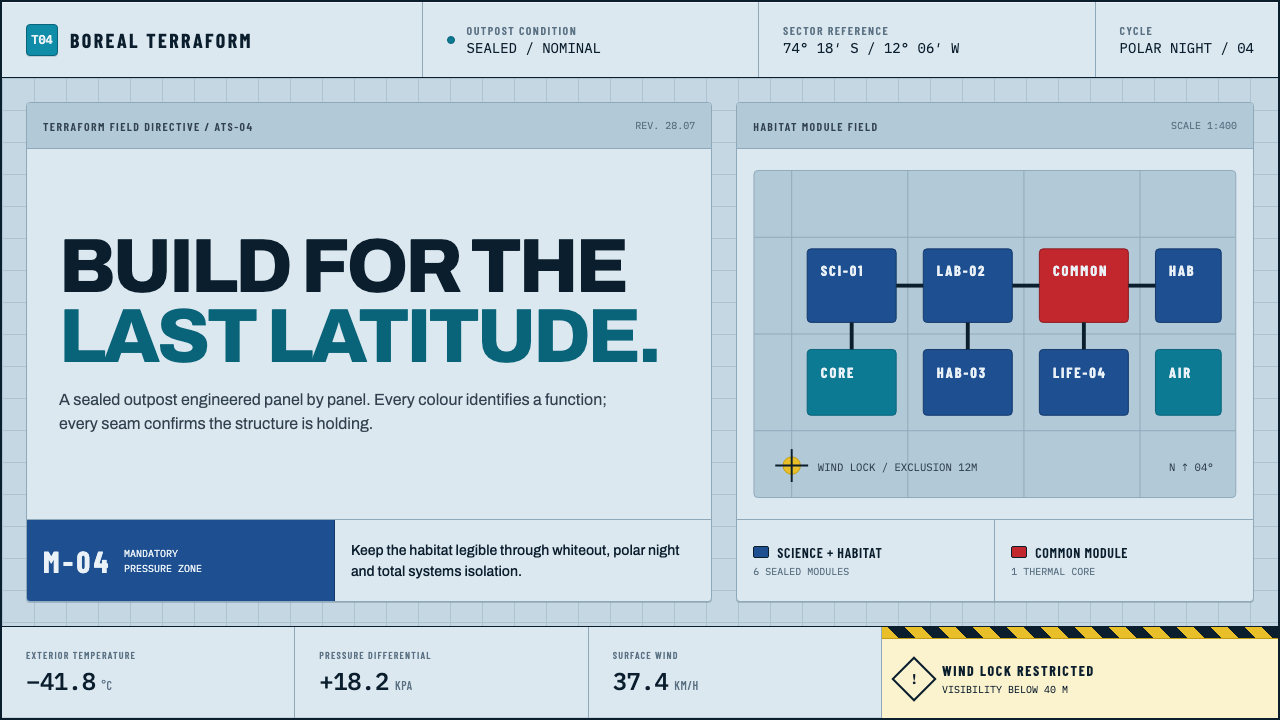 Arctic Terraform StationEvery colour carries a duty. Sky-blue panels, coded modules and hard seams en…
 Bluesky AT Protocol 2024Open tech feels warm. Pale sky, cloud cards, Inter, and one cobalt accent car…
 LinkedInCorporate trust, digitized. Authoritative blue frames white cards on warm cre…