What is Mexican Tarjeta Postal (Posada Engraving 1900)?
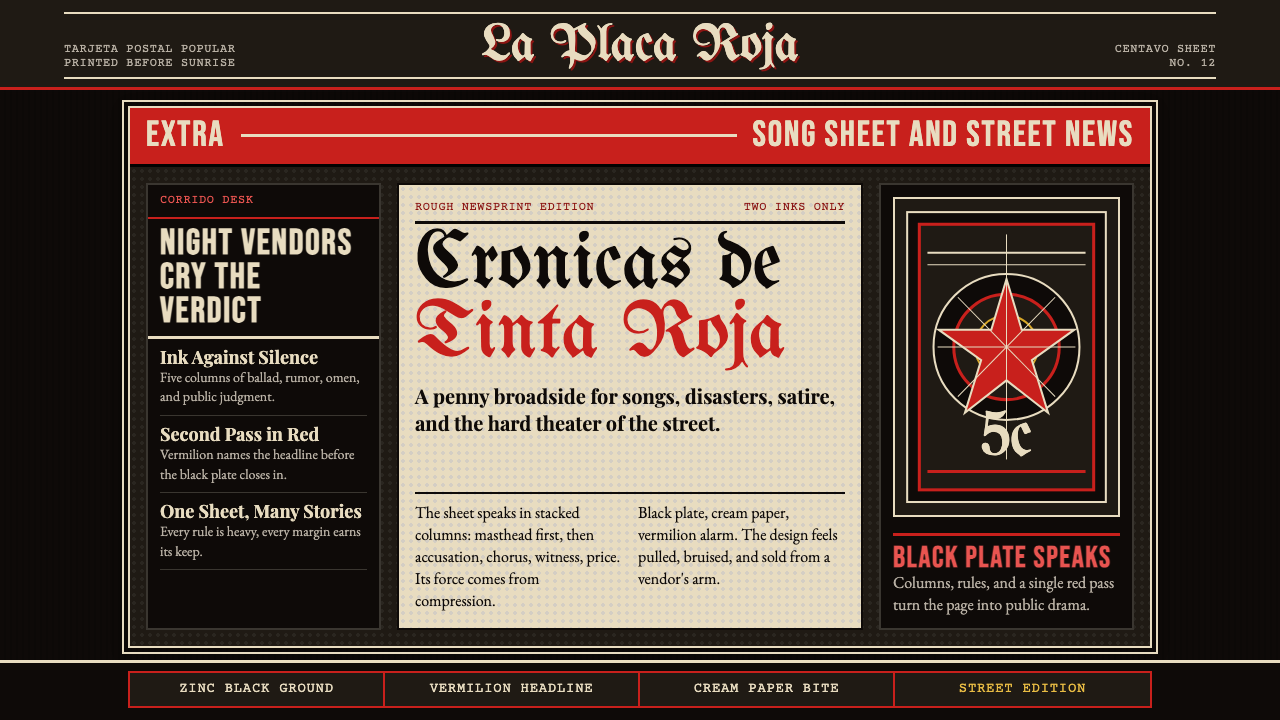
José Guadalupe Posada's zinc-plate engravings for Mexico City's penny broadsides gave the world its most irreverent graphic vocabulary — calavera satire, blood-red headlines, and a dark newsprint ground that still crackles with political energy.
Mexican Tarjeta Postal (Posada Engraving 1900) in brief
Mexican Tarjeta Postal — named for the illustrated penny postcards that circulated alongside Posada's broadsides — is the graphic language of Mexico City's popular print culture between 1888 and 1913. Its defining visual moves are: a near-black or dark zinc-plate ground, a rough cream or newsprint-tan secondary field, vermilion red used exclusively for headlines and emphatic rules, and heavy Fraktur mastheads that tower over dense columns of condensed text. The effect is tabloid drama compressed into a single sheet.
Unlike most nineteenth-century graphic traditions that aspired toward refinement, this style embraced the grain of the press and the imperfection of the zinc plate. Ink spread unevenly, hairlines thickened or broke, letterforms carried the memory of the engraver's tool. These were not flaws to be corrected but marks of authenticity — evidence that a human hand had cut the image and a mechanical press had stamped it into cheap paper for the street market.
The style was revived and formalized in the 1920s and 1930s by muralist Diego Rivera and printmaker Leopoldo Méndez, who recognized in Posada's populist broadside tradition an anti-colonial visual politics. The Taller de Gráfica Popular, founded in 1937, codified the aesthetic into a deliberate political tool. Today the style carries dual meaning: it is simultaneously a historical record of working-class Mexican graphic culture and a living design language used in political illustration, cultural branding, and typographic revival projects worldwide.
See the Mexican Tarjeta Postal (Posada Engraving 1900) design system
Where does Mexican Tarjeta Postal (Posada Engraving 1900) come from?
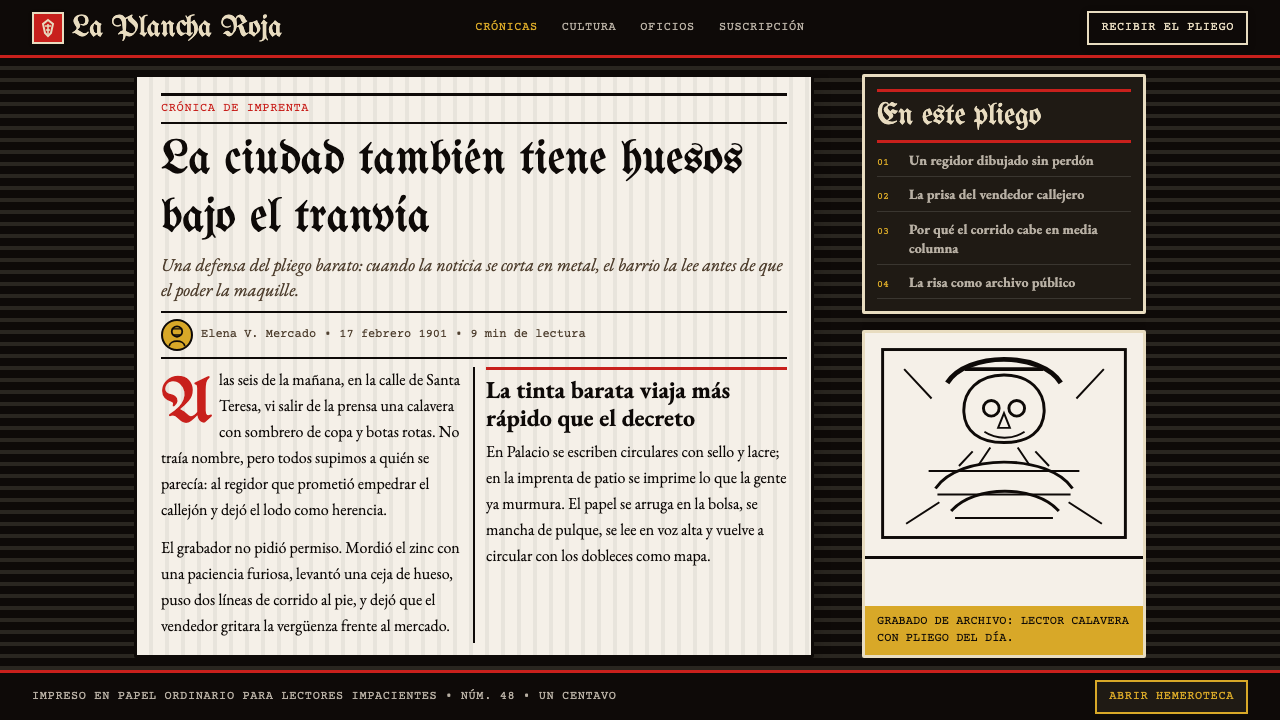
The story begins not with a graphic designer but with a commercial printer. Antonio Vanegas Arroyo ran a small press on Calle Santa Teresa in Mexico City's historic center, producing penny broadsides — hojas volantes — for the street market. His subjects ranged from sensational crime reports to corrido ballads, religious almanacs to revolutionary news. The paper was cheap, the press was fast, and the audience was largely illiterate or semi-literate. Images had to carry the story.
José Guadalupe Posada arrived in Mexico City from Aguascalientes in 1888, already an accomplished engraver. He found in Vanegas Arroyo's press a client willing to publish work at volume and speed. Over the following twenty-five years, Posada cut more than twenty thousand zinc-plate engravings — a rate of roughly two to three plates per working day. His technique moved between the fine crosshatching of academic engraving and the bold outlines demanded by fast reproduction and small format. The calavera — the skeleton figure — became his signature motif: a visual pun on death and social satire that could dress a pompous politician in bones as easily as it could mourn a disaster victim.
The Catrina, Posada's most famous calavera, was originally a nameless zinc engraving of a female skeleton wearing the elaborate feathered hat fashionable among Mexico City's bourgeoisie — a direct satire of the aspirational class that aped European fashion while ignoring indigenous culture. Diego Rivera later gave her the name Catrina and placed her in the 1947 mural Dream of a Sunday Afternoon in Alameda Park, cementing her iconic status. But in Posada's original, she was simply a single frame in an endless tabloid parade.
After Posada's death in 1913 and the end of the Mexican Revolution, his work entered a second life. Muralists and printmakers of the 1920s — Rivera, José Clemente Orozco, David Alfaro Siqueiros — rediscovered his broadsides and recognized their visual power as popular art that had survived despite, and because of, its cheapness and directness. The Taller de Gráfica Popular, founded by Leopoldo Méndez, Pablo O'Higgins, and Luis Arenal in 1937, institutionalized this tradition as a workshop for politically committed printmaking, producing posters, books, and graphic campaigns that carried the Posada aesthetic forward into the mid-twentieth century and beyond.
What defines the Mexican Tarjeta Postal (Posada Engraving 1900) look?
Color
The palette is deliberately restricted to three tones derived from the penny-press printing process: a deep zinc-engraving black that functions as the primary ground, a warm cream or newsprint tan that appears as the secondary field for text and illustration, and a single vivid vermilion red reserved for headlines, horizontal rules, and emphatic callouts. This three-tone constraint is not minimalism — it is the direct consequence of two-ink printing economics, and it gives every composition an innate graphic tension between darkness and heat.
Typography
Mastheads are set in heavy Fraktur or blackletter — the gothic letterforms that dominated Mexican popular print through the nineteenth and early twentieth centuries. Below the masthead, body text shifts to dense condensed roman or grotesque type crammed into narrow columns, creating a vertical rhythm of compressed information. Scale contrast is extreme: a single Fraktur headline might occupy a third of the composition while body text is set so tightly it reads almost as texture. Letterspacing is tight throughout; no element breathes.
Engraving Texture
The signature visual quality of this style is the engraved mark itself — the fine crosshatch that builds shadow areas, the uneven ink coverage that suggests a plate pulled from a press rather than a file rendered on screen, the occasional broken hairline or ink spread at corners. In digital applications, these qualities are evoked through rough paper grain overlays, slight irregularity in ink fills, and texture on text edges. The goal is to suggest mechanical reproduction rather than digital precision — every surface should feel like it was pressed, not clicked.
Composition
Broadside composition stacks information vertically with no hierarchy wasted: masthead at top, a large illustration or woodcut vignette immediately below, then dense columns of text filling the remaining field. Horizontal vermilion rules act as sectional dividers, giving the eye pause before plunging into the next column. There is almost no margin — the printed surface extends close to the sheet's edge, echoing the economic reality of not wasting paper. This compressed density is a feature, not a flaw: it signals abundance and urgency simultaneously.
Calavera Illustration
The calavera — skeleton figure dressed in human social roles — is this style's most distinctive illustrative device. It appears as social satire (politicians, priests, and generals rendered as skeletons), as memento mori (death dancing with everyday figures), and as pure decorative motif (garlands of skulls framing text). The illustration style itself is bold-outlined and crosshatched, legible at small size and cheap to reproduce. In contemporary applications, calavera imagery ranges from literal skull iconography to the more abstract use of the figure's visual logic: high-contrast silhouette, dramatic gesture, and dark-comedy theatricality.
Dark Ground
Unlike most Western print traditions where paper is the light ground and ink creates darkness, the Posada broadside frequently inverts this relationship — beginning from a near-black printed ground out of which cream or light elements emerge. This inverted relationship gives the style its distinctive drama: light text punches through darkness rather than sitting on it. In practice, this means the dark tone carries the weight of atmosphere while the cream tone carries information, and the vermilion cuts across both as pure signal.
Border and Rule Systems
Decorative typographic borders — bands of repeating floral, geometric, or skeletal ornaments assembled from foundry type elements — frame the broadside and separate internal zones. These borders are not merely decorative; they establish the formal boundary of the printed object and give the cheap newsprint sheet a sense of contained authority. Vermilion horizontal rules within the text body perform a different function: they are pure editorial punctuation, marking the transition between sections with a visual slash of heat.
See the Mexican Tarjeta Postal (Posada Engraving 1900) design system
Who shaped Mexican Tarjeta Postal (Posada Engraving 1900)?
Posada was the central figure of Mexican popular print culture and the artist whose twenty-thousand-plus zinc-plate engravings defined the visual language this style is built on. Born in Aguascalientes in 1852, he trained as a lithographer and engraver before moving to Mexico City, where his partnership with printer Antonio Vanegas Arroyo produced a continuous stream of broadside imagery from 1888 until his death in 1913. His range was extraordinary — sensational crime scenes, corrido ballads, natural disasters, political satire, and the calavera figures that became his lasting legacy. He died in poverty, largely forgotten, until the muralist generation rediscovered his work in the 1920s and recognized in it a visual DNA for a distinctly Mexican graphic identity.
Arroyo was the publisher and commercial engine behind Posada's most prolific output. His press on Calle Santa Teresa was one of Mexico City's most active producers of popular printed matter, distributing hojas volantes — flying sheets — through street vendors across the city. Arroyo had an acute sense of what sold: sensational subjects, clear imagery, fast turnaround, cheap price. His commercial instincts drove the style's visual priorities — legibility over refinement, impact over elegance — and his willingness to publish politically charged material gave Posada latitude that more cautious printers would not have offered.
Manilla was Posada's predecessor at the Vanegas Arroyo press and the engraver who established many of the broadside conventions that Posada would later develop and radicalize. His work is less well known outside Mexico but crucial to understanding the tradition as a continuity rather than the invention of a single genius. Manilla's calavera figures, his border systems, and his compositional approach to fitting dense text around large images all became the template Posada inherited and transformed. Recognizing Manilla's contribution restores the style to its proper status as a living craft tradition rather than an isolated creative act.
Méndez was the printmaker who most consciously carried the Posada tradition forward into the twentieth century as a political tool. A founding member of the Taller de Gráfica Popular in 1937, he used linocut and woodcut techniques — related to but distinct from Posada's zinc engraving — to produce posters and pamphlets for labor unions, anti-fascist campaigns, and progressive political causes across Latin America. His work demonstrates how the broadside aesthetic could be modernized without losing its popular-art directness. The TGP's output under Méndez's influence extended the style's reach from Mexico City street culture to international political graphic design.
Rivera's role in this tradition is that of the canonical interpreter — the artist who elevated Posada's broadside work from forgotten street ephemera to celebrated national heritage. His 1947 mural Dream of a Sunday Afternoon in Alameda Park, which spans Mexican history from the colonial era to the mid-twentieth century, places the Catrina at its center and Posada himself as a character, effectively canonizing the broadside tradition within fine-art history. Rivera's endorsement transformed how the style was received: from the disposable output of a commercial press to a visual language of national identity and anti-colonial resistance.
How do you use Mexican Tarjeta Postal (Posada Engraving 1900) today?
Mexican Tarjeta Postal is a high-drama style built for content that needs to stop attention rather than sustain it. Its visual logic — dark ground, compressed density, the slash of vermilion — is calibrated for street legibility and immediate impact. Before applying it, the designer needs to ask whether the content can carry the style's implicit political and cultural weight, because this aesthetic does not read as neutral. It arrives with history, and that history is specifically Mexican, working-class, and satirical.
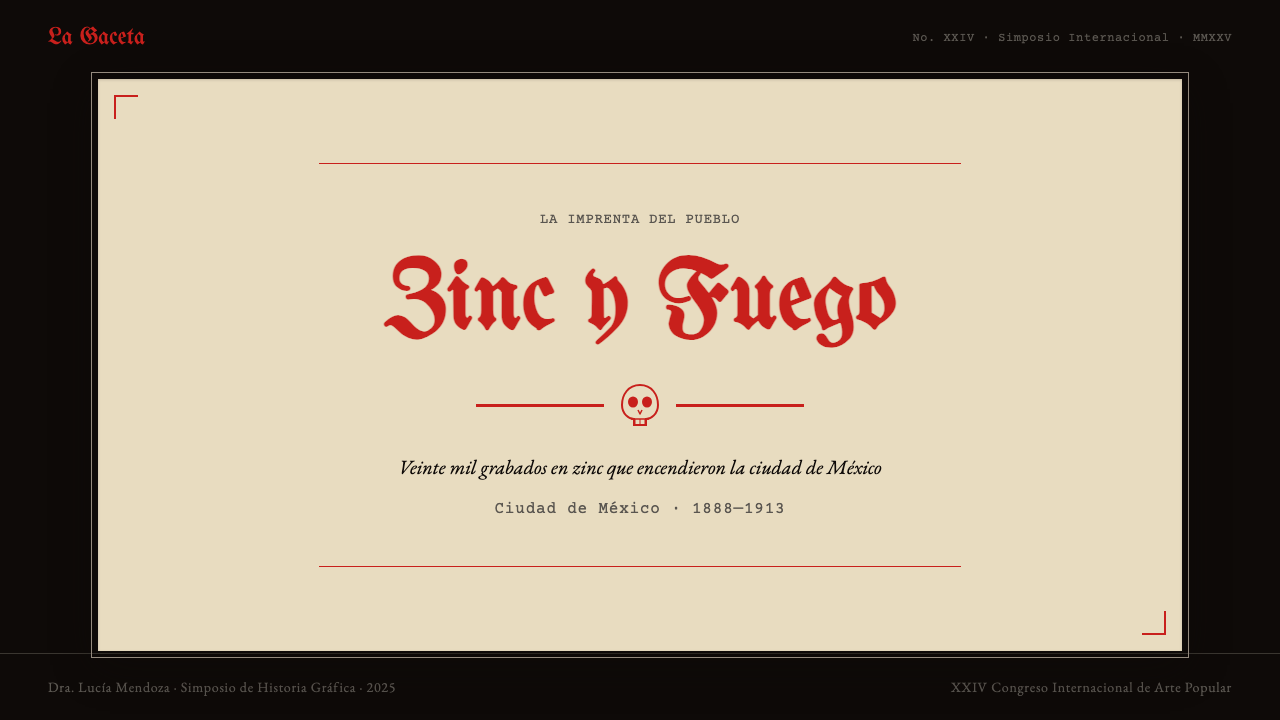
For presentation slides, the style works best on cover pages and section dividers rather than content-heavy pages. A cover in this register: a near-black ground, a single large calavera-style illustration or bold Fraktur word at headline scale, a vermilion rule separating the image zone from the title, and cream or light type set in condensed columns below. Content slides should be treated more sparingly — the style's density can overwhelm complex information. Use the dark ground as a full-bleed accent slide, then return to a lighter field for data and body text. Data visualizations work best when treated as engraving diagrams: charts in cream on dark ground, with vermilion used only for the key data series that needs to be read first.
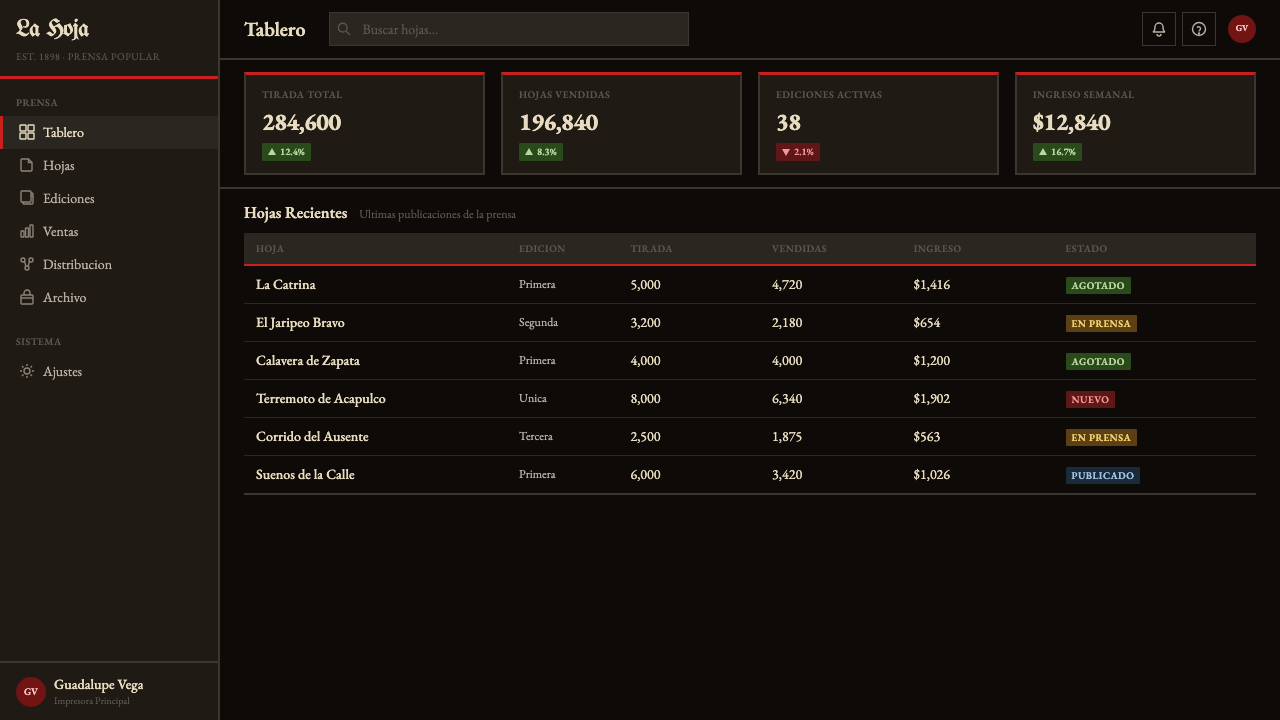
For web interfaces, the style is most coherent in contexts where atmosphere matters more than systemic scalability — editorial microsites, cultural brand landing pages, event pages, and portfolio contexts where a single strong visual statement is the goal. A dashboard or SaaS product would strain the palette to its limits; the compressed density that gives the broadside its power becomes a legibility problem in a UI with many interactive states. If applying to web, commit to the dark ground as the primary field, use cream for all body text and data labels, and treat vermilion as a single semantic signal — the one color that means action or urgency, nothing else.
For editorial and marketing work, the style has the clearest application. Magazine covers, cultural event posters, music editorial layouts, and brand identity for organizations that want to signal social consciousness or counter-cultural positioning all benefit from this register. The key is using the compositional logic — masthead at top, image zone below, dense text columns filling the base — as a structural scaffold rather than a literal reproduction. The vermilion horizontal rule is the most portable single element: it can be introduced into an otherwise neutral layout as a single editorial accent without triggering the full broadside aesthetic.
The most common mistake when applying this style is treating the dark ground as a background choice rather than a structural commitment. A dark background with light text and a red accent element is not the same as a zinc-plate broadside composition; without the engraving texture, the Fraktur letterform logic, and the compressed column density, what results is simply a dark-mode layout with period typography dropped in. The style works when all its elements operate together — ground, texture, typography weight, compositional density, and the specific three-tone color discipline — and fails when any one element is isolated and applied to an otherwise conventional layout.
See the Mexican Tarjeta Postal (Posada Engraving 1900) design system
Mexican Tarjeta Postal (Posada Engraving 1900) — FAQ
Is this style specific to Mexican culture, or can it be used for any subject matter?
The style carries specific cultural weight and should be applied with awareness of its origins. The calavera imagery and Fraktur masthead typography are not neutral choices — they arrive with the history of Mexican working-class print culture, political satire, and social protest. Using the style for culturally unrelated subjects is not inherently wrong, but designers should understand what they are borrowing. The visual grammar — dark ground, vermilion accent, compressed column density — can be applied broadly. The specific iconography — skeleton figures, religious imagery, revolutionary slogans — carries meaning that should not be treated as decoration.
How does this style differ from the broader Mexican folk art aesthetic, such as Día de los Muertos imagery?
The Posada broadside tradition and Día de los Muertos imagery are related but distinct. The broadside style is specifically a print media tradition — zinc engraving on cheap newsprint, produced for rapid commercial distribution. Its color discipline is strict: near-black, cream, and vermilion only. Día de los Muertos visual culture, particularly in its contemporary form, draws on marigold yellows, sugar skull polychrome, and celebratory brightness — a much wider palette and a festive rather than tabloid-satirical tone. The calavera figure appears in both, but in the broadside tradition it is a tool of social criticism; in Día de los Muertos it is an expression of familial memory and cyclical celebration. Conflating the two produces confusion rather than cultural literacy.
Can the style work in a light-ground version, or is the dark background essential?
A light-ground inversion is possible but requires careful handling. The style's drama comes from the relationship between the dark zinc-plate ground and the elements that emerge from it; reversing this to a light ground with dark elements shifts the register from broadside to editorial. The vermilion accent works on light grounds — red headlines on cream or white are common in period-adjacent editorial design — but the near-black ground is what distinguishes this style from generic Victorian or Edwardian print revival. If a light-ground version is needed, lean into the cream-and-black newsprint relationship and use vermilion sparingly; the result will read as period editorial rather than penny-press broadside, which may be precisely what the context requires.
How does this style hold up in digital interfaces compared to print?
The style was born in physical print and its most authentic expressions remain physical — letterpress revivals, screen-printed posters, risograph publications. In digital contexts, the challenge is that the engraving texture and ink-spread qualities that define the style's character are simulated rather than real. This simulation can read as superficial if the underlying composition and typographic logic are not also in place. The strongest digital applications of this style treat the texture as atmospheric rather than structural — a grain overlay that adds character without defining it — and rely on the dark ground, the three-tone color discipline, and the compressed typographic density to carry the visual identity. A digital layout that looks like a broadside because of its texture alone is a costume; a digital layout that works like a broadside because of its compositional logic is a genuine application.
What is the most important single principle to understand before applying this style?
Constraint is the medium. The broadside style was not minimal by aesthetic choice but by economic necessity: two inks, cheap paper, fast reproduction. Every decision — the three-tone palette, the Fraktur masthead, the compressed column density, the vermilion rule — was a solution to a material constraint. When that logic is understood, the style becomes generative: you ask what constraints shape this communication, and you let those constraints drive the visual decisions. When the logic is ignored — when someone simply takes the dark ground and drops in a red headline — the result is atmosphere without structure, a mood board rather than a system.
Related design styles
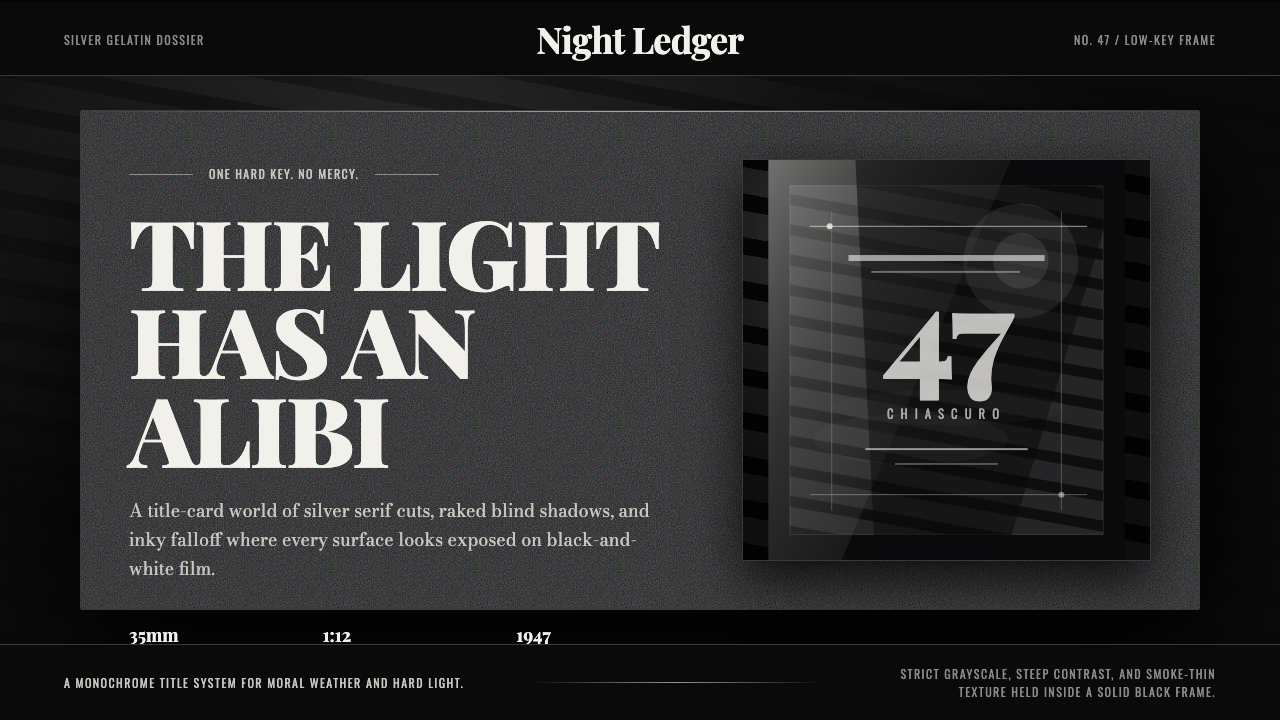 Film Noir ChiaroscuroLight is the crime. Silver serif cards, blind stripes, and grain carve drama…
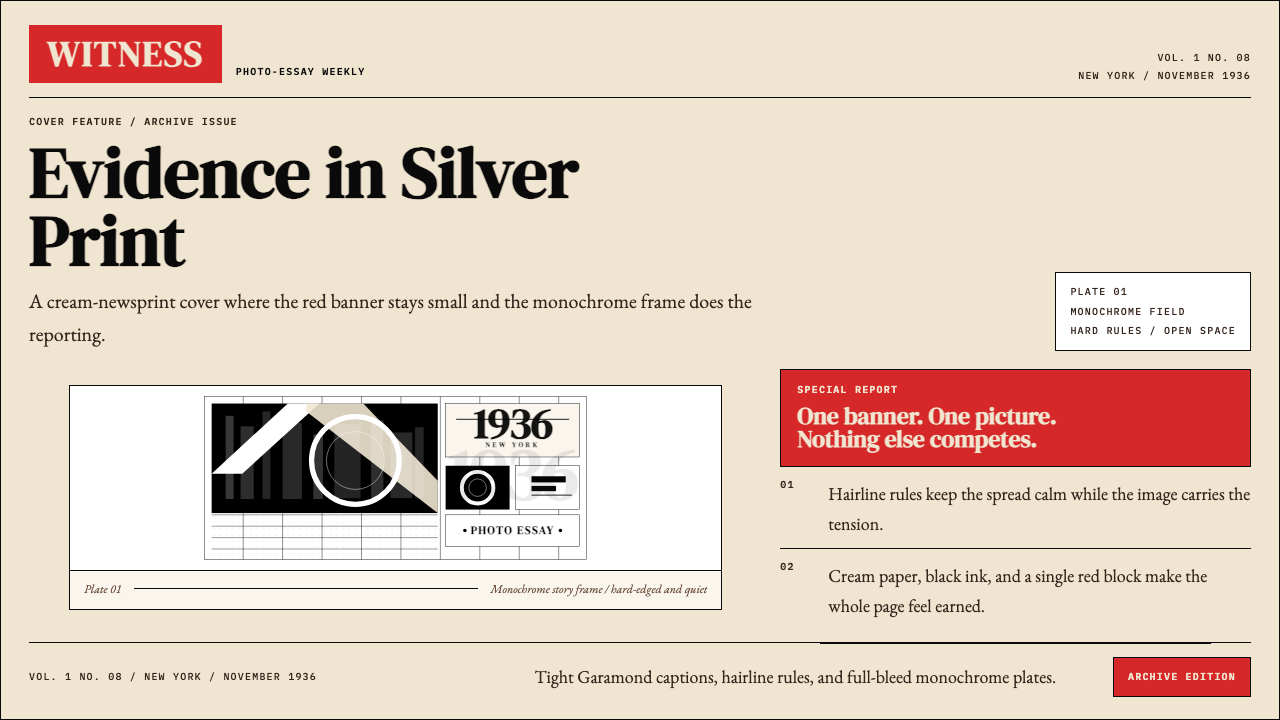 LIFE Magazine (Red-Banner)Photojournalism stripped bare. One red banner, cream newsprint, stark black p…
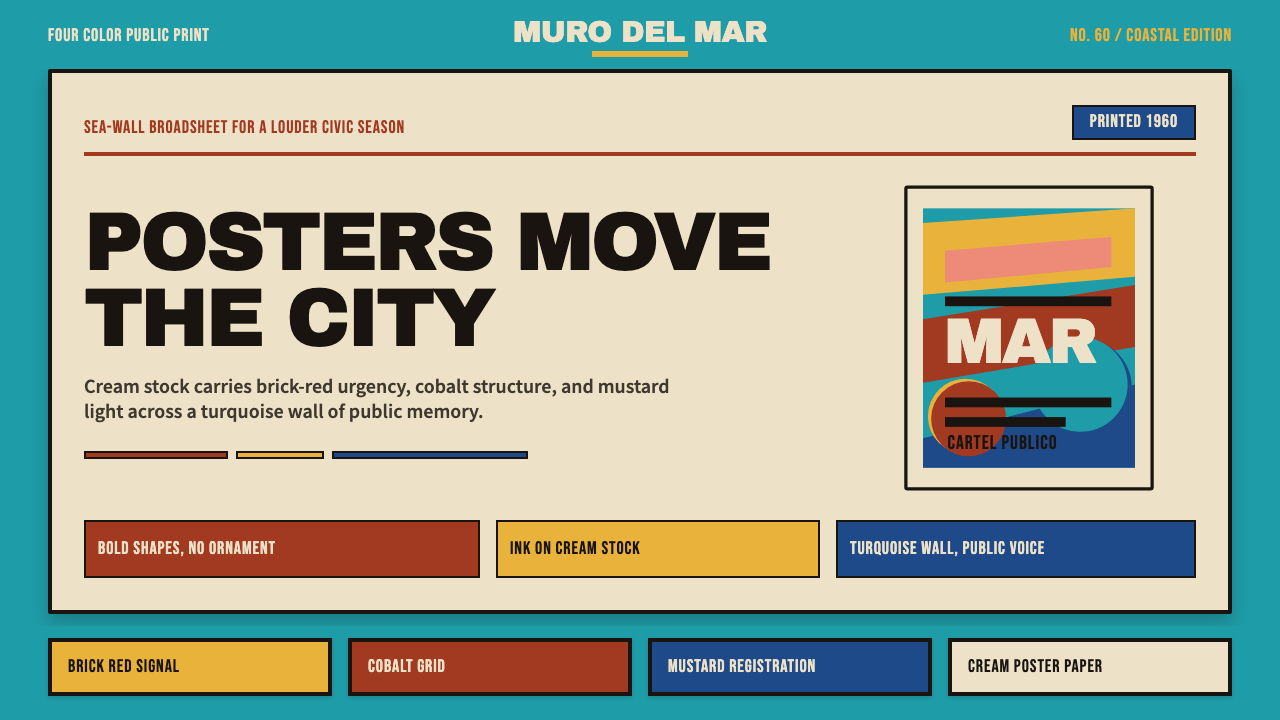 Cuban Malecón 1960 PosterPublic voice in flat ink. Turquoise wall, cream stock, brick red and cobalt b…
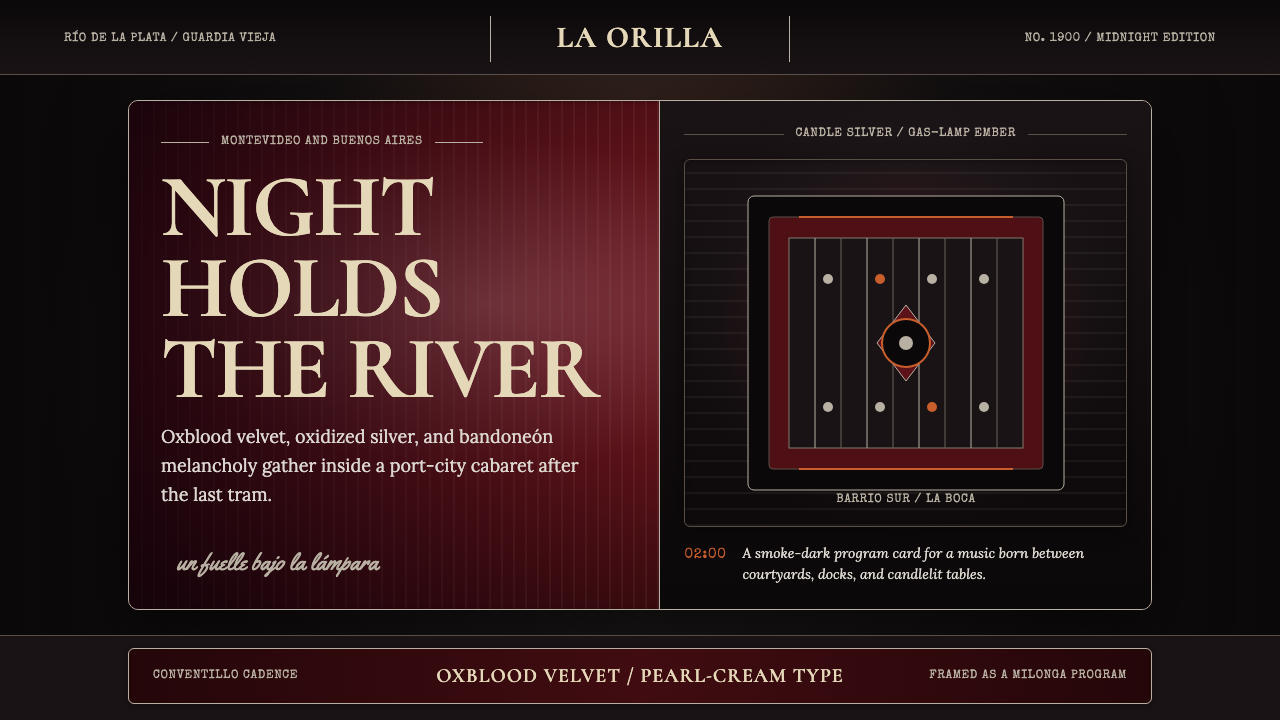 Uruguayan Tango Rioplatense 1900Cabaret melancholy. Oxblood velvet, candle silver, and framed type hold the d…
 Paris MatchThe cover shouts in one red slab. Cream paper, serif headlines, and black rul…
 Parisian Zazou (1942)Defiance swings in the dark. Ink black, record-sleeve red, and battered typew…