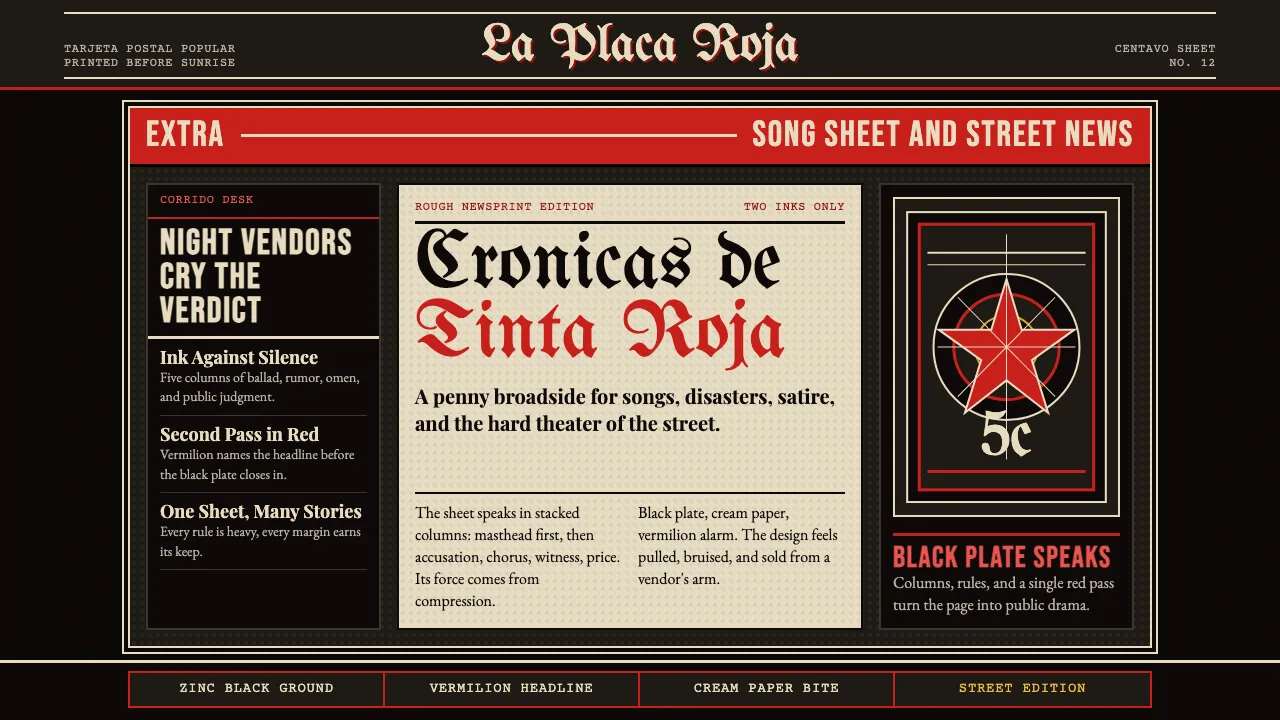
About Mexican Tarjeta Postal (Posada Engraving 1900)
José Guadalupe Posada cut more than 20,000 zinc-plate engravings for Antonio Vanegas Arroyo's penny broadsides between 1888 and 1913 — calavera satires, corrido ballads, news disasters, and revolutionary scenes sold on Mexico City streets for centavos. His Catrina skeleton and tabloid mastheads became the visual grammar of Mexican graphic identity.
This system channels the two-color penny-press aesthetic: zinc-engraving black ground, rough newsprint cream, vermilion blood-red headlines, heavy Fraktur mastheads, and the dense column-stack composition of a broadside vendor's stack. Every surface feels letterpressed, inked, and pulled from a zinc plate.
Learn more about the Mexican Tarjeta Postal (Posada Engraving 1900) style
- Origin
- Mexico City, Mexico — Vanegas Arroyo press at Calle Santa Teresa; Aguascalientes
- Era
- 1888–1913 (Posada's Mexico City working career); 1920s–30s Rivera/Méndez revival; TGP 1937
- Key figures
- José Guadalupe Posada · Antonio Vanegas Arroyo · Manuel Manilla · Leopoldo Méndez
- Movements
- Mexican penny-press graphic tradition · post-revolutionary Posada revival · Taller de Gráfica Popular
Mexican Tarjeta Postal (Posada Engraving 1900) design spec
Colors
Typography
The other 11 sections — buttons, cards, spacing, motion, techniques and more — open once you unlock. Download the DESIGN.md or send it to your AI in one click. Unlock once, yours forever.
Sign up nowStyles similar to Mexican Tarjeta Postal (Posada Engraving 1900)
Also inspired by art & artists, with a close feel.
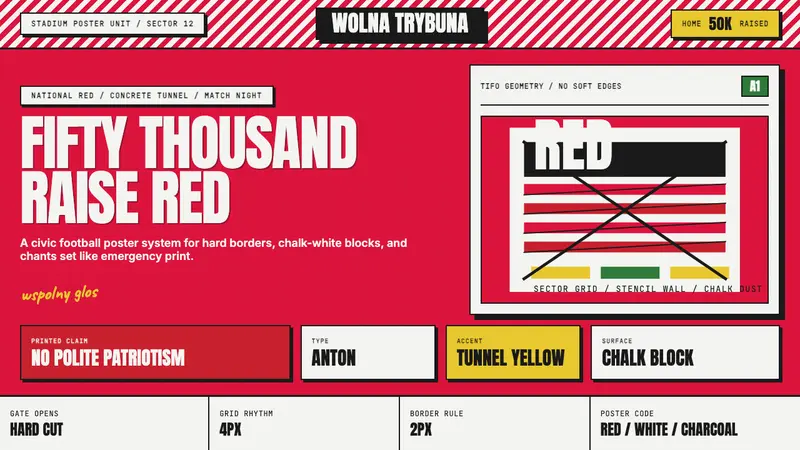 Polish Solidarity Stadium GraphicDefiance fills the stands. Stadium red, Anton stencil type, and chalk-white blocks.
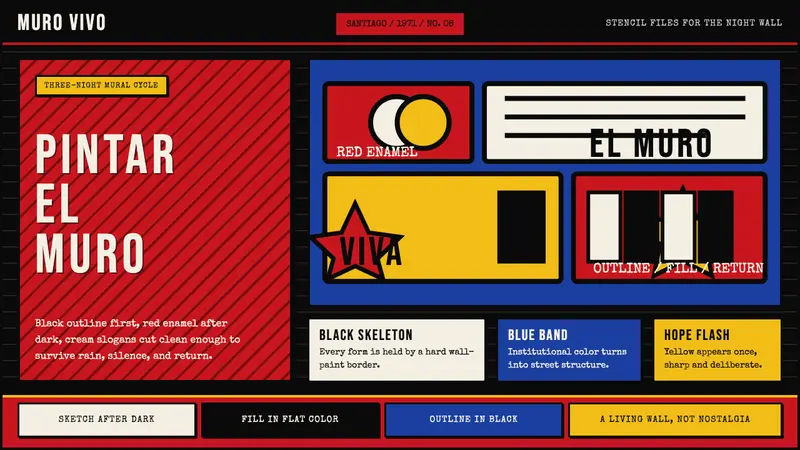 Chilean BRP Ramona Parra 1971Resistance stays alive. Blood red panels, black outlines, and stencil type rebuild the wall.
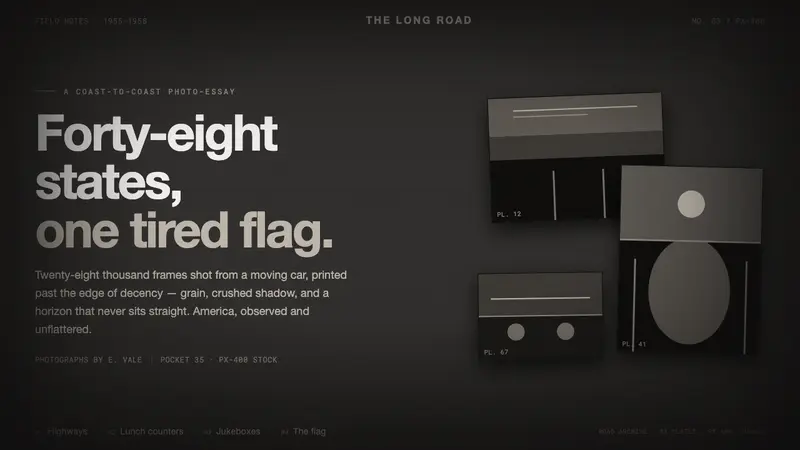 Robert Frank — The AmericansReportage, polish stripped off. Warm sooty charcoal, crushed near-black shadow, grain, tilted frame.
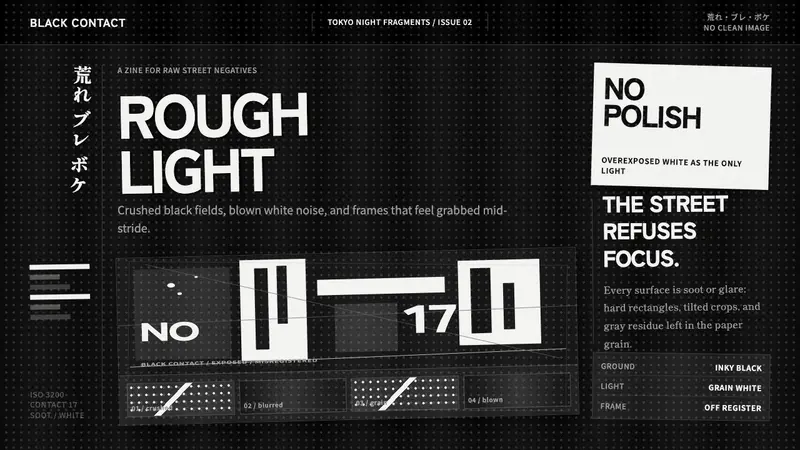 Daido Moriyama Are-Bure-BokeNothing is clean. Inky black, blown white grain, and tilted frames make the image restless.