What is Mary Kay Pink Cadillac (1963)?
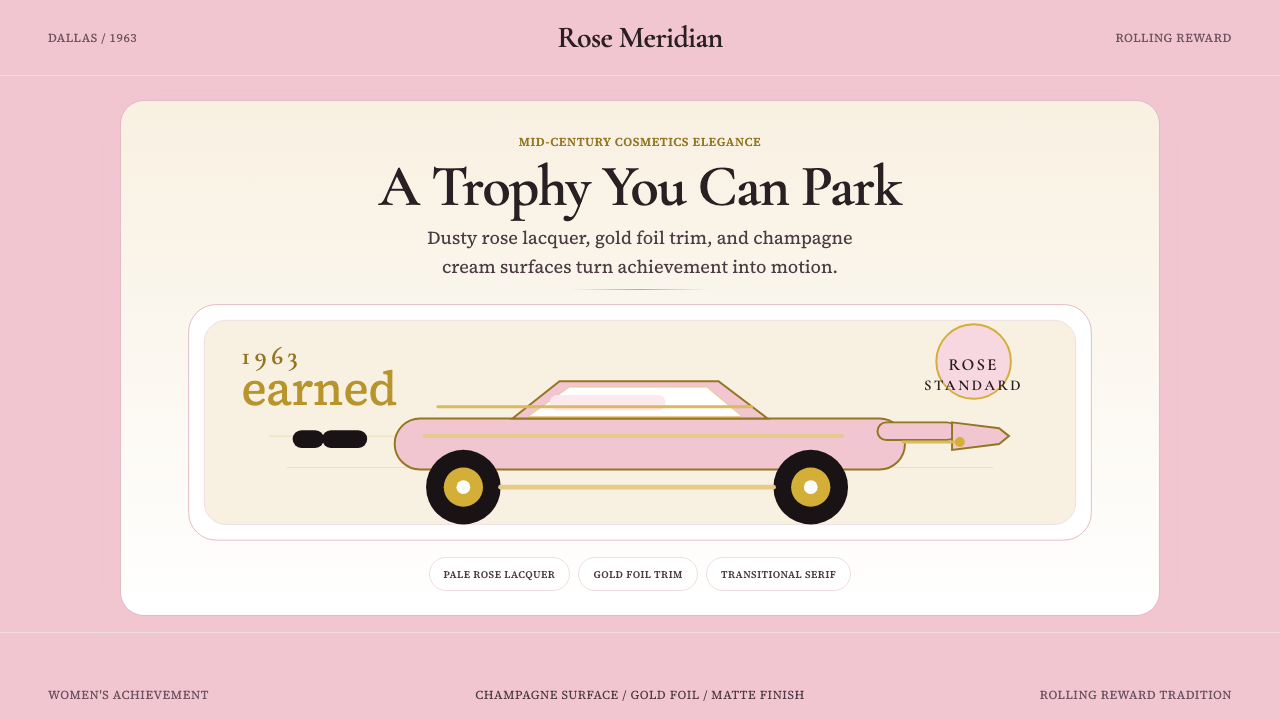
A pale dusty rose painted onto a rolling trophy in 1968 became one of the most recognized corporate colors in American business history — proof that a single shade can carry the weight of earned achievement.
Mary Kay Pink Cadillac (1963) in brief
Mary Kay Pink Cadillac is a design language built around a single act of recognition: rewarding women who had earned their success. The visual system that grew from this act — a specific pale, dusty rose paired with champagne cream, warm gold ornament, and transitional serif letterforms — translates the emotional weight of achievement into tangible form. It is glamour made legible, aspiration made visible.
The palette reads as feminine without drifting into the saccharine. The rose is muted rather than vivid, carrying a sense of maturity and sophistication that separates it from confectionery pinks. Champagne cream grounds the composition and prevents the rose from reading as naïve. Gold foil and gilt ornament elevate the register toward the celebratory — the language of award certificates, cosmetics counters, and the inside of a luxury automobile.
The typographic character of the system leans on transitional serifs: letterforms with moderate contrast between thick and thin strokes, slightly bracketed serifs, and an upright stance that projects authority while retaining elegance. This is not a casual style and not a corporate-minimalist one — it occupies the specific register of mid-century American prestige, where beauty and achievement were understood as mutually reinforcing values.

Where does Mary Kay Pink Cadillac (1963) come from?
Mary Kay Ash founded Mary Kay Inc. in Dallas, Texas, in 1963 with a five-thousand-dollar investment and the explicit goal of creating a company that would give women unlimited opportunity. She was forty-five years old, had spent two decades watching male colleagues promoted over her despite superior performance, and had arrived at the conviction that the direct-sales model — where compensation was tied directly to results, not to seniority or internal politics — was the mechanism that could make equal opportunity real rather than theoretical.
The pink Cadillac program was inaugurated in 1969, the year after Mary Kay Ash received her first company car: a pink Cadillac Coupe de Ville whose color she had personally chosen from a General Motors paint chart by matching a compact she used. That first car was not a planned marketing initiative but a personal expression — a woman who had spent her career being told to be less visible choosing the most visible automobile in the most visible color she could find. When it became the symbol of the company's achievement culture, it was retroactively understood as inspired branding, but it began as a statement of presence.
The specific shade — a dusty, pale rose rather than a vivid bubblegum pink — was a deliberate choice that carried meaning. Pale rose in the mid-twentieth-century American cosmetics register was the color of refinement: powder compacts, evening sachets, the lining of jewelry boxes. It was aspirational without being aggressive, feminine without being girlish. When paired with the specific prestige of the Cadillac nameplate — the definitive symbol of American automotive luxury from the 1950s onward — the combination communicated exactly what Mary Kay Ash intended: this was a reward for women who had worked and won.
The design language that accumulated around the car and the brand drew on the visual vocabulary of mid-century American cosmetics packaging. Gold foil was the material of prestige at the cosmetics counter — on perfume boxes, on compact cases, on the caps of lipstick tubes. Transitional serifs were the letterforms of authority: pharmaceutical brands, department stores, and the certificates that hung on the walls of professional offices. Champagne cream, rather than stark white, softened the palette toward warmth and luxury. Together, these elements formed a coherent system that was recognizable as an idiom before it was ever formally codified — a design language assembled from objects and surfaces that American women of the mid-century already associated with achievement and care.
What defines the Mary Kay Pink Cadillac (1963) look?
Signature Rose
The central color of the system is a pale, dusty rose — muted rather than vivid, with enough grey in it to feel sophisticated rather than sweet. It reads differently from confectionery pinks and bubblegum tones; closer to the rose of a vintage powder compact or the blush of satin evening wear. Used as a dominant field color, it commands attention without aggression. Used as an accent on a cream ground, it becomes refined and ceremonial.
Champagne Cream Ground
White is absent from the canonical palette; champagne cream takes its place. The distinction matters: cream is warmer, softer, and carries associations with luxury materials — ivory, parchment, the pages of a well-made book. Against a cream ground, the rose and gold elements read as coordinated and intentional rather than placed on a neutral field. Cream also functions as a foil to the gold ornament, giving metallic elements something warm to reflect.
Gold and Gilt Ornament
Metallic gold is the system's elevation mechanism — the element that lifts the palette from pleasant to prestigious. It appears as foil on packaging, as gilded rules and dividers, as the color of award typography, and as the accent on serif letterforms. The gold used is warm rather than cold — closer to aged gilt than to polished chrome — which keeps it compatible with the cream ground and the rose. Ornamental flourishes, small floral motifs, and fine-line borders all appear in this gold register.
Transitional Serif Typography
The typographic register is formal and authoritative: transitional serif letterforms with moderate thick-to-thin stroke contrast, slightly bracketed serifs, and upright posture. This places the style in the tradition of cosmetics-counter prestige, department-store signage, and the award certificates that mid-century American professionals recognized as markers of legitimate achievement. Italic cuts are used sparingly for names and quotes, adding warmth without sacrificing formality.
Cosmetics-Counter Ornament
Where Bauhaus would leave an edge bare, the Mary Kay Pink Cadillac system adds a fine line, a small floral motif, or a gilt rule. Ornament is restrained rather than exuberant — it signals category (prestige cosmetics, luxury awards) rather than functioning as decoration for its own sake. Borders are thin and precise. Dividers are hairlines in gold. Floral motifs, when present, are simplified and symmetrical. The cumulative effect is ceremonial rather than baroque.
Warm Metallic Surfaces
The style favors surfaces that evoke luxury materials without literally reproducing them: the warmth of brushed gold rather than mirror chrome, the softness of satin rather than the hardness of lacquer. In two-dimensional applications, this translates to a preference for warm gradients within gold elements (where gradients are used, they are subtle and warm rather than cool or high-contrast) and a general avoidance of anything that reads as industrial or synthetic.
Achievement as Visual Language
The underlying communicative logic of the system is aspirational recognition. Every element is chosen to communicate that something has been earned and is worth celebrating: the gold signals value, the cream signals refinement, the rose signals distinction, the serif signals authority. This is not a style that flatters the viewer into purchasing — it is a style that honors the viewer for having already performed. That distinction gives the aesthetic its particular gravity and separates it from generic luxury branding.

Who shaped Mary Kay Pink Cadillac (1963)?
Mary Kay Ash (1918–2001) founded Mary Kay Inc. in Dallas in 1963 after a twenty-five-year career in direct sales, during which she had repeatedly been passed over for promotion in favor of male colleagues she had trained. Her founding vision — a company structured to reward women's work with direct, visible, and publicly celebrated recognition — produced one of the most distinctive corporate visual cultures in American business history. She personally selected the pink for the first company Cadillac by matching a shade from a General Motors paint chart to her powder compact, establishing the brand's central color not through a design committee but through a private act of personal expression.
Mel Ash, Mary Kay Ash's husband and business partner in the early years of the company, provided essential financial and operational support during the founding period. He died of a heart attack just one month after the company's launch in 1963, leaving Mary Kay Ash to build the enterprise alone. His early involvement is a reminder that the company's origins were collaborative even as its public identity became inseparable from a single founder's vision and personality.
Richard Rogers, Mary Kay Ash's son, served as the company's first president and was instrumental in structuring the business systems that allowed the direct-sales model to scale. His operational contributions provided the infrastructure within which his mother's vision of recognition and reward could function at the scale of tens of thousands of Beauty Consultants. The company's ability to sustain and systematize the pink Cadillac program as a genuine achievement symbol, rather than allowing it to dilute into a marketing gimmick, depended partly on the organizational discipline he helped establish.
The Cadillac Coupe de Ville and its successors were designed by General Motors' storied styling department, whose mid-century language of tailfins, chrome ornament, and sweeping body lines became the visual vocabulary of American automotive aspiration. By adopting the Cadillac specifically — and a custom pale rose version of it — Mary Kay Ash was entering a dialogue with a design language that already carried immense cultural freight in postwar America. The choice was not incidental; the Cadillac's visual authority was borrowed and redirected toward a new form of publicly recognized achievement.
The collective design culture of mid-twentieth-century American cosmetics — Estée Lauder's gold and white, Elizabeth Arden's pink and gold, Max Factor's theatrical glamour — formed the visual context within which the Mary Kay aesthetic was read and understood. These companies had established an idiom in which pale rose, warm gold, and refined serif typography signified legitimate prestige in the beauty industry. Mary Kay Ash drew on this shared vocabulary and extended it from the retail cosmetics counter to the achievement award, finding the precise register where the two contexts — beauty and business success — could be held together credibly.
How do you use Mary Kay Pink Cadillac (1963) today?
The Mary Kay Pink Cadillac design language is most powerful when it is understood as a system of recognition rather than decoration. Its rose, cream, and gold palette was constructed to communicate that something has been earned and deserves public celebration. The most effective applications channel this logic directly: they use the style to honor an audience, not merely to appeal to one. When the communicative purpose aligns with the aesthetic's built-in grammar of achievement, the result feels authoritative and emotionally resonant rather than merely pretty.
For presentation slides, the system works best when the visual hierarchy reinforces a sense of occasion. Cover slides benefit from a strong centered or symmetrically weighted composition — the rose as the dominant field color, the title in gilt or cream serif type, a fine gold border framing the content. This is a deliberate departure from the asymmetric boldness of Bauhaus-influenced approaches; the Mary Kay system is comfortable with symmetry because symmetry carries ceremonial weight. Content slides should keep the cream ground and use gold rules or hairline borders as section dividers rather than plain lines. Data visualizations — charts, graphs, comparison tables — benefit from a restrained palette within the slide, allowing the rose and gold to punctuate key figures rather than saturating the entire composition.
For web and digital UI, the style is best suited to contexts where prestige, recognition, and achievement are the primary emotional registers: awards platforms, membership tiers, beauty brand e-commerce, loyalty program dashboards, and certification or recognition pages. The cream-and-rose palette works well as a light-mode foundation; gold can be applied to interactive highlights, premium tier labels, and achievement badges. Navigation and body text should stay in dark warm tones rather than pure black, which can feel too austere against the warmth of the cream ground. Card components look best with subtle warm shadows and fine border lines rather than the hard-shadow treatment appropriate to more geometric styles.
For editorial and marketing materials — printed certificates, event programs, packaging inserts, email campaigns celebrating milestones — the system is in its most native territory. A certificate or recognition document done in this language should use a cream stock (or cream-tinted digital ground), serif type for names and titles, a fine gold border, and the rose as a controlled accent on seals, ribbons, or initial capitals. Marketing pages celebrating product launches or achievement milestones can use the rose as a full-bleed background for hero sections, with cream and gold typography. Printed collateral — inserts, brochures, thank-you cards — benefits from the warmth of the full palette at close reading distance, where the subtle muting of the rose and the warmth of the cream become tactile associations with quality.
A common mistake is treating the rose as interchangeable with any other pink. The specific quality of the color — its dusty, muted, slightly greyed character — is what separates it from candy pinks and hot pinks and gives it the sophistication the system depends on. Saturating or brightening the rose toward a more vivid or youthful tone collapses the visual register from prestige to playful and undermines the aesthetic's authority. Similarly, substituting cool white for champagne cream, or using a cold-toned gold rather than a warm gilt, quietly shifts the system's emotional temperature in ways that erode its essential character. The palette should always read warm, mature, and earned.

Mary Kay Pink Cadillac (1963) — FAQ
Is this style only appropriate for beauty or women-focused brands?
Not necessarily, though that is its most natural register. The underlying grammar of the style — pale rose, champagne cream, warm gold, refined serif — communicates achievement, prestige, and care. These values can be relevant in any context where recognition and earned status are being communicated: professional awards, membership programs, luxury service brands, celebratory publishing, and heritage institutions. The style reads as feminine in the mid-century American sense, which means some product contexts will find it tonally misaligned. But applied to the right communicative purpose, it can work well beyond its origin category.
How does this style differ from generic luxury or premium design?
Generic luxury design typically pursues neutrality — quiet palettes, minimal typography, and an absence of specificity that allows the brand to feel universally aspirational. The Mary Kay Pink Cadillac system is the opposite: it is highly specific in its color temperature, its ornamental grammar, and its historical associations. That specificity is its strength when the context aligns, but it also makes the style recognizable as a particular idiom rather than a neutral luxury signal. It communicates achievement culture, mid-century American femininity, and cosmetics-counter prestige — and it does so explicitly rather than abstractly.
Can this style work in dark-mode or dark-background layouts?
A dark inversion is possible but requires significant recalibration. On a deep background — a rich burgundy or a very dark warm neutral — the rose can shift to function as a highlight element rather than a field color, and the gold becomes more visually dominant. Cream type replaces dark type. The ornamental elements that read as refined on a light ground can read as theatrical on a dark one, so restraint becomes even more important. The core risk in a dark version is that the palette drifts toward the look of a nightclub or a Las Vegas venue rather than a cosmetics counter; keeping the gold warm and the ornament sparse prevents this.
How should photography be treated within this design system?
Photography in the Mary Kay Pink Cadillac system should feel warm, luminous, and aspirational rather than documentary or editorial-cool. Skin tones are central — portraits that emphasize warmth and confidence align with the system's communicative purpose. Color treatment should warm the image slightly, pulling toward peachy and rose tones and away from cool blues or high-contrast desaturation. Product photography benefits from cream or soft-focus backgrounds that allow the rose and gold packaging to read clearly. Hard-cropped, diagrammatic photography typical of geometric styles is tonally incorrect here; soft focus, warm light, and compositional breathing room are more appropriate.
What is the most common way designers misapply this style?
The most common failure is brightening or intensifying the rose toward a more vivid pink, which collapses the system's sophistication. The dusty, greyed quality of the canonical rose is doing structural work — it holds the palette in the register of maturity and earned achievement rather than playfulness or youth. A second common mistake is over-ornamenting: adding flourishes, borders, and decorative elements so liberally that the composition becomes cluttered and the ceremony becomes noise. The ornament in this system should be sparse enough that each element reads clearly. A third mistake is applying the style to contexts where recognition and achievement are not the actual communicative purpose — using it as generic 'feminine luxury' rather than as a language specifically built around the act of honoring someone who has earned something.
Related design styles
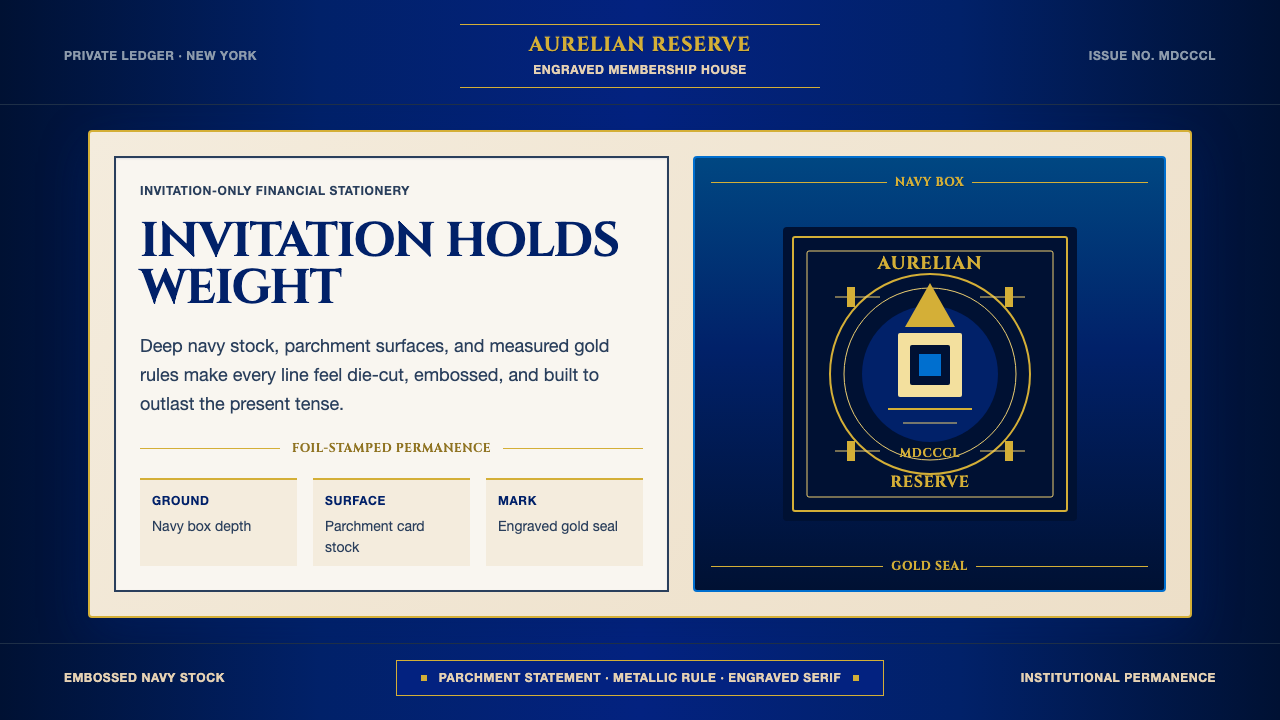 American Express CenturionInstitutional luxury. Deep navy, parchment panels, and gold rules feel engrav…
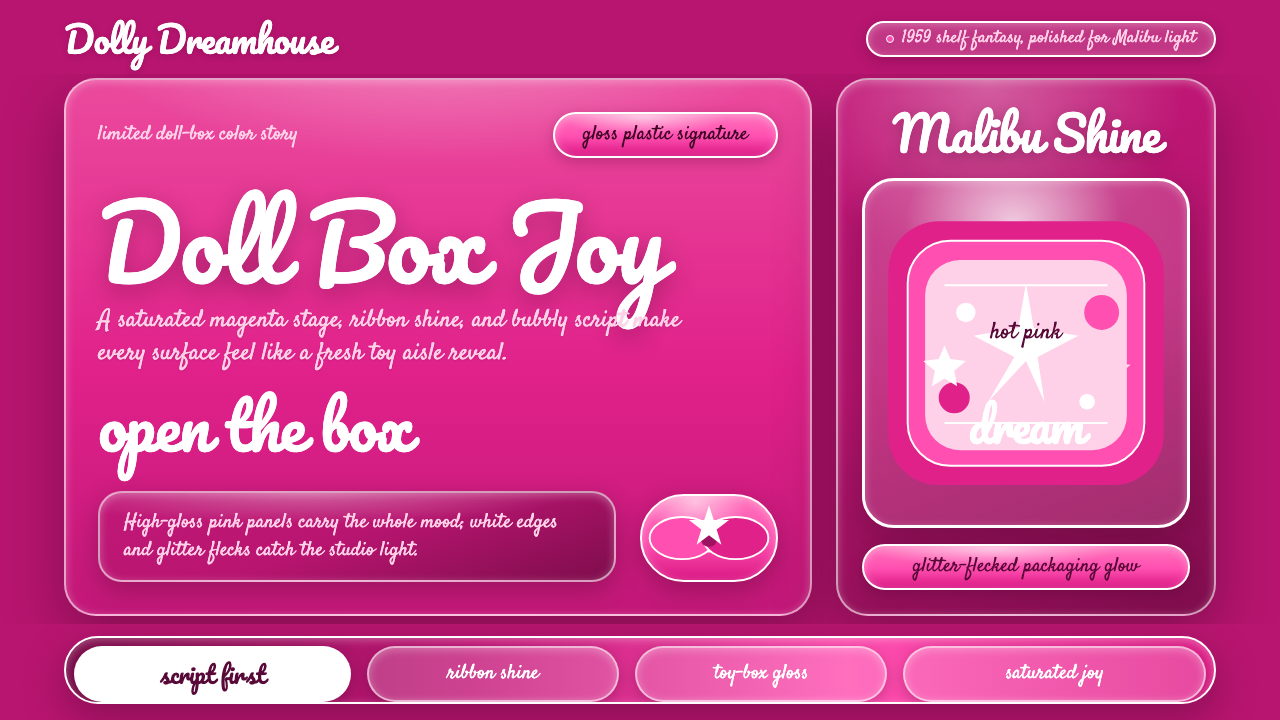 Barbie Hot Pink (Pantone 219)Saturated joy in plastic. Hot magenta, cursive script, gloss streaks, and gli…
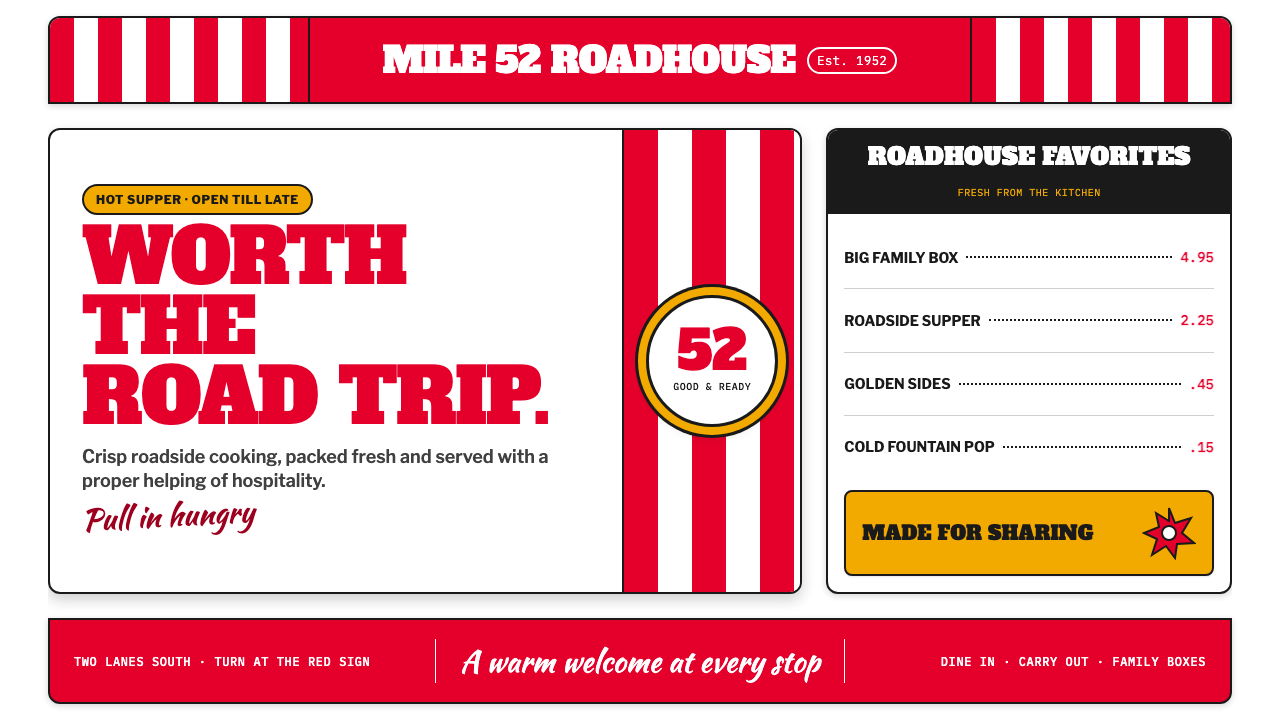 KFC Colonel (1952)Roadside appetite, turned up loud. Enamel red stripes and slab-serif shouts f…
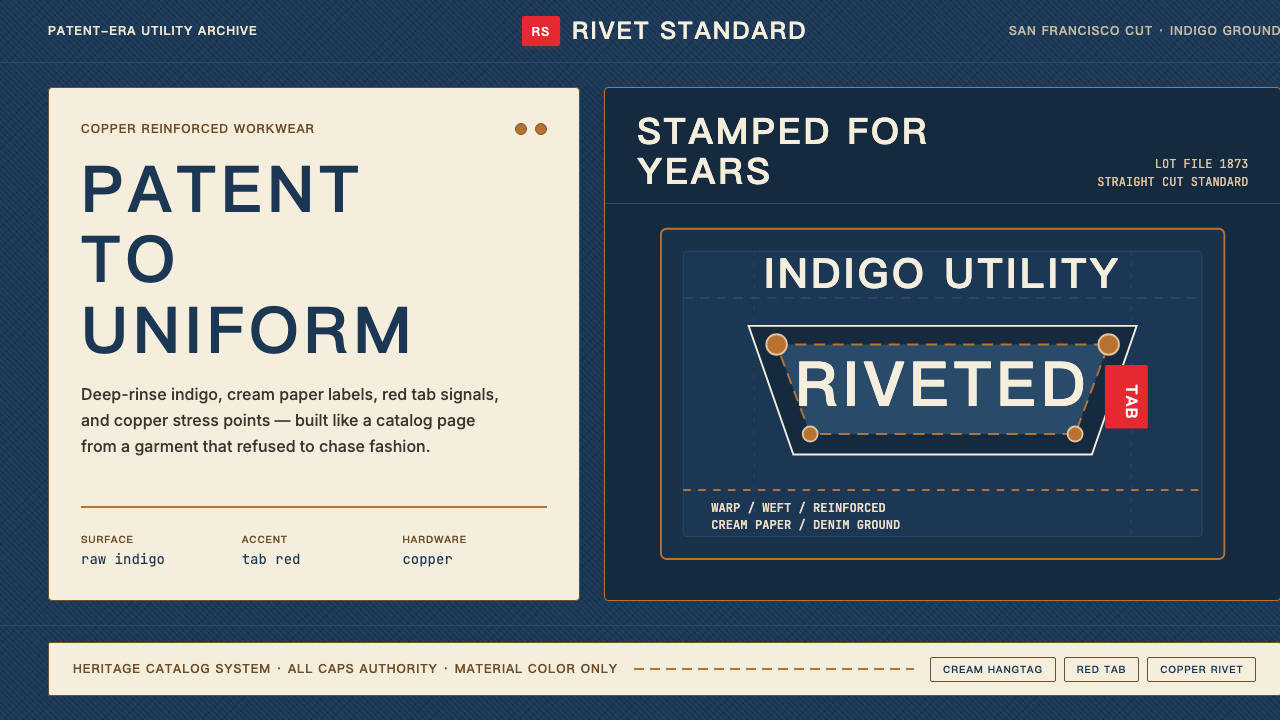 Levi's 501Utility becomes permanent. Indigo ground, cream hangtag panels, red tab and c…
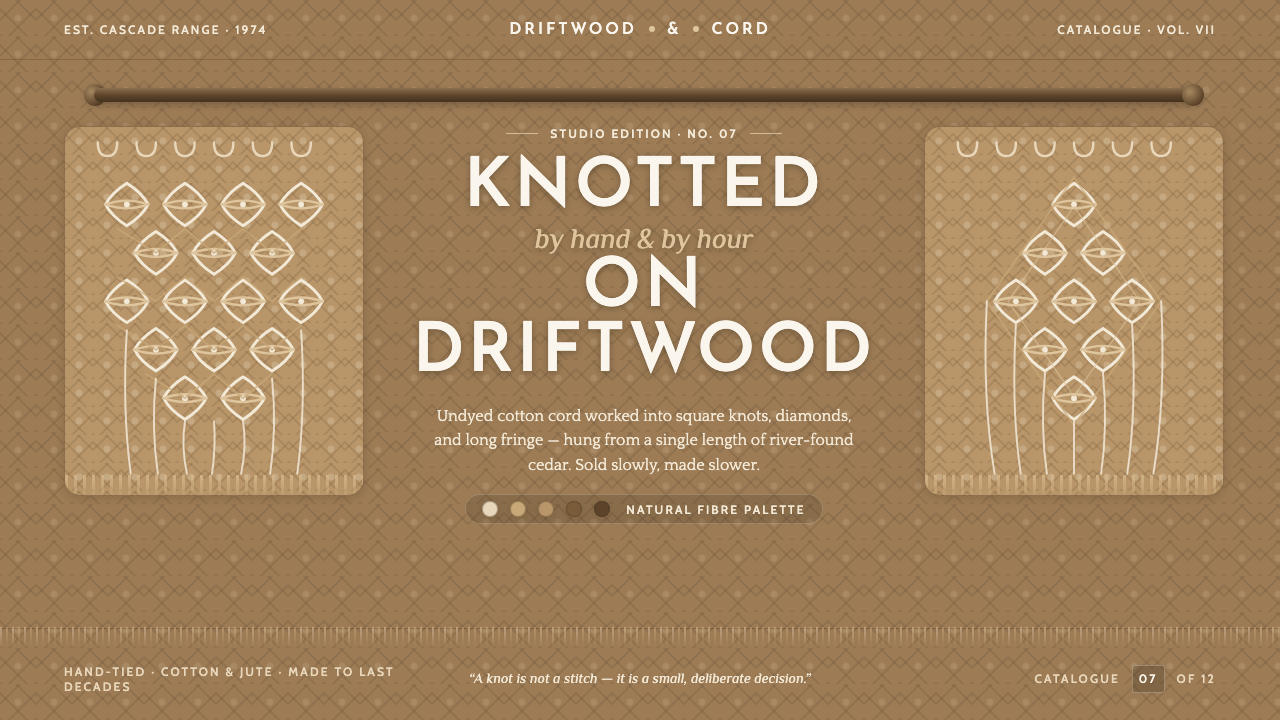 Macramé Fiber ArtSlow craft, hand to fiber. Undyed ecru cotton on raw-jute walnut, square knot…
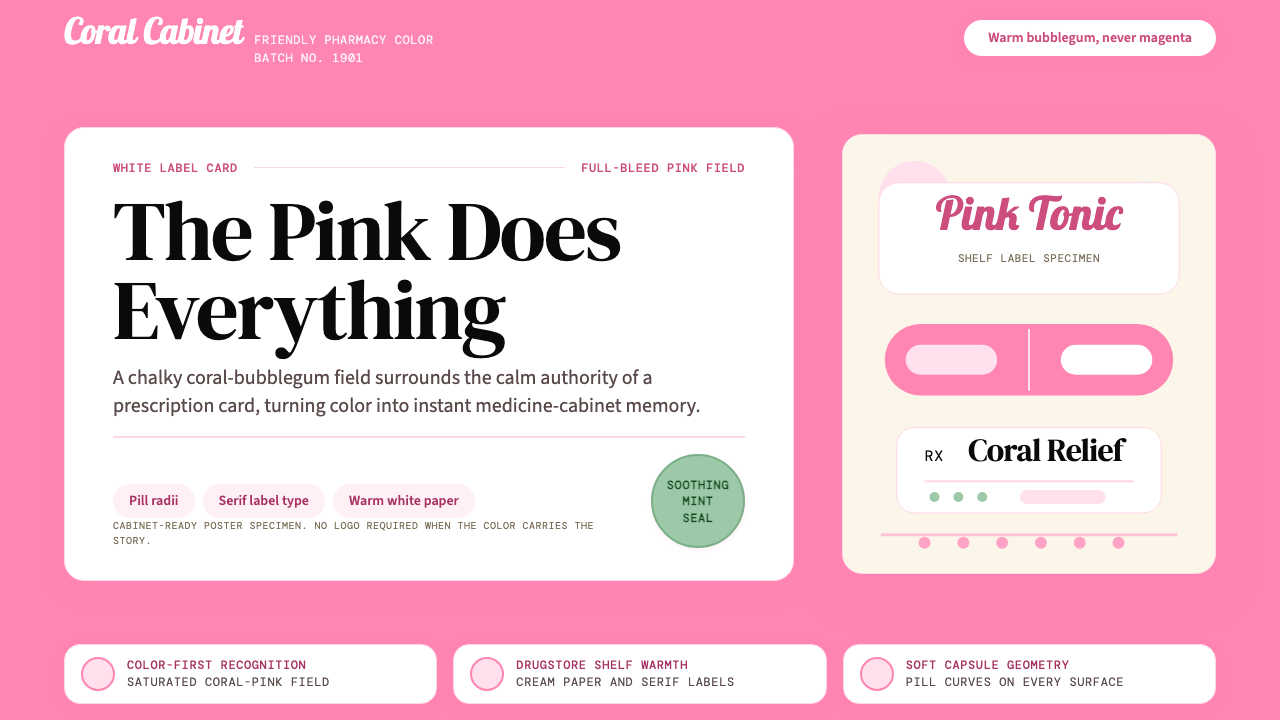 Pepto-Bismol Pink (1901)Color is the cure. Bubblegum pink floods the field; white label cards and pil…