What is Mall Fountain Vaporwave?
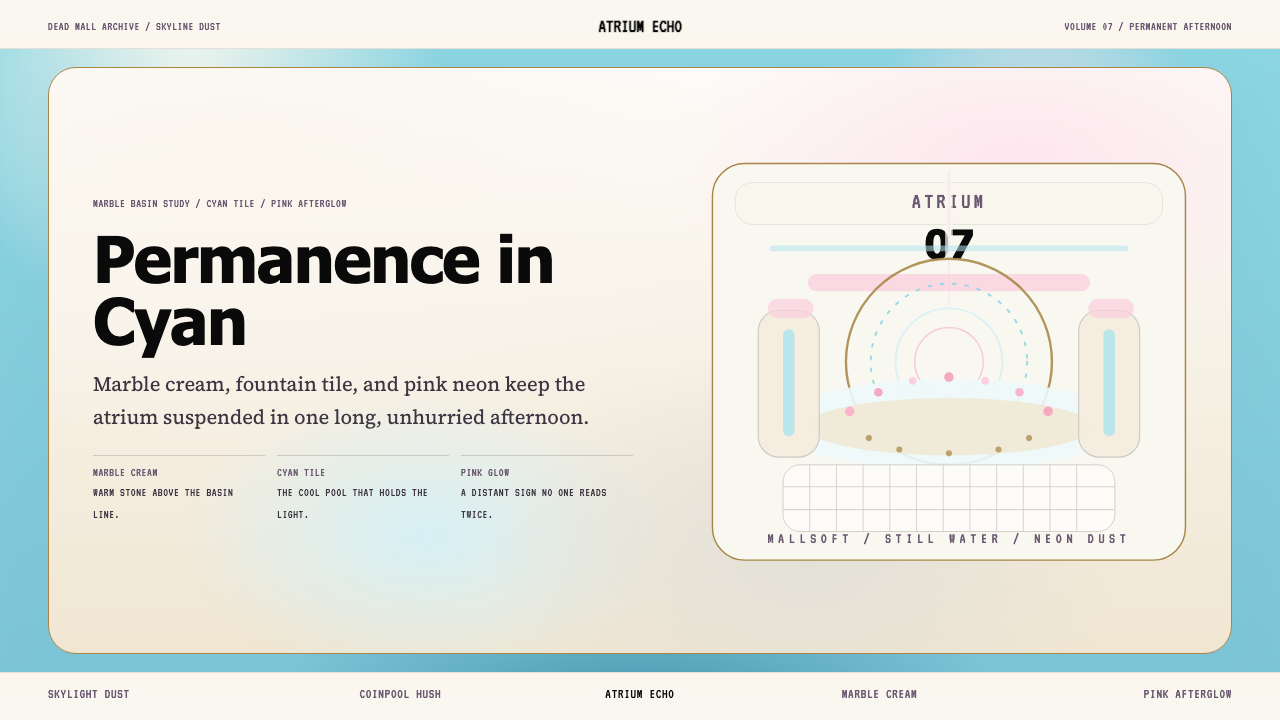
The dead mall's fountain still runs — cyan tile, marble cream, and a pink neon glow nobody reads anymore, suspended in permanent, beautiful stillness.
Mall Fountain Vaporwave in brief
Mall Fountain Vaporwave is a design aesthetic rooted in the visual memory of the enclosed American shopping mall at its zenith and its long, melancholy decline. It draws from the specific palette of the atrium fountain — muted cyan tile, warm marble veining, diffuse skylight white, and the distant blush of a perfume-counter neon sign — and merges it with the dreamy, time-collapsed sensibility of vaporwave music culture.
Where classic vaporwave leans into digital glitch, bright magenta, and Greco-Roman statuary, Mall Fountain Vaporwave is quieter and more architectural. The mood is closer to standing alone in a two-story atrium at eleven on a Tuesday morning: escalators descending to shuttered anchor stores, pennies glinting on a tile basin floor, the ambient hum of recirculating water as the only sound. Everything is slightly faded, slightly dusty, slightly too still.
The visual system that derives from this mood refuses saturated color and sharp contrast. Tones are soft, almost pastel, but not cheerful — they are the pastels of something that has been in fluorescent light too long. Typography mixes the utilitarian legibility of a mall directory with the warmer curves of a 1980s retail brochure. Geometry follows the fountain basin: curved, never angular, never confrontational. The overall effect is a designed melancholy — beautiful because it remembers something, and sad because that something is gone.

Where does Mall Fountain Vaporwave come from?
The enclosed regional shopping mall was invented in its modern form by Austrian-American architect Victor Gruen, whose Southdale Center in Edina, Minnesota (1956) introduced the climate-controlled, inward-facing atrium model that would define American suburban retail for the next four decades. Gruen's original vision was utopian — the mall as a democratic public square, a European piazza transplanted into the American suburb — but what actually emerged was a commercial machine tuned for maximum consumption. The atrium fountain, a fixture of nearly every large regional mall built between the 1960s and 1990s, became the physical and symbolic heart of that machine: decorative, non-functional, permanently running, a reason to linger.
The peak of the enclosed mall — roughly 1975 to 1990 — produced a specific visual culture: the particular cyan of ceramic tile, the warm grain of faux-marble floor, the diffuse glow of skylights supplemented by recessed fluorescent banks, the italic scripts of department store logos in warm gold or coral. These were not designed as an aesthetic system; they were practical choices constrained by 1970s and 1980s material availability and retail convention. But together they constituted a total sensory environment that millions of Americans experienced as the default backdrop of childhood and adolescence.
The decline began in the 1990s with the rise of big-box retail, e-commerce, and demographic shifts away from suburban cores. By the 2000s, dead malls — emptied anchor stores, shuttered kiosks, fountains still running in empty atriums — had become a subject of documentary fascination. Photographers like Seph Lawless and Brian Ulrich produced haunting records of these liminal spaces: interiors where time appeared to have stopped, where the commercial infrastructure of optimism persisted long past its context. Their work circulated widely online and intersected with a growing internet subculture attuned to nostalgia, melancholy, and the uncanny beauty of abandoned spaces.
Vaporwave emerged as a music and visual genre around 2010 to 2012, with Macintosh Plus (the project of producer Vektroid) and its 2011 album Floral Shoppe providing a widely cited landmark. The genre sampled and slowed smooth jazz, elevator music, and corporate background audio from the 1980s and early 1990s, wrapping it in imagery of classical statues, glitched television, Japanese consumer electronics, and early internet graphics. The mall fountain became a natural node where vaporwave aesthetics and dead-mall photography converged: both were about the wreckage of a specific optimism, the eerie persistence of consumer infrastructure, and the strange beauty of a world that kept running after its purpose had departed.
What defines the Mall Fountain Vaporwave look?
Color
The palette centers on three anchor tones — a muted, slightly grayed cyan recalling ceramic fountain tile; a warm cream or off-white evoking veined marble and aged skylighting; and a soft, distant pink suggesting neon viewed through dusty air or frosted glass. These three tones are never deployed at full saturation. Every hue is pulled back, as though slightly exposed to decades of diffuse fluorescent light. Accent moments — a brighter aqua, a deeper rose — appear sparingly, functioning like the glint of a coin on a pool floor rather than as dominant color events.
Tone and Mood
Everything in this system is tuned slightly flat and slightly faded, as though photographed through a skylight that has not been cleaned since the early 1990s. Contrast is low to medium — forms read clearly but never snap against their backgrounds. The visual temperature is neither warm nor cool but somewhere between, the way a marble floor holds the ambient temperature of a large interior rather than the heat of direct sunlight. This deliberate flatness is not a lack of craft; it is the primary emotional carrier of the aesthetic.
Typography
The typographic register shifts between two poles that coexisted in the 1980s mall: the clean, slightly condensed sans-serif of wayfinding signage and directory boards, and the warmer, rounder serif or script letterforms of department store branding and promotional materials. Neither is used at extremes. Body text is set with generous tracking to create an airy, unhurried quality. Headline type sits at medium weight — not the bold of an urgent announcement, but the assured weight of a sign that expects to be there for decades. Mixed-case is preferred over all-caps; the mood is ambient, not shouting.
Geometry and Form
Shapes follow the logic of the fountain basin: curved, rounded, never sharply cornered. Dividers are soft arcs rather than hard lines. Card and container edges carry a generous radius. Decorative motifs, where they appear, reference tilework patterns — repeated small tessellations, symmetrical arrangements that suggest a floor or wall surface. There is no aggressive diagonal energy, no constructivist tension. The geometry is patient, as though it has been waiting in place for thirty years.
Light and Atmosphere
Lighting in this system is diffuse and non-directional — the way skylight spreads through an atrium without casting a definitive shadow. Glows are soft, wide, and low-intensity: a pale aqua bloom around a fountain element, a faint warm halo above a heading. Shadows, where they exist, are barely-there — very soft, very low contrast, suggesting depth without committing to a light source. This atmospheric softness is the antithesis of the hard shadow used in bolder contemporary styles; it keeps everything suspended in the same ambient luminosity.
Texture and Surface
Unlike strict flat-design systems, Mall Fountain Vaporwave permits — even invites — subtle surface texture. A faint grain suggesting a slightly dusty photograph, a very light noise layer that softens banding in gradients, a barely visible geometric tile pattern as a background element. These textures are never loud; they operate at the threshold of perception, the way dust on a glass surface is only visible at certain angles. They add tactility and temporal weight without decorating aggressively.
Negative Space
Space is used generously and purposefully. The atrium model — a large open volume surrounded by retail at the periphery — translates into layouts where content occupies a centered channel and wide margins are left to breathe. There is no fear of emptiness; emptiness is part of the mood. A heading floating in a wide cream field, a single fountain-motif icon centered in a section — these are not failures of content planning but deliberate evocations of the specific quiet of a half-empty mall on a slow afternoon.

Who shaped Mall Fountain Vaporwave?
The Austrian-American architect whose 1956 Southdale Center in Minnesota established the enclosed atrium mall as the dominant form of American suburban retail. Gruen intended the mall as a civic space — a pedestrian commons for the car-dependent suburb — but the commercial logic of his clients transformed it into a consumption machine. The atrium fountain was central to his spatial vision: a focal point that gave the interior its identity and invited lingering. Gruen later expressed regret at what his invention had become, but the visual culture he established — the tile, the marble, the diffuse light — persisted for decades and forms the primary aesthetic source material for this design system.
An American photographer whose ongoing series documenting abandoned shopping malls — including the widely circulated images of Ohio's Rolling Acres Mall, Columbus's Cloverleaf Mall, and dozens of others across the Rust Belt and Sun Belt — provided the definitive visual vocabulary of dead-mall aesthetics. Lawless's work captures the specific qualities that Mall Fountain Vaporwave translates into design: the aqua of drained fountain tile, the marble-cream of empty atriums, the ghostly pink of dormant neon, and the uncanny stillness of commercial space without commerce. His images circulated through Tumblr, Reddit, and early social media during the 2010s, seeding the liminal-space aesthetic across internet culture.
The recording project of Portland-based producer Vektroid, whose 2011 album Floral Shoppe is widely regarded as the landmark text of vaporwave as a genre. The cover image — a pink-tinted classical bust against a soft aqua ground — and the music itself, which slows and pitch-shifts 1980s smooth jazz and corporate audio into something dreamlike and slightly wrong, defined the emotional register that Mall Fountain Vaporwave inherits. Vektroid's work demonstrated that nostalgia and critique could occupy the same aesthetic space: the album sounds like a department store PA system heard from the bottom of a swimming pool, which is to say, beautiful and lost.
A Chicago-based photographer whose long-running projects Copia and Dark Stores document American retail spaces in decline — from liquidation sales to full abandonment. Ulrich's work, exhibited at major museums and published in book form, brought the visual language of dead retail to fine art audiences. His images of empty department stores — the particular quality of light through a skylight over silent escalators, the chromatic relationship between terrazzo floors and fluorescent ceiling panels — are art-historical documents of the same visual environment that defines this aesthetic system.
The founder of deadmalls.com, an archive established in 2000 that catalogued struggling and closed shopping malls across the United States with visitor photographs, floor plans, and community memories. The site became an early internet memorial for the enclosed mall form, and its aesthetic — amateur photography under fluorescent light, the particular way a security gate looks pulled halfway down in front of a dark storefront — is part of the visual substrate from which Mall Fountain Vaporwave draws. Middleton's project demonstrated that the dead mall was not merely an economic statistic but a felt loss for communities whose social life had organized around these spaces.
How do you use Mall Fountain Vaporwave today?
Mall Fountain Vaporwave suits contexts where you want to evoke a mood of contemplative nostalgia — a gentle melancholy that is beautiful rather than depressing, atmospheric rather than urgent. It is not a rational, authority-signaling style in the manner of Swiss International Style or Bauhaus; it is an emotional style, and its primary function is to make the viewer feel a specific quality of stillness and wistful recognition. Applying it correctly means understanding that everything should feel slightly faded, slightly unhurried, as though the design itself has been there for a while and is entirely comfortable with that.
For presentation slides, the system handles both atmospheric covers and quieter content pages well. A cover slide benefits from a wide, low-contrast field — a soft cyan-to-cream gradient occupying most of the frame, with a heading set in rounded medium-weight type centered or offset slightly downward, and a single small fountain or tile motif as a decorative anchor. Content slides should use generous margins, readable body text at relaxed tracking, and section dividers rendered as soft arcs or thin curves rather than hard rules. Data slides work well when charts are desaturated to match the palette — bar charts in muted aqua, comparison columns in cream and rose — treating data as ambient information rather than urgent metrics.
For web interfaces and digital products, this aesthetic suits landing pages, brand storytelling pages, editorial features, and membership or subscription pages where contemplative tone is an asset. It is less suited to action-heavy dashboards, real-time data tools, or any context where urgency and precision are primary values. On web, the approach involves wide content channels with substantial breathing room, background fields in cream or very pale aqua, body text in a warm near-black rather than pure black, and interactive states signaled through subtle color shifts — a card brightening slightly on hover — rather than hard contrast changes. Avoid bright calls-to-action that snap against the palette; primary buttons should feel like an invitation, not an instruction.
For editorial and marketing work, the style supports mood-driven campaigns and brand narratives that position a product or service around slowness, quality, and considered experience — spa and wellness brands, curated retail, boutique hospitality, cultural institutions. An editorial spread in this system uses wide margins, pull quotes in soft rounded type, and section photography treated with a slight overlay that pulls warm and desaturated. Marketing pages work best when they alternate between cream-ground and very pale aqua-ground sections, with the heading type staying consistent across both and the only bold moment being a single centered image — a fountain, a tile detail, a marble texture — used as the emotional anchor of the page.
A common mistake when applying Mall Fountain Vaporwave is pushing the palette toward conventional vaporwave — adding bright magenta, increasing contrast, importing digital glitch effects or chrome type. These moves break the specific mood of the system. The correct reference is not a vaporwave playlist cover but the interior of a half-empty Macy's at 10 a.m. in 1988: quiet, slightly overlit, warm in its materials, and almost entirely devoid of urgency. Similarly, using too much pink, or using pink at full saturation, converts the melancholic blush of a distant neon sign into something festive and loses the melancholy entirely. The pink should always feel like something you have to look for.

Mall Fountain Vaporwave — FAQ
How is Mall Fountain Vaporwave different from classic vaporwave?
Classic vaporwave — as typified by the visual language of the Floral Shoppe era — is high-contrast, often neon-saturated, and draws heavily from digital sources: glitched CRT screens, early 3D rendering artifacts, bright magenta and electric purple. Mall Fountain Vaporwave shares the temporal sensibility (a fixation on the cultural aesthetics of the 1980s and early 1990s) and the melancholic mood, but its visual register is quieter, more architectural, and more material. It draws from the physical world of the mall — ceramic, marble, skylight — rather than from the screen culture of the same era. Contrast is lower, color is less saturated, and the mood is contemplative rather than uncanny.
Can this style work for brands that are not nostalgic or lifestyle-oriented?
It is adaptable but requires honest assessment of fit. The style's emotional core — stillness, wistfulness, beautiful melancholy — is an asset for brands whose value proposition includes slowness, contemplation, and quality over efficiency: boutique hospitality, independent publishing, wellness, curated retail, cultural institutions. It is a poor fit for brands where urgency, precision, innovation, and speed are core values — fintech, SaaS dashboards, medical or legal tools. The risk is not merely aesthetic mismatch; it is that the mood of the system will override the message of the brand, making something feel quietly melancholy when it should feel confidently active.
Is the soft gradient approach in this system acceptable when many design systems forbid gradients?
Yes — but the type of gradient matters enormously. The gradients permitted here are extremely subtle tonal shifts between closely related hues, functioning more like the way a material surface reads under diffuse light than like the decorative gradients associated with dated or overdesigned work. A shift from pale aqua to cream across a wide background field is fundamentally different from a bright multi-stop gradient used to make a button appear three-dimensional. The test is whether the gradient draws attention to itself or simply creates an ambient field. In this system, a gradient that anyone notices is probably a gradient that has gone too far.
How should photography or imagery be treated within this system?
Imagery works best when it is treated as atmospheric rather than documentary. A photograph of a marble texture, a close-up of ceramic tile, a long-exposure interior shot of an empty atrium — these integrate naturally because they supply the material qualities the palette references. Portrait or product photography should be treated with a warm, desaturated grade that pulls the image into the palette rather than letting it pop in full color. Avoid high-contrast, sharply lit product shots; they introduce a visual urgency that conflicts with the system's mood. Imagery should feel like something retrieved from a photo archive rather than something shot this morning for a campaign.
What does getting this style wrong typically look like?
The two most common failure modes are oversaturation and under-restraint. Oversaturation happens when the cyan becomes too bright, the pink too bold, the cream too white — the palette loses its dusty, slightly faded quality and starts reading as generic pastel or retro-pop. Under-restraint happens when too many visual events compete for attention: multiple typefaces, multiple accent colors, textures plus gradient plus motif all in the same composition. The style requires a confident subtlety — each element slightly soft, each decision slightly held back. A good test: if the design would feel completely comfortable in a 1987 Nordstrom brochure, it is probably right. If it looks like a vaporwave playlist cover from 2016, it has gone too far.
Related design styles
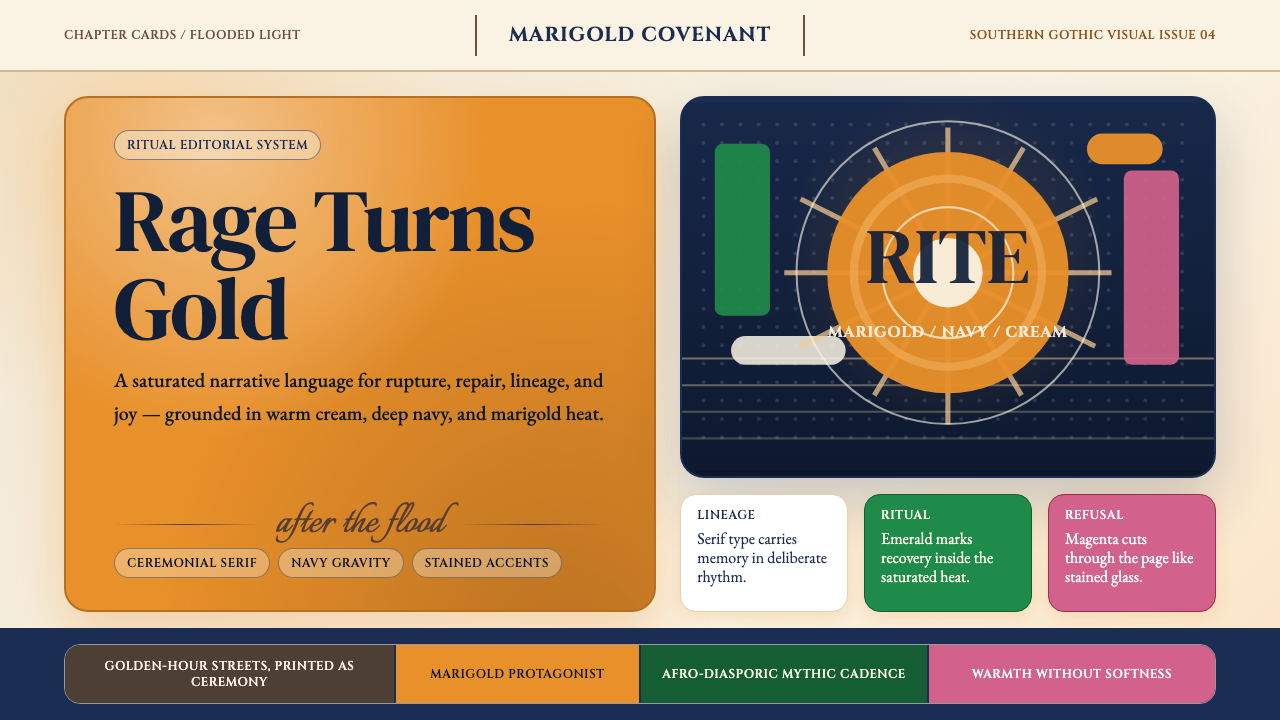 Beyoncé — LemonadeMythic heat refuses restraint. Marigold blocks, navy gravity, serif ceremony.
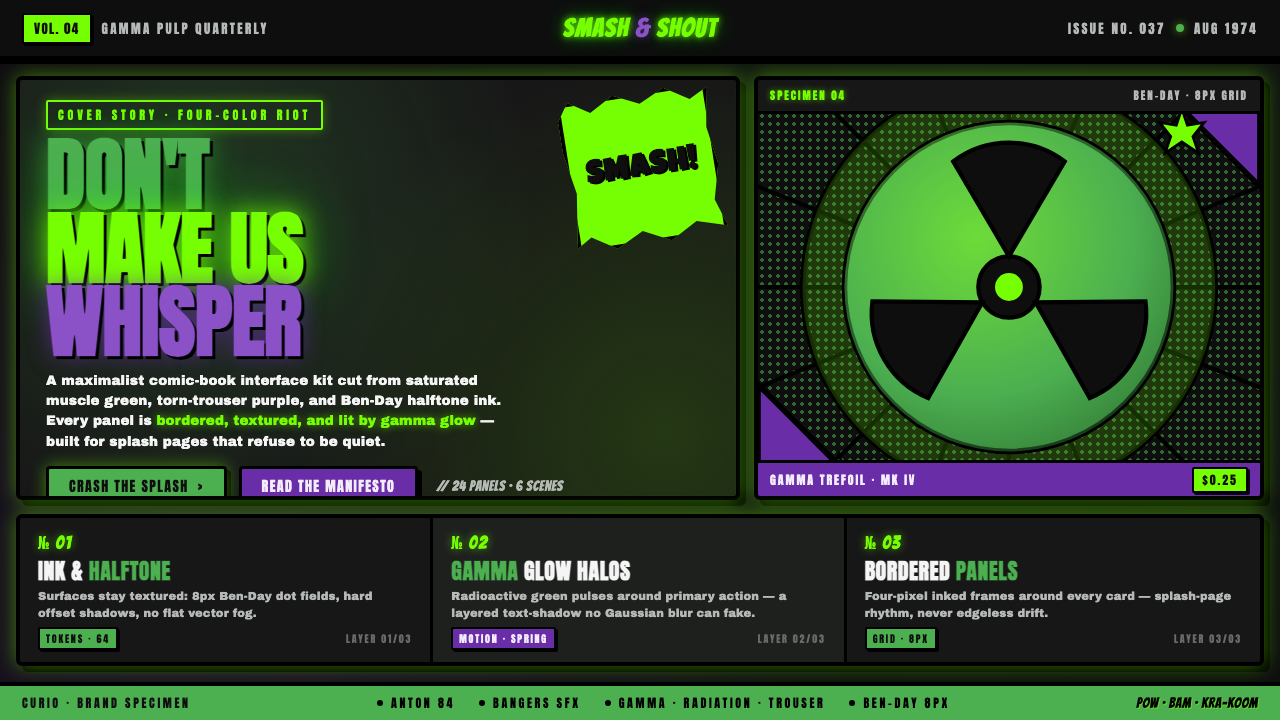 Hulk Gamma GreenDon't make us whisper. Muscle green, trouser purple, inked panels, Ben-Day ha…
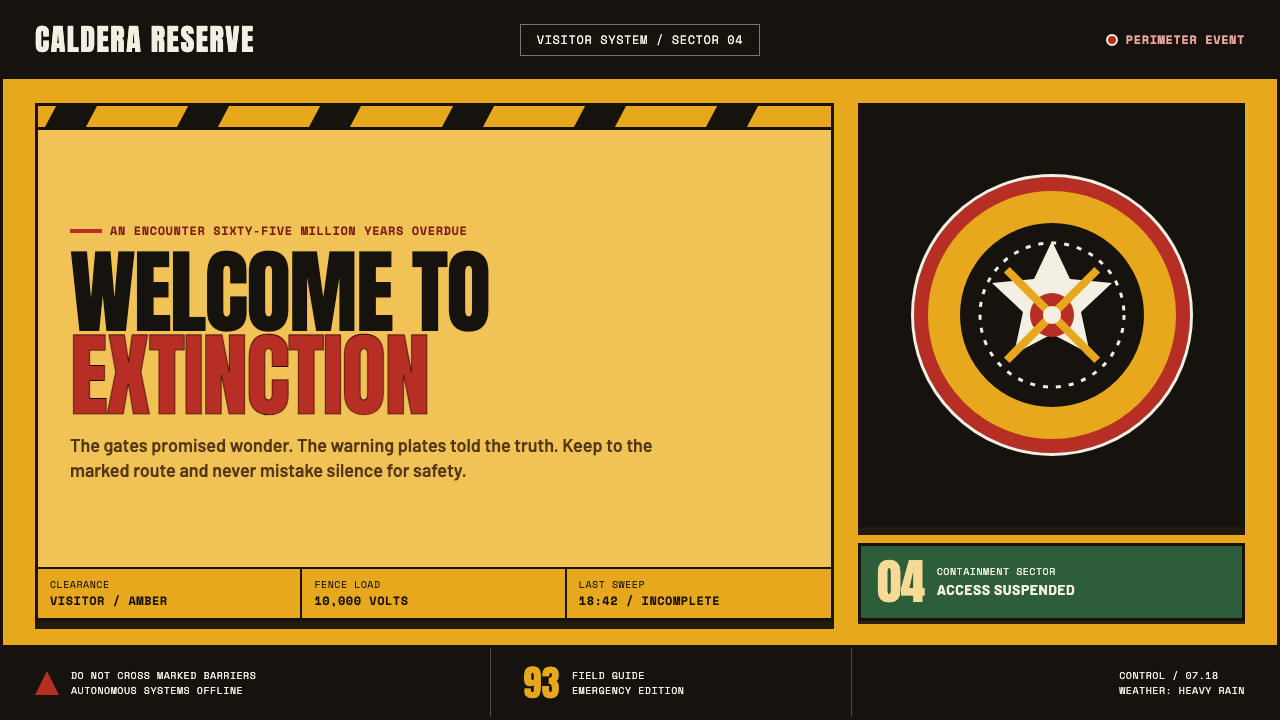 Jurassic Park (1993)Warm welcome, lethal edge. Amber plates, red rings and black chevrons turn aw…
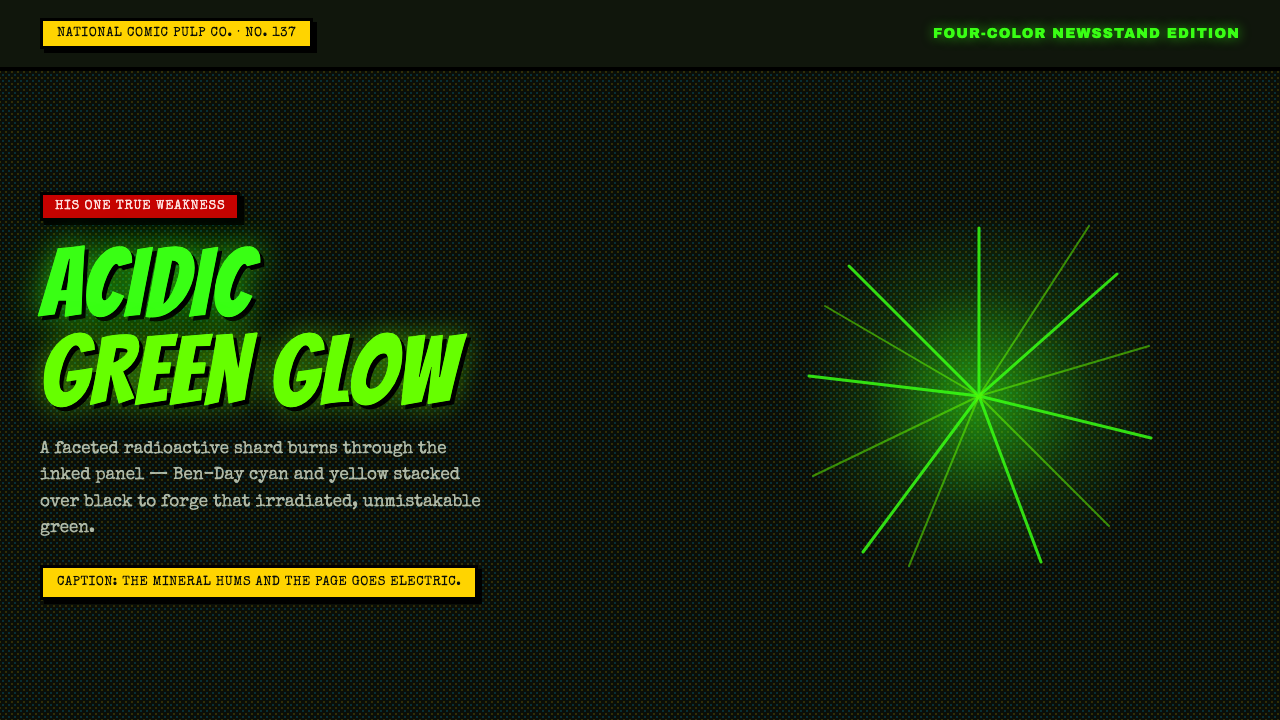 Kryptonite GreenRadioactive pulp glows hard. Neon green shard, black gutters, Ben-Day grit.
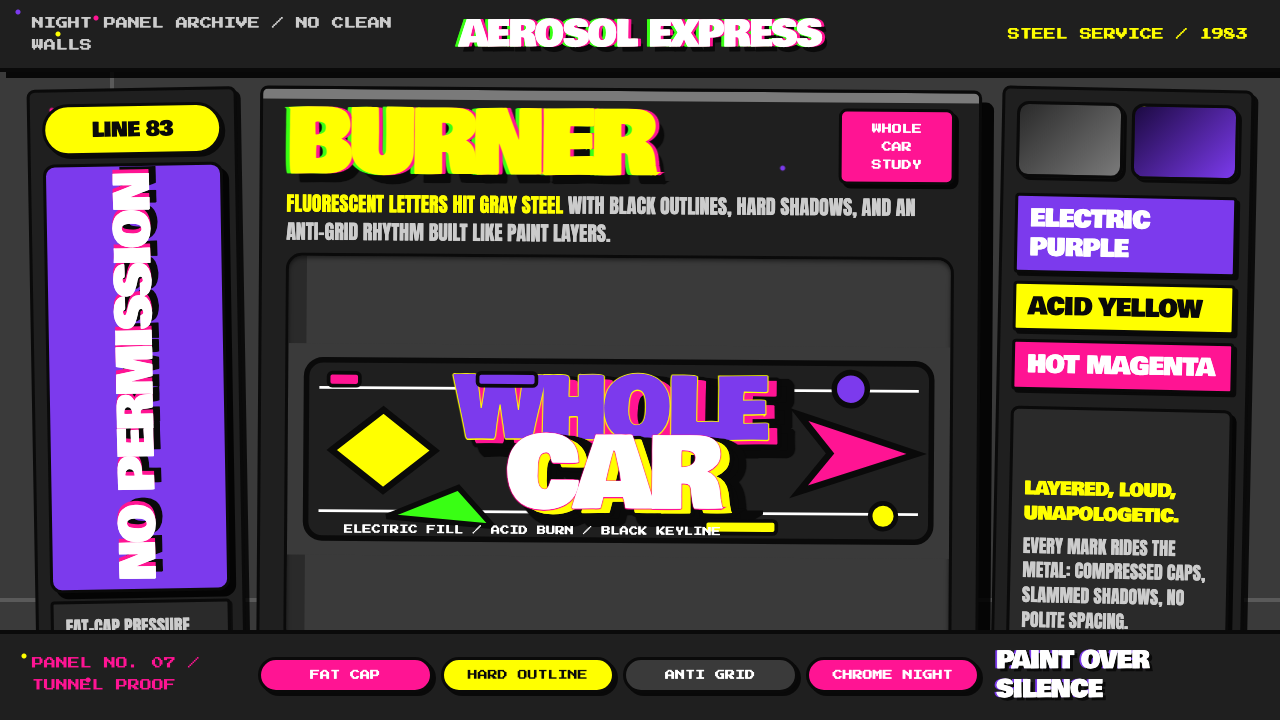 NYC Subway Graffiti (1983)Bombed steel gets loud. Electric purple and acid yellow stack as hard-outline…
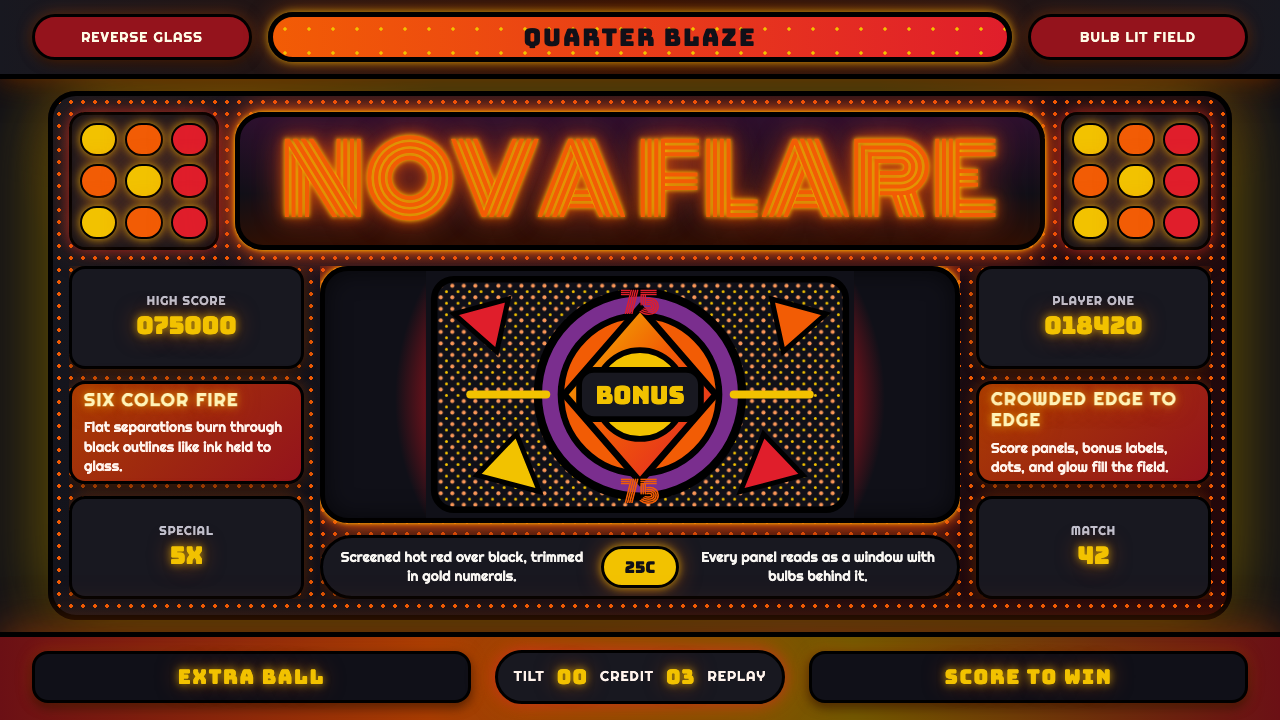 Pinball BackglassGlows like paid light. Monoton type, black outlines, orange-red halftones cro…