What is Bogolanfini Mudcloth?
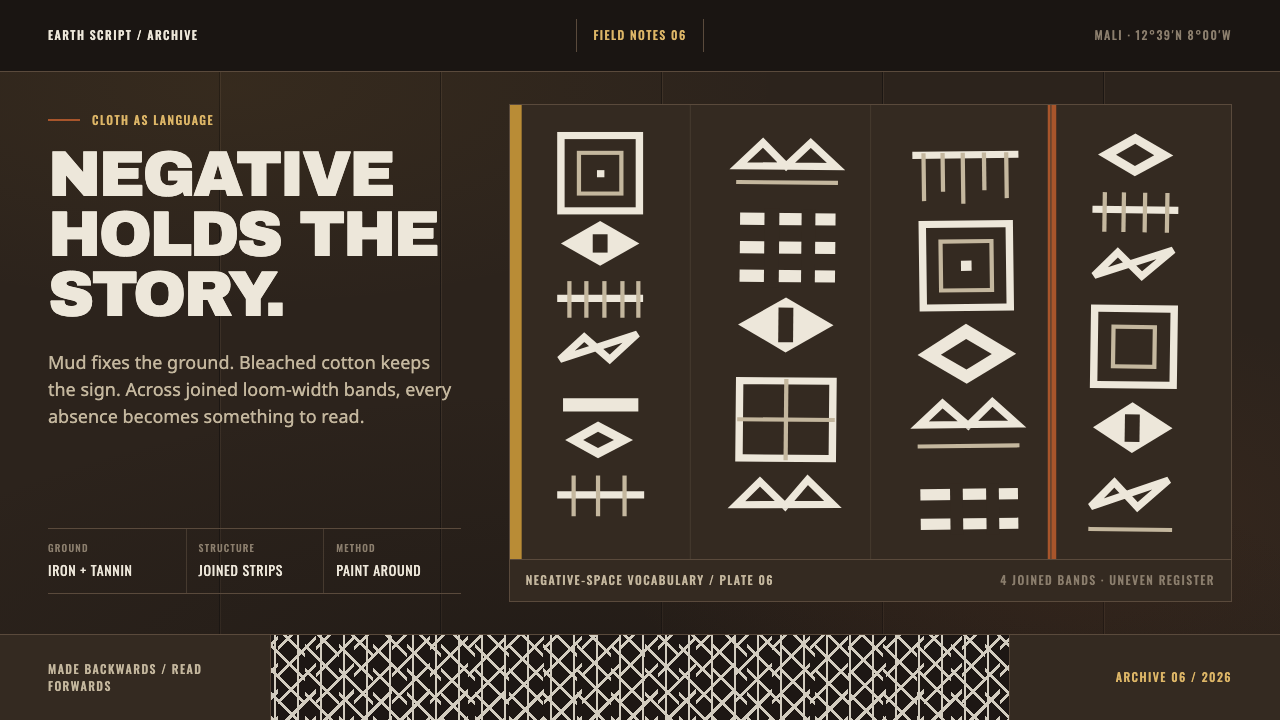
Bògòlanfini is made backwards — the artisan paints fermented river mud around the motif rather than onto it, so what survives on the finished cloth is not the mark itself but the negative space left uncovered by it.
Bogolanfini Mudcloth in brief
Bògòlanfini mudcloth is defined by an inverted production logic that shapes everything about how it looks. Hand-spun cotton is first woven into narrow strips and soaked in dye made from n'gallama leaves until the entire cloth turns yellow. Only then does the artisan paint fermented riverbed mud around the intended motifs rather than onto them — the iron in the mud reacts with the tannin already in the cloth, fixing a brown-black ground everywhere the mud touches, while a final soap wash strips away the remaining yellow from the untouched areas.
What survives this process is negative space: the motifs themselves are never directly painted or dyed dark. They exist purely as the warm, slightly uneven white or pale areas left behind where mud was never applied, standing against a dark ground that surrounds and defines them. This means the visual logic of bogolanfini runs opposite to most figure-and-ground systems — the figure is an absence, not a presence, and its edges are inherently a little irregular because they are the boundary of a hand-applied mud line rather than a printed or painted mark.
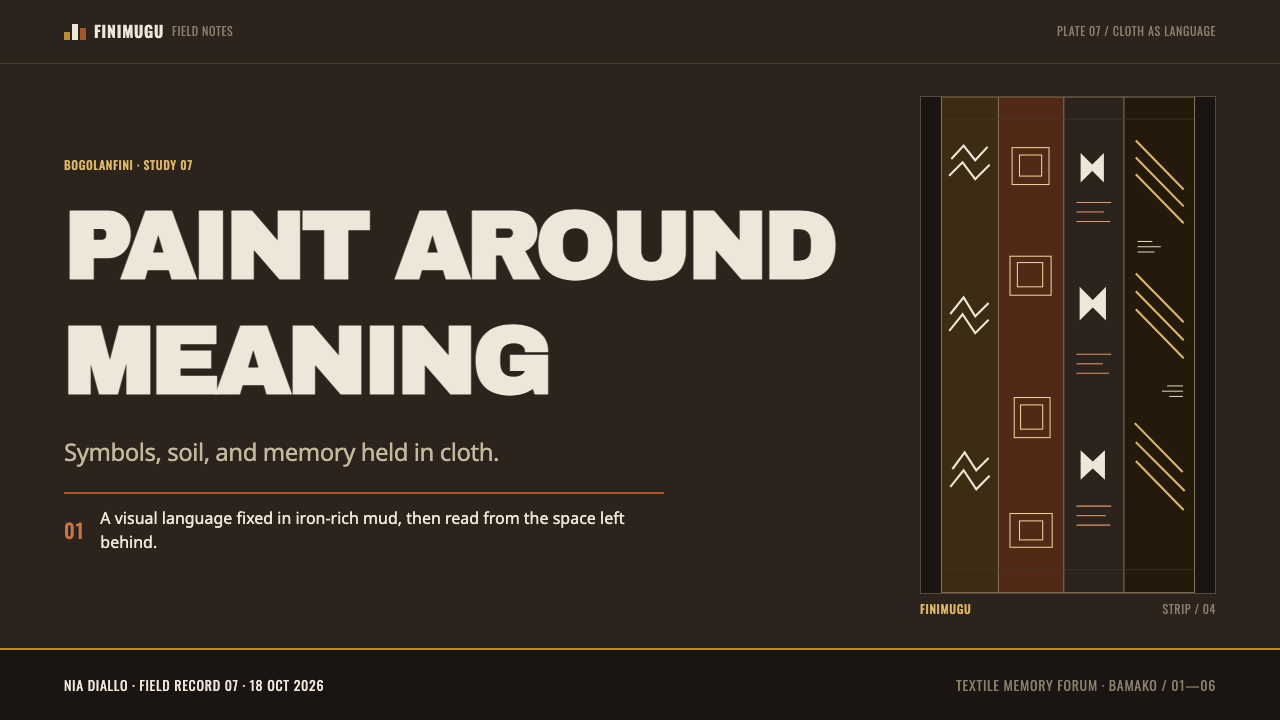
The composition itself is built from loom-width vertical strips joined edge to edge, since hand looms can only produce cloth in narrow bands. Rather than disguising these seams, the tradition treats the strip boundaries as part of the visual structure — the composition is inherently organized into vertical bands, and the joins between them function as a built-in division within the overall design rather than a flaw to be hidden.
Where does Bogolanfini Mudcloth come from?
Bogolanfini practice as documented tradition dates to before 1900 among Bamana communities in Mali, with its heartland in the Bamana region and notable regional variants around the towns of Mopti, Djenné, and San. As with many textile traditions rooted in household and community craft, it was practiced and passed down primarily by Bamana women dyers, who carried both the technical knowledge of the mud-dye process and the symbolic meaning of specific motifs across generations.
Within Bamana tradition, the motifs painted onto bogolanfini are not arbitrary decoration but a readable symbolic system, used specifically on garments tied to significant life stages — hunters' shirts among them — where the motifs carried meaning understood within the community rather than functioning as generic pattern. This is central to why the tradition insists the cloth's texture and hand-applied irregularity should remain visible: the motifs are meant to be read as symbols with weight, not smoothed into decorative regularity.
The tradition crossed into international fashion visibility in 1975 and 1976, when bogolanfini's mud-dye technique entered couture design contexts, marking a significant moment of crossover between an indigenous craft practice and global fashion. This period introduced bogolanfini's visual vocabulary to audiences well beyond Mali while the underlying practice continued within Bamana communities.
From around 2000 onward, stencil-based methods enabled mass production of bogolanfini-style cloth, allowing the aesthetic to reach much larger markets than traditional hand-dyeing alone could supply. The designer Chris Seydou is associated with bringing Malian textile traditions, including this one, into contemporary African fashion and the broader currents of post-independence African modernism, helping establish bogolanfini's motifs as part of a living, evolving fashion vocabulary rather than only a historical craft.
What defines the Bogolanfini Mudcloth look?
Negative-Space Motifs
The pattern exists only as the areas left untouched by mud, meaning every motif is defined by what surrounds it rather than by a direct mark applied to it. A design following this logic should construct its figures by defining the ground around them rather than drawing the figure itself, treating the shape as an absence carved out of a dark field.
Warm Iron-Black Ground
The dark ground is produced by an iron-and-tannin reaction rather than a flat pigment, giving it a warm, slightly brownish black rather than a cold or neutral gray-black. A composition drawing on this should favor a warm, earthy dark tone over a cool digital black, consistent with a dyed rather than printed origin.
Uneven, Hand-Applied Edges
Because motif boundaries are the edge of a hand-painted mud line, they are never perfectly smooth or vector-precise; slight irregularity is inherent to the technique. This principle argues against perfectly clean, geometrically precise edges in favor of boundaries with a visible, deliberate irregularity that signals a handmade rather than mechanically produced origin.
Vertical Strip Composition
The overall composition is built from loom-width vertical strips joined edge to edge, a constraint of the weaving process that becomes a visible structural feature rather than a hidden seam. Layouts should organize content into distinct vertical bands with visible joins, rather than a single unbroken continuous field.
Readable Symbol System
Within Bamana tradition, individual motifs form a symbolic vocabulary tied to specific garments and life stages rather than functioning as generic decorative pattern. This suggests treating individual visual elements as meaningful, distinct units with specific significance, rather than repeating a single motif purely for surface texture.
Texture Over Precision
The tradition's authenticity depends on visible hand-craft texture — uneven mud application, slightly irregular motif edges — rather than smoothed, mass-produced regularity. Any application of this style should resist the urge to vectorize or perfect the motifs, since the handmade imperfection is the substance of the style, not a flaw to be corrected.
Who shaped Bogolanfini Mudcloth?
Bamana women dyers are the primary historical and continuing practitioners of bogolanfini, carrying both the technical mud-dye process and the symbolic knowledge of specific motifs across generations. Their role as the tradition's principal carriers is central to understanding bogolanfini as household and community craft rather than an individually authored art form.
Chris Seydou is associated with bringing Malian textile traditions, including bogolanfini, into contemporary African fashion, helping situate the craft within post-independence African modernism and its broader fashion currents. His work represents the bridge between bogolanfini's roots as indigenous community craft and its later visibility within couture and contemporary design contexts.
The men and women who wore bogolanfini garments tied to specific life stages — hunters wearing motif-marked shirts chief among them — were not passive recipients of the design but the reason the symbol system existed at all: the motifs were chosen and read within the community for their specific meaning at those occasions. Their role as the intended readers of the cloth is central to why bogolanfini's patterns function as a readable vocabulary rather than generic ornament.
How do you use Bogolanfini Mudcloth today?
This style transfers well into contexts that want to signal handmade authenticity, cultural depth, and texture over polished digital uniformity. The essential discipline is to build figures as negative space against a warm dark ground, and to preserve visible, slightly irregular edges rather than smoothing them into vector precision.
For presentation slides, a cover treated as a warm, iron-dark ground with a key icon or wordmark rendered as reversed-out negative space — the mark itself unpainted rather than filled — captures the technique directly. Content slides can organize information into vertical band divisions echoing the loom-width strip structure, using the join between bands as a natural place for section breaks rather than a conventional horizontal rule.
For web interfaces, this approach suits cultural, craft-focused, or heritage-forward brands where texture and handmade quality are part of the value proposition. Icon sets or illustrative elements can be rendered as negative-space cutouts against a warm dark background rather than as filled, colored icons, and edges should retain a slightly organic, non-uniform quality rather than crisp vector cleanliness.
For editorial and marketing layouts, pull-quotes or section markers can borrow the negative-space logic by reversing typography out of a dark, warm-toned block rather than setting dark text on a light ground. Vertical column dividers in a multi-column layout can be treated as deliberate structural bands, similar to the loom-width strips, rather than thin invisible gutters.
A common mistake when applying this style is treating it as simply 'dark background with light pattern' and rendering the motifs with clean, vector-perfect edges. The style's authenticity depends specifically on the inversion of figure and ground being visible — the pattern reading as an absence carved from the dark field — and on retaining a hand-applied irregularity; smoothing either quality away turns it into generic dark-mode decoration rather than a genuine reference to the technique.
Bogolanfini Mudcloth — FAQ
Why is bogolanfini described as being 'made backwards'?
Unlike a process where a motif is painted or dyed directly, bogolanfini artisans paint fermented mud around the intended motif, fixing the surrounding area dark while the motif itself remains untouched and pale. The pattern the viewer eventually sees is therefore the leftover negative space, not a direct mark — which is why the process is described as working in reverse of a typical figure-first approach.
Why does the cloth turn yellow before it turns dark?
The cotton is first soaked in n'gallama leaf dye until it turns fully yellow; this yellow stage is a necessary intermediate step, not the final look. After mud is applied and the iron-tannin reaction fixes the dark ground, a final soap wash strips the remaining yellow from the untouched areas, leaving the pale motif and the dark ground as the finished contrast.
Are the motifs on bogolanfini purely decorative?
No. Within Bamana tradition, the motifs form a readable symbolic system used on garments associated with specific life stages, such as hunters' shirts, and carry meaning understood within the community rather than functioning as generic surface pattern. This is why the tradition treats motif placement and form with intention rather than arranging them purely for visual balance.
Why does the cloth appear in narrow vertical strips rather than one continuous piece?
Hand looms used in this tradition can only weave cloth in narrow, loom-width bands, so the finished textile is assembled by joining several strips edge to edge. Rather than hiding these seams, the tradition treats the strip boundaries as a visible, structural part of the overall composition.
How did bogolanfini move from a village craft to international fashion?
The technique entered couture design contexts in 1975 and 1976, introducing its visual vocabulary to a much wider international audience beyond Mali. From around 2000, stencil-based methods enabled mass production of bogolanfini-style cloth, and designers such as Chris Seydou helped carry Malian textile traditions into contemporary African fashion, extending the craft's reach while the original hand-dyeing practice continued within Bamana communities.
Related design styles
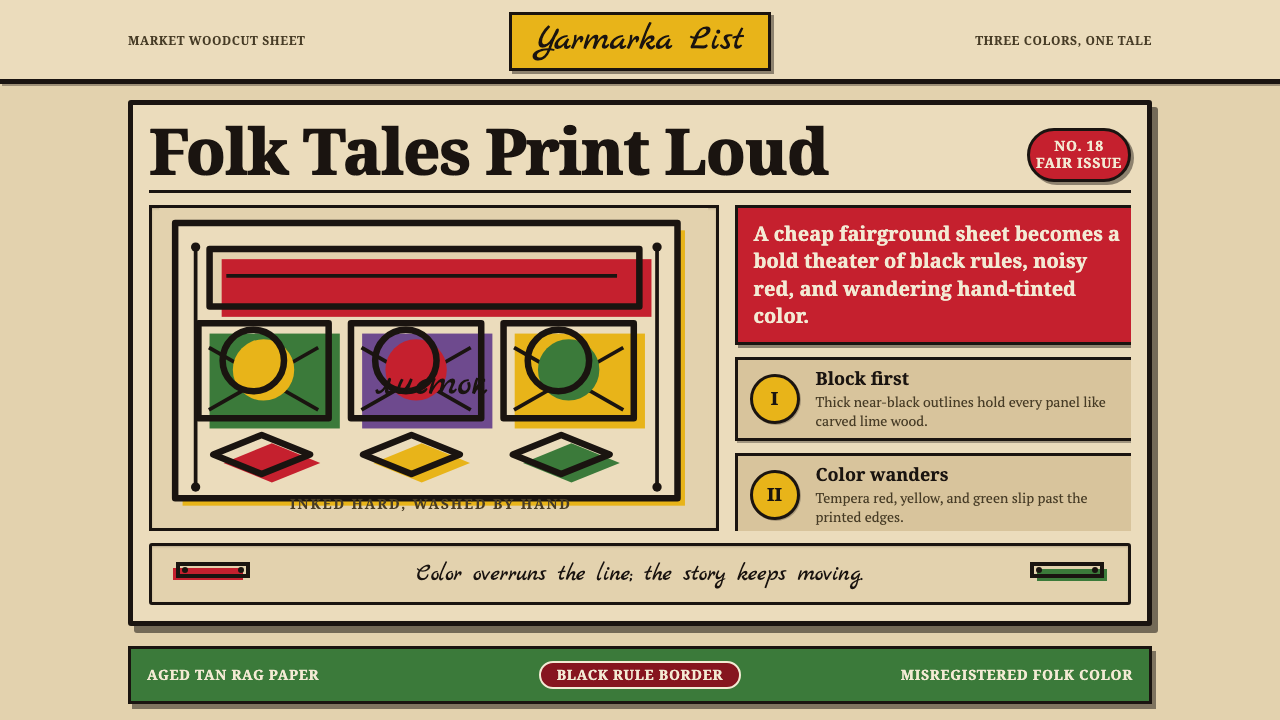 Russian LubokFolk print sings. Tan rag paper, black woodcut rules, red and green fills mis…
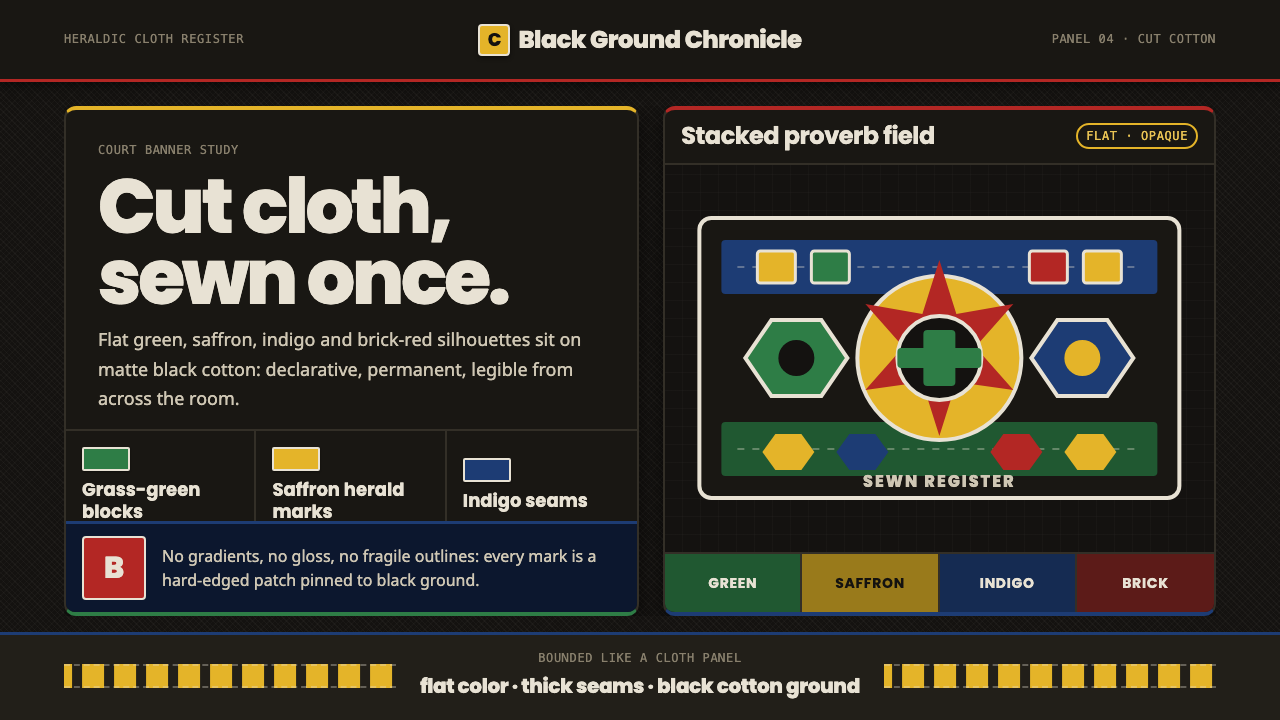 Fon Applique Banner AbomeyRoyal cloth speaks plainly. Flat saffron, green and indigo silhouettes on bla…
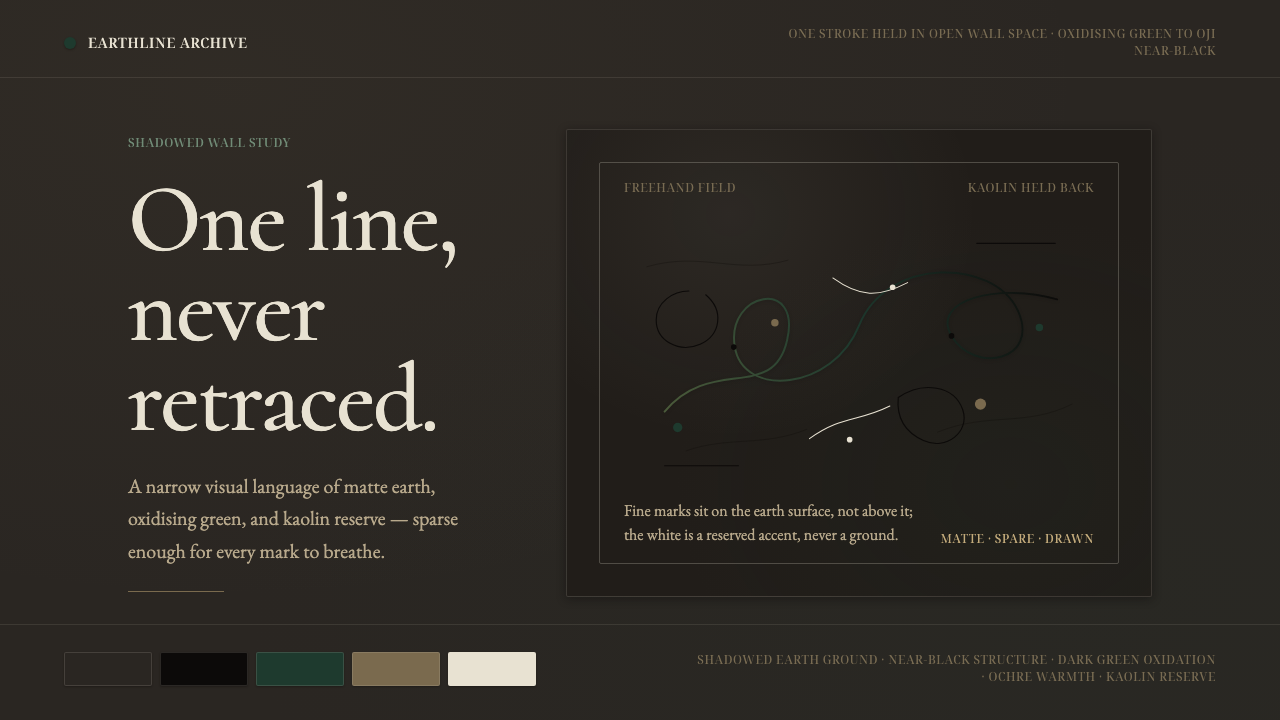 Igbo Uli Painting NigeriaSpare line carries the wall. Near-black curves breathe on dark earth with kao…
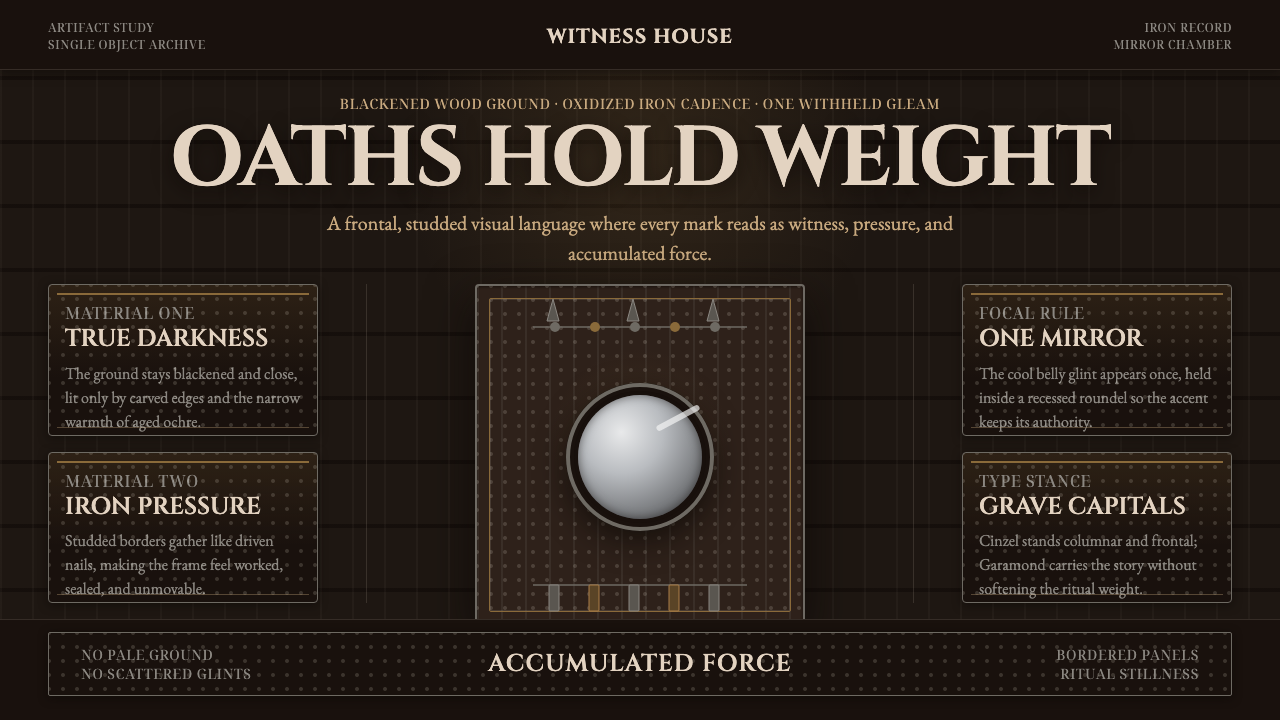 Kongo Nkisi Nkondi FigurePower accumulates in darkness. Black wood, iron studs, and one mirror glint h…
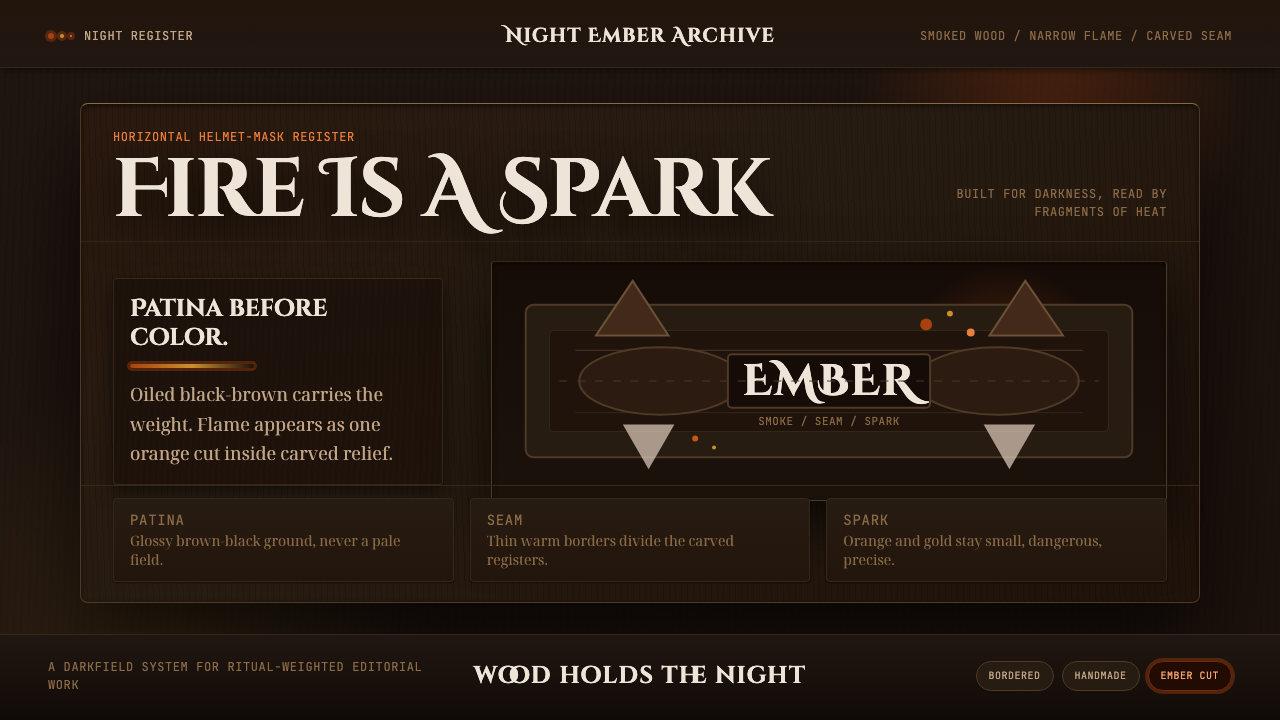 Senufo Firespitter MaskRitual darkness has heat. Smoked wood tones hold back tiny orange-gold sparks.
 Yoruba Orisha ShrineThe colour code of the gods. Shango-red beadwork and cowrie white glow on dar…