What is Malagasy Lamba Hoany?
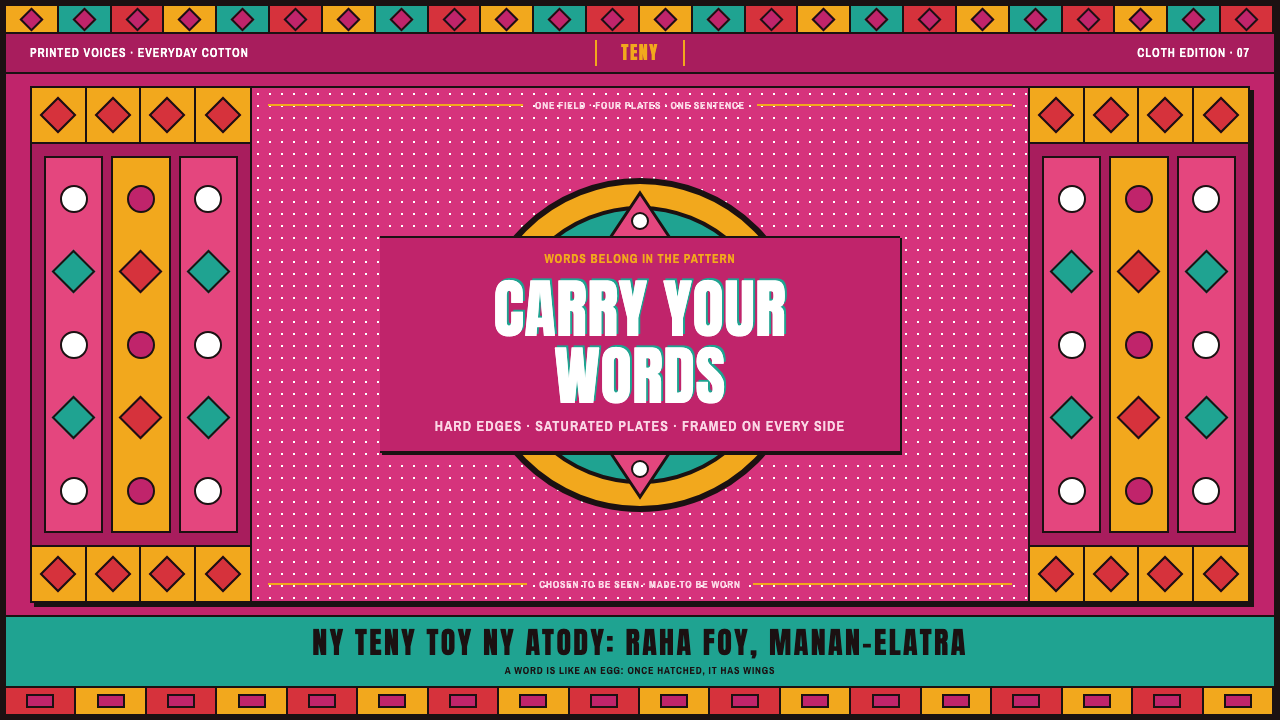
The lambahoany is Madagascar's everyday printed cloth, and its most radical idea is that a proverb printed in a text band near the hem is not a caption beneath the pattern — it is the pattern, and choosing a cloth means choosing the sentence you will wear.
Malagasy Lamba Hoany in brief
The lambahoany is a rectangular printed cotton cloth, roughly fifty by sixty-five inches, worn across Madagascar as a wrap, tied as a baby sling, or hung as a curtain. Its structure follows a fixed formula that never varies from cloth to cloth: a repeating motif border frames the entire field, a medallion or a pastoral vignette occupies the center, and a text band carrying a Malagasy proverb — an ohabolana — runs just above the lower border.
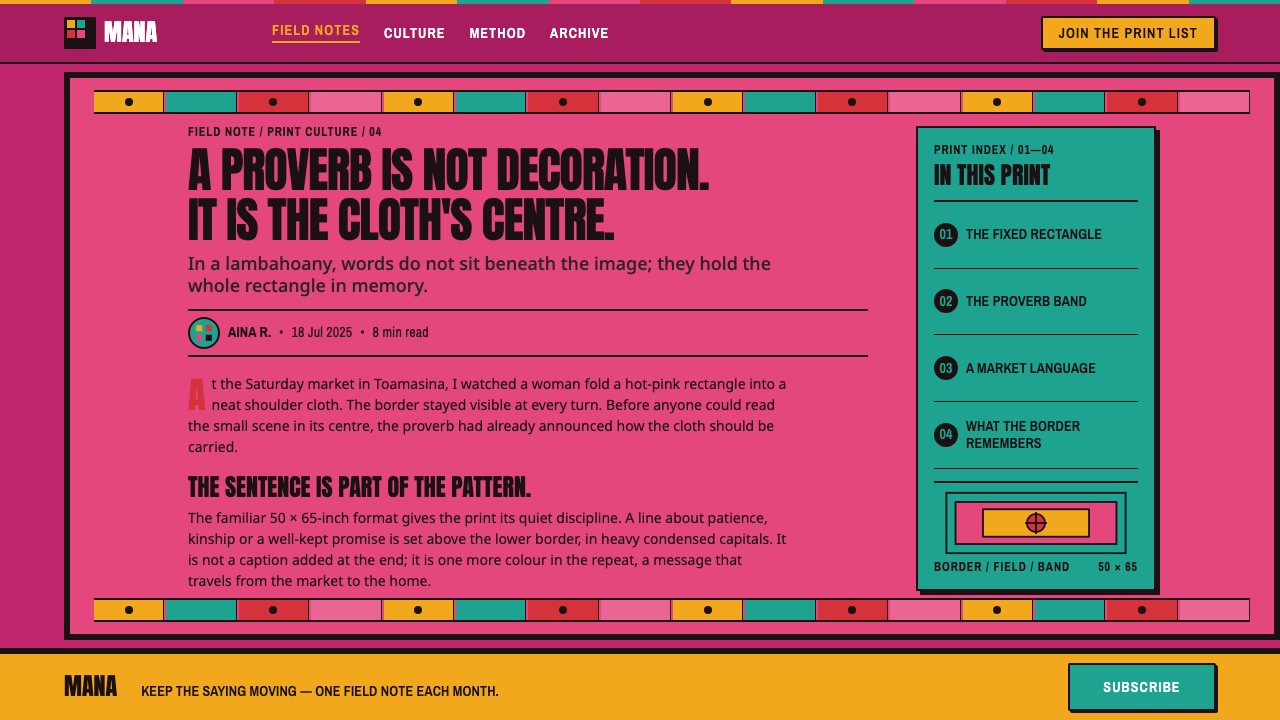
What makes this system distinctive within printed textile traditions is that the text band is not a secondary or explanatory element. The proverb is set as ornament inside the print itself, integrated into the overall composition with the same visual weight as the central image and the border pattern. A buyer selecting a cloth is, in effect, selecting which sentence they want to carry on their body that day, which means the typographic band functions as the emotional and communicative center of the design rather than a footnote to it.
Visually, the lambahoany commits to saturation and flatness rather than subtlety. The ground color is a single, fully saturated hue — often a hot, energetic tone such as fuchsia — and the printed motifs use two or three additional colors at equally high saturation, without gradients or softened transitions between them. Every edge in the print is hard and flat, consistent with a roller or screen printing process rather than a painted or hand-blended one, and the repeating border is treated as a non-negotiable frame that must never be dropped from the composition.
Where does Malagasy Lamba Hoany come from?
The lambahoany tradition took its recognizable printed form from around 1900 to 1950 onward, and the cloth continues to be printed and worn daily across Madagascar today, making it one of the more continuously living textile traditions represented in this kind of documentation. Its geographic base is Madagascar itself, though the physical printing has historically taken place both on the island and in India, reflecting the commercial and industrial networks that produced these cloths at scale for everyday use.
The lambahoany's closest relative and clearest formal ancestor is the East African kanga tradition, a printed cloth format shared across coastal East Africa that established the core grammar the lambahoany inherited: a bordered rectangular field, a saturated ground color, and — critically — a printed text band carrying a proverb or message. The lambahoany adapts this kanga grammar into Madagascar's own lamba textile culture, the broader Malagasy tradition of wrapped cloth garments, giving the format a distinctly Malagasy identity even as its structural bones come from the kanga.
Unlike many of the individually authored design traditions documented elsewhere, the lambahoany has no single named designer or artist credited with its creation. It was and is the product of anonymous commercial textile designers working within roller and screen printing industries, producing new proverb-and-motif combinations for a market economy rather than for gallery display or aristocratic commission. This anonymity is itself characteristic of the tradition: it is a genuinely popular, commercial craft rather than an artisanal or fine-art practice tied to an identifiable creator.
The final and perhaps most essential participants in the tradition are the wearers themselves, who select a particular cloth specifically for its proverb. This consumer choice is not incidental to the design — it is the mechanism that keeps the tradition alive and evolving, since printers must continue producing new proverb texts and motif combinations that will appeal to buyers looking for a specific sentiment to wear, making the ordinary act of purchasing a cloth an active part of how the visual and textual system continues to develop.
What defines the Malagasy Lamba Hoany look?
The Unbreakable Border
A repeating motif border frames the entire field on every lambahoany without exception, functioning as a structural requirement of the format rather than an optional decorative choice. A design following this principle should treat its frame or border as fixed and non-negotiable, present in every instance rather than varied or dropped for visual variety.
Text as Central Ornament
The proverb text band is integrated into the print with the same visual weight as the central image, rather than functioning as a caption placed beneath or apart from the design. Layouts drawing on this idea should treat a key piece of text — a headline, a tagline — as an ornamental element woven into the composition itself, not as supporting copy secondary to an image.
One Saturated Ground
The base field commits to a single, fully saturated hue such as hot fuchsia, rather than a neutral or muted background. This suggests choosing one confident, high-saturation color as the dominant field of a composition, avoiding pale or desaturated backgrounds that would dilute the print's energetic character.
Two to Three Print Colors
Motifs are rendered in only two or three additional colors beyond the ground, each held at the same high saturation as the base, avoiding any expansion into a broader palette. A composition should limit its accent colors to a strict, small set and keep each at full intensity rather than introducing tints or muted variants.
Hard Flat Edges
Every shape in the print is bounded by a hard, flat edge with no gradient or soft transition between colors, consistent with a roller or screen printing process. Digital or print layouts drawing on this style should avoid gradients and soft blends entirely, keeping every color area bounded by a crisp line.
Fixed Central Vignette
The center of the composition always carries either a medallion or a pastoral vignette, giving the layout a clear, unchanging focal point regardless of which specific proverb or border motif is used. Designs should anchor a consistent, identifiable focal element at the center of the composition, letting surrounding content vary while that anchor remains stable.
Who shaped Malagasy Lamba Hoany?
The lambahoany's visual and textual formulas were developed by unnamed commercial designers working within a market-driven printing industry, rather than by individually credited artists. Their collective, anonymous authorship is central to understanding the tradition as a genuinely popular craft — one shaped by ongoing commercial demand rather than by a single creative vision.
The technical process of roller and screen printing determined much of the lambahoany's visual character — its hard flat edges, its limited palette of two or three fully saturated print colors, and the repeatable, mass-producible nature of its border and motif patterns. These printers translated design intent into a physical product manufactured at scale for everyday wear.
The people who buy and wear the lambahoany are active participants in the tradition rather than passive consumers, since the choice of which cloth to wear is fundamentally a choice of which proverb to carry. This consumer-driven selection process is what keeps the tradition responsive and evolving, requiring printers to continually produce fresh text-and-motif combinations that will resonate with buyers.
How do you use Malagasy Lamba Hoany today?
This style transfers well into any context where a single confident color field paired with a meaningful piece of text can carry both visual energy and communicative content simultaneously. The essential principle to preserve is that text is not secondary decoration added after the image is finished — it is designed in from the start, with equal visual weight to any graphic element.
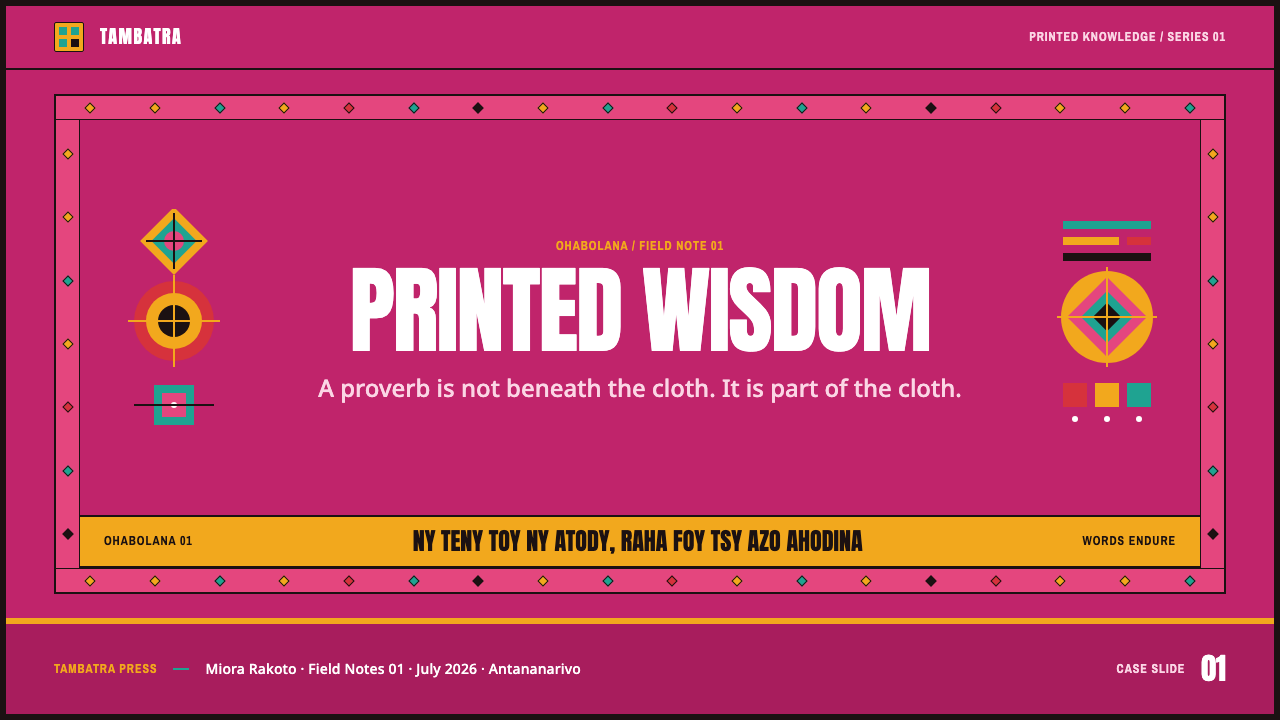
For presentation slides, a cover page built from one fully saturated ground color, framed by a repeating border motif along all four edges, with a key message or tagline set in a bold band near the bottom edge, translates the lambahoany's grammar directly. Content slides can use the same repeating border as a consistent visual frame across the deck, while varying the central vignette-equivalent — a chart, an icon, a photograph — slide to slide.
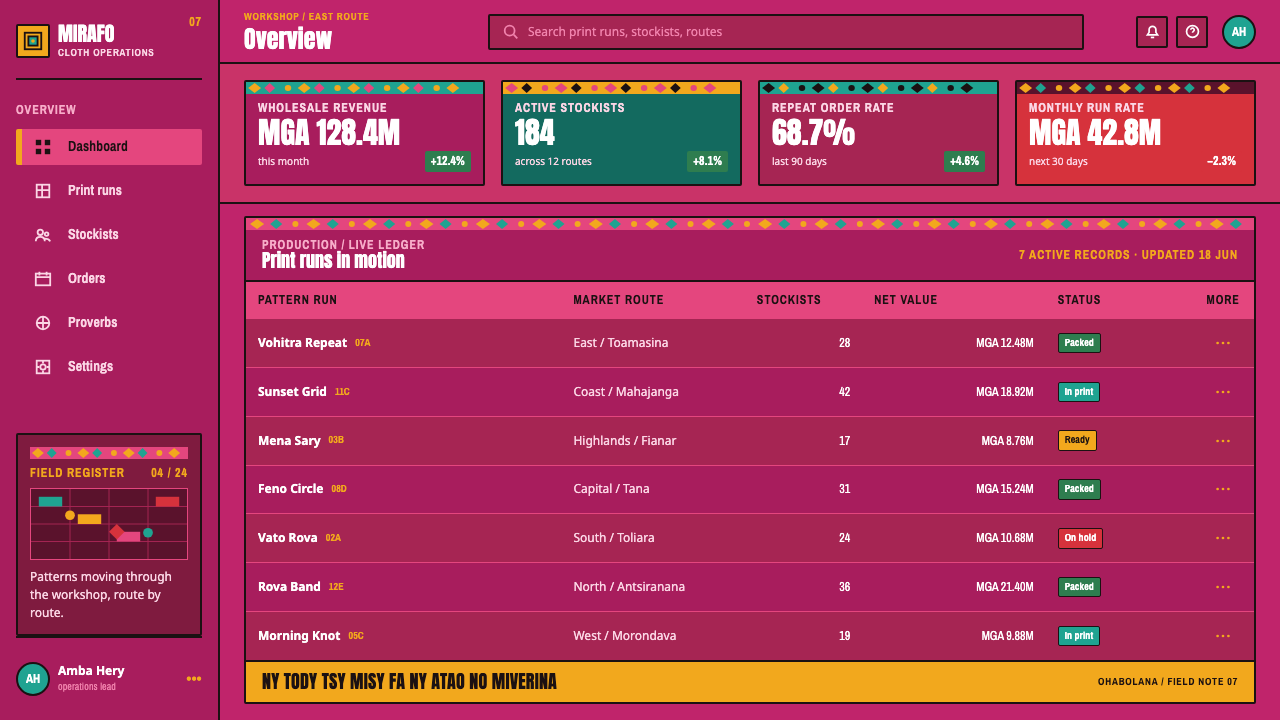
For web interfaces, this approach suits campaign landing pages, seasonal promotions, or culturally themed sections where bold, saturated color and a strong central message are more appropriate than a neutral, restrained palette. A hero section can use one saturated background color, a bordered frame treatment around the content area, and a prominent text band carrying the key value proposition, styled with the same weight as any hero image.
For editorial and marketing layouts, this style supports pull-quote treatments where a short, meaningful phrase is rendered with the same visual prominence as an accompanying photograph or illustration, bordered and set against a saturated ground rather than floating in white space. Section dividers can adopt a repeating small motif as a consistent border element throughout a publication, echoing the lambahoany's insistence on a frame that is never dropped.
A common mistake when applying this style is treating the border as optional ornamentation that can be simplified away, or expanding the palette beyond three colors in an attempt to add visual richness. The lambahoany's power comes specifically from its discipline — one saturated ground, two or three equally saturated accents, and a border that is always present — and diluting any of these three constraints weakens the recognizably bold, confident character that defines the style.
Malagasy Lamba Hoany — FAQ
Why is the proverb text treated as part of the pattern rather than a caption?
The lambahoany's core convention is that the text band is printed with the same visual integration and weight as the central image and border, positioned just above the lower border as an intrinsic part of the overall composition. Because buyers select a cloth specifically for its proverb, the text functions as the primary communicative and emotional content of the design, not as supporting information placed beneath it.
Where does the lambahoany's structural format come from?
The lambahoany's core structure — a bordered field, a saturated ground, and a printed text band — is inherited from the East African kanga tradition, a shared printed-cloth format from the coastal region. The lambahoany adapts this grammar into Madagascar's own lamba textile culture, giving it a distinctly Malagasy identity while retaining the kanga's essential bones.
Why does the palette stay limited to two or three colors plus the ground?
Keeping the print colors to two or three, each at full saturation matching the ground, preserves the bold, confident visual character that defines the style and keeps production practical for roller and screen printing processes. Expanding beyond this range would dilute the intensity that makes each cloth read clearly and immediately, both as an image and as a carrier of its proverb.
Is the lambahoany the product of a named designer or design house?
No. The tradition has no single credited designer; it was developed and continues to be developed by anonymous commercial textile designers working within roller and screen printing industries, producing new proverb-and-motif combinations for a broad market rather than for individual attribution.
How does the buyer's choice affect the tradition's design output?
Because a buyer selects a specific lambahoany for its printed proverb, consumer preference directly drives what new text-and-motif combinations printers continue to produce. This makes the tradition unusually responsive to popular sentiment compared to design systems governed by a single author or fixed canon, since the ordinary act of purchasing is itself part of how the visual and textual vocabulary evolves.
Related design styles
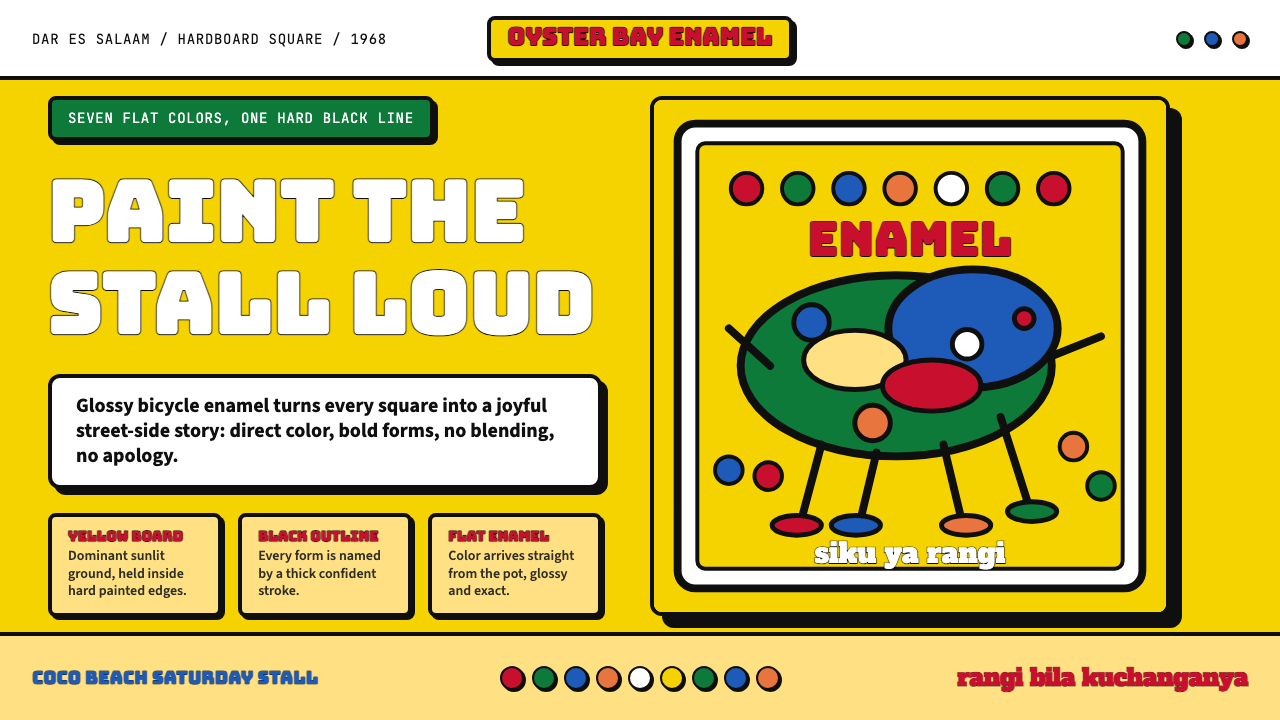 Tingatinga PaintingJoy refuses blending. Enamel yellow, Bungee strokes, and black-outlined flat…
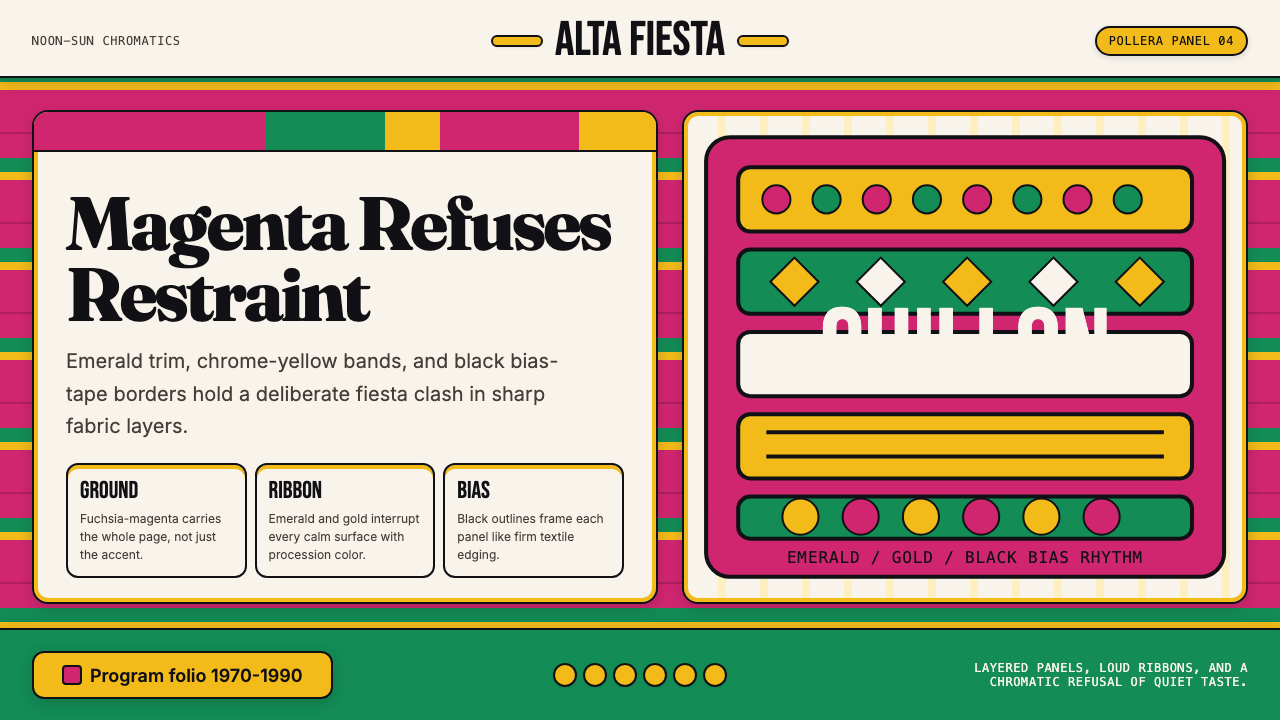 Bolivian Pollera Fiesta MagentaChromatic defiance. Magenta ground, emerald bands and black outlines clash li…
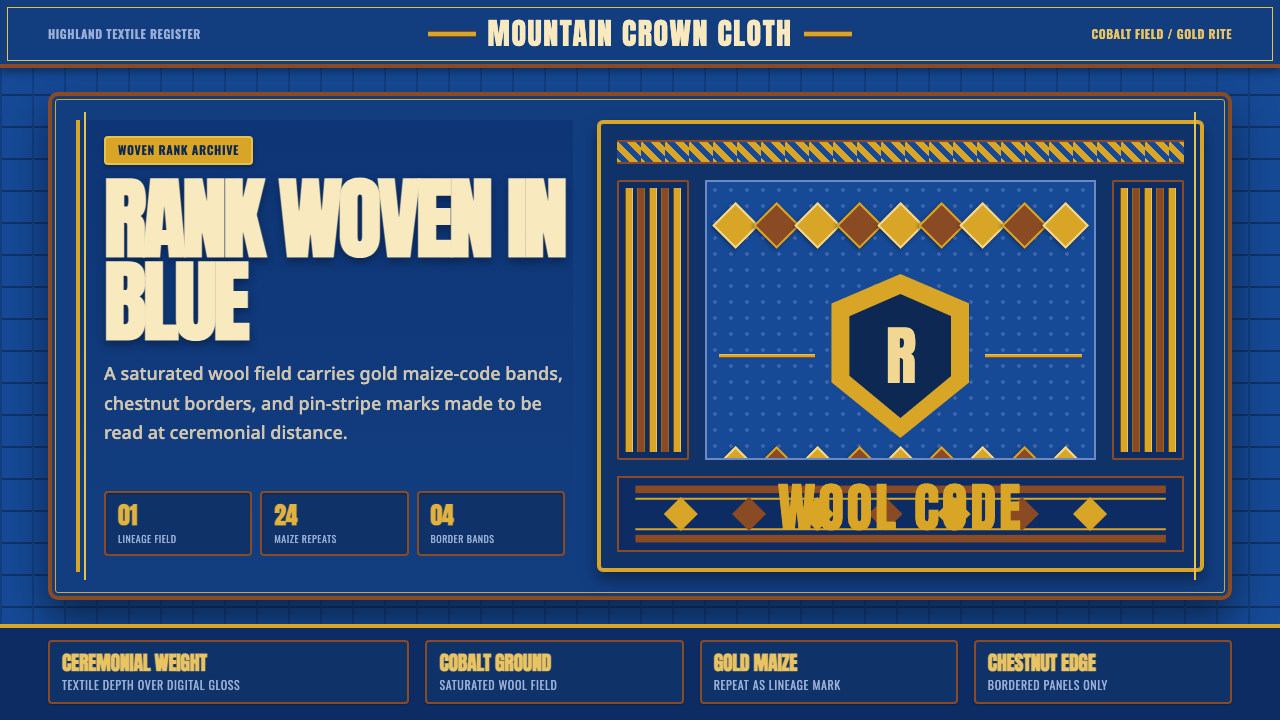 Basotho Seanamarena BlanketRank made visible. Cobalt wool, gold maize diamonds, and chestnut borders rea…
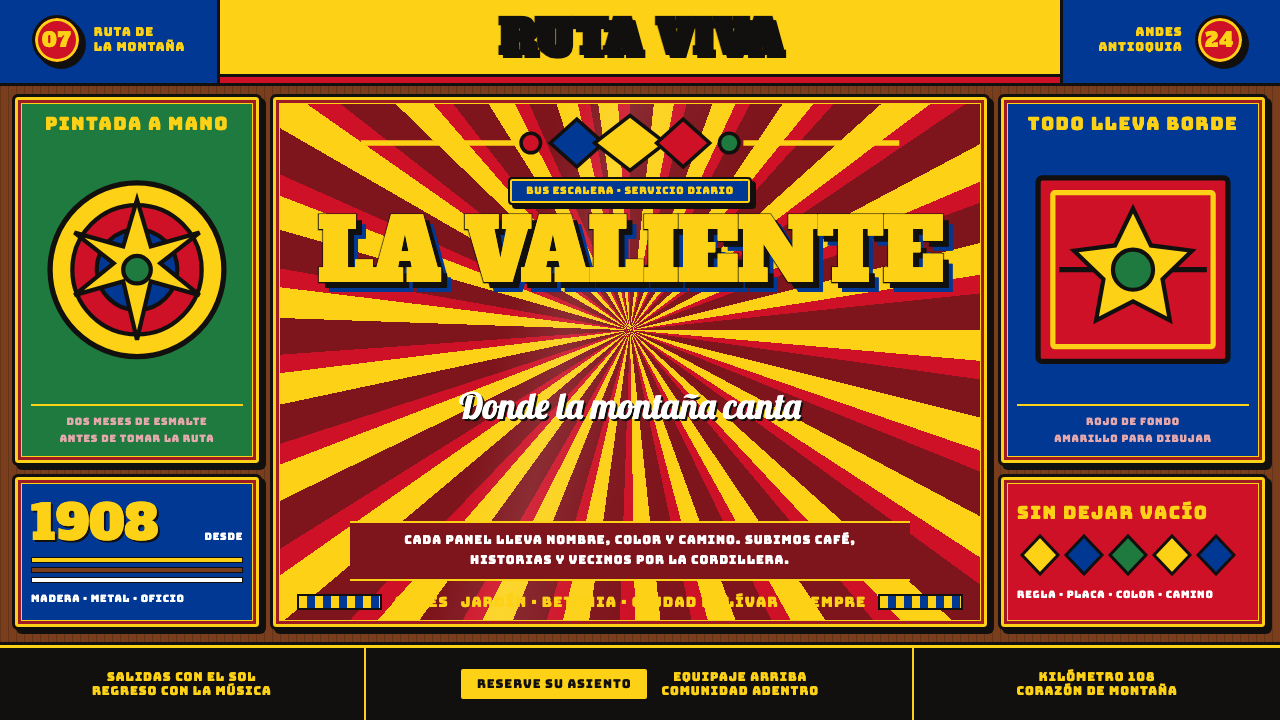 Colombian Chiva BusNothing is left unpainted. Flag-yellow rules, slab lettering and black keylin…
 Afrobeats Album Art 2024Sun-gold and stadium loud. Anton type, kente stripes, and hard flash drive th…
 Bigouden CoiffeIdentity stands tall. Starched linen rises over matte black, edged in saffron…