What is Macramé Fiber Art?
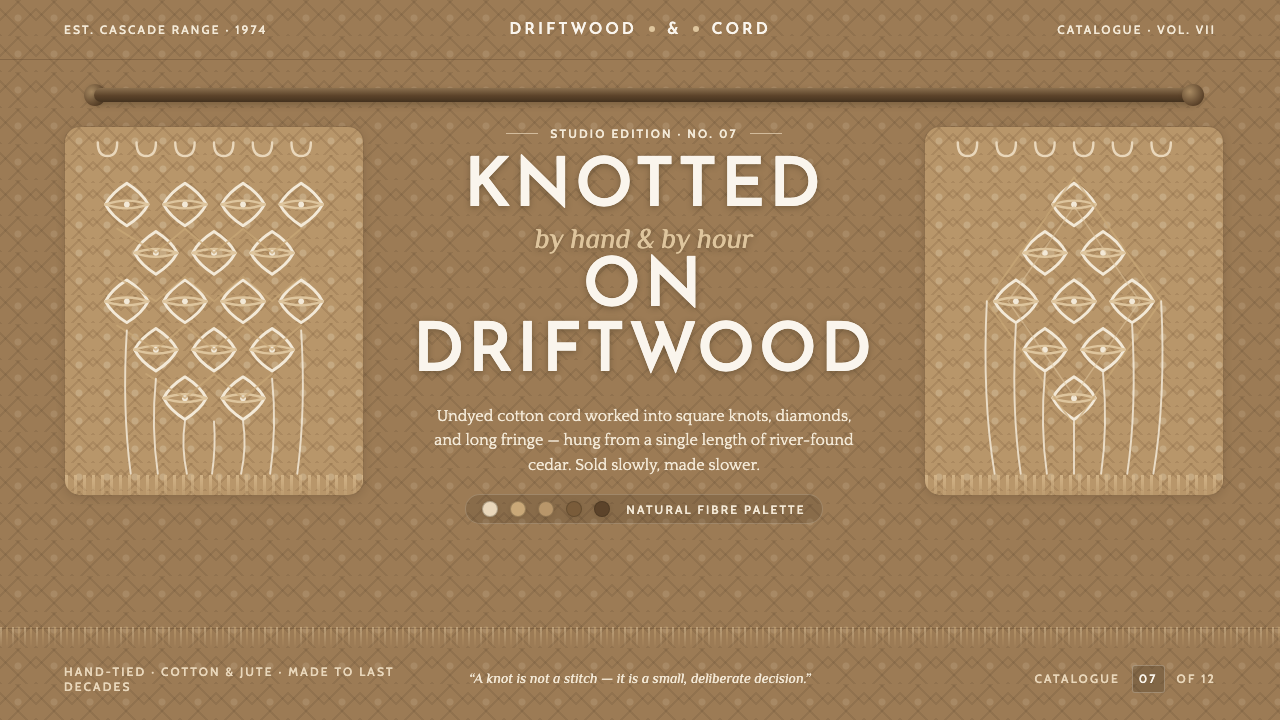
Macramé turns slow craft into a visual language of knotted geometry, undyed fiber, driftwood warmth, and the unmistakable evidence of a human hand.
Macramé Fiber Art in brief
Macramé Fiber Art is a design style drawn from the revival of knotting craft in 1970s North American fiber art. Its signature materials are natural, undyed cotton and jute cord, arranged into square knots, half hitches, diamonds, and long fringe. In its most recognizable setting, these forms hang from a driftwood dowel against a warm, wood-toned bohemian interior.
The visual character is tactile before it is decorative. Ecru cotton provides the light woven voice, while raw jute and walnut establish the ground beneath it. The background should read as fibrous, earthy, and wood-warm rather than as a pale cream surface. The impression is of cord laid, looped, and tied by hand, not of a pattern printed cleanly onto a flat plane.
As a digital system, Macramé Fiber Art translates physical making into structure. Knot grids become organizing frameworks; fringe becomes vertical rhythm; visible fiber twist becomes surface character; and the driftwood dowel becomes a visual anchor. The result should feel calm, handmade, domestic, and patiently assembled, with geometry softened by material warmth.
Where does Macramé Fiber Art come from?
Macramé belongs to the mid-century North American craft and fiber-art movement, with its strongest association here being the bohemian and craft revival of the 1970s. The broader period described by this system runs from 1950 to 1990, but the 1970s are the essential point of reference: a moment when handmade home objects, natural cord, and fiber-based wall work carried cultural meaning as well as visual appeal.
The revival placed knotting in a space between studio fiber art and domestic making. Studio fiber artists treated cord, repetition, and hanging form as material language. Home macramé crafters brought the same vocabulary into everyday interiors, where a wall hanging could function as decoration, craft accomplishment, and evidence of a slower relationship to objects. The craft therefore feels personal without being precious and geometric without becoming industrial.
The movement's vocabulary is inseparable from its materials and setting. Undyed cotton, jute, walnut-toned wood, and driftwood create a visual world that is warm but not polished, organized but not mechanical. The boho macramé revival and handmade home-craft culture supplied the atmosphere; the fiber-art movement supplied the geometric discipline. Contemporary applications work best when they preserve both sides of that inheritance.
What defines the Macramé Fiber Art look?
Color
The palette is built from undyed ecru cotton, raw jute, and walnut warmth. Ecru is the principal light tone, softer and more fibrous than white. Jute and walnut provide the ground, giving the composition an earthy depth without turning it dark. Color should feel inherited from material rather than selected for spectacle; restrained contrast is more characteristic than a bright accent system.
Fiber Material
Material is the style's central evidence. Cotton should suggest a soft cord with a visible twist, while jute should feel rougher, drier, and more irregular. Digital surfaces can echo this distinction through line variation, grain, and small changes in density. The texture is not a background effect applied after the layout; it is part of the identity of every major surface.
Knot Geometry
Square knots, half hitches, and diamond formations provide the underlying geometry. These motifs should read as repeated acts of construction rather than as arbitrary ornament. A knot grid can organize cards, sections, or visual dividers, provided the pattern remains legible and does not compete with the content. Diamonds introduce direction; square knots establish stability; half hitches create a more continuous woven movement.
Hanging Rhythm
Macramé is designed to hang, and its vertical fall matters. Long fringe, descending cords, and the horizontal driftwood dowel create a clear relationship between support and release. In digital compositions, this can become a top anchor followed by lines, stacked modules, or downward-running details. The rhythm should feel suspended and breathable, never compressed into a dense decorative block.
Tactile Depth
Depth comes from overlap, twist, and implied relief rather than polished dimensional effects. A cord can pass over another cord; a knot can interrupt a line; fringe can break a clean edge. The visual language should suggest that surfaces have been handled and assembled. Soft variation is welcome, but it should remain material and quiet rather than becoming glossy, synthetic, or heavily rendered.
Domestic Warmth
The style belongs to lived-in interiors rather than institutional spaces. Its warmth comes from craft, natural materials, and the sense that an object has a maker behind it. Interfaces and compositions should therefore feel welcoming and patient. Type, labels, and controls should support the woven atmosphere with clarity and restraint, allowing the material vocabulary to carry personality without turning every element into a decorative motif.
Who shaped Macramé Fiber Art?
These makers helped re-establish knotting as a serious fiber-art language during the 1970s revival. Their importance lies in treating natural cord, repeated structure, and wall-hanging form as artistic material rather than merely domestic decoration. The geometric discipline of the style is rooted in this studio attention to fiber.
Home macramé crafters carried the craft into everyday interiors and gave it its intimate, approachable character. Their work connected handmade effort with the visual atmosphere of bohemian homes, where a knotted wall hanging could make natural material and personal labor visible within the room.
The broader makers of the fiber-art movement established the cultural ground from which this style draws. They treated fiber as a medium with its own surface, rhythm, and structure. Macramé Fiber Art preserves that emphasis while focusing on knots, diamonds, fringe, driftwood, and the warmth of handmade home craft.
How do you use Macramé Fiber Art today?
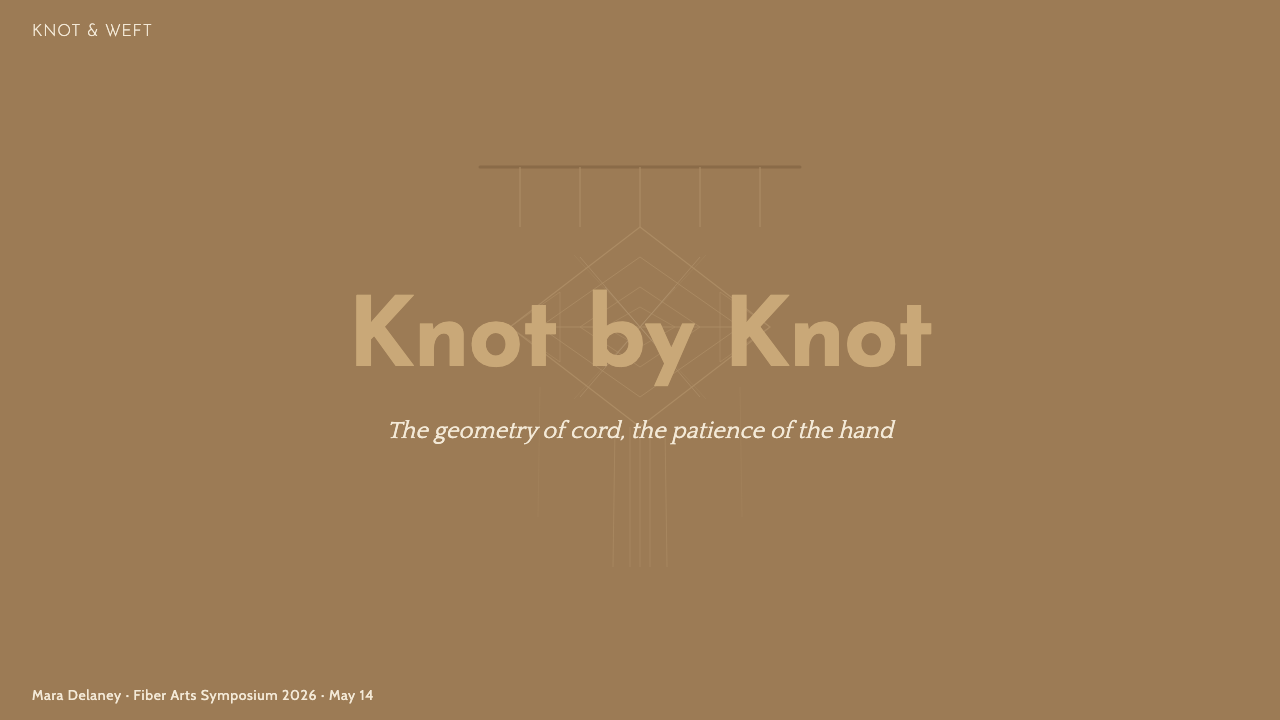
For presentation slides, use the system as a suspended composition. A cover can place the title against a walnut and raw-jute ground, with an ecru knot field or a driftwood-like horizontal anchor giving the page its identity. Content slides should let knot grids organize sections and preserve generous breathing room around text. Data slides can turn repeated diamonds, lines, and hanging strands into a calm visual grammar for comparison, sequence, or categorization.
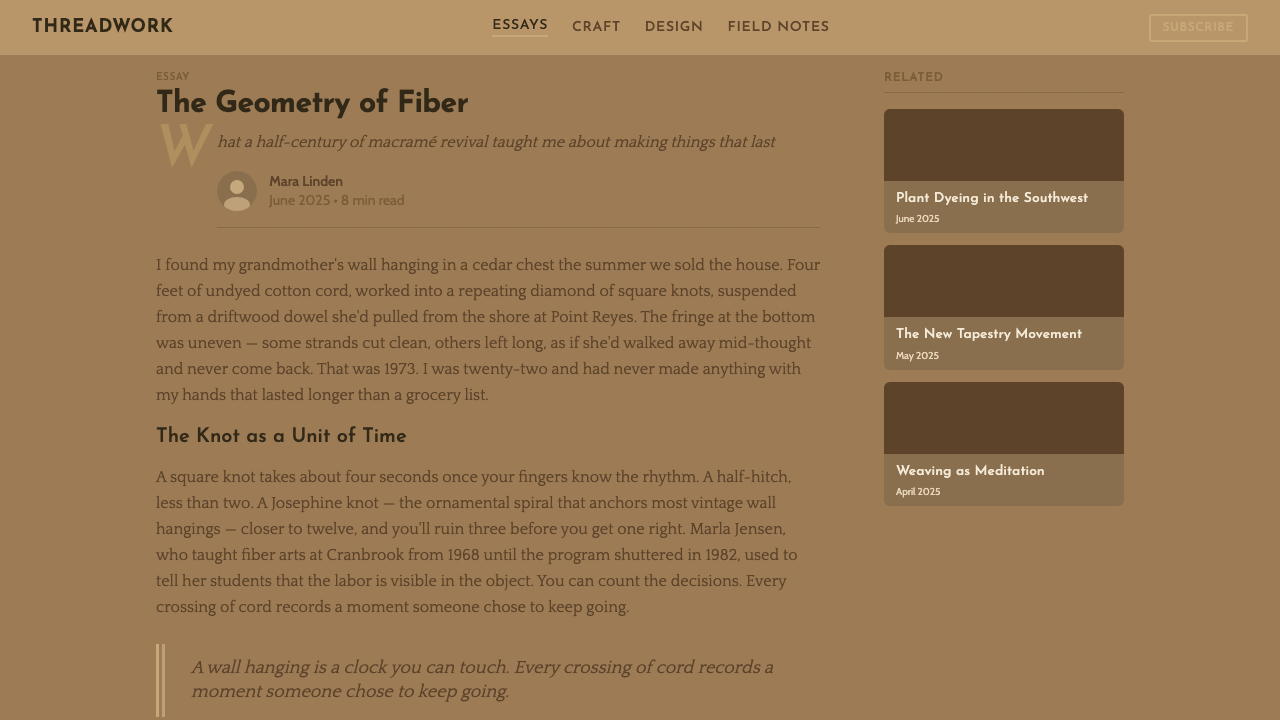
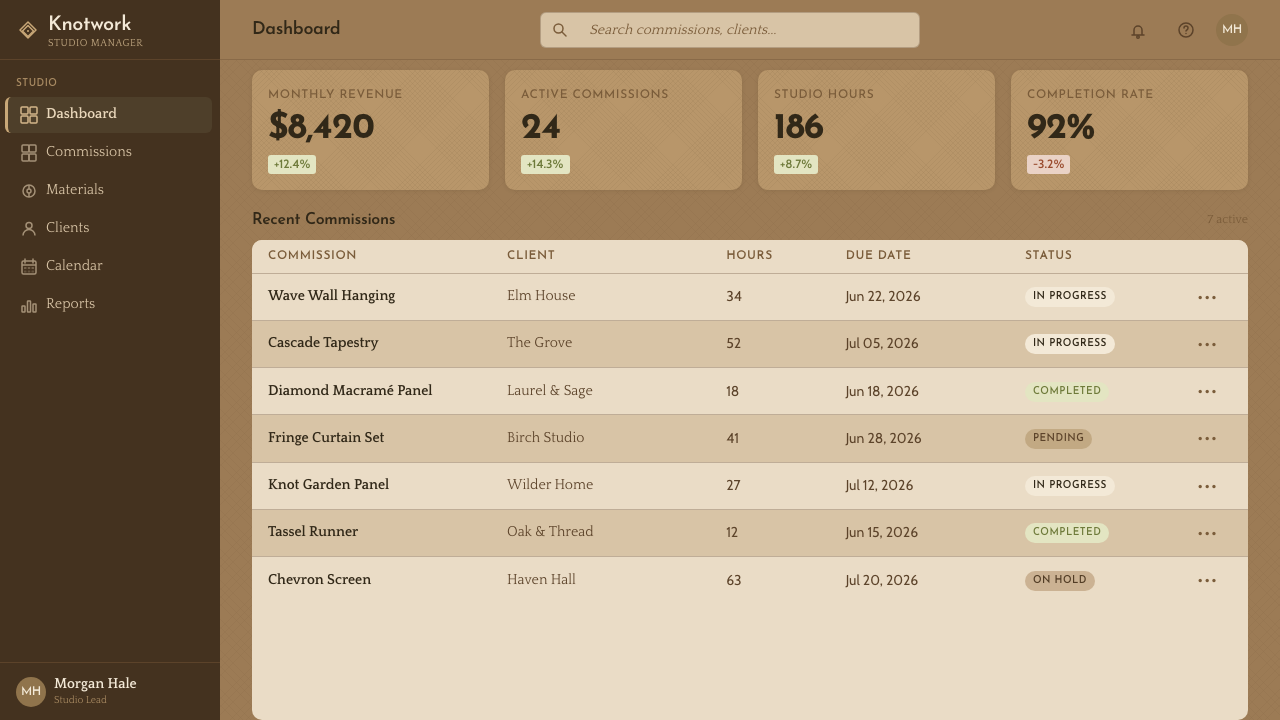
For web interfaces, Macramé Fiber Art suits dashboards and pricing pages that want to feel human, crafted, and approachable. Use the jute-walnut ground to establish atmosphere, then place content in quieter ecru surfaces with restrained fiber texture. Knot-inspired divisions can separate dashboard regions or pricing tiers, while long vertical details can guide the eye through a page. Controls should remain clear and practical; the craft vocabulary should frame interaction rather than disguise it.
For editorial work, the style supports stories about making, interiors, material culture, slow living, and independent craft. A page can pair a strong title with a woven field, then use knot geometry as a recurring section marker. Metadata and captions should remain calm and legible, with texture reserved for moments that need atmosphere. The result should feel like a considered craft journal rather than a novelty pattern applied to every paragraph.
For marketing, the system gives handmade products and home-oriented services a warm, credible presence. A campaign can move between close views of cord texture, geometric knot diagrams, and spacious product-led compositions. Ecru provides the calm foreground, while jute and walnut give the message a grounded setting. Calls to action should be direct and easy to find, allowing the tactile mood to build trust without making the page feel precious or theatrical.
The common mistake is confusing macramé with generic bohemian decoration. Adding beige surfaces, fringe-like graphics, or a few random diamonds is not enough. The style depends on the relationship between material, knot structure, hanging rhythm, and domestic warmth. It also fails when the background becomes a pale cream or when texture turns into noisy faux fabric. Keep the ground earthy, make the geometry intentional, and let the handmade quality remain visible but restrained.
Macramé Fiber Art — FAQ
Is Macramé Fiber Art the same as generic bohemian design?
No. Bohemian interiors provide part of the setting, but Macramé Fiber Art is more specific. Its identity comes from natural undyed cord, square knots, half hitches, diamond geometry, long fringe, driftwood, and the visible suggestion of handwork. Generic bohemian design may borrow the mood without preserving the material and structural logic. This system should feel woven, not merely relaxed or eclectic.
Why must the background feel like raw jute and walnut rather than pale cream?
The ground carries much of the style's warmth. A pale cream background makes the system feel soft but generic, while the raw-jute and walnut reading gives it material depth and a stronger relationship to craft interiors. The ecru cotton then has something to contrast with: it appears as woven fiber resting on a grounded surface rather than as another neutral tone floating in a blank field.
Which visual elements make a digital application feel authentically macramé?
Start with the relationship between structure and texture. Use a restrained ecru, jute, and walnut palette; build repeated geometry from square knots, half hitches, and diamonds; introduce vertical rhythm through fringe or descending lines; and suggest the twist of cotton or jute without overwhelming the content. The most convincing result feels assembled and tactile, while remaining orderly enough to support reading and interaction.
Can the style be used on a dark background?
It can be adapted, but the light, earthy ground is its strongest expression. A very dark background may weaken the distinction between raw jute, walnut, and ecru, and can make the craft language feel more theatrical than domestic. If a darker variation is necessary, preserve the warm material relationship, keep the knot geometry readable, and avoid letting contrast turn the fibers into glowing ornaments.
Related design styles
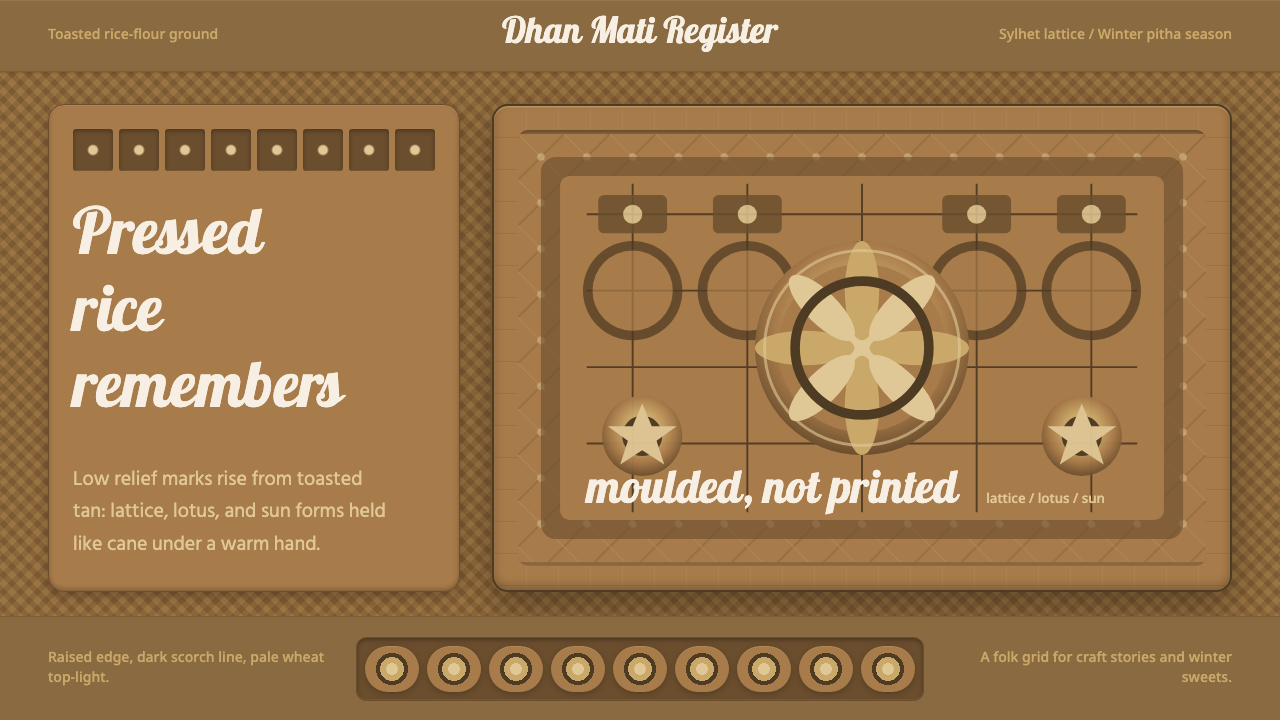 Bangladeshi Nakshi Pitha MotifsWarm relief, never print. Galada type and tan lattice press rice-flour craft…
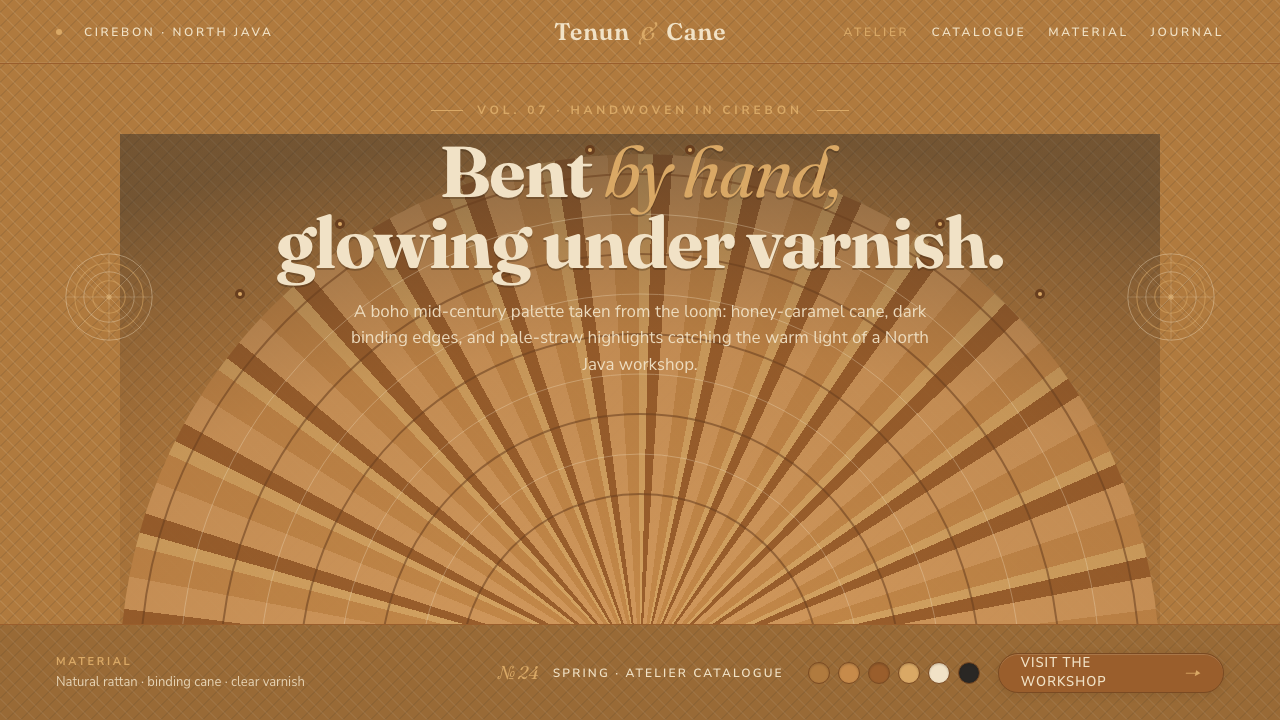 Indonesian Rattan WeaveBent by hand, varnished warm. Honey-caramel cane and dark binding edges over…
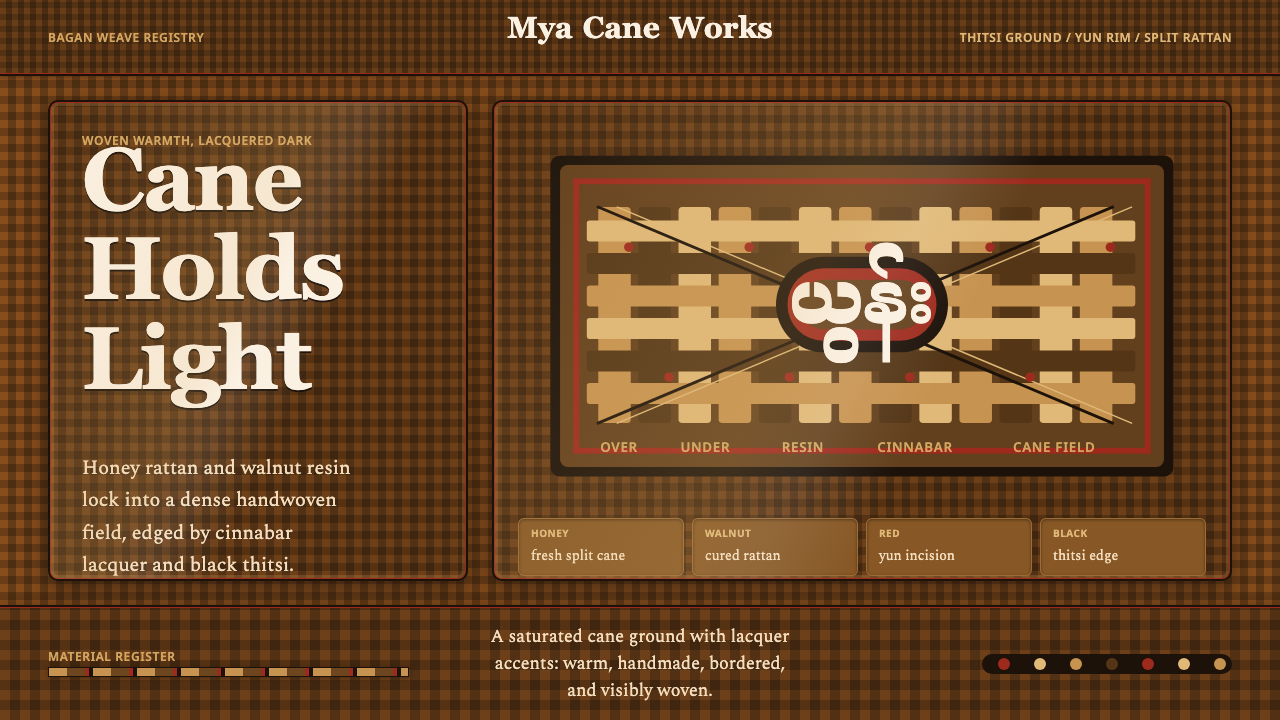 Burmese Cane RattanWoven warmth holds the page. Walnut cane lattice glows with cinnabar rim line…
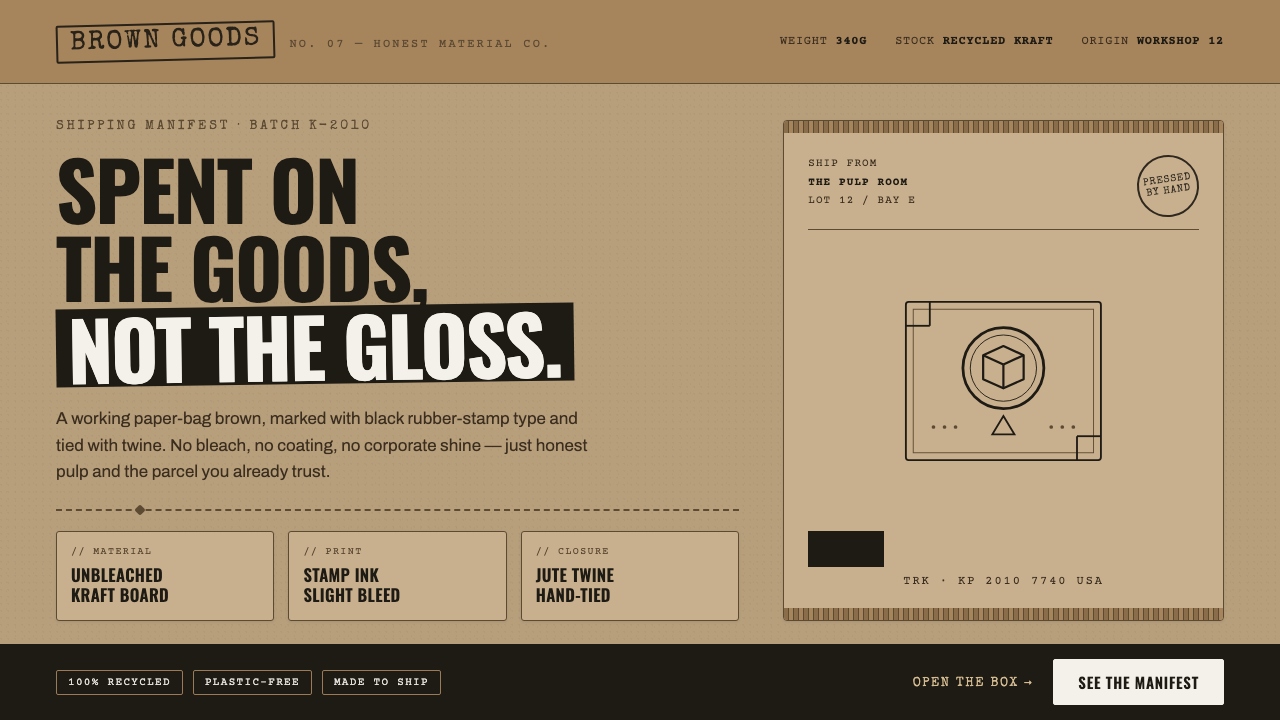 Kraft Paper PackagingThe goods, not the gloss. Mid kraft-brown fields, black rubber-stamp type, co…
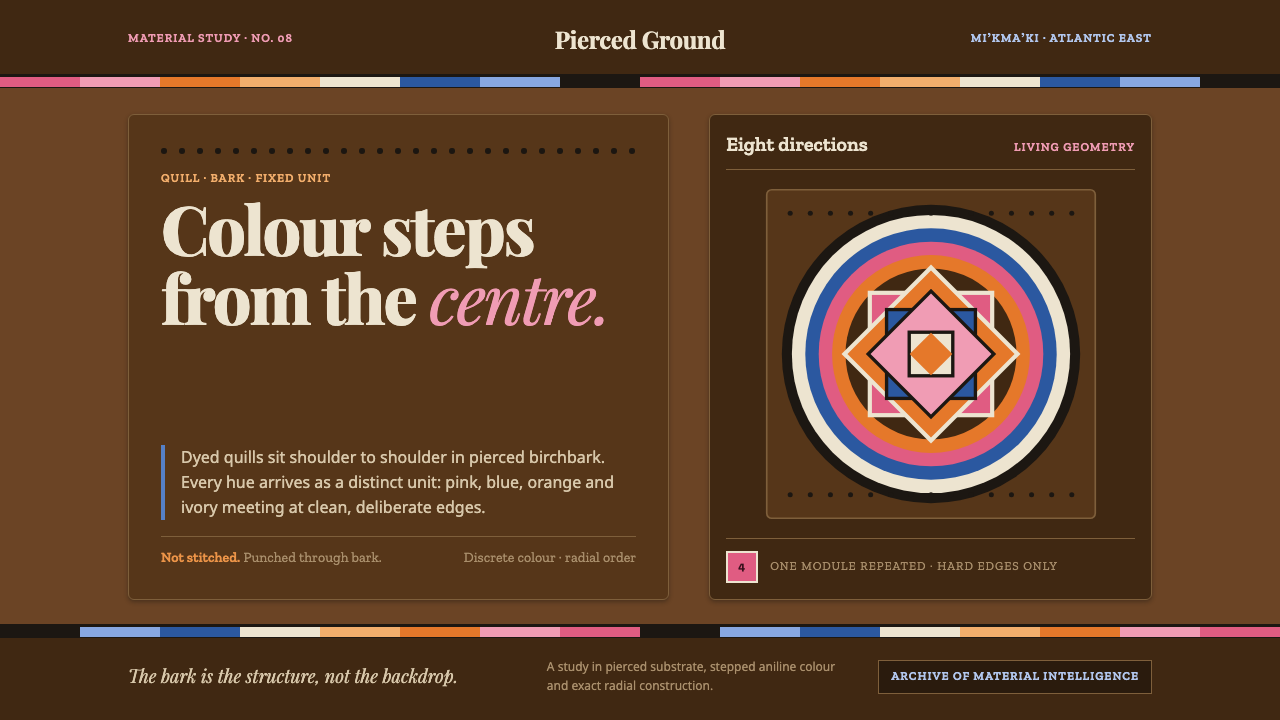 Miʼkmaq QuillworkColour never blends. Bright quill bands step across dark birchbark toward an…
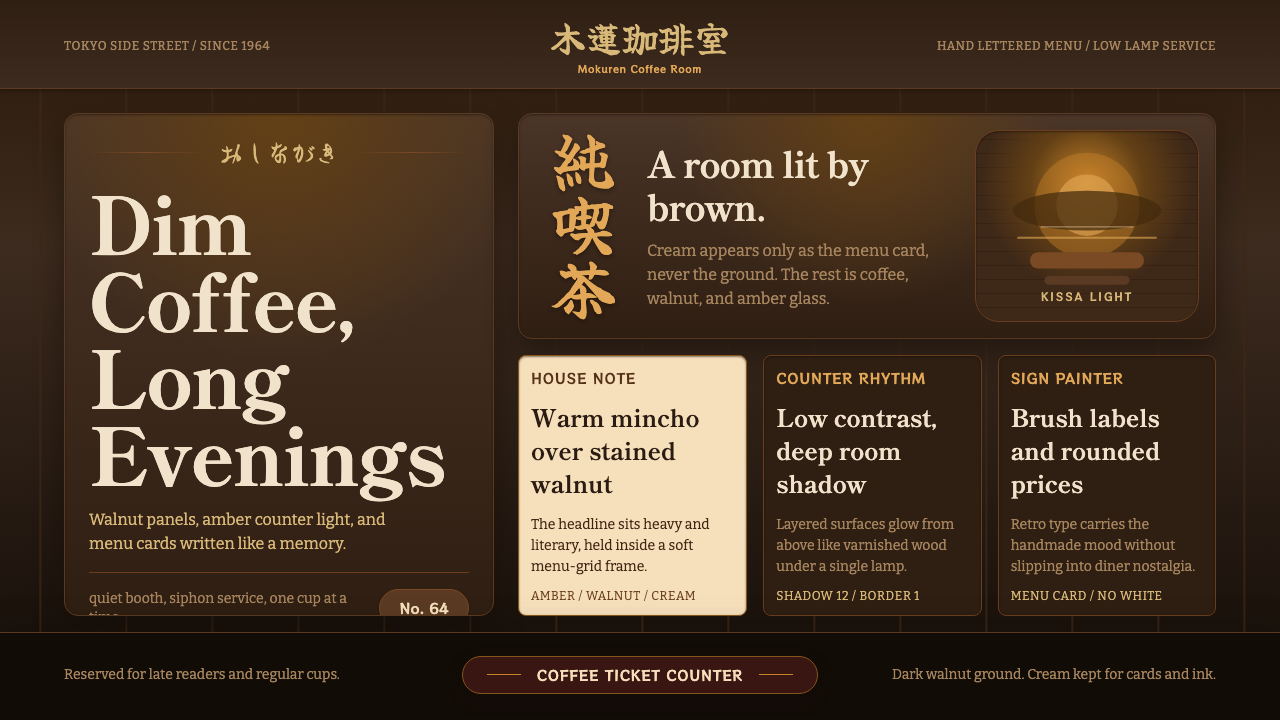 Shōwa KissatenDimness is the luxury. Walnut browns, amber glow, and Mincho type frame a men…