What is Luminol CSI Glow?
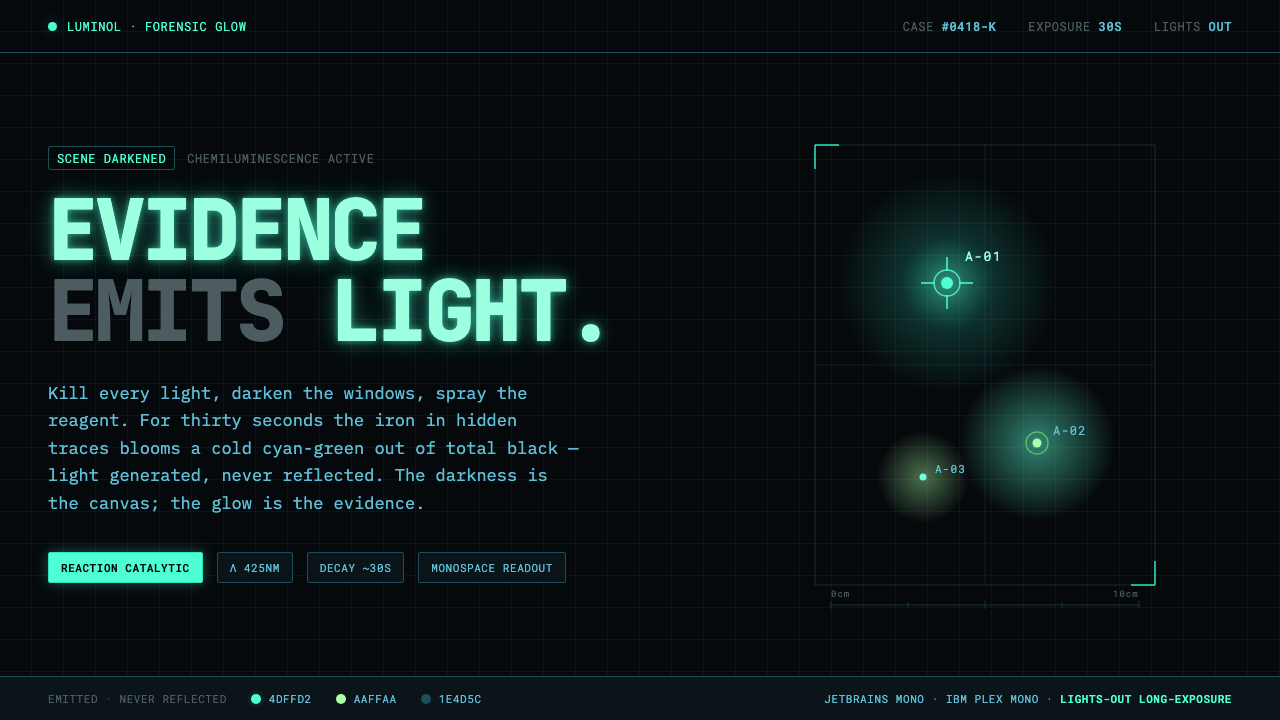
Luminol CSI Glow turns darkness into an instrument: cold cyan-green chemiluminescence, monospace evidence markers, and the severe calm of a forensic scene.
Luminol CSI Glow in brief
Luminol CSI Glow is the visual language of a lights-out crime scene. Every ordinary light is removed, the windows are darkened, and a chemical spray reveals hidden blood through a faint cyan-green glow. The scene is not illuminated in the conventional sense: light is emitted from the evidence itself, blooming briefly out of pitch-black surroundings.
The design system translates that forensic condition into a clinical interface. Black is not merely a background color; it is the field that makes discovery possible. Cyan-green appears sparsely, as if each luminous mark has been earned by investigation. Monospace labels, timestamped readouts, evidence tags, and crosshair grids make the interface feel measured, recorded, and ready for examination.
Its emotional register is restrained rather than theatrical. The glow is cold, thin, and localized, while the surrounding darkness remains dominant. Nothing should feel glossy, decorative, or continuously illuminated. The visual drama comes from contrast: a small sign of evidence against an otherwise silent field.
Where does Luminol CSI Glow come from?
The historical lineage begins with the discovery of the relevant chemistry in 1928, with H. O. Albrecht named among its key figures. The underlying image is forensic rather than decorative: investigators create total darkness so a hidden trace can become visible through its own emitted light. That relationship between darkness, evidence, and observation is the system’s central historical idea.
The visual language later gained broad cultural recognition during the CSI and forensic-procedural era of 1990–2010. Long-exposure crime-scene photography became an important reference point: the surrounding scene recedes into black while chemiluminescence blooms as a cold, almost spectral signal. The image is memorable because it reverses ordinary lighting logic. The subject does not catch the light; it produces the light.
The style belongs to a wider field of forensic science visualization and chemiluminescence imaging. Its vocabulary is procedural: markers identify evidence, grids establish position, and readouts turn observation into a record. This is why the aesthetic feels closer to an investigative workstation than to a conventional neon interface.
Although its references come from forensic laboratories worldwide, the system became especially portable through the global internet. Digital interfaces could preserve the same essential conditions across screens: dominant black, sparse cyan-green glow, monospace information, crosshair geometry, and the visual discipline of a timestamped examination.
What defines the Luminol CSI Glow look?
Black as Evidence Field
Black dominates the composition and should feel absorbing rather than merely dark. It creates the visual silence from which evidence can emerge. Near-black surfaces may separate layers, but the overall field must remain continuous, deep, and resistant to decorative interruption.
Cold Cyan-Green Glow
Cyan-green is the signature luminous color, used as a sparse signal rather than a general accent. It should bloom softly around evidence points while retaining a precise, clinical center. Large uninterrupted fields of glow weaken the forensic logic; luminosity must remain localized.
Monospace Typography
Monospace type gives every label and readout the character of an instrument display. It supports timestamped records, coordinate-like markers, and compact evidence notes. Type should remain legible and procedural, with hierarchy created through scale, spacing, and luminous emphasis rather than expressive lettering.
Crosshair Grid
Crosshair lines organize the field as if a camera or investigator were isolating a point of interest. The grid is a measurement device, not a texture. Lines should remain restrained, with intersections used to establish position, alignment, and attention without competing with the evidence.
Evidence Markers
Labels should feel attached to a case record: concise, coded, and observational. Marker shapes, small identifiers, and directional lines can frame a luminous point, but they should explain its location rather than decorate it. The interface communicates that every highlight has a reason.
Emitted Light, Not Reflection
The glow should appear to originate from the evidence itself. Avoid the visual logic of a spotlight, glossy surface, or environmental illumination. Light gathers around a trace and fades into the surrounding black, preserving the impression that the object has revealed itself rather than been lit from outside.
Timestamped Clinical Readouts
Readouts turn atmosphere into procedure. Time labels, status notes, and compact observations should sit close to the visual field, giving the glow a recorded context. The language is factual and sparse, allowing the luminous evidence to carry the drama.
Who shaped Luminol CSI Glow?
H. O. Albrecht is named as a key figure in the chemistry’s history, whose 1928 discovery provides the earliest historical anchor for the luminous forensic image that this style distills.
Forensic serology investigators represent the practical intelligence behind the aesthetic: darkness is controlled, evidence is revealed, and each luminous trace is treated as something to be observed and recorded rather than admired as decoration.
The CSI and forensic-procedural era from 1990–2010 gave the visual language its broad cultural form, connecting long-exposure crime-scene imagery with investigative interfaces, evidence markers, and cold luminous traces.
Forensic laboratories worldwide form the system’s geographic context. Their shared visual condition — controlled darkness, chemical revelation, and recorded observation — allows the aesthetic to function as a global forensic vocabulary rather than a single local style.
How do you use Luminol CSI Glow today?
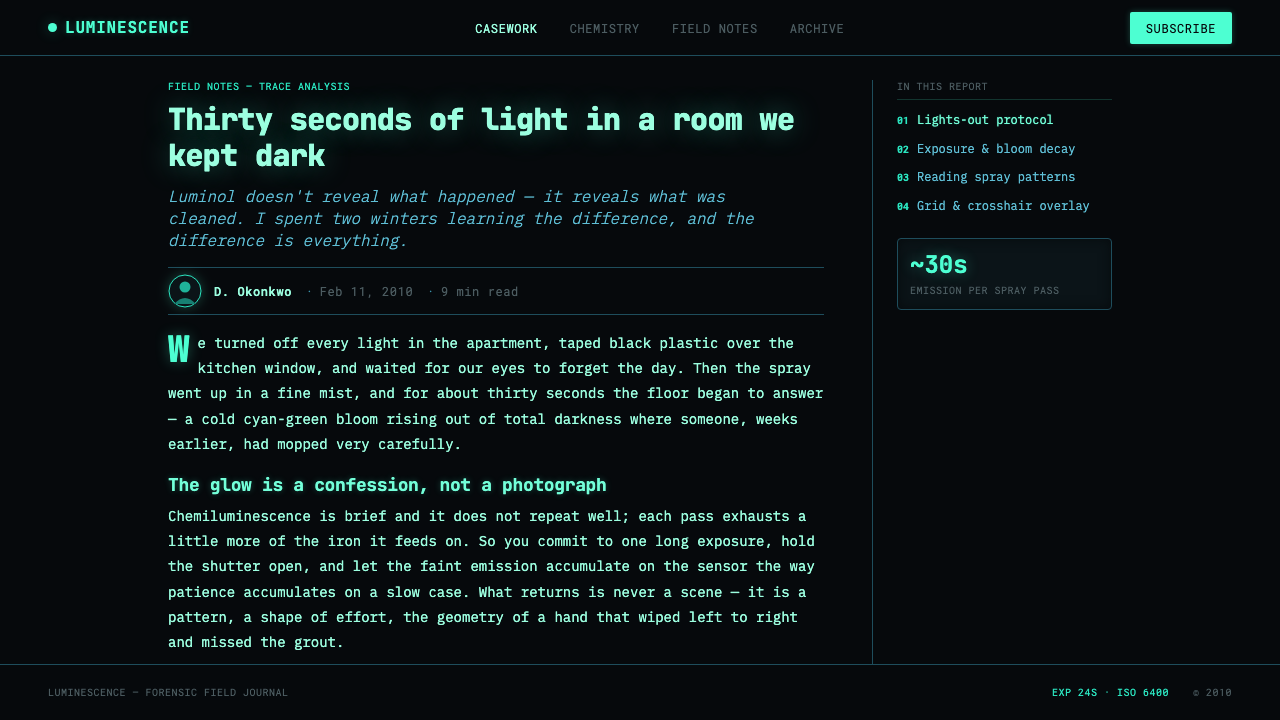
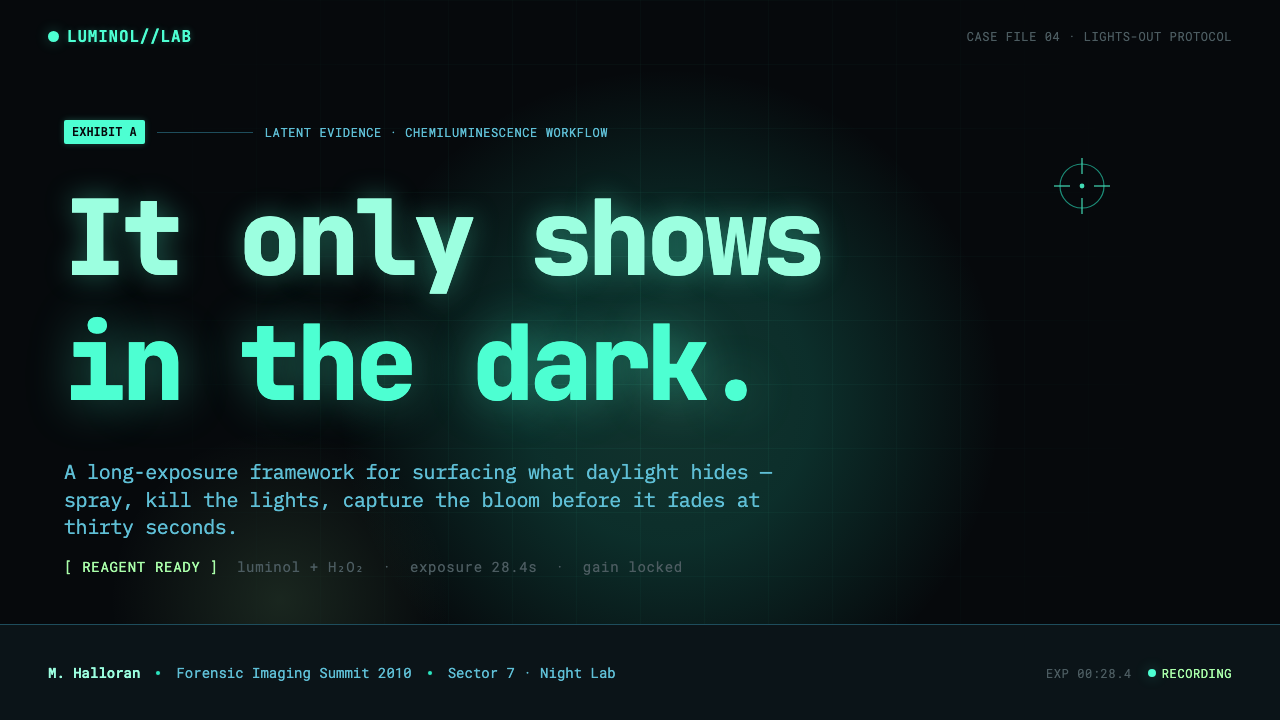
For presentation slides, use the cover as a dark investigative field with a single luminous focal point, a restrained crosshair, and a compact evidence label. Content slides should behave like case records: clear monospace headings, sparse cyan-green emphasis, and generous black space around the information. Data slides work best when charts are treated as evidence diagrams, with one highlighted trace and surrounding readouts that explain what has been isolated.
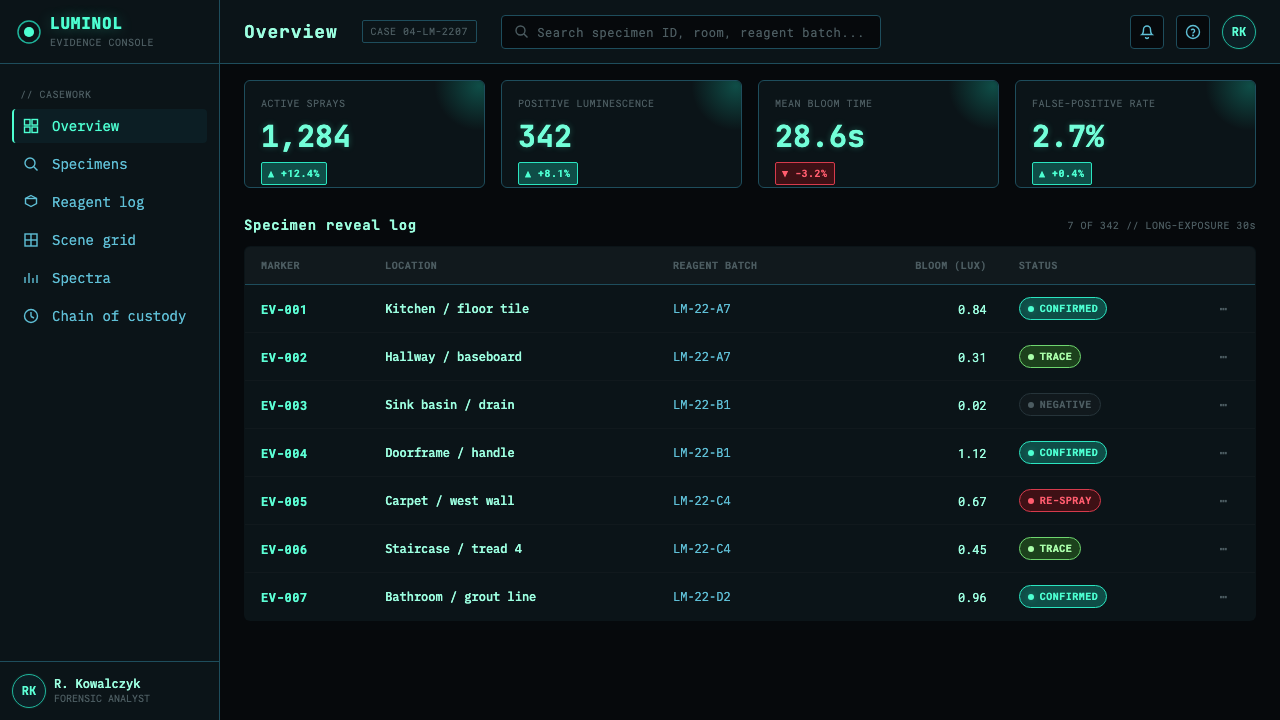
For web interfaces, the style suits dashboards, monitoring tools, analytical workspaces, and pricing pages that want to communicate scrutiny and technical seriousness. Keep the black field dominant, reserve the cyan-green glow for active states or selected evidence, and use markers or crosshairs to clarify focus. A pricing page can make each tier feel like a classified record, but the hierarchy must remain readable and the glow must not turn every card into an illuminated object.
For editorial and marketing work, Luminol CSI Glow supports investigative campaigns, technology stories, research launches, and brands built around discovery. Articles can pair a large dark image field with timestamped captions and evidence-style callouts. Marketing sections should reveal information progressively, allowing a small luminous detail, label, or line to carry the visual emphasis instead of filling every surface with effects.
A common mistake is treating the style as generic cyberpunk neon. Multiple bright colors, continuous glow, glossy surfaces, and decorative circuitry destroy its forensic restraint. Another mistake is making the evidence markers cryptic without purpose. Every line, label, and luminous point should either locate, identify, or record something; if it does none of these, it probably does not belong.
The system is strongest when the interface feels as though the viewer has entered an investigation already in progress. Establish the darkness first, introduce the grid as an instrument, then let the glow identify the important fact. The order matters: atmosphere supports evidence, evidence supports information, and information remains the final purpose.
Luminol CSI Glow — FAQ
Is Luminol CSI Glow simply a neon interface?
No. Generic neon treats light as decoration or atmosphere. Luminol CSI Glow treats light as evidence. The cyan-green signal must emerge from dominant black, remain sparse, and appear connected to a marker, grid position, or recorded observation. If everything glows, nothing has been discovered.
Why must black remain the dominant ground?
Black represents the controlled darkness of the forensic scene. It provides the visual silence that allows emitted light to carry meaning. A lighter background changes the logic from evidence emerging into darkness to an object being illuminated from outside, which makes the result feel more like a conventional interface.
Can the style use colors other than cyan-green?
It can, but additional colors should remain subordinate. Cyan-green is the forensic signature and should carry the principal luminous meaning. Other tones may support structure or status, yet a broad multicolor palette shifts the work toward entertainment technology and away from the focused, clinical quality of chemical revelation.
What role do the crosshair grids and evidence markers play?
They convert atmosphere into examination. Crosshairs establish position and attention; evidence markers identify what has been isolated; readouts record the observation. Together they make the interface procedural. They should clarify the luminous point, not compete with it or function as abstract decoration.
Where does this style work best, and where does it struggle?
It works best where discovery, monitoring, technical scrutiny, or recorded evidence are central: dashboards, analytical tools, research communication, investigative editorial, and focused pricing experiences. It struggles when the product depends on warmth, abundance, or continuous visual richness. Its strength is disciplined revelation, not decorative comfort.
Related design styles
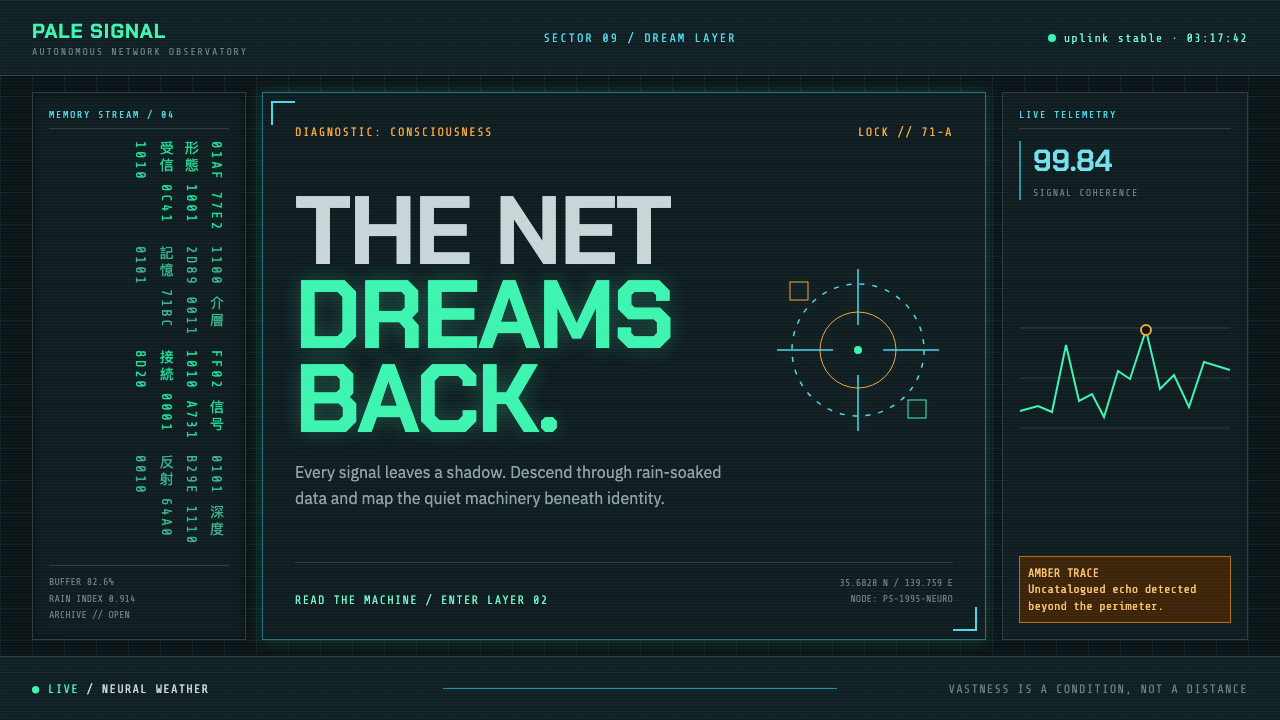 Ghost in the Shell (1995)A machine dreams in the rain. Phosphor green code burns through black-teal gl…
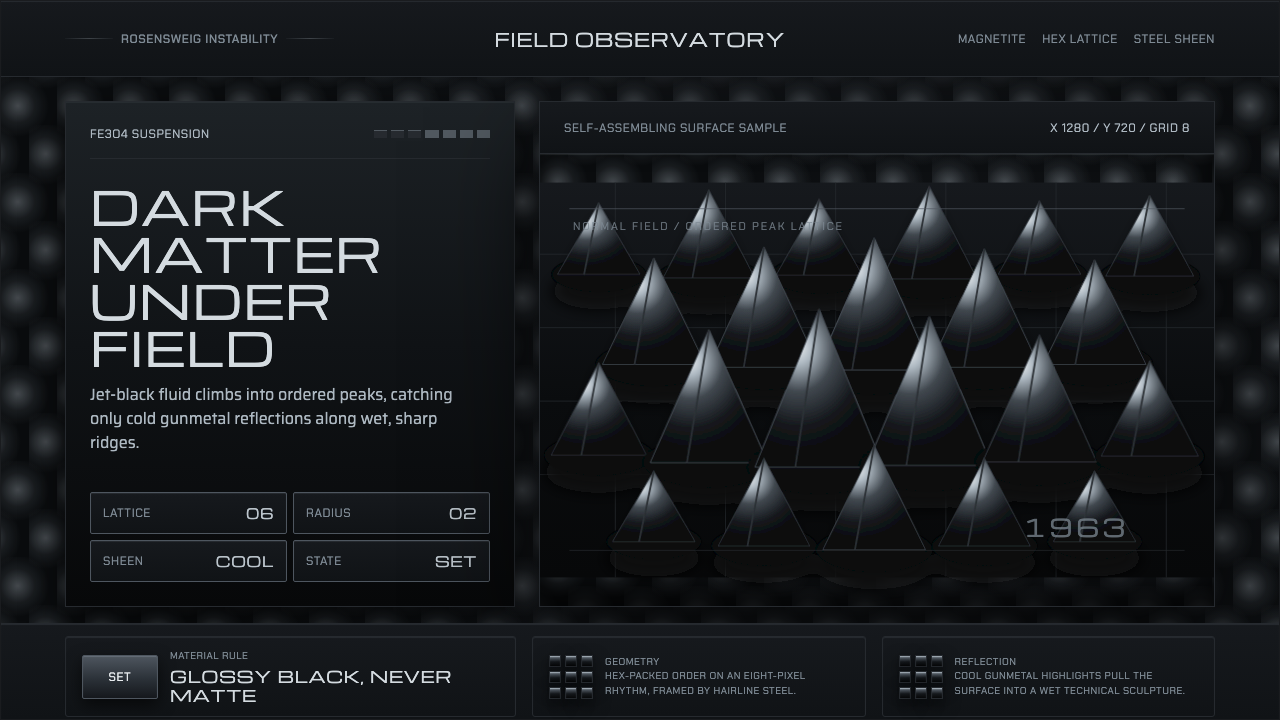 Ferrofluid Spike FieldPhysics turns sculptural. Jet black peaks, steel sheen, hex order.
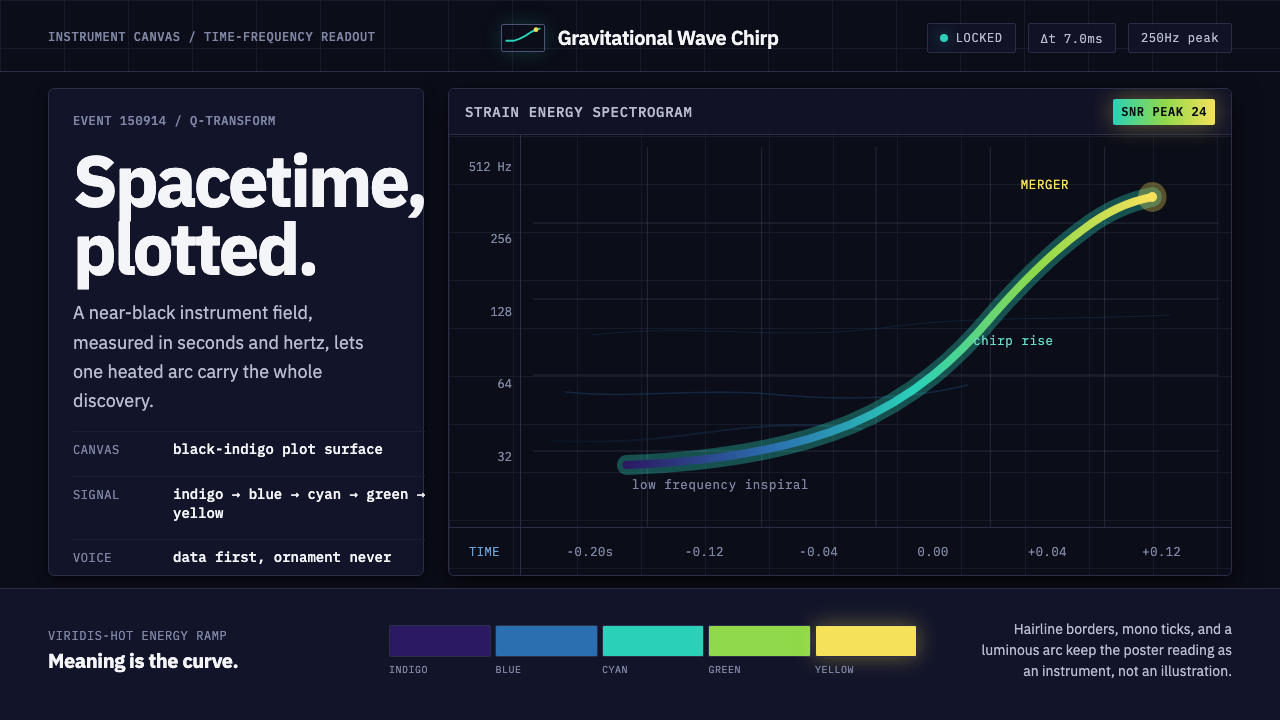 Gravitational Wave ChirpData makes the drama. Near-black grid, mono Hz ticks, and a viridis-hot chirp…
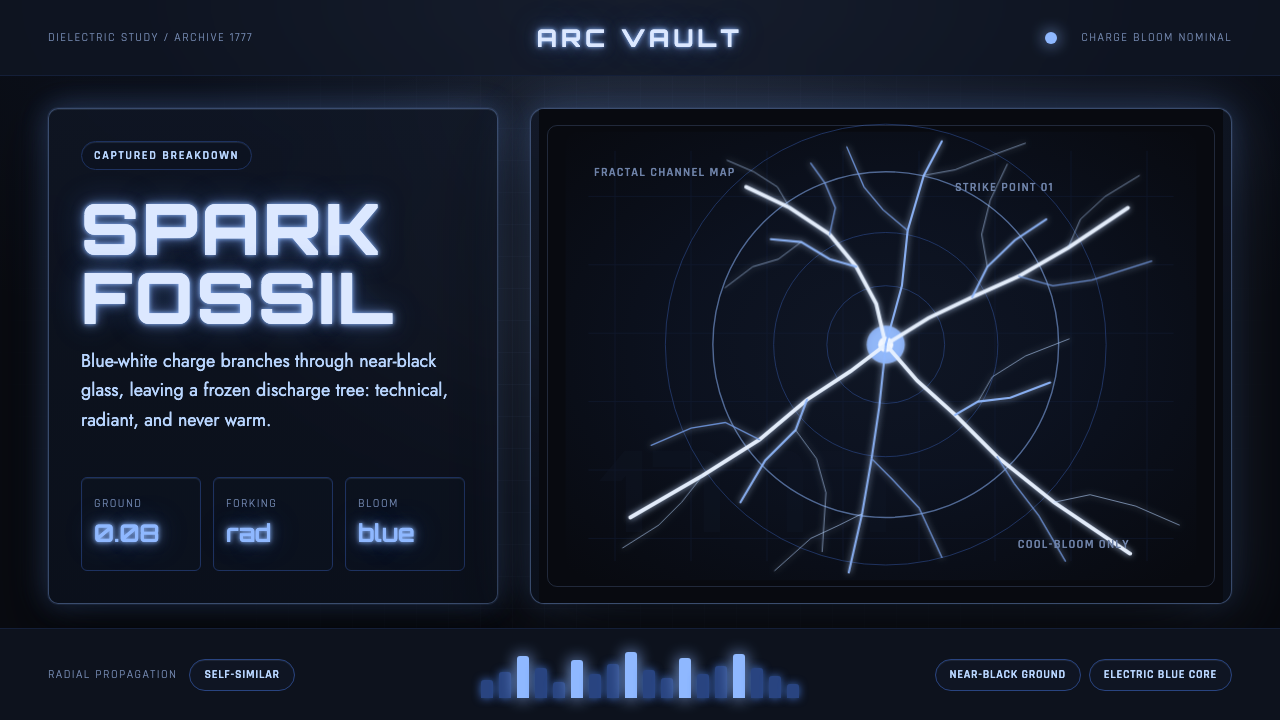 Lichtenberg FigureA spark fossil. Blue-white fractals bloom across near-black dielectric glass.
 Minority Report Gestural UIPredictive computing, conducted on glass. Luminous cyan panels floating in pu…
 Abyssal BioluminescenceDark carries the signal. Electric cyan pins and Exo 2 readouts surface from a…