What is Lo-fi Hip Hop / Chillhop?
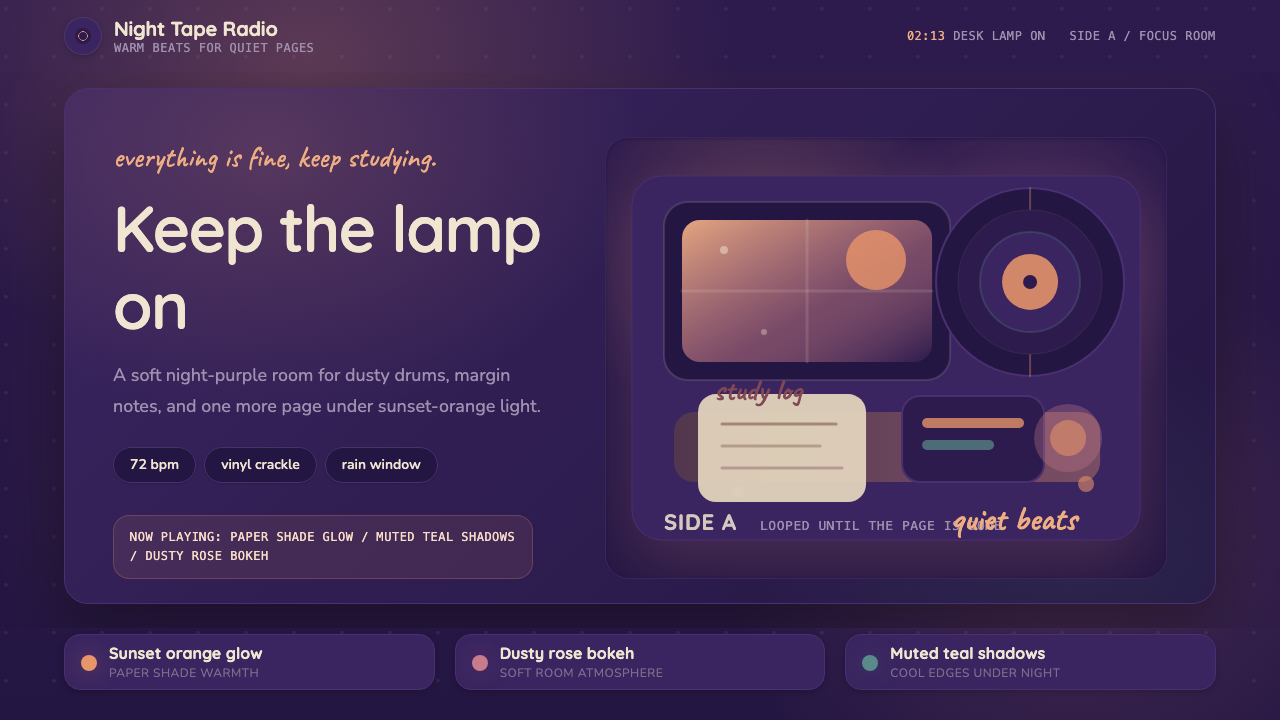
Lo-fi Hip Hop is the visual language of late-night studying — warm lamp glow, night-purple skies, and an animated girl at her desk who never seems to sleep.
Lo-fi Hip Hop / Chillhop in brief
Lo-fi Hip Hop is a visual aesthetic born from the internet's most beloved study soundtrack. It translates the musical warmth of slow, jazzy, vinyl-crackle beats into a cohesive visual system: deep purple and indigo night skies, pools of amber lamplight, houseplants casting soft shadows on wooden desks, steaming mugs of tea or coffee, open notebooks, and headphones resting near a rain-streaked window. Every surface carries a sense of hand-crafted imperfection — slightly painterly, slightly nostalgic, never clinical.
The aesthetic's emotional register is deliberately narrow and deliberately comforting. It does not aspire to excitement or surprise. It says: the world is still moving outside, but here in this circle of lamplight, everything is manageable. That quality — cozy focus, productive calm — is what distinguishes Lo-fi Hip Hop from other warm or retro aesthetics. Where vintage aesthetics reach backward with longing, Lo-fi Hip Hop situates itself in an eternal present-tense evening, one that could be tonight for anyone anywhere.
Typographically, the aesthetic favors rounded, soft letterforms that match its painterly warmth. Headlines carry a friendly approachability; margin annotations feel like handwritten notes left by a fellow student. Body text is never severe. Color is restrained and emotionally legible: the palette is built from the natural colors of a cozy room after dark — warm amber, dusty rose, muted sage, deep violet — rather than from any purely abstract color theory.

Where does Lo-fi Hip Hop / Chillhop come from?
The aesthetic has two distinct roots that converged in the mid-2010s. The musical foundation stretches back to Japanese producer Nujabes, whose 2000s instrumental hip-hop albums fused jazz samples, melancholic chord progressions, and unhurried tempos into something intimate and studious. American producer J Dilla, working in Detroit across the 1990s and 2000s, contributed a similar vocabulary of dusty samples and imperfect drum timing that gave lo-fi music its characteristic sense of warm human imprecision. Both producers are now considered founding figures of the genre's soul, even though neither explicitly branded their work as lo-fi.
The visual identity crystallized around a single YouTube stream. In 2017, a channel then called ChilledCow — later renamed Lofi Girl — launched a 24-hour live stream featuring a looping anime-style animation of a girl studying at her desk. The stream, pairing the visual with a continuous lo-fi playlist, ran uninterrupted for years and accumulated hundreds of millions of views. The image of the studying girl became the genre's iconic mascot: she defined what lo-fi should look like — warm interior light, Japanese anime line-quality, an implied rainy night outside, books and a cat. The visual template she established influenced countless artists, album covers, and eventually UI designers.
Parallel to the Lofi Girl stream, the Dutch label and media brand Chillhop Music built an entire visual ecosystem around the genre. Founded in 2013, Chillhop released compilation albums with illustrated covers depicting raccoons, bears, and foxes working at desks and coffee shops — the same cozy, anthropomorphized-animal imagery that became synonymous with chillhop's visual identity. These covers, by artists including Juan Pablo Machado, set a visual standard for the genre: muted, painterly, character-driven illustration with a strong emphasis on soft light and natural textures.
The visual origins also draw deeply from Japanese anime aesthetics, particularly the atmosphere of studio Ghibli films and slice-of-life genres. The soft, ambient quality of a Ghibli background painting — late afternoon light on tatami mats, a cat in a window, rain on a quiet street — maps almost perfectly onto the lo-fi visual register. This cultural cross-pollination is explicit: many lo-fi artists and channels directly reference anime as a visual source, and the loop format of the original Lofi Girl stream was itself borrowed from the aesthetic of anime background loops.
What defines the Lo-fi Hip Hop / Chillhop look?
Color Palette
The palette is drawn from the natural colors of a cozy interior at night. Deep violet and indigo anchor the backgrounds and sky areas, suggesting late evening rather than absolute darkness. Warm amber and golden tones describe lamplight, candlelight, or the reflected glow of a screen. Dusty rose and terracotta appear as mid-tones in character design and decorative accents. Muted sage or olive greens represent houseplants. Everything is desaturated just enough to feel soft — high-saturation colors are conspicuously absent, because the aesthetic is built around comfort rather than stimulation.
Texture and Grain
Texture is one of the defining characteristics that separates Lo-fi Hip Hop from other warm aesthetics. Subtle film grain or paper texture is layered over the entire composition, softening edges and giving even digital illustrations the tactile quality of a physical medium. Brush strokes remain visible in painted areas. Color transitions are not hard edges or smooth gradients but soft, imprecise washes — the kind that suggest watercolor or gouache applied by hand. This deliberate imperfection signals authenticity and warmth, countering any sense of digital sterility.
Typography
Rounded sans-serif typefaces are the dominant choice for headlines and UI labels, their soft terminals echoing the overall softness of the visual system. Handwritten or casual script typefaces appear frequently in supporting roles — margin annotations, captions, small labels — reinforcing the sense of something personally crafted rather than mass-produced. Body text is set generously, with comfortable spacing between lines, never dense or intimidating. Type color is typically warm rather than pure white or pure black: cream on deep violet, warm brown or amber on pale backgrounds.
Illustration Style
Character and scene illustration draws explicitly from Japanese anime aesthetics, particularly the background painting tradition of slice-of-life genres. Characters are drawn with simplified features and expressive silhouettes; environments are rendered with more detail and painterly depth than the figures inhabiting them — a technique common in anime production. Objects within scenes carry careful emotional weight: a stack of books, a houseplant, a vinyl record, a sleeping cat. Each object is chosen for its associative warmth rather than its functional necessity.
Light and Atmosphere
Light in Lo-fi Hip Hop compositions is always warm, always localized, and always domestic. The primary light source is almost always a desk lamp or window — never overhead fluorescents or cold blue daylight. Lamplight creates a pool of amber warmth that defines the foreground while the rest of the scene recedes into cooler violet tones. This contrast — warm foreground against cool background — is perhaps the single most recognizable compositional signature of the aesthetic. Steam rising from a mug, condensation on a window, the ambient glow of a monitor in a dark room: all of these reinforce the sense of a protected interior space.
Symbolic Objects
The Lo-fi aesthetic has developed a consistent vocabulary of symbolic objects that function almost like a shared visual language. Vinyl records and turntables signal the genre's musical roots. Houseplants in terracotta pots evoke organic life in a digital world. Open books and scattered stationery mark the studying scenario. A cat — sleeping, watching, or curled at the edge of a desk — appears so frequently it has become near-mandatory. Rain on windows signals contemplation and comfortable isolation. Used in combination, these objects quickly communicate the entire emotional register of the aesthetic without requiring any text.
Dark Mode by Default
Unlike most design aesthetics that consider dark mode a secondary variant, Lo-fi Hip Hop is fundamentally dark-mode native. The night setting is not optional — it is the premise. Deep violet or near-black backgrounds are the canonical ground, with warmth introduced through controlled pools of lamplight rather than through a light background. This dark foundation gives the aesthetic its emotional quality of intimate enclosure; a light-background version of the same elements would feel categorically different — more cheerful, less nocturnal, and considerably less characteristic.

Who shaped Lo-fi Hip Hop / Chillhop?
Japanese producer Jun Seba, known professionally as Nujabes, is widely regarded as the spiritual godfather of lo-fi hip-hop music and by extension its visual culture. Working in Tokyo across the late 1990s and early 2000s, he fused jazz harmony, melancholic chord progressions, and hip-hop drum patterns into a sound that felt simultaneously urban and contemplative. His soundtracks for the anime series Samurai Champloo brought his aesthetic to a global audience and cemented the link between lo-fi music and Japanese visual culture. Nujabes died in 2010, but his catalog remains the genre's most referenced touchstone, and his image — headphones, quiet focus, jazz records — is directly embedded in the aesthetic's symbolic vocabulary.
The YouTube channel originally known as ChilledCow, now called Lofi Girl, is responsible more than any other single entity for establishing Lo-fi Hip Hop as a distinct visual aesthetic. The channel's 24-hour live stream, launched in 2017 featuring a looping animation of a girl studying at her desk — drawn in anime style, sitting before a warm lamp with rain on the window and a cat nearby — created the canonical image that defined the genre visually. The stream ran continuously for years, accumulating hundreds of millions of hours watched, and the studying girl became one of the most recognized figures in internet culture. Lofi Girl's aesthetic choices — the color palette, the object vocabulary, the atmospheric mood — became the template that artists, album designers, and app creators worldwide consciously referenced and built upon.
Colombian illustrator Juan Pablo Machado is among the most visible visual artists in the lo-fi and chillhop ecosystem, known primarily for his ongoing work with Chillhop Music. His illustrations — featuring animal characters such as raccoons and bears engaged in cozy domestic activities, rendered in a soft painterly style with warm interior lighting and natural textures — defined the visual language of the Chillhop brand and influenced the broader genre's illustration conventions. Machado's work demonstrates how the aesthetic can carry emotional weight through character design and environmental storytelling without relying on any human figure, expanding the genre's visual possibilities beyond the Lofi Girl archetype.
Founded in the Netherlands in 2013, Chillhop Music is both a record label and a media brand that played a foundational role in establishing Lo-fi Hip Hop as a genre with a coherent visual identity. Through its album art, social media presence, animated music videos, and YouTube compilations, Chillhop built an illustration-based visual ecosystem that paired the genre's music with a consistent aesthetic: animal characters in cozy environments, muted warm palettes, handcrafted textures, and an emphasis on quiet industriousness. The brand demonstrated that lo-fi visual aesthetics could translate successfully to merchandise, digital branding, and community identity — a model that countless creators and platforms subsequently adopted.
Detroit producer James Yancey, known as J Dilla, is one of the two foundational musical figures whose work gave lo-fi hip-hop its defining sonic character. Working across the 1990s and 2000s with artists including A Tribe Called Quest and Common, Dilla developed a production style characterized by deliberately imprecise drum timing, heavy use of vinyl samples, and a warmth that came from the inherent imperfection of the source material. It is this quality of warm, human imprecision — the sense that the music was made by hand rather than by algorithm — that lo-fi visual aesthetics attempt to replicate in the visual domain: the grain, the soft edges, the visible brush strokes, the sense of something touched and lived-in.
How do you use Lo-fi Hip Hop / Chillhop today?
Lo-fi Hip Hop translates into designed artifacts most naturally when the product's emotional goal aligns with the aesthetic's core promise: comfort, focus, and the sense of being in a protected, productive space. Study apps, note-taking tools, ambient productivity platforms, music streaming interfaces, and meditation or sleep applications are all contexts where the aesthetic lands with genuine resonance rather than decorative incongruity. When the product context matches, designers do not need to fight the aesthetic's associations — those associations do the emotional communication work automatically.
For presentation slides, the aesthetic works exceptionally well for covers and scene-setting opening sequences. A cover slide benefits from the compositional logic of a lo-fi illustration: a warm lamplight pool centered in a deep violet or indigo field, with rounded headline type set in cream or warm white. Section divider slides can use symbolic object silhouettes — a coffee mug, an open book, a vinyl record — as compositional anchors. Content slides should maintain the warm dark background with generous type spacing; resist the temptation to brighten the palette for legibility, since the contrast between warm amber type and deep violet grounds is inherently readable. Data slides work best when charts are given soft, muted color fills drawn from the palette rather than the sharp primaries of more clinical visualization styles.
For web interfaces, dashboards and focus-oriented productivity tools are the strongest application contexts. The approach: establish a deep violet or near-black background as the primary ground, introduce warmth through amber or golden accent tones for interactive elements and calls to action, and use cream or soft warm white for body text. Card components should carry subtle grain or soft inner glow rather than hard drop shadows; borders, where used, should be low-contrast and slightly warm rather than neutral grey. Navigation and typographic hierarchy rely on size and weight contrast within a single rounded typeface family; avoid introducing additional typeface personalities that pull against the cohesive warmth. Pricing pages and feature comparison layouts can adapt the aesthetic by keeping backgrounds dark and using amber or dusty rose as tier-differentiating accent colors.
For editorial and marketing applications, the aesthetic communicates particularly well in contexts associated with wellbeing, creative practice, learning, or music culture. An editorial layout built on this aesthetic uses a deep violet or warm near-black as the page ground, with a wide margin reserved for handwritten-style annotations or pull quotes set in a casual script face. Feature illustrations or header imagery should follow the painterly, soft-textured style with warm interior lighting. Marketing pages are most effective when they commit fully to the night-time atmosphere rather than trying to mix the aesthetic with bright, energetic tones — the aesthetic's power comes from its consistency and its clear emotional positioning.
A common mistake when applying Lo-fi Hip Hop aesthetics is treating the warmth as permission for visual busyness. The original aesthetic is actually quite spare: one or two characters, a small selection of meaningful objects, and a great deal of atmospheric negative space. When designers add too many textures, too many symbolic objects, or too many competing warm tones simultaneously, the result loses the quality of focused calm and begins to read as cluttered nostalgia. Similarly, using bright, fully saturated warm tones in place of the muted, desaturated palette destroys the cozy intimacy the style depends on — the amber of lamplight is never the same as a vivid orange brand color. Restraint in color intensity is as important here as the color choice itself.

Lo-fi Hip Hop / Chillhop — FAQ
Is Lo-fi Hip Hop appropriate for professional or corporate contexts?
It depends heavily on what kind of professional context. The aesthetic is well-suited to creative studios, music platforms, wellness companies, educational technology, and individual freelancer portfolios where warmth and approachability are assets. It tends to work against the aesthetic expectations of financial services, legal platforms, enterprise software, or any context where authority and institutional credibility are primary signals. The key diagnostic question is whether the product wants users to feel comforted or to feel confident in the institution's power and reliability — those are different emotional targets that require different visual strategies.
How do I avoid Lo-fi Hip Hop looking generic or derivative?
The most common path to generic lo-fi is assembling the symbolic objects — the girl, the desk lamp, the cat, the plants — without genuine scene design or compositional intention. The original Lofi Girl stream worked because every element was considered in relation to every other; the composition was not a checklist but an atmosphere. To avoid derivativeness, choose a specific time of night, a specific quality of light, and a specific mood — then use only the objects that support that specific version of the aesthetic. The genre is also more expandable than its canonical images suggest: outdoor night scenes, morning transitions, different cultural contexts for the domestic interior, different character types. Working from the emotional premise rather than the object vocabulary opens more original territory.
Can this aesthetic work for light-mode interfaces?
A light-mode variant is possible but requires reconceptualizing the aesthetic rather than simply inverting the colors. The night setting is so fundamental to the aesthetic's emotional identity that removing it changes the register entirely — a daylight lo-fi interface will feel like a related but distinct thing, closer to a general cozy-illustrated style than to lo-fi proper. If light mode is required, the most successful approach shifts the time to early morning rather than late night: pale blue-grey skies, warm cream surfaces, soft morning light rather than lamplight. The object vocabulary and illustration style can remain consistent; it is the color temperature of the light source that shifts. Accepting that this produces a softer, less characteristic version of the aesthetic is important — do not attempt to preserve the nighttime emotional intensity in a light-mode rendering.
How does Lo-fi Hip Hop relate to other cozy or nostalgic aesthetics like cottagecore or vaporwave?
All three are internet-native aesthetic movements that use visual nostalgia as an emotional strategy, but they draw on completely different source material and produce very different atmospheres. Cottagecore references pastoral European imagery — botanical illustration, linen textures, soft natural daylight — and carries connotations of retreat from technology. Vaporwave uses ironic distance and surrealism, saturated pinks and purples, retro computer aesthetics, and corporate imagery fragmented into something uncanny. Lo-fi Hip Hop is neither pastoral nor ironic — it is earnestly urban, contemporary, and productive. The cozy-ness is set against a background of actual work and focused effort, not escape. Mixing these aesthetics tends to undermine each of them; they occupy adjacent but distinct emotional territories.
What are the biggest risks of getting Lo-fi Hip Hop wrong in a UI context?
The primary risk is a readability and accessibility failure. The deep violet and near-black backgrounds, combined with warm amber or cream text, can produce sufficient contrast when the tones are well-chosen — but the temptation to use very low-contrast combinations for aesthetic reasons is significant and frequently produces text that is difficult to read for users with visual sensitivities. Grain textures layered over text compound this problem. The second significant risk is tonal mismatch: if the product being designed involves financial transactions, medical information, legal documents, or any high-stakes decision, the cozy-comforting tone of the aesthetic will work against the user's need to feel alert, careful, and competent. The aesthetic is not tonally neutral — it is specifically calibrated toward relaxed focus, and that calibration is a liability in contexts that require vigilance.
Related design styles
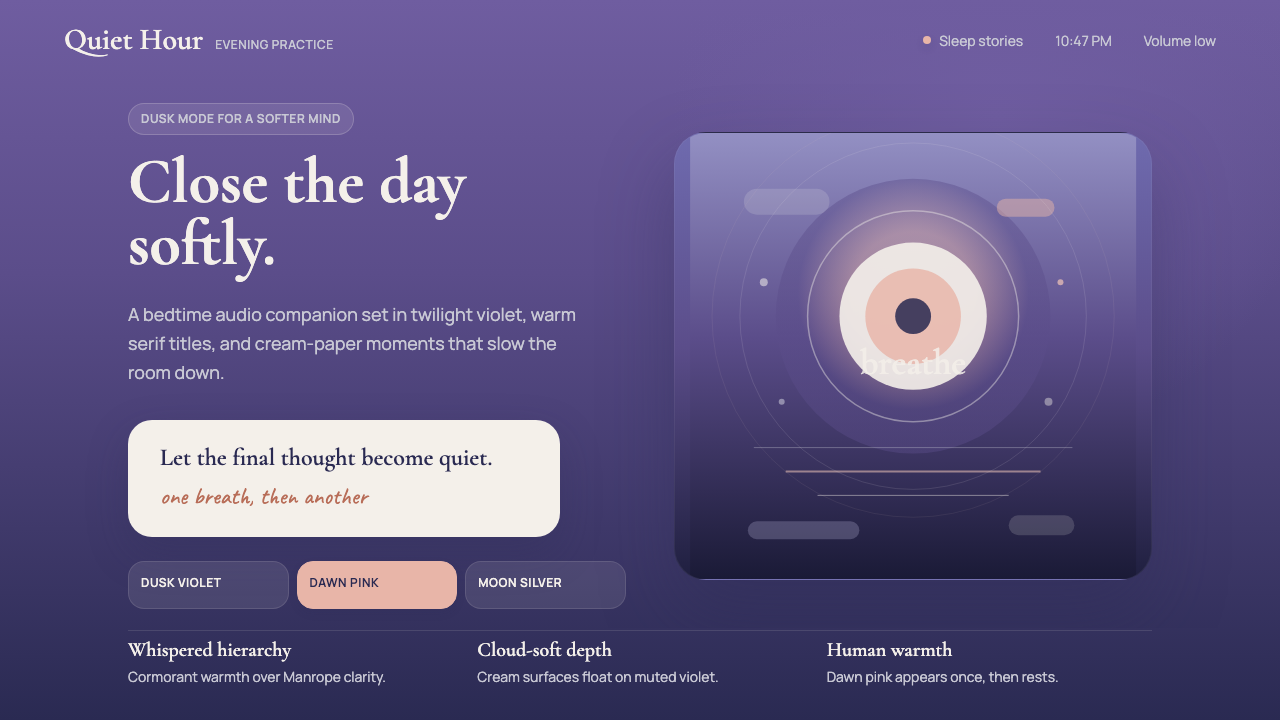 Calm App Purple MeditationWhispers at bedtime. Dusk-purple gradients, cream serif type, and dawn-pink w…
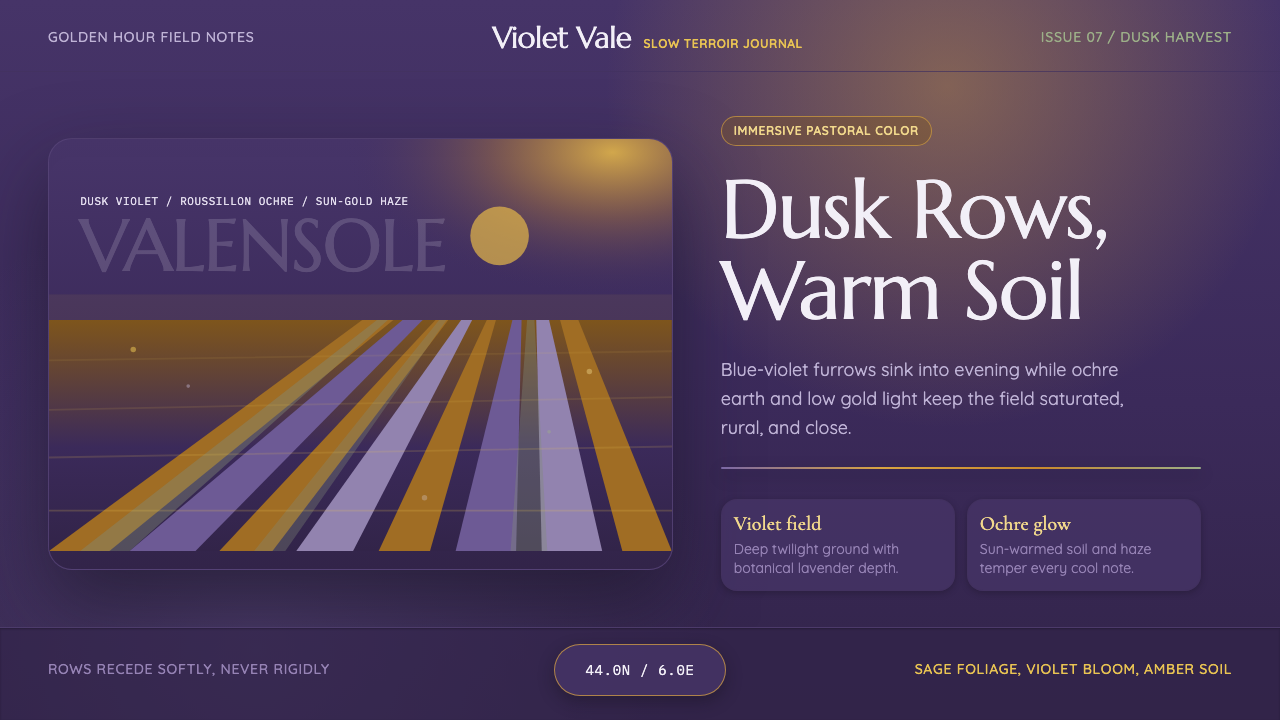 Provence LavenderSaturated pastoral dusk. Violet rows, ochre soil, and sun-gold haze build the…
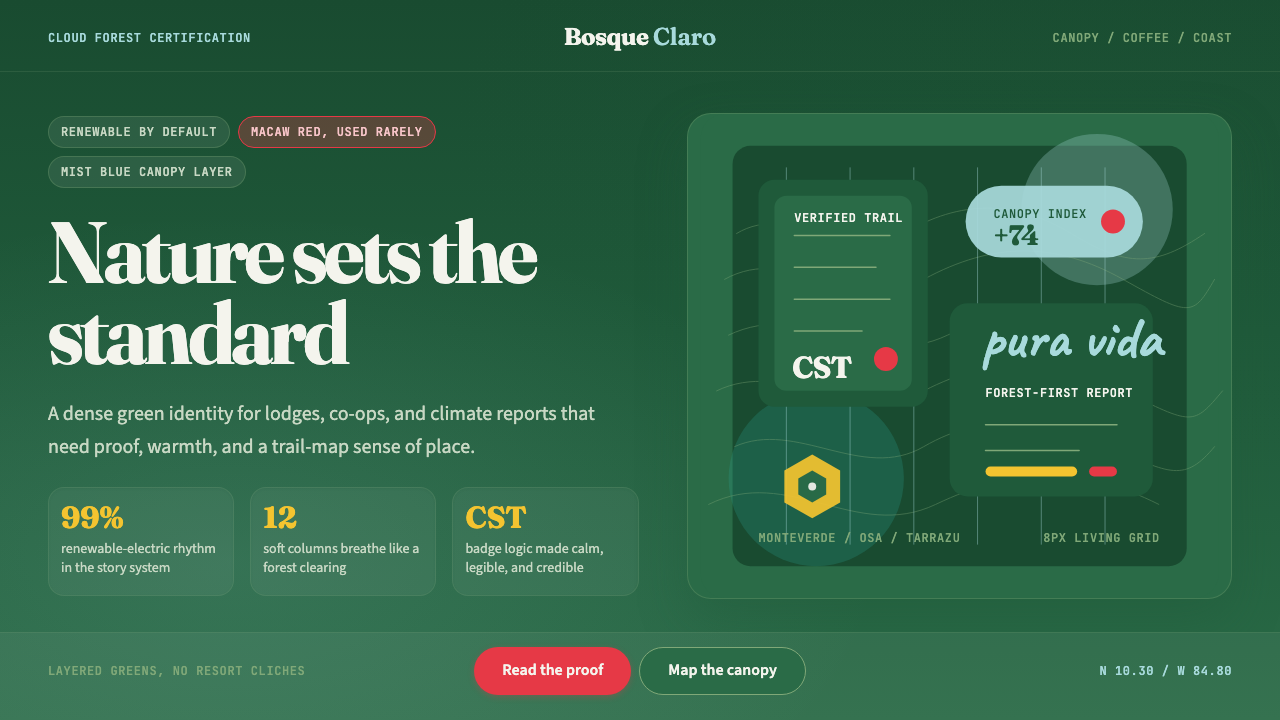 Costa Rica Pura Vida EcoAlive without greenwash. Cloud-forest green, Fraunces serif, and scarlet acce…
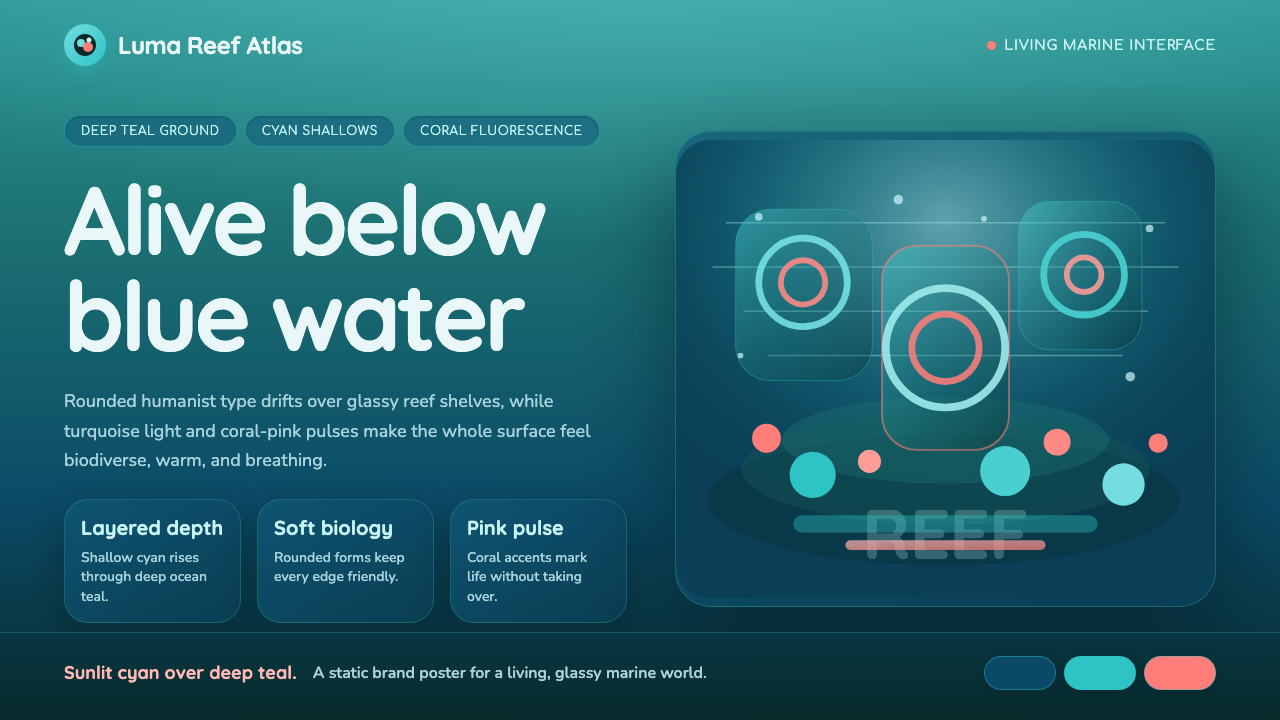 Great Barrier ReefAlive under deep teal. Quicksand curves, cyan glow, and coral-pink pulses bui…
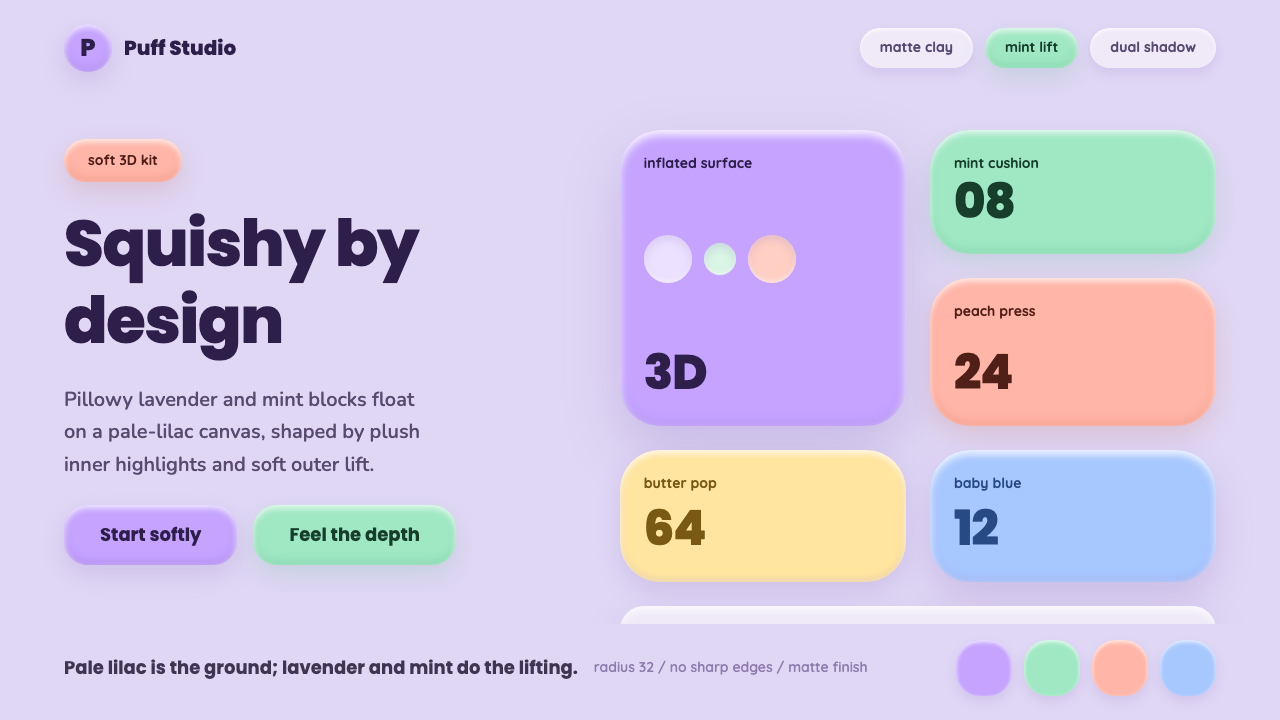 ClaymorphismSquishy, not flat. Lilac clay surfaces puff up with mint and lavender dual sh…
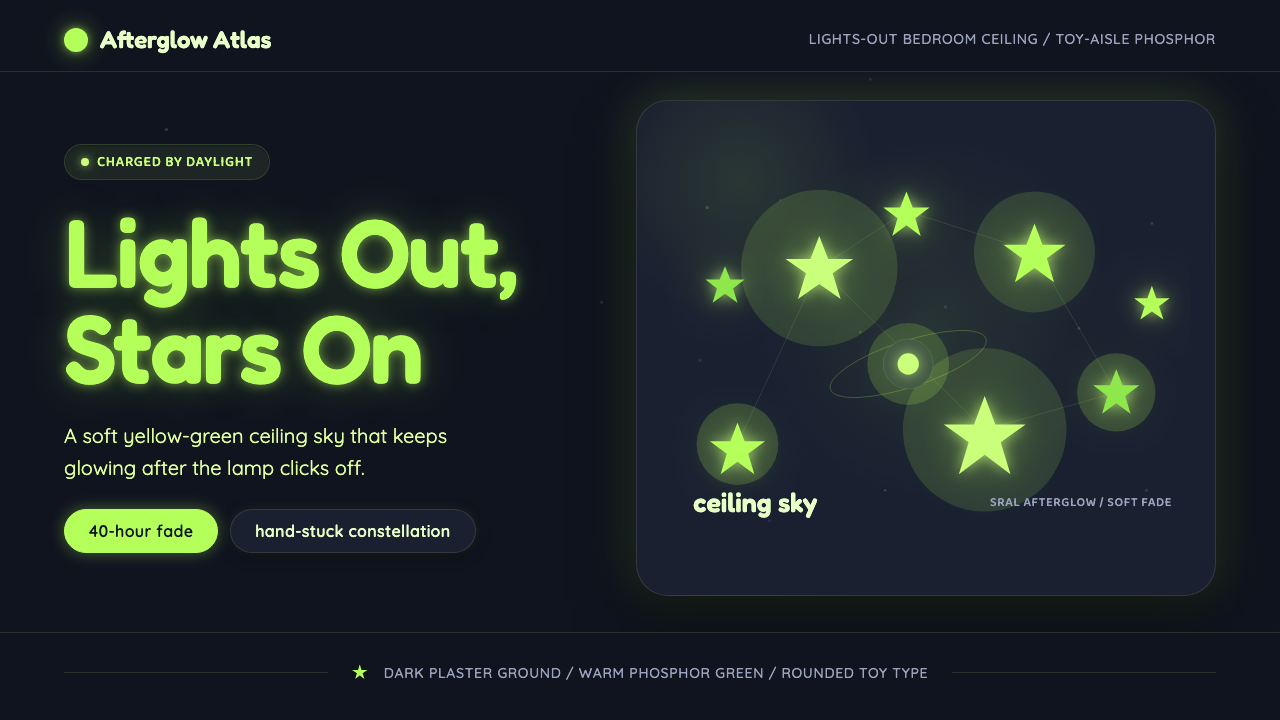 Glow-in-Dark Ceiling StarsTurns lights-out into wonder. Yellow-green stars glow across a dark blue-gray…