What is Leonardo — Mona Lisa (1503)?
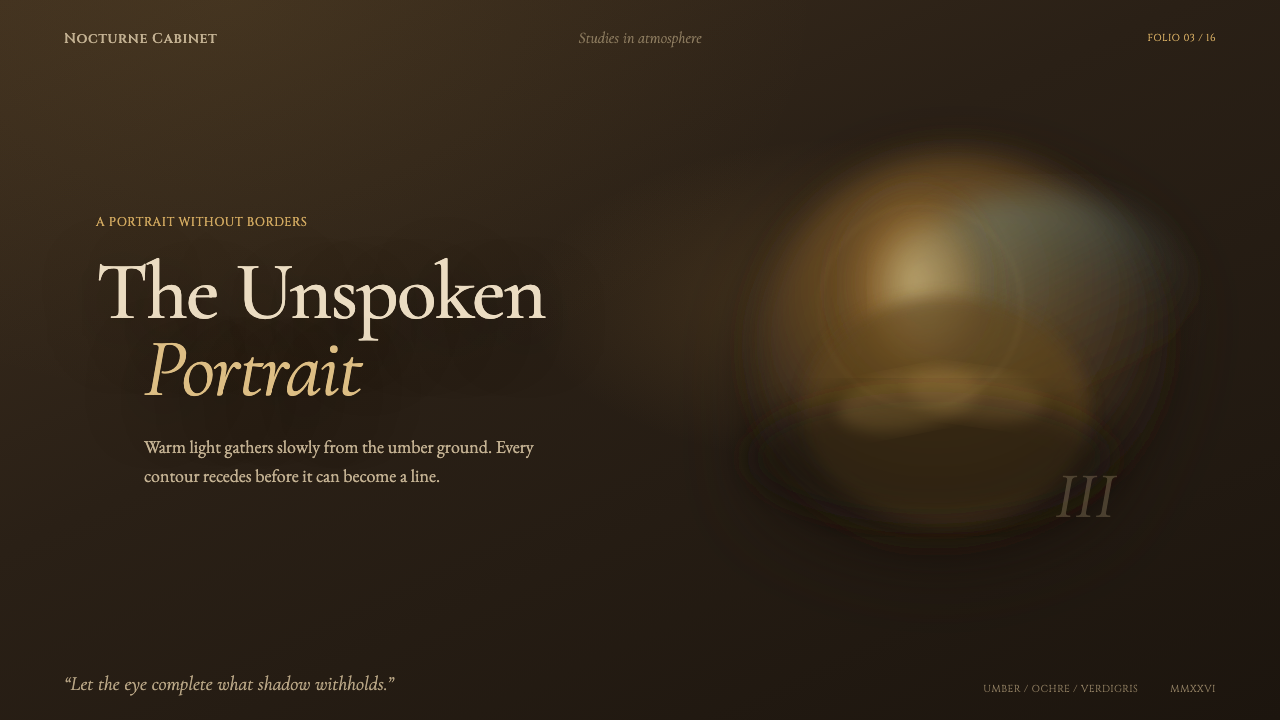
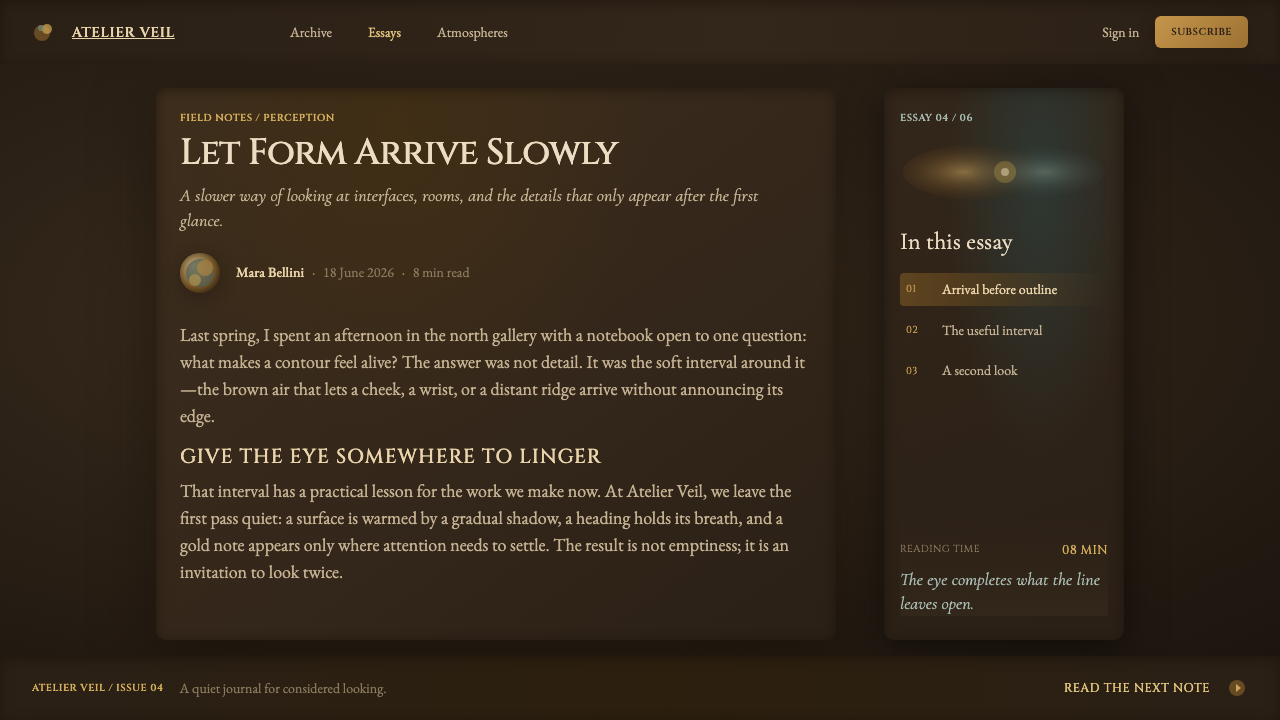
Leonardo — Mona Lisa (1503) lets form arrive without ever drawing an edge — ochre light dissolving into umber shadow and a blue-green haze at the horizon.
Leonardo — Mona Lisa (1503) in brief
This is a design language drawn from the softest painting ever made: no line is ever asserted, and every contour vanishes the way smoke does. It takes sfumato, an Italian word meaning something like 'vanished into smoke,' as its whole grammar — ochre-to-umber gradients with no visible seam between one tone and the next, warm brown shadow that bleeds outward rather than stopping at a hard edge, and a form emerging out of atmospheric haze rather than being outlined against it.
Behind the figure, a hazy blue-green landscape recedes into the distance using the same soft transition logic applied at a larger scale: color and detail both fade as they retreat, so depth is suggested by atmosphere rather than by a drawn horizon line or a sharp change in scale. The whole picture behaves as though everything, near or far, were seen through the same faint mist.
The system favors suggestion over declaration everywhere: a half-turned pose rather than a frontal one, an expression built from transitions too subtle to pin down rather than a clearly legible smile or frown. The instruction underneath all of it is simple — outline nothing, let form arrive out of shadow, and let the viewer lean in rather than being told what to see.
Where does Leonardo — Mona Lisa (1503) come from?
Leonardo began the portrait around 1503 in Florence, during the High Renaissance. It is generally understood to depict Lisa Gherardini, the wife of the Florentine cloth merchant Francesco del Giocondo, which is why the painting is also known as La Gioconda. Uncharacteristically for a commissioned portrait, Leonardo never delivered the finished panel to the family; instead he kept it and kept working on it.
The technique that produced the picture's softness was itself extraordinarily slow: oil glazes built up in many thin, translucent layers over a small poplar wood panel, each layer allowing Leonardo to push tonal transitions further before any brushstroke or hard edge could register. That patient, additive method, consistent with his broader scientific study of light and optics, is precisely what makes sfumato possible — the technique cannot be rushed without reintroducing the very edges it exists to dissolve.
Leonardo carried the unfinished panel with him for the rest of his career, reworking it over roughly a decade and a half. He eventually brought it to France after entering the service of King François I, who invited him to spend his final years near the French royal court at Amboise. The painting is thought to have remained in Leonardo's own possession until his death there in 1519, after which it passed into the French royal collection — which is why it hangs in the Louvre today rather than in Italy.
The technique's legacy outgrew the single painting. Sfumato and chiaroscuro became defining hallmarks of High Renaissance painting more broadly, and the ambiguity produced by a technique that refuses hard edges even at the mouth and eyes turned this particular portrait's expression into the most discussed and mythologized effect in the history of Western portraiture.
What defines the Leonardo — Mona Lisa (1503) look?
Sfumato Transition
Tones shift into one another with no visible seam, the way smoke disperses rather than the way a hard edge is drawn. Every boundary in the system should feel like a gradual arrival, not a decision made with a ruler.
Ochre-to-Umber Palette
Warm ochre light dissolves into deep umber shadow without a visible break between the two. The palette stays warm and earthen throughout, avoiding any hue that would read as clean or synthetic.
No Hard Contour
Forms are never outlined; their edges are built entirely from tonal shift. This applies even at a face's most expressive points, the eyes and mouth, which is what produces the system's characteristic ambiguity.
Atmospheric Depth
Distance is suggested through a hazy blue-green fade in color and detail rather than through a drawn horizon line or a sharp change in scale. Everything, near or far, appears to sit behind the same faint veil of atmosphere.
Suggestion Over Declaration
A half-turned pose and an unresolved expression stand in for a fully frontal, clearly legible one. The system rewards restraint: leaving something for the viewer to complete rather than stating it outright.
Dark Surround, Luminous Subject
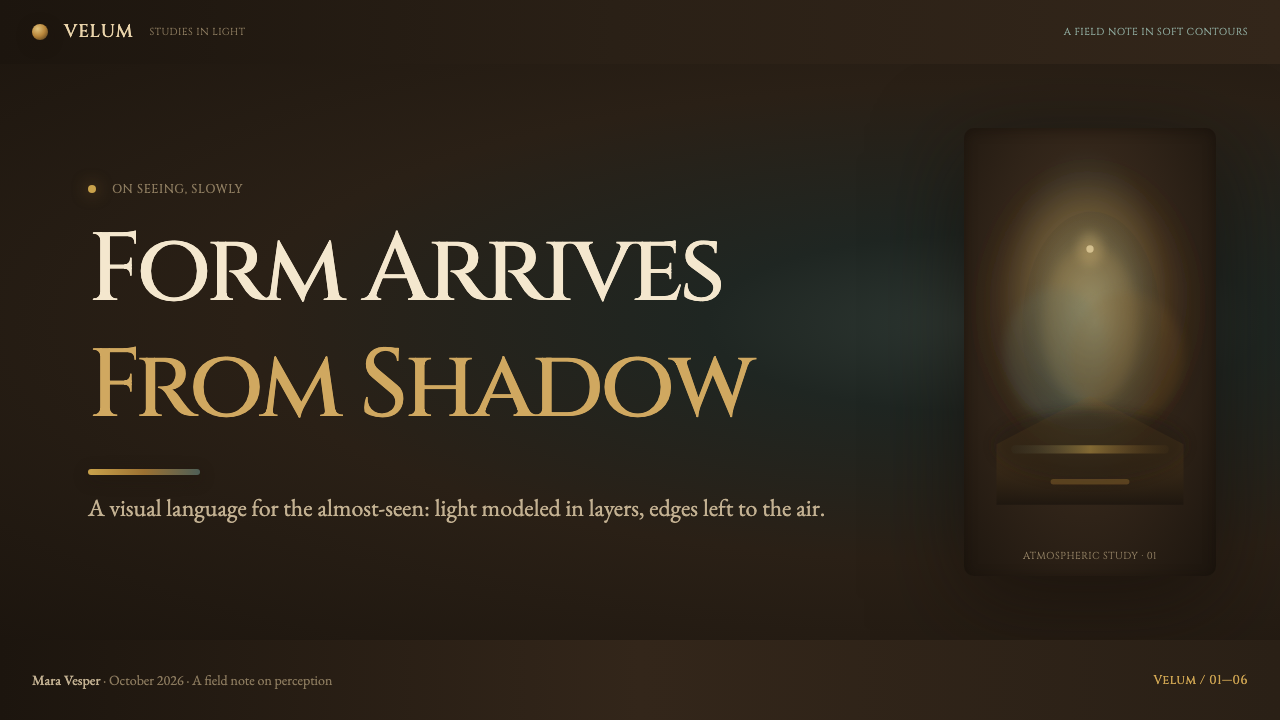
A small, glowing focal subject sits against a much darker, varnished-looking surround, so the eye is drawn inward without any bright border or frame doing the work.
Who shaped Leonardo — Mona Lisa (1503)?
The painter who began the portrait around 1503 and reworked it for roughly the rest of his life, developing sfumato through a slow, layered oil-glaze technique rooted in his broader scientific study of light and optics.
The Florentine woman generally identified as the painting's sitter, whose married name gives the work its Italian title, La Gioconda, alongside its more common name, the Mona Lisa.
The Florentine cloth merchant and husband of Lisa Gherardini, generally understood to have commissioned the portrait — a commission Leonardo notably never delivered, keeping the panel for himself instead.
The French king who invited Leonardo to spend his final years near the royal court at Amboise, a move that brought the still-unfinished painting to France, where it entered the royal collection after Leonardo's death and eventually reached the Louvre.
How do you use Leonardo — Mona Lisa (1503) today?
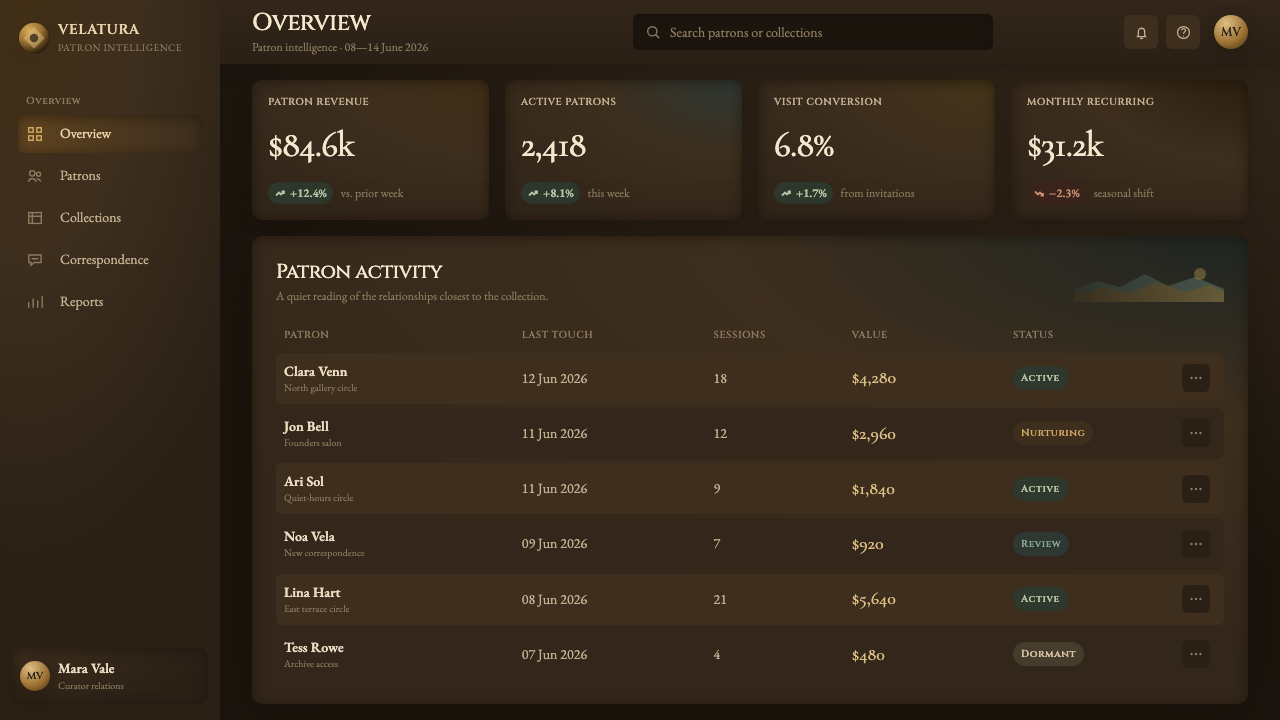
This system rewards contexts that want to feel intimate, contemplative, and a little mysterious rather than bold or declarative — luxury brands, cultural and museum content, and editorial work built around quiet sophistication all suit it well.
For presentation slides, a cover works best with a dark, varnished-looking ground and a single warm, glowing focal element with no hard-edged frame around it — let the darkness around the subject do the framing instead. Content slides should avoid crisp dividing rules in favor of soft tonal transitions between sections, and any imagery should favor soft focus over sharp, high-contrast photography.
For web interfaces, the no-hard-contour principle translates into soft, gradual transitions between sections rather than crisp borders, and a restrained, earthen palette for backgrounds with a single luminous accent reserved for the primary call to action — the one element that should feel like it is emerging from the surrounding dimness.
For editorial and marketing work, the style supports a slow, deliberate reveal rather than an immediate, fully explained message: a headline that suggests rather than states, imagery cropped tightly around a single glowing subject, and generous dark space that lets that subject read as important without needing a bright border to say so.
A common mistake is adding a crisp outline or a bright, high-contrast frame around the focal subject to make it 'pop' — this directly undoes the sfumato logic the system depends on. Another is treating the ambiguity as vagueness and over-explaining it with captions or labels; the restraint is the point, and resolving it removes the exact quality that makes this style recognizable.
Leonardo — Mona Lisa (1503) — FAQ
What exactly is sfumato?
Sfumato is an Italian term meaning roughly 'vanished into smoke,' describing a painting technique where tones shift into one another with no visible seam or hard edge. It is built up through many thin, translucent layers of paint rather than a single application, which is why it takes so much time to execute convincingly.
Why does the subject's expression feel so hard to pin down?
Because sfumato is applied even at the most expressive points of the face, the corners of the mouth and eyes, where a hard-edged painting technique would normally give a clear, legible signal like a smile or a frown. Without that hard edge, the expression shifts slightly depending on the angle and distance from which it is viewed, which is exactly what produces the famous ambiguity.
Why is the surrounding environment kept so dark?
A dark, varnished-looking surround lets a small, warm, glowing subject read as the clear focal point without needing a bright frame or border to do that job. The darkness itself is doing compositional work, not just setting a mood — it is what makes the subject feel like it is emerging rather than simply being placed on a page.
Can this style be applied without a literal portrait?
Yes — the transferable core is the relationship between soft tonal transition, a warm ochre-to-umber palette, and a dark surround holding a single luminous focal point, not the literal subject matter. Any layout that concentrates attention on one softly emerging element against a much darker field can apply the same logic.
Related design styles
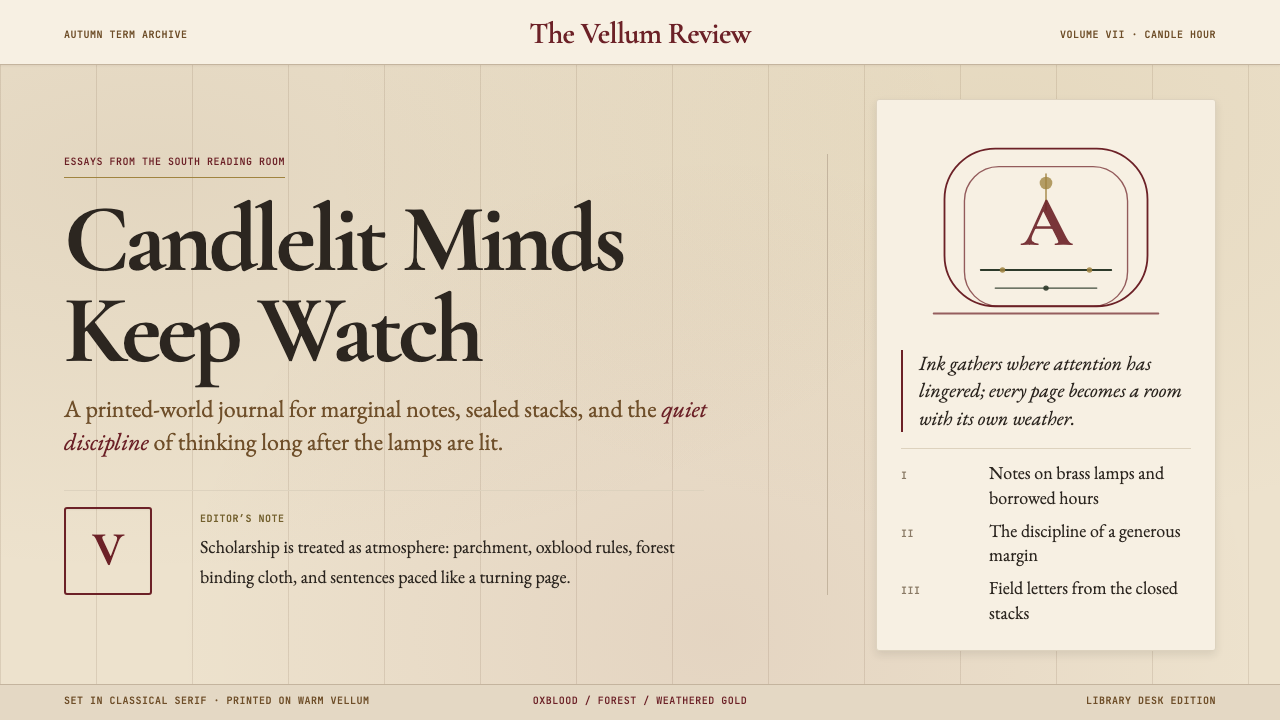 Dark AcademiaCandlelit nostalgia for old books. Parchment grounds, oxblood accents, classi…
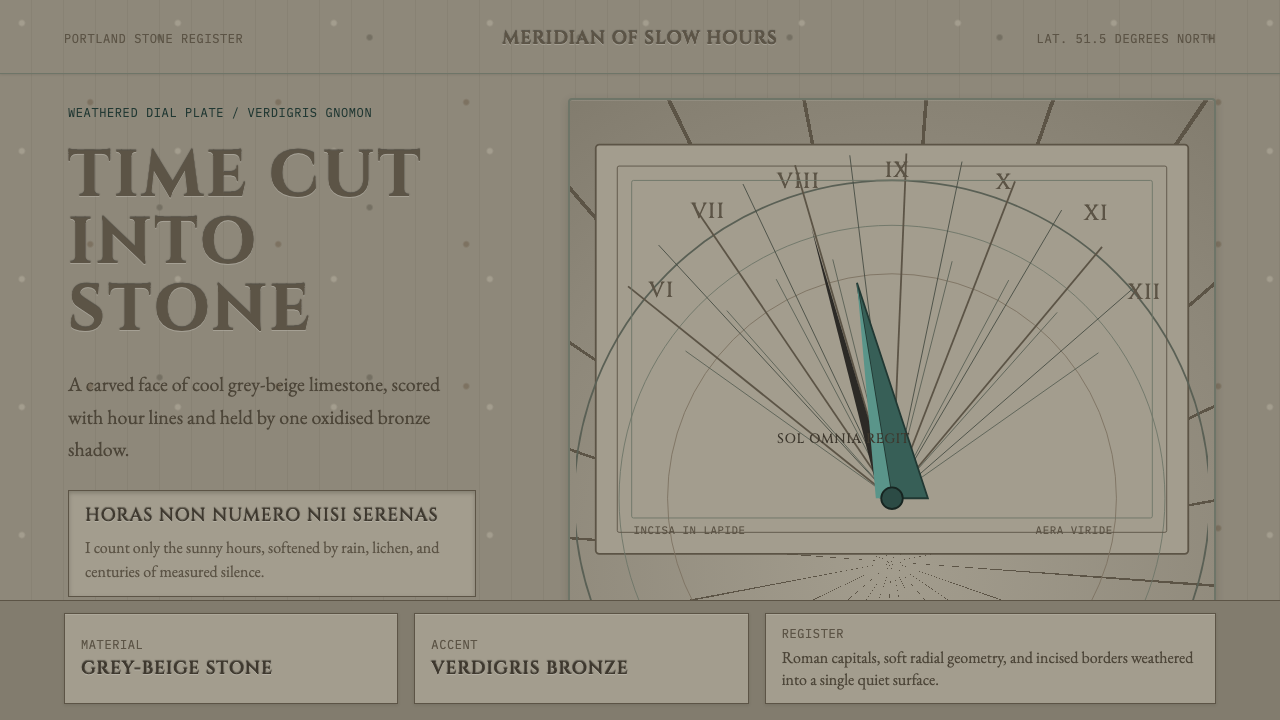 Engraved SundialStone refuses haste. Grey-beige hour lines and verdigris gnomon carve silence.
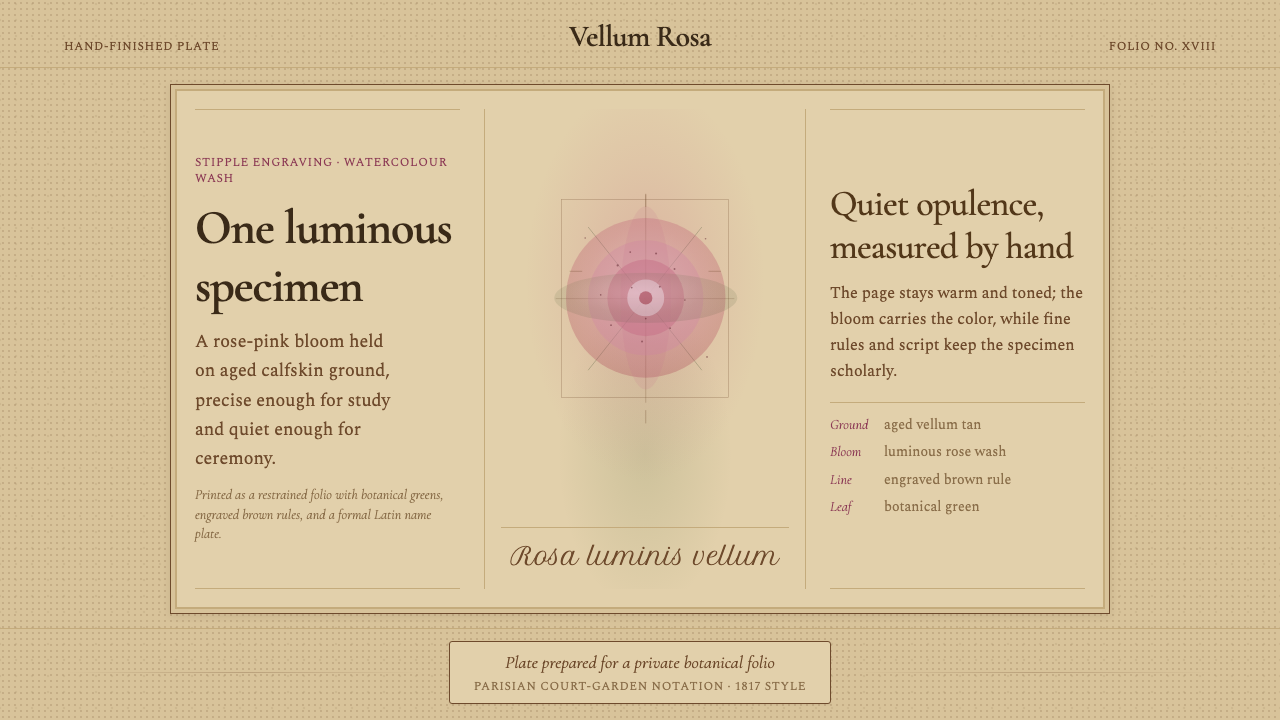 Redouté BotanicalScholarly opulence. Rose wash on aged vellum, framed by engraved brown rules.
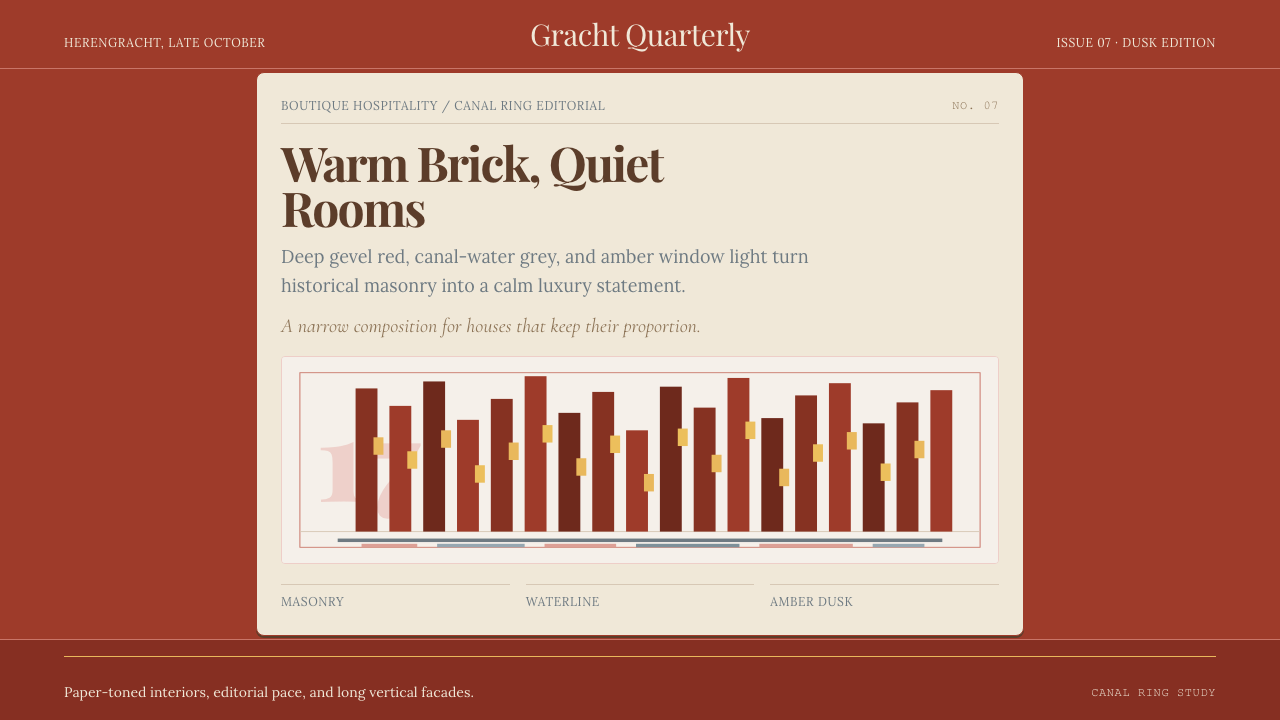 Amsterdam Canal HouseQuiet luxury in brick and cream. Playfair serif, narrow columns, amber window…
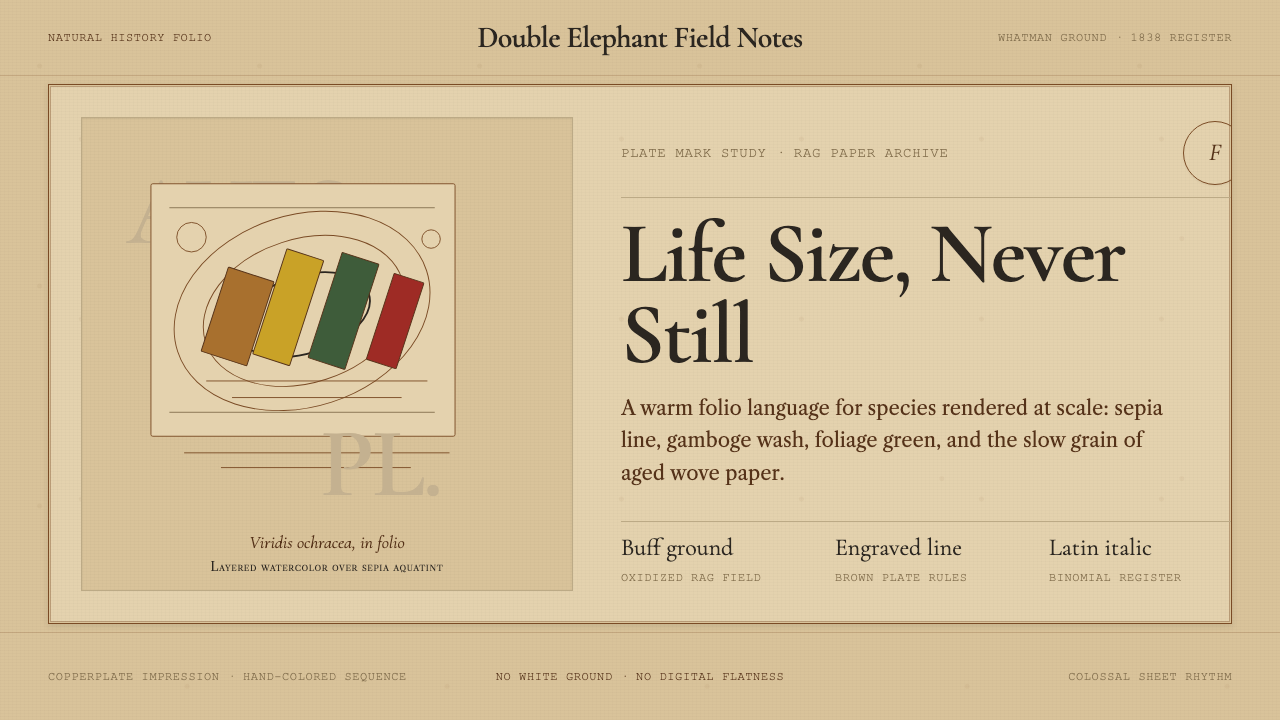 Audubon Birds of AmericaAged natural history breathes. Buff rag paper, sepia rules, and italic binomi…
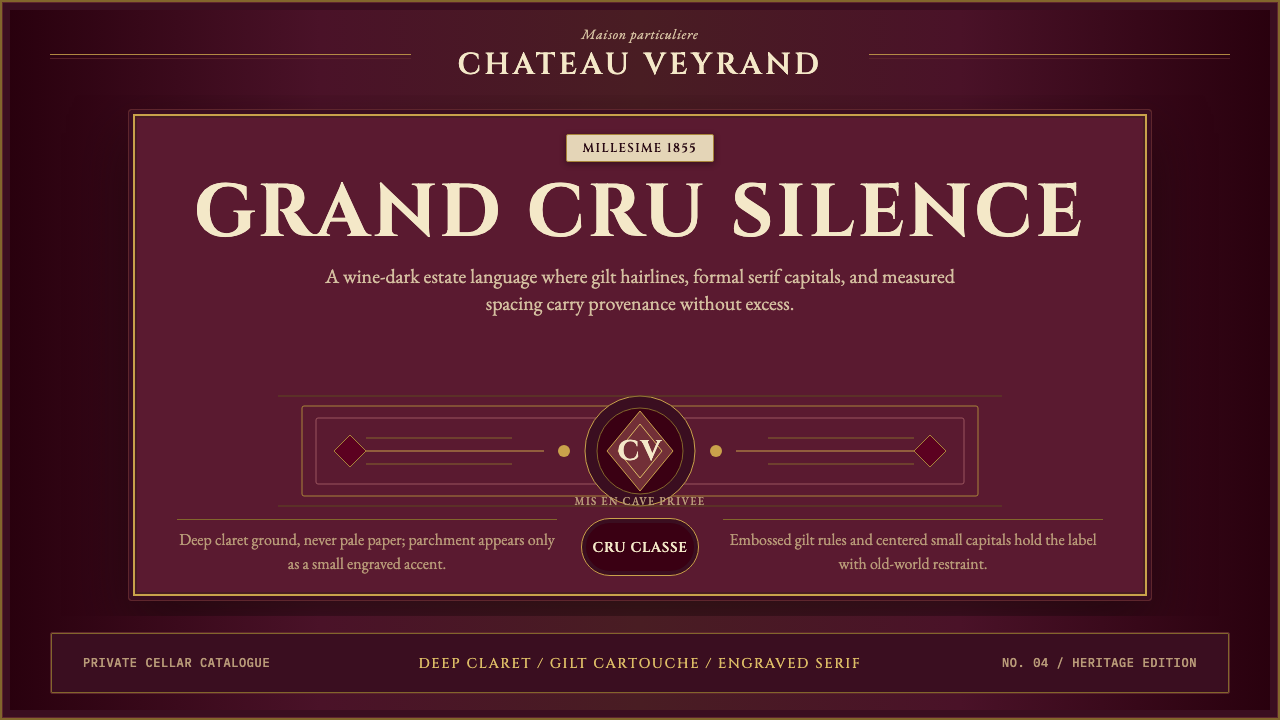 Bordeaux Wine ChâteauAged claret authority. Cinzel capitals, gilt rules, and label symmetry on win…