What is Amsterdam Canal House?
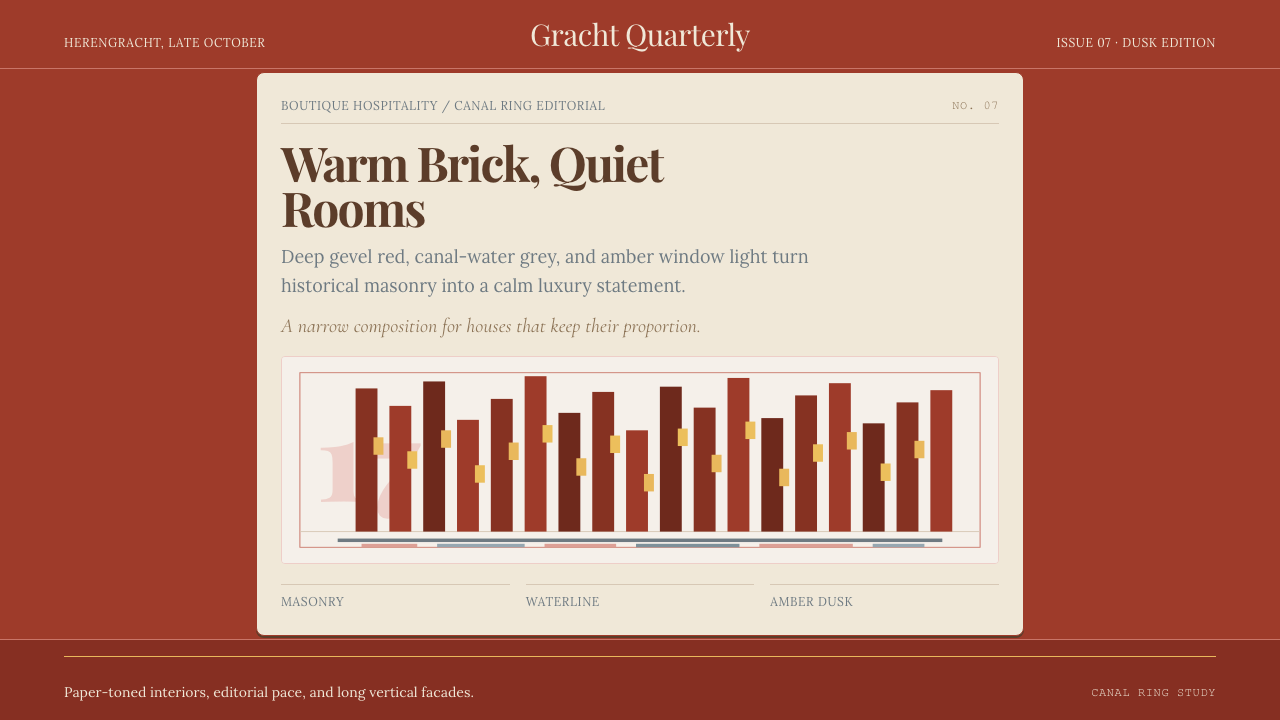
Amsterdam Canal House translates the quiet grandeur of seventeenth-century Grachtengordel merchant architecture into a modern visual system where deep brick warmth, canal grey, and amber window-glow create an atmosphere of unhurried, layered luxury.
Amsterdam Canal House in brief
Amsterdam Canal House is a design system rooted in the visual character of the historic Grachtengordel — the concentric ring of seventeenth-century canals that forms the heart of Amsterdam's UNESCO-listed historic center. The palette draws from the narrow gabled townhouses that line those waterways: deep warm brick for the facades, a grey-green that mirrors the canal water, cream tones recalling lime-washed interior plaster, and a muted amber that evokes the glow of leaded-glass windows at dusk. Together these hues produce an effect simultaneously grounded and luminous — historically resonant without being nostalgic.
The typographic character of the system pairs editorial serif headlines with a warm, readable serif for body text. The resulting combination recalls the beautifully proportioned letterpress printing that flourished in the Dutch Golden Age — a tradition that gave the world some of the finest book typefaces of the early modern period. Surfaces in the system are never stark white but lean toward cream or warm paper tones, reinforcing the sense that every document or interface is something worth holding, not just scanning.
What distinguishes Amsterdam Canal House from other heritage-inflected design systems is its restraint. It does not deploy ornament freely or quote architectural decoration literally. Instead it absorbs the proportional logic and material warmth of canal-house architecture and re-expresses that logic in contemporary layouts. The result is editorial without pretension — a system that feels genuinely cultivated rather than costumed.

Where does Amsterdam Canal House come from?
The visual sources of Amsterdam Canal House reach back to the Dutch Golden Age, specifically the decades between roughly 1600 and 1680, when Amsterdam was the wealthiest trading city in the world. The Grachtengordel — a planned urban expansion of three concentric semi-circular canals, the Herengracht, Keizersgracht, and Prinsengracht — was constructed during this period. Its narrow, deep lots produced a distinctive building typology: tall, narrow brick facades with elaborately shaped gables (step gables, neck gables, bell gables) that served as both structural expression and merchant status display. The city architect Hendrick de Keyser (1565–1621) was instrumental in formalizing this architectural language, introducing Dutch Renaissance ornament and the use of local sand-lime brick in civic and private buildings alike.
The canal houses were not merely domestic; they were instruments of commercial power. Merchants stored goods in their upper floors and attic spaces, conducted business in street-level offices, and received clients in formal ground-floor reception rooms. The facades were therefore public-facing statements of reliability, taste, and wealth — and the visual language of deep brick, white limestone trim, and warm interior light became inseparable from the idea of Dutch mercantile prestige. This association of warm brick warmth with trustworthy, understated prosperity is one the Amsterdam Canal House design system consciously inherits.
The twentieth century brought a second wave of influence through the Amsterdam School movement (roughly 1910–1930), a variant of Art Nouveau and Expressionism that flourished among Amsterdam's municipal architects. Designers like Michel de Klerk and Piet Kramer transformed social-housing blocks into sculptural brick buildings with ornamental brickwork, rounded corners, and organic metalwork. While the Amsterdam School was more overtly decorative than the austere Golden Age tradition, it deepened the cultural association between Amsterdam's urban identity and the expressive potential of brick as a building material. The warm, textured quality of brick — its capacity to absorb and glow with light rather than merely reflecting it — became a defining characteristic of the city's architectural self-image.
The modern design revival that informs the contemporary Amsterdam Canal House system emerged in the 2010s from the boutique-hotel movement. Properties like Pulitzer Amsterdam — a hotel assembled from twenty-five interconnected Golden Age canal houses — and The Hoxton Amsterdam demonstrated that the spatial vocabulary and material warmth of historic canal houses could be translated directly into hospitality interiors and subsequently into brand identity. Philip Knatchbull and the Sharan Pasricha-led Ennismore group (operating The Hoxton) were among the hospitality designers who showed that this visual language could feel genuinely contemporary rather than merely period-correct. This hospitality-led revival provided the bridge between a seventeenth-century urban aesthetic and its twenty-first-century design application.
What defines the Amsterdam Canal House look?
Color Palette
The palette is anchored by a deep, warm brick red drawn from the gevel — the Dutch word for the characteristic facade of a canal house — alongside a cool canal grey-green that reads as quiet and recessive. A cream tone, warm enough to suggest aged paper or lime plaster rather than digital white, provides the primary surface for text. Amber — the color of candlelight seen through period glass — serves as the accent, deployed sparingly to signal warmth and attention. This combination avoids both the coldness of cool-white modernism and the heaviness of brown-dominated heritage palettes.
Typography
Headline typography is drawn from the editorial serif tradition — display-weight serifs with carefully crafted contrast between thick strokes and thin hairlines, a quality that echoes the precision of Dutch Golden Age letterpress printing. Body text uses a warmer, more humanist serif that reads comfortably at length, reinforcing the sense that this is a system built for sustained reading rather than quick scanning. Type is set with generous leading and deliberate tracking, giving the overall composition an unhurried quality. The system does not employ decorative scripts or display fonts that mimic historical calligraphy; the historical resonance is achieved through proportion and weight, not through pastiche.
Surface and Texture
In the Amsterdam Canal House system, surfaces are not neutral. The primary surface is cream-paper card — warm, slightly weighted, with an implied texture that recalls fine cotton stationery or museum catalogue paper. Against masonry-toned backgrounds, these card surfaces float with a sense of physical presence. The masonry background itself reads as warm and rough rather than smooth, suggesting the grain of aged brick rather than polished stone. This layering of card on brick creates depth without resorting to digital shadow effects — the depth is semantic, architectural.
Proportion and Grid
Canal house facades are narrow and tall by necessity — Amsterdam's historic property tax was calculated by facade width, incentivizing slender buildings of great height. This vertical proportion is absorbed into the design system as a preference for narrow columns, tall card formats, and layouts that breathe vertically rather than sprawling horizontally. Navigation elements and captions are placed with architectural deliberateness: left-aligned in narrow side columns, as if positioned in the margin of a well-designed book. The grid is structured but not mechanical; a slight asymmetry — the kind that results from genuine composition rather than formula — gives the layouts a crafted rather than templated quality.
Light and Glow
Lighting in the Amsterdam Canal House system is warm and directional, never diffuse or clinical. The amber accent color carries the primary light role — it appears as a highlight on interactive elements, as a warm rule or divider, or as the tint of an icon or callout. When shadows are used, they are not hard-offset geometric shapes in the Bauhaus manner, but rather soft, warm penumbrae that suggest candlelight or afternoon sun filtering through tall windows. This is one of the defining contrasts with the Bauhaus system: where Bauhaus uses shadow as structure, Amsterdam Canal House uses light as atmosphere.
Ornamentation and Restraint
Unlike the Amsterdam School movement, which embraced expressive ornamental brickwork and decorative flourishes, the Amsterdam Canal House design system applies ornament with extreme economy. Where it appears at all — a fine ruled line, a small gable-shaped graphic motif, a subtle corner bracket — it is used to mark boundaries or signal transitions rather than to decorate surfaces. The underlying principle is closer to the bare facades of the Herengracht's most severe houses than to the exuberant ornament of the Amsterdam School. Ornament, when it exists, earns its place through structural justification.
Editorial Hierarchy
The Amsterdam Canal House system produces layouts with a clear and unhurried information hierarchy. A single dominant headline occupies the upper register; supporting information is set at a noticeably smaller size in the same serif family; captions and metadata occupy their own quiet zone, set in a reduced size with increased tracking. This three-tier hierarchy — prominent, supporting, marginal — reflects the way a well-designed book or catalogue page distributes attention: readers know immediately where to look first, and nothing competes aggressively for their gaze. The hierarchy is achieved through size and weight contrast alone, never through color contrast or emphatic decorative dividers.

Who shaped Amsterdam Canal House?
As Amsterdam's official city sculptor and architect from 1595 until his death in 1621, Hendrick de Keyser defined the canonical visual language of the Grachtengordel townhouse. He introduced Dutch Renaissance refinements — limestone pilasters, sandstone keystones, and decorative gable carvings — to the local tradition of load-bearing brick construction, creating a hybrid that was simultaneously robust and elegant. His Westerkerk and Zuiderkerk churches, along with his work on private merchant houses, established the proportional vocabulary and material combination — brick with stone accents — that would define Amsterdam's urban image for the next three centuries and continue to underpin the Amsterdam Canal House design system today.
The leading designer of the Amsterdam School movement, Michel de Klerk (1884–1923) demonstrated that the expressive potential of brick was far greater than the canal house tradition had exploited. His social-housing complexes in the Spaarndammerbuurt and De Dageraad neighborhoods treat brick not as a structural cladding but as a plastic material to be shaped, curved, and detailed into dynamic sculptural surfaces. De Klerk's work expanded the cultural understanding of what brick could communicate — not just mercantile solidity, but craft warmth, material honesty, and civic care. His influence resonates in the Amsterdam Canal House system's emphasis on brick as a material with expressive depth rather than mere historical reference.
Philip Knatchbull, through his direction of Pulitzer Amsterdam, provided one of the most influential demonstrations that the visual and spatial language of historic canal houses could be translated into a fully functional contemporary hospitality environment without pastiche. By assembling twenty-five interconnected Golden Age townhouses into a single hotel — preserving original beam ceilings, brick walls, and narrow stair halls while introducing modern comfort — Knatchbull showed that warm brick, cream plaster, and amber light could form a coherent modern identity rather than a museum reconstruction. The Pulitzer's design language directly seeded the contemporary Amsterdam Canal House visual system.
As founder of Ennismore and the creative force behind The Hoxton hotel brand, Sharan Pasricha developed a parallel approach to Amsterdam canal house aesthetic: where Pulitzer Amsterdam was faithful to preservation, The Hoxton Amsterdam interpreted the same material vocabulary — brick, timber, warm plaster — through a more contemporary editorial lens. The Hoxton's brand identity demonstrated that the canal house system could be made accessible and design-forward without losing its essential warmth and material character. Pasricha's work in Amsterdam contributed to establishing the language as a recognized contemporary design register, not merely a historic preservation exercise.
Set Hotels, the group encompassing Pulitzer Amsterdam alongside other design-forward European properties, has been significant in codifying the canal house aesthetic as a transferable brand system rather than a site-specific anomaly. By applying consistent material choices — the brick warmth, the cream card surfaces, the amber accent, the editorial serif typography — across properties in different European cities, Set Hotels demonstrated that the Amsterdam canal house visual language had sufficient formal coherence to travel beyond its geographic origin. This codification is one of the direct precedents for how the Amsterdam Canal House design system is structured today.
How do you use Amsterdam Canal House today?
Amsterdam Canal House is among the more contextually specific design systems — its warmth, material depth, and editorial character are genuine strengths in the right contexts, and genuine liabilities in the wrong ones. Applying it correctly begins with understanding what emotional register it occupies: quiet authority, understated luxury, and the kind of trustworthiness that is demonstrated through sustained quality rather than loud assertion. Products and services that embody those values — boutique hospitality, premium financial services, cultural institutions, luxury editorial, high-end real estate — find the system immediately expressive. Mass-market consumer products, high-energy e-commerce, and interfaces that depend on speed and urgency will typically find it too slow and too warm.
For presentation slides, Amsterdam Canal House excels at cover pages that need to feel expensive without being ostentatious. A strong cover composition uses a cream card surface centered or offset on a brick-warm background, with a serif headline in a generous size set at comfortable tracking. A single amber accent — a thin rule, a small motif, a highlighted word — provides focal warmth without overloading the palette. Content slides should maintain narrow text columns with generous margins, setting body text in the warm serif and using the brick or canal-grey tones only as section markers or background zones, never as competing figure elements. Data slides work well when chart elements are assigned to the palette's restrained range — brick for primary data series, canal grey for secondary, cream as a neutral reference line — keeping the analytical quality warm rather than clinical.
For web interfaces, the system is particularly well-suited to dashboards, pricing pages, and product-detail pages where a sense of considered craftsmanship builds user trust. The approach is to set a warm cream or off-white as the dominant surface, reserve brick red for primary interactive states and calls-to-action, and use canal grey as the structural color for borders, dividers, and secondary typography. Card components should feel physically present — a soft warm shadow, never a hard-offset one, with a slight border reinforcing their material quality. Navigation should be typographic, using the editorial serif at a moderate scale, with amber highlights indicating the active state. Avoid the temptation to introduce additional accent colors; the restraint of the palette is integral to its authority.
For editorial and marketing work, Amsterdam Canal House produces layouts with genuine depth and readability. A feature article layout uses a dominant serif headline, a deck or standfirst in the same family at a smaller size, and body text set in a measure that encourages a comfortable reading pace — narrow enough to feel curated, wide enough not to feel cramped. Pull quotes or callouts are set in the amber-warm accent tone, using scale rather than color shock to attract attention. Marketing pages benefit from alternating surface zones — cream card sections for product or service descriptions, brick-warm background sections for testimonials or context-setting — creating a spatial rhythm that mimics walking through the rooms of a well-proportioned building. Photography, where used, should lean toward warm natural light, shallow depth of field, and material textures rather than bright flat product photography.
A common mistake when applying Amsterdam Canal House is allowing the warmth of the palette to drift into muddiness. The system's distinguishing quality is that its warmth is layered and specific — deep brick against cream against amber — not a generalized brownish haze. This means each color must be used at its own distinct value and saturation, never blended or faded together. A second common error is overusing the serif in its heaviest weights across all levels of hierarchy, which produces a funereal solemnity rather than cultivated authority. The editorial character of the system depends on deliberate contrast between a prominent heavyweight headline and a lighter, more open body setting — the contrast is what gives the system its sense of a well-edited page rather than a uniformly dense document.
A further pitfall is literal historicism — adding decorative architectural motifs, faux-aged textures, or period ornament that reads as costumed rather than cultivated. The system's historical references should be felt in proportion, material tone, and typographic logic, not seen in clip-art gables or artificially distressed surfaces. The goal is a contemporary reader's emotional recognition of Amsterdam's canal house atmosphere, not a reproduction of it.

Amsterdam Canal House — FAQ
How does Amsterdam Canal House differ from other warm, heritage-inflected design systems?
The key difference is specificity of source and restraint of application. Many warm heritage systems draw on a general impression of aged materials and historical typography without a precise cultural anchor. Amsterdam Canal House has a specific geographic and historical referent — the Grachtengordel and its seventeenth-century merchant architecture — and it applies that referent through proportion, material tone, and typographic logic rather than through decorative quotation. It is also more editorially rigorous than, say, a Tuscan or English country house system: the Dutch mercantile tradition prized clarity and legibility alongside warmth, and that combination of the editorial and the comfortable is central to the system's character.
Can Amsterdam Canal House work effectively in dark mode or on dark backgrounds?
It can, but the inversion requires care. The system's canonical form is light-ground: cream surfaces against warm masonry backgrounds, with amber as the primary accent. A dark inversion works best when it treats deep brick red as the dominant dark surface — richer and warmer than pure black or neutral dark grey — and reserves cream for primary body text and headlines. Amber remains effective as an accent in this configuration. Canal grey becomes a lighter structural element against the dark field. What does not work well is inverting the system to cool dark backgrounds (near-black or dark blue-grey), because the warmth that gives the system its identity is dependent on the warmth of the dark register, not just of the light surfaces.
Is the system appropriate for digital-native products, or does it only suit traditional editorial contexts?
The system is genuinely effective in digital-native contexts where its core values — trustworthiness, considered craft, understated authority — align with the product's positioning. SaaS platforms for finance, legal, or property; subscription services in the premium cultural or educational space; and professional portfolio sites all find the system a strong fit. It is less suited to high-frequency interaction products (social feeds, messaging apps, gaming interfaces) where the deliberate pace of the typography and the warmth of the palette would feel mismatched with the product's energy. The test is not whether the product is digital or editorial, but whether the product's values and the system's values overlap.
How should the brick red be used without the composition feeling heavy or dated?
Brick red carries weight visually, and that weight is an asset — but it must be used in measured quantities. The most effective approach is to treat brick red as a background zone rather than a foreground element: a section-dividing band, a card background for a callout, or a navigation bar. When used as a foreground color — for a headline, a call-to-action button, or a data series in a chart — it should be deployed against cream rather than white, because white will make the brick tone read as aggressive, while cream will allow it to read as warm and grounded. Avoid applying brick red as a tint or gradient; it loses its material specificity and becomes generic. At full, clear value against cream, it is exactly right.
What makes this system feel luxurious rather than simply old-fashioned?
The distinction between luxurious and merely old-fashioned lies in selectivity and contemporary application. A system that quotes historical sources indiscriminately — using every period convention simultaneously — produces pastiche. Amsterdam Canal House achieves a luxurious quality by selecting the proportional logic, material warmth, and editorial typography of its sources and applying them with contemporary restraint. The layouts are clean; the hierarchies are clear; the color palette is limited and deliberate. The historical references are felt as atmosphere rather than seen as quotation. Luxury in design is typically a product of restraint — of knowing what not to include — and the Amsterdam Canal House system's authority comes precisely from what it refuses: excess ornament, competing color families, overwrought texture, and any element that is not earning its place on the page.
Related design styles
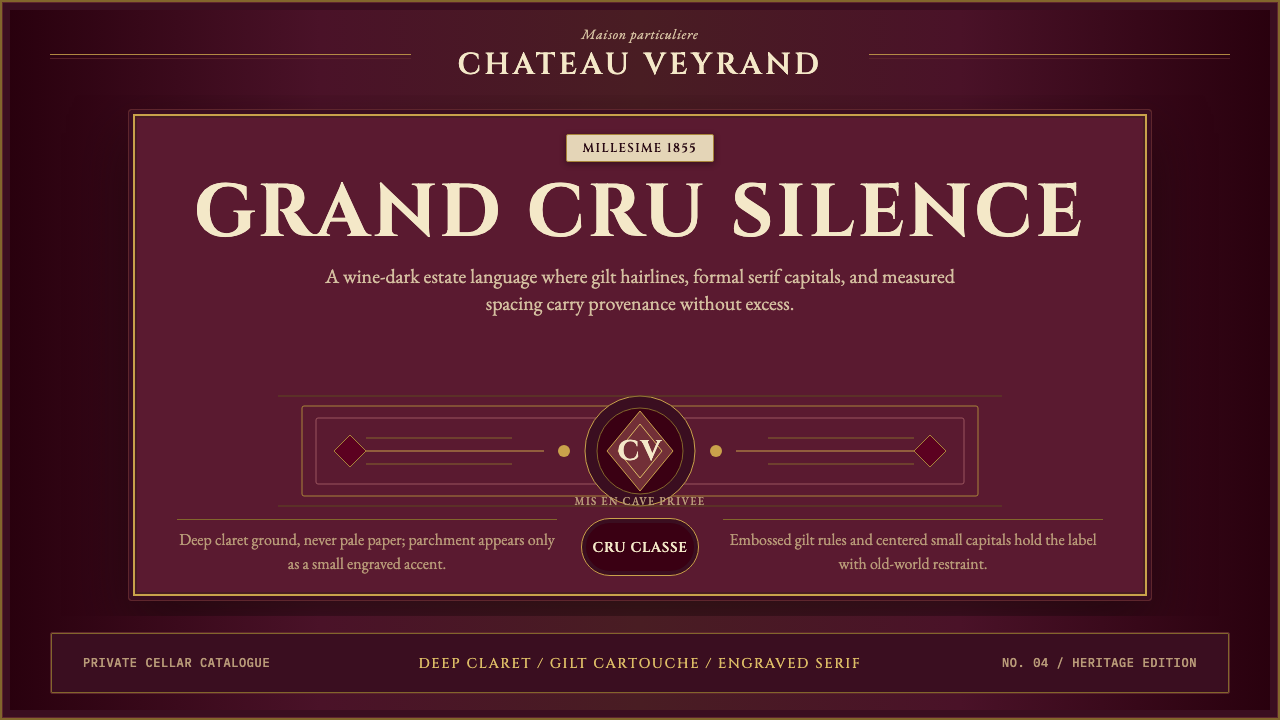 Bordeaux Wine ChâteauAged claret authority. Cinzel capitals, gilt rules, and label symmetry on win…
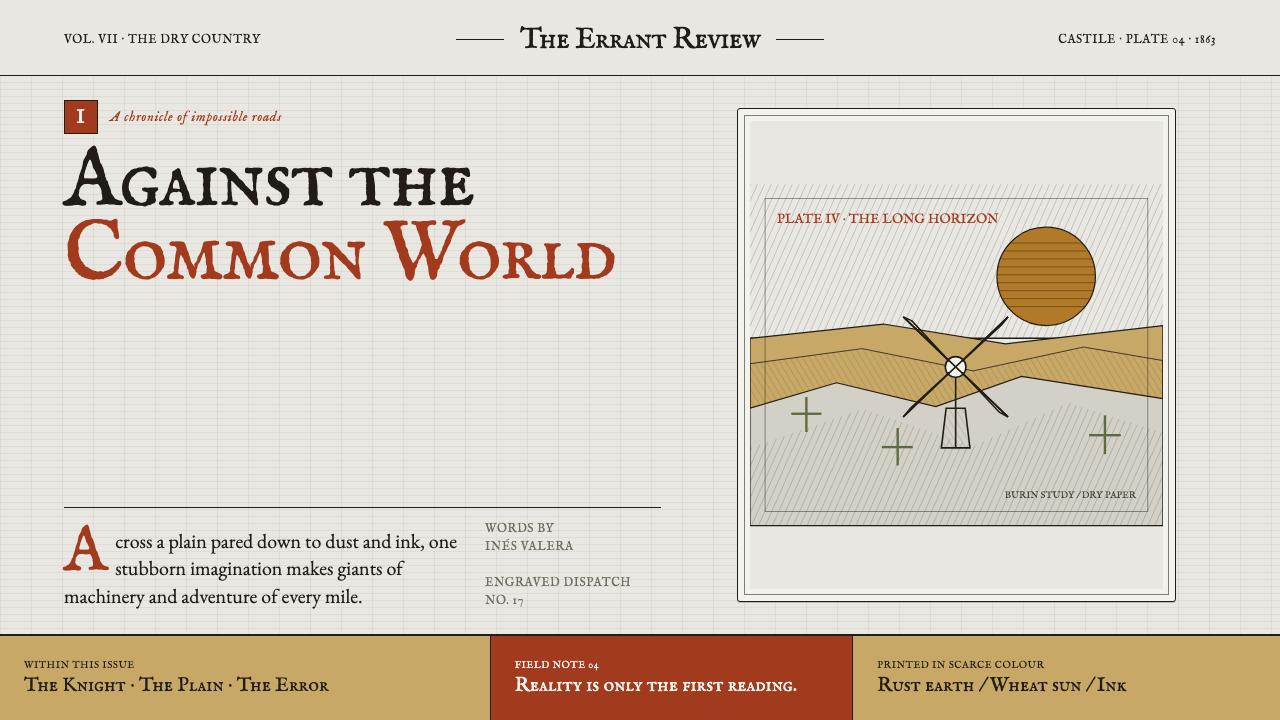 Don Quixote (1605)Imagination defies the plain. Rust capitals and cross-hatched ink score a dry…
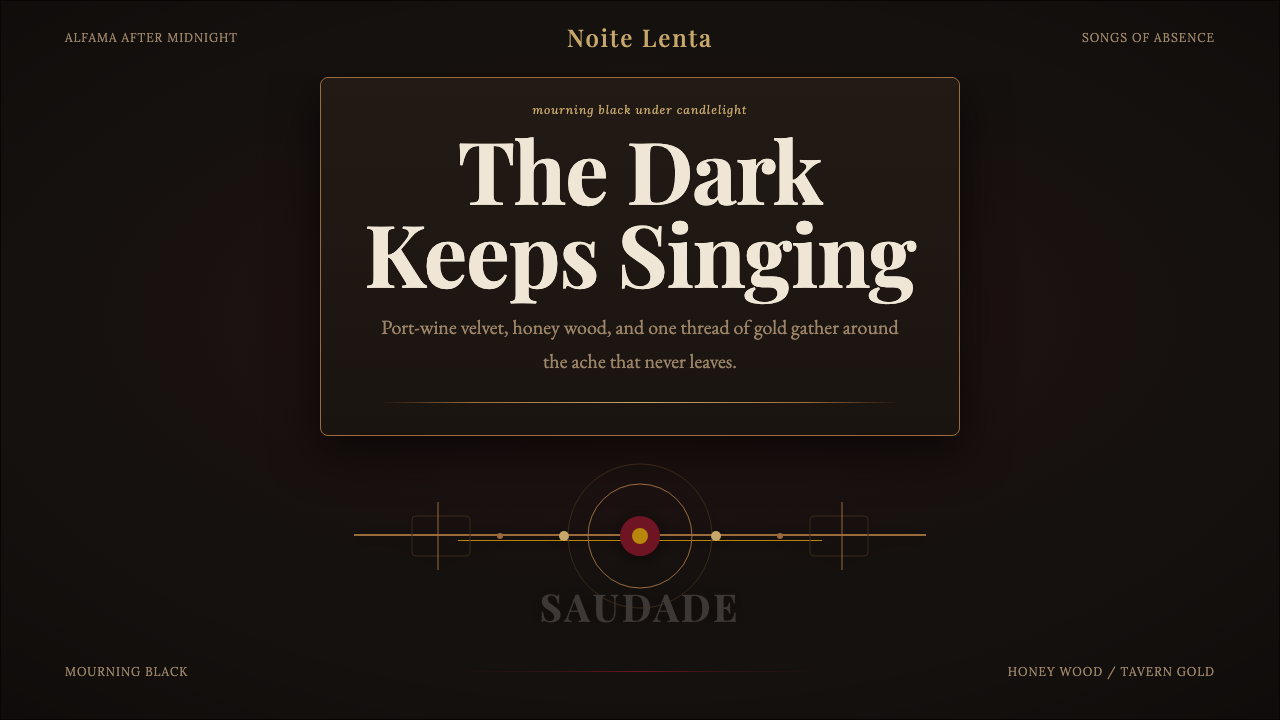 Fado SaudadeSaudade in shadow. Mourning black holds wine red, honey wood, and one gold li…
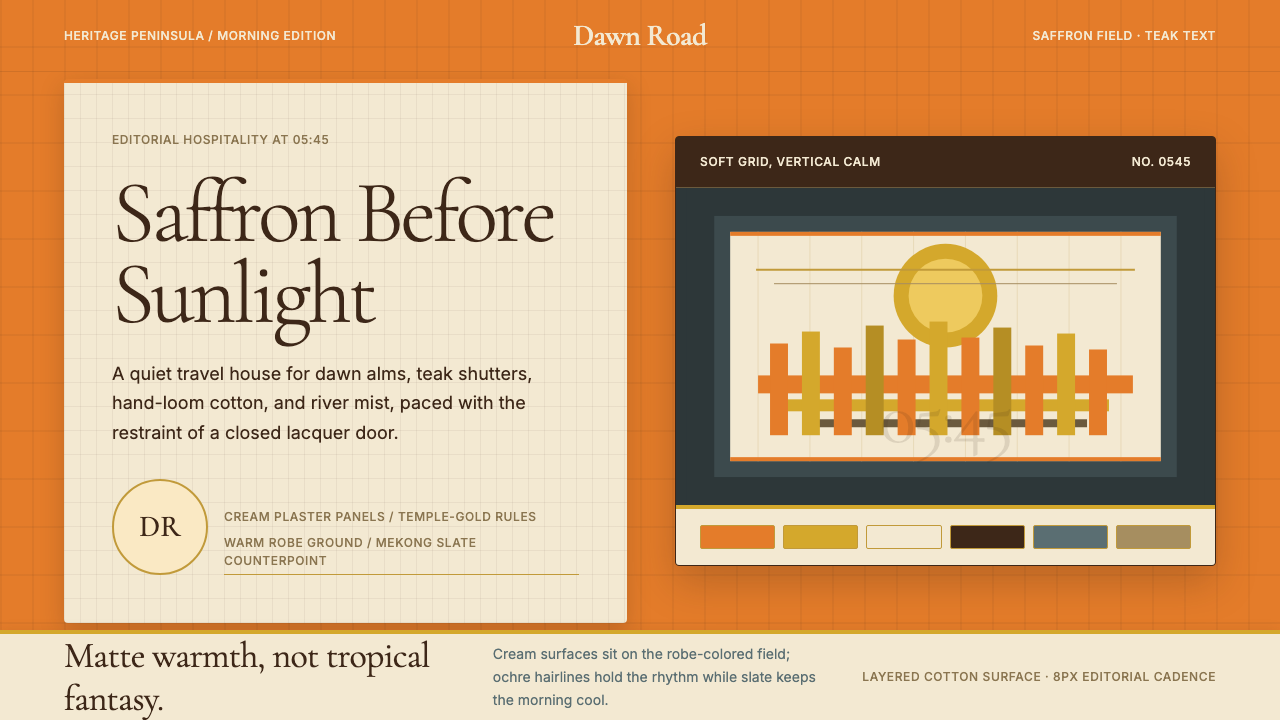 Luang Prabang Temple TourismReverent dawn luxury. Saffron field, cream panels, and teak serif type carry…
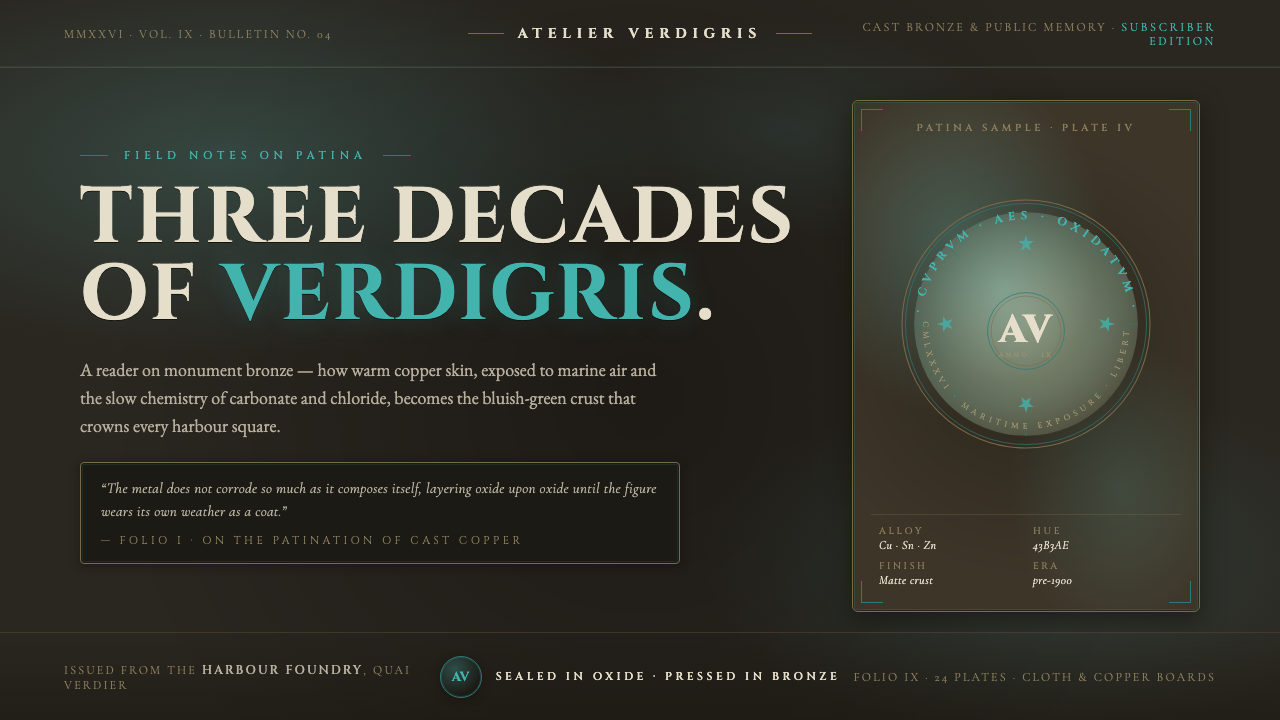 Bronze Patina StatueThree decades of weather, worn as a coat. Verdigris crust on dark bronze, eng…
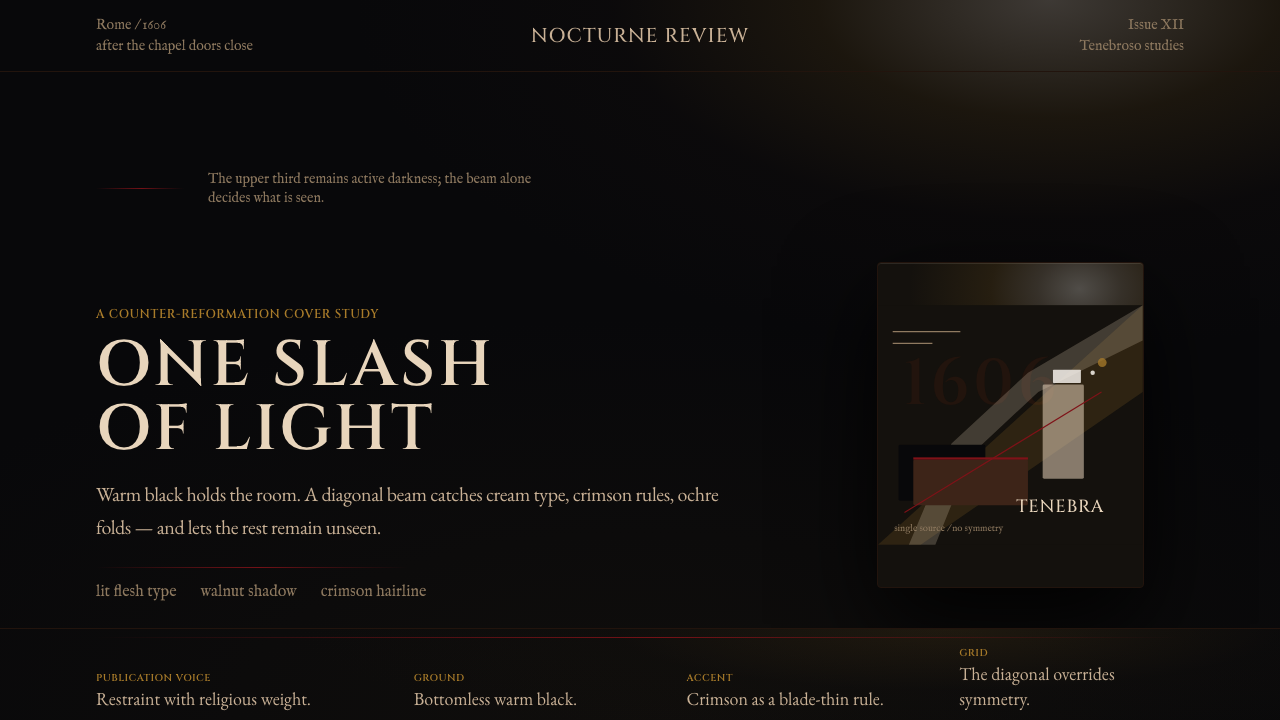 Caravaggio TenebrismDarkness acts first. Warm-black voids, Cinzel capitals, and one ochre raking…