What is Gaucho Leather?
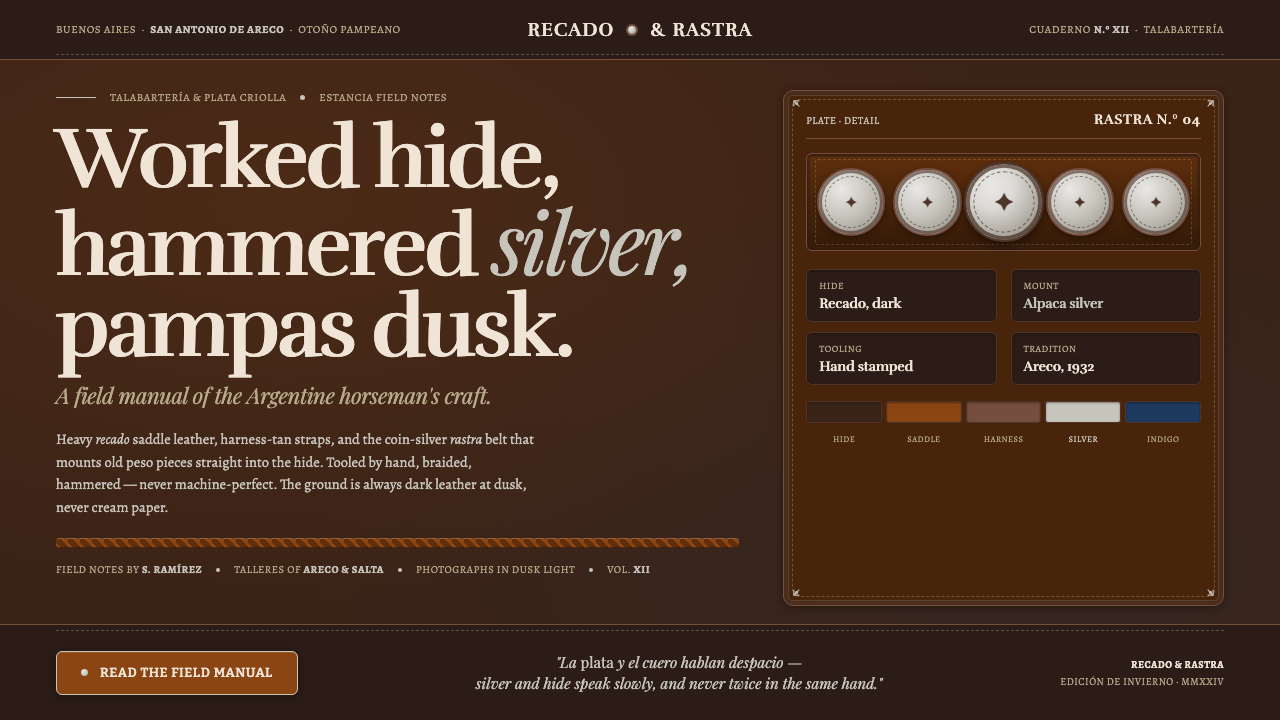
Gaucho Leather brings the worked rawhide of the Argentine horseman to the screen — dark recado hide, harness tan, coin-silver rastras, and the quiet heat of the pampas at dusk.
Gaucho Leather in brief
Gaucho Leather is a material-led design language rooted in the Argentine pampas and in the horseman craft of Latin America. Its visual vocabulary comes from heavy dark recado saddle hide, harness-tan straps, and the rastra: a belt that mounts old peso coins directly into leather. The result is neither rustic decoration nor generic western imagery. It is a specific world of saddle, harness, handwork, metal, and open grassland.
The system translates that world to screen through deep saddle-leather grounds, saddle-brown surfaces, coin and alpaca silver, indigo poncho, and pampas-dun grass. Its warmth comes from hide that has been handled, braided, tooled, and hammered over time. The base remains dark, like embossed leather seen at the edge of evening, while the lighter accents behave as worn material and reflected metal rather than as clean digital brightness.
Gaucho Leather should feel made rather than manufactured. Edges may carry the suggestion of hand pressure, surfaces may vary subtly, and metallic details should feel mounted or hammered into a working object. The style is strongest when every element belongs to the same material story: dark leather carries the structure, harness tan supplies warmth, silver catches attention, and indigo or grass-dun accents evoke the wider pampas without turning the composition into a landscape illustration.
Where does Gaucho Leather come from?
Gaucho Leather draws from gaucho material culture of 1900–1950, with roots reaching back into the nineteenth-century pampas. Its region is Latin America, specifically the Argentine pampas, where the horseman’s world was expressed through the objects carried, worn, and worked by hand. The design language begins with that practical material culture rather than with an abstract mood board.
The central objects are the recado saddle, harness straps, and rastra belt. Recado leather supplies the heavy dark ground; harness leather introduces a warmer brown; the rastra brings old peso coins mounted directly into the hide. Coin-silver and alpaca silver create a controlled counterpoint to the leather, giving the system a glint of age and use without displacing the saddle as its visual foundation.
Its craft character comes from the processes named in the source material: hand tooling, braiding, and hammering. These processes explain why Gaucho Leather must never appear mechanically perfect. The visual system is allowed to retain the evidence of touch and labor. A surface should feel worked, and a repeated detail should feel assembled by a craftsperson rather than stamped out by an invisible machine.
The tradition sits within South American horseman craft, pastoral pampas tradition, and Spanish-colonial decorative work. Its named practitioners are gaucho leatherworkers, or talabarteros, plateros who work in silver, and the Vakiano workshop. Together, these figures and practices give the style its division of material roles: leather carries the body of the object, metal supplies the mounted ornament, and the workshop preserves the continuity of hand-worked making.
What defines the Gaucho Leather look?
Dark Leather Ground
The background is the most decisive element: a dark, embossed saddle-leather field that establishes the atmosphere of pampas dusk. It should feel dense, warm, and slightly worked rather than flat black or polished charcoal. Every lighter surface is understood in relation to this ground, so the composition retains the weight of leather even when the content becomes bright.
Harness Tan
Harness tan is the warmer working color of the system. It belongs to straps, panels, labels, and surfaces that need to rise from the dark leather without becoming pale or decorative. Its role is tactile and structural: it suggests a second piece of hide laid over the saddle, not a bright accent floating above it.
Mounted Silver
Coin-silver and alpaca silver appear as mounted details, echoing the rastra belt rather than functioning as a general metallic gradient. Silver should catch the eye in discrete pieces: a coin, a clasp-like mark, or a narrow reflective interruption. It is precious because it is embedded in working leather, not because it covers the whole interface.
Braided Rhythm
Braiding supplies the system’s sense of rhythm. Repeated bands, linked marks, and interlaced divisions can organize information while preserving the feeling of hand assembly. The repetition should remain legible and grounded, with enough variation to suggest craft. Braided structure is especially useful where the design needs a boundary without introducing a sterile digital rule.
Worked Imperfection
Hand-worked tooling and hammering are visible values, not flaws to be hidden. Gaucho Leather should avoid the frictionless sameness of machine-perfect surfaces. Slight irregularity can make a border, coin detail, or leather panel feel made and handled. The discipline lies in keeping the irregularity controlled enough to support clarity.
Pampas Dusk
Indigo poncho and pampas-dun grass extend the palette beyond leather and metal. Indigo brings the depth of cloth and evening, while pampas-dun introduces the dry openness of grassland. Both should remain supporting notes. If they become dominant, the design loses the central tension between dark hide and mounted silver.
Who shaped Gaucho Leather?
The talabarteros represent the leatherworking core of the style. Their craft is expressed through the recado saddle hide and harness leather, and through the hand-worked actions of tooling, braiding, and hammering. In the design system, they establish the expectation that leather is not a neutral background but a made surface with labor embedded in it.
Plateros are the silversmiths whose material role is carried into the rastra and its coin-mounted details. They provide the counterpoint to the hide: hard, reflective, and assembled into the leather rather than spread across it. Their presence keeps silver specific and object-based, giving metallic accents the character of a crafted fastening or ornament.
The Vakiano workshop stands for the workshop setting in which the style’s material language remains continuous. Its place among the named key figures connects leather, metal, and decorative work through shared making rather than through a single surface treatment. In application, that means the interface should feel like a family of related crafted objects.
How do you use Gaucho Leather today?
Gaucho Leather works best when the entire composition is treated as a material system. Begin with the dark saddle-leather ground, then assign roles to harness tan, mounted silver, indigo, and pampas-dun. Each color should feel attached to a material or object. The result should carry the warmth of worked hide and the restraint of a working saddle, with silver reserved for moments that deserve attention.
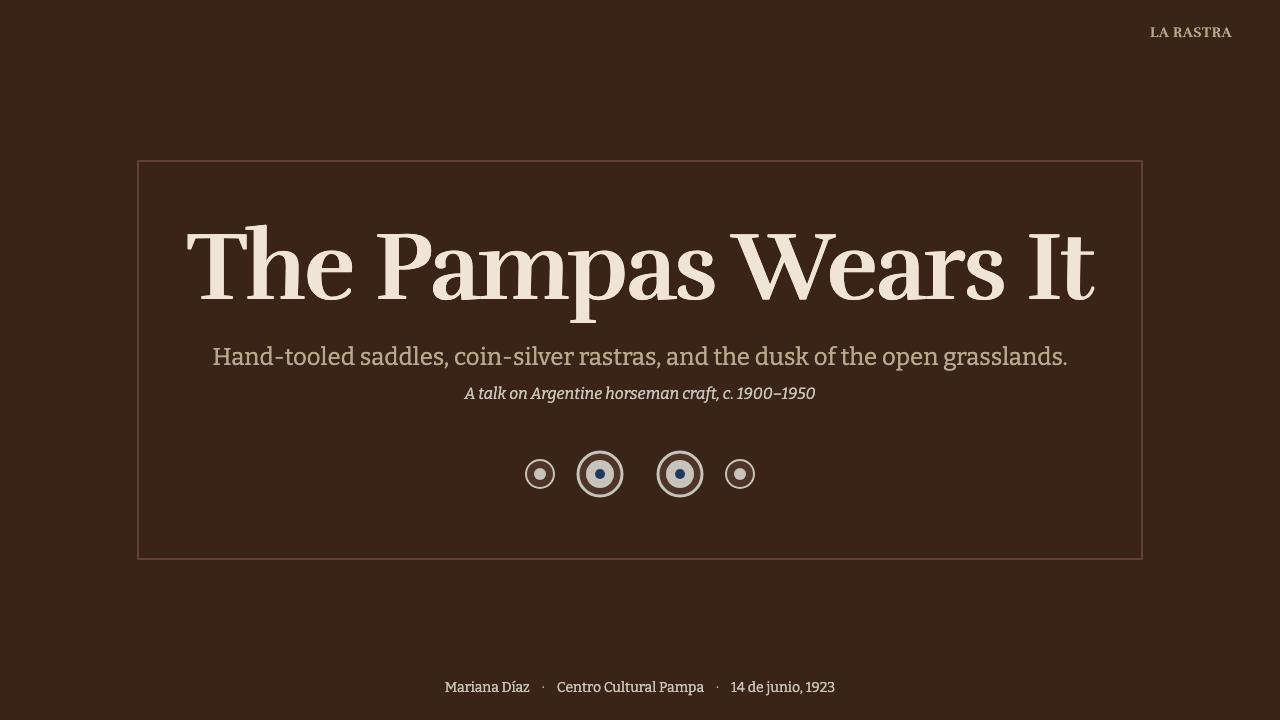
For presentation slides, the cover can behave like a single dramatic piece of leather at pampas dusk: a dark field, a restrained saddle-brown surface, and one clear coin-silver or indigo intervention. Content slides should organize information through bands, panels, and braided divisions that feel assembled rather than boxed by software. Data slides can treat values as mounted objects, using silver-like markers, harness-tan fields, and grass-dun comparison areas while keeping the dark leather ground responsible for continuity.
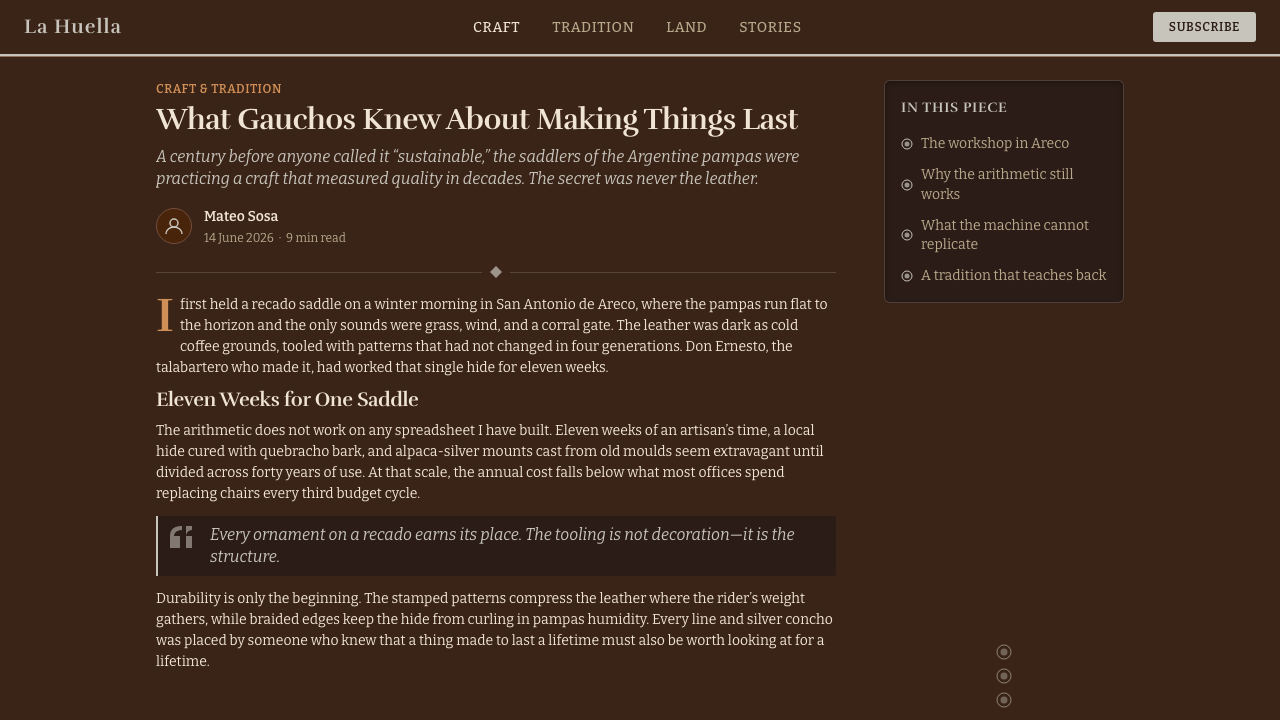
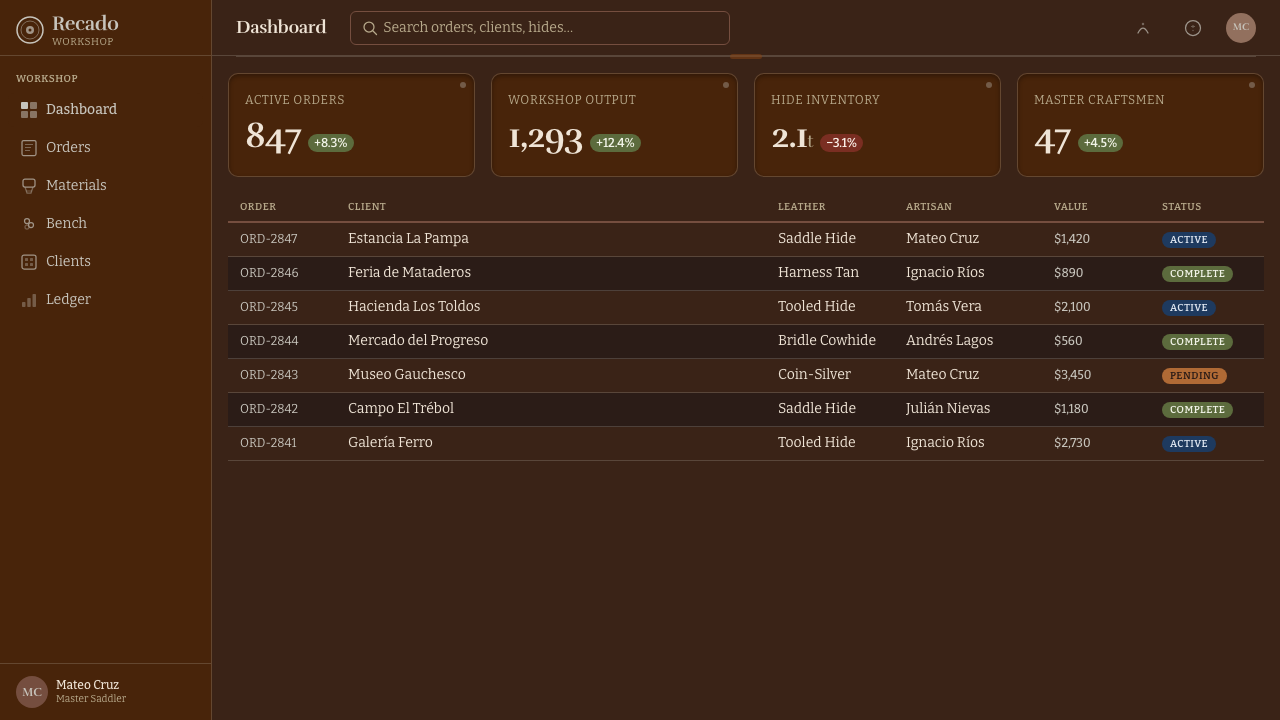
For web interfaces, Gaucho Leather suits dashboards and pricing pages that need a strong sense of territory and material identity. Use the dark saddle-leather field as the persistent environment, saddle brown for working surfaces, silver for selected states or high-value actions, and indigo or pampas-dun to distinguish supporting categories. Cards should feel like layered hide or attached plates; controls should appear handled and purposeful, with hierarchy coming from contrast between materials rather than from a collection of unrelated effects.
For editorial and marketing work, the style supports stories about craft, place, heritage, making, and durable goods. A feature page can use a dark leather opening, harness-tan information bands, and silver details that punctuate names, figures, or key claims. Campaign compositions should leave room for the material to breathe: a rastra-like line or mounted coin can carry more identity than a crowded field of decorative motifs. Indigo and pampas-dun are useful for extending the narrative toward cloth and grassland.
The common mistake is to reduce Gaucho Leather to brown backgrounds plus random western ornament. That misses the system’s material logic. Avoid cream-paper surfaces, excessive silver, perfectly uniform tooling, and decorative details with no relation to leather, harness, coins, or the pampas. The style also weakens when every accent is equally strong. Let dark hide lead, let harness tan support, and allow silver, indigo, and grass-dun to appear as deliberate, limited signals.
Gaucho Leather — FAQ
Is Gaucho Leather simply a brown color palette?
No. Brown is only one material role within the system. Gaucho Leather depends on the relationship between dark recado leather, harness tan, mounted coin-silver, alpaca silver, indigo poncho, and pampas-dun grass. It also depends on hand tooling, braiding, hammering, and the refusal of machine-perfect surfaces. Without that relationship, brown becomes generic and the gaucho material culture disappears.
Can the style use a light background?
A light variation is possible as a loose adaptation, but it weakens the defining atmosphere. The supplied system establishes dark saddle leather as the ground, and its warmth comes from worked hide rather than cream paper. If a lighter field is necessary, it should behave as harness tan, pampas-dun, or a worn material surface, while the dark leather remains present enough to preserve the style’s identity.
What is a rastra in this visual system?
A rastra is a coin-silver belt that mounts old peso coins directly into leather. In Gaucho Leather, it explains why silver details should feel attached, hammered, or set into a dark hide rather than sprayed across a surface as a general metallic effect. The rastra gives the interface a clear material reference and makes coin-like accents meaningful rather than ornamental.
How should silver be balanced with the leather?
Silver should remain a counterpoint, not a competing foundation. Coin-silver and alpaca silver are most convincing when they appear in discrete mounted details against the dark recado ground. If silver becomes continuous, glossy, or equally prominent everywhere, the design loses the working-object quality that makes the rastra reference distinctive.
How can the design feel handmade without becoming chaotic?
Keep the structure deliberate, then allow irregularity inside the material roles. The dark leather should still establish continuity, harness tan should still organize working surfaces, and silver should still mark selected points. Variation belongs in the suggestion of tooling, braiding, and hammering. The goal is not disorder; it is controlled evidence that a person made and handled the object.
Related design styles
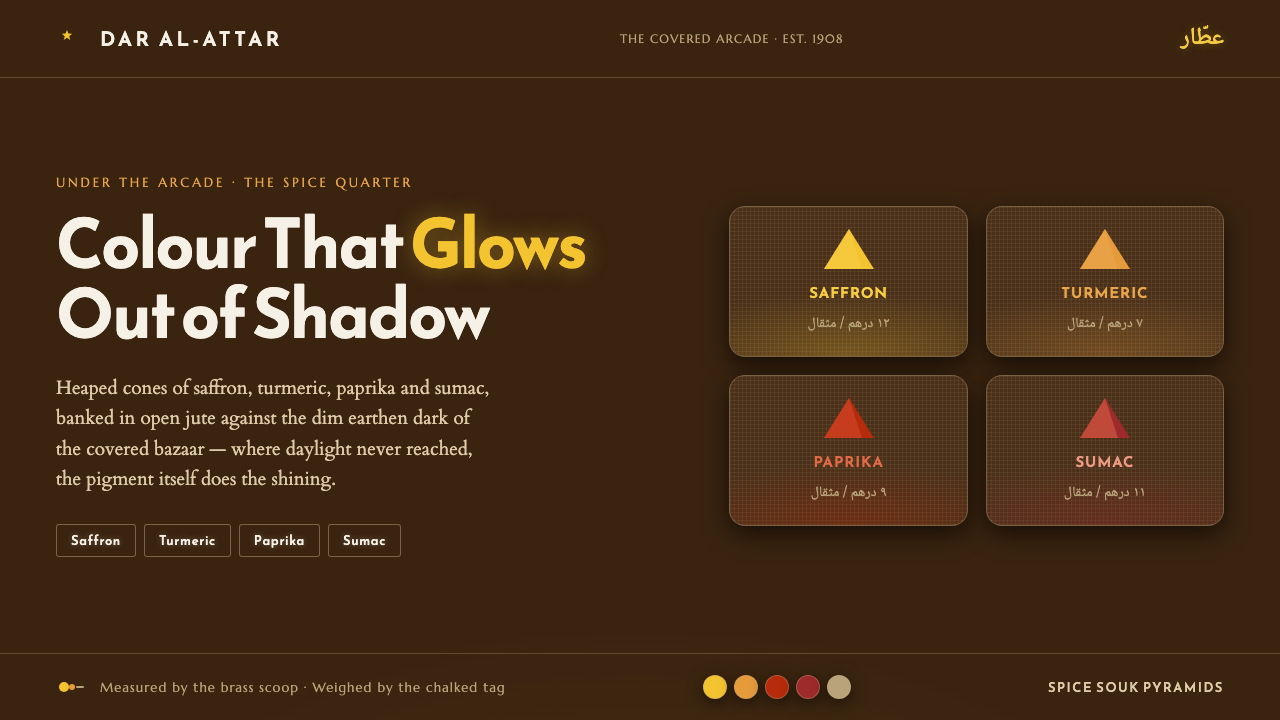 Spice Souk Market PyramidsColour glows out of shadow. Saffron-paprika-sumac heaps on dim earthen brown,…
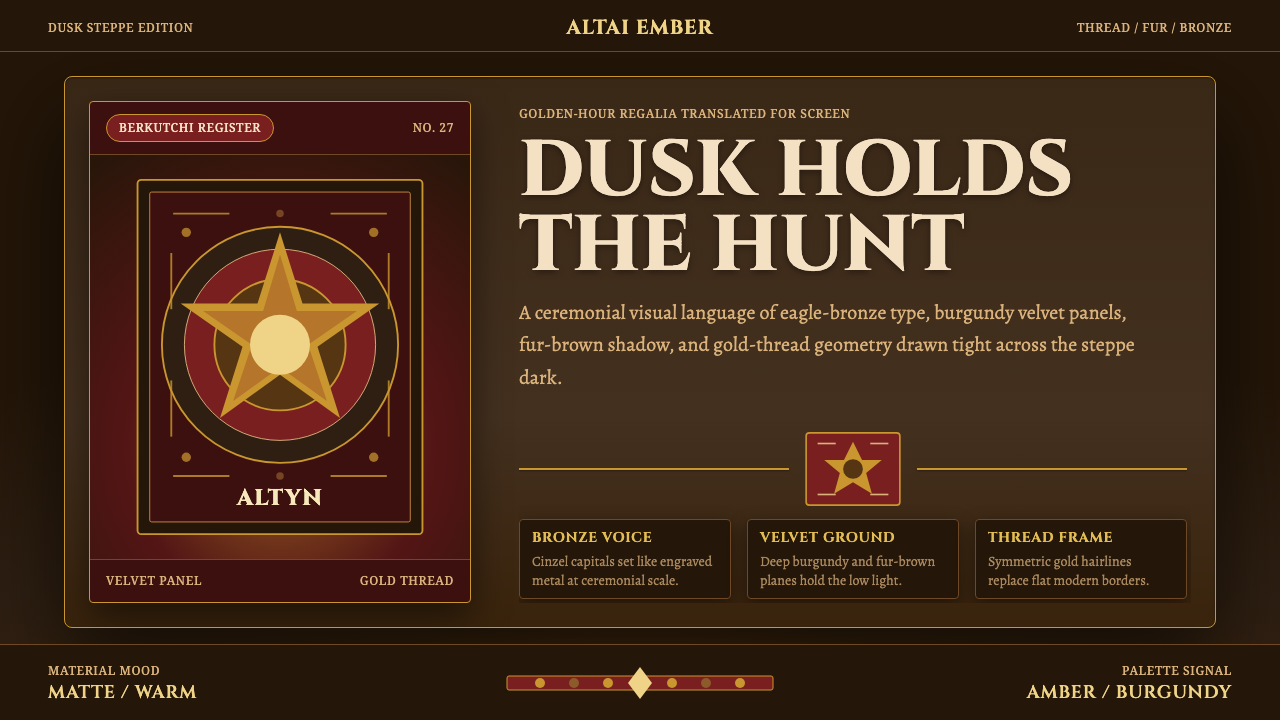 Kazakh Eagle HunterGolden hour feels handmade. Burgundy velvet, bronze type, and gold-thread bor…
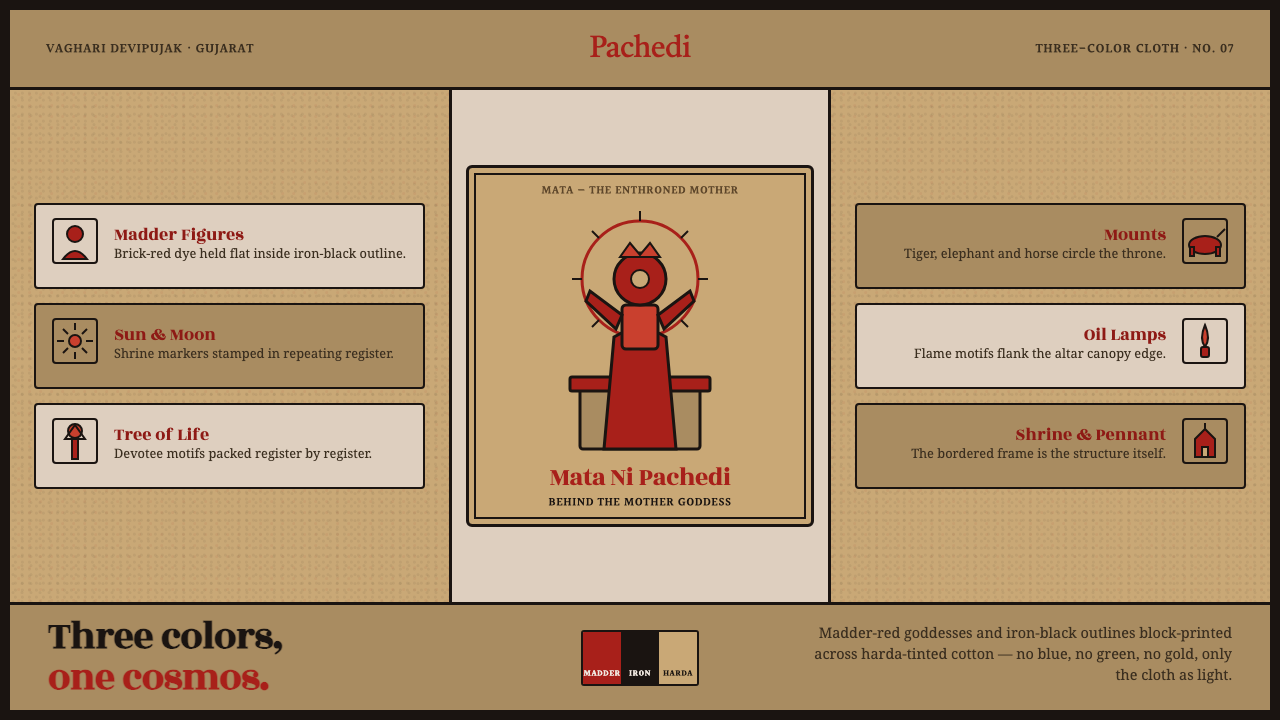 Mata Ni Pachedi Temple ClothThree colors, one cosmos. Madder-red goddesses, iron-black outlines, harda-ti…
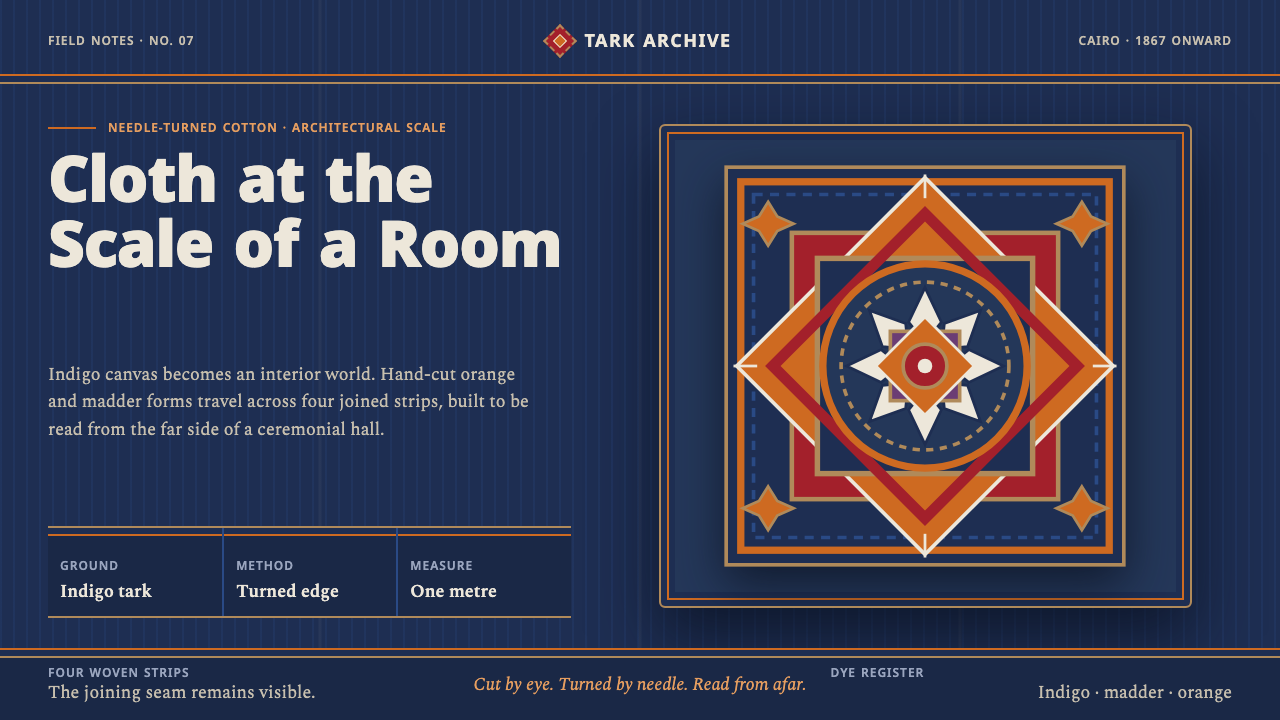 Khayamiya Tentmaker AppliquéCloth becomes architecture. Indigo canvas holds monumental orange and madder…
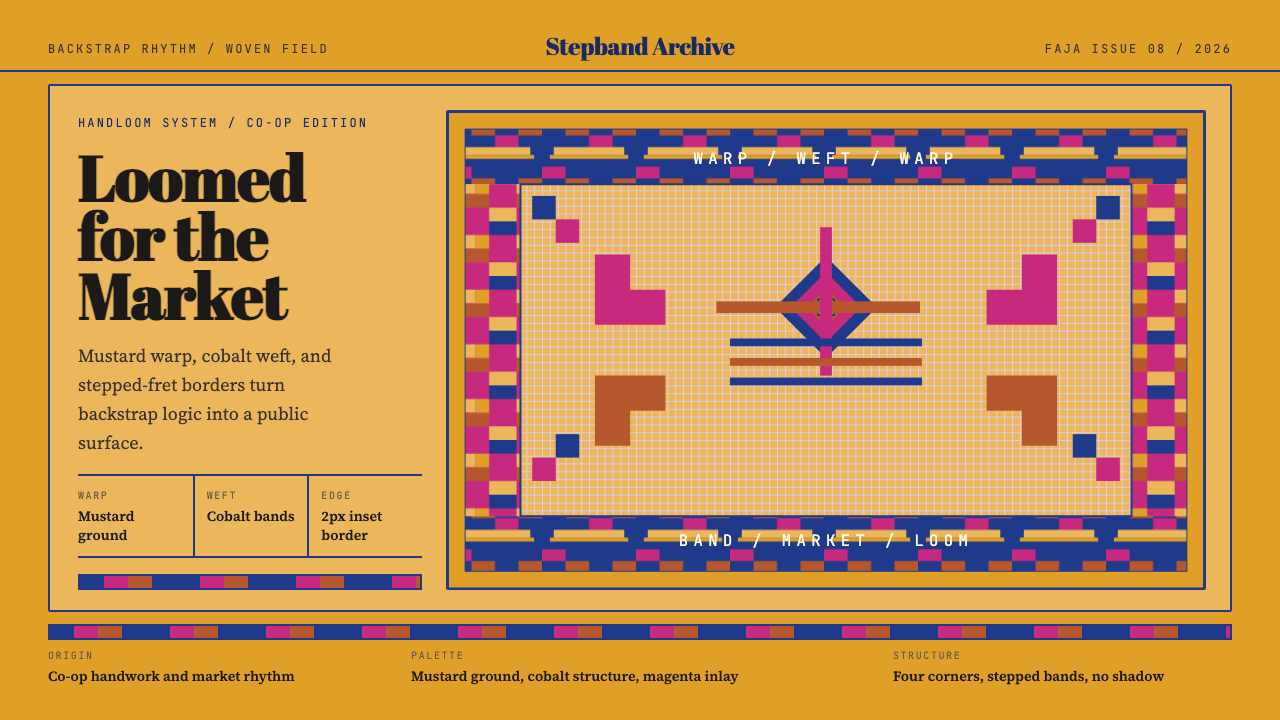 Otavalo Andean TextileThe loom stays vivid. Mustard ground, cobalt bands, stepped-fret borders.
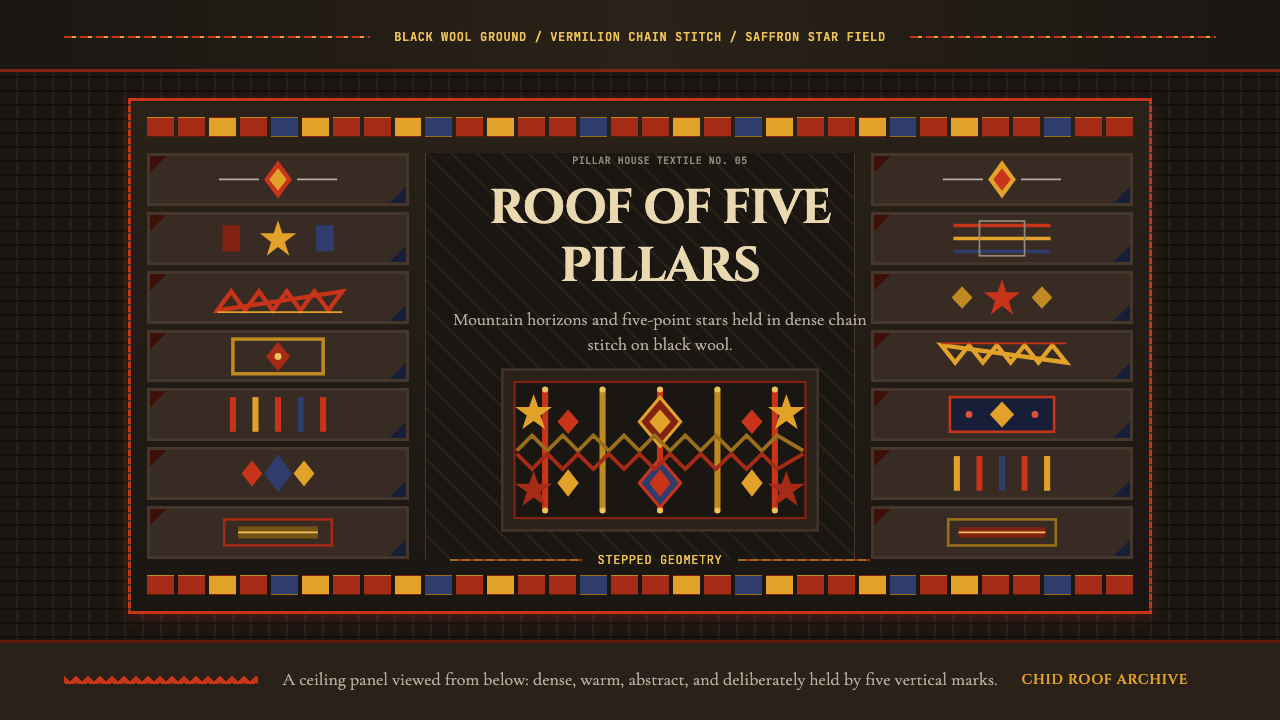 Tajik Pamir Needlework (Chid Roof)Cosmos stitched into wool. Vermilion diamonds and saffron stars hold a five-p…