What is Kawaii Japanese Letter Purikura?
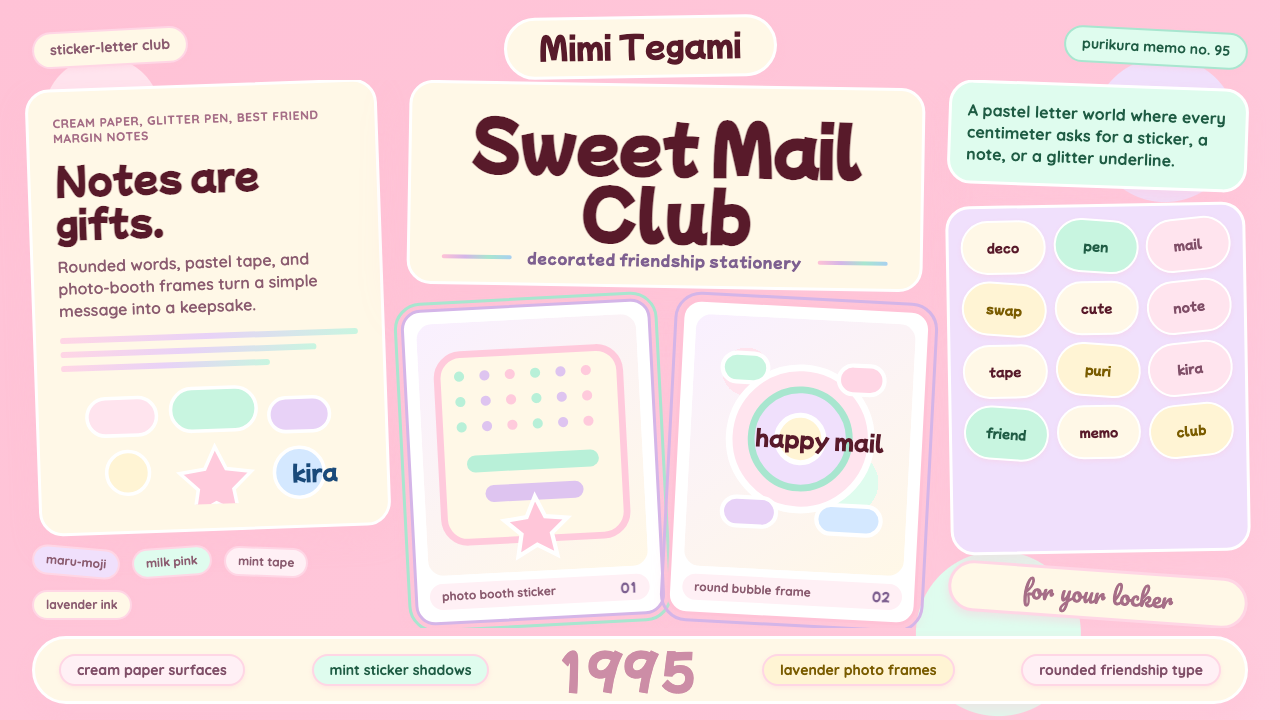
Kawaii tegami letter culture and purikura sticker-photo booths gave the world a joyfully maximalist visual language built from pastel rounds, layered stickers, and the conviction that every surface deserves a little more love.
Kawaii Japanese Letter Purikura in brief
Kawaii Japanese Letter Purikura is a densely decorative visual system born from two overlapping traditions in Japanese youth culture: the bubbly maru-moji handwriting style popularized by schoolgirls in the 1970s and 1980s, and the purikura (Print Club) sticker-photo booth phenomenon that erupted across Japan from 1995 onward. Together they produced a design language in which every available surface is treated as a canvas for pastel color, rounded forms, layered stickers, glitter-pen marginalia, and character mascots — a style whose defining mood is exuberant, generous, and unapologetically cute.
The aesthetic operates by accumulation rather than restraint. Where modernist design systems subtract until nothing unnecessary remains, kawaii letter-purikura design adds until the composition feels complete — complete meaning warm, personal, and saturated with affection. Sticker clusters overlap speech-bubble captions; lace-edged frames nest inside scalloped borders; small mascot characters perch in corners or dangle from ruled lines. The palette centers on pale pink and cream as the dominant ground tones, with mint, lavender, baby blue, and soft yellow introduced as accent layers. Nothing is harsh or angular; every edge softens into a curve, and every curve is an invitation.
Although the style is rooted in analog craft — physical sticker sheets, gel pens on letter paper, photo-booth print strips — its visual logic translates cleanly into digital design. The rounded geometry, pastel layering, soft drop shadows, and character-based illustration vocabulary carry directly into interface design, social media graphics, brand identity, and presentation materials. The key quality that distinguishes the style from generic pastels is intentional density: kawaii letter-purikura work is carefully composed even when it looks spontaneous, with each decorative element placed to contribute warmth without producing chaos.

Where does Kawaii Japanese Letter Purikura come from?
The roots of the kawaii letter aesthetic reach back to the late 1960s and early 1970s, when Japanese schoolgirls began writing in an idiosyncratic style they called maru-moji — literally 'round letters.' Characters were drawn with rounded strokes, letters were given faces and appendages, and pages were filled with small drawings of hearts, stars, and anthropomorphized objects alongside the written text. This handwriting was initially condemned by teachers and cultural commentators as a sign of intellectual regression; Yamane Kazuma's influential 1986 sociological study characterized it as a symptom of childlike dependency. But the girls writing it understood something their critics did not: the style was a deliberate construction of softness and playfulness in a social environment that demanded conformity and seriousness. Maru-moji was not laziness — it was a visual dialect.
The second foundational current was the rise of the kawaii goods industry in Tokyo's Shibuya, Harajuku, and Ikebukuro districts from the 1970s onward. Sanrio, founded in 1960, began producing character stationery and gift goods that made maru-moji culture tangible and purchasable: letter sets printed with Hello Kitty and My Melody, sticker sheets in pastel die-cut shapes, gel pens in confectionery colors. The Sanrio design department, under the creative direction of Yuko Yamaguchi (who became Hello Kitty's primary designer from 1980), refined a visual vocabulary in which cuteness operated through simplification — removing the mouth, rounding every form, centering the composition on emotional warmth rather than physical realism. San-X contributed its own roster of characters, including Rilakkuma and Nyan Nyan Nyanko, each embodying a slightly different register of softness and whimsy.
The third and most catalyzing development was the 1995 launch of Print Club by Atlus, distributed in arcades and game centers across Japan by Sega. Print Club machines allowed users to photograph themselves against decorative backgrounds and print the results as sheets of small sticker photos — purikura, a phonetic contraction of 'print club.' The technology gave the letter-writing tradition a photographic dimension: purikura strips were exchanged between friends the way letters were, decorated with pens and stickers, and collected in albums. Later generations of the machines added in-booth decoration tools — digital stamps, glitter overlays, text fonts, and frame templates — that transferred the sticker-collage aesthetic directly into the photograph itself. By the late 1990s, the purikura booth had become the primary social technology of Japanese teenage girl culture.
The peak years of kawaii letter-purikura culture as a unified aesthetic ran roughly from 1995 to 2005, coinciding with the height of the gyaru fashion subculture and the Harajuku decora movement, in which participants layered as many character accessories, plastic clips, and sticker-laden objects on their bodies as physically possible. The style never disappeared after that decade — it evolved, absorbed digital tools, and continued through social media, LINE sticker sets, and the global spread of Japanese pop culture. Today, a revived interest in Y2K aesthetics and in analog craft has brought kawaii letter-purikura sensibility back to prominent international attention, informing everything from fashion brand campaigns to mobile application interface design.
What defines the Kawaii Japanese Letter Purikura look?
Color Palette
The palette is built around soft, desaturated pinks and creams as the dominant ground tones, with mint green, lavender, baby blue, and pale butter yellow layered on top as accent and sticker colors. Pure white appears as a highlight and as the ground for text bubbles. Nothing in the palette is fully saturated or harsh — even the deepest tones are pulled toward the pastel register, as though every color has been mixed with a measure of cream. Black is used sparingly, primarily for fine outlines and pen-drawn details rather than as a structural color. Iridescent and glitter tones — soft silver, light gold, pearl — appear as special-effect layers that evoke the physical shimmer of gel pens and holographic sticker sheets.
Form and Geometry
Rounded geometry is the structural signature of the style. Squares become rounded rectangles; circles and ovals are the primary containment shapes for portraits, speech bubbles, and decorative frames. The corner radius is never zero — sharp corners are alien to the aesthetic. Organic shapes derived from hearts, stars, clouds, and flowers appear as both background elements and sticker forms. Scalloped edges, lace patterns, and daisy chains function as border vocabulary. The overall compositional effect is one of softness and approachability: nothing in the layout could be described as severe or confrontational.
Layering and Density
The compositional method is additive layering: a patterned or solid ground receives a frame, which receives sticker clusters, which receive photograph panels or illustrated elements, which receive text in bubble or stamp form, which may receive yet another layer of small character stickers or glitter accents. This creates a sense of visual depth and richness that reads as handmade and personal even in digital form. Unlike modernist design, where white space is structural, negative space in kawaii letter-purikura compositions is simply the space that hasn't been decorated yet — it is potential, not principle.
Typography and Lettering
Text in the style occupies three registers. First, handwritten or hand-lettered elements that echo maru-moji: rounded, bouncy, with inconsistent baseline and deliberate imperfection. Second, stamp-style type — blocky, outlined, and slightly offset — that evokes the physical rubber stamps sold in kawaii stationery stores. Third, speech-bubble captions in which the bubble shape is as expressive as the text inside it. Type is never the primary structural element of a composition; it is one decorative layer among many. Scale variation is used for expressive emphasis rather than informational hierarchy — a single word might be enlarged to fill a sticker, while surrounding text remains small and dense.
Character and Mascot Illustration
Character illustration is central rather than supplemental. Small mascot figures — whether licensed Sanrio or San-X characters, original drawn figures, or simplified emoji-style creatures — appear throughout compositions as emotional anchors. The illustration style shares the style's geometric softness: large heads relative to bodies, eyes that are simple circles or ovals, minimal facial features, and postures that communicate a specific emotional state (surprised, sleepy, happy, shy). These characters personalize compositions and function the way a handwritten signature does on a physical letter — they are a form of identity and a declaration of warmth.
Soft Shadow and Glow
Where shadows appear, they are soft and diffuse rather than hard and geometric — the opposite of the Bauhaus approach. A sticker element casts a gentle rounded shadow that lifts it slightly off the layer beneath, creating a sense of physical tactility and craft. White glow effects outline characters and key sticker elements, increasing contrast against busy backgrounds while maintaining the style's softness. Gradient glows in iridescent tones appear on special frames and overlay effects. The shadow and glow system serves one purpose: to make the composition feel dimensional, like something assembled by hand and held in the light.
Pattern and Texture
Patterned backgrounds replace flat grounds in many compositions: polka dots, gingham checks, small repeating hearts or stars, stripe sequences, or lightly textured surfaces that suggest cream paper or washi tape. These patterns are never bold or distracting — they operate at a lower visual weight than the sticker and character layers above them, creating depth without competition. Washi tape strips, with their characteristic semi-transparent stripe patterns, appear as both compositional elements and framing devices. Texture in this system signifies handmade care: the slight roughness of sticker paper, the translucency of gel pen glitter.

Who shaped Kawaii Japanese Letter Purikura?
Yamaguchi became the primary designer of Hello Kitty in 1980 and held that role for decades, making her the single most influential individual in defining the visual vocabulary of commercial kawaii. Her approach to the character — stateless expression (no mouth), oversized head, simplified silhouette — encoded the core principles of kawaii illustration: legibility across tiny reproduction sizes, emotional openness that allows the viewer to project feeling, and a geometry stripped of everything not essential to cuteness. Through Hello Kitty's licensing across thousands of product categories, Yamaguchi's design sensibility became the template against which all subsequent kawaii character design was measured.
The designers and engineers at Atlus who created the original Print Club machine in 1995 — distributed by Sega — effectively invented a new social medium. Their key insight was pairing photography with immediate physical output in sticker format, creating an object that was simultaneously a photograph, a sticker, and a letter-writing accessory. Subsequent development teams expanded the in-booth decoration capabilities over the following decade, adding the digital stamp, glitter, and frame tools that brought the full kawaii letter aesthetic into the photographic space. The Print Club machine's combination of mechanical photography and sticker culture created the central artifact around which the entire purikura aesthetic organized itself.
While Sanrio established the foundational vocabulary of Japanese character stationery, San-X — founded in 1932 and pivoting to character goods in the 1990s — extended the kawaii letter aesthetic in a more melancholy and introspective direction. Characters like Rilakkuma (a bear of uncertain origin who simply appeared one day) and Nyan Nyan Nyanko (a cat who wears a fish costume) introduced a quality of gentle ambiguity and absurdist warmth that distinguished San-X work from the more straightforwardly cheerful Sanrio register. San-X stationery, sticker sets, and character goods were central to kawaii letter culture throughout the 1990s and 2000s, and the company's design sensibility showed that kawaii could encompass quiet, sleepy, and even slightly strange alongside purely happy.
Sanrio's in-house design team, working under successive creative directors since the company's 1960 founding, built the commercial infrastructure of kawaii letter culture. The company's genius lay not in any single character but in the system: a roster of characters each occupying a distinct emotional niche, a stationery product line that gave girls the physical materials to write in kawaii style, and a retail environment (Sanrio stores, later Sanrio Puroland) that made the aesthetic immersive and aspirational. The department's work on letter sets — envelopes with matching paper, printed with character borders and pastel grounds — directly shaped the visual conventions that kawaii letter-purikura design inherited.
The decora subculture that flourished in Harajuku from the mid-1990s through the 2000s represented the most fully realized physical embodiment of kawaii letter-purikura aesthetic values. Decora participants applied the layering principle to their bodies: hundreds of plastic clips, character accessories, sticker-covered objects, and pastel garments accumulated into compositions that were literal three-dimensional equivalents of a densely decorated letter page. Photographers like Shoichi Aoki, who documented Harajuku street fashion in the magazine Fruits, brought international visibility to the subculture and established the connection between kawaii accumulation aesthetics and a broader global visual conversation. The decora community demonstrated that kawaii letter-purikura principles were not limited to paper — they were a complete approach to personal visual expression.
How do you use Kawaii Japanese Letter Purikura today?
Kawaii Japanese letter-purikura is one of the few historical design systems built explicitly around emotional warmth, which makes it simultaneously highly specific in application and unusually transferable across product categories where affection, personality, and playfulness are desired values. Applying it well requires understanding its underlying logic — accumulation as care, softness as welcome, density as generosity — rather than simply selecting pastel colors and adding a few hearts.
For presentation slides, the style excels on cover pages and section dividers where emotional tone is established before content begins. A cover built in this system layers a soft patterned background with a centered or slightly offset composition of character illustration, rounded title type, and a small sticker cluster in the lower corner. The result should feel curated, as though someone prepared it specifically for the viewer. Content slides require more restraint: use the style's patterned border vocabulary to frame content areas, keep background patterns at very low visual weight, and rely on rounded-rectangle containers rather than hard-edged boxes. Data slides can incorporate the style's character mascots as data annotation elements — a small surprised character next to an unexpected data point reads as warm and self-aware rather than clinical.
For web interfaces, the style is well-suited to consumer-facing products targeting audiences who value personality over authority: children's education platforms, personal productivity tools, pet-care applications, social and community products, gift and stationery e-commerce. Dashboard layouts benefit from soft rounded cards with subtle inner glow effects, pastel color coding for categories, and character mascots used as empty-state illustrations. Pricing pages can use the style's sticker vocabulary — a slightly rotated badge with rounded corners and an outline glow — to highlight a recommended tier without resorting to aggressive contrast. Navigation elements should have a handcrafted quality: slightly imperfect alignment, type that reads as friendly rather than corporate.
For editorial and marketing work, the style supports campaigns where authenticity, warmth, and community are central values. A brand campaign built in this system uses a consistent mascot character as a through-line, applies the pastel layering system to photography by overlaying sticker-style graphic elements, and writes copy in a register that is personal and conversational. Packaging design in this system emphasizes the gift-giving dimension of kawaii culture: the package is itself an object of delight, not merely a container. Pattern-based wrapping, sticker-sheet inserts, and character-printed tissue paper are all consistent with the aesthetic's logic of making every surface an opportunity for affection.
A common mistake when applying this style is confusing visual density with visual chaos. Kawaii letter-purikura compositions are dense, but they are not random — each element is placed with intention, and the overall composition has a clear focal point (usually a character or photograph) surrounded by supporting decorative layers at decreasing visual weight. A second mistake is applying the pastel palette without the rounded geometry: pastel colors on sharp-cornered layouts produce a style that feels clinical and cold rather than warm. The softness of the color and the softness of the form must work together. A third mistake is treating the style as inherently juvenile; in contemporary practice, kawaii aesthetics operate successfully in adult consumer products, premium gift brands, and sophisticated editorial contexts — the key is maintaining compositional care and avoiding the kind of thoughtless accumulation that makes the style read as childish rather than curated.

Kawaii Japanese Letter Purikura — FAQ
How is kawaii letter-purikura different from generic pastel or 'soft girl' aesthetics?
Generic pastel design uses soft color simply for its mood value — calm, approachable, gentle — and often pairs it with clean, minimal layouts. Kawaii letter-purikura is specifically about density, layering, and character-based illustration. The pastel color is not the subject; it is the ground on which stickers, frames, mascots, handwriting-style type, and photographic elements are accumulated. A true kawaii letter-purikura composition will always have more elements than a soft pastel design, and those elements will include character figures, decorative borders derived from craft traditions (lace, stamps, washi tape), and a sense that the composition was assembled as an act of affection for its recipient.
Can this style work for brands that need to appear professional or premium?
Yes, but it requires calibration. The style's density and character illustration can be dialed down while retaining its core qualities: rounded forms, layered soft color, patterned grounds, and a sense of compositional care. Premium kawaii applications tend to reduce the number of decorative layers, limit the character illustration to a single refined mascot, use higher-quality typographic choices in the handwritten register, and apply the palette in a more restrained range — perhaps two pastel tones rather than five. Japanese stationery brands like Midori and Classiky demonstrate that kawaii principles can operate at a craft-premium register without becoming childish or chaotic. The key is elevating the craft quality of each individual element rather than reducing the number of elements.
How should photography be treated within this design system?
Photography in kawaii letter-purikura compositions is treated as one layer among many, not as the dominant visual element. Photographs are typically contained within rounded frames — circles, ovals, rounded rectangles, or decorative shaped frames — and positioned within a larger decorated composition rather than bleeding to the edge of a layout. The purikura tradition specifically involves decorating around and over photographs with digital stamps, glitter overlays, and text frames, so the photograph becomes a center point for additional decoration rather than a standalone image. In digital applications, this translates to treating product photography or portrait photography as contained objects within a sticker-like frame, surrounded by character illustration and decorative elements at a lower visual weight.
Is it appropriate to use licensed Sanrio or San-X characters in commercial design work?
Licensed character use requires formal licensing agreements with the IP holders — Sanrio and San-X both have active global licensing programs and are accustomed to commercial partnerships, but unauthorized use of their characters in commercial contexts is a copyright infringement regardless of aesthetic intent. In practice, the kawaii letter-purikura style can be fully realized using original character illustration that follows the style's established conventions: large-headed figures with simple facial features, rounded silhouettes, and clear emotional expression. Many successful kawaii brand identities use original mascot characters that clearly operate within the kawaii visual tradition without requiring licensed IP. The style's conventions are in the public domain even when specific character designs are not.
What makes a kawaii letter-purikura design feel authentic versus merely derivative?
Authentic work in this style is characterized by compositional intentionality — the sense that every element was chosen and placed with care, even if the overall effect is maximalist. Derivative work tends to scatter decorative elements randomly across a pastel ground without establishing a focal point or a visual hierarchy among the layers. Authentic kawaii letter-purikura compositions always have a clear center of gravity: a portrait, a character, or a text element that the surrounding decoration serves. A second marker is the quality of the character illustration: rough or generic clip-art figures read as hollow imitation, while original illustration with personality and emotional specificity anchors the style convincingly. Finally, authentic work demonstrates understanding of the physical craft traditions it references — the visual logic of sticker sheets, the semi-transparency of washi tape, the bounce of rubber-stamp type — rather than simply applying pastel color to a conventional layout.
Related design styles
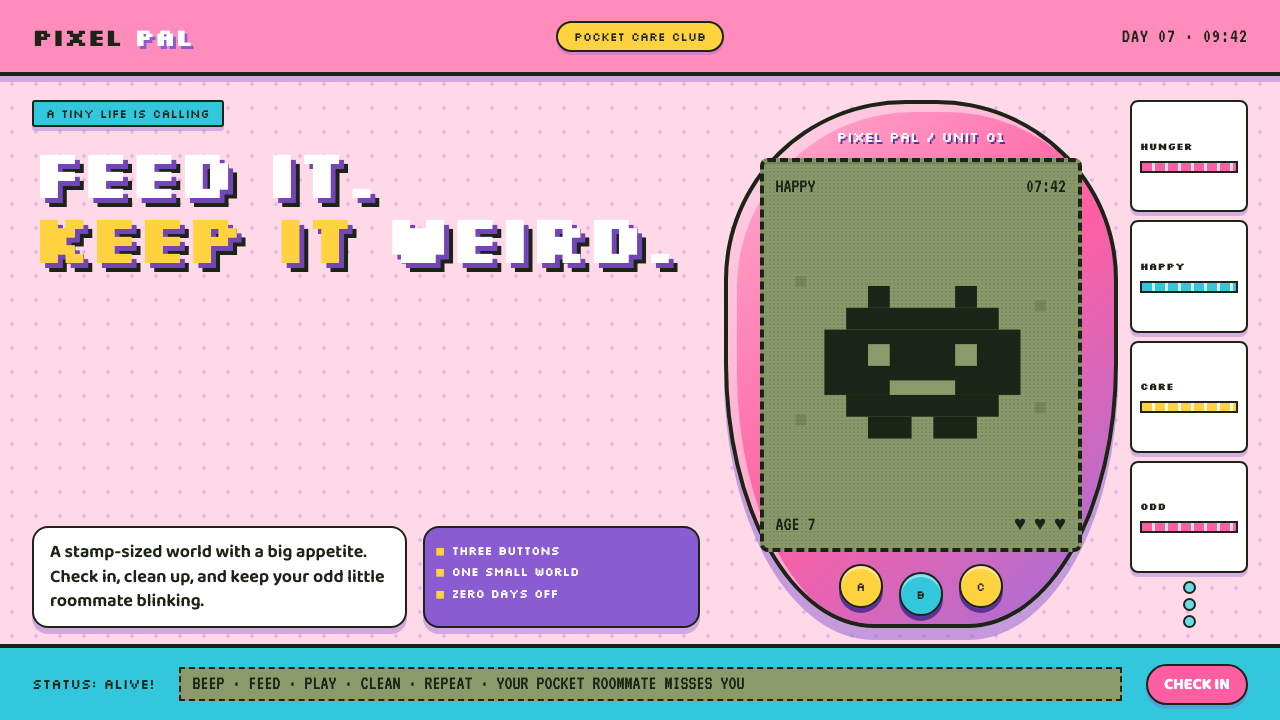 Tamagotchi (1996)Care gets candy-coated. Bubblegum plastic frames a crunchy pea-green pixel wo…
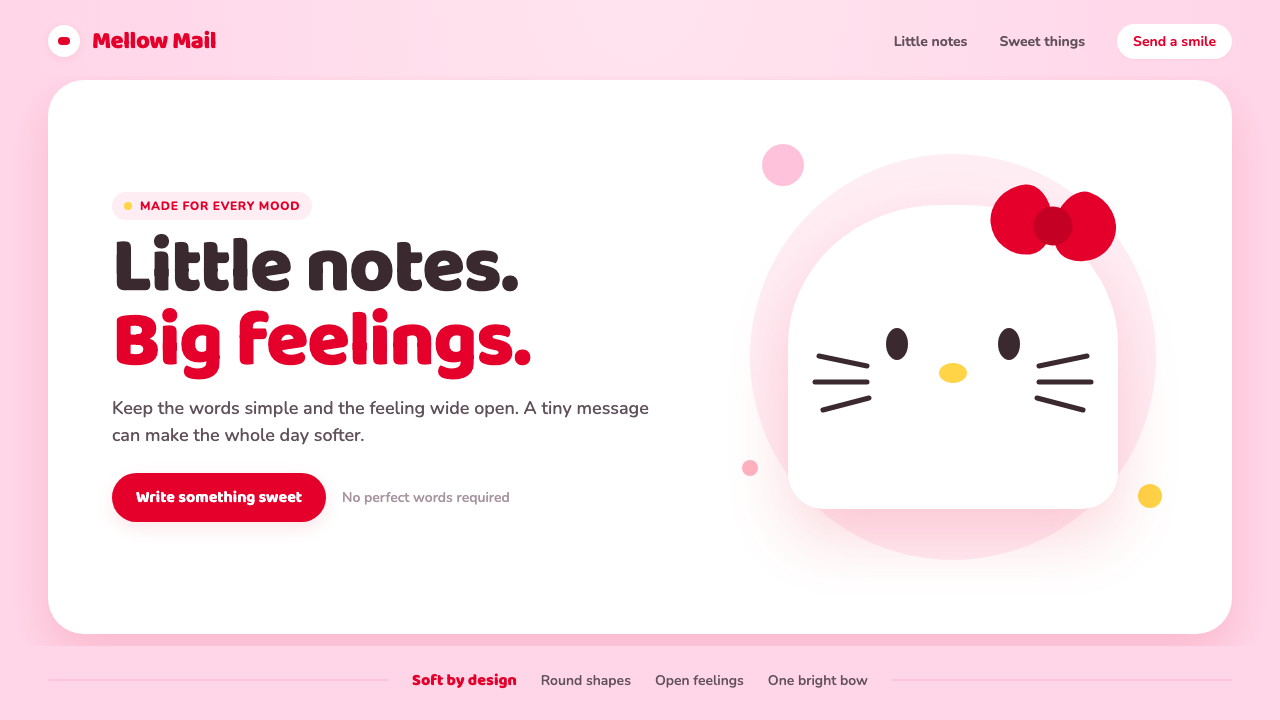 Hello Kitty (Sanrio 1974)Cuteness through subtraction. Bubblegum pink, round white forms, and one red…
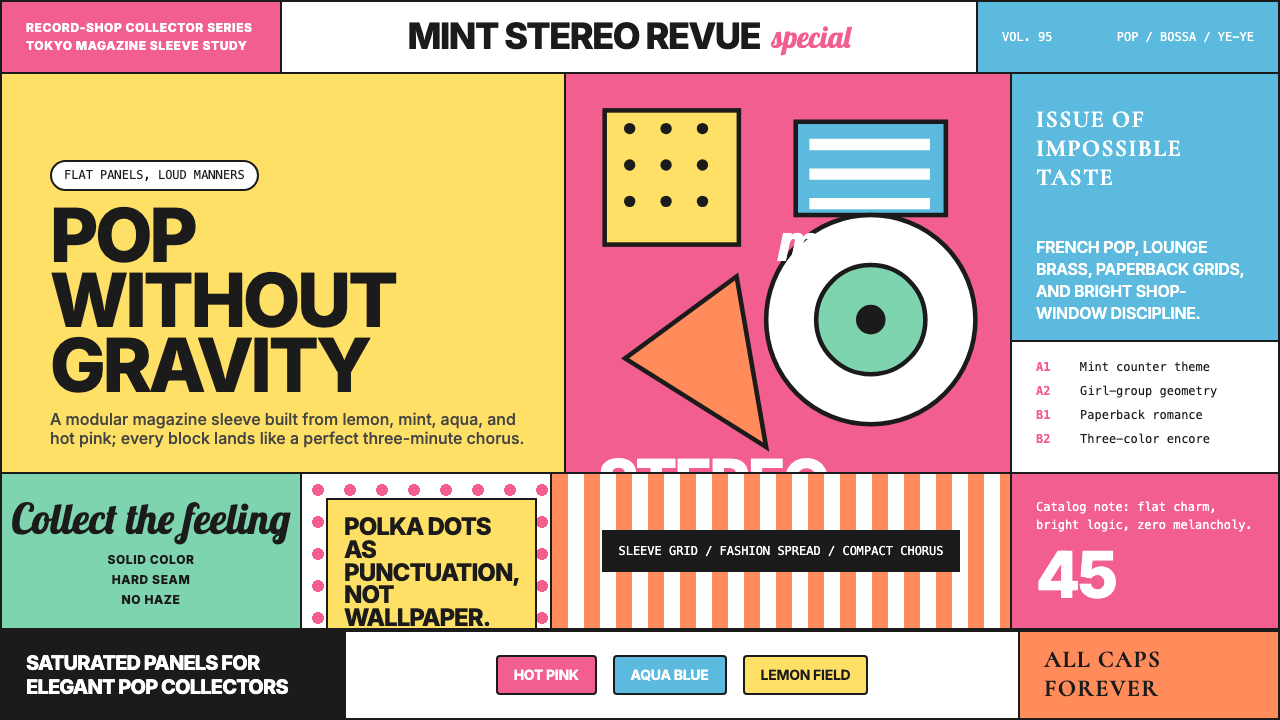 Shibuya-kei (Flipper's Guitar, 1995)Pop without gravity. Hot pink, mint, lemon, and aqua snap into album-sleeve g…
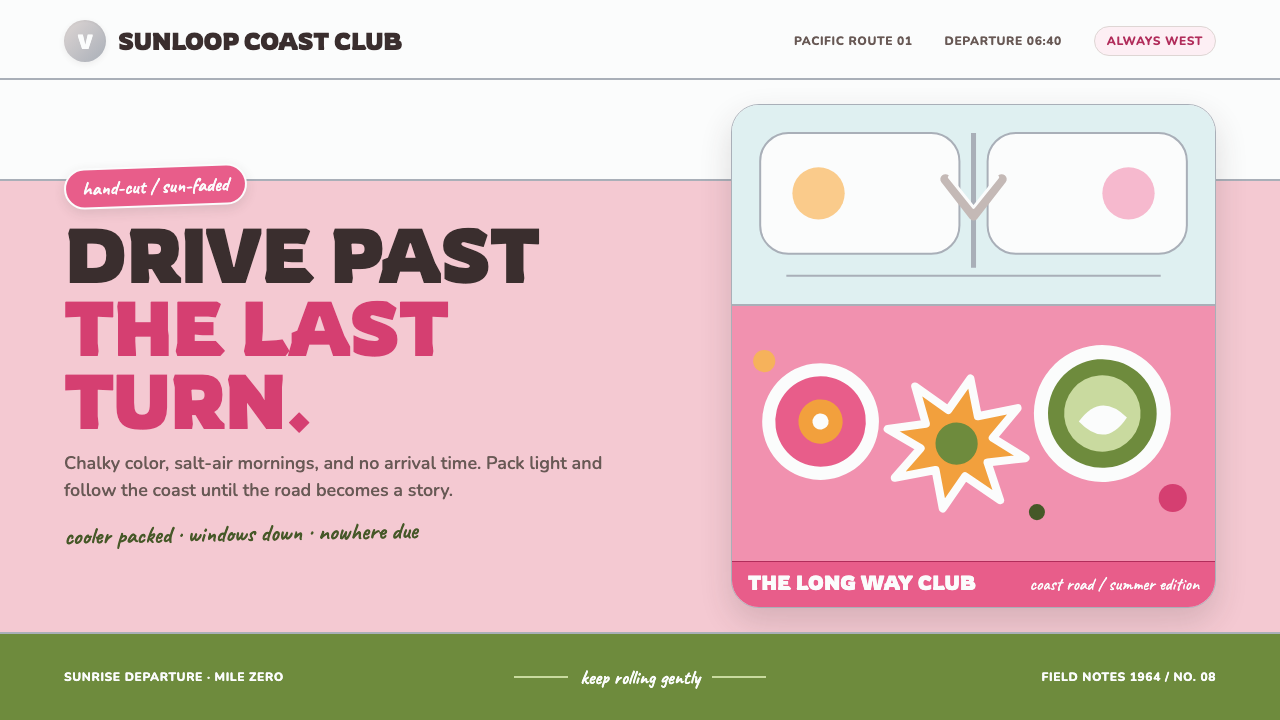 VW Bus Flower-Power (1964)Road-trip optimism in chalky pastels. Rounded type rides pink, white, and chr…
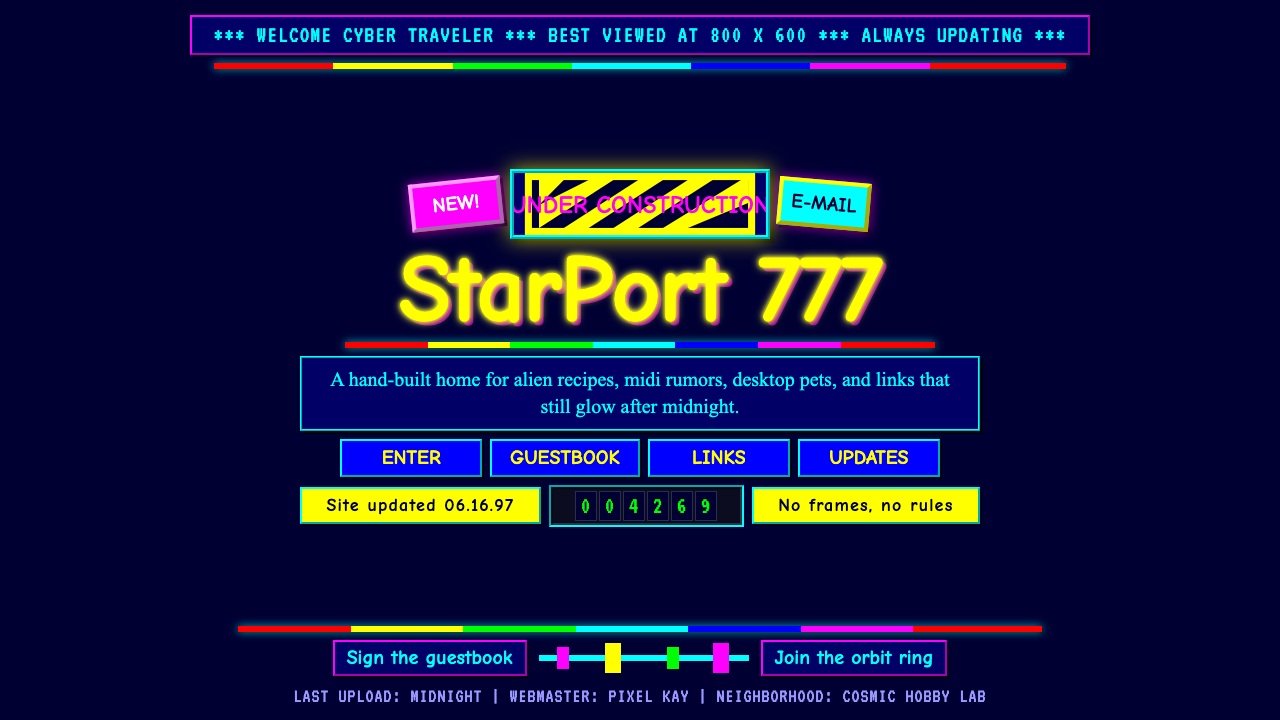 GeoCities Personal WebClutter is celebration. Starfield tiles, cartoon headings, rainbow rules, and…
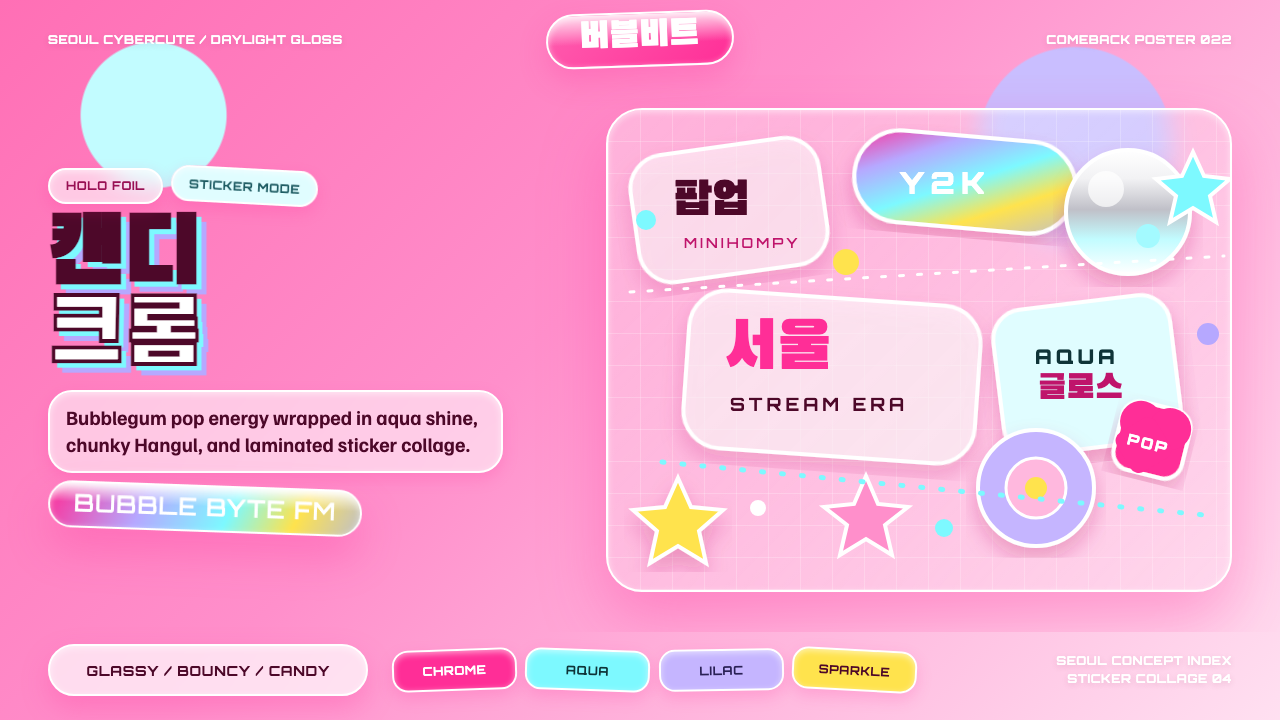 K-Pop Y2K SeoulCandy chrome goes maximal. Hot pink, aqua, Hangul type, and sticker collage s…