What is Kashmiri Sozni Shawl Embroidery?
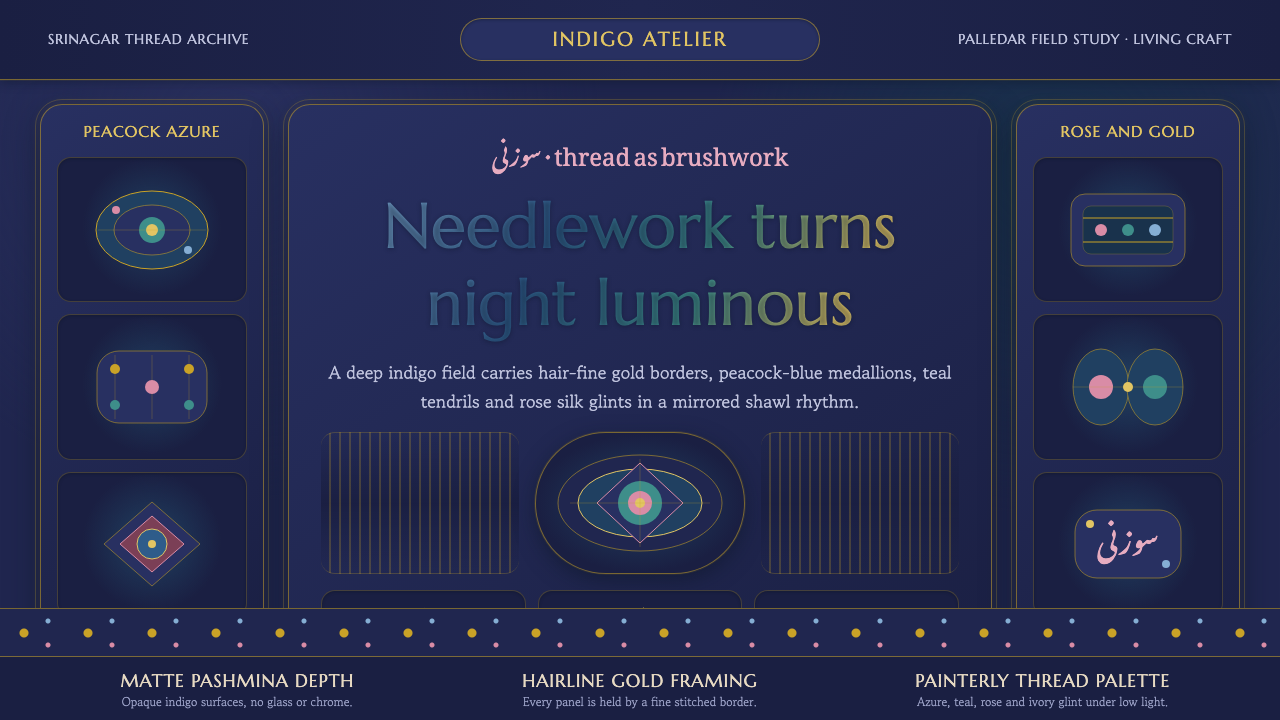
Kashmiri Sozni makes night luminous — indigo becomes a field for gold hairlines, silk medallions, and floral movement that feels painted one stitch at a time.
Kashmiri Sozni Shawl Embroidery in brief
Sozni is Kashmir’s finest needle embroidery, worked with ultra-fine silk thread over pashmina cashmere. The stitches are so dense and delicate that they read less like conventional embroidery than brushwork held in fabric. Its signature visual atmosphere is saturated, nocturnal, and exceptionally precise: a deep indigo-navy ground carries symmetrical boteh medallions, curling floral tendrils, and hairline borders.
The digital translation preserves that contrast between darkness and illumination. Indigo establishes the page as a quiet field, while gold lines, silk-toned gradients, and jewel-like accents create the sensation of thread catching light. Peacock azure, teal-green, golden yellow, soft rose-pink, and occasional ivory appear as embroidered notes rather than a general-purpose palette. Every color should feel placed, stitched, and given a reason to exist.
The result is an aesthetic of cultivated abundance. Sozni is richly ornamented, but its richness is controlled by symmetry, repeated botanical movement, fine linework, and the discipline of the dark ground. Serif type with the poise of court calligraphy completes the impression: the interface should feel ceremonial and intimate, like a shawl unfolded under lamplight.

Where does Kashmiri Sozni Shawl Embroidery come from?
Sozni belongs to the Mughal-era history of Kashmiri shawl artistry, with origins in the sixteenth and seventeenth centuries. Its home is the Kashmir valley, especially Srinagar, where the craft is tied to the making and ornamentation of shawls rather than treated as a detached surface style. The work carries the visual memory of courtly luxury while remaining rooted in the patient handling of thread, cashmere, and repeated pattern.
The material relationship is central to the craft. Pashmina cashmere supplies a soft, refined ground, while silk thread creates the exceptionally fine mark that defines Sozni. Because the thread is worked so densely and delicately, the embroidered image can behave like a painting: floral curves, medallions, color transitions, and borders remain legible without becoming heavy. The digital style should preserve this sense of image emerging from a precious surface.
Documented indigo-ground palledar shawls reached a particularly strong expression during the eighteenth and nineteenth centuries. The palledar arrangement is important because it turns the shawl into an organized field: a dark ground, symmetrical boteh forms, floral tendrils, and carefully controlled accents work together as a complete composition. Indigo is not merely a background choice; it is the condition that allows the embroidery to appear luminous.
Sozni remains a living craft today through master embroiderers, known as sozankar, and Kashmiri shawl weaving guilds. This continuity matters to the design language. The style is not a historical fantasy assembled from isolated motifs; it is a living relationship between skilled hands, textile structure, and inherited pattern logic. Digital applications should therefore emphasize care, density, and workmanship rather than turning the embroidery into generic luxury decoration.
What defines the Kashmiri Sozni Shawl Embroidery look?
Indigo Ground
The foundation is a deep indigo-navy field that absorbs visual noise and gives every thread a chance to glow. It should feel atmospheric rather than flatly black, allowing the page to remain dark while retaining a textile softness. Light elements become precious because the ground refuses to compete with them.
Thread Palette
Color behaves like embroidery, not paint poured across a surface. Peacock azure, teal-green, golden yellow, soft rose-pink, and occasional ivory are placed as distinct luminous threads against indigo. Gold should articulate structure, while brighter colors animate medallions and botanical details.
Boteh Medallions
Symmetrical boteh forms provide the principal motif and a recognizable sense of inheritance. They should read as composed medallions rather than scattered paisley icons, with enough surrounding quiet for their curved profiles to remain legible. Repetition creates rhythm; symmetry creates ceremonial order.
Floral Tendrils
Curling floral tendrils soften the geometry of the medallions and carry the eye through the composition. Their movement should feel continuous, fine, and botanical, with curves that connect rather than interrupt. Floral detail is most convincing when it appears woven into the field instead of pasted on top.
Hairline Gold
Gold appears as a fine structural glint: borders, rules, small contours, and restrained points of emphasis. It should never become a broad metallic field. The impression is of precious thread catching light along an edge, not of a polished surface trying to announce its richness.
Courtly Serif
Typography carries the poise of court calligraphy through elegant serif forms, measured contrast, and generous breathing room. Headings may feel ceremonial, but body text must remain calm and readable. Type should sit inside the textile atmosphere, not imitate the embroidery so aggressively that language becomes ornament.

Who shaped Kashmiri Sozni Shawl Embroidery?
The master embroiderers are the human measure of the style. Their work demonstrates that the visual richness of Sozni depends on control, patience, and the ability to make silk thread behave like a fine painted line. In digital design, their example argues for restraint inside abundance: detail should be deliberate, continuous, and visibly cared for.
The sozankar is the skilled maker associated with the finest needlework of Kashmir. This figure represents the close relationship between hand, material, and inherited pattern. The design language should preserve that intimacy through fine borders, tactile-looking transitions, and ornament that feels worked rather than algorithmically scattered.
The shawl weaving guilds provide the broader structure in which Sozni belongs. Their presence reminds designers that the motif is not an isolated illustration but part of a textile system, where ground, border, medallion, and repeated movement must cooperate. Digital layouts should therefore feel composed as wholes.
The indigo-ground palledar shawl is the clearest compositional model for the style. Its dark field, symmetrical boteh medallions, floral tendrils, and luminous thread colors establish the relationship between order and radiance. It is best treated as a complete visual grammar rather than a source of isolated decorative symbols.
How do you use Kashmiri Sozni Shawl Embroidery today?
For slides, use Sozni as a contrast between a quiet indigo field and carefully illuminated information. A cover can place a restrained gold border around a spacious title area, with a boteh-like medallion or floral curve acting as the visual anchor. Content slides should keep the same ground and typographic poise while reducing ornament around dense text. Data slides can treat charts as stitched diagrams: lines remain fine, highlights are jewel-toned, and the composition never becomes brighter than the information requires.
For web interfaces, the system suits dashboards, pricing pages, and premium analytical tools that need authority without becoming cold. Indigo can hold the main interface, gold can identify structure or selected states, and the brighter thread colors can distinguish categories or meaningful changes. Cards should feel like framed textile panels rather than floating white boxes. Borders, dividers, and active states benefit from delicate continuity instead of loud contrast.
For editorial and marketing work, Sozni supports a luxurious but intimate reading experience. Long-form pages can use generous dark margins, narrow text measures, fine ornamental rules, and occasional medallions to mark transitions. Marketing pages can frame a product or service as carefully made: the visual language suggests patience, rarity, and inherited craft. Imagery should sit within the indigo atmosphere, with botanical curves or gold linework used to connect separate sections.
For identity systems, the strongest approach is to let the embroidery logic organize the whole experience. A wordmark may carry the courtly serif character, while a repeated boteh or floral tendril becomes a quiet signature across packaging, interfaces, and campaign material. The system works best when the motif, border, type, and background share the same sense of measured richness rather than appearing as unrelated luxury cues.
The common mistake is treating Sozni as a dark background plus random gold decoration. That loses the essential relationship between ground, symmetry, thread color, and continuous floral movement. Another mistake is using every jewel tone at equal intensity, which turns the field noisy. Choose a dominant indigo atmosphere, let gold articulate structure, and reserve brighter colors for moments that deserve the attention.

Kashmiri Sozni Shawl Embroidery — FAQ
What is Kashmiri Sozni?
Sozni is the finest needle embroidery of Kashmir, made with ultra-fine silk thread worked over pashmina cashmere. Its stitches are dense and delicate enough to resemble brushwork. The classic visual expression uses a deep indigo-navy ground with symmetrical boteh medallions, floral tendrils, fine borders, and luminous thread colors.
Why is indigo so important to the style?
Indigo is the ground that makes the embroidery luminous. It absorbs visual noise and gives gold, azure, teal, yellow, rose, and ivory the character of individual threads catching light. Replacing it with an arbitrary dark color can preserve the mood, but it weakens the specific relationship between darkness and radiance that defines the indigo-ground palledar tradition.
Does the style require paisley motifs everywhere?
No. Boteh is a central inherited motif, but the style depends on the relationship among ground, medallion, floral movement, border, and color restraint. A single composed medallion or a partial floral curve can carry the reference more convincingly than many repeated icons. The aim is a textile-like field, not a surface covered with symbols.
How should typography behave in a Sozni-inspired interface?
Typography should use elegant serif forms with the poise of court calligraphy. Headings can feel ceremonial and refined, while body text needs calm spacing and clear reading order. Type should complement the embroidery’s delicacy rather than imitate every curve. Its role is to give the page dignity and rhythm without competing with the threadwork.
What is the biggest risk when applying this style digitally?
The biggest risk is confusing richness with accumulation. Sozni is dense, but it is not careless: symmetry, repeated botanical movement, fine borders, and a dark ground keep the detail coherent. If every color, motif, and ornament is given equal emphasis, the result becomes generic luxury rather than Kashmiri Sozni. The digital version must preserve the discipline behind the beauty.
Related design styles
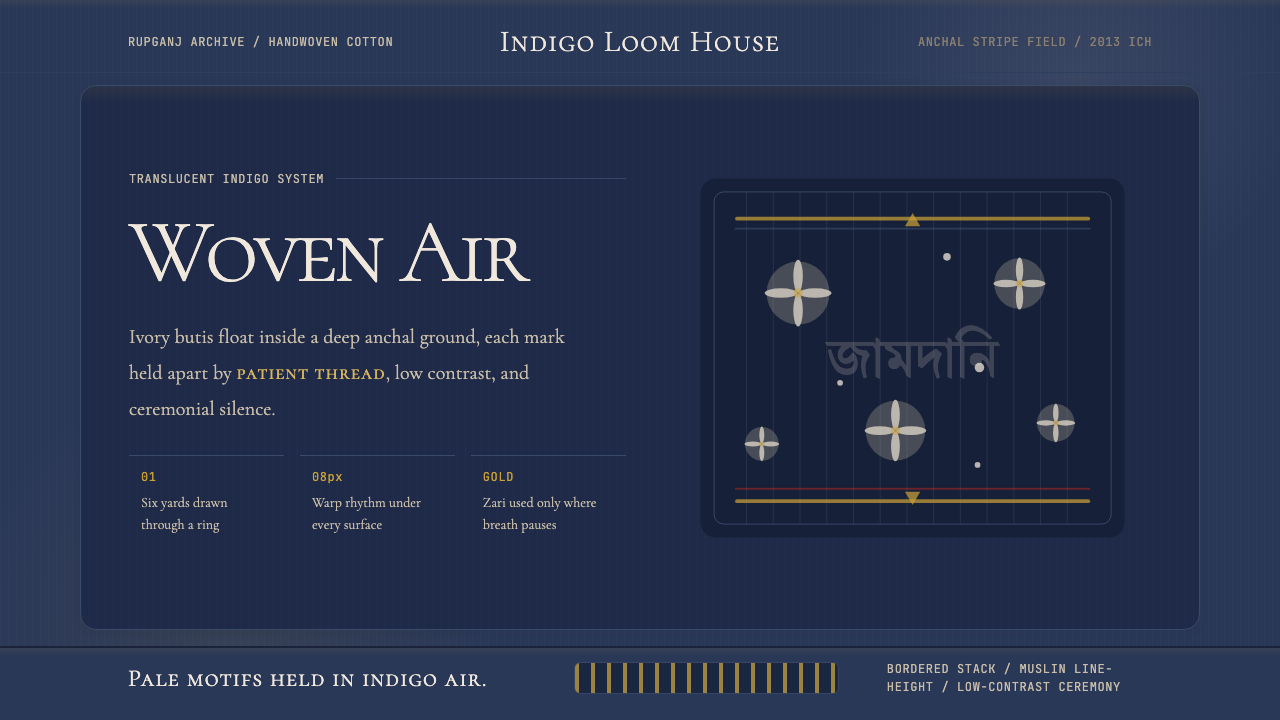 Bengali Jamdani MuslinBreathes like woven air. Indigo ground, ivory butis, and threadline borders s…
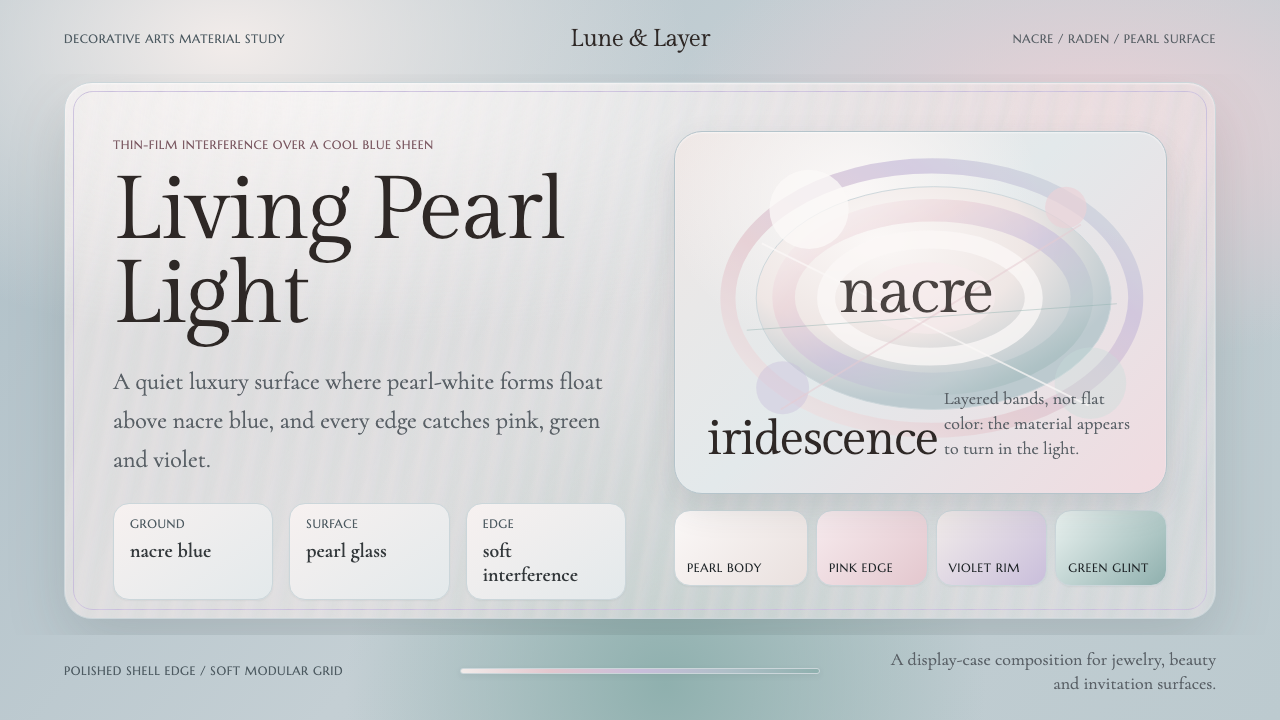 Mother-of-Pearl NacreQuietly expensive shimmer. Nacre blue ground with pearl panels and pink-viole…
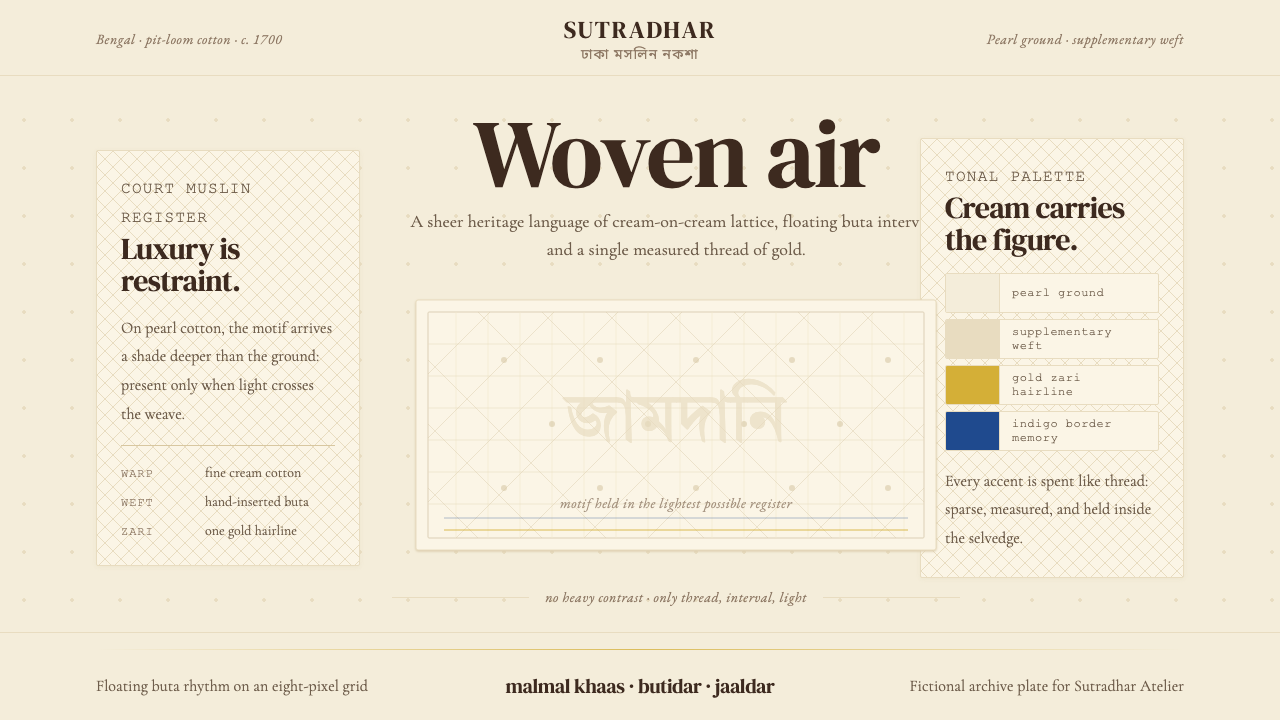 Bengali Jamdani WeavingLuxury whispers. Pearl cream, tonal buta, and one gold hairline make woven ai…
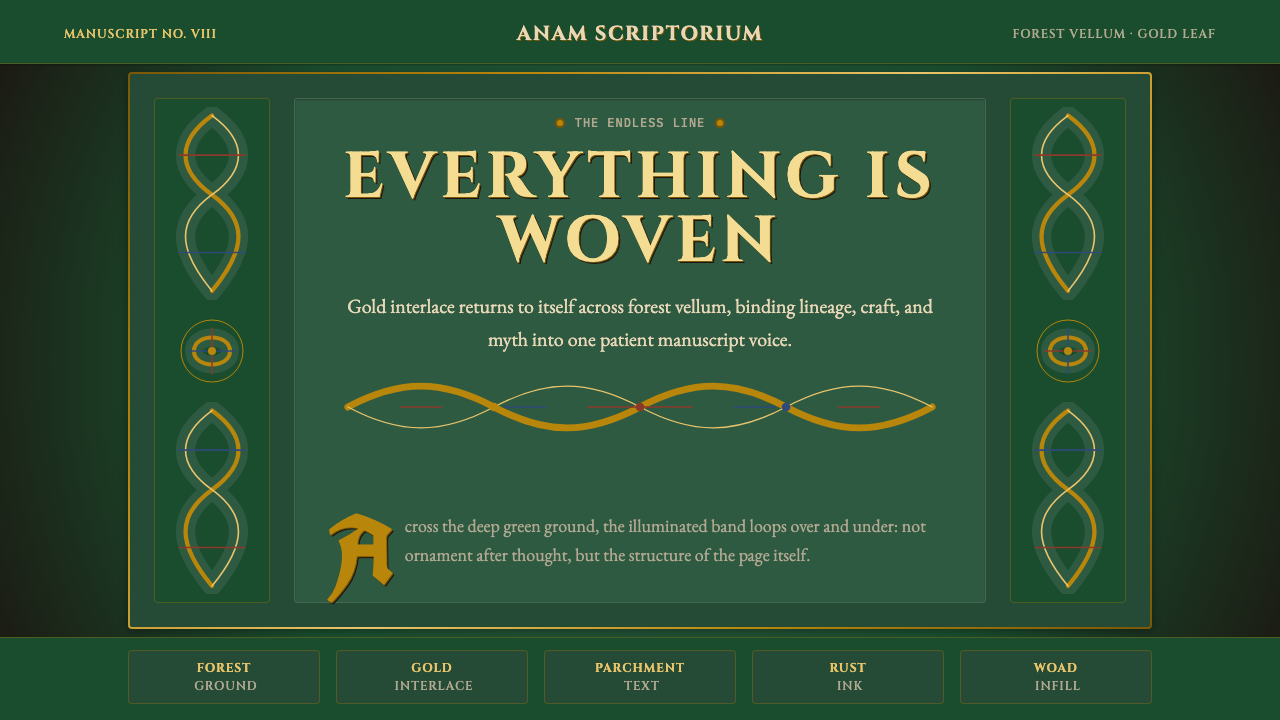 Celtic KnotworkEverything is connected. Gold Cinzel interlace frames forest-green vellum.
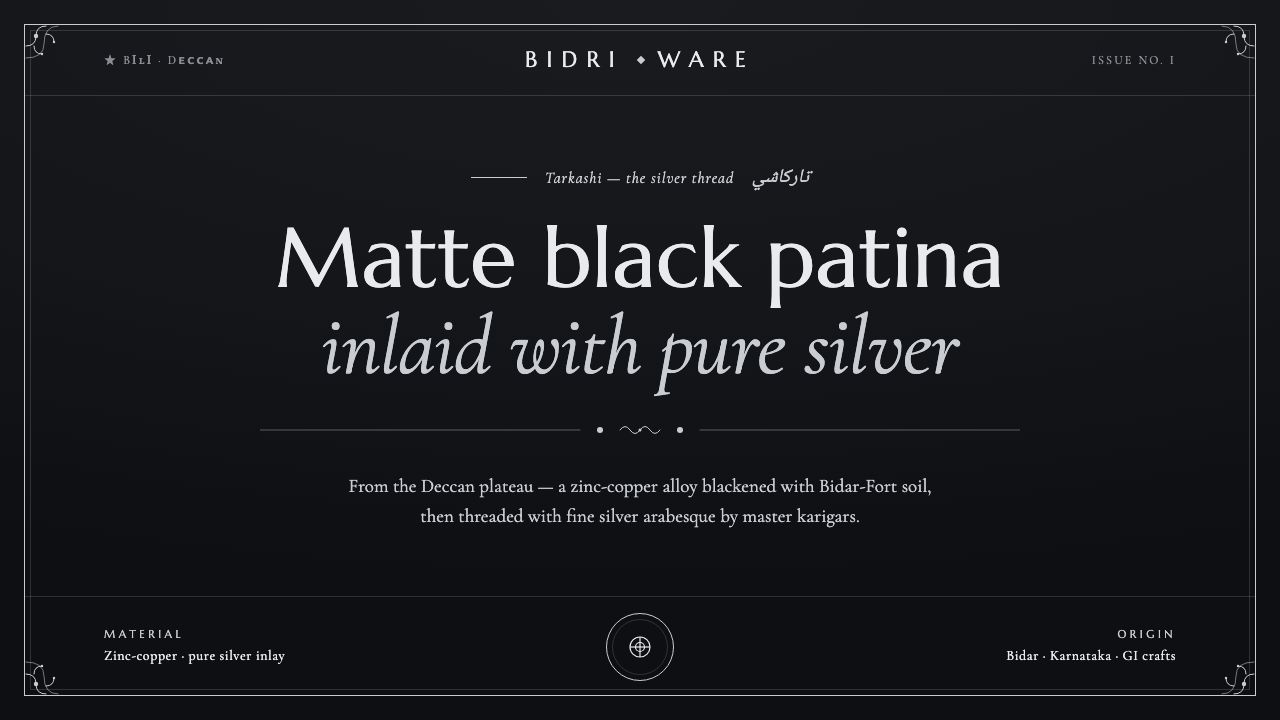 Bidriware Black MetalMonochrome luxury, hammered by hand. Matte-black Deccan patina threaded with…
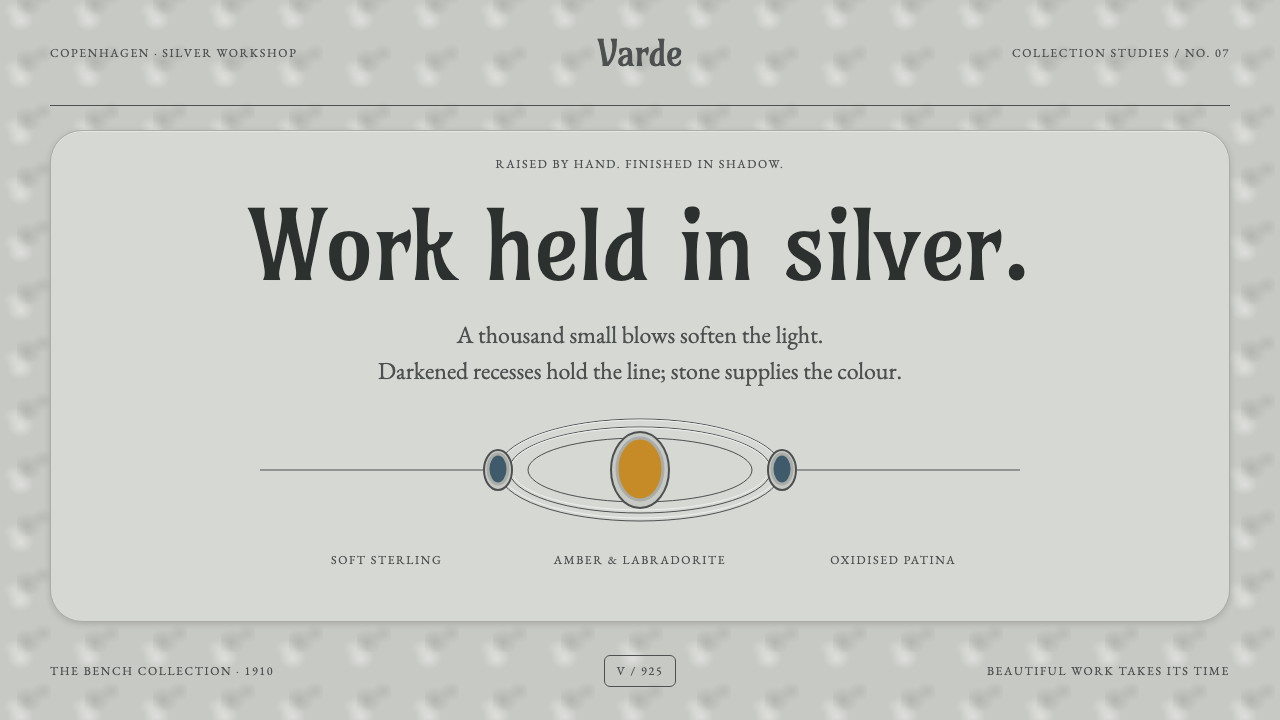 Danish Skønvirke SilverThe drawing is done in shadow. Amarante on soft silver, with amber held in bi…